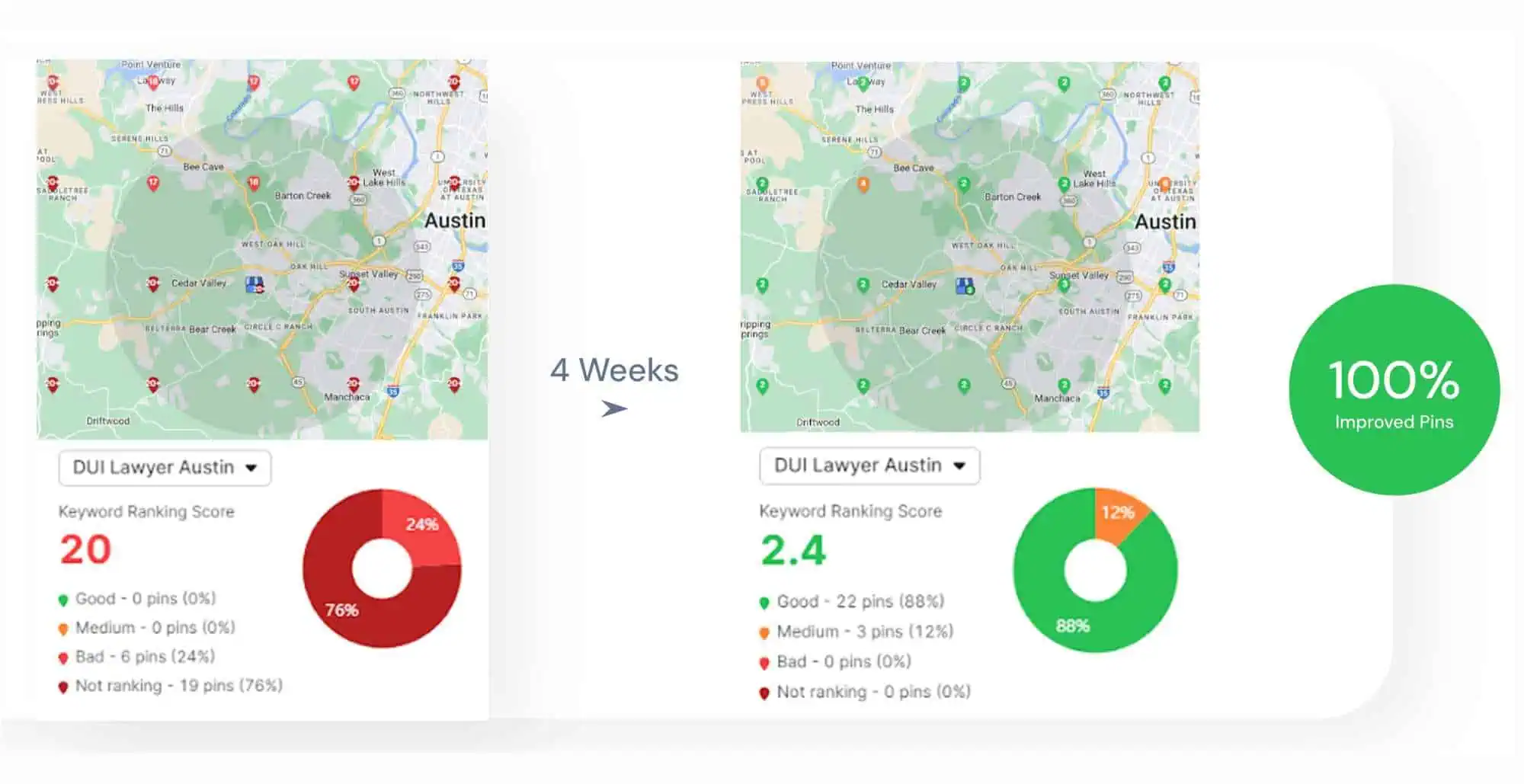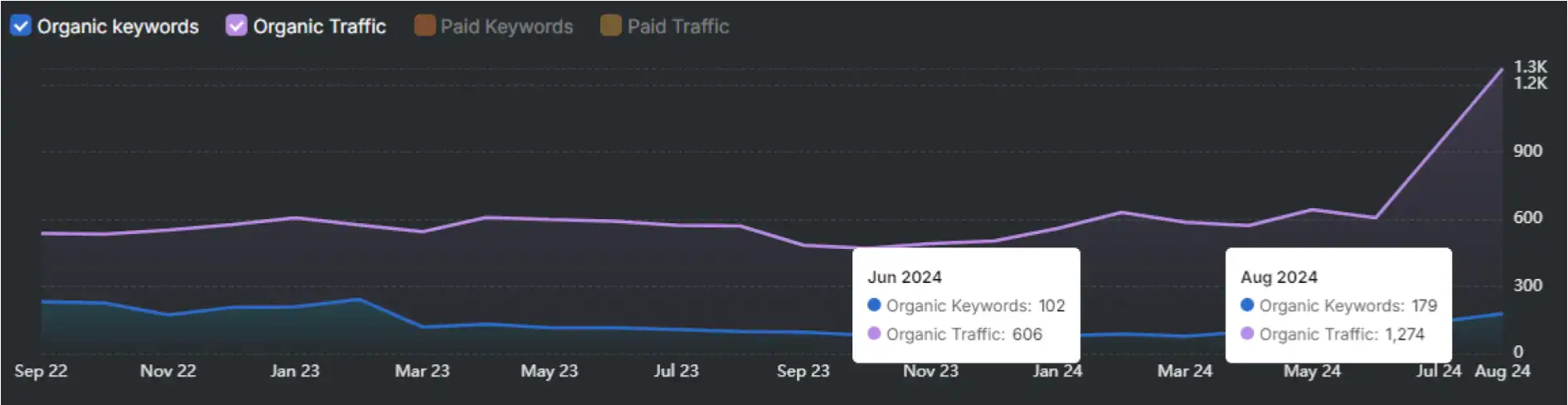
Dashword alternatives are AI-powered content optimization platforms that replace or exceed Dashword in SEO content scoring, content brief creation, and real-time optimization workflows. Dashword alternatives deliver different approaches to content marketing, from comprehensive SEO suites to specialized content optimization tools that address gaps in Dashword functionality.
Dashword is an AI-powered content optimization platform that provides content brief creation, SEO content scoring, and real-time optimization feedback through SERP (search engine results page) analysis. However, Dashword reviews reveal limitations in content quality, high pricing for full feature access, restricted workflow automation, and limited integration capabilities, which drive users to seek alternatives.
Dashword pricing starts at $99 per month for the Startup plan and $349 per month for the Business plan. Many users seek alternatives to Dashword that provide better content quality, more flexible pricing, or more comprehensive SEO features.
The best Dashword alternatives in 2025 are Search Atlas, Surfer SEO, and Frase. These Dashword competitor tools excel in content automation, SEO depth, and cost-effectiveness while delivering superior workflow integration compared to Dashword.
What are the Best Dashword Alternatives?
The 33 best Dashword alternatives are listed below.
| # | Dashword Alternative | Best For | Starting Price |
| 1 | Search Atlas | Full SEO automation, content creation, and topical authority | $99 / month |
| 2 | Surfer SEO | Real-time on-page SEO metrics | $99 / month |
| 3 | Frase | SERP-based briefs and content research | $38 / month |
| 4 | MarketMuse | Topic modeling and content inventory analysis | $99 / month |
| 5 | Scalenut | AI writing with SEO workflows | $49 / month |
| 6 | Content Harmony | Structured content brief creation | $50 / month |
| 7 | Outranking | AI drafting with guided SEO workflows | $19 / month |
| 8 | Jasper | Marketing-focused AI content writing | $69 / seat / month |
| 9 | Writesonic | Multi-format AI content generation | $49 / month |
| 10 | Copy.ai | Marketing copy and GTM ideation | $29 / month |
| 11 | Page Optimizer Pro | Correlation-based on-page SEO | $37 / month |
| 12 | Textmetrics | Enterprise writing consistency and SEO scoring | $99 / month |
| 13 | Clearscope | Content quality scoring and keyword coverage | $189 / month |
| 14 | Rankability | NLP-driven semantic optimization | Custom pricing |
| 15 | Semrush Writing Assistant | SEO + readability inside Semrush | $139.95 / month |
| 16 | Wope | SERP tracking and ranking insights | $27 / month |
| 17 | WriterZen | Keyword clustering and content planning | $75 one-time |
| 18 | GrowthBar | Simple AI blog generation | $48 / month |
| 19 | Keyword Insights | Keyword clustering and SERP intent mapping | $58 / month |
| 20 | KWHero | Topical authority and semantic coverage | $59 / month |
| 21 | Contentpace | Workflow-based SEO content production | $27 / month |
| 22 | SEO.AI | Autonomous SEO article creation | $149 / month |
| 23 | Copywritely | Basic on-page content optimization | $29 / month |
| 24 | Robinize | Clean content grading and SEO suggestions | $19 / month |
| 25 | Topic | Simple SERP topic extraction and grading | $99 / month |
| 26 | Wordmetrics | Real-time content scoring while writing | Usage-based |
| 27 | RankDots | AI keyword clustering and SERP gap detection | $29 / month |
| 28 | Kazan | Lightweight SEO content suggestions | Low-cost/variable |
| 29 | GetGenie | WordPress AI SEO writing plugin | $10 / month |
| 30 | ContentShake AI (Semrush Content Toolkit) | SME-friendly SEO article creation | Semrush Guru+ |
| 31 | RankIQ | Low-competition keyword lists and SEO briefs | $99 / month |
| 32 | Squirrly SEO | Beginner-friendly SEO writing tools | Free / $9.99 month |
| 33 | NeuronWriter | Semantic optimization and content planning | $23 / month |
1. Search Atlas: Best Dashword Alternative
The Search Atlas SEO platform is the best Dashword alternative in 2025. Search Atlas ranks as the number 1 alternative to Dashword for agencies, marketers, and business owners who need AI-powered content creation, comprehensive SEO audits, automated technical and on-page fixes, link building, and scalable reporting without high costs or feature restrictions.
The Search Atlas SEO platform includes content tools such as Content Genius, SCHOLAR, Content Planner, and SEO Topical Map Generator to automate content strategy, creation, optimization, and analysis in one workflow.
Search Atlas Content Genius generates original content in minutes and optimizes every passage for keyword targeting, entity coverage, and SERP competitiveness. Search Atlas SCHOLAR reviews each draft for clarity, accuracy, and information gain using semantic scoring models that expose hidden gaps.
Search Atlas Content Planner clusters keywords by intent and streamlines campaign scheduling, which ensures users build complete topic coverage at scale. Search Atlas SEO Topical Map Generator creates detailed semantic maps, which ensure that every topic and subtopic facilitates stronger topical authority.
Dashword focuses primarily on content brief creation with basic optimization scoring, while Search Atlas powers content creation, plus identifies, prioritizes, and resolves complex site problems without manual intervention.
Search Atlas uses the OTTO SEO agent to automate schema markup implementation, Core Web Vitals improvements, internal linking, and other technical and on-page optimizations that Dashword cannot execute.
Search Atlas includes real-time keyword rank tracking, Google Search Console (GSC) integration, AI search visibility monitoring, and local SEO dashboards, which Dashword does not provide. Users monitor performance across devices, locations, and SERP features, then use AI-powered tools to optimize content and backlinks in one dashboard.
Compared to Dashword, Search Atlas is the best alternative for agencies and content teams who need complete SEO automation, technical optimization, and content creation workflows, while Dashword remains limited to content brief creation and basic optimization scoring.
Search Atlas is a paid alternative to Dashword that starts at $99 per month, includes all major features in every plan, and saves most users at least $50 per month compared to a Dashword subscription plus separate audit and tracking tools.
The pros highlighted in the Search Atlas SEO tool review include unified SEO management, automated technical fixes, AI content creation, and real-time SERP data in one platform. The con of Search Atlas is the initial learning curve for agencies that manage several domains.
2. Surfer SEO: Best Dashword Alternative for Real-Time On-Page SEO Metrics
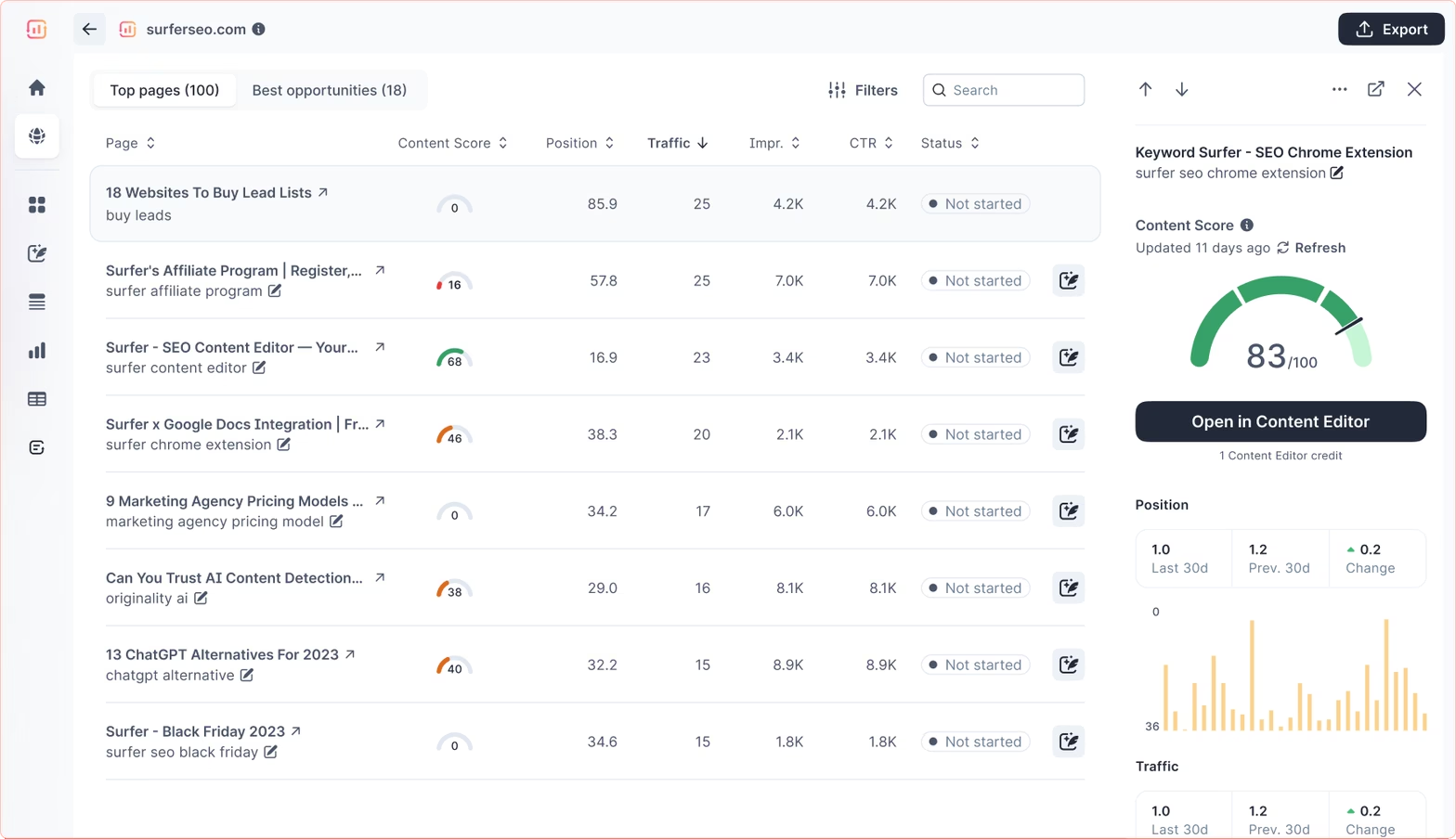
Surfer SEO is the best Dashword alternative for real-time on-page SEO metrics with SERP-based content analysis and data-driven optimization guidance. Surfer SEO is a cloud-based SEO platform that analyzes top-ranking pages, extracts ranking signals, and provides data-backed recommendations for keyword usage, content length, structure, and topical coverage.
Surfer SEO features include the Content Editor (real-time keyword, heading, and length optimization), SERP Analyzer (detailed competitor breakdowns across on-page factors), Content Audit (gap detection in existing content), Keyword Research (search volume, clustering, difficulty metrics), and Grow Flow (automated content refresh recommendations based on performance data).
Surfer SEO excels as a Dashword alternative because Surfer SEO provides precise on-page optimization with structured benchmarks and accurate SERP analysis, while Dashword offers simpler content scoring without advanced competitive analysis. Surfer SEO analyzes over 500 on-page signals (word count, keyword density, heading structure), whereas Dashword provides basic keyword suggestions and content grading.
Compared to Dashword, Surfer SEO is the best Dashword alternative for SEO specialists who need precise on-page optimization, structured benchmarks, and data-driven adjustments. Dashword is better suited for basic content brief creation, while Surfer SEO excels at improving rankings with measurable, data-driven recommendations.
Surfer SEO pricing starts at $99 per month for the Essential plan, $219 per month for the Scale plan, and $999 per month for the Enterprise plan.
The pros highlighted in the Surfer SEO review include real-time content suggestions, data-supported insights, integration with Google Docs and WordPress (Content Editor, Grow Flow, Audit), and keyword relevance recommendations.
The cons of Surfer SEO are limited keyword data, a lack of backlink analytics, a risk of over-optimized content, and ongoing complaints about customer support responsiveness.
3. Frase: Best Dashword Alternative for SERP-Based Briefs and Content Research
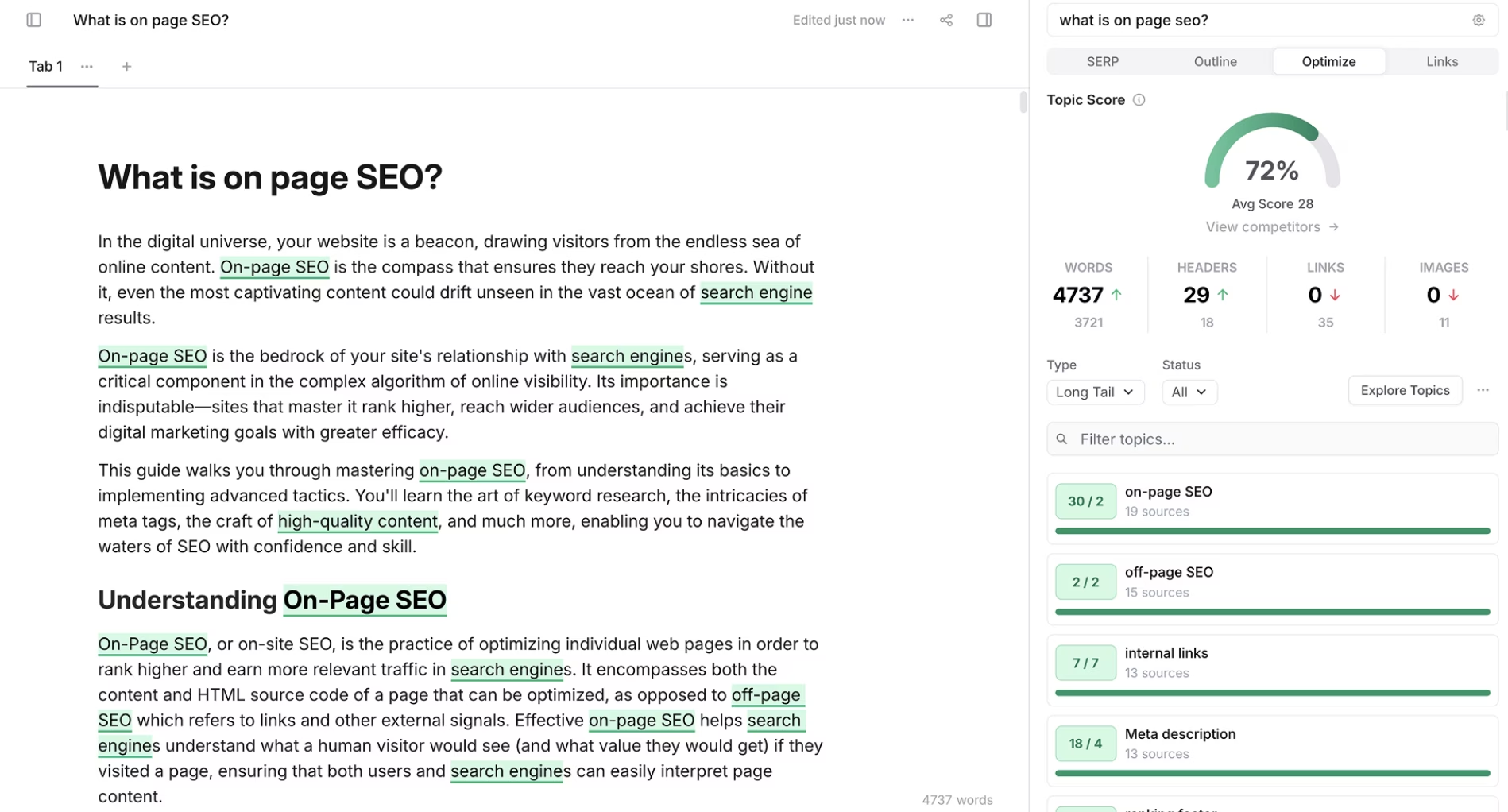
Frase is the best Dashword alternative for SERP-based briefs and content research with comprehensive competitor analysis and content optimization scoring. Frase is a content research and optimization platform that combines AI writing with detailed competitor analysis, keyword research, and content scoring for SEO-focused content creation.
Frase features include content research based on top-ranking pages, AI-powered writing assistance, content optimization scoring, SERP analysis, topic modeling, and automated content briefs. Frase analyzes competitor content to identify gaps and opportunities while providing real-time optimization suggestions.
Frase excels as a Dashword alternative because Frase provides deeper research capabilities, more accurate content scoring, and better integration with existing content workflows. Dashword offers basic keyword suggestions and content templates, whereas Frase analyzes top-performing content to provide data-driven recommendations for content structure, topics, and optimization.
Compared to Dashword, Frase is the best alternative for content teams who need research-driven insights, detailed competitor analysis, and proven content optimization strategies based on SERP data. Dashword remains simpler for quick content briefs, while Frase delivers comprehensive research and optimization features.
Frase is a paid tool with pricing that starts at $38 per month for the Solo plan and $115 per month for the Professional plan. The Scale plan is $229 per month, and the Advanced plan is $349 per month.
Frase Solo is $61 cheaper than Dashword Startup, which makes Frase the more affordable option for freelancers and small content teams who need research and optimization capabilities.
Pros of Frase, according to the Frase review, are streamlined content research, actionable SEO suggestions, a time-saving workflow, and strong competitor analysis. Cons of Frase include limited keyword terms on lower tiers, AI writer limitations that require editing, and advanced features locked behind add-ons.
4. MarketMuse: Best Dashword Alternative for Topic Modeling and Content Inventory Analysis
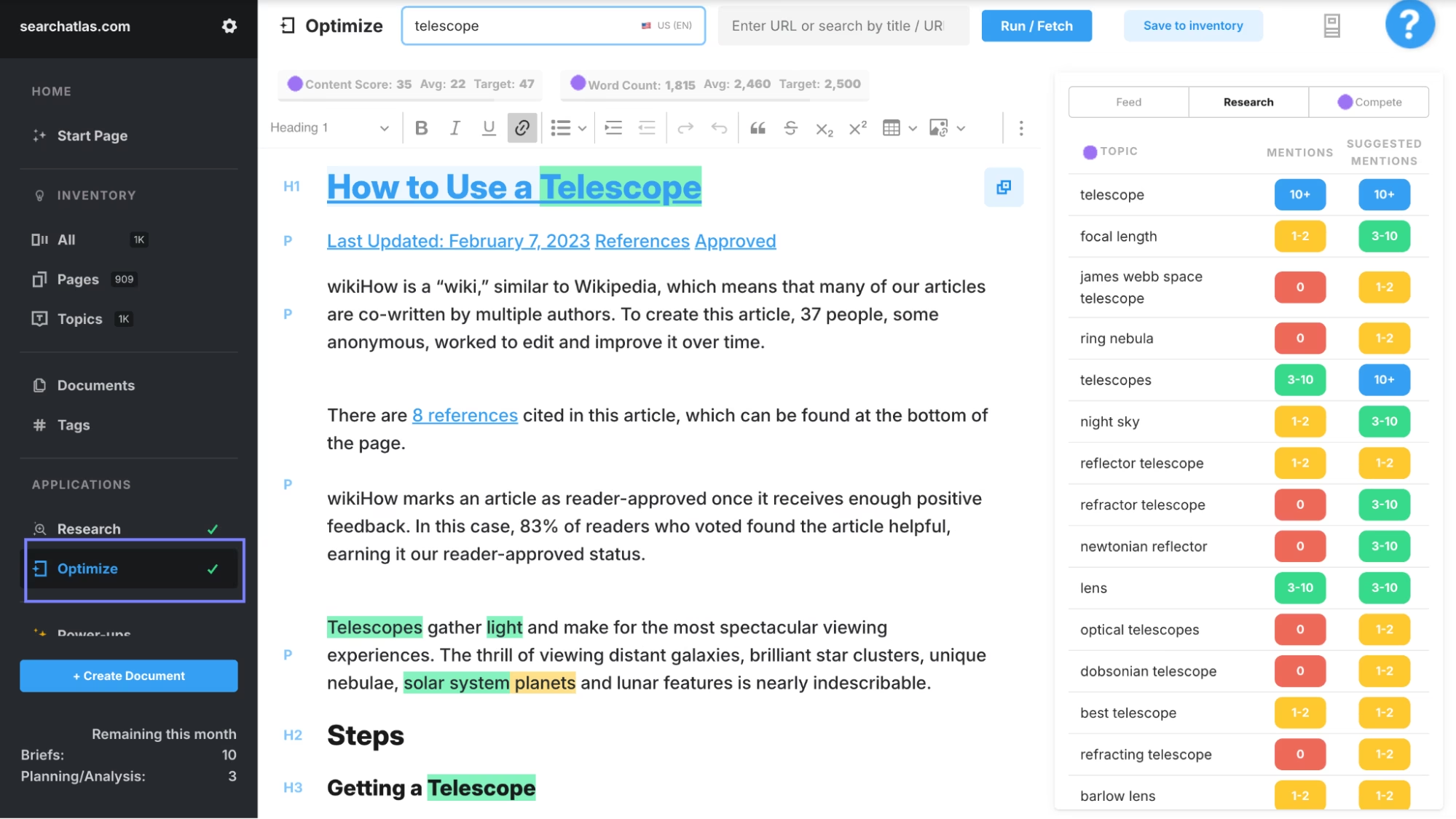
MarketMuse is the best Dashword alternative for topic modeling and content inventory analysis with AI-powered competitive content analysis and domain-level topical authority optimization. MarketMuse is a content intelligence platform that maps site-wide authority, detects SERP gaps, and generates prioritized content recommendations to strengthen topical coverage.
MarketMuse features include Competitive Content Analysis (topic gap heatmaps and scoring grids), Content Clusters (grouping related URLs and revealing missing subtopics), Content Planning (prioritized creation and update tasks aligned with inventory gaps), Content Brief Generator (structured outlines with topics, subheadings, internal links, questions), and Optimize (real-time scoring against competitor benchmarks with missing terms flagged for editing).
MarketMuse functions as a Dashword alternative because MarketMuse specializes in enterprise-level content planning and authority building, while Dashword emphasizes basic content brief creation and optimization scoring. MarketMuse provides domain-wide content intelligence and strategic planning that Dashword does not offer.
Compared to Dashword, MarketMuse is the stronger choice for teams that need domain-wide content intelligence, editorial strategy, and topical authority development. Dashword fits basic brief creation workflows, but MarketMuse excels when long-term strategy and authority growth matter most.
MarketMuse offers a Free plan ($0), an Optimize plan ($99 per month), a Research plan ($249 per month), and a Strategy plan ($499 per month). MarketMuse Optimize matches Dashword Startup pricing, while Research and Strategy tiers climb to enterprise-level investment.
The advantages listed in the MarketMuse review include advanced topic modeling, content cluster mapping, domain-level authority analysis, and prioritized content planning. Disadvantages of MarketMuse are higher pricing, a lack of traditional keyword and trend tools, and a steeper learning curve for beginners.
5. Scalenut: Best Dashword Alternative for AI Writing with SEO-Focused Workflows
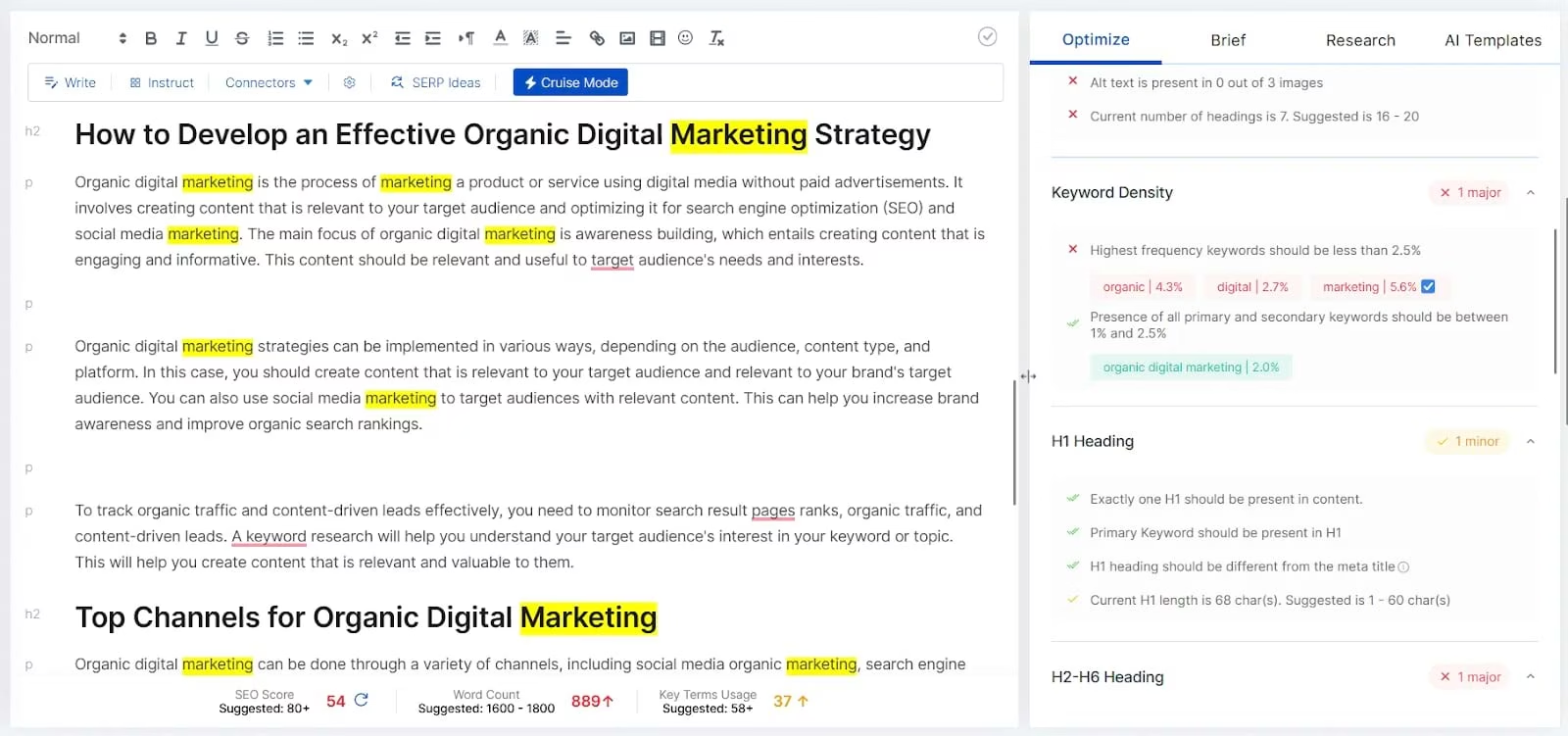
Scalenut is the best Dashword alternative for AI writing with SEO-focused workflows and automated content generation. Scalenut is an AI-powered content marketing platform that provides keyword research, SEO content optimization, and automated content creation through AI-driven insights and SERP analysis.
Scalenut features include keyword clustering, SERP analysis, AI content generation, content optimization scoring, topic research, and automated content briefs. Scalenut combines research and writing in a single platform, which enables users to generate SEO-optimized content at scale.
Scalenut excels as a Dashword alternative because Scalenut provides AI-generated drafts alongside optimization scoring, while Dashword focuses primarily on content brief creation without comprehensive AI writing capabilities. Scalenut delivers end-to-end content production (research, writing, optimization), whereas Dashword provides research and scoring without extensive AI generation.
Compared to Dashword, Scalenut is the best alternative for content teams who need AI-assisted content generation combined with SEO optimization. Dashword remains stronger for teams that prefer manual writing with optimization guidance, while Scalenut accelerates content production through AI automation.
Scalenut pricing starts at $49 per month for the Essential plan, $79 per month for the Growth plan, and $149 per month for the Pro plan. Scalenut Essential is $50 cheaper than Dashword Startup, which makes Scalenut the more affordable option for teams that need AI writing capabilities alongside optimization.
According to our Scalenut review, the pros include comprehensive keyword research, AI content generation, integrated optimization scoring, and affordable pricing for full-feature access. Cons of Scalenut are inconsistent content quality, repetitive AI-generated phrases (nestled in, breathtaking), and limited customization options for brand voice.
6. Content Harmony: Best Dashword Alternative for Structured Content Brief Creation
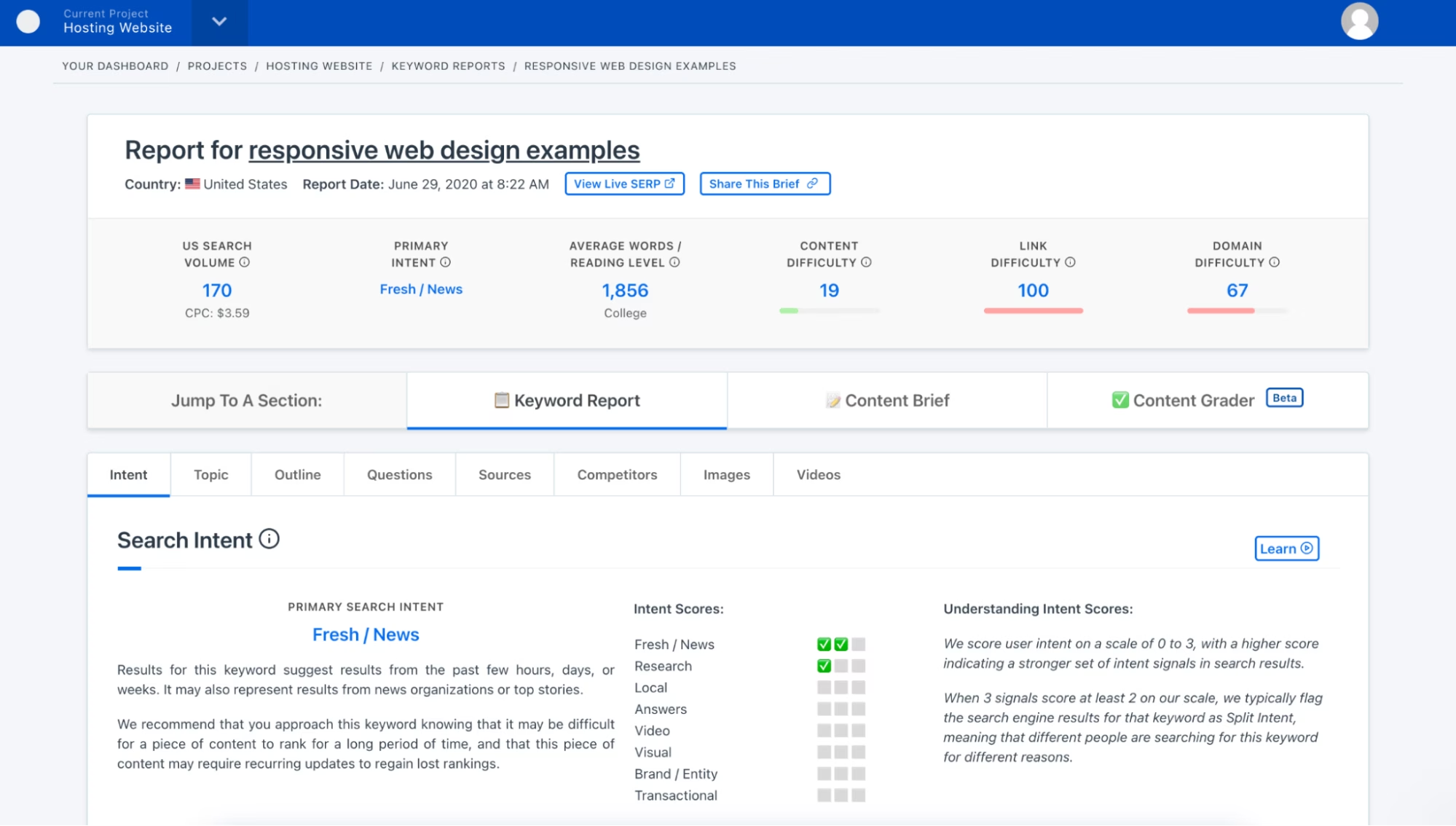
Content Harmony is the best Dashword alternative for structured content briefs and workflow-driven planning. Content Harmony is a content strategy and optimization platform that automates research, builds standardized briefs, and grades drafts for SEO coverage.
Content Harmony features include workflow-based brief generation, AI-driven topic modeling, search intent analysis, competitor outline extraction, structured content scoring, and performance tracking. Every workflow delivers a SERP keyword report, a detailed brief, and a grader to benchmark content against competitors.
Content Harmony functions as a Dashword alternative because Content Harmony specializes in giving teams a repeatable framework for planning, briefing, and optimizing content, while Dashword emphasizes individual content scoring and brief creation. Content Harmony provides standardized workflows and collaborative features that Dashword lacks.
Compared to Dashword, Content Harmony is the better option for teams that need consistent processes, detailed requirements, and collaborative workflows. Dashword is stronger for quick individual content optimization, while Content Harmony provides structured planning and quality controls that scale across larger editorial operations.
Content Harmony pricing starts at $50 per month for 5 workflows and scales to $799 per month for 150 workflows. Content Harmony Professional scales significantly higher than Dashword for agencies with large volumes. A $10 paid trial includes 10 workflows.
The strengths highlighted in the Content Harmony review include standardized brief creation, AI-powered topic modeling, unlimited users and projects, workflow-based consistency, and strong SERP analysis. The weaknesses of Content Harmony are no backlink or rank tracking features, limited AI writing, and reliance on credit-based pricing that becomes costly for high-output agencies.
7. Outranking: Best Dashword Alternative for AI Drafting and Guided SEO Content
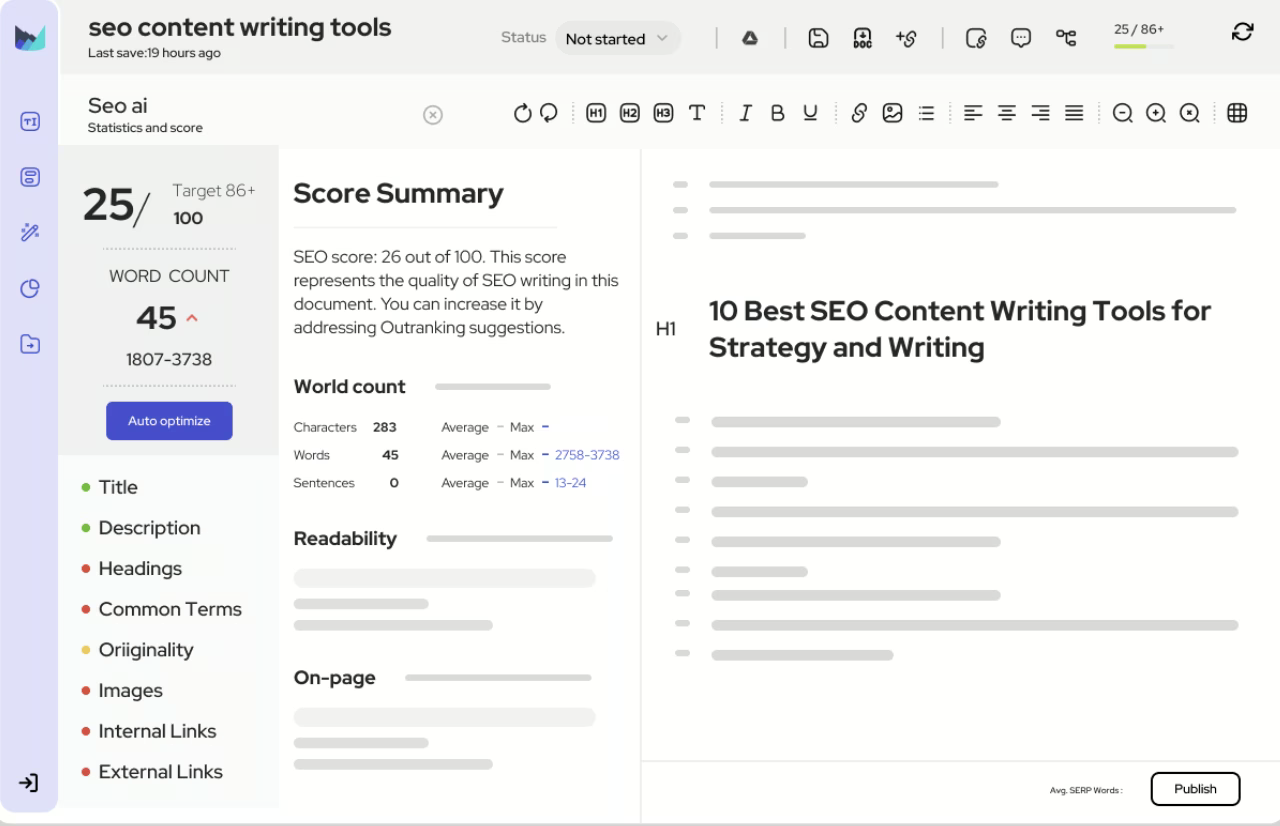
Outranking is the best Dashword alternative for AI drafting and guided SEO content with structured workflows and streamlined optimization. Outranking is an AI-powered SEO content platform that automates research, drafting, and optimization through guided workflows and live SERP analysis.
Outranking features include step-by-step content workflows, E-E-A-T (Experience, Expertise, Authoritativeness, Trustworthiness) aligned originality checks, real-time SEO scoring, keyword clustering, automated internal linking, data-backed content briefs, collaborative tools, and WordPress integration.
Outranking excels as a Dashword alternative because Outranking delivers a structured, systematic optimization process with advanced automation, while Dashword emphasizes simpler content scoring and brief creation. Outranking provides step-by-step guidance and AI-assisted drafting that Dashword does not offer.
Compared to Dashword, Outranking is the best alternative for content teams who need structured workflows, AI-assisted drafting, and automated optimization processes. Dashword remains simpler for basic content scoring, while Outranking provides comprehensive guidance from research through publication.
Outranking offers plans starting at $19 per month for 4 SEO documents, $79 per month for 15 documents, and $159 per month for 30 documents, with custom pricing for agencies. Outranking Starter ($79 per month) is $20 lower than Dashword but includes more advanced workflow automation and AI drafting capabilities.
Pros noted in the Outranking review include step-by-step content workflows, integrated keyword clustering, real-time SEO scoring, and automated internal linking.x Cons of Outranking include credit-based usage limits, a steeper learning curve for beginners, and fewer classic SEO features like backlink tracking or full rank monitoring.
8. Jasper: Best Dashword Alternative for Marketing-Focused AI Content Writing
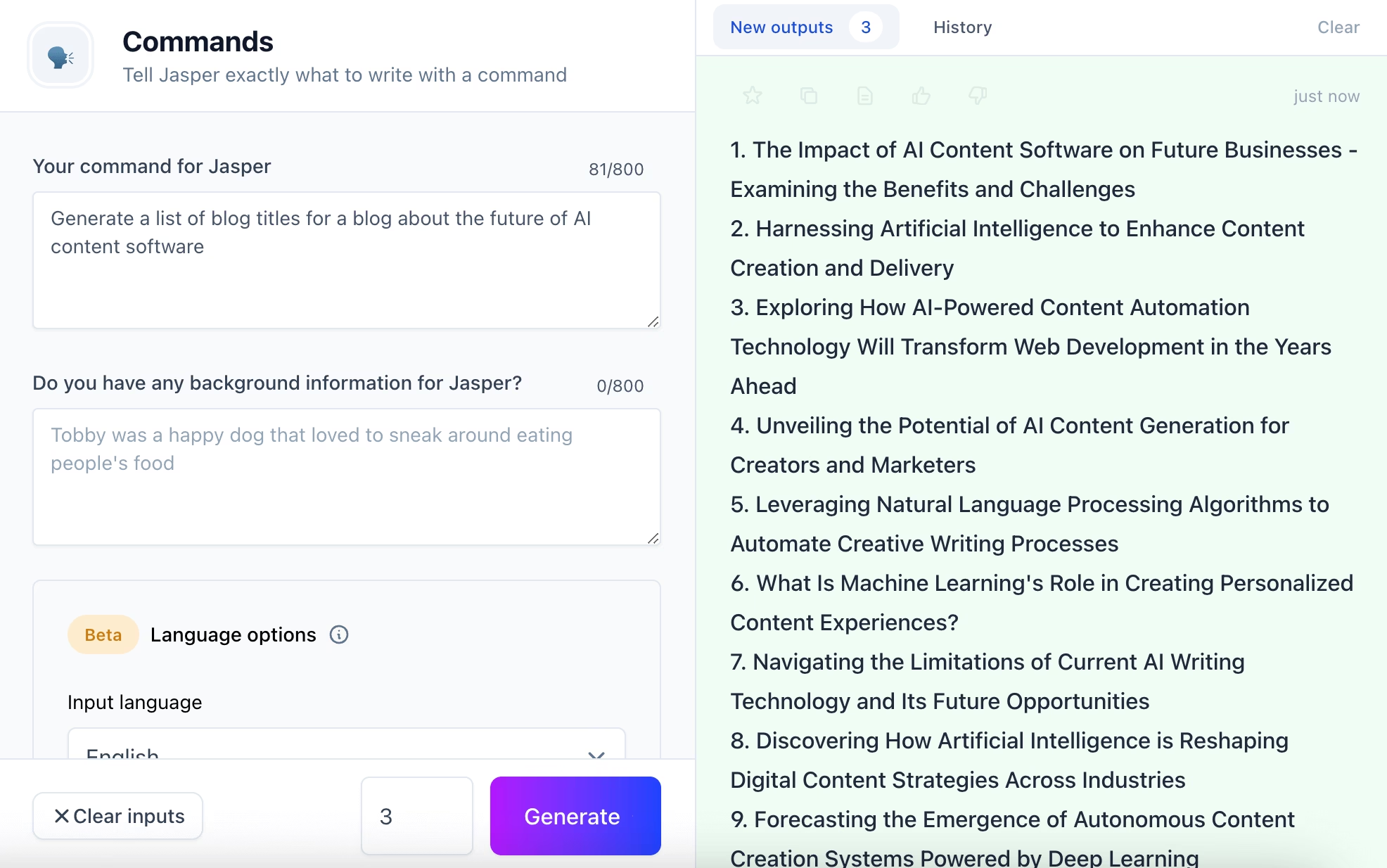
Jasper AI is the best Dashword alternative for marketing-focused AI content writing with advanced brand voice training and team collaboration features. Jasper is an AI writing platform that specializes in creating marketing content, blog posts, and copy that match specific brand voices and maintain consistency in campaigns.
Jasper features include AI writing with brand voice training (BrandIQ), MarketingIQ, 100+ marketing templates, team collaboration tools, campaign management, plagiarism detection, SEO mode, conversational AI with Jasper Chat, and Jasper Art for image generation.
Jasper functions as a Dashword alternative because Jasper focuses on high-quality content generation with brand consistency, while Dashword emphasizes SEO optimization and content scoring. Jasper provides more sophisticated AI models, better content quality, and team collaboration features that Dashword lacks.
Compared to Dashword, Jasper is the best alternative for marketing teams who prioritize content quality, brand voice consistency, and collaborative workflows over basic SEO optimization and content brief creation. Dashword remains stronger for SEO-focused content scoring and optimization guidance.
Jasper pricing starts at $69 per seat per month for the Pro plan when paid monthly, or $59 per seat per month when paid annually. The Business plan has custom pricing. Jasper Pro is $30 cheaper than Dashword Startup but provides smart customization with 2 Brand Voices, 5 Knowledge assets, and 3 Audiences that Dashword does not match.
Pros mentioned in the Jasper AI review include content quality, custom solutions by brand and by industry, and a suite of purpose-built tools for digital advertising (Jasper Chat, Jasper Art, BrandIQ). The platform excels at maintaining brand consistency and creating engaging marketing content.
Cons of Jasper include higher pricing for advanced features, limited SEO research capabilities, and no technical SEO tools.
9. Writesonic: Best Dashword Alternative for Fast Multi-Format AI Content Generation
Writesonic is the best Dashword alternative for fast, multi-format AI content generation with conversion-focused templates. Writesonic specializes in AI-powered content creation for multiple formats (blog posts, ad copy, product descriptions, landing pages), powered by over 100 templates optimized for different marketing channels.
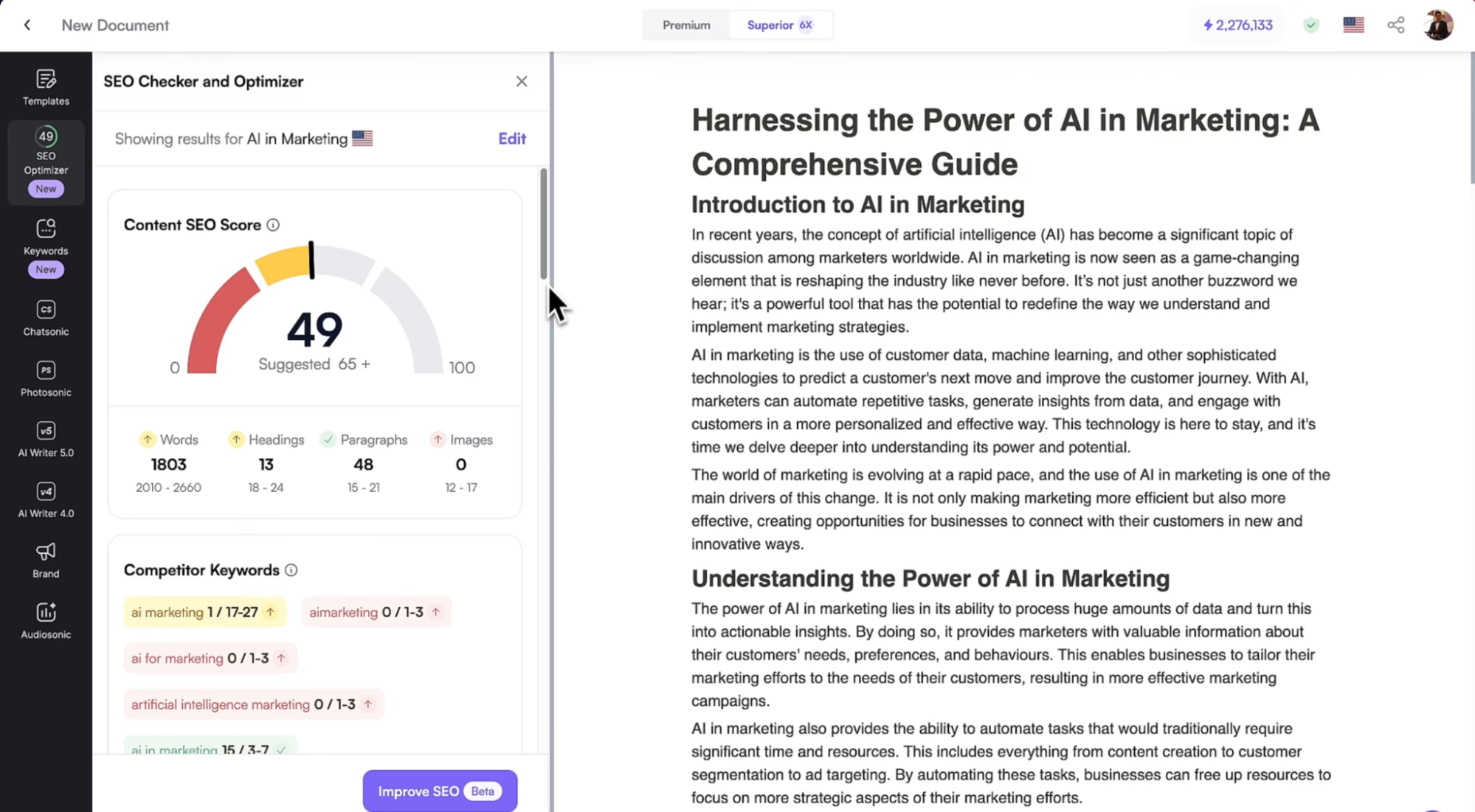
Writesonic features include AI Article Writer 6.0 for long-form blog posts, SEO Checker and Optimizer, Chatsonic for real-time AI workflows, Botsonic for custom chatbots, Photosonic for image generation, and Audiosonic for voice synthesis. The Writesonic platform integrates with WordPress, Google Analytics, and Search Console, which enables teams to generate, optimize, and publish from one workspace.
Writesonic excels as a Dashword alternative because Writesonic provides rapid multi-format content generation with extensive templates, while Dashword focuses on content optimization scoring and brief creation. Writesonic delivers complete content creation capabilities (writing, images, audio), whereas Dashword provides optimization guidance without content generation.
Compared to Dashword, Writesonic is the stronger choice for businesses that prioritize rapid content creation across multiple formats and marketing channels. Dashword remains the better option for content optimization scoring and research-driven briefs, while Writesonic accelerates multi-format content production.
Writesonic pricing starts at $49 per month for Writesonic Lite, $99 per month for Standard, and $249 per month for Professional. Writesonic Lite matches Dashword Startup pricing but includes AI content generation, image creation, and audio synthesis that Dashword does not provide.
According to the Writesonic review, the pros include a wide template variety for multiple content formats (ads, landing pages, social posts), strong conversion optimization features, integrations with multiple AI models (GPT-4, Claude, LLaMA), and extra tools like Chatsonic and Photosonic. Cons of Writesonic are credit-based pricing complexity, variable long-form quality that often needs editing, and weaker SEO depth compared to dedicated optimization tools.
10. Copy.ai: Best Dashword Alternative for Quick Marketing Copy and Ideation
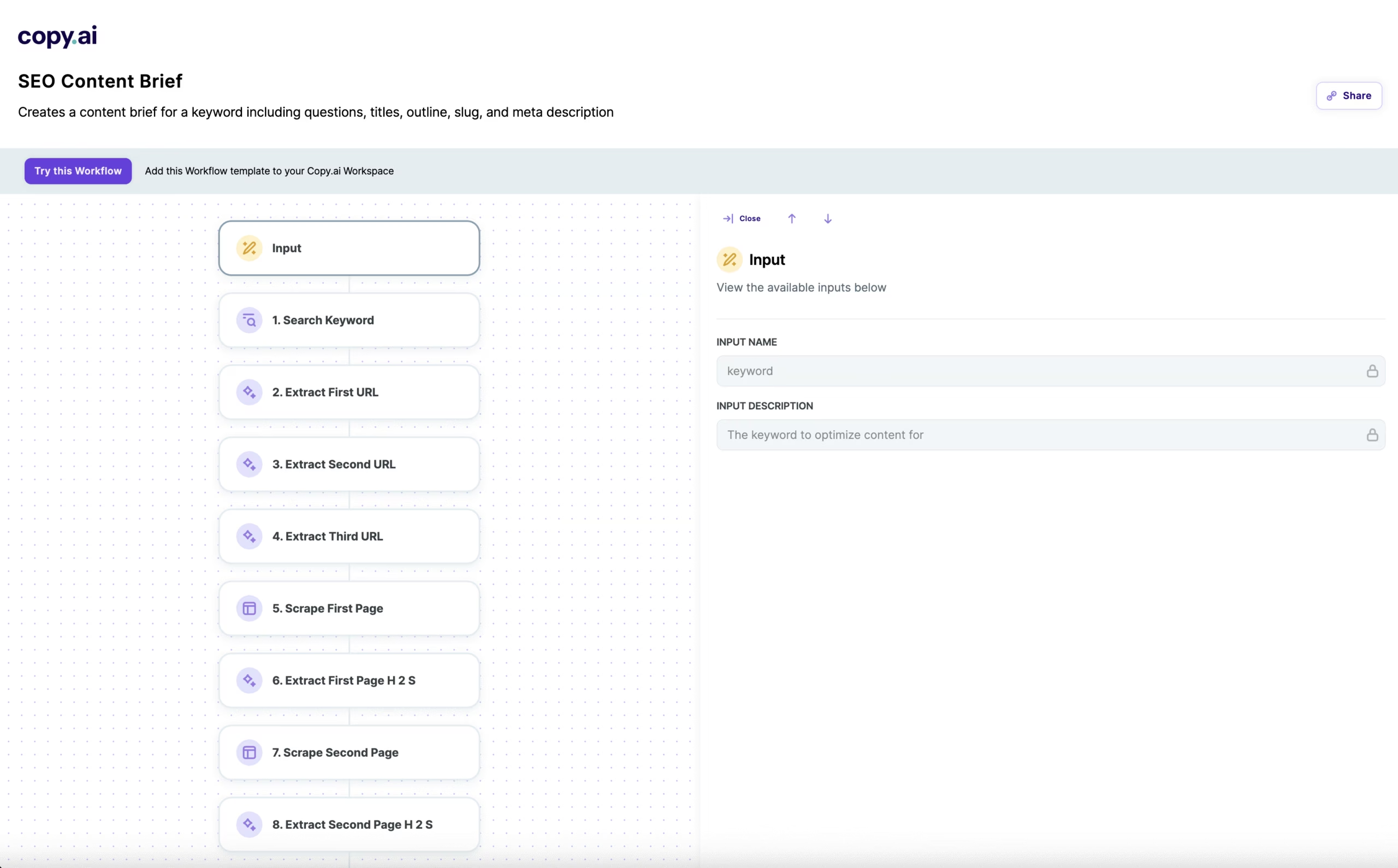
Copy.ai is the best Dashword alternative for quick marketing copy and GTM (go-to-market) workflows. Copy.ai is a go-to-market AI platform that automates the creation of ads, sales copy, emails, and promotional materials while facilitating team collaboration and brand-voice consistency.
Copy.ai features include workflow automation, shared team spaces, brand voice training, 90+ copywriting tools, and integrations with marketing platforms. Copy.ai platform added advanced GTM automation and a First Draft Wizard for long-form content in 2025, which extends its use cases beyond short-form copy.
Copy.ai functions as a Dashword alternative because Copy.ai prioritizes automated marketing workflows and sales enablement, while Dashword specializes in content optimization scoring and research. Copy.ai delivers GTM automation and collaborative workflows that Dashword does not provide.
Compared to Dashword, Copy.ai is the best alternative for marketing teams that prioritize campaign copy, automated workflows, and GTM execution. Dashword remains stronger for SEO-driven content optimization and research-based briefs.
Copy.ai pricing starts at $29 per month for Chat (5 seats, unlimited words) and $249 per month for Agents (10 seats, 10k workflow credits, advanced automation). Copy.ai Chat is $70 cheaper than Dashword Startup, which makes Copy.ai the more affordable option for small marketing teams.
The benefits listed in the Copy.ai review are extensive marketing templates, workflow automation, brand voice training, team collaboration features, and improved long-form content creation through the Blog Wizard. The downsides of Copy.ai as a Dashword alternative include limited SEO depth compared to Dashword, higher pricing for advanced GTM workflows ($249 per month), and reliance on templates that require human refinement for technical accuracy.
11. Page Optimizer Pro: Best Dashword Alternative for Correlation-Based On-Page SEO
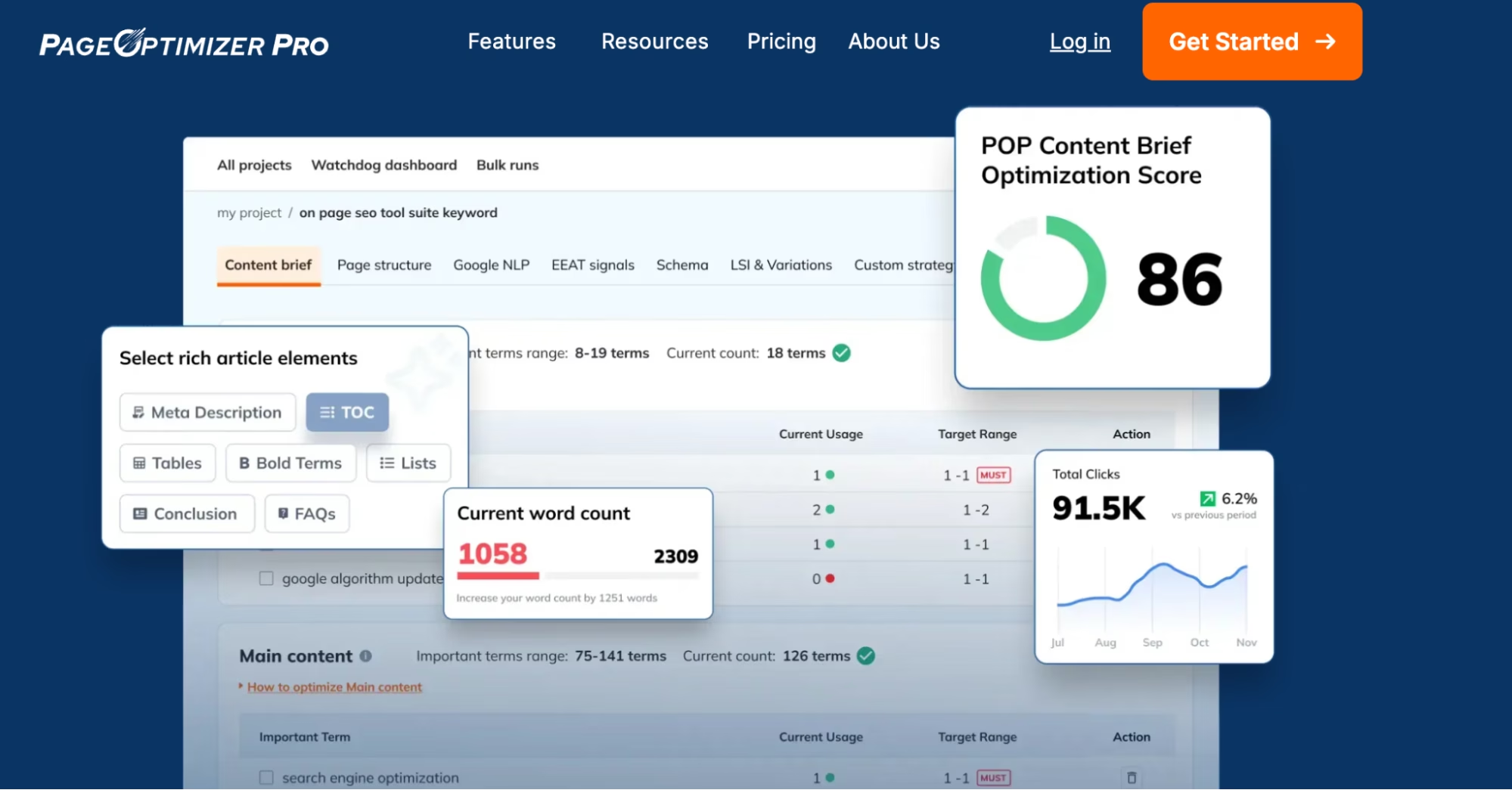
Page Optimizer Pro (POP) is the best Dashword alternative for correlation-based on-page SEO with science-backed optimization tests and advanced EEAT scoring. POP is an on-page SEO platform built by Kyle Roof, powered by the proprietary Rank Engine that analyzes 400+ controlled SEO experiments.
Page Optimizer Pro features include the POP Rank Engine for on-page scoring, AI Writer for optimized content generation, Keyword Insights and clustering, AI-powered Schema builder, Basic and Nextgen EEAT scoring, NLP entity detection, Content Briefs, Chrome extension, and POP Watchdog monitoring for ranking drops.
Page Optimizer Pro pricing starts at $37 per month for the Basic plan, $67 per month for Unlimited, $130 per month for the Teams plan, and White Glove from $275 per month. POP Basic is $62 cheaper than Dashword Startup, which makes POP the more affordable option for individual content creators and SEO specialists.
The upsides mentioned in the Page Optimizer Pro review include data-driven on-page recommendations, unique EEAT scoring, AI-powered schema, and actionable Watchdog alerts. The downsides of POP are a limited backlink and technical SEO toolkit, reliance on learning the specific workflow, and steeper pricing for agency-level plans.
12. Textmetrics: Best Dashword Alternative for Enterprise Writing Consistency and SEO Scoring
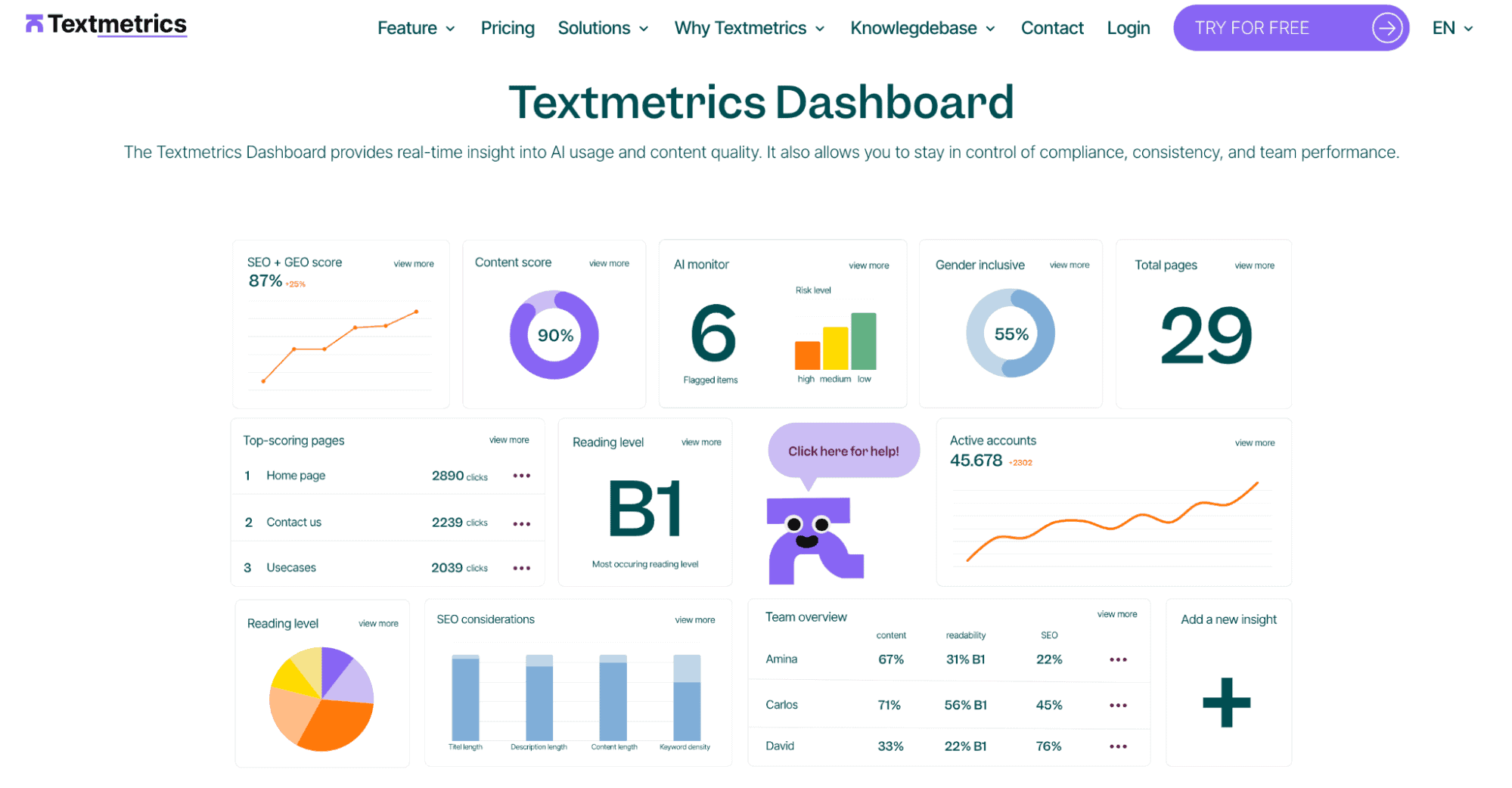
Textmetrics is the best Dashword alternative for enterprise writing consistency and SEO scoring with brand compliance and readability optimization. Textmetrics is an AI writing platform that enforces brand guidelines, optimizes readability, and ensures SEO compliance across large content teams.
Textmetrics features include brand voice consistency checks, readability scoring, SEO optimization, accessibility compliance, multi-language support, and team collaboration tools. Textmetrics analyzes content against brand guidelines and provides real-time suggestions to maintain consistency across all content.
Textmetrics excels as a Dashword alternative because Textmetrics focuses on enterprise-level brand consistency and compliance, while Dashword emphasizes individual content optimization. Textmetrics provides brand governance features (style guides, terminology databases, compliance checks) that Dashword does not offer.
Textmetrics pricing starts at $99 per month for the Pro plan and uses custom enterprise pricing based on team size and features. Textmetrics targets large organizations with complex brand guidelines, while Dashword serves individual creators and small teams with fixed pricing.
Pros mentioned in the Textmetrics reviews include brand consistency enforcement, enterprise collaboration features, readability optimization, and accessibility compliance. Cons of Textmetrics include higher pricing for enterprise features, limited SEO research capabilities, and a focus on compliance rather than creative content generation.
13. Clearscope: Best Dashword Alternative for Content Quality Scoring and Keyword Coverage
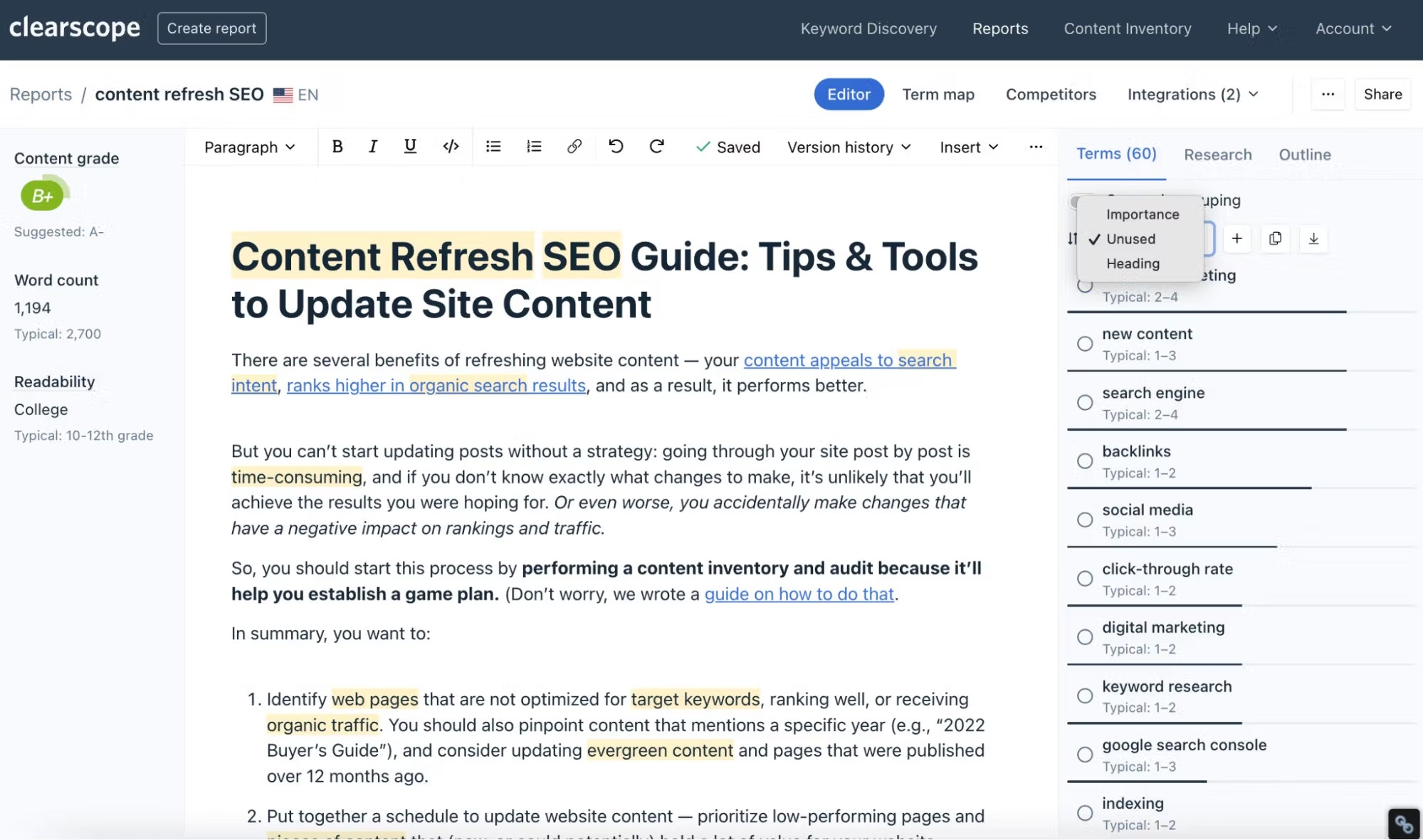
Clearscope is the best Dashword alternative for content quality scoring and keyword coverage with semantic analysis and competitor-based recommendations. Clearscope is an AI-powered SEO platform that focuses on improving content quality, semantic coverage, and keyword usage to align with search intent and rank in Google.
Clearscope features include Content Reports for SERP-driven recommendations, Keyword Discovery for high-opportunity terms, Content Inventory for auditing existing pages, ongoing performance tracking, and a Content Editor that provides real-time optimization feedback. The platform integrates directly with Google Docs and WordPress, which allows writers to optimize within their existing workflows.
Clearscope excels as a Dashword alternative because Clearscope provides accurate, competitor-backed recommendations and precise optimization guidance, while Dashword offers simpler content scoring. Clearscope delivers deeper semantic analysis and competitor-based insights (NLP, entity coverage, topic modeling) that Dashword does not provide.
Clearscope pricing starts at $189 per month for Essentials, $399 per month for Business, and custom pricing for Enterprise. Clearscope Essentials is $90 more expensive than Dashword Startup, which reflects detailed SERP-driven insights but limits accessibility for freelancers and small teams.
Pros mentioned in the Clearscope review are accurate content scoring, detailed competitor-based recommendations, high-quality keyword data, intuitive Google Docs and WordPress integrations, and strong support. Cons of Clearscope include high pricing, limited content generation capabilities, no backlink or technical SEO features, and credit and report restrictions.
14. Rankability: Best Dashword Alternative for NLP-Driven Content Optimization
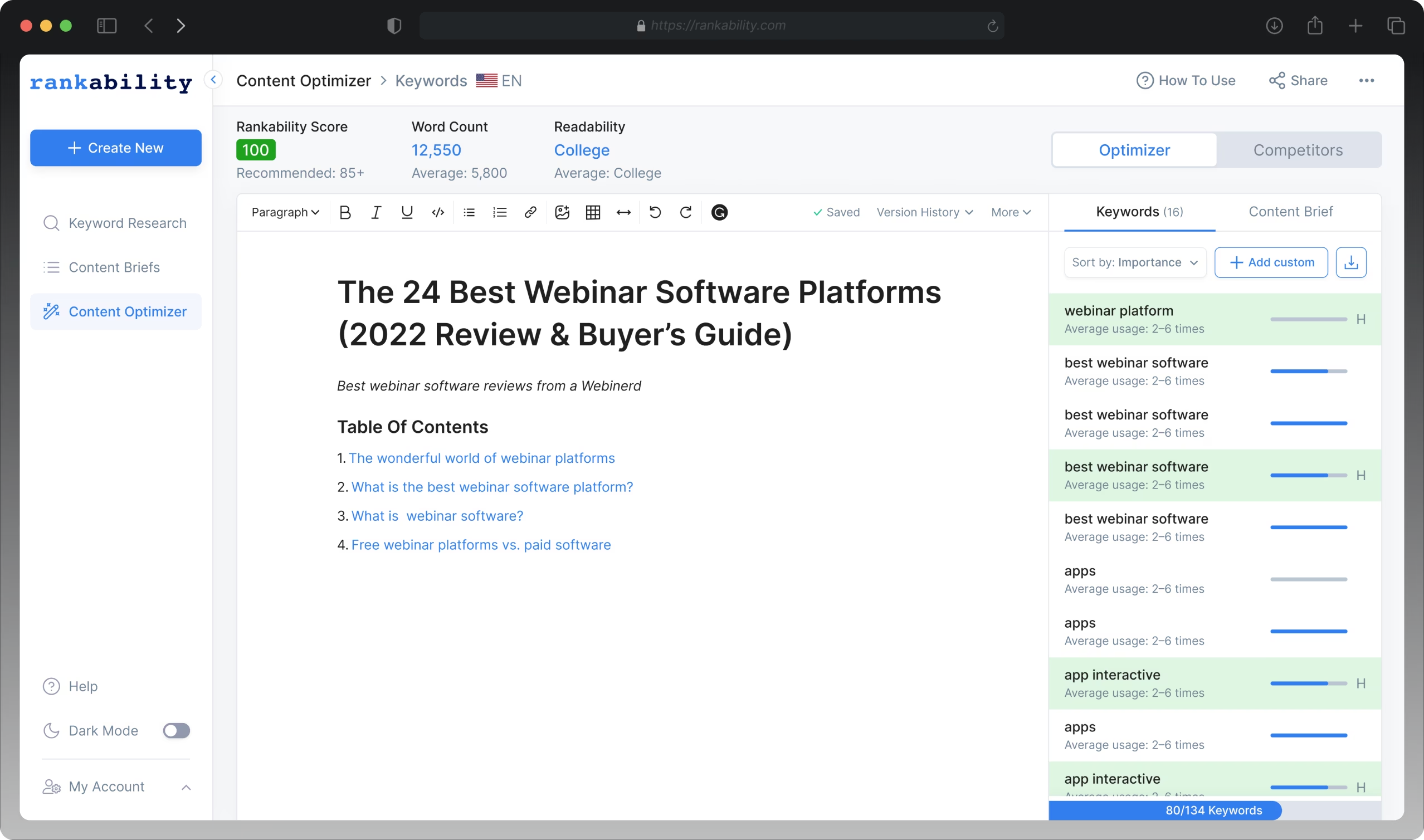
Rankability is the best Dashword alternative for NLP-driven content optimization with advanced semantic analysis and topical authority scoring. Rankability is a content optimization platform that uses natural language processing to analyze content quality, semantic coverage, and topical relevance for search engine rankings.
Rankability features include NLP-based content scoring, semantic keyword analysis, topical authority measurement, competitor content analysis, and real-time optimization suggestions. Rankability analyzes content against SERP patterns to identify semantic gaps and optimization opportunities.
Rankability functions as a Dashword alternative because Rankability specializes in NLP-driven semantic optimization, while Dashword provides basic keyword-based content scoring. Rankability offers advanced topical authority analysis and semantic coverage metrics that Dashword does not provide.
Rankability pricing uses custom pricing based on usage volume. Rankability targets SEO professionals and agencies with advanced optimization needs, while Dashword serves broader content marketing teams with fixed pricing.
Pros of Rankability review include advanced NLP analysis, topical authority scoring, semantic gap detection, and competitor benchmarking. Cons of Rankability include custom pricing complexity, a learning curve for NLP concepts, and limited content generation features.
15. Semrush Writing Assistant: Best Dashword Alternative for Integrated SEO and Readability Checks
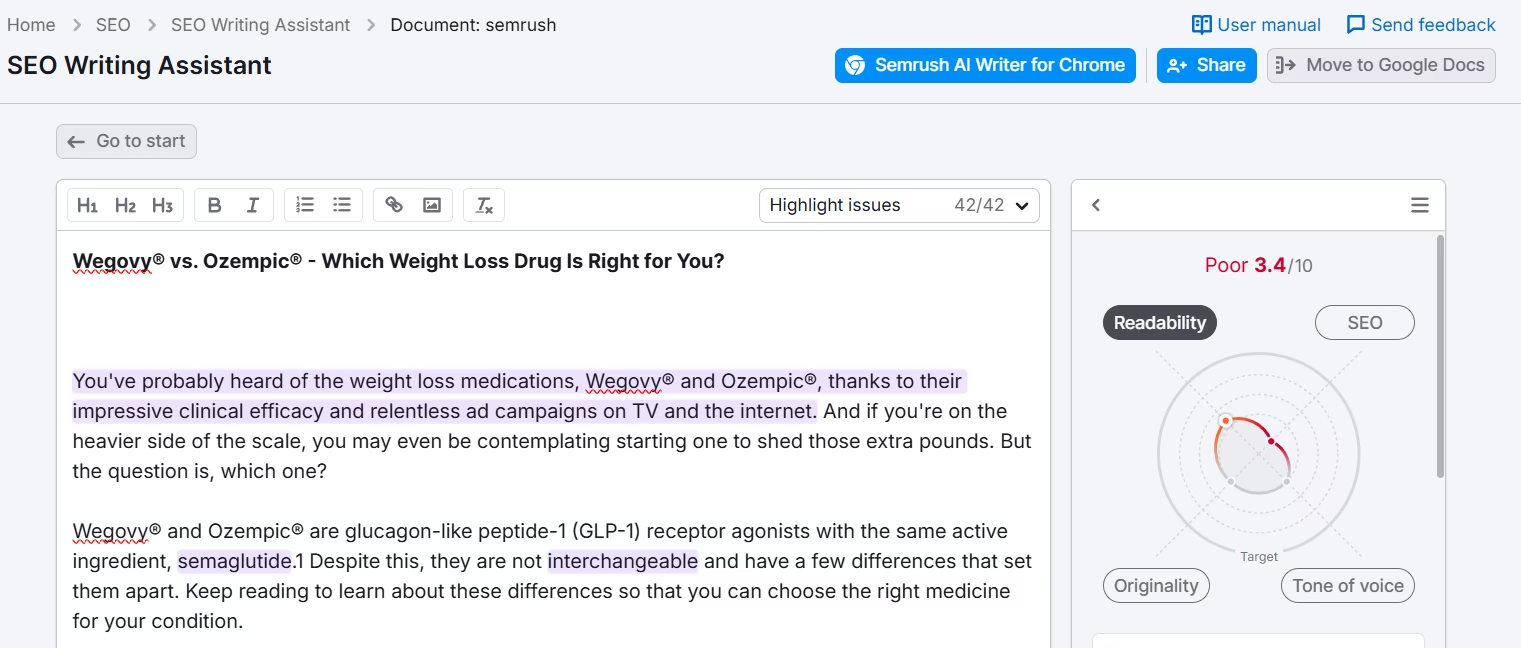
Semrush Writing Assistant is the best Dashword alternative for integrated SEO and readability checks within the Semrush ecosystem. Semrush Writing Assistant is a content optimization tool that provides real-time SEO recommendations, readability scoring, and tone consistency checks directly in Google Docs, WordPress, and Microsoft Word.
Semrush Writing Assistant features include SEO recommendations based on top-ranking content, readability analysis, tone of voice consistency, plagiarism detection, and keyword optimization suggestions. The tool integrates seamlessly with popular writing platforms and connects to the broader Semrush SEO suite.
Semrush Writing Assistant excels as a Dashword alternative because it provides integrated optimization within existing writing workflows, while Dashword requires a separate platform for content creation. According to the Semrush review, the Writing Assistant connects to comprehensive SEO data (keywords, backlinks, rankings) that Dashword does not offer.
Semrush Writing Assistant is included with Semrush subscriptions starting at $139.95 per month for Pro. Semrush Pro is $40.95 more expensive than Dashword Startup but includes comprehensive SEO tools (keyword research, rank tracking, backlink analysis) alongside content optimization.
Pros of Semrush Writing Assistant include seamless integration with writing platforms (Google Docs, WordPress, Microsoft Word), connection to Semrush SEO data, real-time optimization suggestions, and comprehensive readability scoring.
Cons of Semrush Writing Assistant include higher pricing for full Semrush access, limited standalone functionality without a Semrush subscription, and basic content brief features.
16. Wope: Best Dashword Alternative for SERP Tracking and SEO Performance Insights
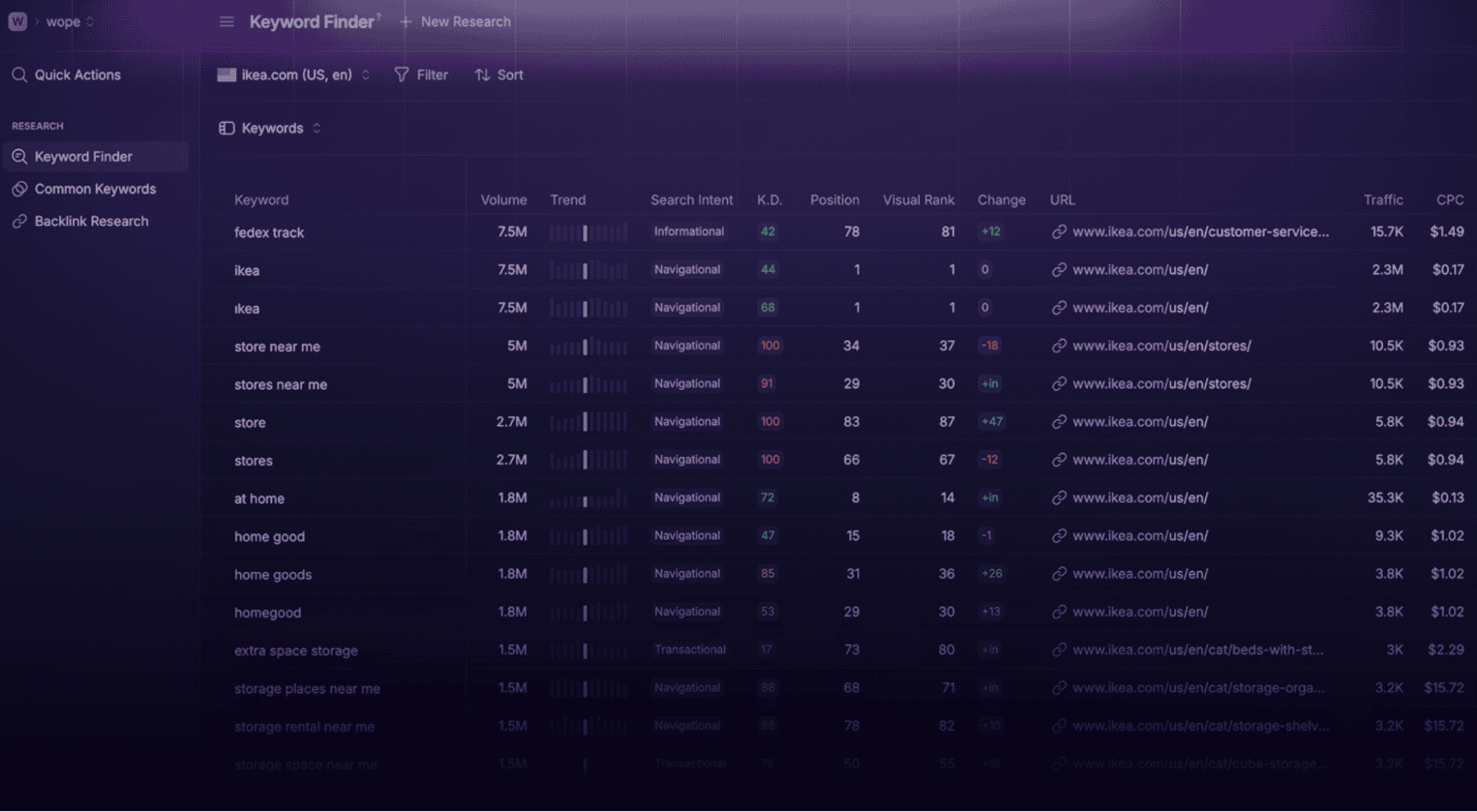
Wope is the best Dashword alternative for SERP tracking and SEO performance insights with real-time ranking monitoring. Wope is a rank tracking and SEO performance platform that monitors keyword rankings, SERP features, and competitor movements with automated reporting and alerts.
Wope features include real-time rank tracking, SERP feature monitoring, competitor tracking, automated reports, ranking alerts, and performance dashboards. Wope provides detailed ranking data across devices, locations, and search features to monitor SEO performance.
Wope pricing starts at $27 per month for basic tracking. Wope is $72 cheaper than Dashword Startup, which makes Wope the more affordable option for rank tracking without content optimization features.
Pros of Wope include accurate rank tracking, real-time SERP monitoring, competitor insights, and automated alerts. Cons of Wope include no content optimization features, limited keyword research capabilities, and a focus on tracking rather than content creation.
17. WriterZen: Best Dashword Alternative for Keyword Clustering and Content Planning
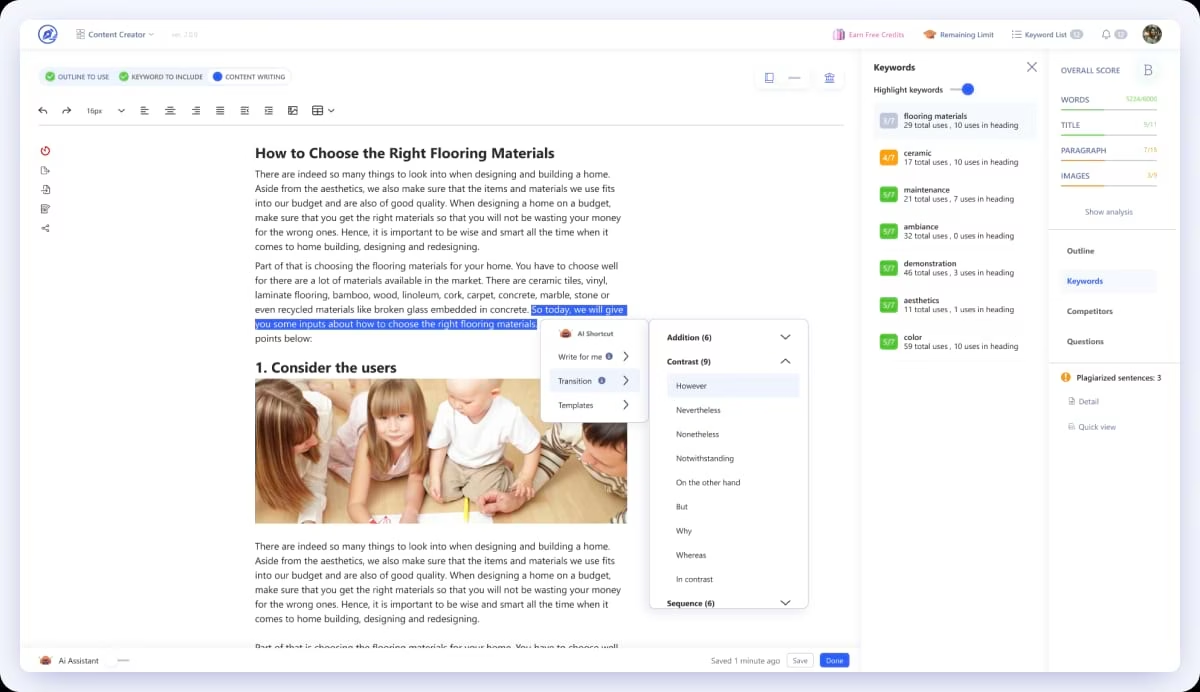
WriterZen is the best Dashword alternative for keyword clustering and content planning with advanced keyword analysis and topic mapping. WriterZen is an SEO content platform that combines keyword analysis, topic discovery, AI-powered content creation, and plagiarism detection for scaling content strategies.
WriterZen features include Topic Discovery, Keyword Explorer, Keyword Planner, Content Creator with GPT-powered writing, a plagiarism checker, and workflow management for teams. WriterZen Topic Discovery reveals hundreds of related queries from a single seed keyword, while Keyword Explorer integrates Google data for search volume, competition, and intent.
WriterZen pricing starts at a one-time $75 lifetime deal for basic keyword research, scaling to $225 for advanced team features. WriterZen lifetime pricing eliminates recurring fees, which makes WriterZen significantly more cost-effective than Dashword Startup at $99 per month over time.
Advantages included in the WriterZen review are powerful keyword clustering, advanced topic discovery, unlimited AI writing on higher tiers, and lifetime pricing that removes recurring fees. The disadvantages of WriterZen are no live SERP content scoring, limited on-page audit features, and extra charges for bulk keyword credits.
18. GrowthBar: Best Dashword Alternative for Simple AI Blog Generation with SEO Tools
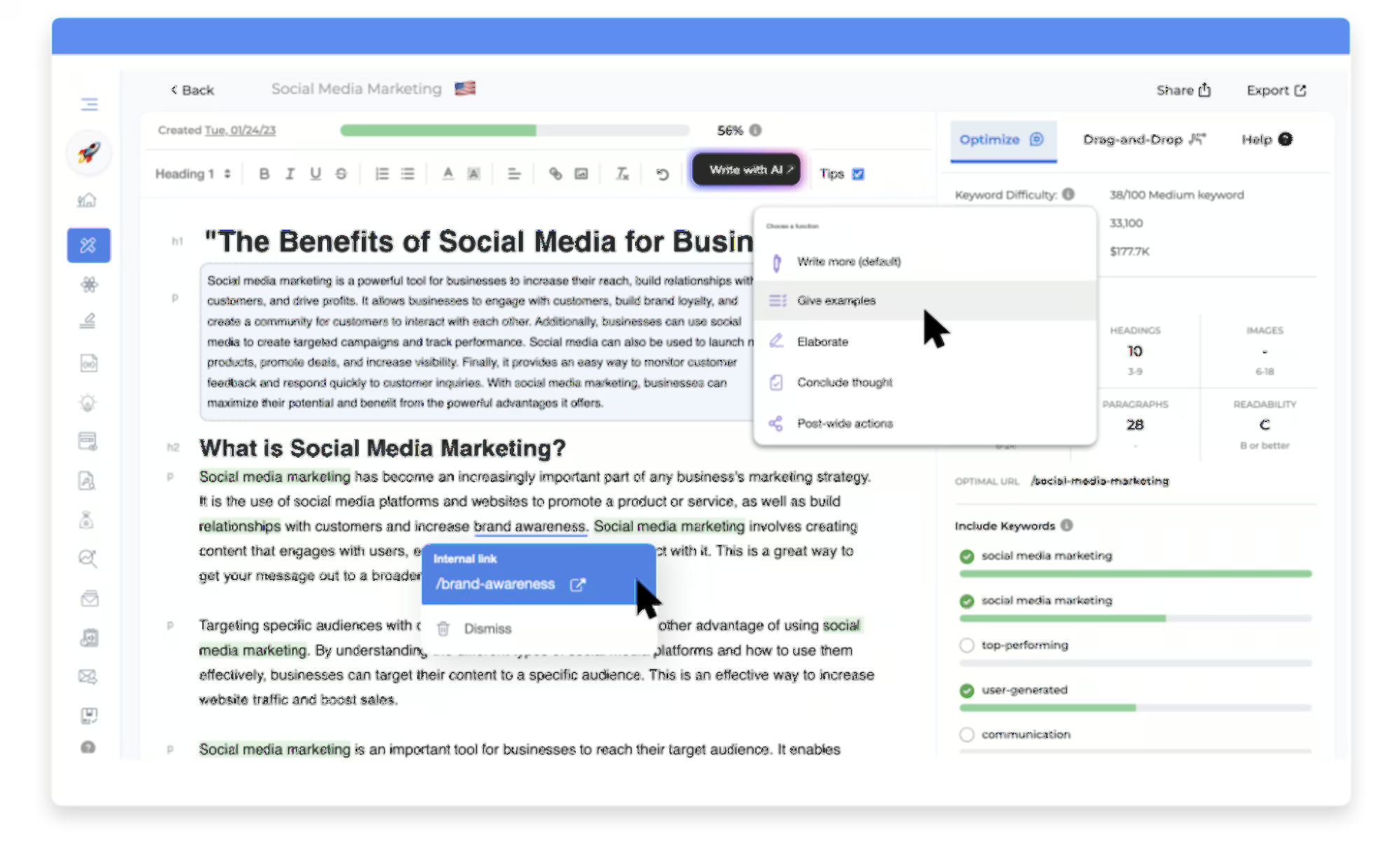
GrowthBar is the best Dashword alternative for simple AI blog generation with integrated SEO tools. GrowthBar is an AI writing and SEO platform that combines content generation, keyword research, and competitor analysis in a Chrome extension and web application.
GrowthBar features include AI blog post generation, keyword research, SERP analysis, competitor tracking, backlink analysis, and Chrome extension integration. GrowthBar provides simple content creation with basic SEO data directly in search results.
GrowthBar pricing starts at $48 per month for Standard and $99 per month for Pro. GrowthBar Standard is $51 cheaper than Dashword Startup, which makes GrowthBar the more affordable option for simple AI writing with basic SEO features.

Pros of GrowthBar include simple AI content generation, Chrome extension convenience, integrated keyword research, and affordable pricing. Cons of GrowthBar include basic optimization features, limited content scoring depth, and fewer advanced SEO capabilities.
19. Keyword Insights: Best Dashword Alternative for Keyword Clustering and SERP Intent Mapping
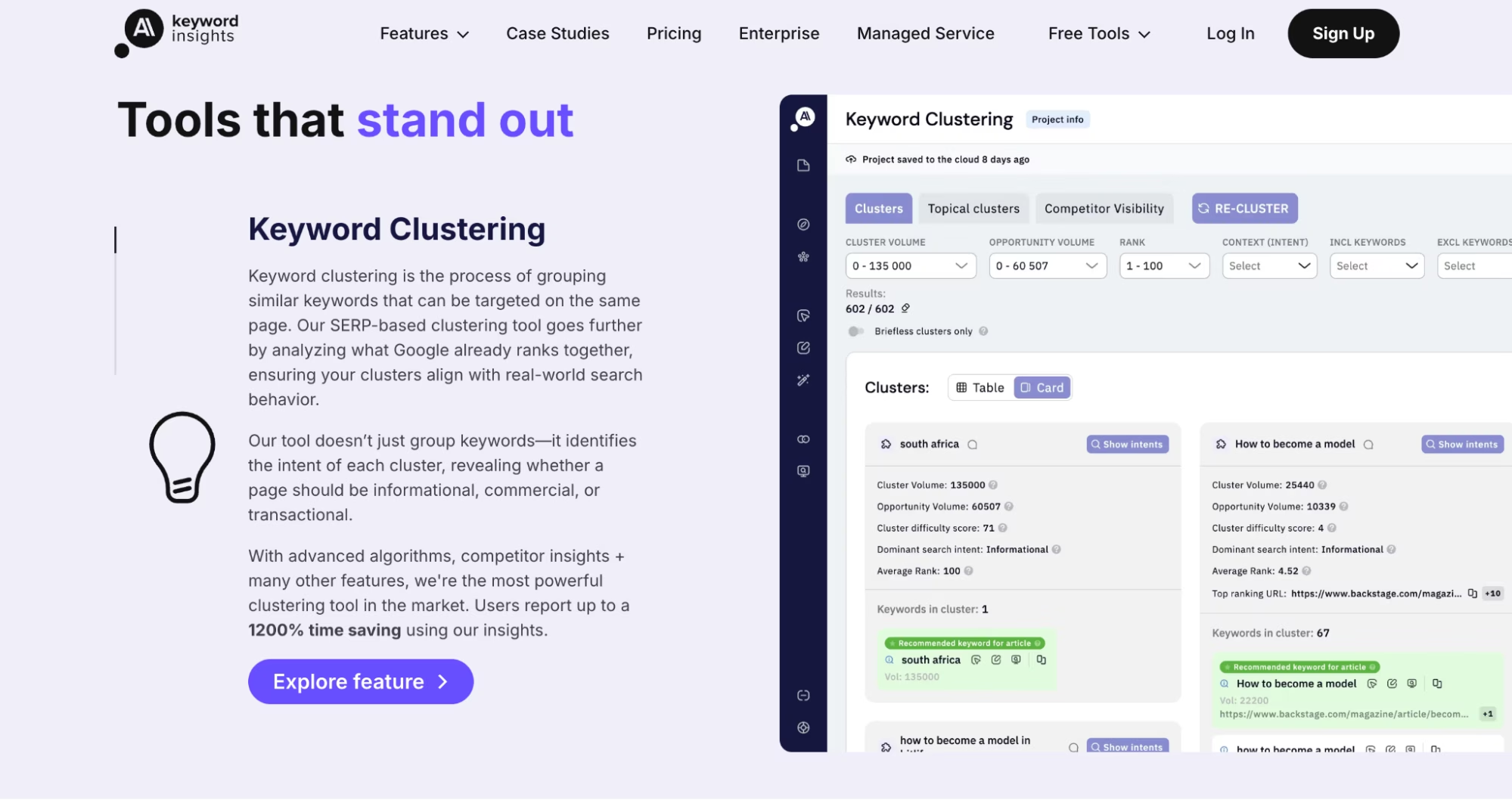
Keyword Insights is the best Dashword alternative for keyword clustering and SERP intent mapping with AI-powered keyword grouping. Keyword Insights is an AI-driven keyword research platform that clusters keywords by search intent, generates content briefs, and provides SERP analysis for content strategy.
Keyword Insights features include AI keyword clustering, search intent analysis, content brief generation, SERP similarity analysis, and keyword discovery. As mentioned in the Keyword Insights review, it uses machine learning to group keywords into content clusters based on SERP similarity and search intent.
Keyword Insights pricing starts at $58 per month for Basic, $99 per month for Standard, and $299 for Premium. Keyword Insights Basic is $41 cheaper than Dashword Startup, which makes Keyword Insights the more affordable option for keyword research and clustering without full content optimization.
Pros of Keyword Insights include advanced keyword clustering, accurate search intent analysis, automated content brief generation, and SERP similarity scoring. Cons of Keyword Insights include no content editor, limited optimization scoring, and a focus on research rather than content creation.
20. KWHero: Best Dashword Alternative for Topical Authority Mapping
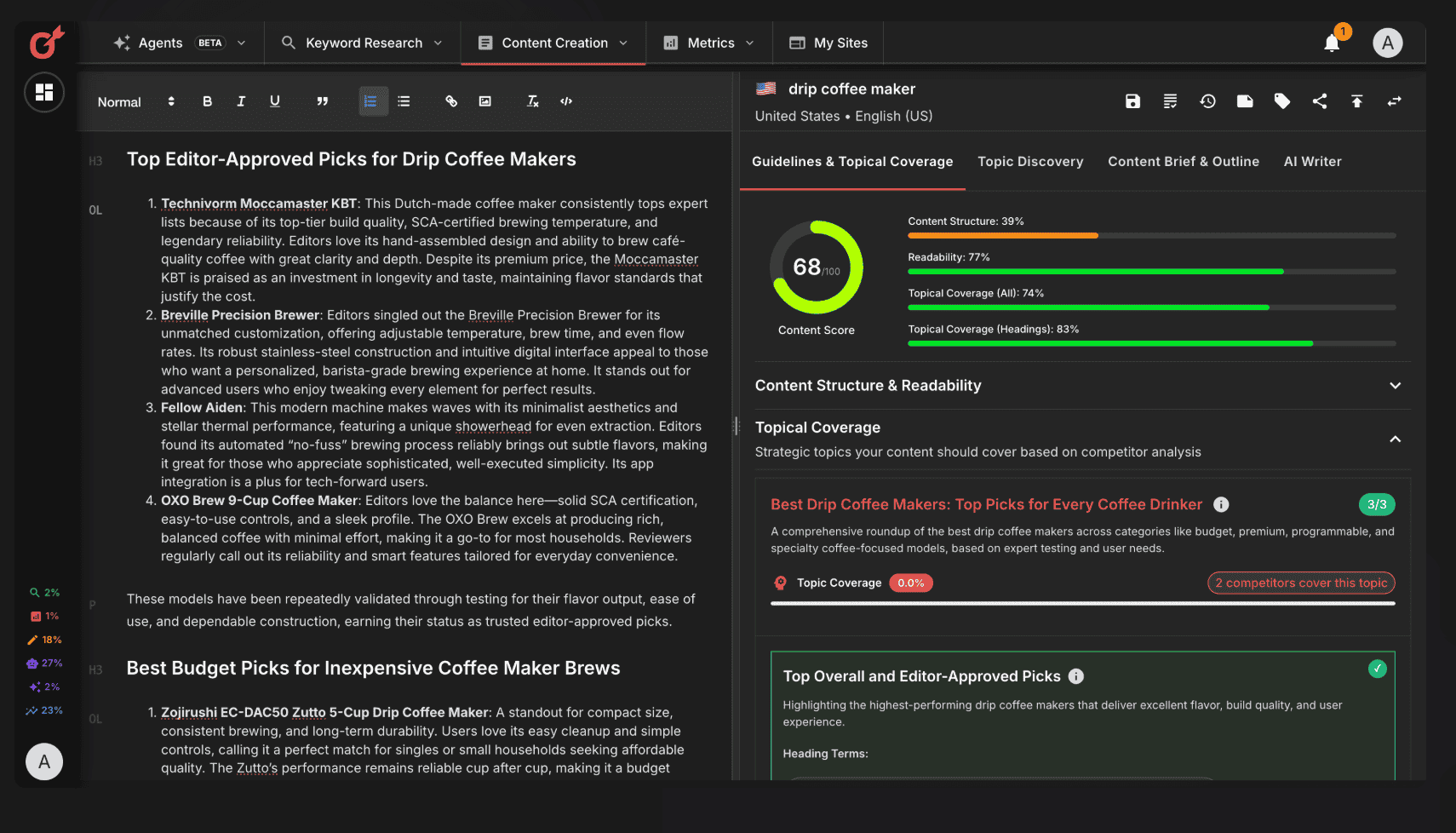
KWHero is the best Dashword alternative for topical authority mapping, aimed at AI-search visibility. KWHero is an SEO platform that prioritizes semantic coverage, entity-based scoring, and topic-cluster planning instead of simple keyword matching.
KWHero evaluates websites based on how comprehensively they cover topics, which directly affects visibility in both search engines and LLM-based answer engines.
KWHero features include Topical Coverage scoring across hundreds of topics, entity-level gap detection, keyword clustering powered by multi-step AI processing, SERP-based content briefs, content planning workflows, and internal link recommendations derived from crawled site context.
KWHero agents automate high-volume research tasks, such as clustering, competitive breakdowns, and bulk keyword analysis. Dashword focuses on content scoring at article-level depth, while KWHero evaluates full topical scope, authority progression, and semantic completeness.
KWHero measures how visible content becomes inside AI chat engines and knowledge panels, which Dashword does not track. KWHero includes site-wide planning and architecture control (clusters, briefs, interlinking), while Dashword remains single-page oriented.
Compared to Dashword, KWHero is the stronger choice for teams that operate content calendars, build hub-based structures, track semantic footprint, and require measurable authority progress. Dashword suits single-post optimization, but KWHero builds topic-level systems that scale authority across groups of pages.
KWHero pricing starts at $59 per month for Basic, $119 per month for Marketer, and $349 per month for Agency. KWHero Basic is $40 cheaper than Dashword Startup, while offering site tracking, content planning, internal link automation, and entity-based scoring that Dashword does not match.
According to KWHero reviews, the advantages of KWHero include authority scoring, semantic topic clustering, AI-based planning, scalable briefs, and AI-engine visibility tracking. The disadvantages include credit-based usage, limited long-form drafting, and a steeper learning curve for teams transitioning from classic keyword-oriented SEO workflows.
21. Contentpace: Best Dashword Alternative for Workflow-Based SEO Content Production
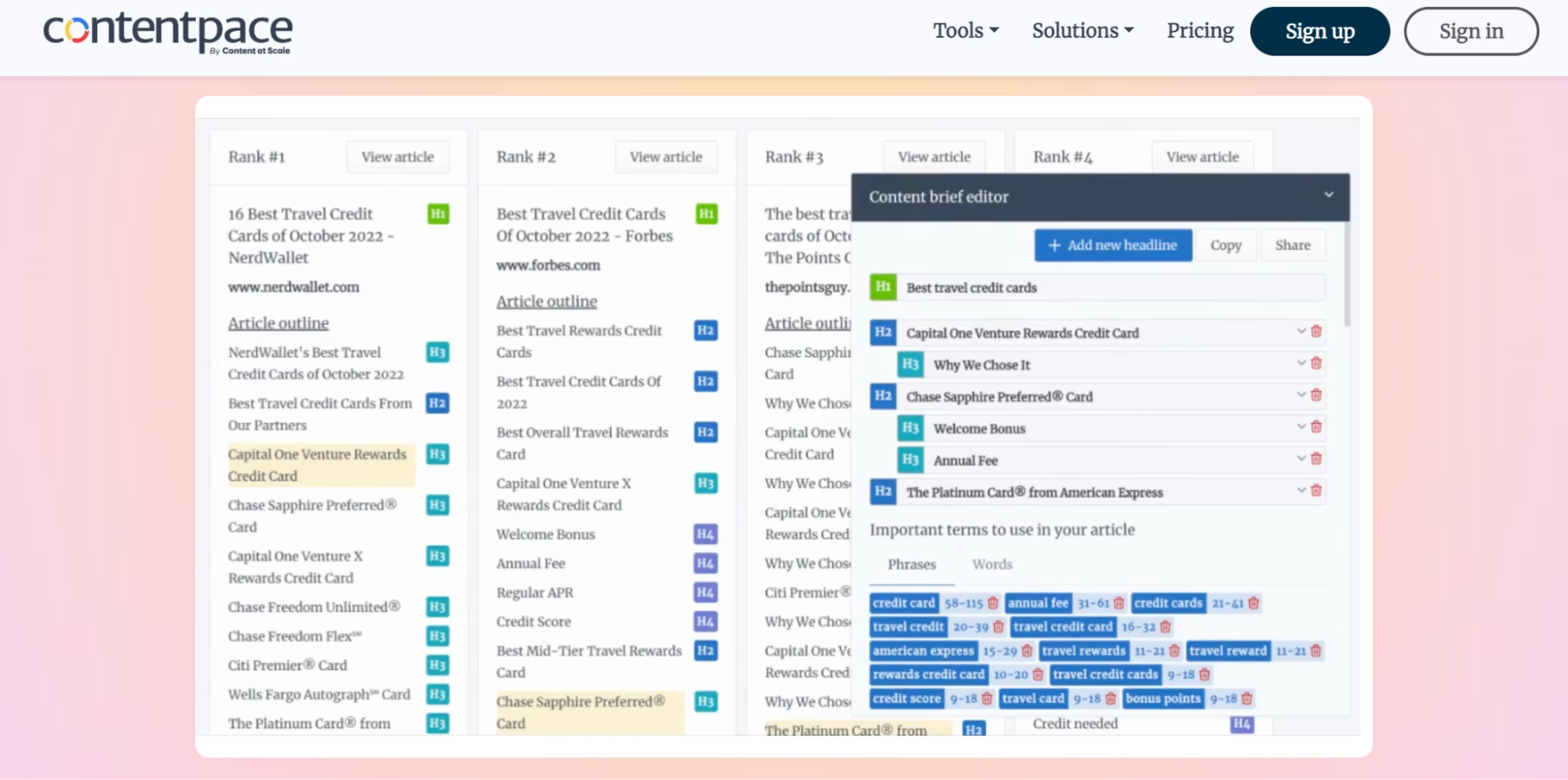
Contentpace is the best Dashword alternative for workflow-based SEO content production that unifies research, briefing, optimization, writing, and publishing in a single workspace. Contentpace is an all-in-one SEO content platform built for teams that manage multiple articles, writers, and projects simultaneously, with a strong emphasis on guided workflows instead of isolated content scoring.
Contentpace features include competitor analysis, NLP-based topic gap analysis, content brief builder, guided content optimization, audit tools for existing content, and a collaborative content calendar. The platform analyzes competitor pages before writing begins, identifies topic and subtopic gaps, and generates structured briefs with integrated writing guidelines.
Dashword focuses on per-article scoring and basic brief creation, while Contentpace supports end-to-end editorial workflows from ideation to publication.
Contentpace functions as a Dashword alternative because Contentpace emphasizes repeatable processes, collaboration, and production scale, whereas Dashword remains centered on individual content optimization.
Contentpace evaluates over 1,250 parameters during guided optimization and integrates media management, version control, and publishing workflows that Dashword does not provide. Contentpace also supports multilingual content creation across 14 languages, which expands its use cases beyond Dashword’s primarily English-centric workflows.
Compared to Dashword, Contentpace is the better option for content teams, agencies, and publishers that manage high output volumes and require consistent processes, shared briefs, and centralized communication. Dashword suits solo creators optimizing single articles, while Contentpace supports structured production environments with multiple contributors and timelines.
Contentpace pricing starts at $27 per month for Essential, $57 per month for Team, and $97 per month for Agency. Contentpace Essential is $72 cheaper than Dashword Startup, while the Agency plan still undercuts Dashword pricing and includes unlimited users, content planning, and workflow collaboration features that Dashword does not offer.
Based on user feedback and the Contentpace review, the strengths of Contentpace include strong workflow automation, detailed competitor analysis, guided NLP optimization, collaborative planning, and affordable pricing. The limitations of Contentpace include capped topic and brief quotas, limited technical SEO features, and a focus on production workflows rather than advanced authority or backlink analysis.
22. SEO.AI: Best Dashword Alternative for Search-Data-Driven AI Article Creation
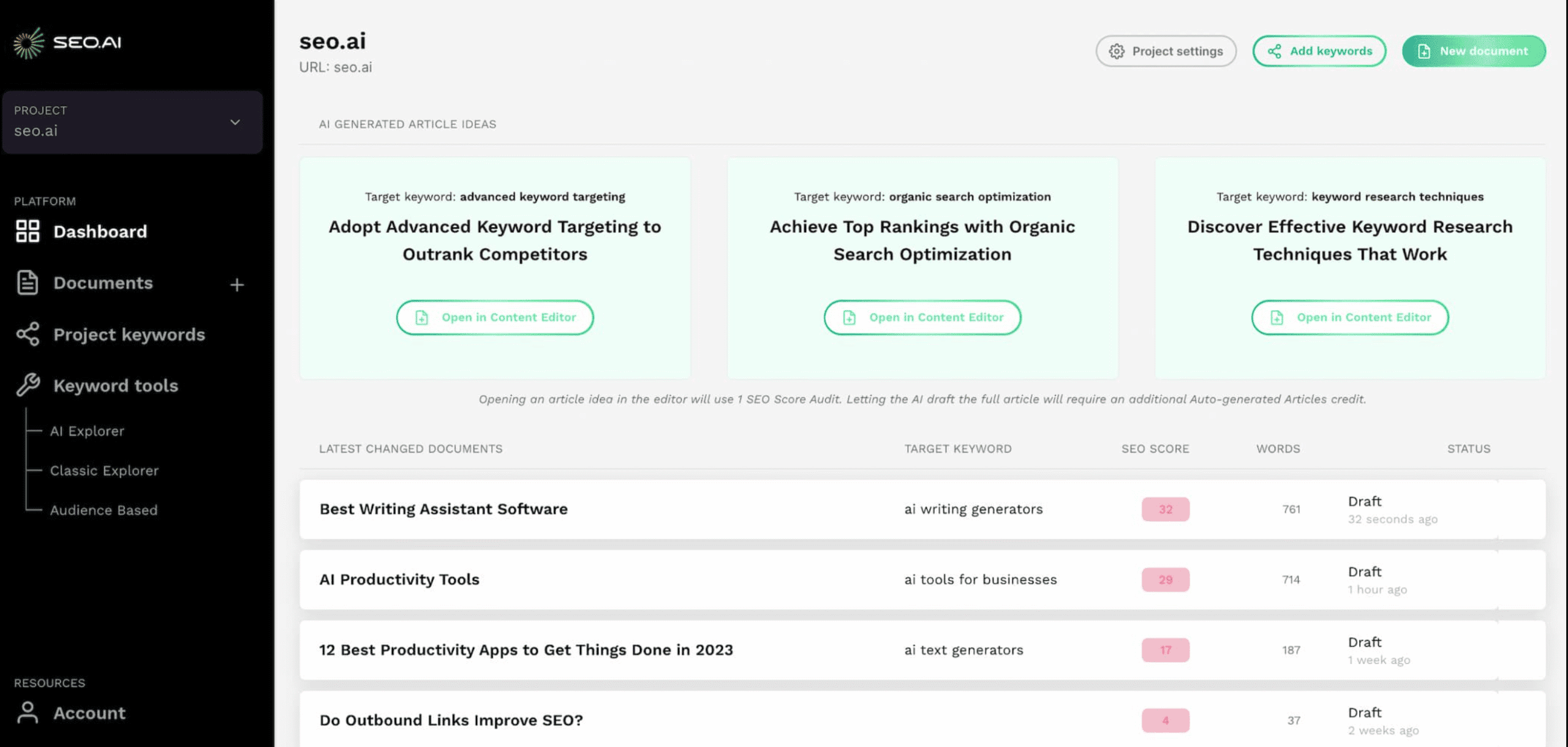
SEO.AI is the best Dashword alternative for search-data-driven AI article creation with end-to-end automation from planning to publishing. SEO.AI positions itself as an AI teammate that runs the full SEO content lifecycle, which includes gap analysis, content planning, research, writing, internal linking, metadata creation, image generation, and direct CMS publishing.
SEO.AI features include automated content gap analysis, adaptive 90-day content plans, deep topic research, AI-written long-form articles, internal link insertion, metadata optimization, featured image generation, and direct publishing to connected CMS platforms. The platform continuously adjusts content plans based on site performance and search opportunity shifts. Dashword focuses on content briefs and optimization scoring, while SEO.AI executes content production and publishing with minimal human input.
SEO.AI functions as a Dashword alternative because SEO.AI replaces manual SEO workflows with autonomous execution. Dashword assists writers during optimization, but SEO.AI plans, writes, and publishes content automatically based on live search data and business context. SEO.AI targets Google and AI-driven search engines such as ChatGPT by optimizing content structure, entity coverage, and internal linking at scale.
Compared to Dashword, SEO.AI is the stronger choice for small businesses, local websites, and founders who want consistent SEO output without managing writers, briefs, or editorial workflows. Dashword suits teams that prefer manual writing with optimization guidance, while SEO.AI suits users who want SEO handled as a background process.
SEO.AI pricing starts with a $1 seven-day trial, followed by $149 per month for a single website in one language and $299 per month for multiple websites or languages. SEO.AI Single Site costs $50 more than Dashword Startup, but replaces content writers, publishing tools, and manual SEO management, which changes the cost comparison for non-agency users.
The strengths mentioned in the SEO.AI review include full SEO automation, CMS-native publishing, multilingual support across more than 50 languages, and adaptive content planning. The limitations of SEO.AI include limited editorial control, reduced flexibility for custom briefs, and less transparency compared to hands-on optimization tools like Dashword.
23. Copywritely: Best Dashword Alternative for Basic On-Page Content Optimization
Copywritely is the best Dashword alternative for basic on-page content optimization focused on content quality checks, keyword usage control, and plagiarism detection. Copywritely is an SEO content analysis platform designed to help writers and SEO specialists identify technical content issues that affect rankings, readability, and originality.
Copywritely features include an SEO content checker, keyword density analysis, plagiarism detection, readability scoring, grammar checks, competitor content comparison, article rewriting suggestions, and automatic task generation for copywriters. The platform highlights keyword stuffing, duplicated content, readability problems, and structural issues directly inside an online editor. Dashword focuses on content briefs and SERP-driven optimization scoring, while Copywritely concentrates on correcting fundamental on-page content errors.
Copywritely functions as a Dashword alternative because Copywritely provides granular quality control for written content, whereas Dashword emphasizes topic coverage and optimization guidance. Copywritely excels at identifying low-quality passages, overused keywords, and plagiarism risks that can suppress rankings. Dashword does not offer built-in plagiarism detection or detailed keyword density controls at this level.
Compared to Dashword, Copywritely is the better option for teams that need fast content audits, quality enforcement, and copywriter task automation without advanced SEO strategy or content planning layers. Dashword suits users who want SERP-based guidance and content scoring, while Copywritely serves users who need basic on-page corrections and editorial hygiene.
Copywritely pricing starts at $29 per month for 50 pages, with higher tiers scaling to $1,250 per month for 5,000 pages. Copywritely entry pricing is $70 cheaper than Dashword Startup, which makes it a lower-cost option for content quality checks without full SEO research or optimization workflows.
According to Copywritely review, the pros of Copywritely include plagiarism detection, keyword stuffing alerts, readability analysis, and simple task generation for copywriters. The cons of Copywritely include minimal content planning, no advanced SERP intent modeling, no topical authority tracking, and limited suitability for large-scale SEO strategy compared to Dashword.
24. Robinize: Best Dashword Alternative for Clean Content Grading and SEO Suggestions
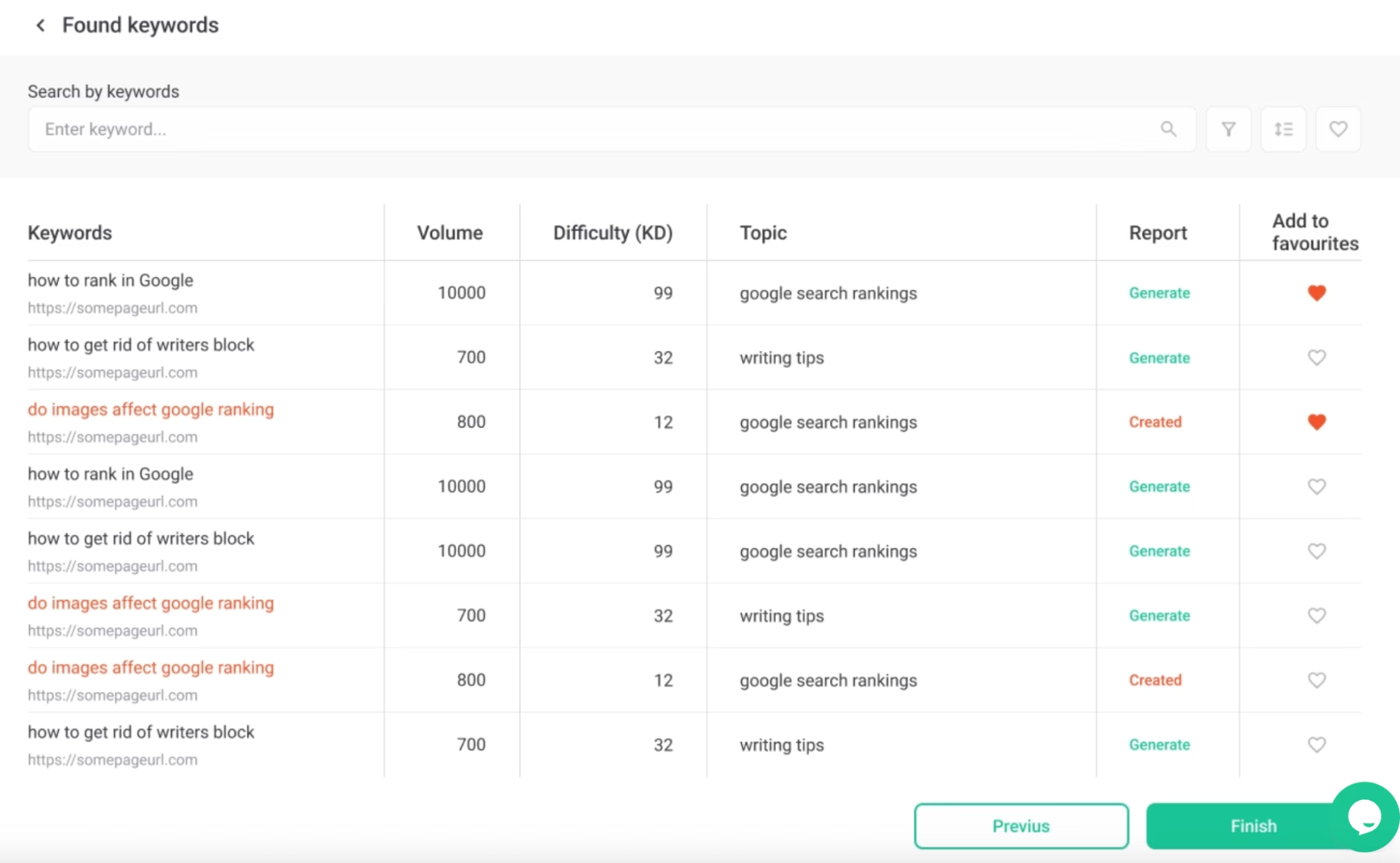
Robinize is the best Dashword alternative for clean content grading and SEO suggestions with simple, easy-to-interpret scoring. Robinize is an SEO content optimization tool that focuses on clarity, usability, and fast improvements through lightweight grading, keyword guidance, and readability analysis.
Robinize features include content grading, keyword optimization suggestions, readability analysis, heading and FAQ recommendations, competitor benchmarking, basic AI-assisted content drafting, rank tracking, and WordPress publishing. The platform generates clear reports based on top competitor content and highlights terms, headings, and structural elements that improve relevance. Dashword emphasizes content briefs and SERP-based optimization scoring, while Robinize prioritizes fast, understandable recommendations with minimal configuration.
Robinize functions as a Dashword alternative because Robinize removes complexity from content optimization and focuses on actionable suggestions instead of dense SEO metrics. Dashword suits users who want deeper SERP modeling and content brief workflows, while Robinize supports writers and small teams that need straightforward guidance to improve existing or new content quickly.
Compared to Dashword, Robinize is the better option for solo writers, small content teams, and non-technical marketers who want simple grading, AI-assisted drafting, and easy collaboration. Dashword fits structured SEO workflows, while Robinize favors accessibility and speed over advanced strategic depth.
Robinize pricing starts at $19 per month for Individual, $49 per month for Team, and includes a free plan with limited reports. Robinize entry pricing is $80 cheaper than Dashword Startup, which makes Robinize a lower-cost alternative for basic content optimization and grading.
Based on the feature scope in the Robinize review, the strengths of Robinize include a clean interface, a clear scoring system, multilingual support across 13 languages, and beginner-friendly SEO suggestions. The limitations of Robinize include limited advanced competitor analysis, basic AI content generation, and reduced suitability for large-scale SEO strategy compared to Dashword.
25. Topic: Best Dashword Alternative for Simple SERP Topic Extraction and Content Grading
Topic is the best Dashword alternative for simple SERP topic extraction and content grading, focused on fast research consolidation and clean optimization feedback. Topic is a content briefing and grading tool designed to reduce manual SERP research by extracting headings, questions, and keywords from top-ranking pages and turning them into structured outlines.
Topic features include SERP-based research using the top 30 Google results, an outline builder for rapid brief creation, a content grader that highlights topical gaps, keyword and question extraction, GPT-powered title and description ideas, and integrations with Google Docs and WordPress. Topic prioritizes ease of use and speed, while Dashword offers broader optimization scoring and content brief depth.
Topic functions as a Dashword alternative because Topic simplifies the content research and outlining phase, whereas Dashword extends further into optimization scoring and editorial guidance. Topic focuses on what to include in an article based on SERP consensus, while Dashword emphasizes how well a draft performs against optimization benchmarks.
Compared to Dashword, Topic is the better option for editors, agencies, and content teams that want to create SEO-ready outlines quickly and give writers clear, lightweight grading feedback. Dashword suits users who want more detailed optimization metrics and content scoring layers, while Topic favors simplicity and faster production cycles.
Topic pricing starts at $99 per month for Starter, $199 per month for Plus, and $299 per month for Premium. Topic Starter matches Dashword Startup pricing but includes faster brief creation, outline building, and rollover credits, which Dashword does not emphasize.
The advantages highlighted in the Topic review include clean SERP topic extraction, fast outline generation, an easy-to-understand content grader, and strong collaboration features. The limitations of Topic include limited AI drafting, fewer optimization signals than advanced content optimization platforms, and a narrower focus on briefing and grading compared to Dashword.
26. Wordmetrics: Best Dashword Alternative for Real-Time Content Scoring
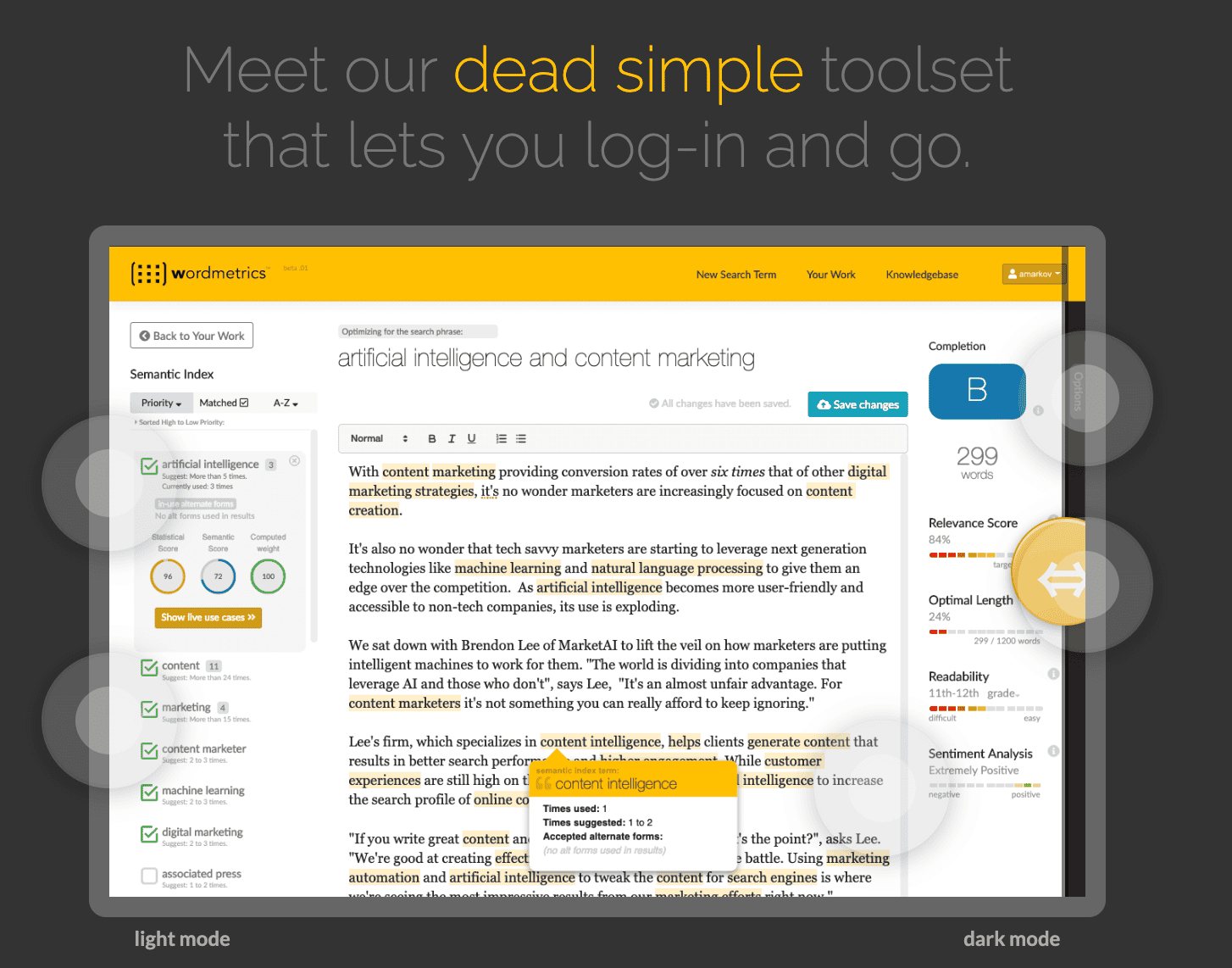
Wordmetrics is the best Dashword alternative for real-time content scoring built specifically for professional writers who want immediate SEO feedback while writing. Wordmetrics is a non-generative, AI-assisted SEO writing platform that analyzes semantic relevance, topical completeness, and readability as text is produced, instead of relying on post-write audits.
Wordmetrics features include real-time contextual scoring, semantic index terms derived from competing pages, live search data integration, readability analysis, and semantic highlighting that shows which terms contribute to contextual relevance.
The Wordmetrics platform evaluates what it calls contextual DNA, which reflects how closely content aligns with search intent based on statistical language patterns. Dashword focuses on content briefs and optimization scores after research, while Wordmetrics embeds optimization directly into the writing process.
Wordmetrics functions as a Dashword alternative because Wordmetrics prioritizes live, sentence-by-sentence feedback instead of prebuilt briefs and checklists. Dashword guides what to write before drafting, while Wordmetrics guides how well the content matches search intent as it is written. Wordmetrics does not generate content, which differentiates it from AI writing tools and keeps editorial control fully with the writer.
Compared to Dashword, Wordmetrics is the better option for writers and content marketers who want SEO signals integrated into their writing environment with no setup friction. Dashword suits teams that rely on structured briefs and research-driven planning, while Wordmetrics suits writers who prefer intuitive, continuous scoring without managing separate optimization workflows.
Wordmetrics pricing is positioned for professional writers and content teams, with plans that scale based on usage rather than per-brief credits. Entry pricing typically undercuts Dashword Startup, which makes Wordmetrics a cost-effective alternative for real-time optimization without content brief or research modules.
The strengths noted in the Wordmetrics platform include live semantic scoring, zero learning curve, writer-first design, and strong contextual relevance analysis.
The limitations of Wordmetrics include no content planning, no SERP intent clustering, no AI content generation, and limited suitability for teams that require structured briefs or large-scale editorial workflows compared to Dashword.
27. RankDots: Best Dashword Alternative for AI Keyword Clustering and SERP Gap Detection
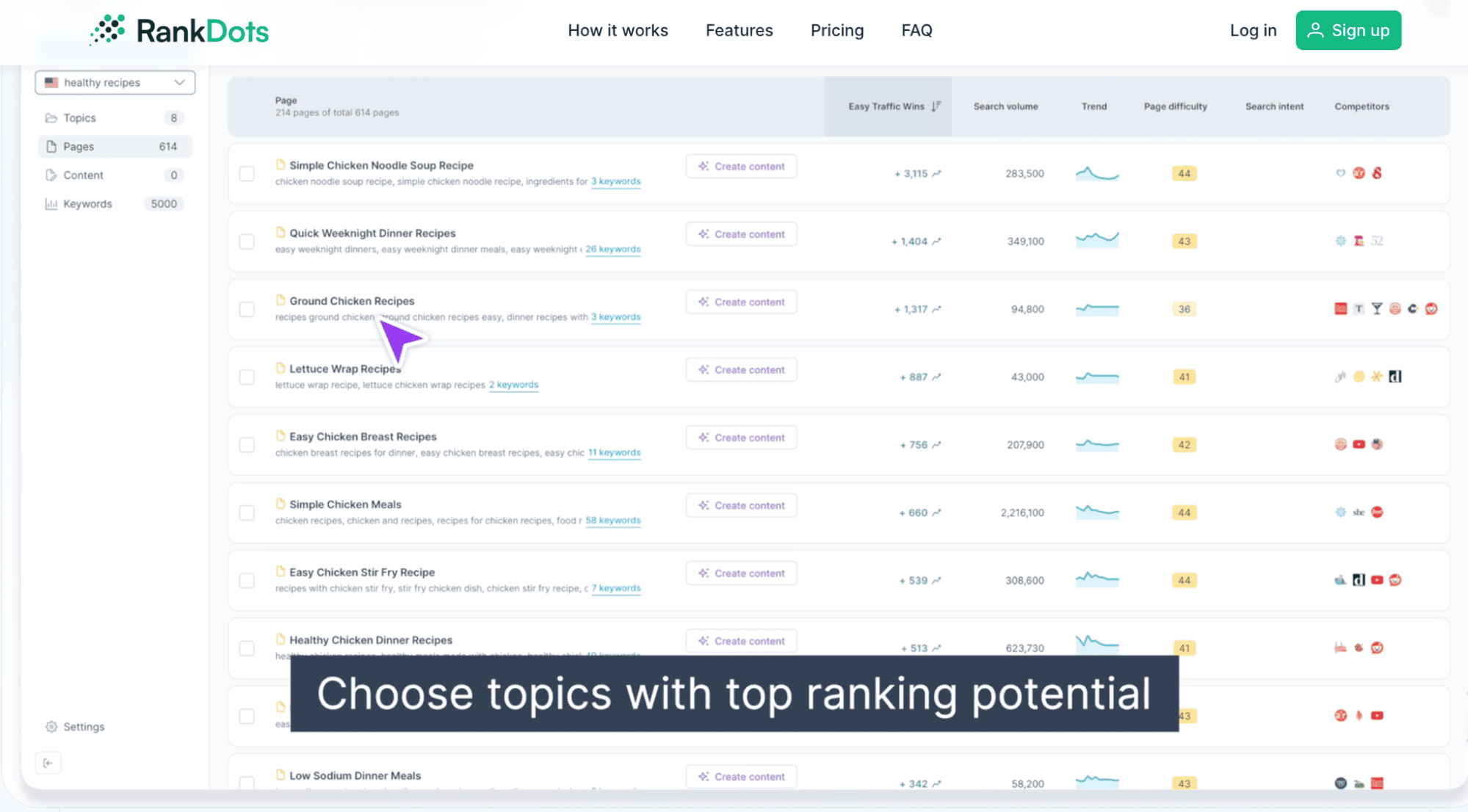
RankDots is the best Dashword alternative for AI keyword clustering and SERP gap detection, built around topic-level opportunity discovery rather than page-level scoring. RankDots is an AI-powered SEO platform that reverse-engineers Google ranking patterns to identify low-competition, high-impact keywords and organize them into actionable topic clusters that guide what to publish and why it ranks.
RankDots features include AI-powered keyword discovery, intelligent topic clustering, SERP intent analysis, topic gap detection, growth potential prediction, and an AI SEO content writer that generates drafts aligned with winning SERP structures. The platform analyzes ranking patterns, content formats, and SERP features to surface keywords competitors miss and groups them into cluster-based content plans instead of isolated keyword lists.
RankDots functions as a Dashword alternative because RankDots focuses on pre-content strategy and opportunity identification, while Dashword centers on content briefs and optimization scoring after a topic is chosen.
RankDots answers what to write, how topics connect, and where ranking gaps exist, whereas Dashword optimizes execution once a content direction already exists. RankDots emphasizes topic clusters, low-hanging fruit keywords, and SERP pattern decoding rather than single-article grading.
Compared to Dashword, RankDots is the stronger option for SEO professionals, affiliates, startups, and agencies that need scalable keyword clustering, SERP gap discovery, and topic-driven planning. Dashword suits teams refining individual articles, while RankDots supports building entire content ecosystems designed to grow authority and rankings faster.
RankDots pricing starts at $29 per month for Starter, $58 per month for Business, $99 per month for Agency, and $169 per month for Enterprise. RankDots Starter is $70 cheaper than Dashword Startup and includes keyword clustering, topic discovery, and AI-assisted content creation that Dashword does not bundle at the entry level.
The pros included in the RankDots review are AI-driven topic clustering, SERP gap detection, growth forecasting, and fast SEO-ready content generation. The limitations of RankDots include lighter content grading depth, fewer editorial workflow controls, and less emphasis on detailed content scoring compared to Dashword
28. Kazan: Best Dashword Alternative for Lightweight SEO Content Suggestions
Kazan is the best Dashword alternative for lightweight SEO content suggestions, combined with fast keyword discovery and basic competitive analysis. Kazan is a modular SEO toolkit designed to reduce manual work by offering quick keyword research, content optimization hints, and text extraction from competing pages without complex workflows or heavy configuration.
Kazan features include keyword discovery and clustering for topical relevance, correlation-based content optimization against the top 10 SERP results, competitor content extraction, AI content detection, and basic SEO analysis tools.
The platform highlights which keywords and terms appear most frequently across ranking pages so users can adjust content accordingly. Dashword emphasizes structured content briefs and optimization scoring, while Kazan focuses on fast, actionable suggestions with minimal setup.
Kazan functions as a Dashword alternative because Kazan provides simple, tactical guidance for improving content relevance rather than structured brief creation or deep SERP modeling. Dashword supports editorial planning and content scoring, while Kazan helps users quickly identify missing terms, extract competitor insights, and fine-tune pages with less overhead.
Compared to Dashword, Kazan is the better option for solo SEOs, niche site builders, and affiliate marketers who want quick optimization signals and keyword ideas without managing full content workflows. Dashword fits teams that rely on briefs and editorial processes, while Kazan favors speed, simplicity, and experimentation.
Kazan pricing is positioned as low-cost compared to full content optimization platforms, which places it well below Dashword Startup pricing for most users. This makes Kazan an accessible alternative for lightweight optimization and research tasks without committing to a higher monthly subscription.
Based on scope and positioning, the strengths of Kazan include fast keyword research, straightforward content optimization signals, competitor text extraction, and added utilities such as AI content detection and outreach email tools. The limitations of Kazan include limited content grading depth, no structured content briefs, no advanced topical authority modeling, and less suitability for large editorial teams compared to Dashword.
29. GetGenie: Best Dashword Alternative for WordPress and AI SEO Writing in One Plugin
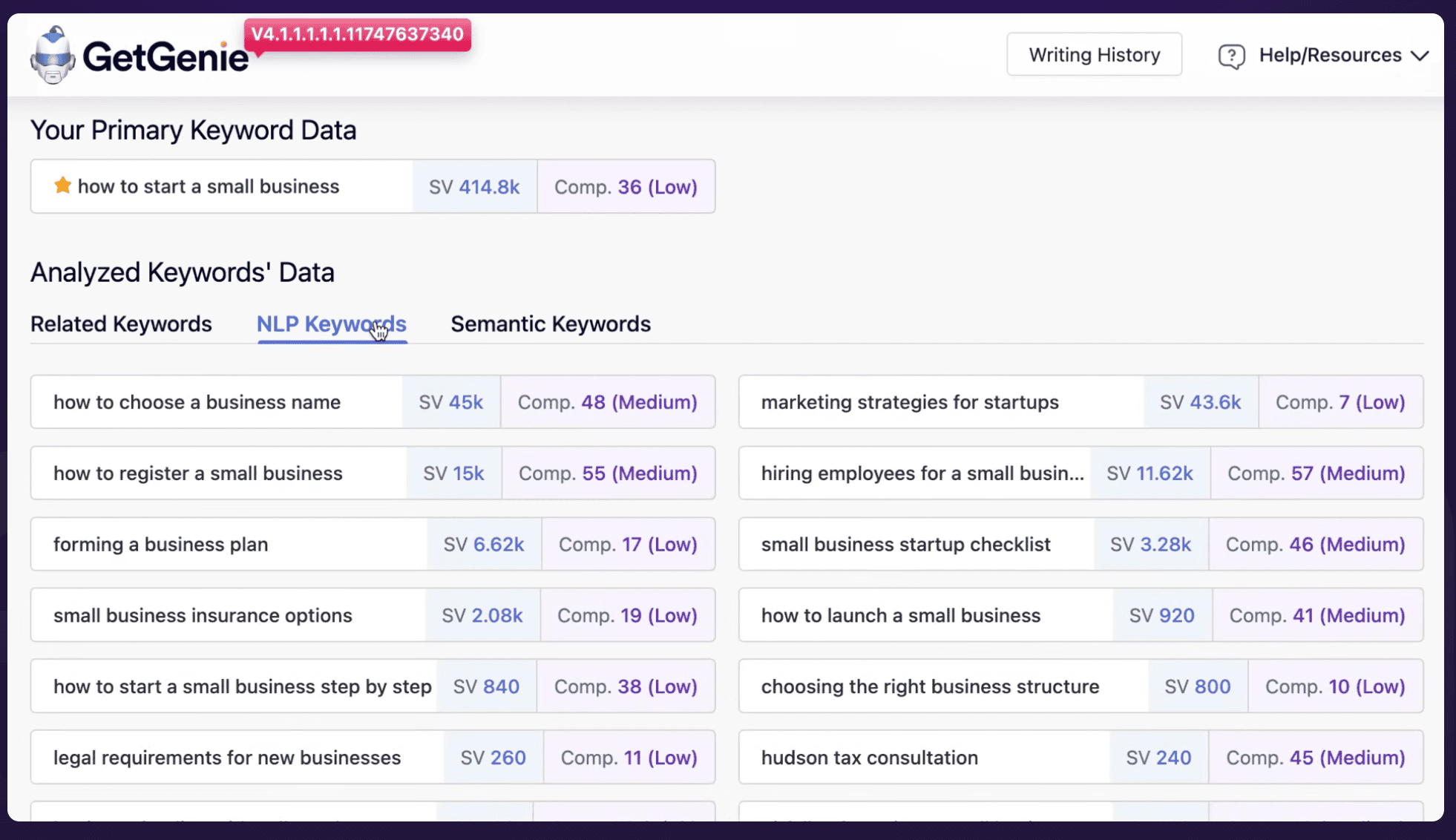
GetGenie is the best Dashword alternative for WordPress users who want AI SEO writing, keyword research, content optimization, and performance tracking directly inside the WordPress editor. GetGenie is a WordPress-native SEO and AI writing plugin that combines content creation, NLP-based optimization, competitor analysis, and SERP tracking in a single in-dashboard workflow.
GetGenie features include keyword research with NLP and semantic keywords, SERP competitor analysis, head-to-head content comparison, AI-assisted blog and product content generation, content scoring, topical map creation, and SEO performance tracking.
Writers generate, optimize, and score content without leaving WordPress, which removes the need for separate briefing or optimization tools. Dashword operates as a standalone platform focused on briefs and scoring, while GetGenie embeds the entire SEO writing and optimization process into
GetGenie functions as a Dashword alternative because GetGenie prioritizes in-editor execution over external research workflows. Dashword helps teams plan and optimize content before or after writing, while GetGenie guides keyword usage, semantic coverage, and optimization in real time as content is drafted inside WordPress.
This makes GetGenie especially effective for bloggers, niche site owners, and WordPress-based content teams that publish frequently.
Compared to Dashword, GetGenie is the stronger option for WordPress-centric workflows that require speed, convenience, and reduced tool switching. Dashword suits teams that rely on external briefs and editorial handoffs, while GetGenie fits solo creators and small teams that want research, writing, and optimization in one place.
GetGenie pricing without promotional discounts starts at $10 per month for Starter, $19 per month for Writer, $49 per month for Pro, and $99 per month for Agency Unlimited. All plans include access to AI writing templates, keyword research, SERP analysis, content optimization, and the WordPress plugin. At the entry level, GetGenie costs significantly less than Dashword Startup while bundling AI writing and CMS integration that Dashword does not offer.
The pros noted in the GetGenie review include deep WordPress integration, combined AI writing and SEO optimization, NLP-driven keyword suggestions, topical mapping, and built-in performance tracking.
The cons of GetGenie include reliance on WordPress, usage caps tied to AI word limits, and a less editorial briefing structure compared to Dashword for multi-writer, non-WordPress environments.
30. ContentShake AI: Best Dashword Alternative for SME-Friendly SEO Article Creation
ContentShake AI is now fully embedded within the main Semrush platform and operates under the Content Toolkit name rather than as a standalone product. All AI-powered content creation, optimization, and topic research features are available directly inside the Semrush dashboard through the Content Marketing section.
Although the Content Toolkit functions as part of the broader Semrush ecosystem, full access depends on the subscription level. Most advanced features require a Guru or Business plan, while users on lower tiers can access the toolkit by purchasing it as a separate add-on.
31. RankIQ: Best Dashword Alternative for Low-Competition Keyword Lists and SEO Briefs
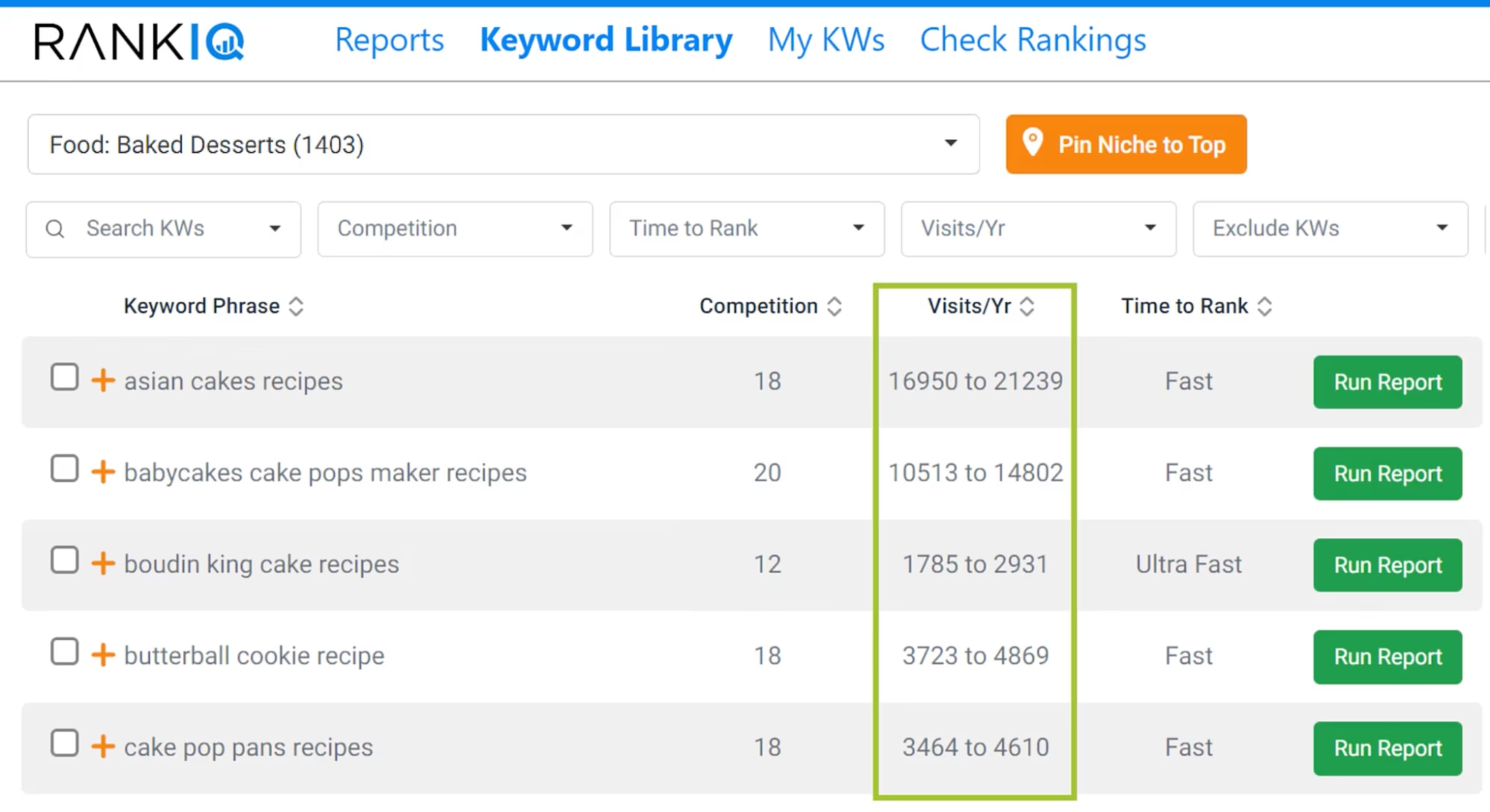
RankIQ is the best Dashword alternative for low-competition keyword discovery and blogger-focused SEO briefs built specifically for ranking informational content. RankIQ is an SEO content optimization platform designed for bloggers and content-driven businesses that want clear guidance on what to write, which keywords to target, and how to structure posts to reach page one.
RankIQ features include a curated keyword library organized by niche, SEO content briefs that outline topics Google expects coverage on, a content optimizer that highlights missing terms, and title optimization based on top-ranking SERP data.
The platform emphasizes speed and clarity by telling users exactly what to include in a post instead of requiring deep manual research. Dashword focuses on flexible content briefs and scoring, while RankIQ narrows its scope to prescriptive outlines and keyword lists that reduce decision fatigue.
RankIQ functions as a Dashword alternative because RankIQ prioritizes keyword selection and outline creation over granular content scoring. Dashword supports broader optimization workflows and SERP comparisons, while RankIQ excels at identifying low-competition, high-traffic opportunities and packaging them into simple briefs that bloggers can execute quickly.
Compared to Dashword, RankIQ is the better option for bloggers, niche site owners, and publishers who want pre-vetted keyword opportunities and fast content outlining without managing complex optimization dashboards. Dashword fits teams that want customizable briefs and iterative optimization, while RankIQ favors clarity, speed, and reduced research overhead.
RankIQ pricing is $99 per month at the standard rate. RankIQ pricing matches Dashword Startup, but RankIQ includes a proprietary keyword library and blogger-specific briefs, whereas Dashword offers broader content optimization features without niche-curated keyword lists.
The strengths noted in the RankIQ review include low-competition keyword libraries, fast brief generation, title optimization guidance, and strong performance for informational blog content.
The limitations of RankIQ include limited use outside blogging niches, no technical SEO features, no backlink analysis, and less flexibility for non-blog or enterprise content workflows compared to Dashword.
32. Squirrly SEO: Best Dashword Alternative for Beginner-Friendly SEO Writing Tools
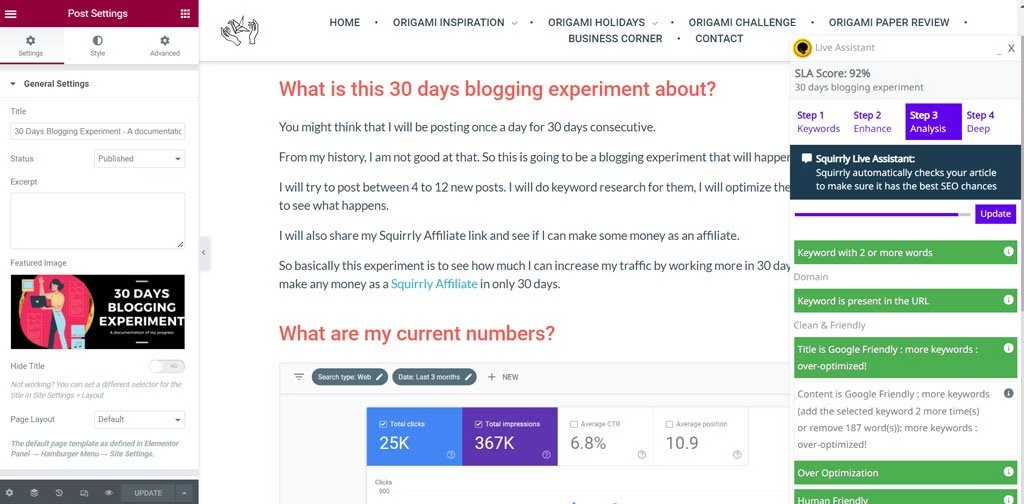
Squirrly SEO is the best Dashword alternative for beginner-friendly SEO writing tools with WordPress integration. Squirrly SEO is a WordPress plugin that provides SEO optimization, content analysis, keyword research, and real-time writing assistance for non-technical users.
Squirrly SEO features include SEO Live Assistant, keyword research, content optimization, focus pages, rank tracking, and WordPress integration. Squirrly SEO provides step-by-step guidance for SEO optimization directly in the WordPress editor.
Compared to Dashword, Squirrly SEO is the stronger choice for beginners, small businesses, bloggers, and non-technical users who want clear instructions instead of abstract scores. Dashword fits content teams that already understand SEO workflows, while Squirrly SEO prioritizes simplicity, guidance, and execution support inside WordPress.
Squirrly SEO pricing starts with a Free plan at $0 per month for beginners, which includes limited AI guidance, 1 website, 1 Focus Page, and basic audits. The PRO plan costs $9.99 per month and supports up to 5 websites with expanded AI keyword research, more Focus Pages, and full SEO Live Assistant access.
For agencies and developers, the Web Dev Kit plan is $51.20 per month, covering up to 10 websites with higher limits and client controls, while the Business plan costs $71.99 per month and delivers full Holistic SEO features for teams managing up to 7 websites with advanced analytics and automation.
Pros included in the Squirrly SEO review are a beginner-friendly interface, WordPress integration, real-time SEO assistance, affordable pricing, and comprehensive tutorials. Cons of Squirrly SEO include WordPress-only functionality, basic optimization compared to advanced platforms, and limited scalability for large teams.
33. NeuronWriter: Best Dashword Alternative for Semantic Optimization and Content Planning
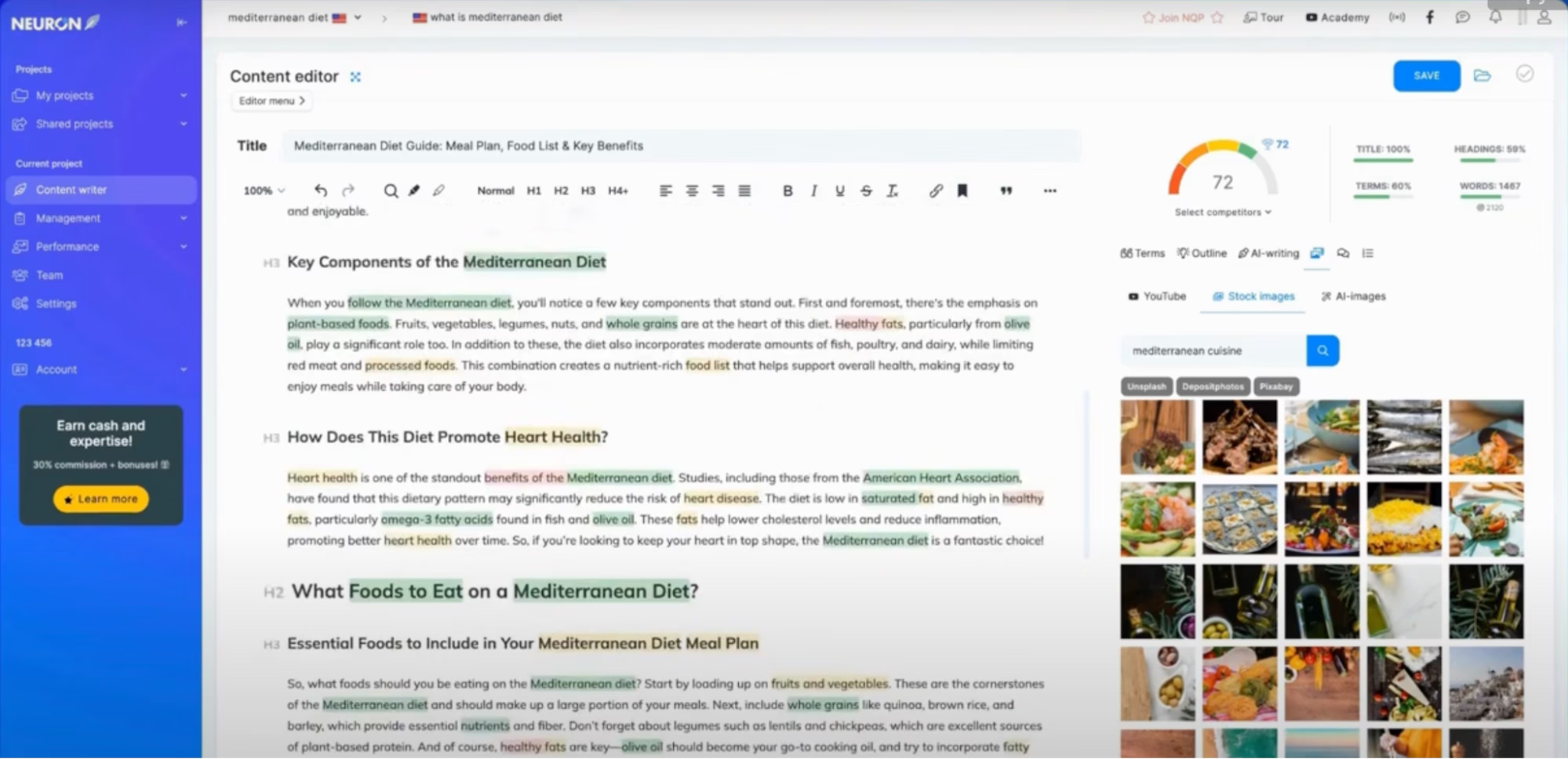
NeuronWriter is the best Dashword alternative for semantic optimization and content planning with advanced NLP analysis. NeuronWriter is an AI-driven content platform that combines semantic keyword optimization, topic clustering, competitor benchmarking, and content planning for effective content strategies.
NeuronWriter features include semantic keyword optimization, topic clustering, competitor benchmarking, plagiarism checks, outline building, and integrations with WordPress, Google Search Console, and Shopify. The NeuronWriter platform offers over 170 languages and organizes projects into clusters with detailed recommendations for topical coverage.
NeuronWriter excels as a Dashword alternative because NeuronWriter specializes in semantic optimization and strategic planning with NLP analysis, while Dashword emphasizes simpler content scoring. NeuronWriter provides deeper semantic analysis and NLP-driven optimization that Dashword does not offer.
Compared to Dashword, NeuronWriter is the best alternative for content teams who need semantic optimization, NLP-driven recommendations, and strategic content planning. Dashword remains simpler for basic content scoring, while NeuronWriter delivers comprehensive semantic analysis and topical authority building.
NeuronWriter pricing starts at $23 per month for the Bronze plan, $57 per month for the Silver plan, and $117 per month for the Diamond plan. NeuronWriter Bronze is $76 cheaper than Dashword Startup, which makes NeuronWriter the more affordable option for semantic optimization and content planning.
According to the NeuronWriter review, the advantages include semantic optimization with NLP, granular competitor analysis, flexible pricing tiers, and multi-language support. Cons of NeuronWriter are stricter credit limits per plan, slower UI at scale, and fewer bundled features compared to all-in-one workflows.
Why Do People Seek Alternatives to Dashword Tool?
People seek alternatives to the Dashword tool because Dashword content optimization is limited, Dashword pricing is high for full feature access, and it lacks advanced workflow automation. Dashword provides basic content scoring and brief creation without comprehensive content generation, technical SEO audits, or automated optimization capabilities that advanced users require.
Limited AI content generation, restricted integration options, and basic competitor analysis are the 3 main reasons users look for alternatives to the Dashword tool. Dashword pricing starts at $99 to $349 monthly, which many users find expensive for the features provided compared to specialized alternatives.
Dashword lacks features now standard in leading content platforms (Search Atlas, Surfer SEO, Frase), such as advanced workflow automation, comprehensive SEO audits, and AI content generation. Advanced users and agencies report that Dashword content analysis cannot handle complex SEO projects, automated optimization workflows, or scalable content operations.
Users frequently mention that the Dashword simplicity is both a strength and a limitation, with basic optimization recommendations and limited customization options. Several Dashword reviews point to restricted content generation, limited integration options, and basic collaborative features. Most professionals migrate from Dashword to tools like Search Atlas that offer comprehensive SEO features, automated workflows, and superior value.
What to Look for in a Dashword Alternative?
The best Dashword alternative combines advanced content optimization, comprehensive SEO analysis, and flexible workflow automation in a single dashboard. Most users outgrow Dashword content optimization because it focuses on basic content scoring and brief creation, but leading alternatives to Dashword deliver detailed competitor analysis, AI content generation, real-time optimization suggestions, and actionable workflow automation.
Choose an alternative to Dashword that offers integration with content management systems (WordPress, Webflow, Shopify), analytics platforms (Google Search Console, Google Analytics, SEMrush), and marketing tools, along with robust reporting features, team collaboration capabilities, and transparent pricing structures. Prioritize Dashword competitors with proven content quality, comprehensive SEO features, and responsive customer support.
The best alternatives to Dashword offer scalable content operations, automated optimization workflows, and granular performance tracking, which give content teams and SEO specialists the depth and control they need to create high-performing content and drive measurable results.
Why is Search Atlas the Best Dashword Alternative?
Search Atlas is the best Dashword alternative because it executes the entire SEO workflow instead of stopping at content briefs and scoring. Dashword focuses on single-page optimization and advisory feedback, while Search Atlas combines content creation, semantic optimization, technical SEO automation, internal linking, schema deployment, and performance tracking in one system.
Search Atlas builds topical authority through structured topical maps and entity coverage rather than isolated keyword scoring, which aligns with how Google and LLMs evaluate expertise. The platform uses AI agents to implement fixes directly, not just recommend them, which removes manual execution gaps that Dashword cannot address.
Search Atlas replaces multiple tools by integrating content optimization, audits, rank tracking, and Google Search Console data under one subscription, making it more scalable and cost-efficient for teams and agencies.Try Search Atlas today and experience the power of AI execution.