Wordtune alternatives are AI writing and content platforms that replace Wordtune in rewriting, grammar correction, long-form drafting, summarization, SEO optimization, and research-backed content updates.
Wordtune excels at sentence rewriting and tone refinement, but it lacks deeper features for SEO workflows, brand voice governance, structured briefs, and full-document optimization. Many Wordtune reviews highlight its narrow scope. These gaps make free, paid, and cheaper Wordtune competitors attractive for people who need broader capability in one tool.
Wordtune pricing works well for light rewriting needs, but value drops when writing requires multiple systems to finish the job. Teams often add a grammar Tool, an SEO Tool, and a content planning Tool to cover what Wordtune does not handle.
Writers, marketers, and businesses choose an alternative to Wordtune when they need SEO-driven guidance, campaign-scale brand consistency, stronger integrations, or specialized writing support for academic work and research. The best Wordtune alternatives in 2026 are Search Atlas, Grammarly, and Quillbot.
What are the Best Wordtune Alternatives?
The 32 best Wordtune alternatives for 2026 cover sentence rewriting, grammar correction, SEO optimization, content research, summarization, and full-scale content workflows.
Some tools focus on controlled paraphrasing and clarity improvement, while others specialize in marketing copy, academic editing, SEO-driven rewrites, or research-backed content expansion.
The 32 best Wordtune alternatives for 2026 are listed below.
| # | Wordtune Alternative | Best For | Price |
| 1 | Search Atlas | Best Wordtune alternative overall | $99 to $399/month |
| 2 | QuillBot | Paraphrasing and sentence rewriting | (price varies) |
| 3 | Paraphraser.io | Quick free rewrites | $23 to $499/month |
| 4 | Simplified | Rewriting and social media copy | Free to $20/month |
| 5 | Copy.ai | Marketing-focused rewrites & variations | $49 to $249/month |
| 6 | Speedwrite | Rapid text regeneration | (price varies) |
| 7 | ChatGPT | Contextual rewriting & idea expansion | Free to $200/month |
| 8 | Rytr | Budget rewriting & short-form copy | $9 to $29/month |
| 9 | Writesonic | Long-form content rewrites & enhancements | $39 to $399/month |
| 10 | Jasper | Brand-tuned copy rewriting | $49/month to custom |
| 11 | Grammarly | Grammar fixes & tone adjustments | Free to $30/month |
| 12 | ProWritingAid | Style, clarity, & readability improvements | Free to $36/month |
| 13 | Linguix | Real-time grammar & style suggestions | $10 to $30/month |
| 14 | Content Harmony | Structured briefs & content refreshes | $8 per workflow / $99+/mo |
| 15 | Writecream | Outreach emails & personalized rewrites | Free to $49/month |
| 16 | Anyword | Conversion-optimized copy variants | $49 to $499/month |
| 17 | Surfer SEO | SEO-optimized content revisions | $79 to $179/month |
| 18 | Clearscope | Rewriting for SEO intent | $189 to $399/month |
| 19 | Frase.io | SERP-aware rewrites & content updates | $45 to $115/month |
| 20 | Dashword | Content scoring & SEO-aligned rewrites | $99 to $349/month |
| 21 | WriterZen | Topic research & content refresh planning | $90 lifetime |
| 22 | Arvow | SEO-focused rewriting & auto-publishing | $59 to $389/month |
| 23 | WordAI | Human-sounding spun text variations | $27 to $57/month |
| 24 | Textero | Academic & essay rewriting | Free to $8.33/month |
| 25 | Paperpal | Research paper & journal-ready edits | $25/month (varied plans) |
| 26 | TextCortex | Inline rewriting across apps | Free to $23.99/month |
| 27 | Perplexity | Research-backed rewrites with citations | Usage-based API ($5/1K requests) |
| 28 | Dorik AI | Generating & refining website copy | $10.38 to $20.75/month (biennial) |
| 29 | TLDR This | Summarizing & condensing long texts | Free to $16.60/month |
| 30 | Notion AI | Rewriting inside notes & docs | Free to $20/user/month |
| 31 | Ahrefs Content Helper | SEO-aware content revision | $129 to $449/month |
| 32 | Semrush Writing Assistant | Real-time SEO & readability tweaks | $249 to $499/month |
1. Search Atlas: Best Wordtune Alternative
Search Atlas is an all-in-one SEO automation platform built for teams that need writing tied to measurable search performance. Search Atlas replaces sentence-level rewriting with a system that connects content creation, optimization, and execution across entire sites.
Wordtune focuses on rewriting individual sentences for tone and clarity. Search Atlas operates at the page and site level, where rankings, authority, and technical signals determine results.
Automation extends beyond recommendations through OTTO SEO, the autonomous AI agent inside Search Atlas. OTTO applies approved changes directly to live pages by updating metadata, schema, internal links, headings, and structural elements automatically. Wordtune does not execute changes or interact with live sites.

Content optimization continues inside Content Genius, the semantic editor. Content Genius evaluates drafts against live SERP patterns, refining passages based on search intent, entity relationships, and competitive coverage. Wordtune rewrites language but does not align content with ranking systems.
Quality measurement comes from Scholar, the scoring engine. Scholar evaluates clarity, intent satisfaction, topical completeness, accuracy, and structure using ranking-aligned signals. Wordtune does not provide objective content scoring tied to search performance.
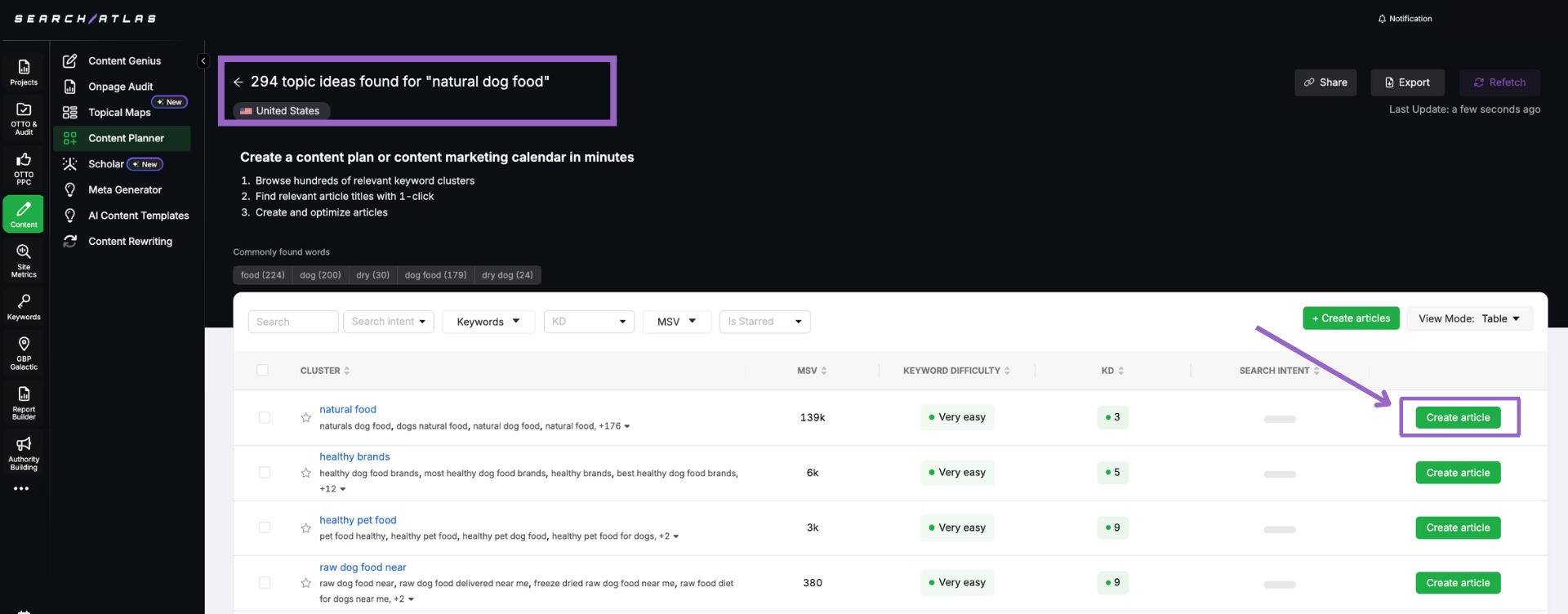
Strategic planning happens through Content Planner, which converts a single keyword into hundreds of semantically grouped topics organized by intent and opportunity. These clusters guide long-term content architecture for blogs, hubs, and editorial programs. Wordtune does not offer keyword clustering, topic mapping, or planning workflows.
Search Atlas pricing ranges from $99 to $399 per month, replacing Wordtune alongside separate SEO audit tools, keyword research platforms, and optimization software. The value comes from unifying writing, auditing, optimization, and execution in one system.
Pros of Search Atlas review include keyword-driven on-page audits, automated execution, semantic optimization, objective scoring with Scholar, and scalable planning with Content Planner. The main con is a learning curve for teams moving from sentence rewriting tools to performance-driven SEO systems.
2. QuillBot: Best Wordtune Alternative for Paraphrasing and Sentence Rewriting
QuillBot is an AI writing platform built for paraphrasing, sentence restructuring, and originality control across academic, professional, and creative content. QuillBot focuses on generating multiple rewritten versions quickly while preserving the original meaning.
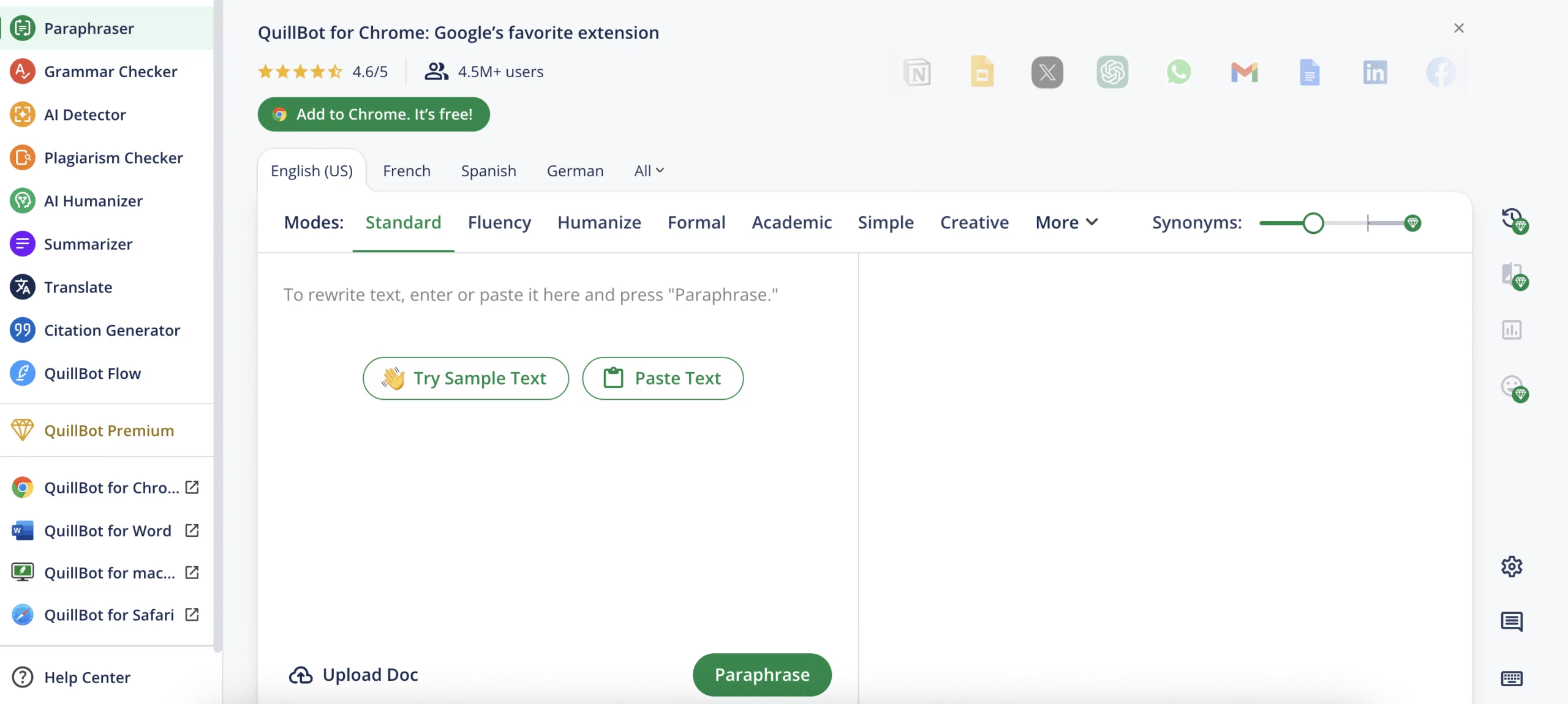
QuillBot delivers broader paraphrasing modes and faster bulk rewrites than Wordtune. QuillBot emphasizes high-throughput rephrasing and add-on utilities, while Wordtune emphasizes nuance, tone control, and sentence polish.
Core features in QuillBot include the AI Paraphraser, rewrite modes, synonym controls, a grammar checker, a plagiarism detector, and a citation generator. QuillBot runs in a web editor and offers extensions that keep rewriting close to the draft.
QuillBot is a paid tool with pricing ranging from free access for basic rewriting to $8.33 per month for the Premium plan.
Pros of QuillBot include flexible rewrite modes, fast output, and built-in plagiarism tools. Cons include inconsistent voice on nuanced passages and weaker style refinement than Wordtune.
3. Paraphraser.io: Best Wordtune Alternative for Quick Free Rewrites
Paraphraser.io is an AI rewriting tool designed for fast sentence rephrasing and vocabulary changes. Paraphraser.io targets short to mid-length text where speed and accessibility matter more than editorial depth.
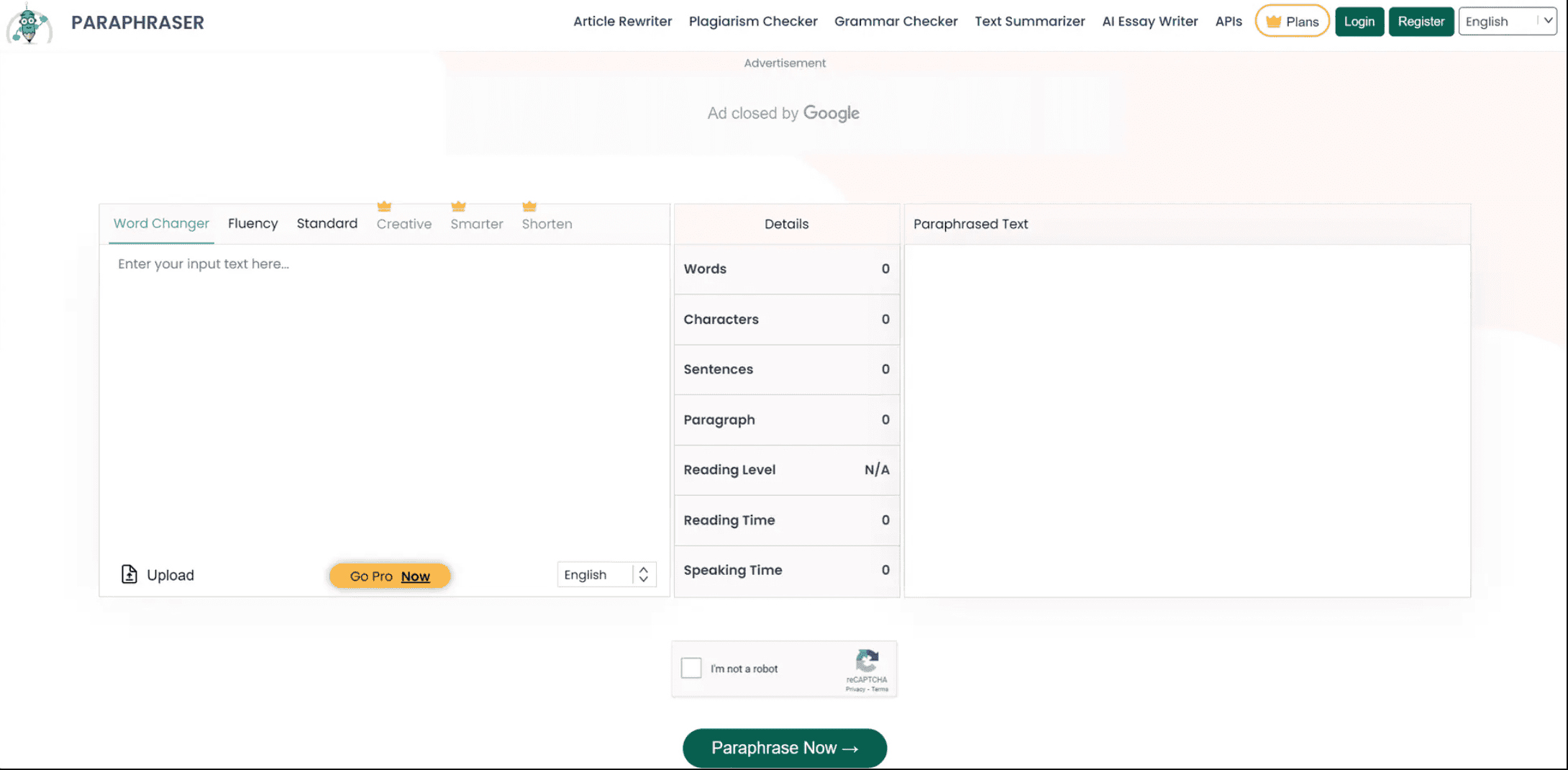
Paraphraser.io provides higher free rewrite volume than Wordtune for rapid drafts. Wordtune produces smoother phrasing and stronger readability for professional writing, while Paraphraser.io prioritizes throughput over nuance.
Core features in Paraphraser.io include rewrite modes, grammar correction, plagiarism checks, summarization, multi-language support, and API access on higher tiers. The editor generates rewrites with context awareness rather than simple synonym swaps.
Paraphraser.io is a paid tool with pricing ranging from $23 to $499 per month, depending on usage limits, features, and API access.
Pros of Paraphraser.io include fast rewrites, generous limits on paid plans, and broad language coverage. Cons include uneven accuracy, intrusive ads on the free version, and limited editor integrations.
4. Simplified: Best Wordtune Alternative for Rewriting and Social Media Copy in One Place
Simplified is an all-in-one creative platform that blends AI writing, visual design, video editing, and social media publishing into a single workspace. Simplified centralizes content creation for teams producing copy across multiple channels.
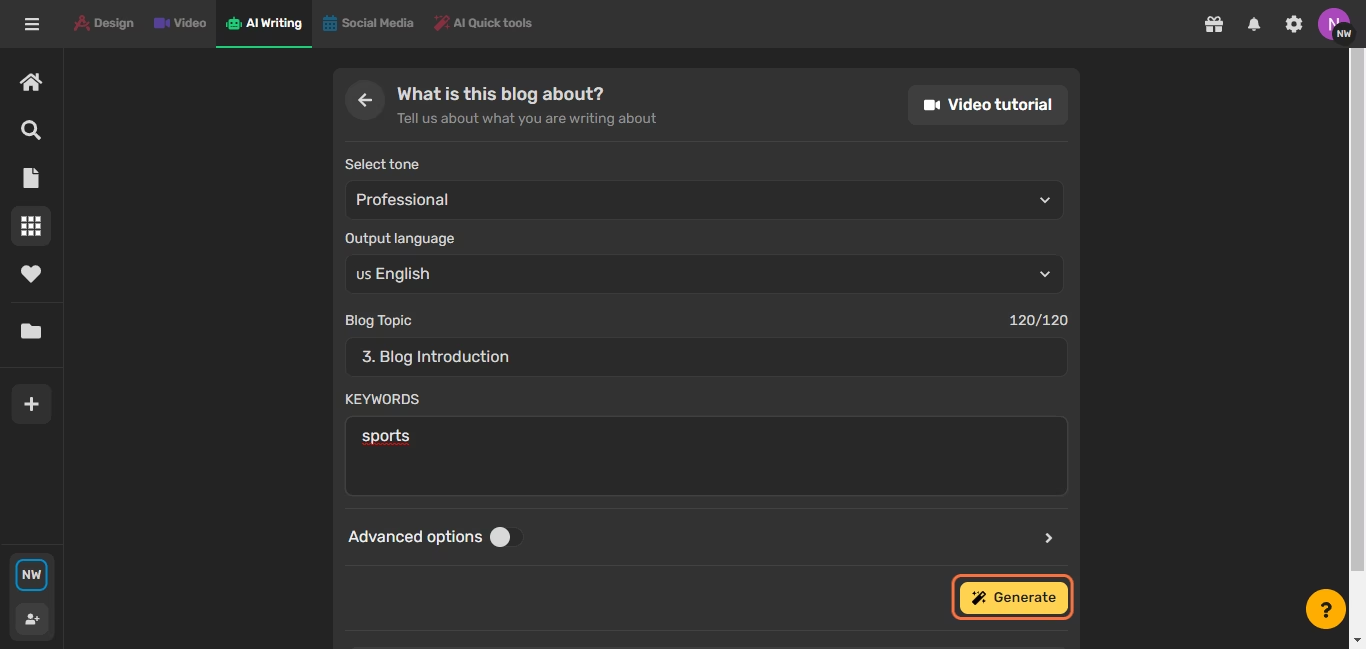
Simplified goes beyond Wordtune by pairing rewriting with execution-ready formats. Wordtune refines individual sentences, while Simplified connects rewrites directly to captions, ads, visuals, and scheduled posts, which suits social and marketing workflows.
Core features in Simplified include AI writing for blogs, ads, and captions, brand-ready design templates, AI-assisted video editing, and a built-in social media planner with scheduling and analytics. Team collaboration tools keep copy, visuals, and approvals aligned across campaigns.
Simplified is a paid tool with pricing ranging from free access to $20 per month, depending on publishing limits and collaboration needs.
Pros of Simplified include a unified workspace for writing and publishing, accessible pricing, and strong collaboration features. Cons include limited SEO optimization, shallow keyword insights, and less control for long-form content refinement.
5. Copy.ai: Best Wordtune Alternative for Marketing-Focused Rewrites and Variations
Copy.ai is an AI writing platform built to generate marketing and sales content across multiple channels. Copy.ai functions as a copy production system that expands short prompts into structured marketing assets.
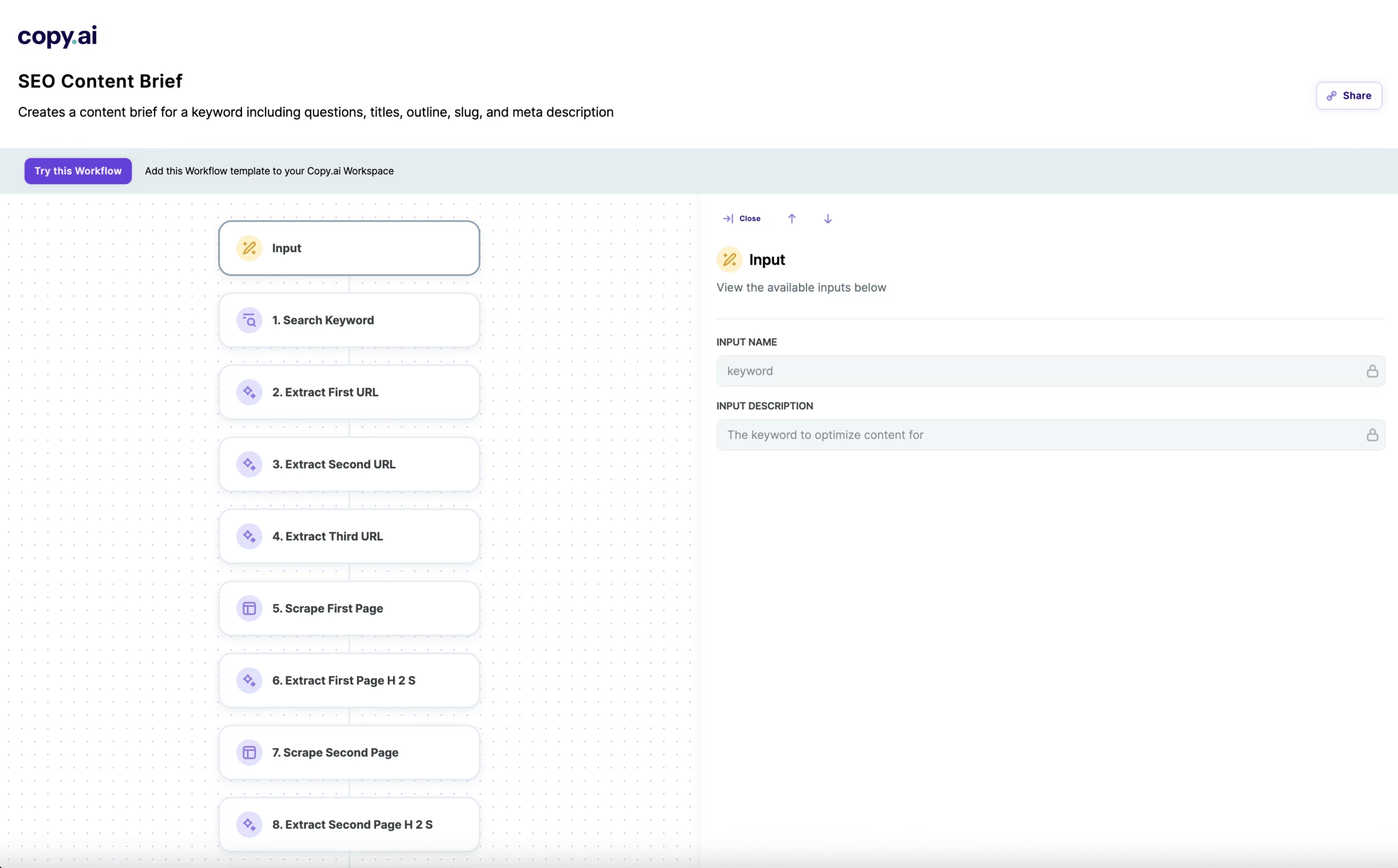
Copy.ai provides stronger marketing focused rewriting than Wordtune by generating multiple content variations for campaigns. Copy.ai produces ads, emails, and landing page copy at scale, while Wordtune centers on improving clarity and tone within individual sentences.
Core features in Copy.ai include rewrite and expansion tools, marketing templates for ads and emails, brand voice controls, localization options, and workflow automation for repeatable content tasks. These features support faster campaign production rather than manual editing.
Copy.ai is a paid tool with pricing ranging from $49 to $249 per month. Higher tiers add workflow automation, collaboration credits, brand voice controls, and marketing integrations for larger teams.
Pros of Copy.ai include fast content variation, strong marketing templates, and scalable workflows. Cons include limited SEO intelligence and higher costs on advanced plans.
6. Speedwrite: Best Wordtune Alternative for Rapid Text Regeneration
Speedwrite is an AI rewriting tool built to regenerate existing text into unique versions while preserving meaning and grammar. Speedwrite focuses on speed and originality, which makes it useful for users who need fast paraphrasing from source material.
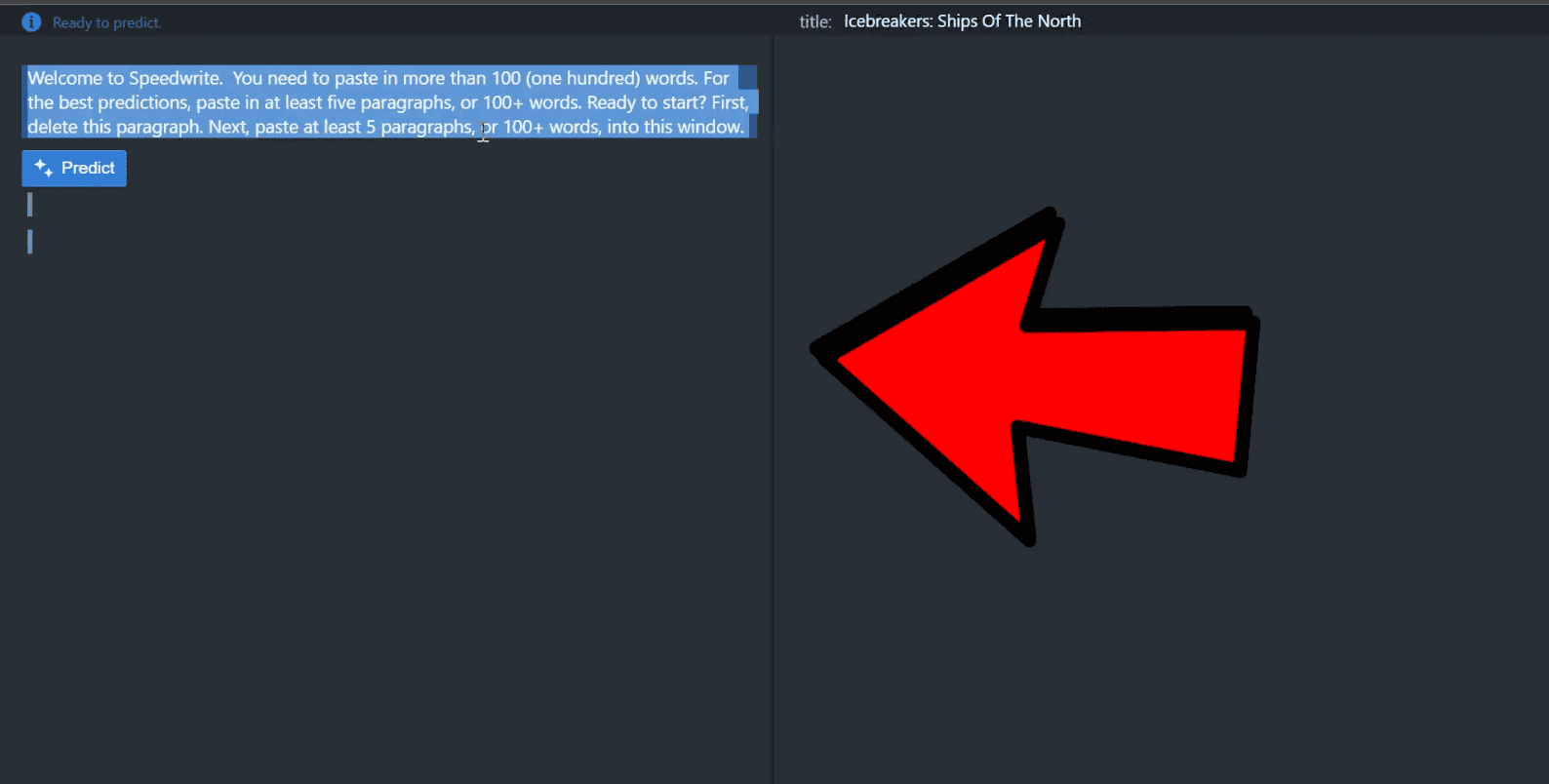
Speedwrite prioritizes originality and large-scale regeneration, while Wordtune emphasizes precision, tone control, and sentence-level refinement. This makes Speedwrite better suited for bulk rewriting and plagiarism avoidance, whereas Wordtune fits everyday stylistic edits.
Core features in Speedwrite include automatic text regeneration, plagiarism-focused rewriting, and sentence restructuring driven by predictive language models. The tool works exclusively from source text rather than generating content from prompts.
Speedwrite is a paid tool with pricing ranging from $4.99 to $7.99 per month, depending on billing cycle. All plans include a fixed number of monthly predictions for content rewriting.
Pros of Speedwrite include fast output, strong originality, and simple workflows. Cons include limited control over tone, no content generation from scratch, and fewer refinement options than advanced editors.
7. ChatGPT: Best Wordtune Alternative for Contextual Rewriting and Idea Expansion
ChatGPT is a conversational AI platform designed for drafting, rewriting, and developing ideas across multiple content formats. ChatGPT adapts responses based on context and instructions, enabling paragraph-level and full-document transformations.
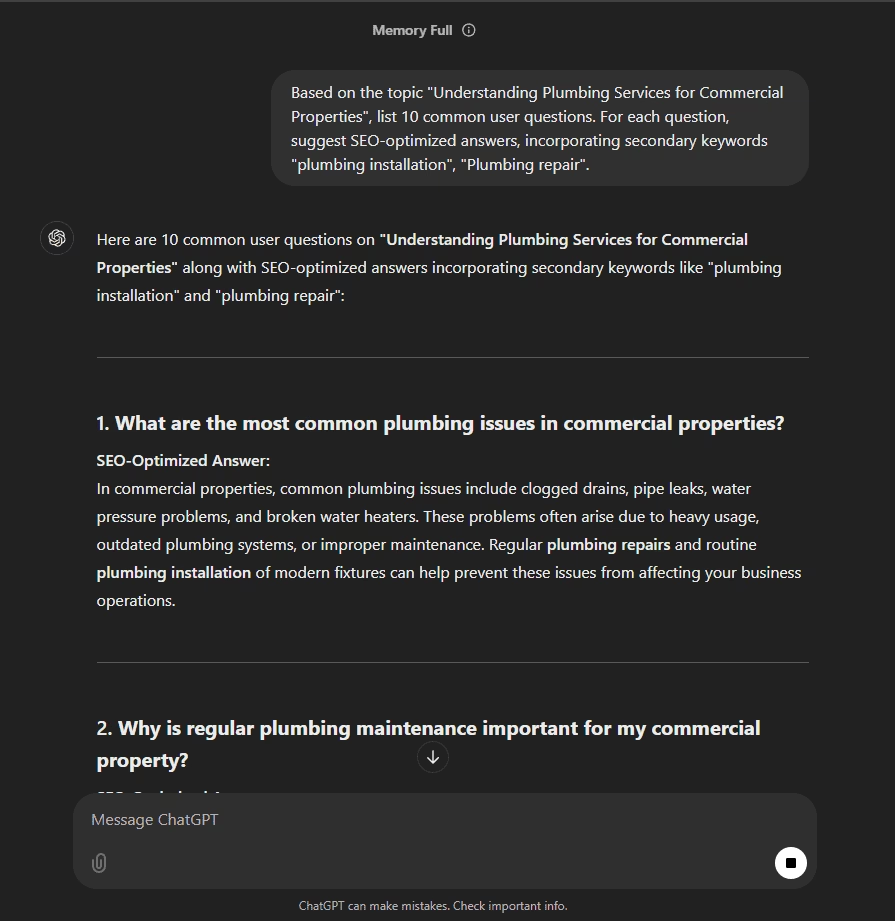
ChatGPT delivers broader contextual rewriting and idea expansion than Wordtune. ChatGPT reshapes structure, meaning, and intent across entire passages, while Wordtune focuses on controlled sentence rewrites and tone adjustments.
Core features in ChatGPT include contextual rewriting, tone adaptation, ideation support, and iterative refinement through prompts. The platform supports exploratory drafting, structured writing, and conversational editing workflows.
ChatGPT is a paid tool with pricing ranging from free access to $200 per month, depending on plan and model access. Higher tiers unlock faster responses, advanced models, and increased usage limits.
Pros of ChatGPT include flexibility, creative range, and support for diverse writing tasks. Cons include limited built-in SEO tooling, occasional repetition, and less precise control over sentence-level edits.
8. Rytr: Best Wordtune Alternative for Budget Rewriting and Short-Form Copy
Rytr is an AI writing tool built for rapid, low-cost short-form content creation. Rytr generates drafts for emails, ads, product descriptions, and social posts using templates and tone presets.
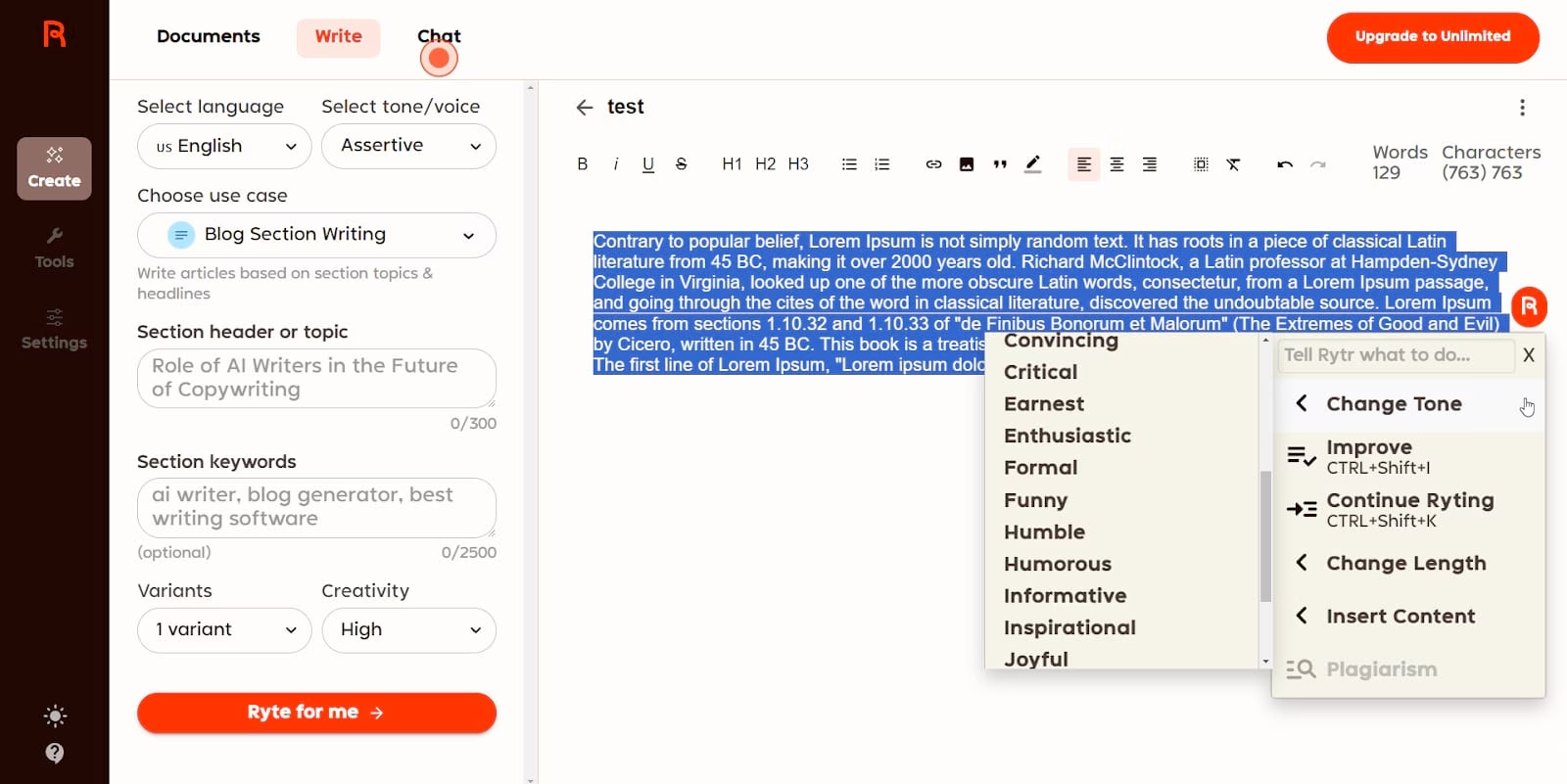
Rytr delivers higher-volume short-form output than Wordtune. Rytr generates repeatable, template-driven copy for marketing workflows, while Wordtune concentrates on refining individual sentences and tone.
Core features in Rytr include short-form rewriting, paragraph generation, tone selection, and a browser extension for in-context writing across web editors. The system prioritizes speed and reuse over detailed editorial analysis.
Rytr is a paid tool with pricing ranging from $9 to $29 per month, based on usage limits, tone availability, and language support.
Pros of Rytr include low pricing, fast generation speed, and a broad template library. Cons include weaker long-form coherence, limited optimization depth, and repetitive phrasing in extended outputs.
9. Writesonic: Best Wordtune Alternative for Long-Form Content Rewrites and Enhancements
Writesonic is an AI content platform built to generate and enhance long-form content across blogs, landing pages, and marketing assets. Writesonic combines drafting tools with optimization features in a single workspace.
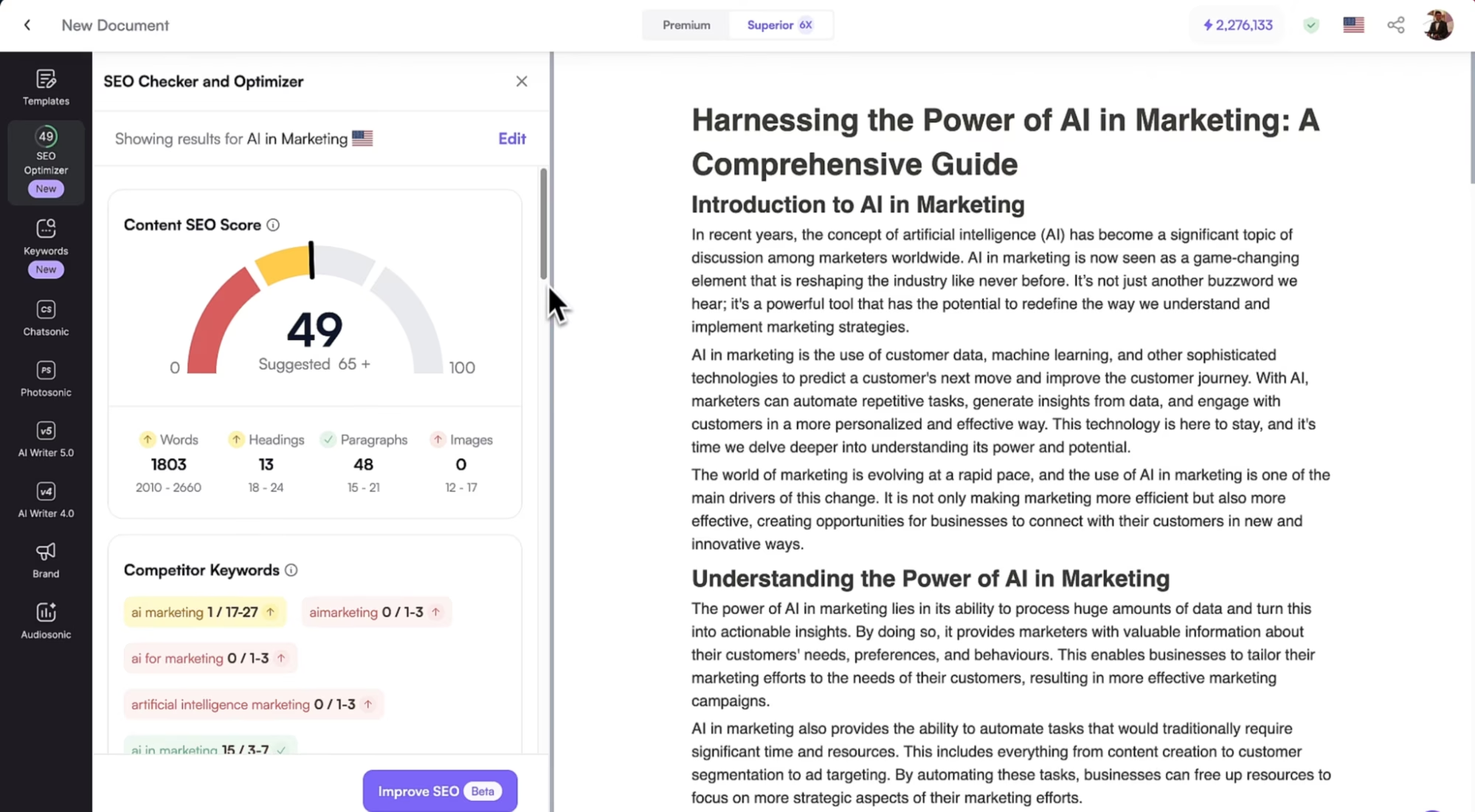
Writesonic is an AI content platform built for rewriting and expanding long-form marketing content. Writesonic supports blogs, landing pages, and campaign assets inside a single writing environment.
Writesonic delivers stronger long-form rewriting capabilities than Wordtune. Writesonic restructures full articles, expands sections, and rebuilds page-level flow, while Wordtune concentrates on refining individual sentences.
Core features in Writesonic include long-form drafting, rewrite and expansion modules, outline generation, and guided prompts that control structure and progression. The platform focuses on content generation rather than sentence-level linguistic tuning.
Writesonic is a paid tool with pricing ranges from $39 to $399 per month, based on usage limits, feature access, and team plans.
Pros of Writesonic review include fast long-form production and broad format support. Cons include low quality in extended outputs, restrictive lower-tier limits, and a dense interface.
10. Jasper: Best Wordtune Alternative for Brand-Tuned Copy Rewriting
Jasper is an AI writing platform designed for marketing teams managing branded content across multiple channels. Jasper supports blogs, ads, email campaigns, and landing pages through centralized brand and workflow controls.
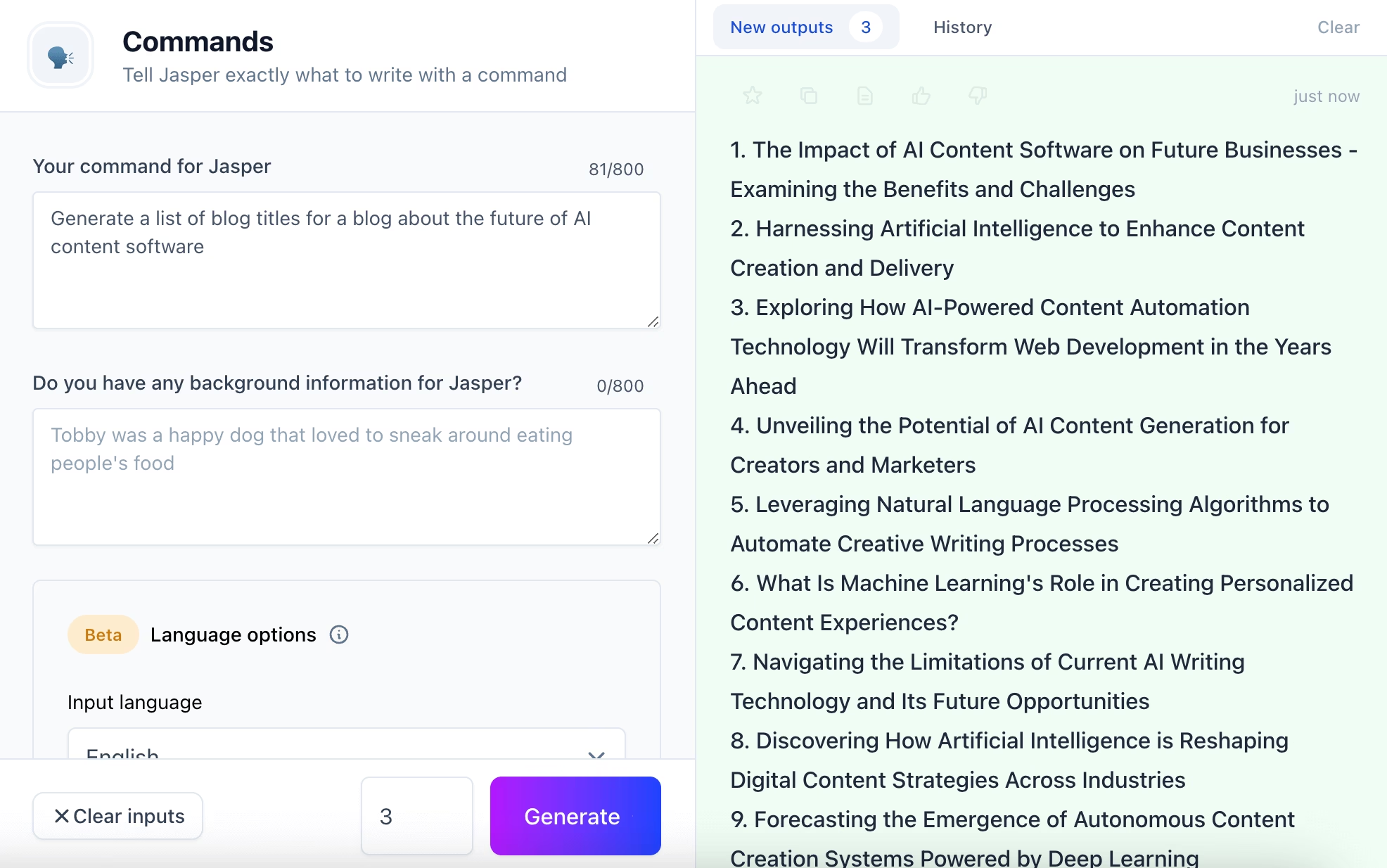
Jasper delivers stronger brand voice enforcement than Wordtune. Jasper applies consistent messaging rules across campaigns and assets, while Wordtune concentrates on refining individual sentences and tone adjustments in isolation.
Core features in Jasper include structured workflows for blog posts, email sequences, paid ads, and long-form rewrites. The Brand Voice capability standardizes terminology, tone, and style, which reduces revision cycles for teams producing content at scale.
Jasper is a paid tool with pricing ranges from $49 per month to custom enterprise pricing, depending on collaboration needs, brand voice configurations, and automation scope.
Pros of Jasper include reliable brand consistency, strong long-form writing quality, and workflows tailored for marketing teams. Cons include onboarding complexity, no free tier, and limited native SEO analysis.
11. Grammarly: Best Wordtune Alternative for Grammar Fixes and Tone Adjustments
Grammarly is an AI writing assistant focused on improving grammar, spelling, punctuation, and tone across documents and digital platforms. Grammarly reviews text in real time and surfaces corrections that improve clarity and readability.
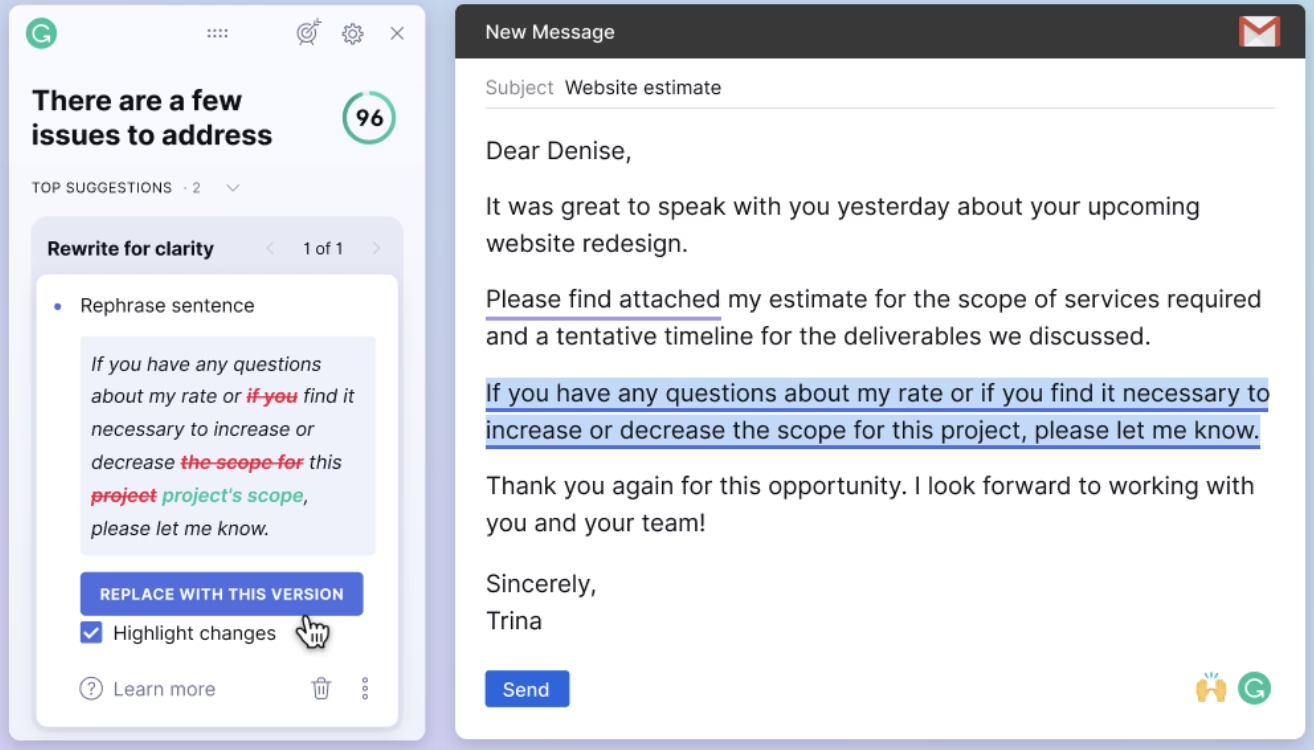
Grammarly delivers broader grammar accuracy and tone standardization than Wordtune. Grammarly prioritizes correctness and professional language consistency, while Wordtune emphasizes creative rephrasing and stylistic variation.
Core features in Grammarly include live grammar and clarity corrections, tone feedback, plagiarism detection, and AI-assisted text generation. The tool runs through desktop software, browser extensions, and integrations with Google Docs and Gmail.
Grammarly is a paid tool with pricing ranges from free access to $30 per month, based on feature depth and AI capabilities.
Pros of Grammarly include high correction accuracy, dependable tone guidance, and wide availability across platforms. Cons include limited content ideation features, occasional overcorrections, and weaker SEO-oriented functionality.
12. ProWritingAid: Best Wordtune Alternative for Style, Clarity, and Readability Improvements
ProWritingAid is a writing analysis platform designed to improve clarity, style, and structure in long-form text. ProWritingAid reviews grammar, repetition, pacing, sentence flow, and readability across creative, academic, and business writing.
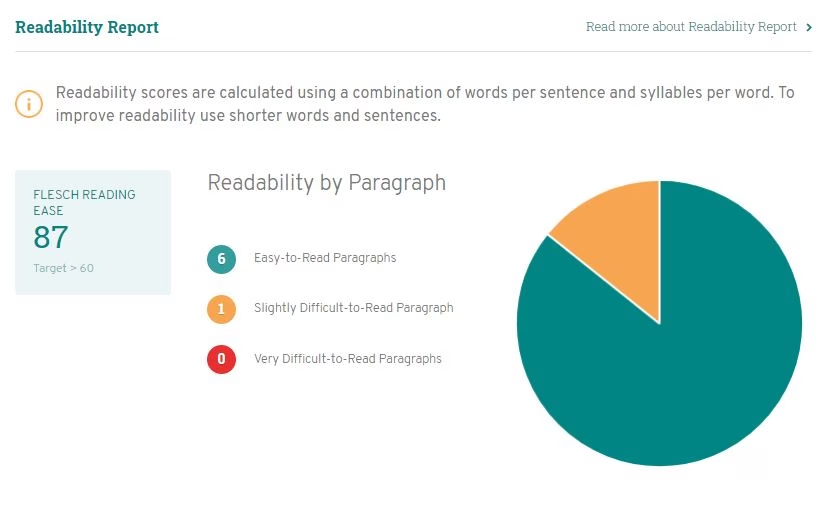
ProWritingAid delivers deeper style and readability analysis than Wordtune. ProWritingAid examines full documents through detailed reports and structural feedback, while Wordtune concentrates on fast sentence rewrites and paraphrasing.
Core features in ProWritingAid include more than 25 reports covering grammar, style, readability, pacing, dialogue, consistency, and structure. The platform includes paraphrasing, plagiarism detection, a contextual thesaurus, and live integrations with Word, Google Docs, and Scrivener for large projects.
ProWritingAid is a paid tool with pricing ranging from free access to $36 per month. The free plan limits word count and AI usage. Paid plans remove writing limits, unlock advanced style reports, and expand editing guidance. Higher tiers increase AI allowances and add deeper critique features for long-form projects.
Pros of ProWritingAid include detailed editorial insight and strong long-form integrations. Cons include strict free-tier limits, added cost for advanced AI features, no mobile app, and reports that overwhelm new writers.
13. Linguix: Best Wordtune Alternative for Real-Time Grammar and Style Suggestions
Linguix is an AI writing assistant built for real-time grammar correction and style guidance. Linguix checks spelling, punctuation, and clarity while providing live rewriting suggestions through browser-based tools.
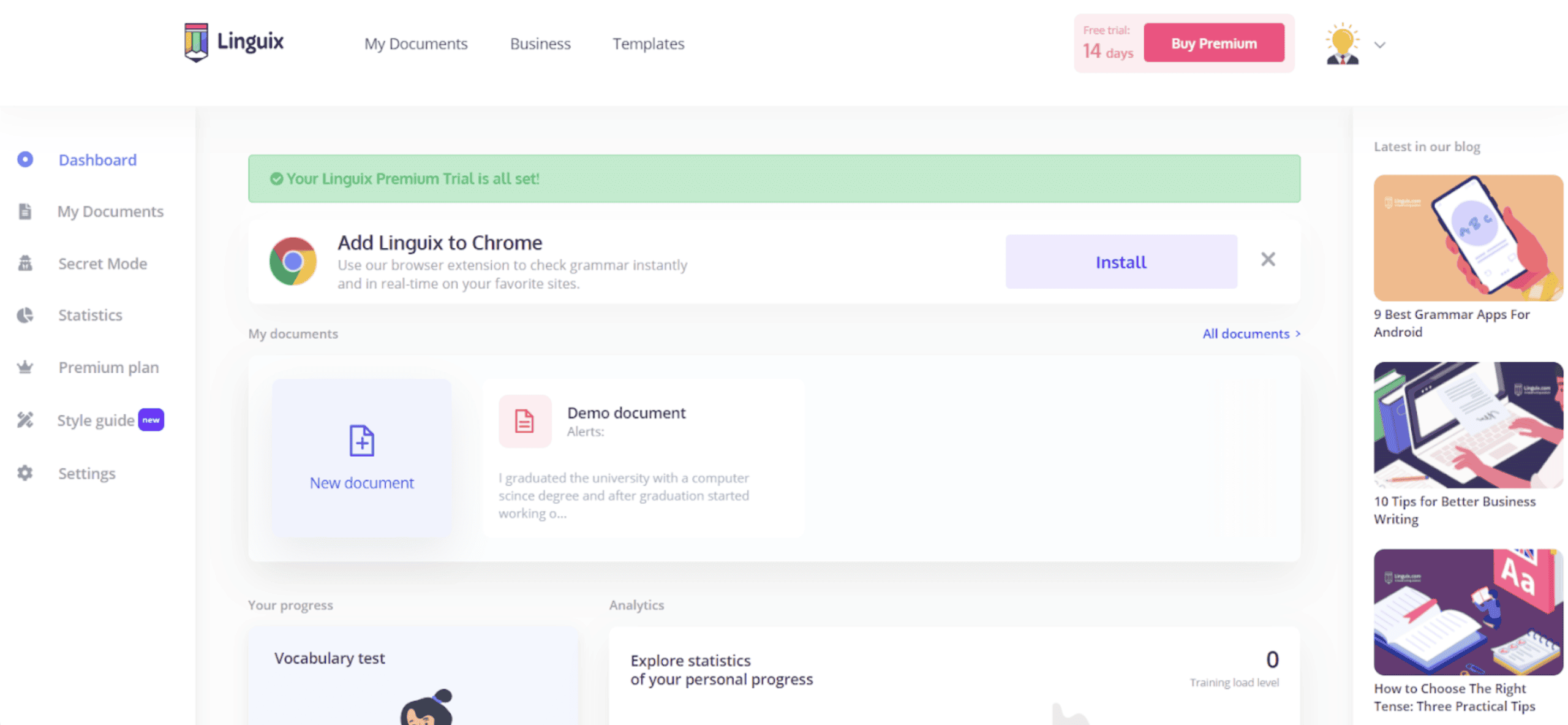
Linguix delivers stronger real-time grammar feedback than Wordtune. Linguix flags errors and style issues as text is written, while Wordtune focuses on post-write sentence rewrites and phrasing changes.
Core features in Linguix include grammar and spell checking, sentence rewriting, contextual style suggestions, and productivity tools such as text shortcuts and templates. The system emphasizes continuous feedback during writing rather than revision after completion.
Linguix is a paid tool with pricing ranging from $10 to $30 per month, depending on the billing term. Monthly plans offer full grammar checking, rewriting, and productivity shortcuts. Longer-term plans reduce the monthly cost while keeping the same feature set.
Pros of Linguix include affordable pricing, real-time feedback, and productivity shortcuts. Cons include missed complex errors, limited language support, and no dedicated desktop application.
14. Content Harmony: Best Wordtune Alternative for Structured Briefs and Content Refreshes
Content Harmony is a content workflow platform built to systematize content briefs, keyword research, and content evaluation for editorial teams. Content Harmony supports agencies and in-house teams that manage research-heavy content production at scale.
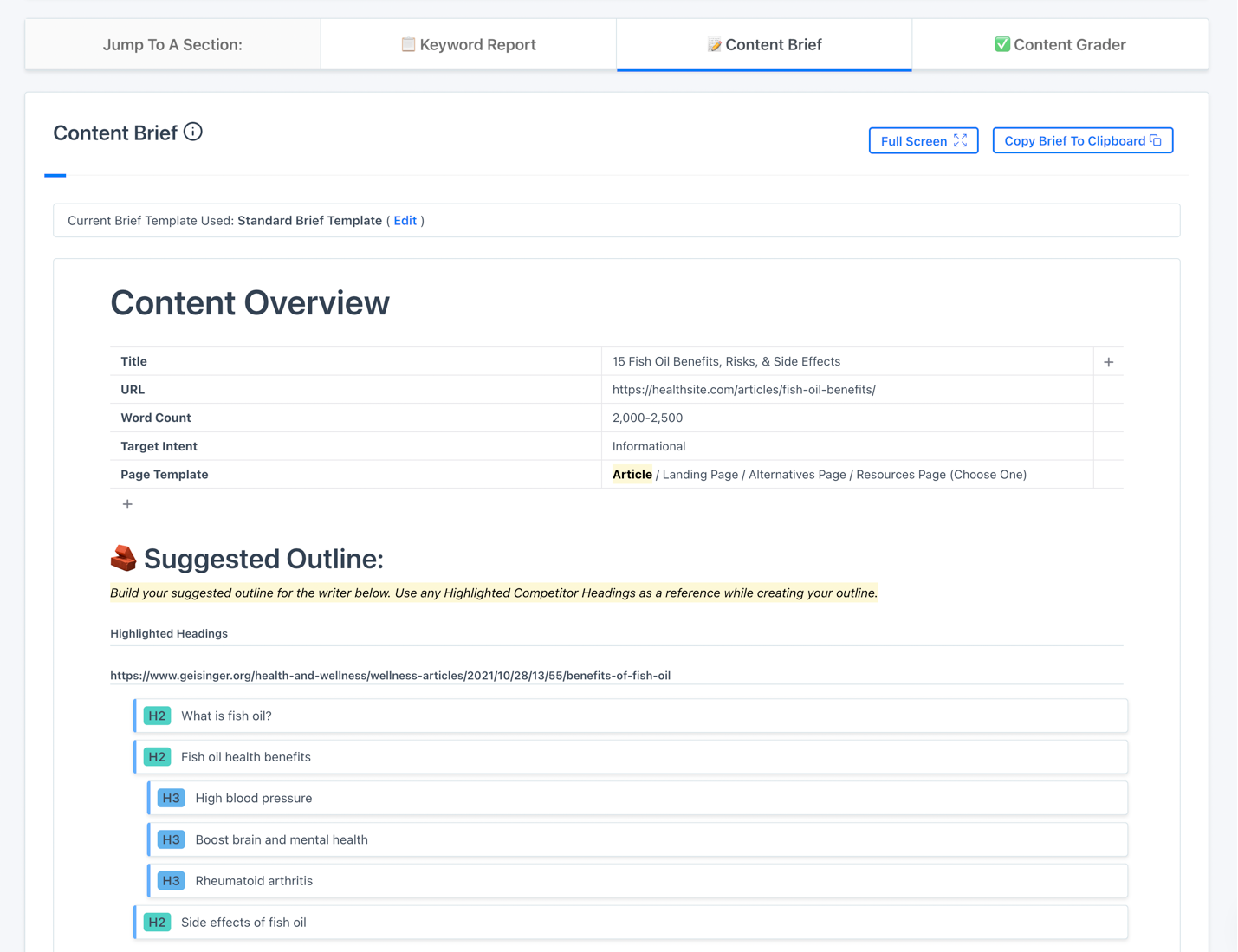
Content Harmony delivers stronger content briefing and SERP-driven optimization than Wordtune. Content Harmony builds structured briefs from search intent analysis and competitor research, while Wordtune focuses on rewriting and clarity improvements at the sentence level.
Core features in Content Harmony include automated brief generation, search intent mapping, competitor outline analysis, keyword clustering, and topic coverage scoring. These workflows standardize research and ensure writers address all required topics before drafting or refreshing content.
Content Harmony is a paid tool with pricing starting at $8 to $99 per month. A $10 trial covers the first 10 workflows. Subscription plans include a fixed number of workflows with rollover credits, while higher volumes reduce the effective monthly cost on annual plans. Flexible usage is available with per-workflow pricing starting at $8.
Pros of Content Harmony include consistent brief structure, strong SERP and keyword analysis, and efficient workflows for agencies. Cons include per-workflow costs, limited optimization beyond briefs, and no deep technical SEO tooling.
15. Writecream: Best Wordtune Alternative for Outreach Emails and Personalized Rewrites
Writecream is an AI content platform designed for personalized outreach and high-volume marketing copy. Writecream generates cold emails, LinkedIn messages, ads, scripts, and social content through automation-first templates.
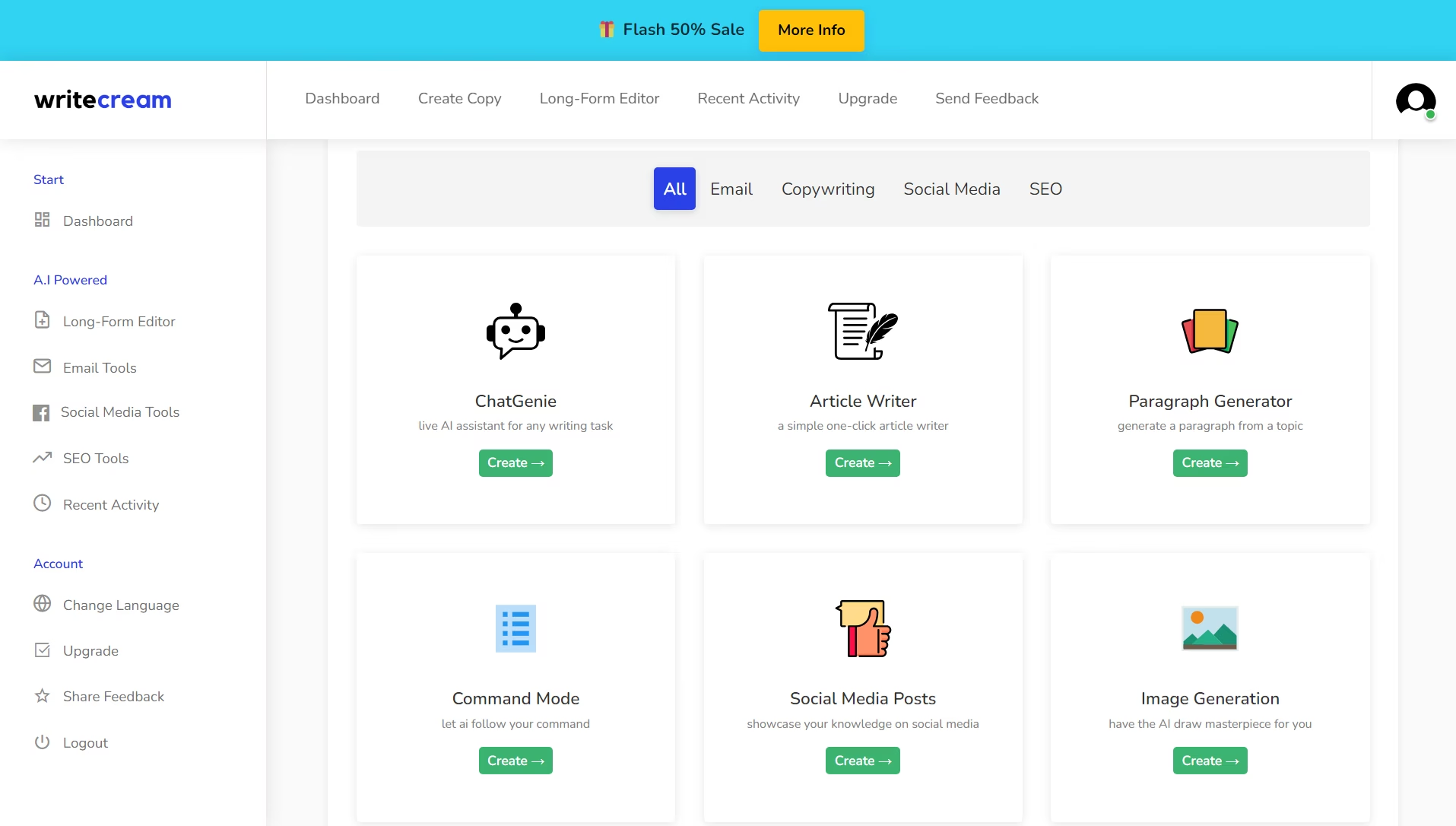
Writecream delivers stronger outreach-focused personalization than Wordtune. Writecream automates tailored intros and lead-specific messaging, while Wordtune centers on general rewriting and clarity improvements.
Core features in Writecream include automated personalization for cold outreach, bulk content generation, and a large template library across email, social, and sales channels. The platform extends beyond text into basic image and audio generation.
Writecream is a paid tool with pricing ranging from free access to $49 per month. Lower tiers limit credits and usage, while higher plans expand volume, processing speed, and team access.
Pros of Writecream include strong personalization, broad template coverage, and fast execution. Cons include credit limitations, inconsistent AI media quality, and required manual refinement for longer content.
16. Anyword: Best Wordtune Alternative for Conversion-Optimized Copy Variants
Anyword is an AI copywriting platform built for marketers who prioritize performance-driven messaging. Anyword creates and evaluates copy for ads, landing pages, and campaigns using audience data and historical performance signals.
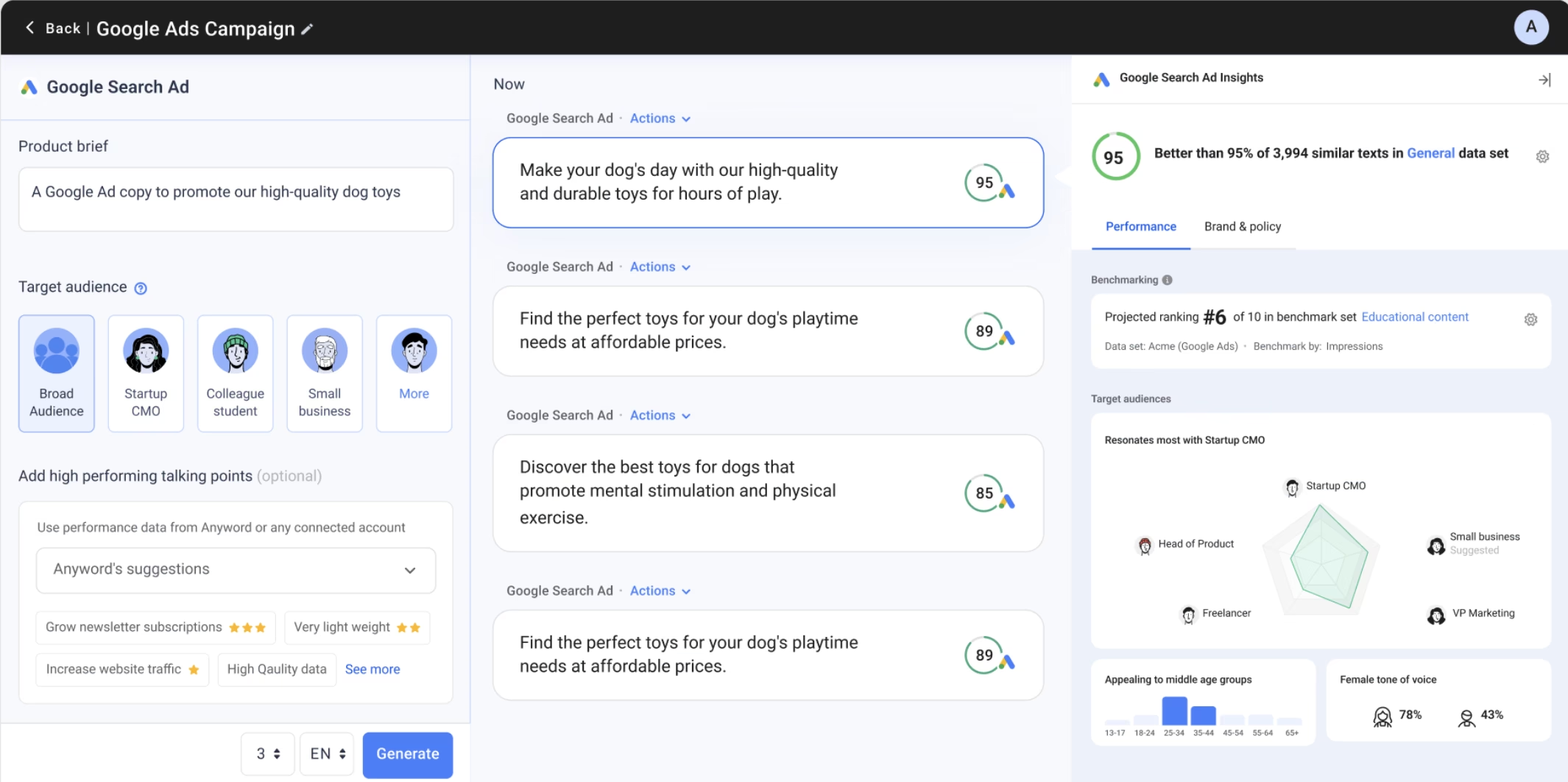
Anyword delivers stronger conversion-focused copy optimization than Wordtune. Anyword predicts performance outcomes and scores variants before publishing, while Wordtune concentrates on rewriting text for clarity and tone without conversion feedback.
Core features in Anyword include predictive performance scoring, copy intelligence recommendations, audience targeting controls, and brand voice settings. The platform supports multilingual campaigns and adapts messaging for different audience segments.
Anyword is a paid tool with pricing ranging from $49 to $499 per month. Lower tiers target individual marketers, while higher plans expand prediction volume, advanced models, and access to deeper performance data.
Pros of Anyword include data-backed copy scoring, audience-level insights, and strong brand consistency controls. Cons include limited SEO tooling and occasional instability during live editing.
17. Surfer SEO: Best Wordtune Alternative for SEO-Optimized Content Revisions
Surfer SEO is a content optimization platform designed to improve search performance through data-driven analysis. Surfer SEO evaluates top-ranking pages and converts ranking patterns into actionable content recommendations.
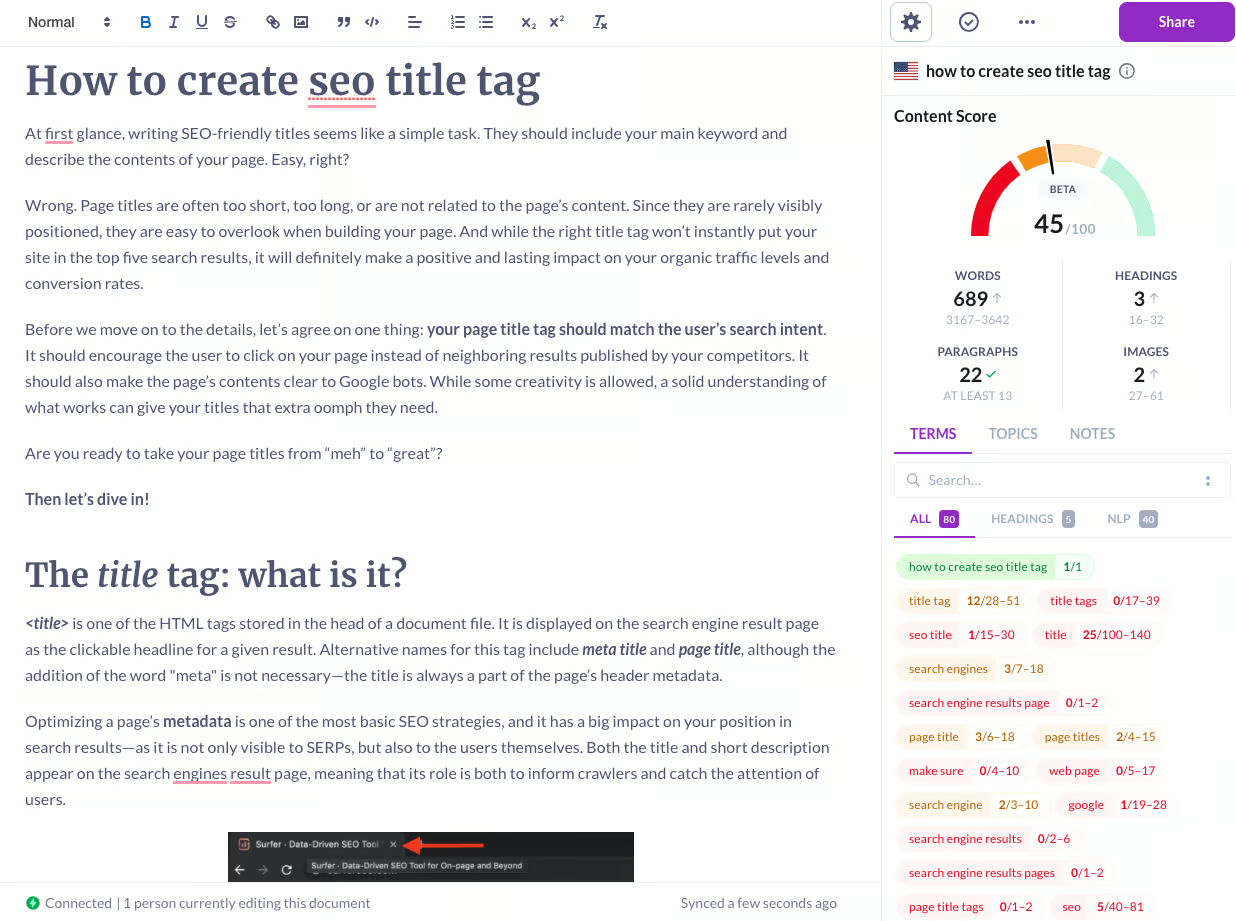
Surfer SEO delivers stronger SEO-focused content revisions than Wordtune. Surfer SEO provides keyword targets, structural guidance, and competitive benchmarks, while Wordtune focuses on general rewriting, readability, and tone refinement.
Core features in Surfer SEO include a content editor with keyword ranges, topic coverage analysis, and competitor comparisons. NLP-based models translate ranking signals into measurable on-page optimization targets.
Surfer SEO is a paid tool with pricing ranging from $79 to $179 per month. Entry plans include content optimization and audits, while higher tiers expand collaboration, AI features, and API access.

Pros of Surfer SEO review include precise optimization scoring, strong international SEO support, and a focused editing interface. Cons include a learning curve and reduced flexibility for highly creative or niche tone requirements.
18. Clearscope: Best Wordtune Alternative for Rewriting Content to Match SEO Intent
Clearscope is an SEO content optimization platform built to align written content with search intent and ranking expectations. Clearscope analyzes top-ranking pages and translates competitive patterns into concrete content guidance.

Clearscope delivers stronger SEO-intent alignment than Wordtune. Clearscope identifies priority topics, terms, and structural gaps based on SERP analysis, while Wordtune concentrates on improving language clarity and tone without search context.
Core features in Clearscope include a Content Editor that balances readability and keyword usage, a Term Map for competitive topic grouping, and detailed content reports covering headings, related questions, and priority terms. These tools reveal how high-ranking pages structure and expand topic coverage.
Clearscope is a paid tool with pricing ranging from $189 to $399 per month. Lower tiers provide access to the Content Editor and reports, while higher plans expand usage limits, support levels, and enterprise controls.
Pros of Clearscope review include reliable SERP insights, a clean interface, and strong customer support. Cons include limited technical SEO tooling and the risk of over-optimization when targeting top content grades.
19. Frase.io: Best Wordtune Alternative for SERP-Aware Rewrites and Content Updates
Frase.io is an AI content platform designed to centralize research, outlining, and content updates. Frase.io examines search results and competing pages to surface topics, questions, and keyword patterns that shape search-aligned content.
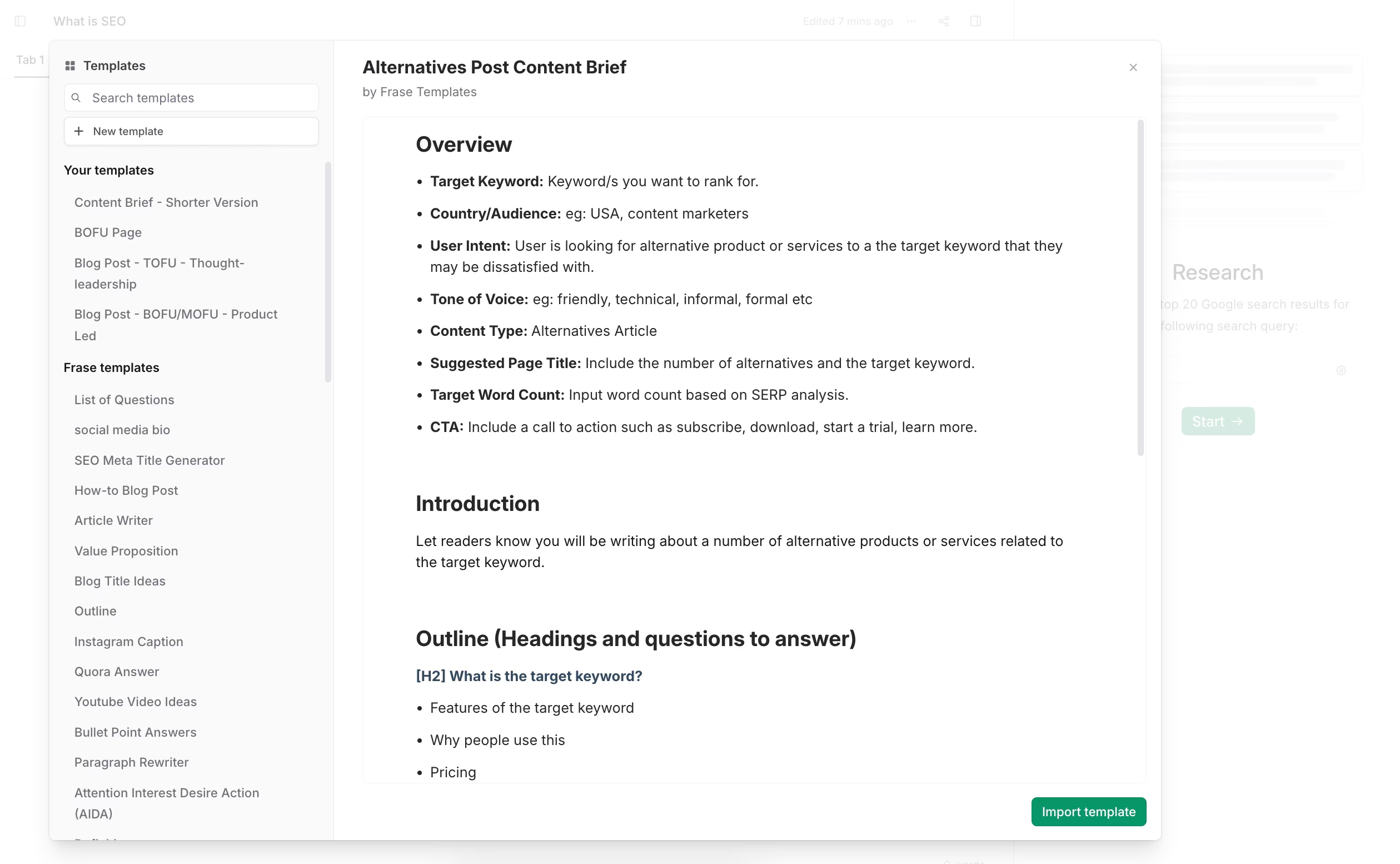
Frase.io delivers stronger SERP-aware rewriting and content refresh capabilities than Wordtune. Frase.io guides updates using competitor data and query intent, while Wordtune focuses on rewriting text for readability and stylistic flow.
Core features in Frase.io include AI-generated content briefs, SERP analysis, a collaborative writing editor, and integrations with Google Docs and WordPress. These features keep research, drafting, and optimization aligned across contributors.
Frase.io is a paid tool with pricing ranging from $45 to $115 per month, depending on content limits, user access, and workflow needs.
Pros of Frase review include strong research synthesis, clear outline creation, and live optimization guidance. Cons include restrictive lower-tier limits, separate costs for advanced AI documents, and limited technical SEO depth.
20. Dashword: Best Wordtune Alternative for Content Scoring and SEO-Aligned Rewrites
Dashword is an SEO content optimization platform built to guide writers toward search-aligned articles. Dashword studies top-ranking pages and converts SERP patterns into structured briefs and measurable content scores.
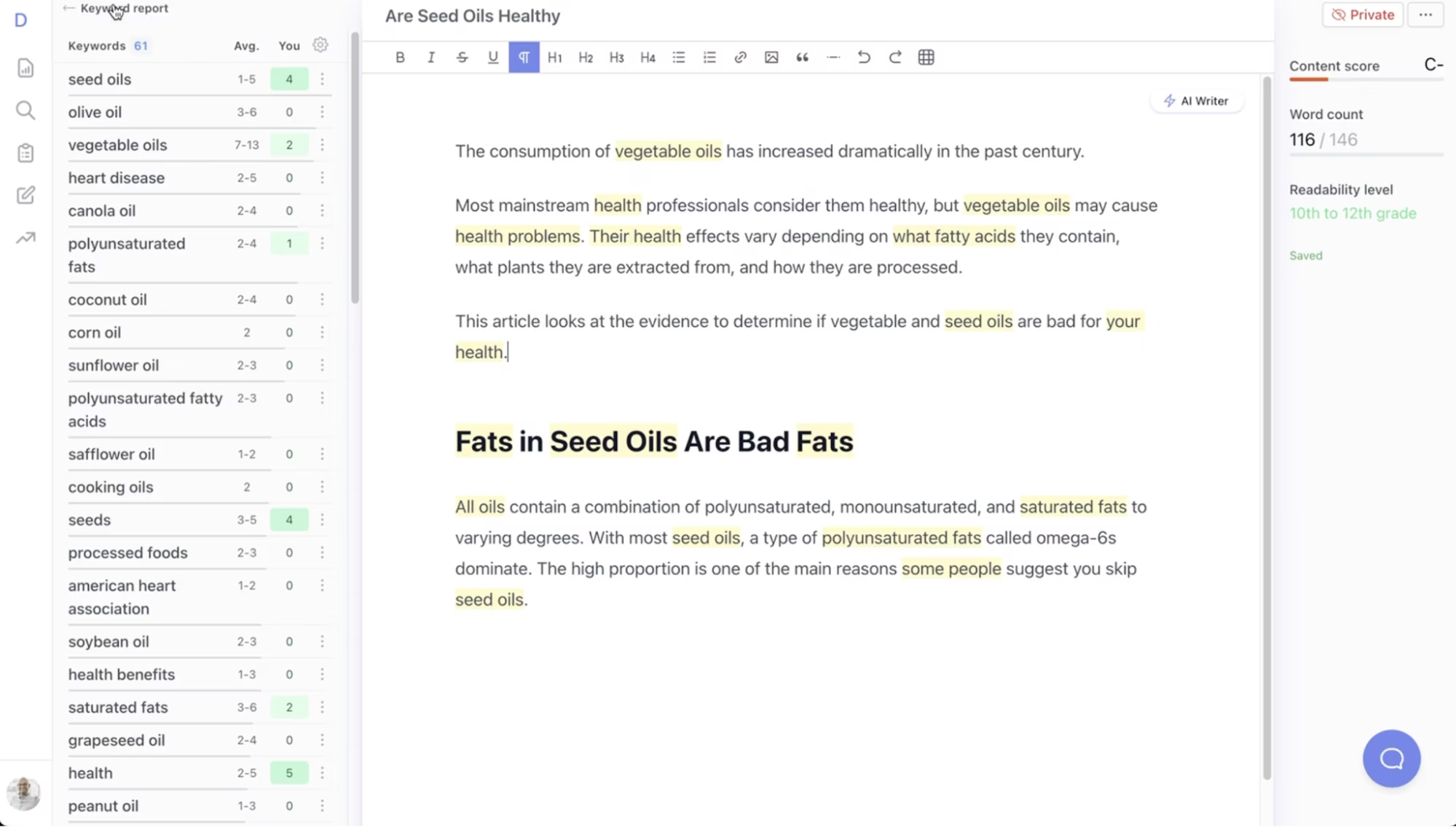
Dashword delivers stronger SEO-driven content scoring than Wordtune. Dashword evaluates topic coverage and alignment against ranking pages, while Wordtune focuses on improving style and clarity without search intent context.
Core features in Dashword include a brief builder that compiles outlines, questions, and key terms from ranking results, plus a content editor that updates scores in real time. Google Docs integration extends scoring into external writing environments, and an optional AI assistant speeds up drafting.
Dashword is a paid tool with pricing ranging from $99 to $349 per month. Lower tiers include a fixed number of content reports and seats, while higher plans expand report volume, optimization limits, and team access.
Pros of Dashword include a clean interface, clear SEO guidance, and collaboration support. Cons include higher costs at scale and fewer advanced SEO capabilities than broader enterprise platforms.
21. WriterZen: Best Wordtune Alternative for Topic Research and Content Refresh Plans
WriterZen is an SEO content platform built to manage keyword research, topic clustering, outlining, drafting, and optimization in one system. WriterZen supports marketers and SEO teams that plan and refresh content at scale.
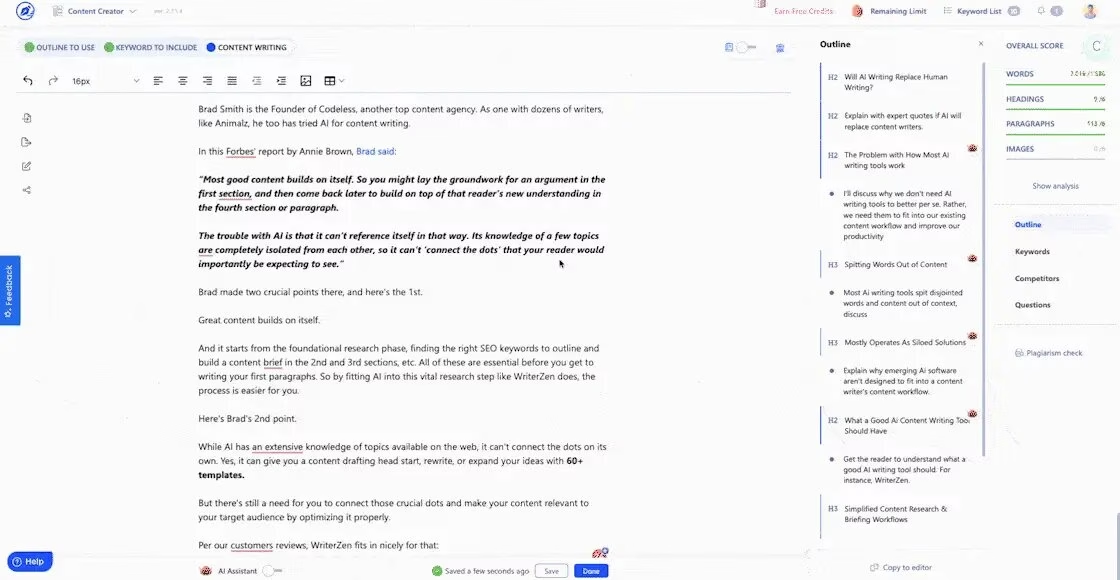
WriterZen delivers stronger topic research and content planning capabilities than Wordtune. WriterZen structures content strategies around keyword clusters and refresh opportunities, while Wordtune centers on rewriting text for clarity and tone.
Core features in WriterZen include Topic Discovery for idea clustering, a Keyword Explorer with KGR filtering, a Content Creator for SERP-aligned outlines, and an AI writing assistant for section-level drafting. Additional tools cover plagiarism checks, keyword planning, and collaboration.
WriterZen is a paid tool with lifetime pricing starting at $90. The one-time payment model grants ongoing access after a short trial period, removing recurring subscription fees.
Pros of WriterZen include strong keyword research, effective topic clustering, and an integrated workflow. Cons include a learning curve, slower keyword updates, an AI writer that requires editing, and a workflow interface that feels fragmented in places.
22. Arvow: Best Wordtune Alternative for SEO-Focused Rewriting and Auto-Publishing
Arvow, previously known as Journalist AI, is an AI-powered platform built for large-scale SEO content creation and automated publishing. Arvow generates, optimizes, refreshes, and publishes content directly to websites through an end-to-end automation workflow.
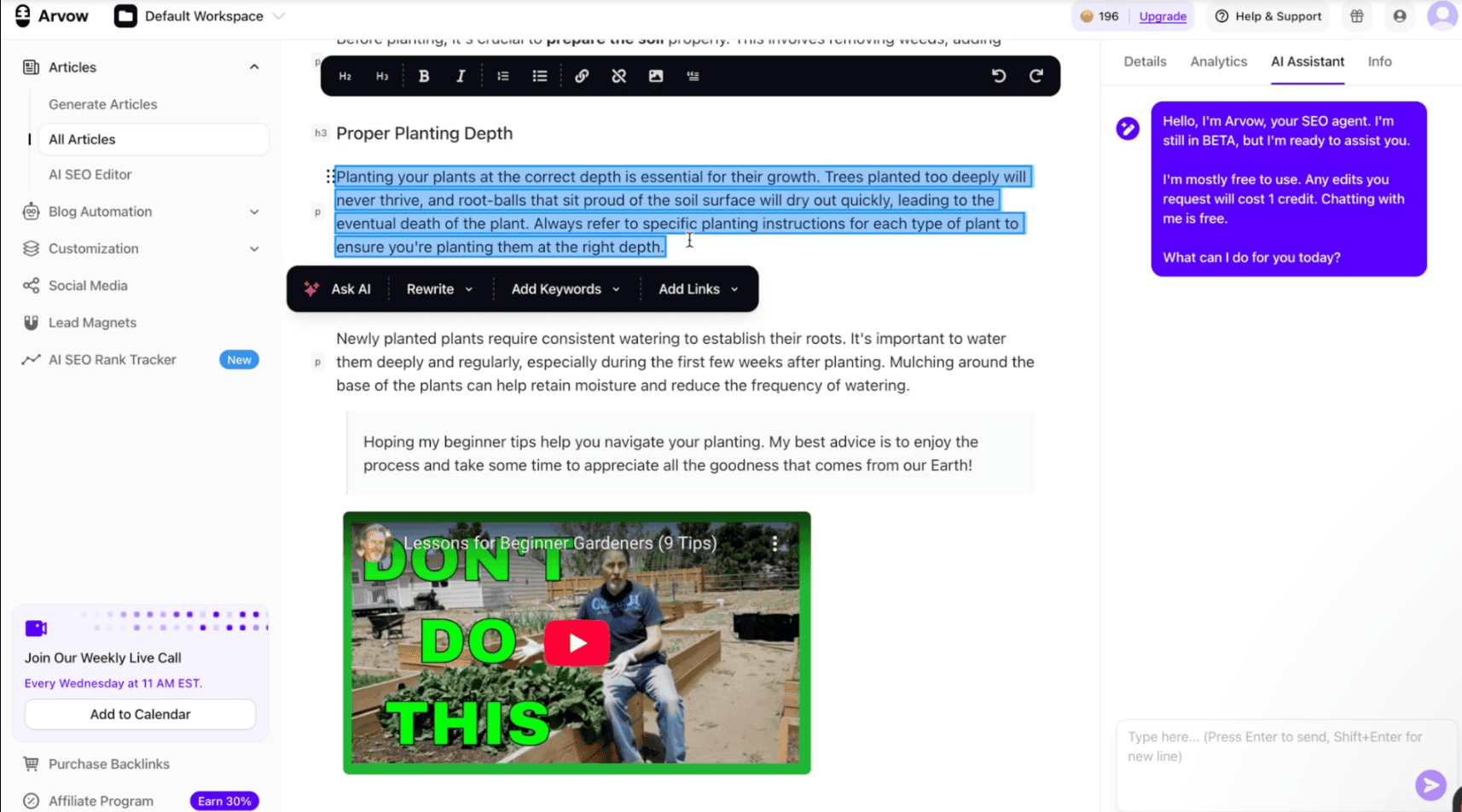
Arvow is designed as a more comprehensive SEO automation and auto-publishing platform than Wordtune, which primarily functions as an AI writing assistant for improving general text clarity and readability.
Core features in Arvow focus on full-cycle SEO automation. The AI Article Writer produces long-form, structured content from keywords or headlines. Knowledge Base uploads train the system on brand data, documents, and URLs to align output with domain expertise and E-E-A-T expectations.
Arvow is a paid tool with pricing ranging from $59 to $389 per month. The $59 Solo plan offers individual workflows, the $89 Business plan expands credits, and the $389 Agency plan scales production for multiple clients. Additional options include pay-as-you-go credits.
Pros of Arvow include automated content refresh, direct publishing, and scalable SEO production. Cons include reduced creative control and the need for human review to verify facts and refine output quality.
23. WordAI: Best Wordtune Alternative for Human-Sounding Spun Variations
Arvow is an AI-driven SEO automation platform built to generate, update, and publish content at scale. Arvow manages the full lifecycle of SEO content, from creation and optimization to direct publishing on live sites.
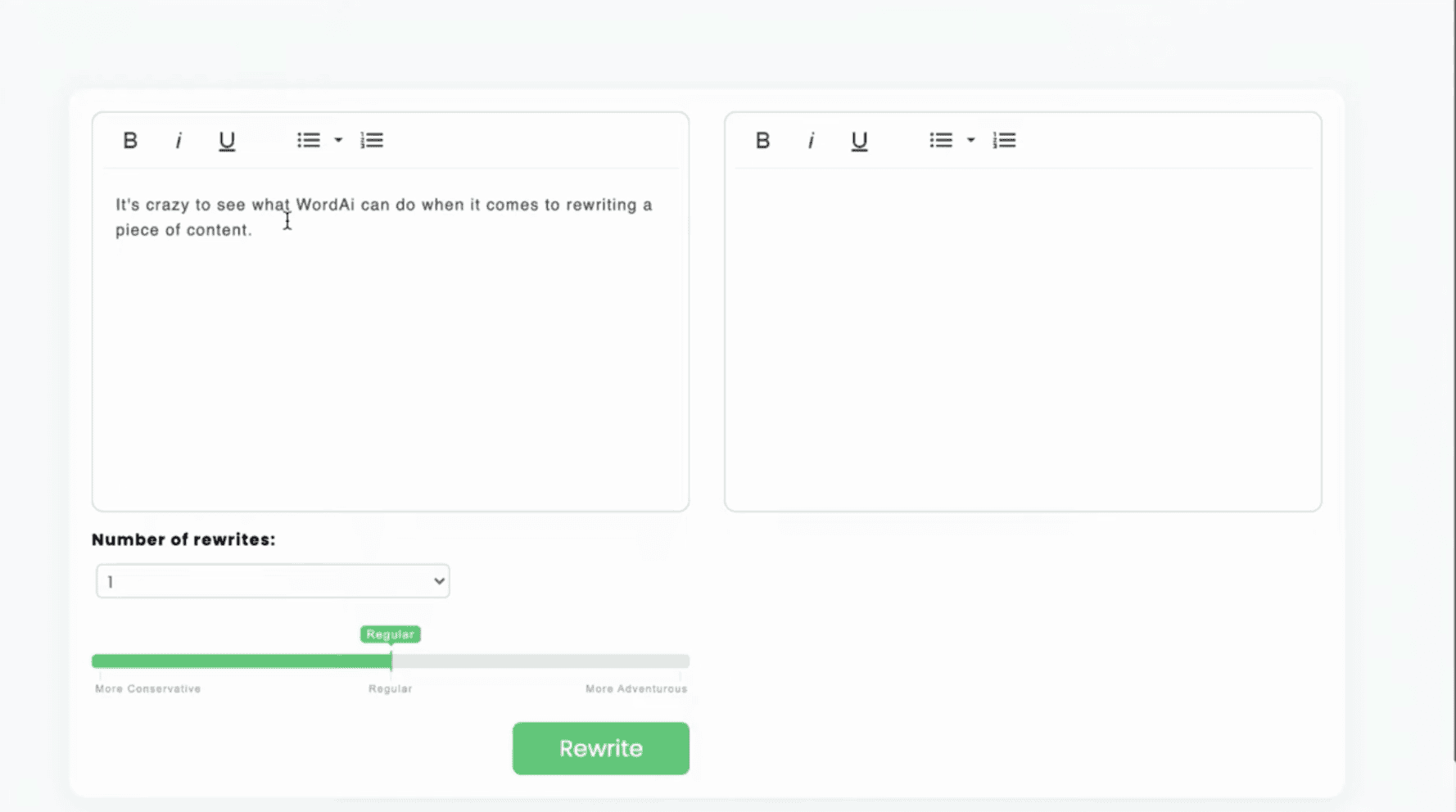
Arvow delivers broader SEO automation and publishing capabilities than Wordtune. Arvow automates content creation, optimization, and deployment, while Wordtune focuses on rewriting text to improve clarity and readability.
Core features in Arvow include an AI Article Writer that produces long-form structured content from keywords or headlines, a Knowledge Base that trains output on brand documents and URLs, and built-in publishing and syndication tools. These features enable continuous content refresh with minimal manual effort.
Arvow is a paid tool with pricing ranging from $59 to $389 per month. Entry plans support individual workflows, while higher tiers expand content credits, automation capacity, and multi-client production. Pay-as-you-go credits provide additional flexibility.
Pros of Arvow include automated content refresh, native publishing, and scalable SEO production. Cons include reduced creative control and the need for human review to verify accuracy and refine output.
24. Textero: Best Wordtune Alternative for Academic and Essay Rewriting
Textero.ai is an AI academic writing assistant built for students and researchers working on structured assignments. Textero.ai supports essay drafting, outlining, research assistance, and citation-aware writing across academic formats.
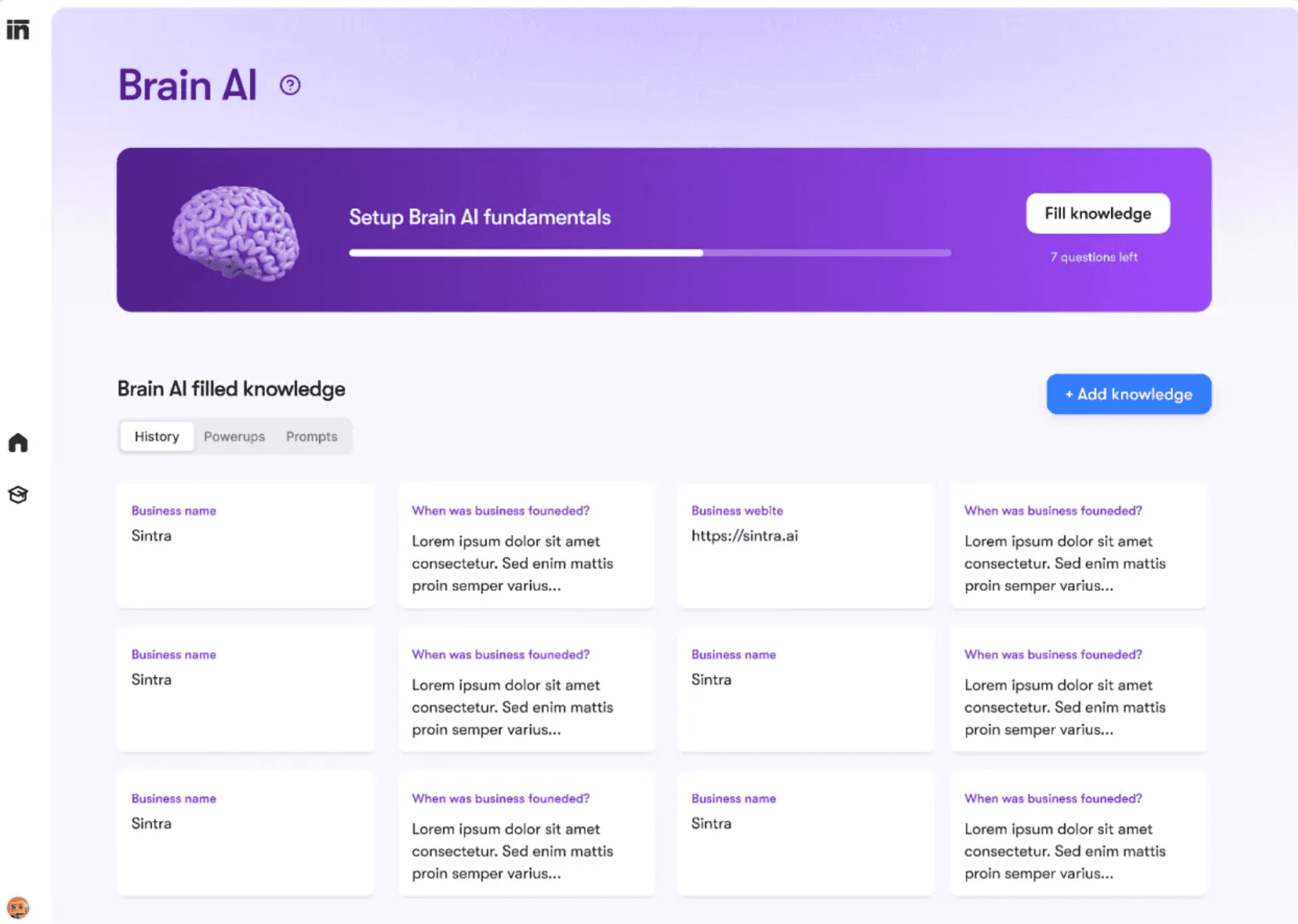
Textero delivers stronger academic rewriting and argument restructuring than Wordtune. Textero reshapes essays around thesis clarity, paragraph logic, and academic conventions, while Wordtune focuses on general sentence rewriting and tone improvements.
Core features in Textero.ai include essay and outline generators, source discovery for research support, PDF summarization, plagiarism checks, and AI content detection. These tools guide structure, originality, and citation accuracy throughout academic projects.
Textero.ai is a paid tool with pricing ranging from free access to $8.33 per month. Free tiers limit daily usage and features, while paid plans unlock longer papers, expanded research tools, and higher writing limits.
Pros of Textero.ai include built-in research assistance, faster structured drafting, and multilingual support. Cons include generic draft tone, limited citation style flexibility, and the need for substantial human refinement.
25. Paperpal: Best Wordtune Alternative for Research Paper and Journal-Ready Edits
Paperpal is an AI academic editing platform designed for researchers and scholars preparing publication-ready manuscripts. Paperpal improves grammar, clarity, and academic tone to meet journal standards.
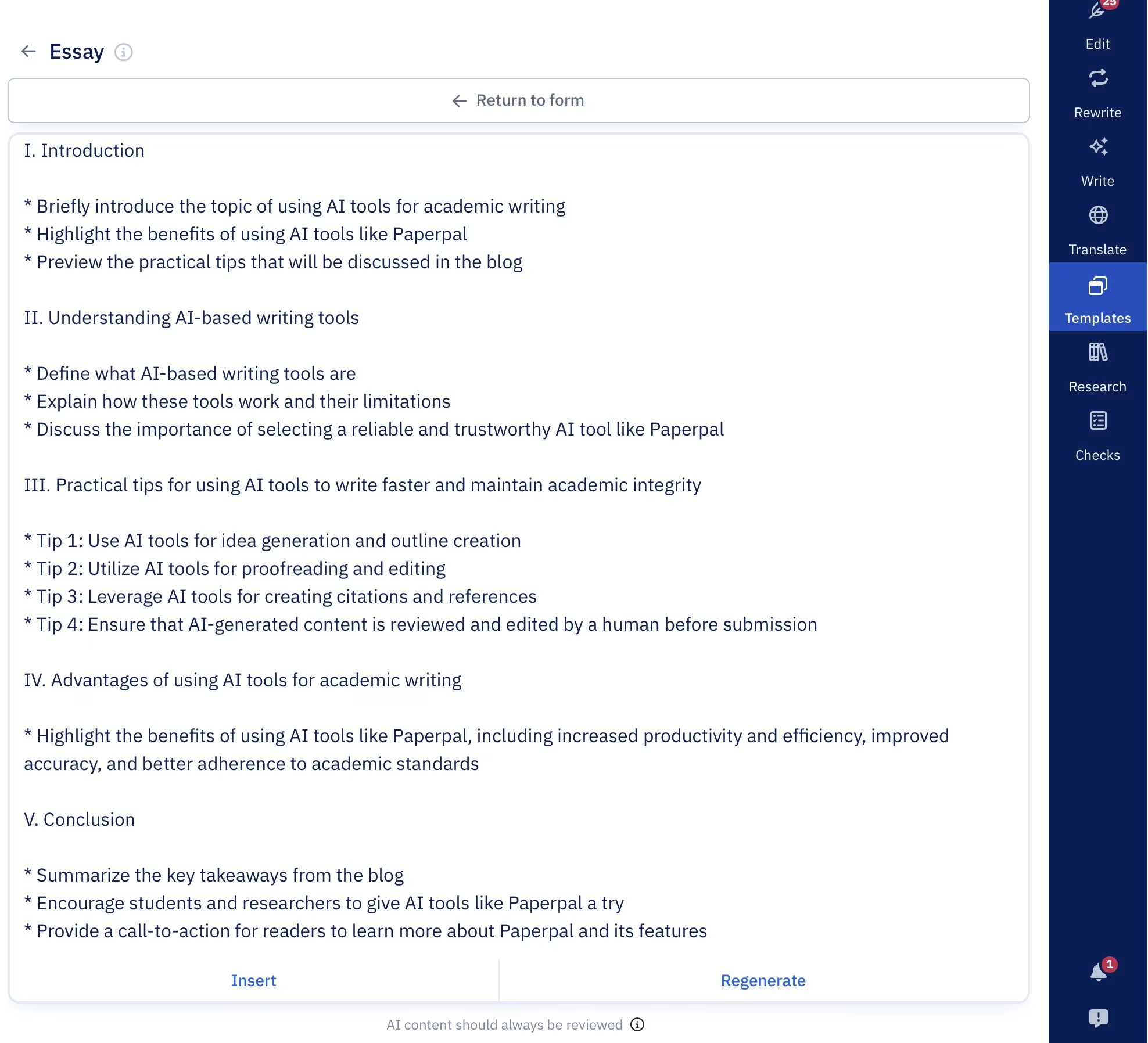
Paperpal delivers stronger research-focused editing accuracy than Wordtune. Paperpal applies academic language rules and submission checks, while Wordtune emphasizes general clarity and stylistic rewrites.
Core features include advanced grammar and style correction, academic paraphrasing, citation tools, and research-aware reference support. Integrations with Microsoft Word and Google Docs maintain consistent editing during manuscript development.
Paperpal is a paid tool with pricing starting at $25 per month, with quarterly and annual plans available for long-term academic workflows.
Pros of Paperpal include precise academic editing, reliable citation support, and strong Word integration. Cons include limited free access, no creative writing tools, occasional AI inaccuracies, and narrow use outside academic contexts.
26. TextCortex: Best Wordtune Alternative for Inline Rewriting Across Apps
TextCortex is an AI writing platform built for in-context editing across browsers, documents, and business tools. TextCortex generates and rewrites content directly where teams write, without forcing environment switches.
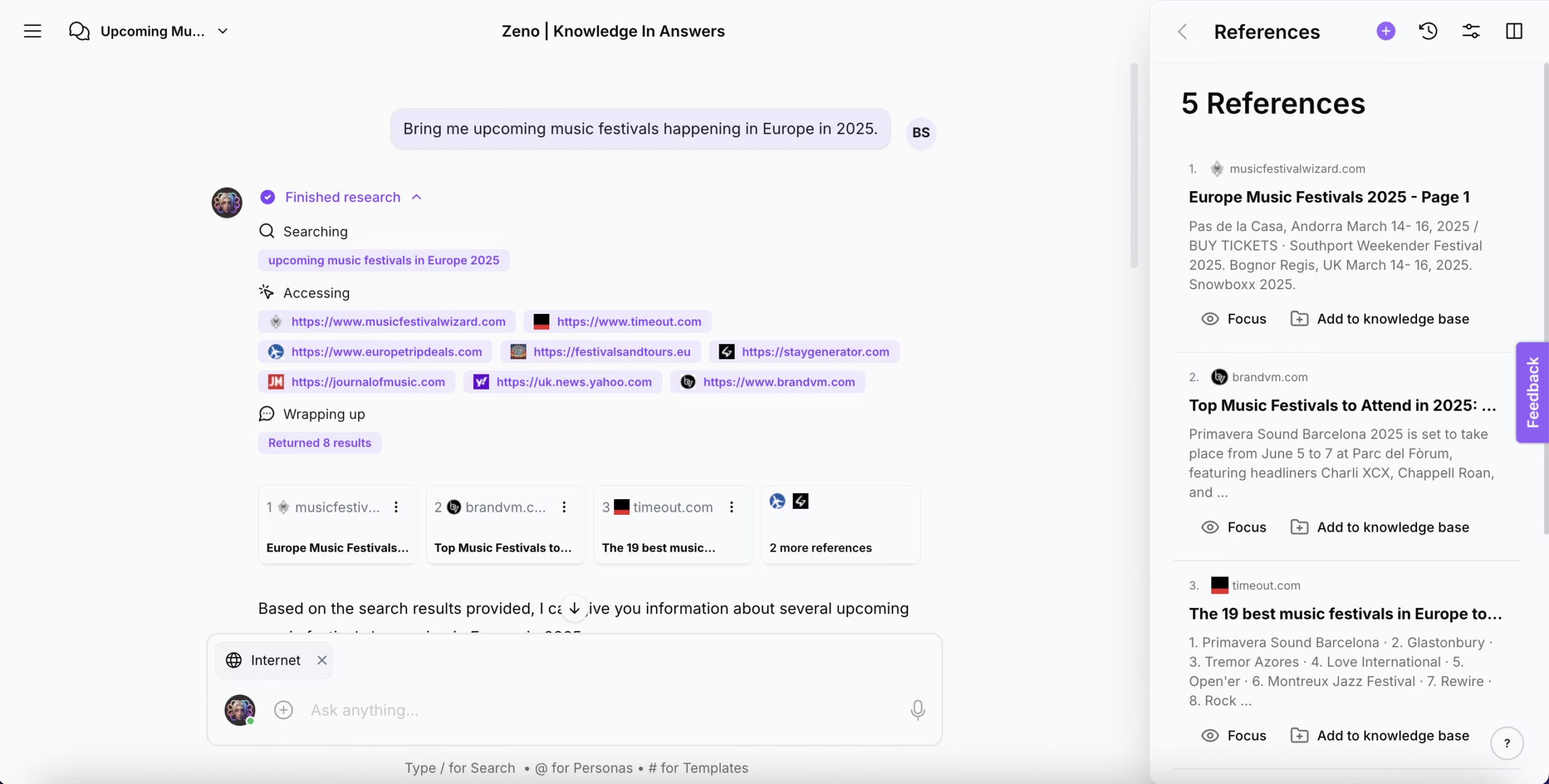
TextCortex delivers broader inline rewriting and cross-app flexibility than Wordtune. TextCortex edits text inside live tools and workflows, while Wordtune concentrates on standalone rewriting and sentence refinement.
Core features in TextCortex include ZenoChat as a configurable AI assistant, inline tone controls, and a browser toolbar that rewrites text directly on web pages. The platform supports custom knowledge bases and content generation for articles, emails, and social posts.
TextCortex is a paid tool with pricing ranging from free access to $23.99 per month. Free plans include limited credits, while paid tiers expand usage, unlock custom knowledge bases, and add advanced privacy options. Enterprise plans provide organization-level controls.
Pros of TextCortex include strong multilingual support and brand customization. Cons include limited free credits, higher cost per output volume, weaker technical content handling, and the need for manual editing on complex drafts.
27. Perplexity: Best Wordtune Alternative for Research-Backed Rewrites with Citations
Perplexity is an AI answer engine that combines live web search with large language models to generate cited responses. Perplexity synthesizes current sources into concise answers with verifiable references.
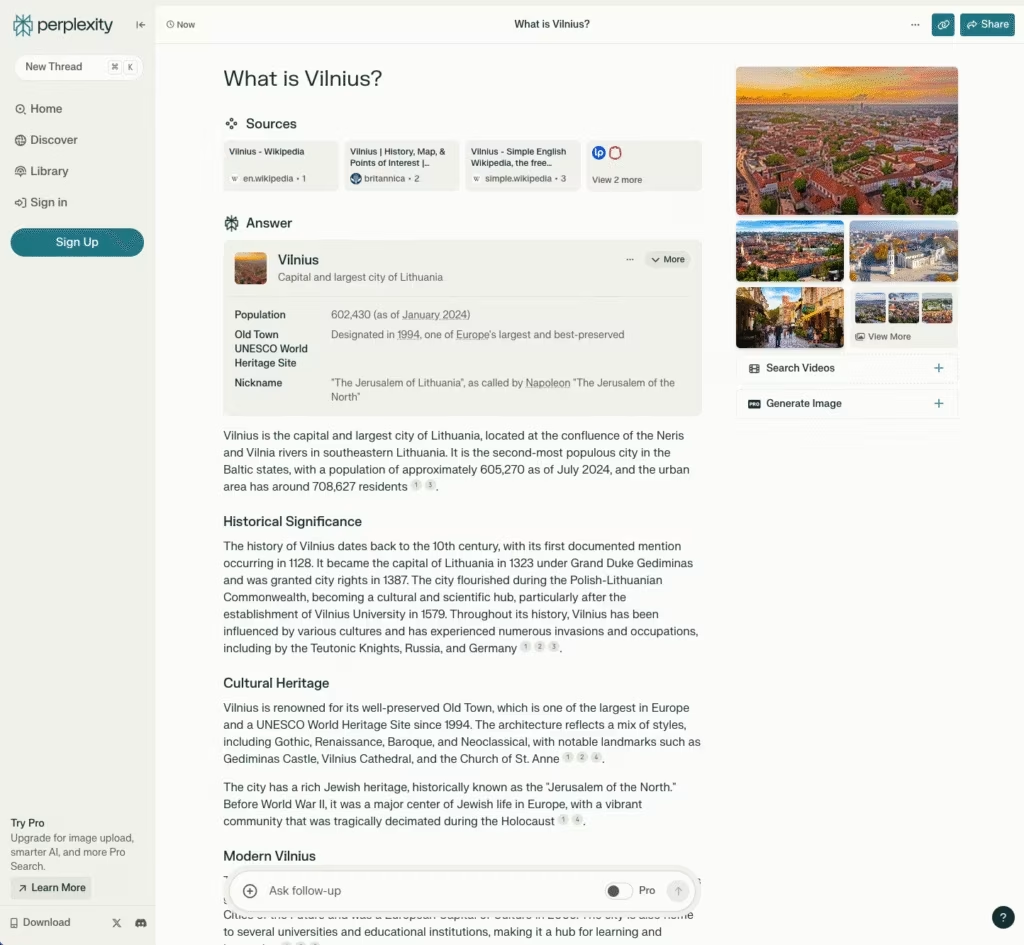
Perplexity delivers stronger research-driven rewriting with source attribution than Wordtune. Perplexity generates answers from live web data and includes citations, while Wordtune focuses on improving clarity and tone of existing text without research context.
Core features in Perplexity include AI-generated answers with in-text citations, real-time web search, follow-up question handling, and model selection for different reasoning styles. These capabilities support fact-checking, research synthesis, and source verification.
Perplexity offers usage-based pricing through API plans. Search API access starts at $5 per 1,000 requests, while advanced Sonar models charge based on input and output tokens with additional request fees. Higher tiers expand reasoning depth and research capabilities.
Pros of Perplexity include transparent citations, up-to-date information, and strong research depth. Cons include weaker creative flexibility, occasional bias or hallucinations, and an experience optimized for research rather than stylistic rewriting.
28. Dorik AI: Best Wordtune Alternative for Generating and Refining Website Copy
Dorik AI is a no-code website builder that uses AI to generate layouts, page copy, and visual elements for complete websites. Dorik AI supports landing pages, blogs, and full sites through an in-editor workflow designed for fast site creation.
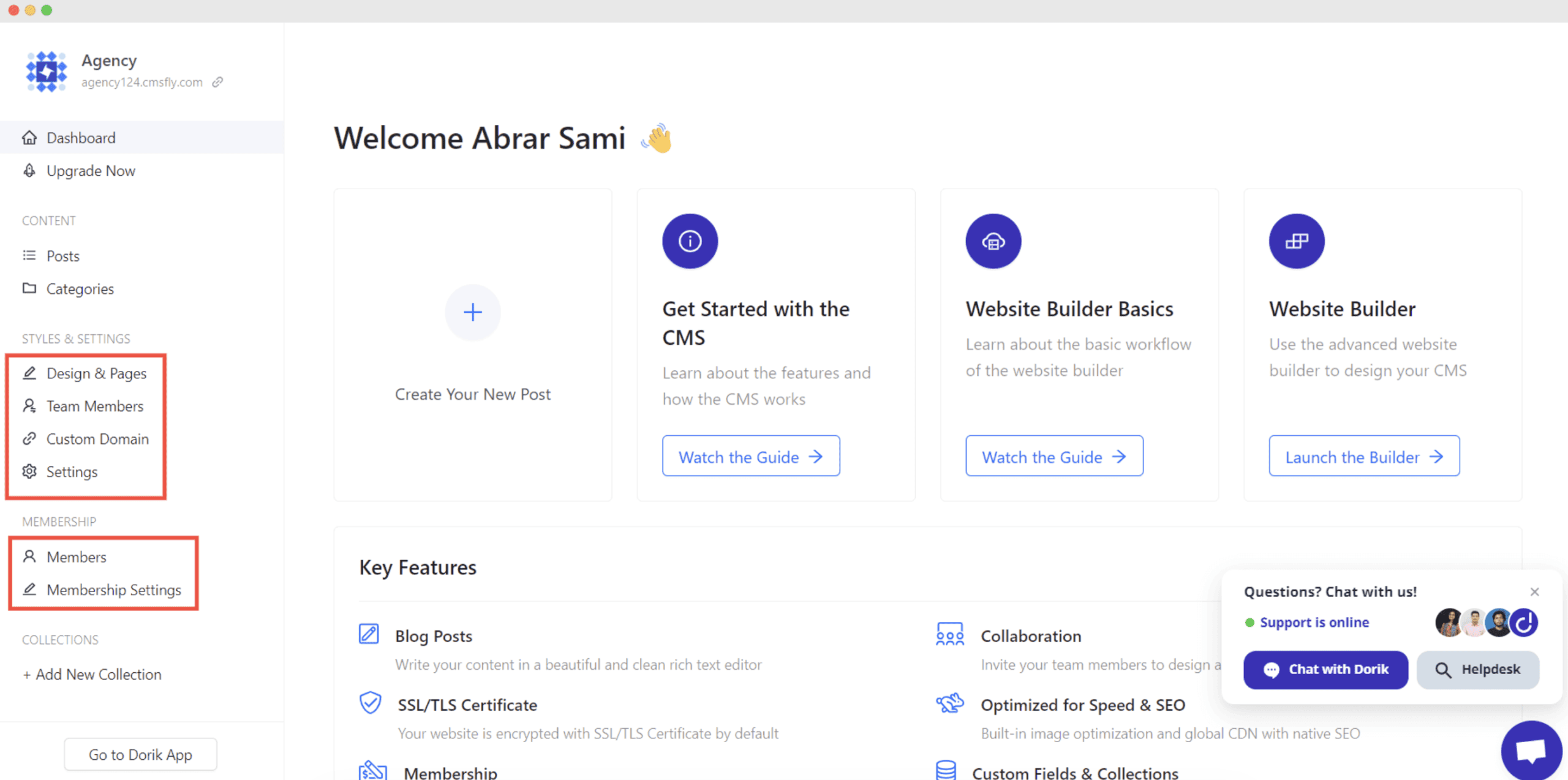
Dorik AI delivers stronger website-level copy generation than Wordtune. Dorik AI creates section-based content, headlines, and CTAs inside full page layouts, while Wordtune focuses on rewriting individual sentences outside a site context.
Core features in Dorik AI include AI site generation from prompts, a drag-and-drop editor, 250+ UI blocks, prebuilt templates, and integrated AI for copy and image generation. The platform includes a CMS, responsive design controls, hosting, and built-in SEO settings.
Dorik AI is a paid tool with pricing starting at $10.38 per month, billed biennially. Higher plans expand business features, collaboration, and agency-level controls, with custom pricing for unlimited domains and clients.
Pros of Dorik AI include ease of use, fast site creation, built-in AI content tools, and affordable entry pricing. Cons include limited deep customization, restricted ecommerce functionality, fewer advanced integrations, and occasional support delays.
29. TLDR This: Best Wordtune Alternative for Summarizing and Condensing Long Texts
TLDR This is an AI summarization tool built to condense long articles, documents, and web pages into concise summaries. TLDR This focuses on extracting key points rather than rewriting text sentence by sentence.
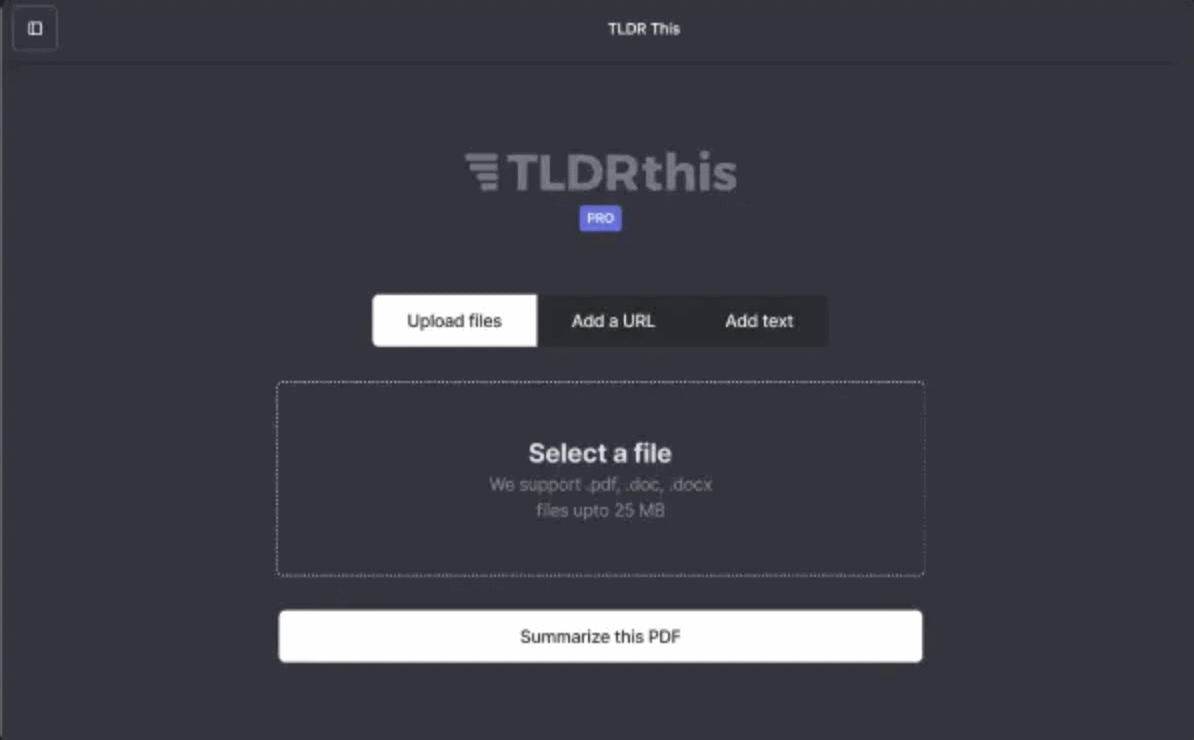
TLDR This delivers stronger long-form summarization than Wordtune. TLDR This compresses entire documents into structured summaries, while Wordtune concentrates on rewriting and refining existing sentences.
Core features include article and document summarization, adjustable summary length, distraction-free reading mode, metadata extraction, and support for URLs, pasted text, and file uploads. Browser extensions enable one-click summaries across the web.
TLDR This is a paid tool with pricing ranging from free access to $16.60 per month. Free plans allow basic summaries, while higher tiers increase advanced summary limits and support high-volume team usage.
Pros of TLDR include fast summarization, clean reading output, and flexible input options. Cons include limited rewriting depth, fewer customization controls, and a narrow focus on summarization rather than full content editing.
30. Notion AI: Best Wordtune Alternative for Rewriting Inside Notes and Documents
Notion AI is a native writing assistant embedded directly inside the Notion workspace. Notion AI generates drafts, summaries, and edits using the context of pages, databases, and team documentation.
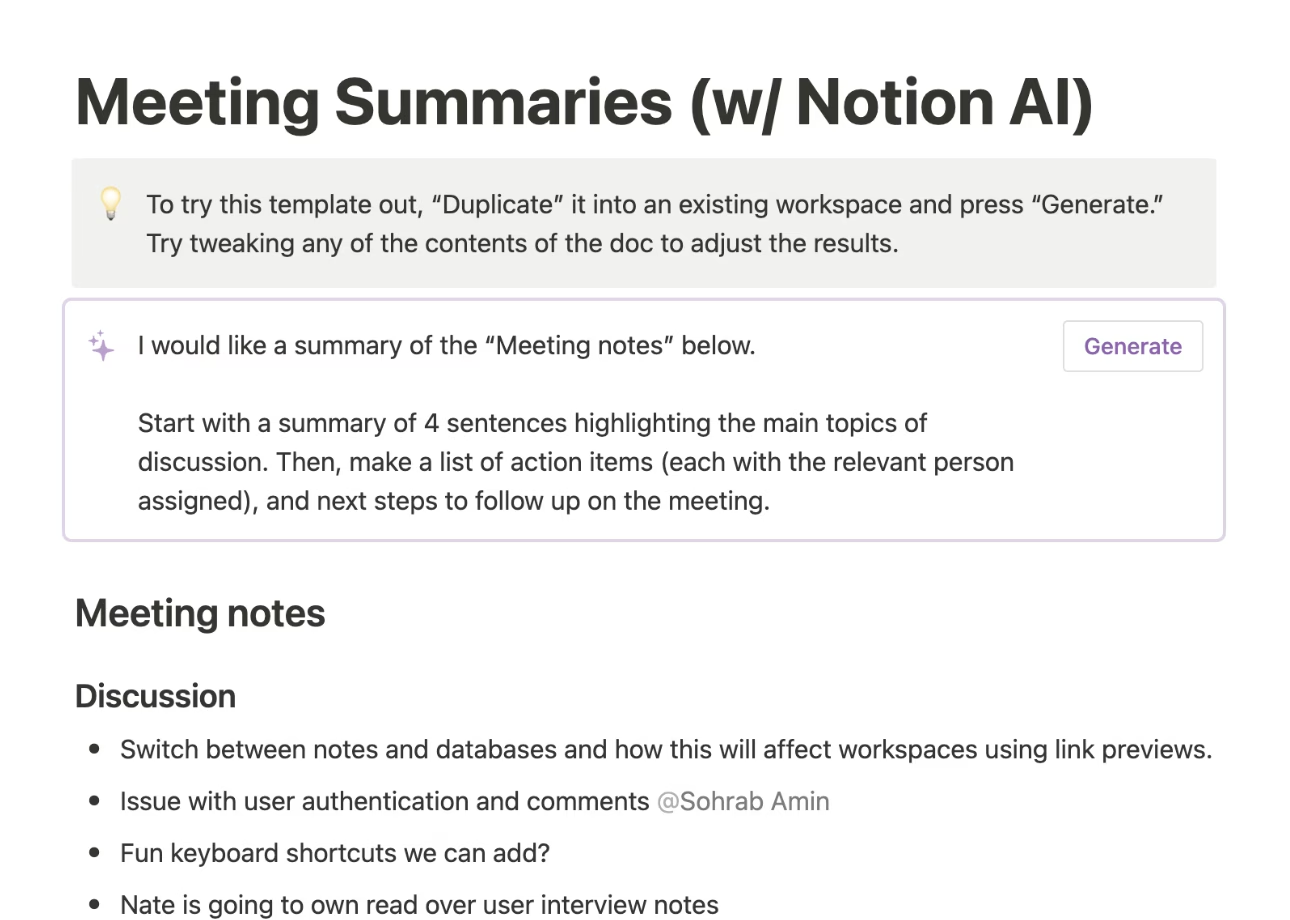
Notion AI delivers stronger in-workspace rewriting and summarization than Wordtune. Notion AI works across entire documents and databases with full context awareness, while Wordtune focuses on sentence-level rewrites outside a connected workspace.
Core features in Notion AI include meeting transcription, AI-generated summaries with action items, and content generation inside pages, tables, and templates. These capabilities turn conversations and notes into structured, searchable knowledge.
Notion AI is a paid add-on with pricing ranging from free access to $20 per member per month. Lower tiers support basic AI usage, while higher plans expand collaboration and advanced workspace features.
Pros of Notion AI include seamless workspace integration, strong summarization, and effective brainstorming support. Cons include reliance on the Notion ecosystem, added cost per user, and limited depth for complex content rewriting.
31. Ahrefs Content Helper: Best Wordtune Alternative for SEO-Aware Content Revision
Ahrefs Content Helper is an AI planning and optimization feature embedded within the Ahrefs platform. Ahrefs Content Helper converts ranking data and SERP analysis into guidance for content structure and topic coverage.
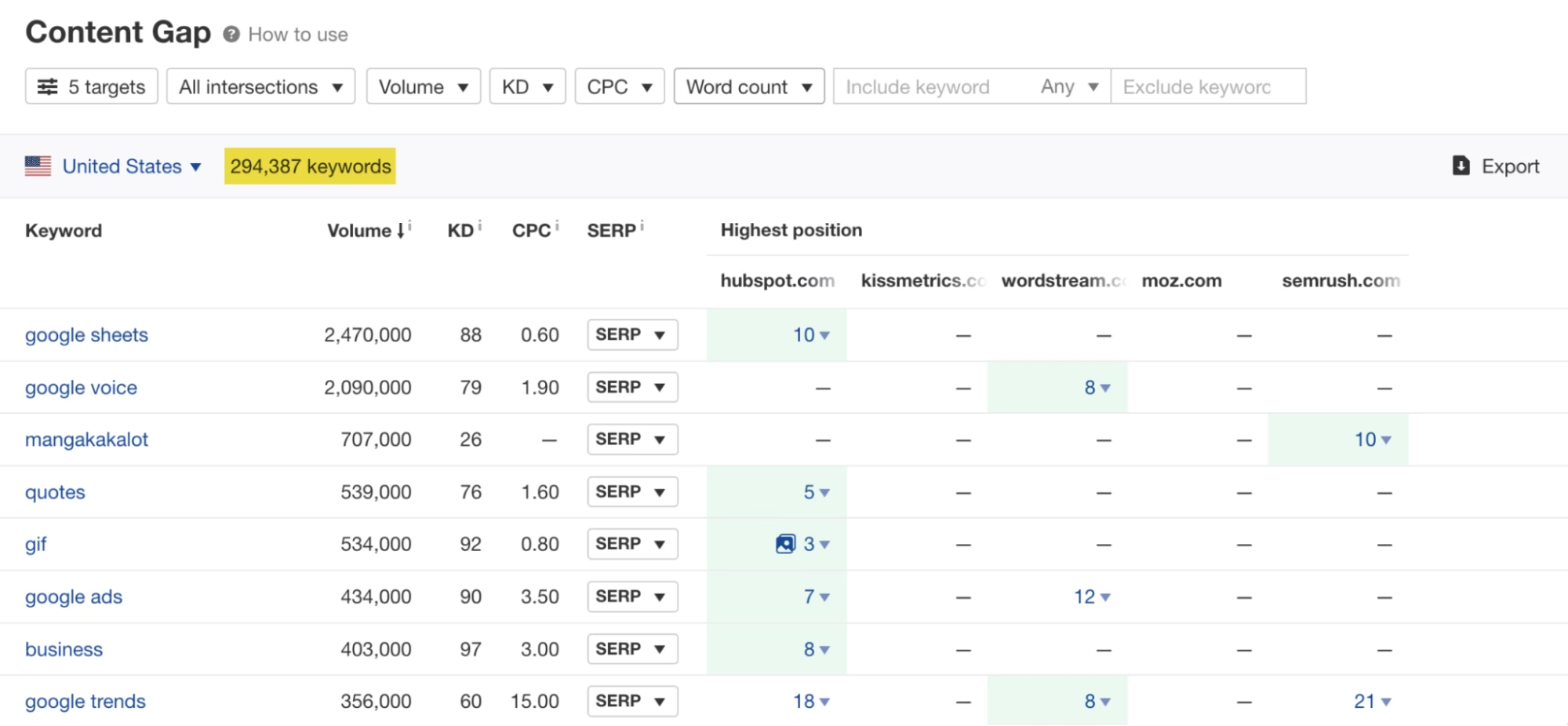
Ahrefs Content Helper delivers stronger SEO-driven content revisions than Wordtune. Ahrefs Content Helper aligns updates with keyword gaps and ranking patterns, while Wordtune concentrates on rewriting text for clarity and flow.
Core features in Ahrefs Content Helper include AI-assisted drafting, real-time content scoring for topical coverage, and topic gap analysis that identifies missing subtopics before publishing. Integration with Ahrefs datasets strengthens revisions with live ranking insights.
Ahrefs Content Helper is available through Ahrefs subscriptions, with pricing ranging from $129 to $449 per month, depending on data access and platform features.
Pros of Ahrefs review include access to large SEO datasets, strong topic gap detection, and efficient refresh workflows. Cons include higher cost, occasional performance lag, and AI outputs that require human refinement.
32. Semrush Writing Assistant: Best Wordtune Alternative for Real-Time SEO and Readability Tweaks
Semrush Writing Assistant is an AI editing feature built into the Semrush marketing platform. Semrush Writing Assistant delivers live SEO and readability feedback inside Google Docs, WordPress, and Microsoft Word.
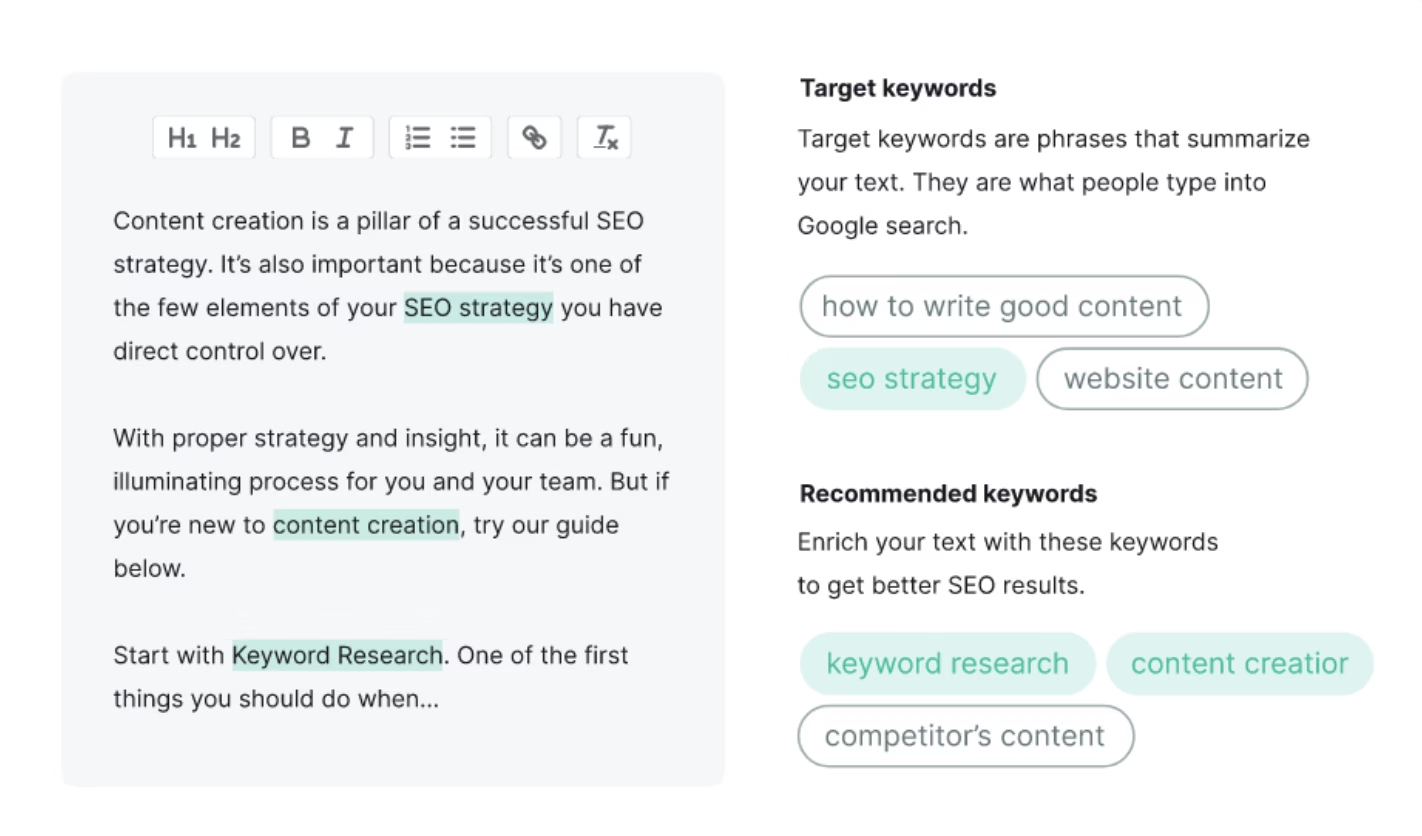
Semrush Writing Assistant delivers stronger real-time SEO and on-page guidance than Wordtune. Semrush Writing Assistant evaluates keyword usage, readability signals, and structural alignment during drafting, while Wordtune focuses on rewriting sentences for clarity and tone.
Core features in Semrush Writing Assistant include in-editor SEO scoring, readability analysis, keyword density monitoring, tone checks, and plagiarism detection. The assistant flags over-optimization, suggests content length ranges, and highlights structural improvements tied to on-page performance factors.
Semrush Writing Assistant is available through Semrush subscriptions with pricing ranging from $249 to $499 per month. An optional AI add-on expands generation capacity, adding AI-written word allowances for an additional monthly fee.
Pros of Semrush review include accurate optimization feedback, seamless editor integrations, and access to Semrush marketing data. Cons include added AI costs, inconsistent tone analysis for formal writing, and feature limitations on lower-tier plans.
Why do People Seek Alternatives to Wordtune Tool?
People seek Wordtune alternatives because its strengths stop at sentence-level rewriting. Wordtune improves phrasing and tone, but it does not support full content creation, structural editing, or workflow-level optimization. Writers often need additional tools to finish an article, campaign, or document.
Wordtune does not offer academic editing, citation support, research-backed writing, or structured briefs. Users working on research papers, technical content, or data-driven articles outgrow sentence-only rewriting quickly.
Brand control is another limitation. Wordtune does not enforce brand voice, terminology rules, or campaign-wide consistency. Teams producing marketing content, sales copy, or multi-page assets often need tools that apply tone and language standards across every output.
SEO and performance gaps push users elsewhere. Wordtune does not provide keyword guidance, search intent analysis, content scoring, or SERP-driven recommendations. Writers focused on ranking, content refreshes, or organic traffic growth typically move to SEO-aware platforms.
Wordtune delivers value for quick rewrites, but users seeking broader capabilities often find better returns in platforms that combine rewriting with grammar correction, content generation, SEO optimization, or collaboration features.
That combination of limited scope, lack of structural and SEO depth, restricted brand control, and narrow specialization leads many people to explore Wordtune alternatives that support complete writing workflows rather than isolated sentence edits.
What to Look for in a Wordtune Alternative?
The best Wordtune alternatives extend beyond sentence rewriting and tone adjustment. A strong Wordtune replacement supports full-document editing, consistent brand voice, and specialized workflows that Wordtune does not cover. These tools reduce manual stitching between apps and enable complete writing workflows instead of isolated rewrites.
The 5 features to look for in an alternative to the Wordtune rewriting tool are listed below.
- Full-Document and Context-Aware Editing. Choose platforms that rewrite paragraphs and entire documents while preserving structure, intent, and narrative flow instead of isolated sentence edits.
- Brand Voice and Tone Consistency. Look for tools that apply defined tone rules, terminology, and messaging standards across all content rather than adjusting tone sentence by sentence.
- Grammar, Style, and Readability Intelligence. Strong alternatives provide advanced grammar analysis, readability scoring, and style guidance that goes deeper than basic clarity suggestions.
- SEO, Research, and Content Planning Support. Advanced tools integrate keyword insights, search intent analysis, content scoring, or SERP research to guide what to write, not just how to rewrite it.
- Workflow Scalability and Integrations. Pick platforms that integrate directly with editors, or team workflows and remove friction caused by limited modes, manual copying, or restricted collaboration.
What is the Difference Between Wordtune vs Grammarly?
The difference between Wordtune and Grammarly is that Wordtune focuses on rewriting and rephrasing text for fluency and tone, while Grammarly specializes in grammar accuracy and language correctness.
Wordtune improves how sentences sound by offering alternative phrasings and expansions. Grammarly corrects grammar, spelling, punctuation, and clarity issues using strict language rules and consistency checks.
Both Wordtune vs Grammarly improve writing quality, but they serve different purposes. Search Atlas goes beyond both by combining rewriting, grammar intelligence, SEO optimization, and content strategy in one platform.
What is the Difference Between Wordtune vs ChatGPT?
The difference between Wordtune and ChatGPT is that Wordtune refines existing text, while ChatGPT generates new content from prompts.
Wordtune rewrites sentences to improve clarity, tone, and conciseness within an existing draft. ChatGPT produces full articles, ideas, outlines, and responses without relying on prewritten text.
Both Wordtune vs ChatGPT use AI for writing, but their intent differs. Search Atlas extends beyond rewriting and generation by unifying AI writing with SEO data, content planning, optimization, and automation, enabling scalable content performance rather than isolated drafts.
Why is Search Atlas the Best Wordtune Alternative?
Search Atlas is the best Wordtune alternative because it goes beyond sentence rewriting and delivers a complete SEO-driven content system. Search Atlas connects AI writing with live SERP data, content optimization, and automated site execution.
Wordtune refines language. Search Atlas improves visibility by aligning content with search intent, rankings, and technical signals through Content Genius, Scholar, and On-Page SEO Audits.
Search Atlas pricing starts at $99 per month and includes AI content tools, keyword research, topical clustering, technical audits, and automation through OTTO SEO. Every plan replaces multiple tools that Wordtune does not provide.For teams outgrowing sentence-level rewriting, Search Atlas delivers scalable content creation with measurable search performance.