HyperWrite alternatives are AI writing, SEO, and content platforms that replace HyperWrite for tasks like drafting, rewriting, research, content optimization, and publishing. These tools deliver more structure, stronger specialization, and broader workflows than browser-based writing assistance.
Many HyperWrite reviews point to gaps in SEO depth, long-form structure, and scalable automation. While HyperWrite performs well for quick drafts, it does not include SERP analysis, content scoring, or end-to-end workflows required for ranking or publishing at scale.
Cost and feature scope drive further comparison. HyperWrite pricing feels high relative to its focus on general writing assistance. Advanced needs (SEO planning, content intelligence, team workflows, publishing automation) remain outside its core feature set.
Writers, marketers, agencies, and businesses choose a HyperWrite alternative when they need research-backed content, SEO-ready drafts, or scalable production systems. Professionals managing content growth often require tools that combine writing with analysis, optimization, and execution.
The best HyperWrite alternatives in 2026 are Search Atlas, Jasper, and Writesonic.
What are the Best Hyperwrite Alternatives?
The top 32 best HyperWrite alternatives for 2026 cover SEO briefs, content scoring, marketing copy, enterprise governance, creative writing, and social publishing. Some platforms run full content workflows, while others focus on rewriting, outlines, or on-page scoring.
The top 32 best HyperWrite alternatives for 2026 are listed below.
| # | HyperWrite Alternative | Best For | Price |
| 1 | Search Atlas | Full-stack SEO workflows and content optimization | $99 to $399/month |
| 2 | Dashword | SEO content scoring and briefs | $99 to $349/month |
| 3 | Anyword | Conversion-focused ad and landing page copy | $49 to $499/month |
| 4 | Rytr | Budget-friendly short-form writing | $9 to $29/month |
| 5 | Clearscope | Enterprise SEO content optimization | $189 to $399/month |
| 6 | Letterdrop | Editorial pipelines with AI-assisted drafts | $299/month to custom pricing |
| 7 | Frase | Research, outlines, and SERP-aligned drafts | $45 to $115/month |
| 8 | MarketMuse | Content intelligence and topic planning | $99 to $499/month |
| 9 | Outranking | SEO-optimized drafts and briefs | $19 to $159/month |
| 10 | Scalenut | AI blog writing with built-in SEO focus | $49 to $149/month |
| 11 | Surfer SEO | On-page SEO and content scores | $79 to $179/month |
| 12 | Wordtune | Sentence rewriting and style changes | $6.99 to $9.99/month |
| 13 | ProWritingAid | Style, grammar, and readability checks | Free to $36/month |
| 14 | ChatGPT | Flexible drafting, rewriting, and ideation | $20 to $200/month |
| 15 | Jasper AI | High-volume marketing copy | $49/month to custom pricing |
| 16 | Copy.ai | Social, email, and ad copy variations | $49 to $249/month |
| 17 | Arvow | SEO content refresh and auto-publishing | $59 to $389/month |
| 18 | QuillBot | Paraphrasing and text rewrites | Free to $8.33/month |
| 19 | Buffer AI Assistant | AI social media captions and posts | $0 to $10/channel/month |
| 20 | Writesonic | Long-form articles and landing pages | $39 to $399/month |
| 21 | SEOWind | SEO briefs and content outlines | $59 to $359/month |
| 22 | Sudowrite | Creative and narrative writing | $10 to $44/month |
| 23 | GrowthBar | AI SEO content inside WordPress | $48 to $99/month |
| 24 | Writecream | Outreach emails and personalized copy | $0 to $49/month |
| 25 | WordHero | All-purpose marketing copy | $29 to $79/month |
| 26 | Writer.com | Brand-safe enterprise writing | Custom pricing |
| 27 | Meta AI | Chat-based drafting and Q&A | Free to ~$10/month to custom pricing |
| 28 | Copysmith | Ecommerce product descriptions | $19/month to custom pricing |
| 29 | Grammarly | Grammar, tone, and clarity adjustments | Free to $30/month |
| 30 | LongShot AI | Research-backed long-form articles | $19 to $299/month |
| 31 | Ahrefs Content Helper | Topic research and outlines | $129 to $449/month |
| 32 | Semrush Writing Assistant | Real-time SEO writing guidance | $249 to $499/month |
1. Search Atlas: Best Hyperwrite Alternative
Search Atlas is an AI SEO automation platform built for teams that need measurable content performance. Search Atlas replaces browser-level writing assistance with a system that connects content creation, optimization, and site-wide execution.
HyperWrite focuses on productivity and drafting inside the browser. Search Atlas operates at the page and site level, where rankings, authority, and technical health determine outcomes.
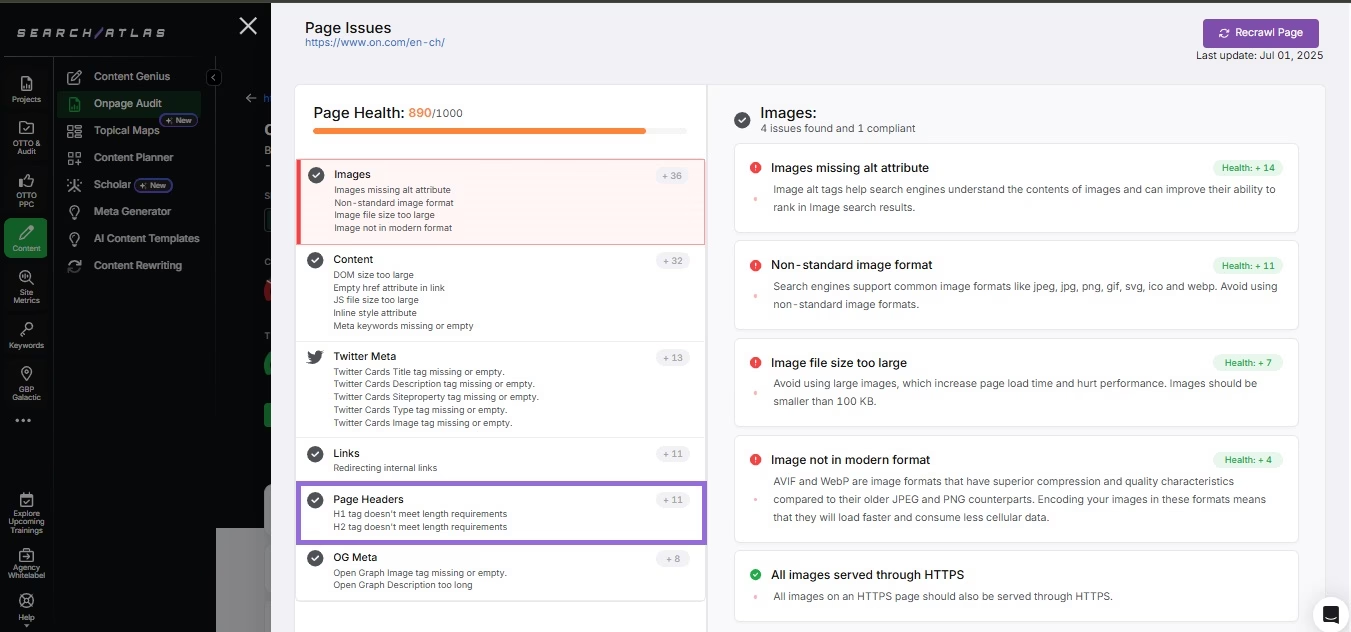
Search Atlas On-Page SEO Audit feature evaluates any URL against target keywords, analyzing content depth, topical relevance, internal linking, metadata, schema, technical health, and UX signals. HyperWrite does not provide SEO diagnostics.
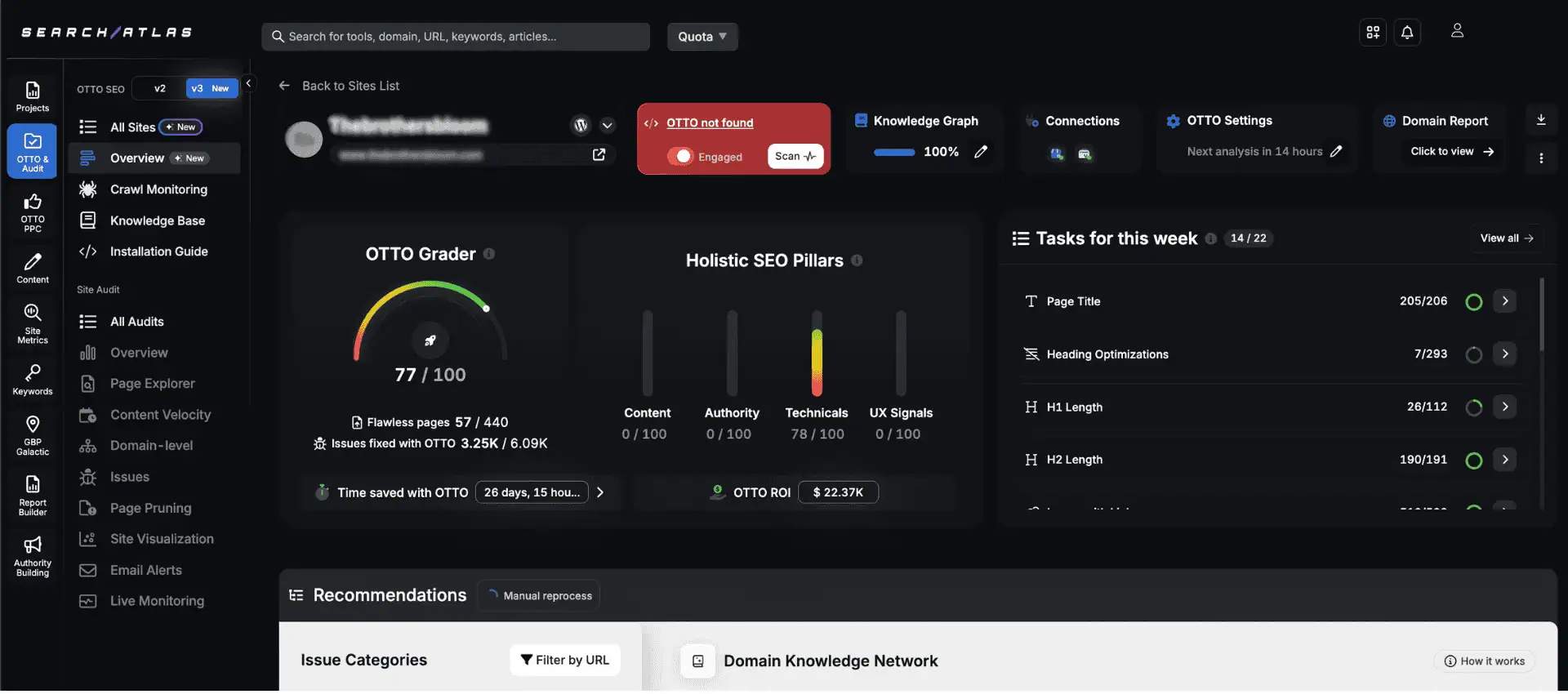
Automation extends these insights further through OTTO SEO, the autonomous AI agent inside Search Atlas. OTTO applies approved on-page fixes directly to live pages, updating metadata, schema, internal links, and structural elements automatically. HyperWrite does not offer automated optimization or live site updates.
Content optimization continues inside Content Genius, the semantic editor that evaluates drafts against live SERP patterns. Content Genius refines passages based on search intent, keyword relationships, and competitive coverage. This bridges the gap between writing and ranking, something HyperWrite does not address.
Quality measurement comes from Scholar, the scoring engine. Scholar evaluates clarity, intent satisfaction, topical completeness, accuracy, and structure using ranking-aligned signals. HyperWrite lacks objective content scoring tied to search systems.
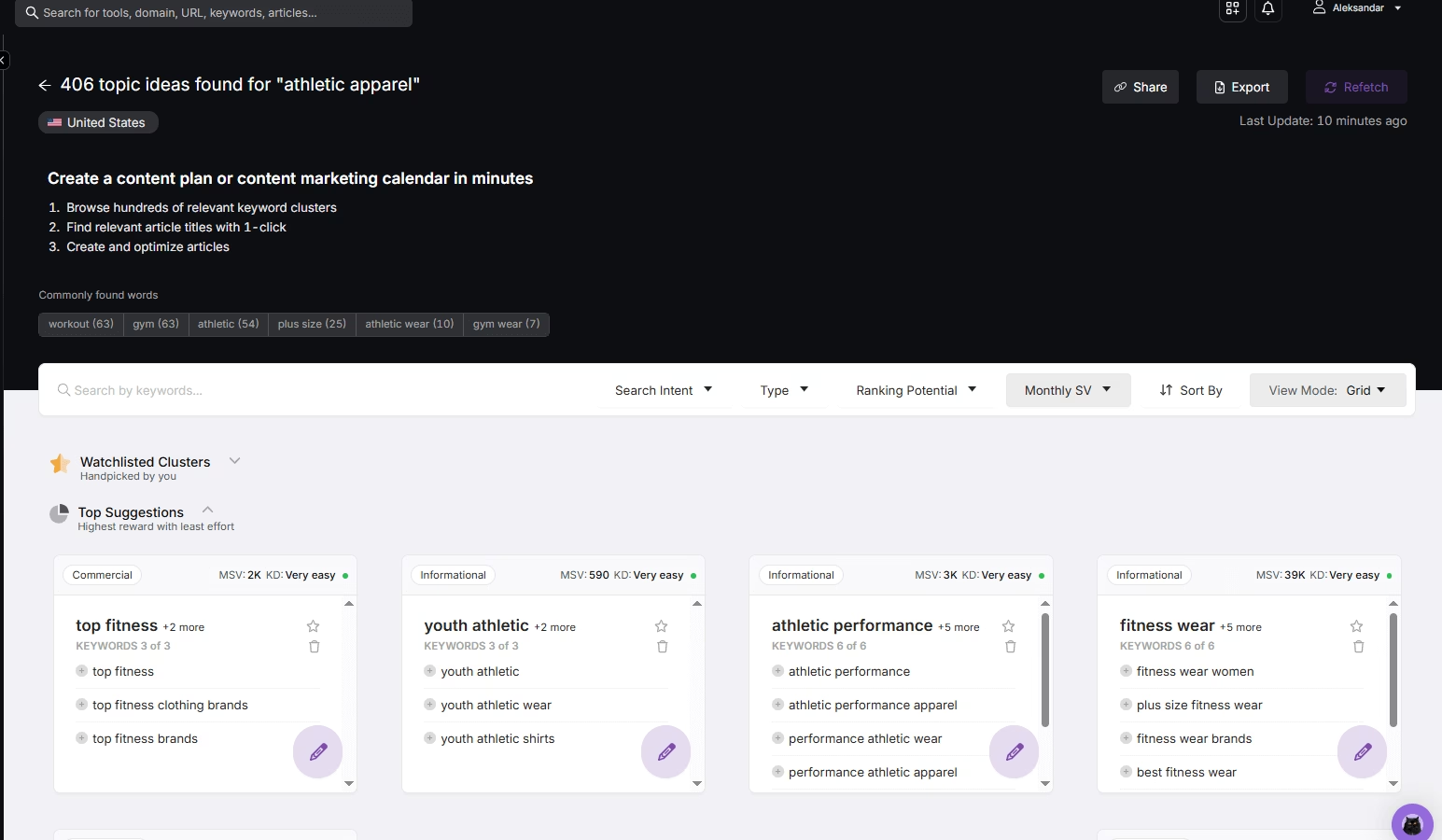
Strategic planning happens through Content Planner, which converts a single keyword into hundreds of semantically grouped topics organized by intent and opportunity. These clusters guide long-term content architecture for blogs, hubs, and large editorial programs. HyperWrite does not provide keyword clustering or topic mapping.
Search Atlas pricing ranges from $99 to $399 per month, replacing HyperWrite alongside separate SEO audit tools, keyword research platforms, and optimization software. The value comes from unifying writing, auditing, optimization, and execution in one system.
Pros of Search Atlas review include keyword-driven on-page audits, automated execution through OTTO SEO, semantic optimization with Content Genius, and scalable planning with Content Planner. The main con is a learning curve for teams transitioning from drafting tools to performance-driven SEO systems.
2. Dashword: Best HyperWrite Alternative for SEO Content Scoring and Briefs
Dashword is an AI-powered SEO content optimization platform built to plan, score, and refine content for search performance. Dashword reviews top-ranking SERP pages for a target keyword and converts ranking patterns into clear briefs, topic requirements, and measurable content scores.
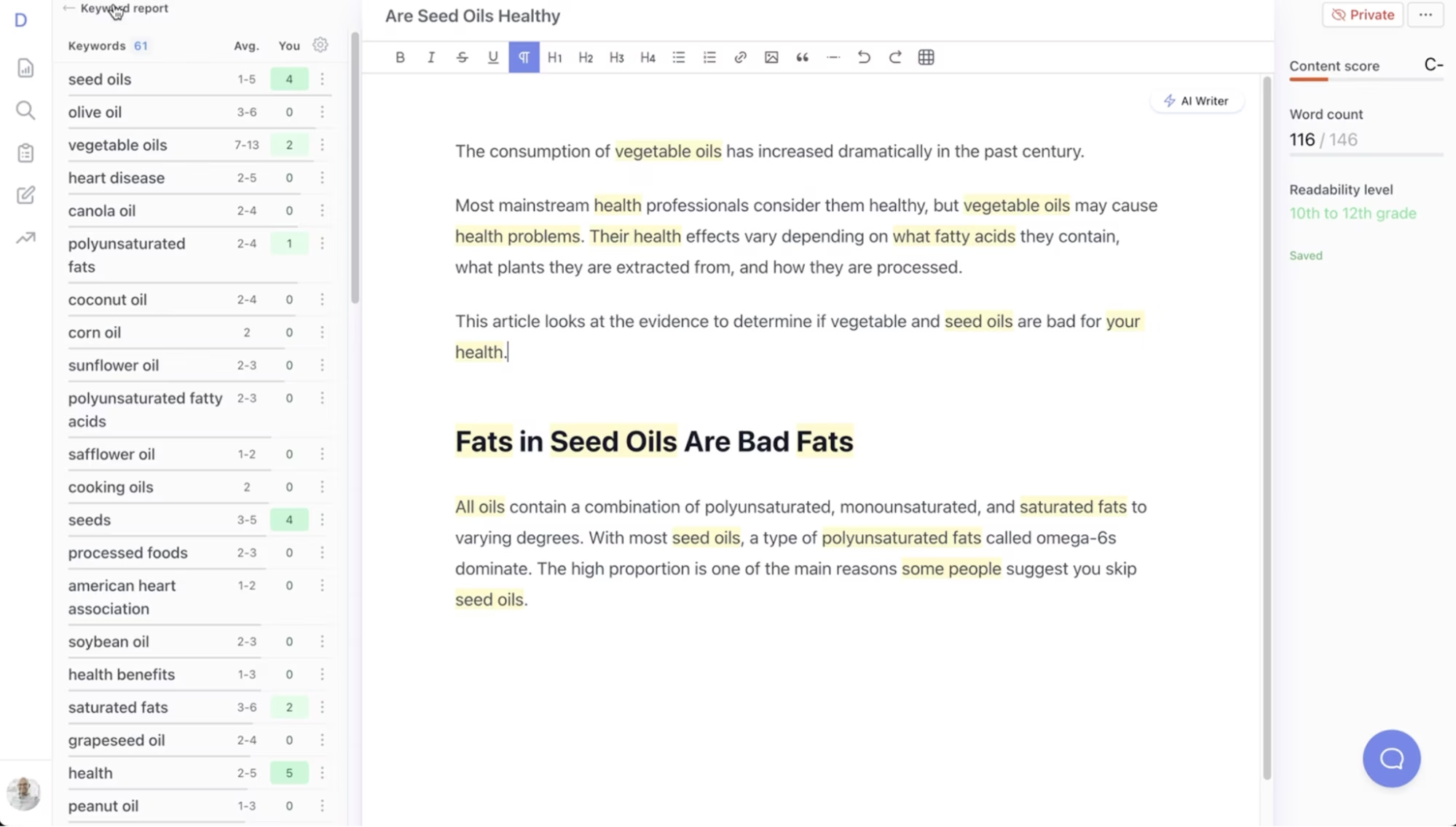
Dashword delivers stronger SEO content scoring and SERP-informed briefs than HyperWrite. Dashword focuses on competitive analysis, search intent mapping, and structured optimization guidance across full articles. HyperWrite centers on general writing assistance, which limits its impact on ranking-driven content workflows.
Core features cover content brief creation, live content scoring, and guided optimization. Dashword generates keyword-driven outlines, common questions, and topic coverage requirements directly from ranking pages. A real-time editor applies content scores and writing guidance as drafts progress, with optional AI-assisted drafting to speed up production.
Dashword is a paid tool with pricing ranging from $99 to $349 per month. The $99 plan offers 30 content reports, roughly 30 optimized articles, 5 seats, and content briefs. The $349 plan expands usage to 100 reports, approximately 100 optimized articles, and 10 seats.
Pros of Dashword include accurate SEO scoring, clear SERP-based briefs, and strong collaboration features. Cons include higher pricing and limited technical SEO depth compared to broader all-in-one SEO platforms.
3. Anyword: Best HyperWrite Alternative for Conversion-Focused Ad and Landing Page Copy
Anyword is an AI copywriting platform designed to optimize marketing messages based on predicted performance. Anyword evaluates copy using audience signals, historical performance data, and intent modeling to forecast how messaging resonates across ads and landing pages.
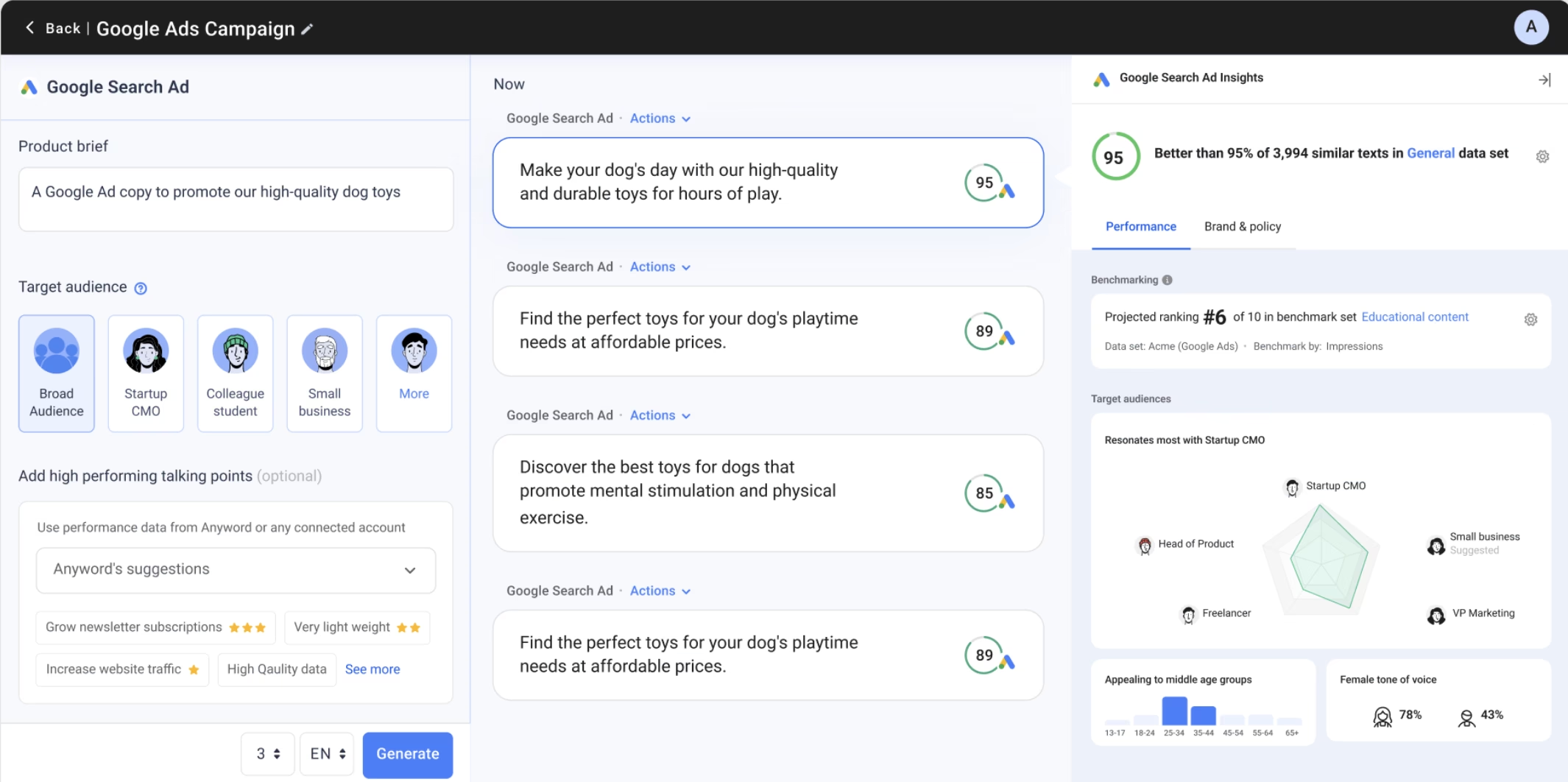
Anyword delivers a clearer advantage than HyperWrite for conversion-focused copy and performance-driven messaging. Anyword applies predictive scoring and audience segmentation to guide copy choices before campaigns launch.
Core features include predictive performance scoring, copy intelligence recommendations, and brand voice controls. Anyword assigns conversion scores to headlines and body copy, suggests data-backed improvements, and preserves tone consistency across campaigns. Multilingual support and plagiarism detection extend usability for global teams.
Anyword is a paid tool with pricing ranging from $49 to $499 per month. Lower tiers fit individual marketers, while higher plans expand prediction volume, analytics depth, and access to advanced AI models for scaled campaigns.
Pros of Anyword include accurate performance predictions and strong brand voice governance. Cons include limited SEO-focused workflows and occasional friction during real-time editing.
4. Rytr: Best HyperWrite Alternative for Budget-Friendly Short-Form Writing
Rytr is an AI writing tool built for low-cost short-form content production. Rytr focuses on quick generation of ads, emails, headlines, and product descriptions across more than 30 languages.
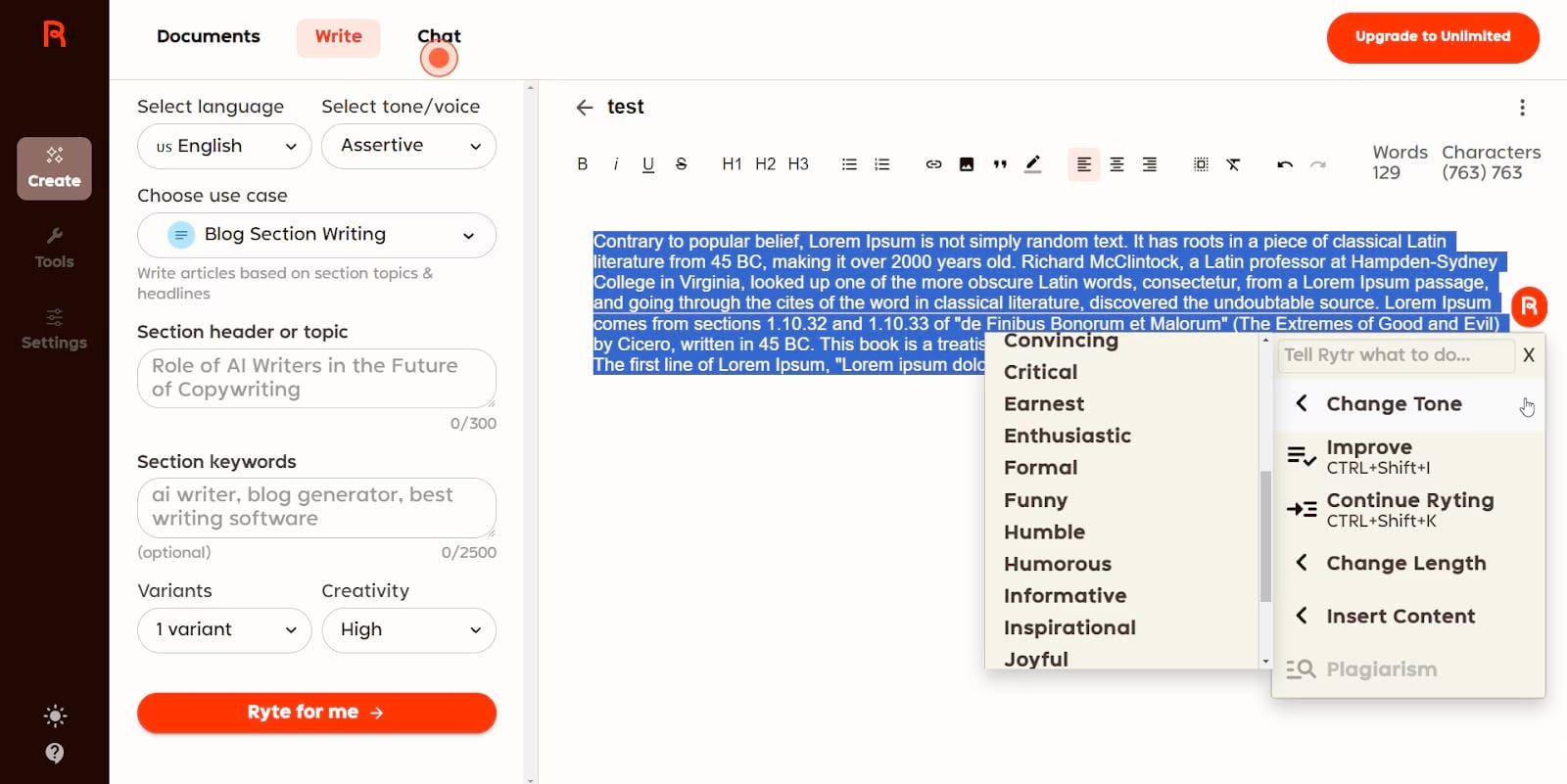
Rytr presents a more cost-efficient option than HyperWrite for short-form writing and rapid copy generation. Rytr prioritizes affordability for lightweight content tasks. HyperWrite targets broader writing assistance, which raises cost without improving short-form output efficiency.
Core features in Rytr cover paragraph generation, rewriting assistance, tone adjustment, and custom style presets. Saved tones simplify multi-project workflows, while the browser extension enables immediate writing across web-based tools.
Rytr is a paid tool with pricing ranging from $9 to $29 per month. Entry plans offer unlimited characters and one custom tone. Higher tiers unlock additional tones, languages, and flexibility for higher-volume workloads.
Pros of Rytr include low pricing and quick content turnaround. Cons are weaker long-form performance, limited SEO depth, and repetitive phrasing in extended drafts.
5. Clearscope: Best HyperWrite Alternative for Enterprise SEO Content Optimization
Clearscope is an SEO content optimization platform built to align written content with SERP expectations at scale. Clearscope analyzes ranking competitor pages and translates keyword patterns into clear recommendations for structure, relevance, and topical completeness.

Clearscope provides a stronger foundation than HyperWrite for enterprise SEO content optimization. Clearscope prioritizes SERP-driven analysis, keyword relevance, and editorial consistency across large content teams. HyperWrite concentrates on AI writing assistance, which limits its usefulness for enterprise-level SEO quality control.
Core features in Clearscope include structured SEO guidance and competitive insight. The Content Editor evaluates readability, keyword balance, and topic coverage. The Term Map organizes related concepts based on competitor usage. Content Reports define headings, priority terms, and related questions that shape ranking pages.
Clearscope is a paid tool with pricing ranging from $189 to $399 per month. Entry plans include access to the Content Editor and content reports. Higher tiers expand usage limits, collaboration options, and enterprise features such as single sign-on and crawler whitelisting.
Pros of Clearscope review include dependable SERP analysis, a clean interface, and strong editorial consistency for large teams. Cons include limited technical SEO capabilities and the risk of over-optimization when targeting top content grades.
6. Letterdrop: Best HyperWrite Alternative for Editorial Pipelines with AI-Assisted Drafts
Letterdrop is an AI-powered B2B content operations platform designed to manage editorial workflows from planning through distribution. Letterdrop connects content creation, collaboration, publishing, and analytics inside a single system.
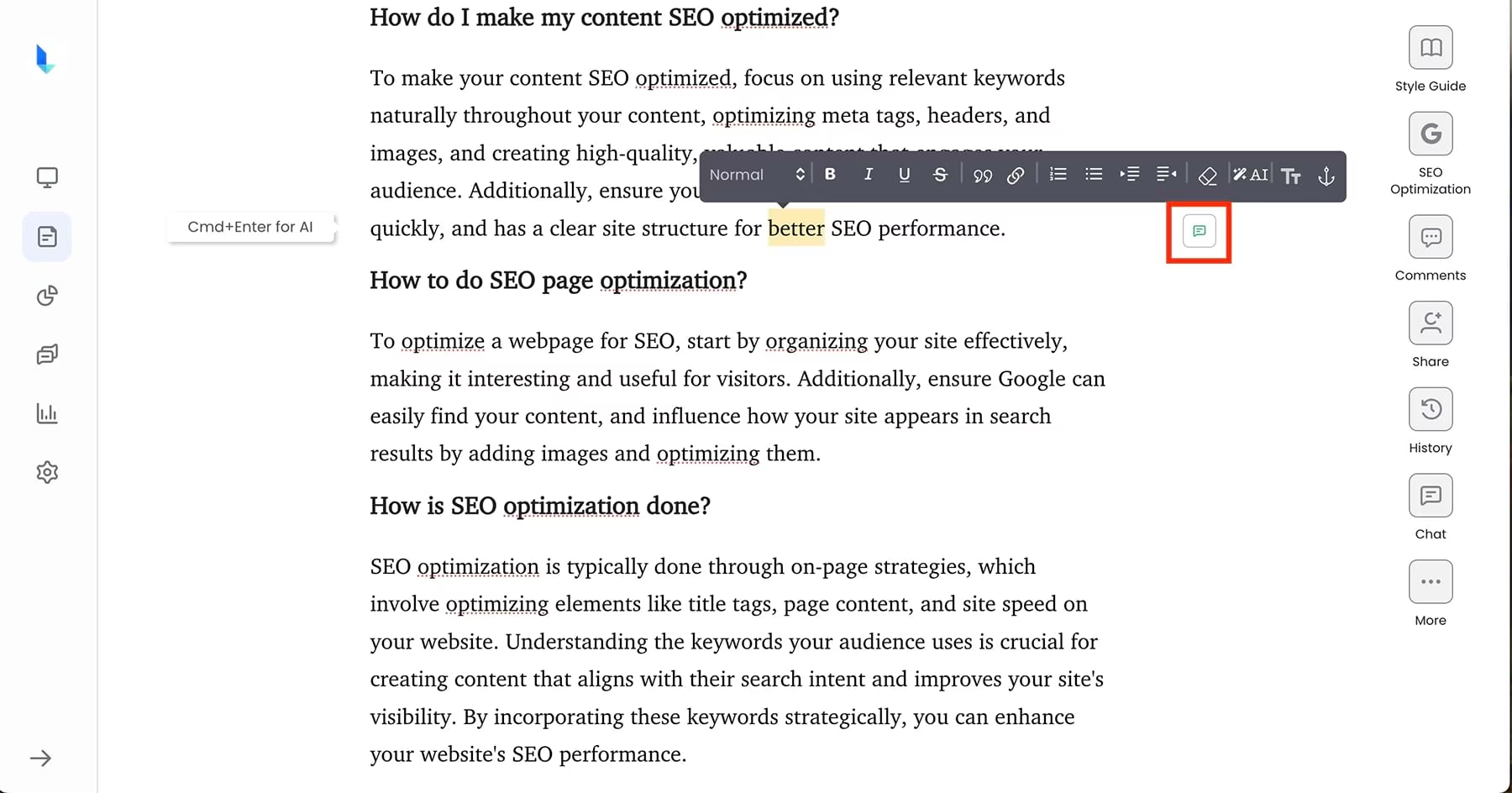
Letterdrop fits structured editorial pipelines better than HyperWrite. Letterdrop manages content planning, multi-channel distribution, collaboration, and performance tracking across teams. HyperWrite emphasizes individual writing speed and browser-based automation, which does not address end-to-end editorial operations.
Core features include AI-assisted drafting, SEO optimization, and sales enablement workflows. Letterdrop generates blog content and social posts, distributes assets across channels, and applies analytics to measure impact. Social listening, CRM connections, and content libraries align marketing output with revenue-focused outreach.
Letterdrop is a paid tool with pricing ranging from $299 per month to custom enterprise pricing. The $299 plan offers core content workflows. Growth and Enterprise tiers expand integrations, automation depth, and team-level customization through annual contracts.
Pros of Letterdrop include unified content operations, strong repurposing workflows, and LinkedIn-focused distribution. Cons include higher costs, reported technical issues, and inconsistent support experiences across accounts.
7. Frase: Best HyperWrite Alternative for Research, Outlines, and SERP-Aligned Drafts
Frase is an AI-powered SEO content platform built to compress research, outlining, and drafting into a single workflow. Frase examines ranking SERP pages to surface priority topics, related questions, and keyword patterns that shape search-aligned articles.
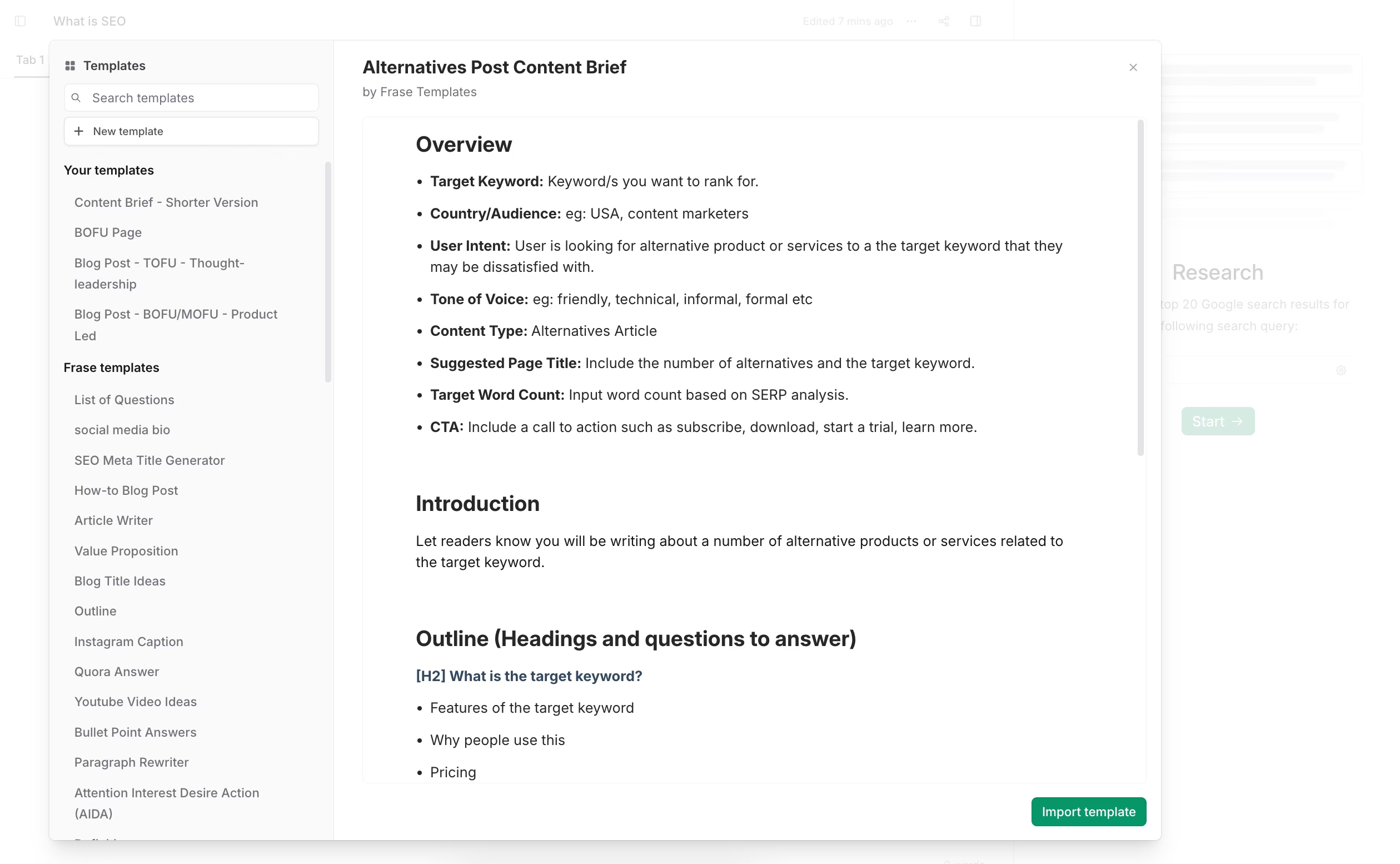
Frase differentiates itself from HyperWrite through its SERP-first workflow. Frase embeds competitor analysis and search intent mapping directly into outline creation and drafting. HyperWrite emphasizes general writing productivity.
Core features in Frase focus on SERP-informed preparation and collaborative writing. The platform generates AI-driven content briefs, applies competitive SERP analysis, and supports shared editors for multi-author workflows. Integrations with Google Docs and WordPress connect research outputs directly to publishing pipelines.
Frase is a paid tool with pricing that ranges from $45 to $115 per month. Lower tiers suit individual creators, while higher plans expand collaboration capacity and workflow control. A free trial provides full access before a subscription.
Pros of Frase review include fast research execution, structured outlines, and real-time optimization feedback. Cons include project limits on lower plans, separate pricing for advanced AI documents, and limited technical SEO depth.
8. MarketMuse: Best HyperWrite Alternative for Content Intelligence and Topic Planning
MarketMuse is an AI content intelligence platform built to guide long-term topical authority and strategic planning. MarketMuse evaluates semantic depth, topic coverage, and content gaps through advanced NLP-driven models.
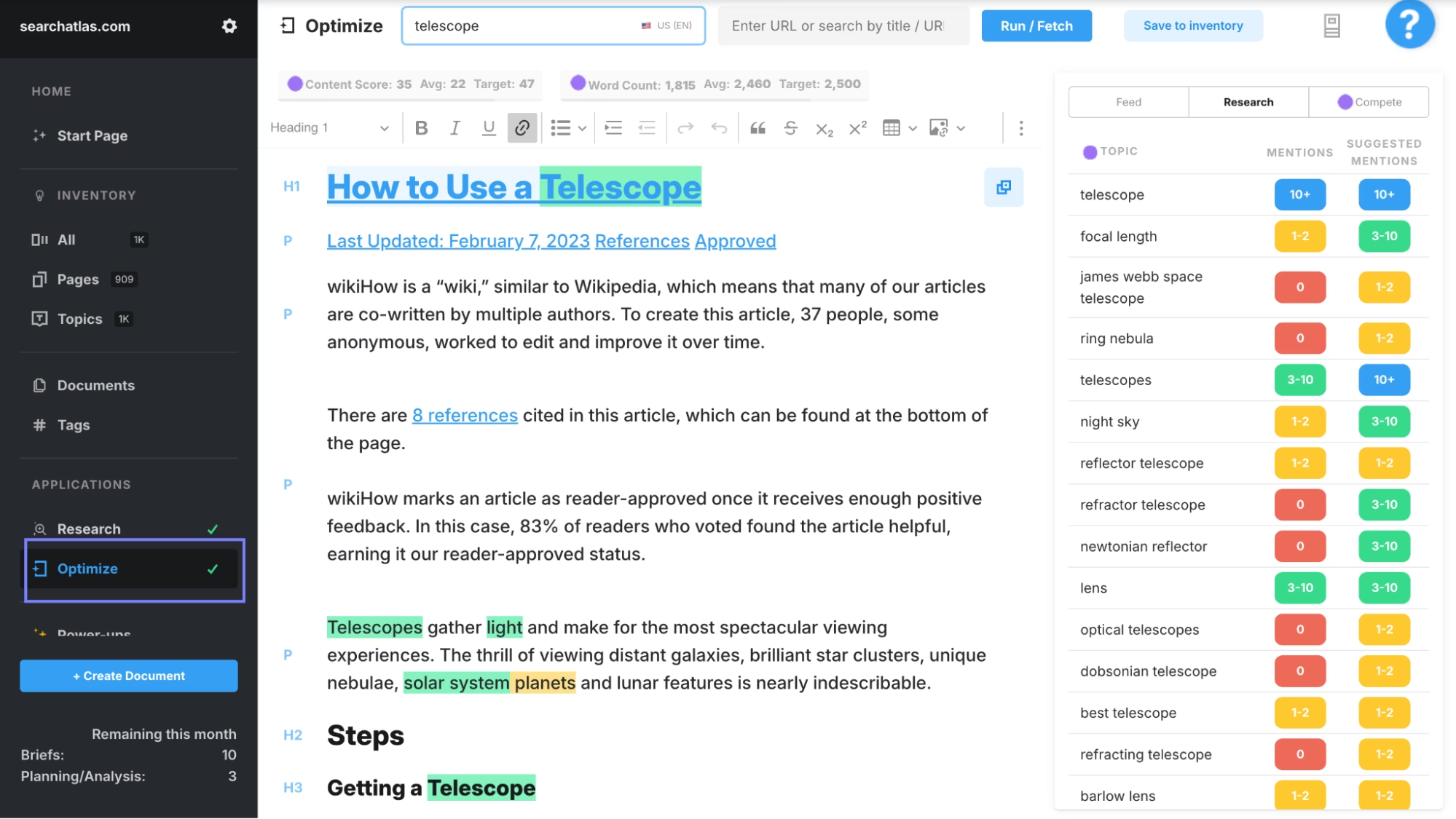
MarketMuse addresses a different layer of content strategy than HyperWrite. MarketMuse concentrates on authority modeling, competitive topic analysis, and gap identification across content portfolios, while HyperWrite focuses on AI-assisted drafting.
Core features center on topic intelligence and optimization strategy. Content inventory assessments track decay and performance gaps. Topic models reveal semantic coverage requirements. The Optimize workspace applies inline scoring, while competitive analysis defines subtopics, relevance signals, and recommended depth.
MarketMuse is a paid tool with pricing that ranges from $99 to $499 per month. The $99 plan offers optimization workflows, the $249 plan expands research depth, and the $499 plan enables full strategy development. A limited free tier provides restricted topic modeling access.
Pros of MarketMuse include deep topic intelligence, proprietary authority scoring, and concept-based difficulty metrics. Cons include higher pricing and limited keyword discovery flexibility for lean workflows.
9. Outranking: Best HyperWrite Alternative for SEO-Optimized Drafts and Briefs
Outranking is an AI-powered SEO content platform designed to guide research, drafting, and optimization through structured workflows. Outranking applies live SERP analysis and step-by-step processes to shape briefs and drafts around ranking requirements.
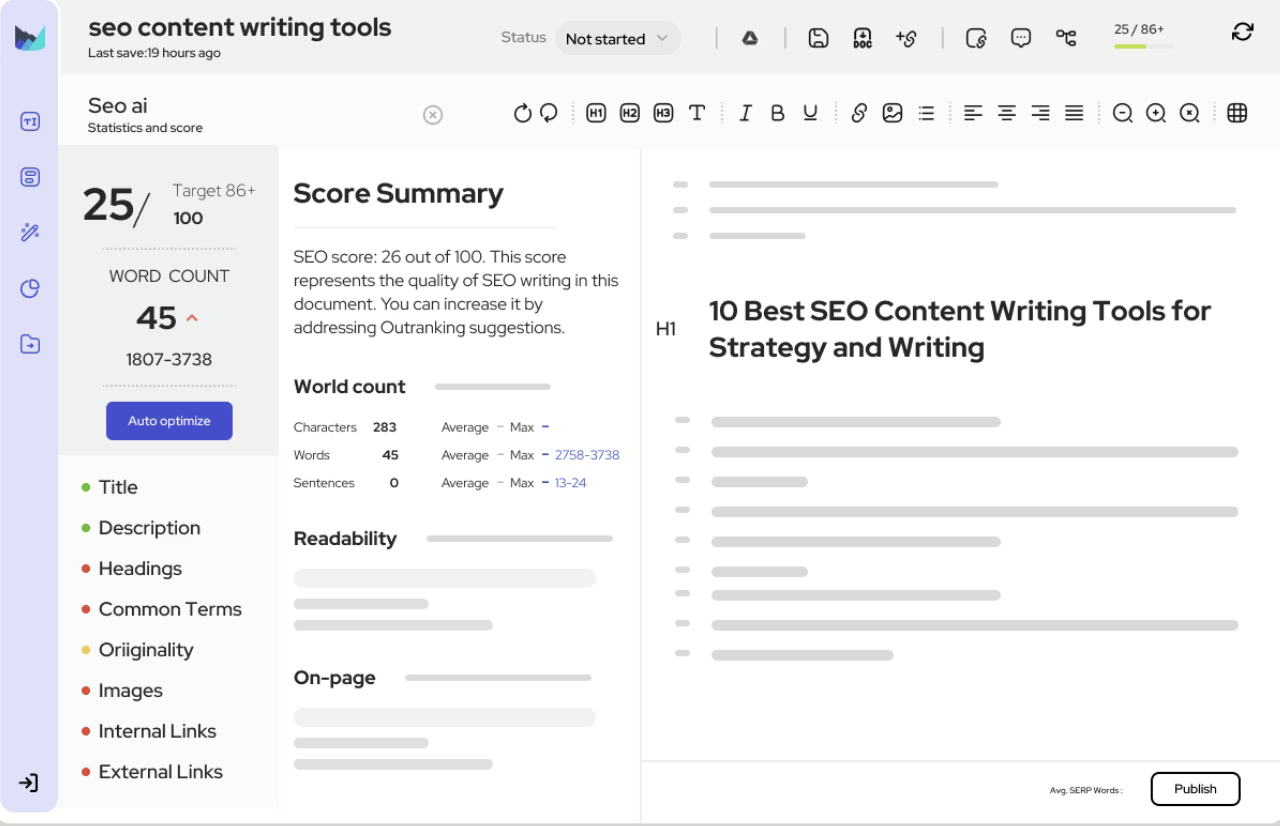
Outranking outperforms Hyperwrite in SEO optimized content creation. Outranking connects research, outlining, drafting, and optimization inside a single guided system. HyperWrite focuses on AI writing assistance, which leaves SEO structure, scoring, and content planning fragmented.
Core features center on guided SEO execution. Outranking provides structured content workflows, originality checks, real-time SEO scoring, keyword clustering, and automated internal linking. Collaborative tools and WordPress integration connect drafts directly to publishing pipelines.
Outranking is a paid tool with pricing ranging from $19 to $159 per month. Lower tiers cover a small number of SEO documents, while higher plans expand document limits and workflow capacity. Agency plans use custom pricing for scaled operations.
Pros of Outranking include clear step-by-step workflows, integrated keyword clustering, and automated internal linking. Cons include credit-based usage limits, a steeper onboarding curve, and the absence of backlink tracking or full rank monitoring.
10. Scalenut: Best HyperWrite Alternative for AI Blog Writing with Built-In SEO Focus
Scalenut is an AI-powered SEO platform that combines keyword research, SERP analysis, and content optimization into a unified system. Scalenut identifies search intent, builds structured outlines, and applies real-time scoring to guide blog creation.
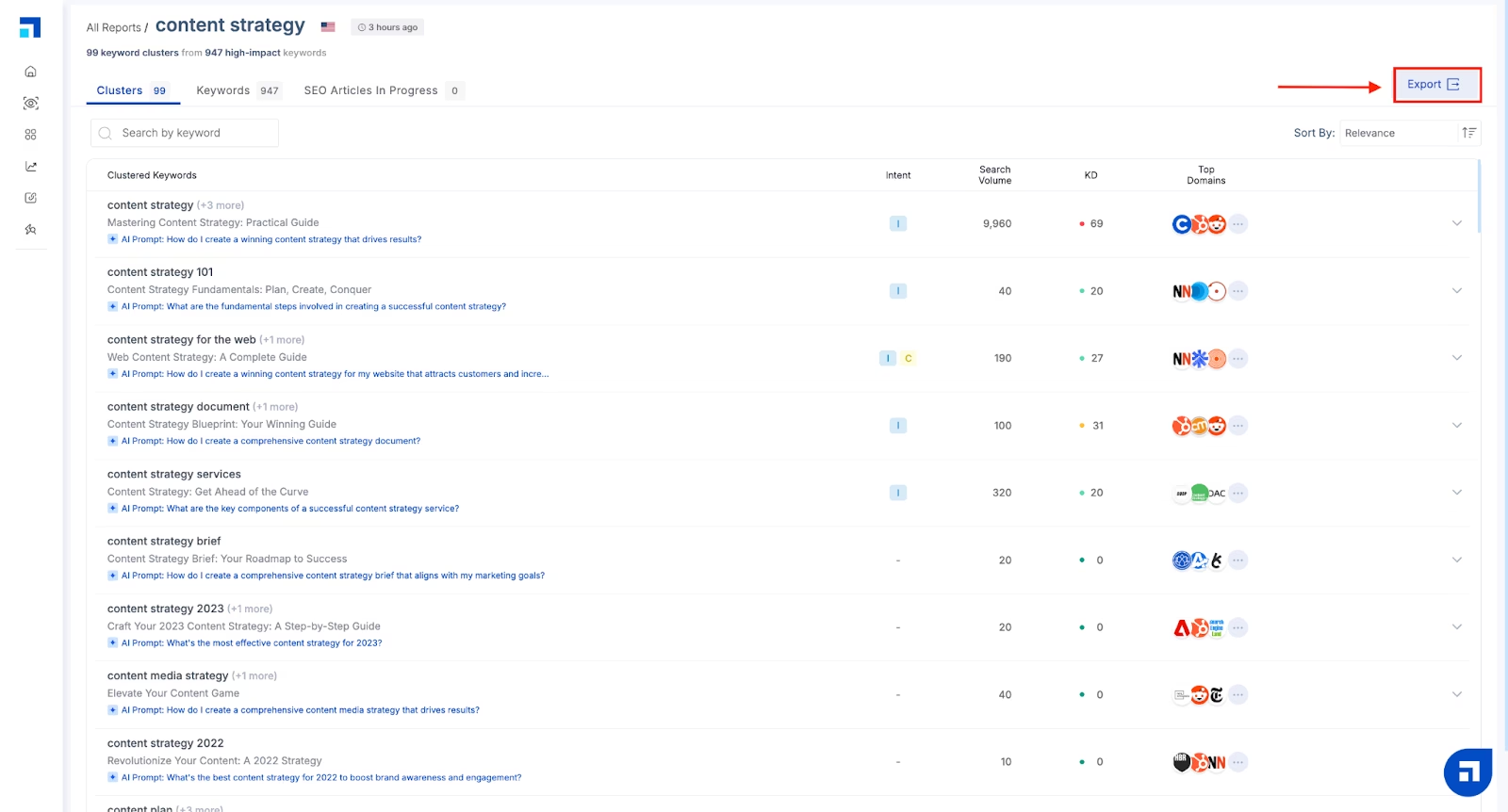
Unlike HiperWrite, Scalenut integrates keyword planning, competitive analysis, and SERP-informed briefs directly into the drafting process. HyperWrite prioritizes flexible writing workflows, which reduces alignment with ranking-focused blog strategies.
Core features in Scalenut span keyword clustering with intent tagging, a live SEO editor, and a SERP analyzer for ranking comparison. The AI Copywriter offers short-form content, while the SEO Assistant applies NLP-based scoring and structure checks for long-form articles.
Scalenut is a paid tool with pricing ranging from $49 to $149 per month. Entry plans offer limited content credits; the Growth tier increases article capacity, and the Pro tier unlocks deeper analysis and expanded tools.
Pros of Scalenut include fast topic clustering, structured optimization, and integrated SERP evaluation. Cons include occasional tone inconsistencies in AI output and limited rewriting depth on lower plans.
11. Surfer SEO: Best HyperWrite Alternative for On-Page SEO and Content Scores
Surfer SEO is a content optimization platform built around on-page SEO analysis and real-time scoring. Surfer SEO examines top-ranking pages for target queries and converts SERP patterns into clear recommendations for structure, depth, and formatting.
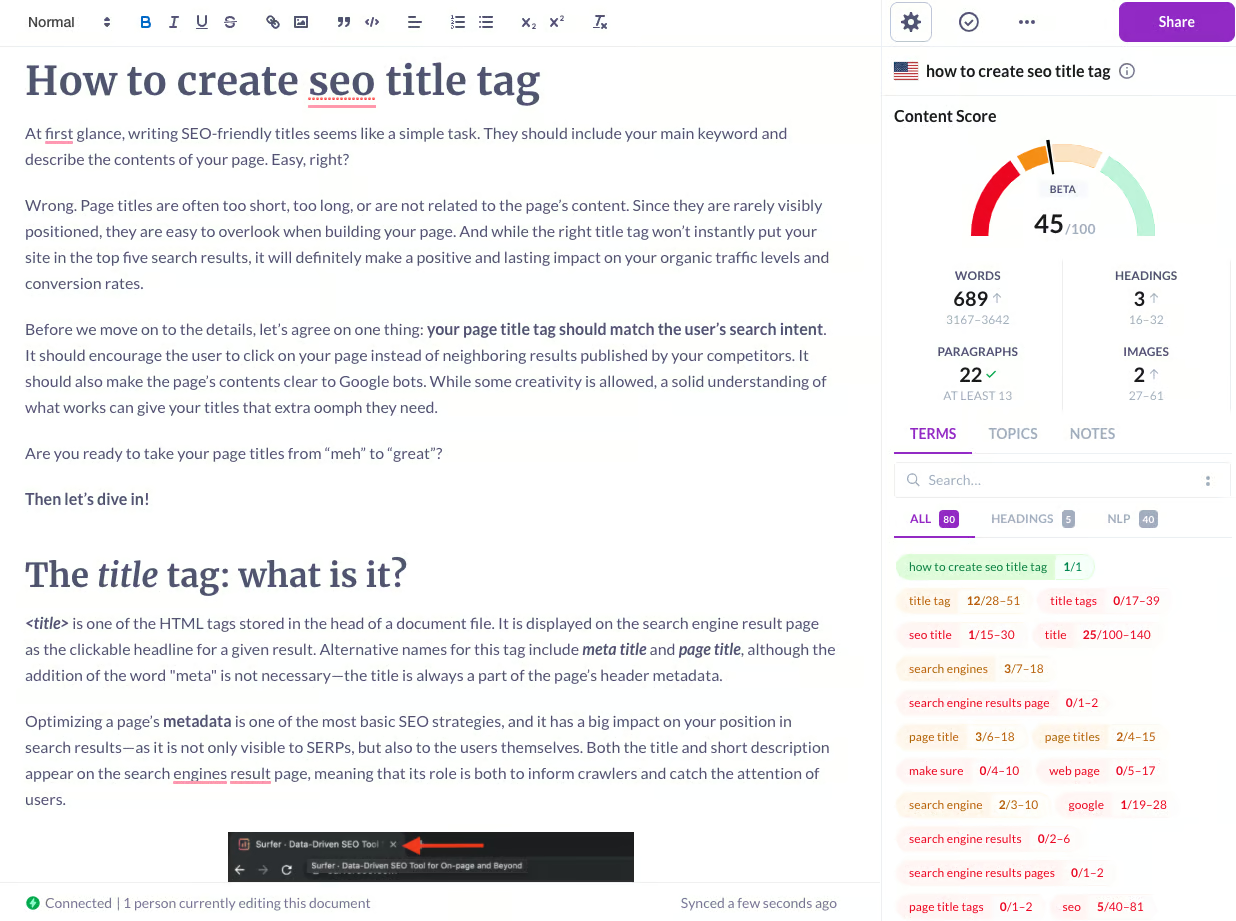
Surfer SEO outperforms Hyperwrite in on-page SEO and content scores. Surfer SEO applies live content scores, keyword distribution targets, and competitor benchmarks to align pages with ranking signals. HyperWrite concentrates on writing assistance, which leaves on-page SEO measurement outside the core workflow.
Core features include the Content Editor that applies keyword usage targets and competitor comparisons. NLP-driven models surface ranking signals and translate them into actionable writing thresholds for search-aligned articles.
Surfer SEO is a paid tool with pricing ranging from $79 to $179 per month. Entry plans cover audits, keyword research, and content optimization. Higher tiers expand collaboration capacity, activate AI modules, and unlock API access.
Pros of Surfer SEO review include precise content scoring, strong international SEO support, and a streamlined interface. Cons include a learning curve for new users and limited flexibility for highly specialized tone requirements.
12. Wordtune: Best HyperWrite Alternative for Sentence Rewriting and Style Changes
Wordtune is an AI writing platform focused on sentence-level rewriting and tone refinement. Wordtune reshapes text for clarity, length, and style through real-time, context-aware suggestions.
Wordtune addresses sentence improvement rather than workflow automation. Wordtune specializes in rephrasing, tone shifts, and readability adjustments at the line level. HyperWrite emphasizes broader writing productivity, which reduces precision for sentence-by-sentence refinement.
Core features include sentence and paragraph rewrites, summarization, tone adjustment across formal and casual styles, and length control for concise or expanded text. A built-in readability checker improves clarity without changing intent.
Wordtune is a paid tool with pricing ranging from $6.99 to $9.99 per month. A free tier offers limited rewrites, while paid plans unlock unlimited rewriting volume and tone controls.
Pros of Wordtune include fast rewrites, reliable tone adjustments, and simple browser integration. Cons include limited free usage, no SEO-focused capabilities, and occasional loss of nuance in complex sentences.
13. ProWritingAid: Best HyperWrite Alternative for Style, Grammar, and Readability Checks
ProWritingAid is a writing improvement platform designed to refine grammar, clarity, style, and structure across long-form and short-form content. ProWritingAid evaluates text for sentence flow, repetition, pacing, and readability while applying detailed editorial feedback.
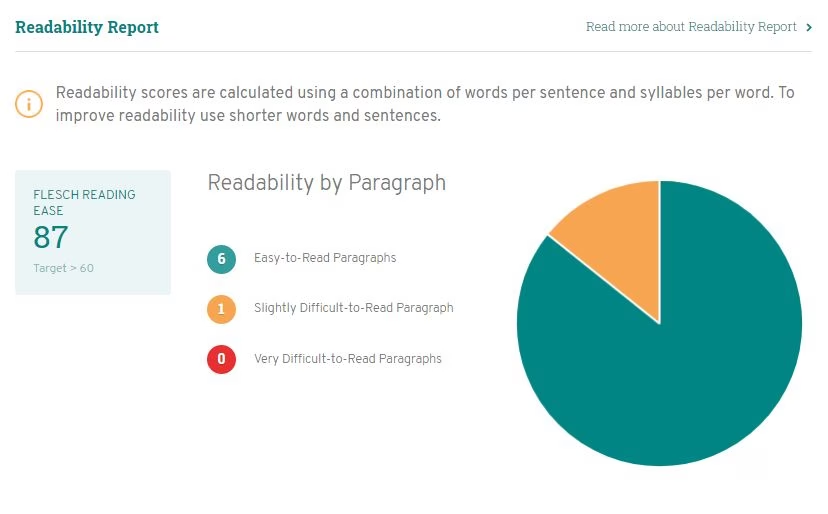
ProWritingAid focuses on deep editorial analysis rather than content generation. ProWritingAid applies advanced grammar rules, readability scoring, and stylistic diagnostics that polish writing at the structural level.
Core features in ProWritingAid emphasize detailed analysis and revision. ProWritingAid offers more than 25 reports covering grammar, style, readability, pacing, dialogue, and consistency. Paraphrasing tools, plagiarism checks, and a contextual thesaurus support revision.
ProWritingAid is a paid tool with pricing ranging from free to $36 per month. The free plan restricts word count and AI usage. Premium removes most limits and adds custom style guides and collaboration. Premium Pro expands AI allowances.
Pros of ProWritingAid include in-depth editorial feedback and strong long-form integrations. Cons include strict limits on the free tier, added costs for advanced AI usage, no mobile app, and reports that overwhelm new writers.
14. ChatGPT: Best HyperWrite Alternative for Flexible Drafting, Rewriting, and Ideation
ChatGPT is a general-purpose AI writing platform built for ideation, drafting, rewriting, and content exploration across formats. ChatGPT generates context-aware responses that adapt to creative, technical, and professional writing needs.
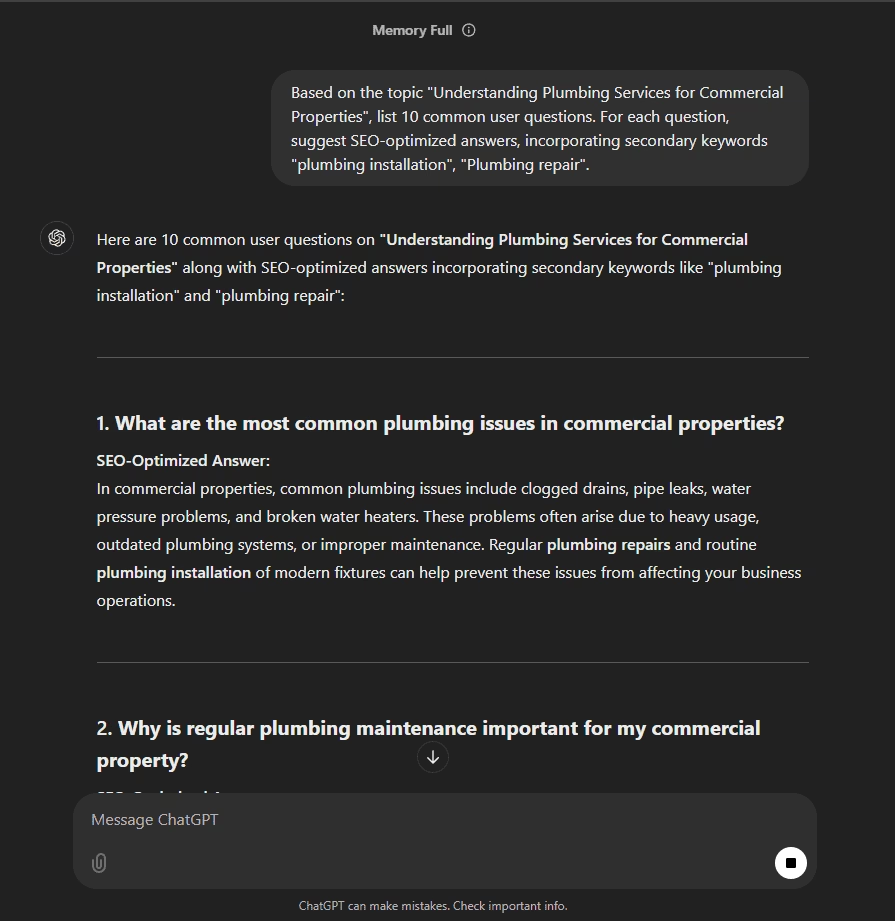
ChatGPT outperforms HyperWrite in flexible drafting, rewriting, and ideation. ChatGPT offers iterative drafting, open-ended ideation, and multi-format content development through conversational interaction. HyperWrite relies on predefined templates and browser-based automation, which narrows flexibility across diverse writing scenarios.
Core features include tone variation, structured rewriting, long-form drafting, and idea expansion through prompt-driven interaction. Multi-section articles, outlines, and revisions evolve dynamically as prompts change.
ChatGPT is a paid tool with pricing ranging from $20 to $200 per month. A free tier provides limited access for individual experimentation, while paid plans expand model access and usage capacity.
Pros of ChatGPT include versatility, rapid ideation, and strong performance across many writing formats. Cons include the absence of built-in SEO optimization and occasional repetition in extended outputs.
15. Jasper AI: Best HyperWrite Alternative for High-Volume Marketing Copy
Jasper is a content automation platform designed for marketing teams producing branded assets at scale. Jasper centralizes AI writing, brand voice governance, and campaign workflows inside one workspace built for consistent output.
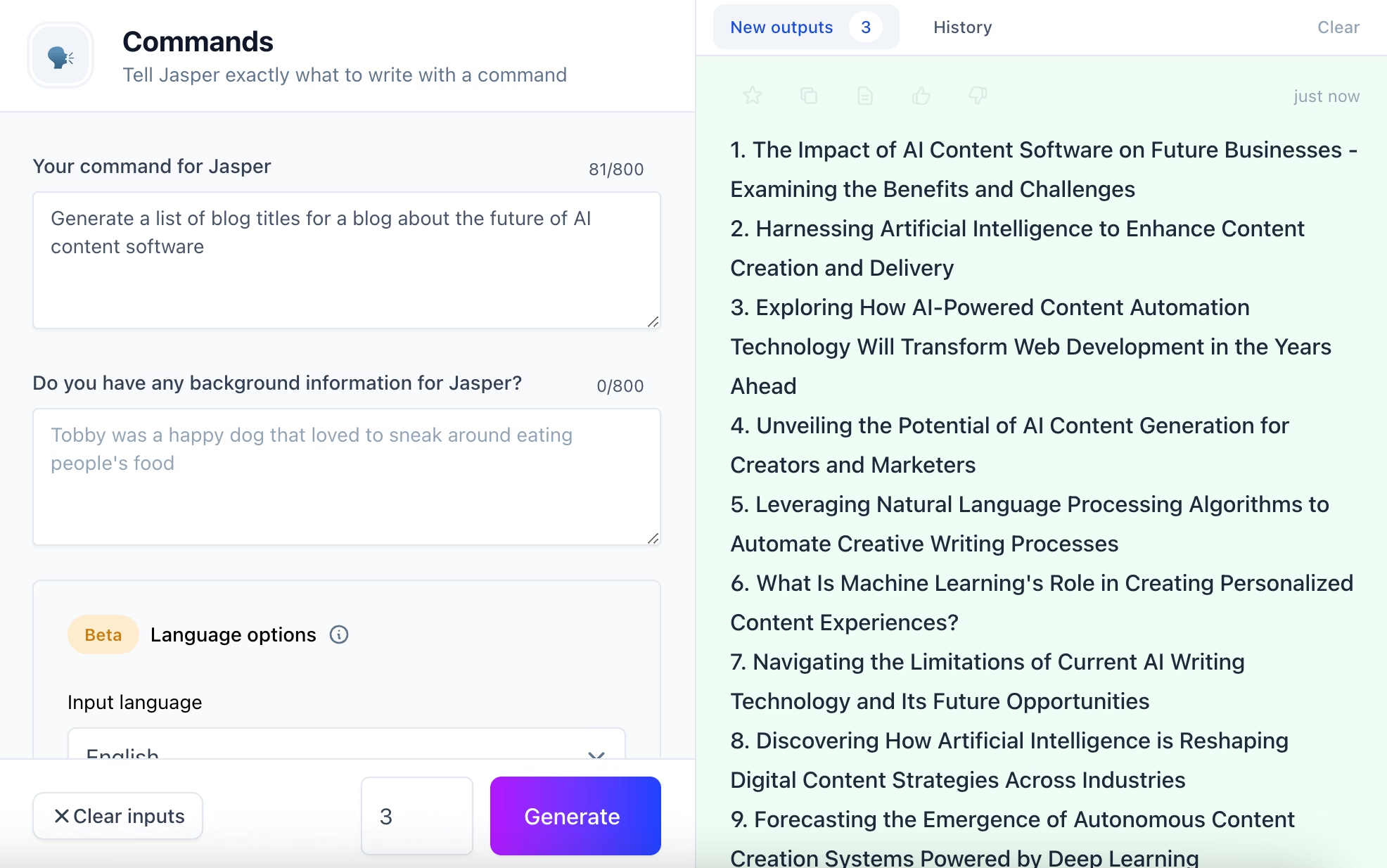
Jasper structures content creation around repeatable workflows that preserve tone across blogs, ads, and email campaigns. HyperWrite centers on personalized assistance, which narrows effectiveness for high-volume, team-driven production.
Core features in Jasper focus on workflow-led creation. Custom paths guide blog posts, email sequences, social ads, and long-form rewrites from draft to revision. Brand voice controls standardize messaging, while collaboration tools coordinate multi-writer teams.
Jasper is a paid tool with pricing that ranges from $49 per month to custom enterprise plans. The $49 Creator plan provides core writing tools. The $69 Pro plan expands collaboration, brand voices, and image generation. Business plans add API access, enterprise security, and advanced workflow customization.
Pros of Jasper include strong long-form quality, consistent brand output, and marketing-focused automation. Cons include a learning curve, no free plan, and limited SEO insight compared to specialized optimization platforms.
16. Copy.ai: Best HyperWrite Alternative for Social, Email, and Ad Copy Variations
Copy.ai is an AI writing platform built for rapid short-form marketing content. Copy.ai transforms brief prompts into campaign-ready copy while maintaining a consistent tone across channels.
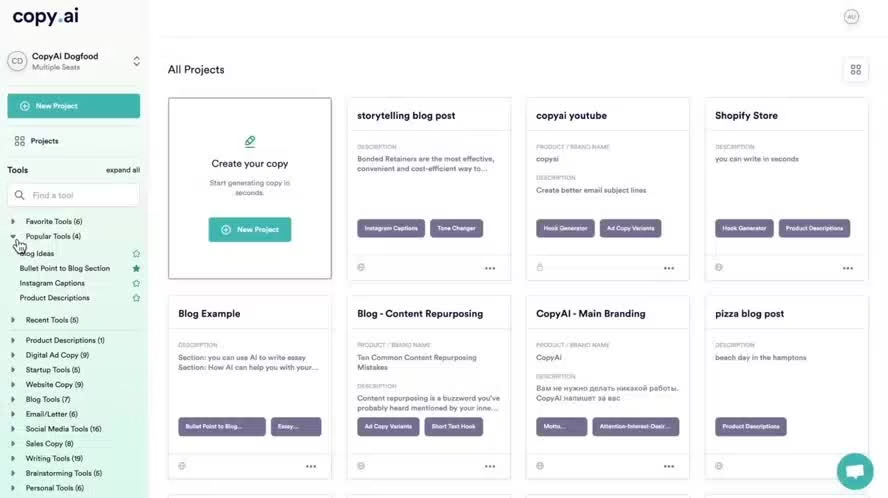
Copy.ai outperforms Hyperwrite in social and ad copy variations. Copy.ai generates multiple copy angles for ads, emails, and social posts through marketing-specific workflows. HyperWrite focuses on flexible assistance, which reduces efficiency for rapid campaign iteration.
Core features in Copy.ai concentrate on short-form execution. Prebuilt templates cover email sequences, social ads, blog drafts, and product descriptions. Personalization and localization tools adapt language and tone for regional markets to accelerate multi-geo campaigns.
Copy.ai is a paid tool with pricing ranging from $49 to $249 per month. Entry tiers allow unlimited word generation. Higher plans unlock workflow automation, collaboration credits, and advanced integrations for larger teams.
Pros of Copy.ai include fast output and strong localization capability. Cons include limited SEO depth, repetition in extended use, and higher pricing on automation-focused tiers.
17. Arvow: Best HyperWrite Alternative for SEO Content Refresh and Auto-Publishing
Arvow, previously known as Journalist AI, is an AI-powered platform built for large-scale SEO content creation and automated publishing. Arvow generates, optimizes, refreshes, and publishes content directly to websites through an end-to-end automation workflow.
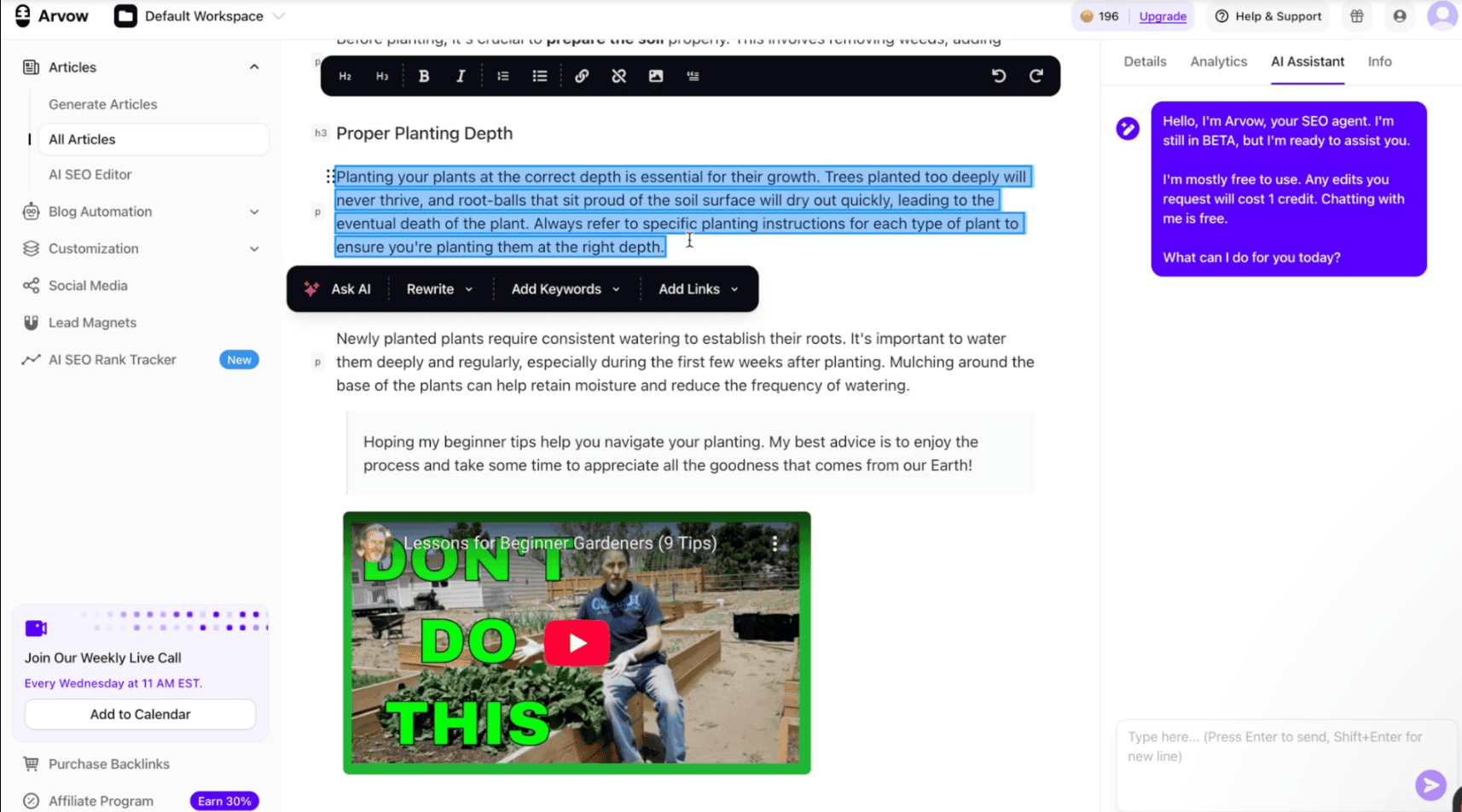
Unlike HyperWrite, Arvow approaches SEO execution as a continuous system. Arvow connects content generation, optimization, refresh cycles, and publishing into a single automated pipeline.
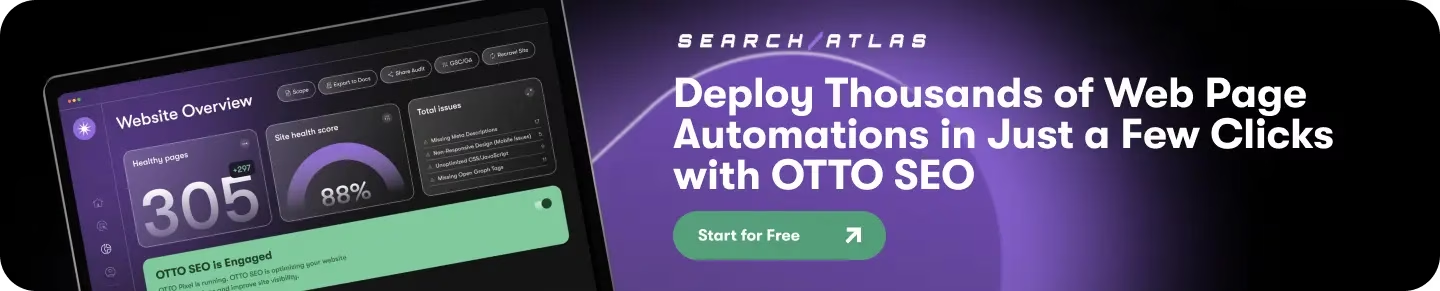
Core features in Arvow focus on full-cycle SEO automation. The AI Article Writer produces long-form, structured content from keywords or headlines. Knowledge Base uploads train the system on brand data, documents, and URLs to align output with domain expertise and E-E-A-T expectations. Built-in publishing and syndication complete the workflow with minimal manual input.
Arvow is a paid tool with pricing ranging from $59 to $389 per month. The $59 Solo plan offers individual workflows, the $89 Business plan expands credits, and the $389 Agency plan scales production for multiple clients. Additional options include pay-as-you-go credits.
Pros of Arvow include automated content refresh, direct publishing, and scalable SEO production. Cons include reduced creative control and the need for human review to verify facts and refine output quality.
18. QuillBot: Best HyperWrite Alternative for Paraphrasing and Text Rewrites
QuillBot is an AI writing platform centered on paraphrasing, clarity, and originality. QuillBot restructures sentences, adjusts tone, and rewrites text while preserving original meaning across academic, professional, and creative use cases.
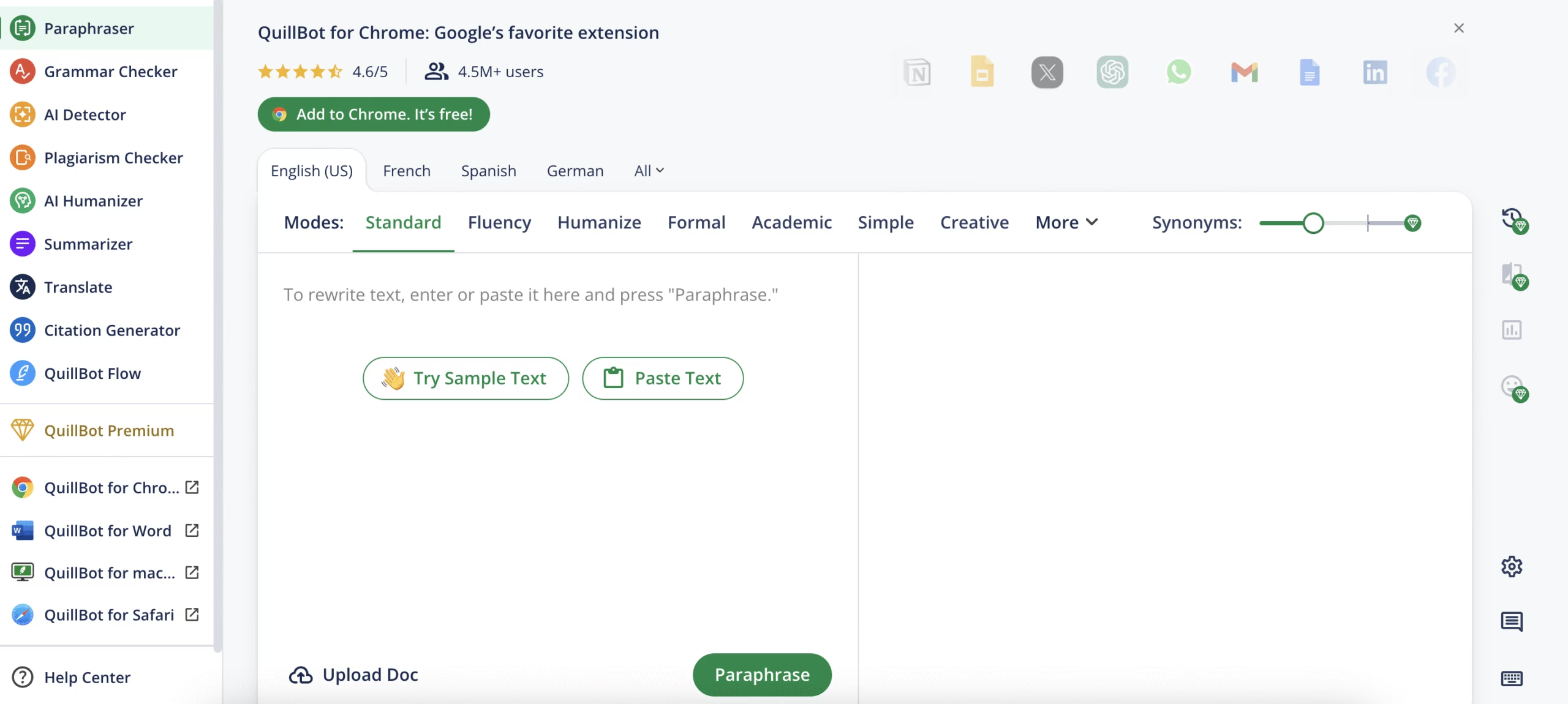
QuillBot specializes in rewriting precision rather than broad writing workflows. QuillBot applies multiple rewrite modes and synonym controls to reshape text at the sentence level. HyperWrite emphasizes general writing assistance, which limits focus on targeted paraphrasing tasks.
Core features in QuillBot concentrate on rewriting accuracy. The AI paraphraser generates alternative versions instantly. Integrated grammar checking, plagiarism detection, and citation tools offer refinement and originality validation within the same editor.
QuillBot is a paid tool with pricing ranging from free access to $8.33 per month. The free plan supports basic rewrites and grammar checks. Paid plans unlock full paraphrasing modes and higher usage limits.
Pros of QuillBot include strong paraphrasing accuracy, built-in plagiarism detection, and multilingual support. Cons include weaker handling of nuanced subject matter, occasional tone mismatches, and reliance on expert review for complex topics.
19. Buffer AI Assistant: Best HyperWrite Alternative for AI Social Media Captions and Posts
Buffer AI Assistant is an AI feature embedded directly inside the Buffer social media management platform. Buffer AI Assistant generates post ideas, adapts copy for specific networks, and reshapes tone, length, and format inside the publishing workflow.
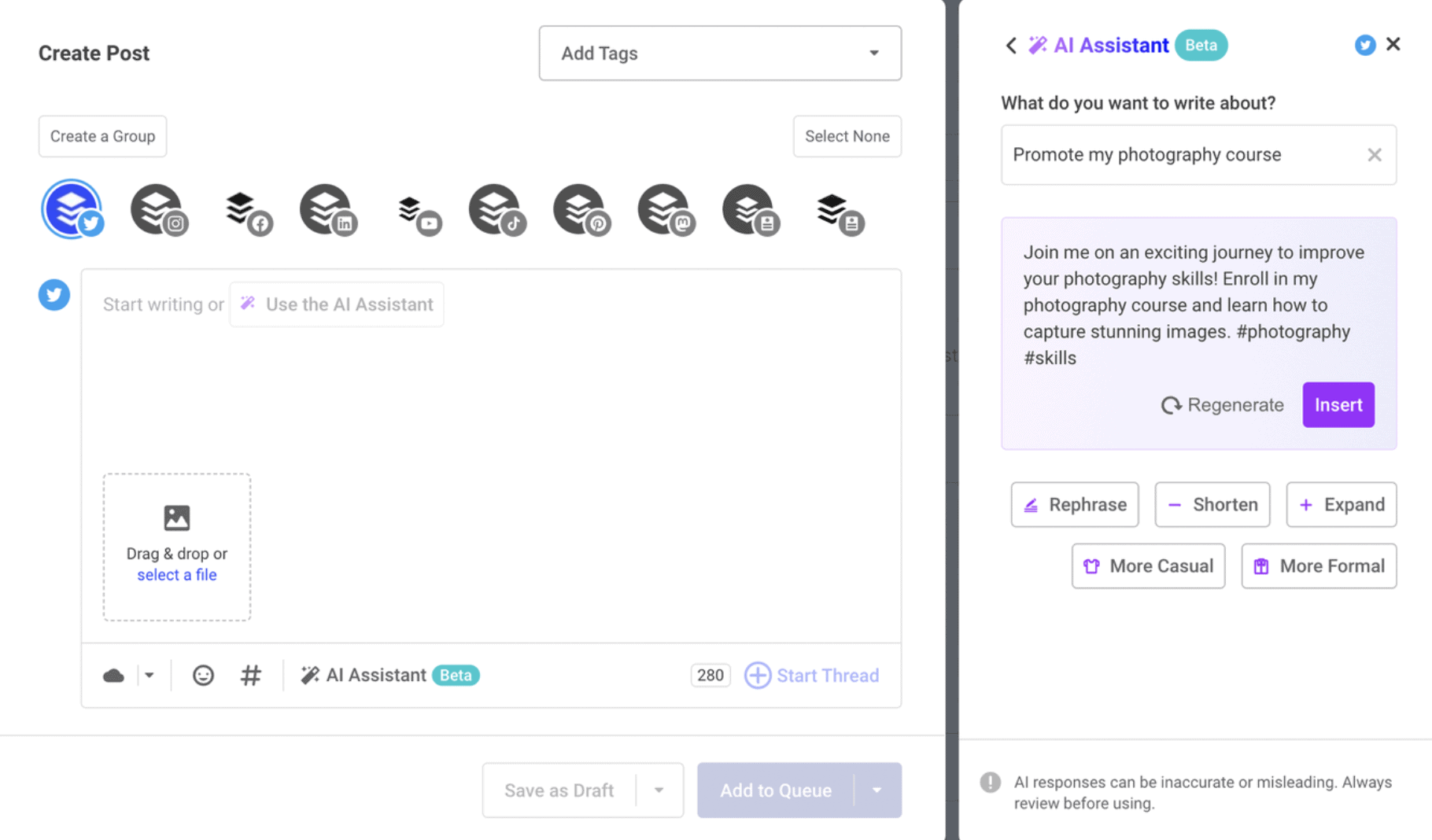
Buffer AI Assistant aligns captions with platform constraints, character limits, and posting cadence while writing directly into the content calendar. HyperWrite functions outside social scheduling, which separates writing from publishing and planning.
Core features in Buffer AI Assistant focus on social-first execution. The tool generates caption ideas and applies one-click adjustments for tone and length. Native integration with scheduling and analytics keeps ideation, writing, and publishing in one place.
Buffer AI Assistant is a paid tool with pricing ranging from $0 to $10 per channel per month. The free plan offers up to 3 channels with limited scheduling and AI ideas. The $5 Essentials plan enables unlimited posts and AI ideas for one user. The $10 Team plan adds collaboration for multiple users.
Pros of Buffer AI Assistant include ease of use, direct scheduling integration, and fast caption generation. Cons include basic analytics on lower plans, higher costs as channels scale, and lighter AI strategy depth than specialized tools.
20. Writesonic: Best HyperWrite Alternative for Long-Form Articles and Landing Pages
Writesonic is an AI content platform designed for producing long-form articles, landing pages, and marketing copy. Writesonic combines rapid drafting with SEO-oriented refinement to allow publication-ready content.
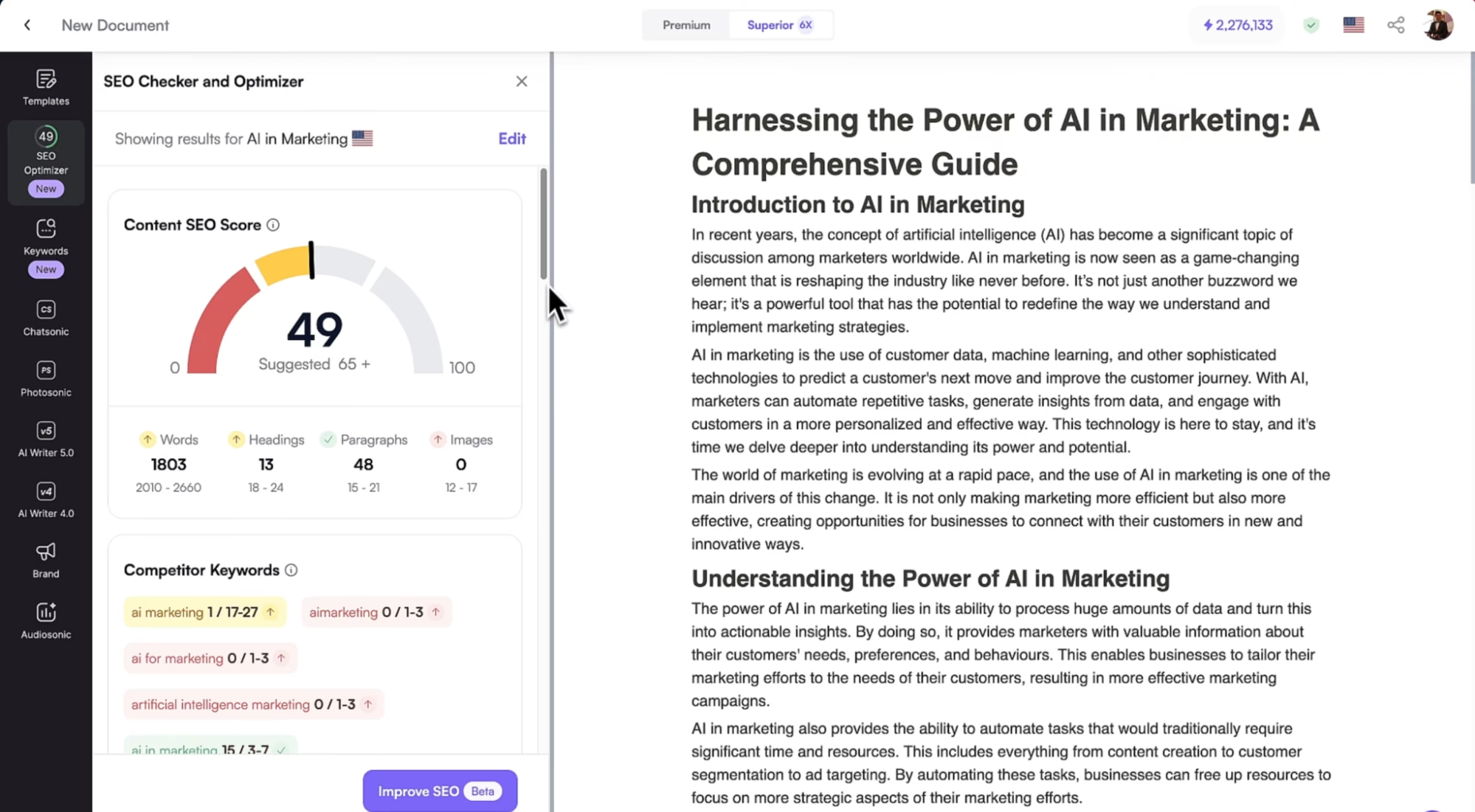
Writesonic outperforms HyperWrite in long-form articles and landing pages. Writesonic integrates SEO scoring, structured outlines, and publishing connections to guide long articles and conversion pages.
Core features in Writesonic include SEO Optimizer, which evaluates keyword usage and content quality. Chatsonic connects with Ahrefs and WordPress to streamline research and publishing. Outline builders and rephrasing tools maintain structure and tone consistency.
Writesonic is a paid tool with pricing ranging from $39 to $399 per month. Lower tiers fit individual creators, while higher plans unlock advanced integrations, reporting, and multi-user collaboration.
Pros of Writesonic review include fast article drafting, integrated SEO scoring, and support for multiple content formats. Cons include inconsistent quality in extended articles, tight limits on entry plans, and a crowded interface for new writers.
21. SEOWind: Best HyperWrite Alternative for SEO Briefs and Content Outlines
SEOWind is an AI-powered SEO content platform designed to generate research-driven briefs, update existing articles, and produce EEAT-aligned content at scale. SEOWind treats SERP analysis and competitive research as the foundation of every outline and article.
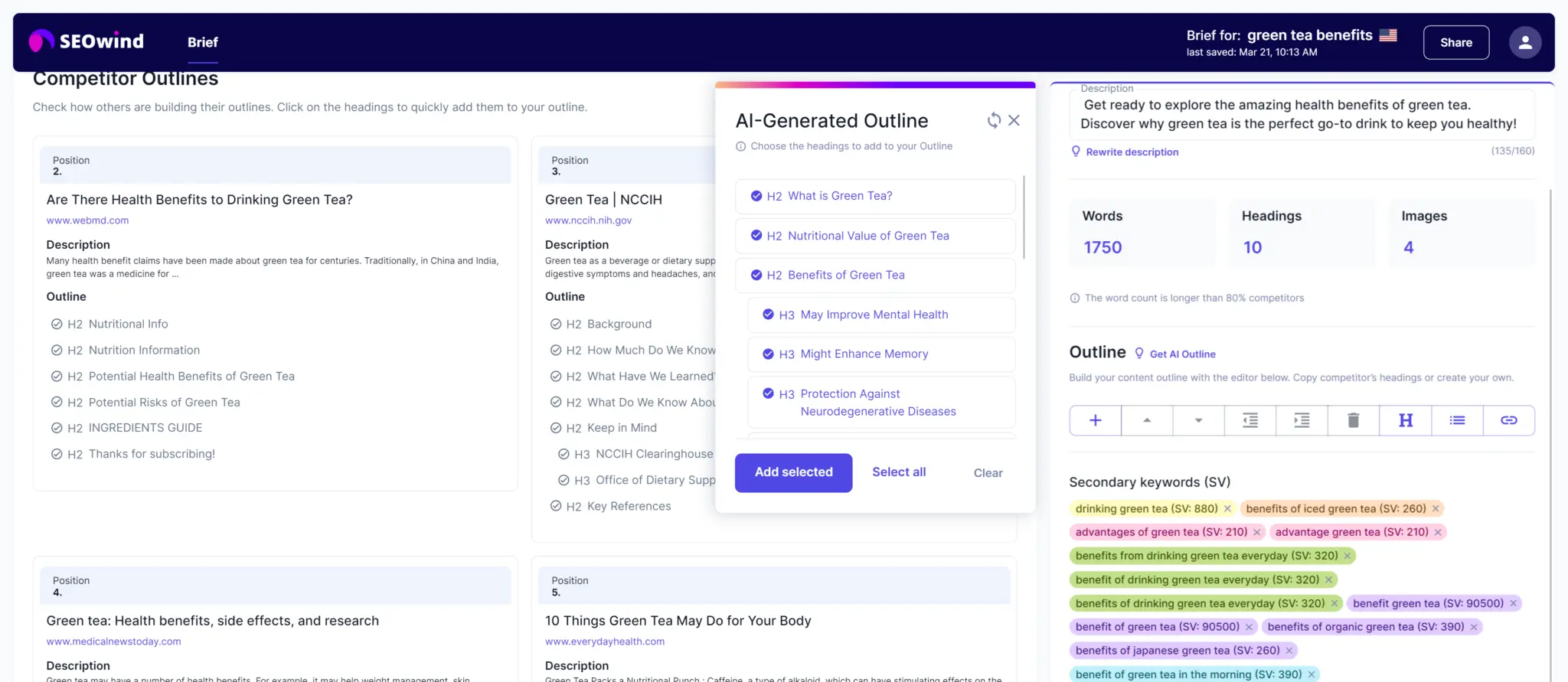
SEOWind emphasizes SEO intelligence over general writing automation. SEOWind builds content briefs from SERP data, keyword clustering, and competitor patterns before drafting begins. HyperWrite functions as a broad AI assistant, which places more responsibility on manual research and post-draft validation for SEO-heavy content.
Core features include in-depth SERP analysis that evaluates ranking pages and user intent. The Content Brief Generator produces structured outlines with clustered keywords and topical coverage requirements. AI-driven article updates and internal linking suggestions.
SEOWind is a paid tool with pricing ranging from $59 to $359 per month. The $59 plan covers 8 articles, the $89 Pro plan offers 20 articles, and the $359 Agency plan expands capacity to 100 articles. Managed growth partnerships begin at $2,500 per month.
Pros of SEOWind include fast outline generation, AI-powered content refresh, EEAT scoring, and smooth onboarding. Cons include article caps on entry plans, limited domain support on lower tiers, and fewer technical SEO capabilities than full-suite platforms.
22. Sudowrite: Best HyperWrite Alternative for Creative and Narrative Writing
Sudowrite is an AI writing assistant built specifically for fiction and narrative development. Sudowrite offers brainstorming, drafting, revision, and story expansion while preserving narrative flow and creative intent.
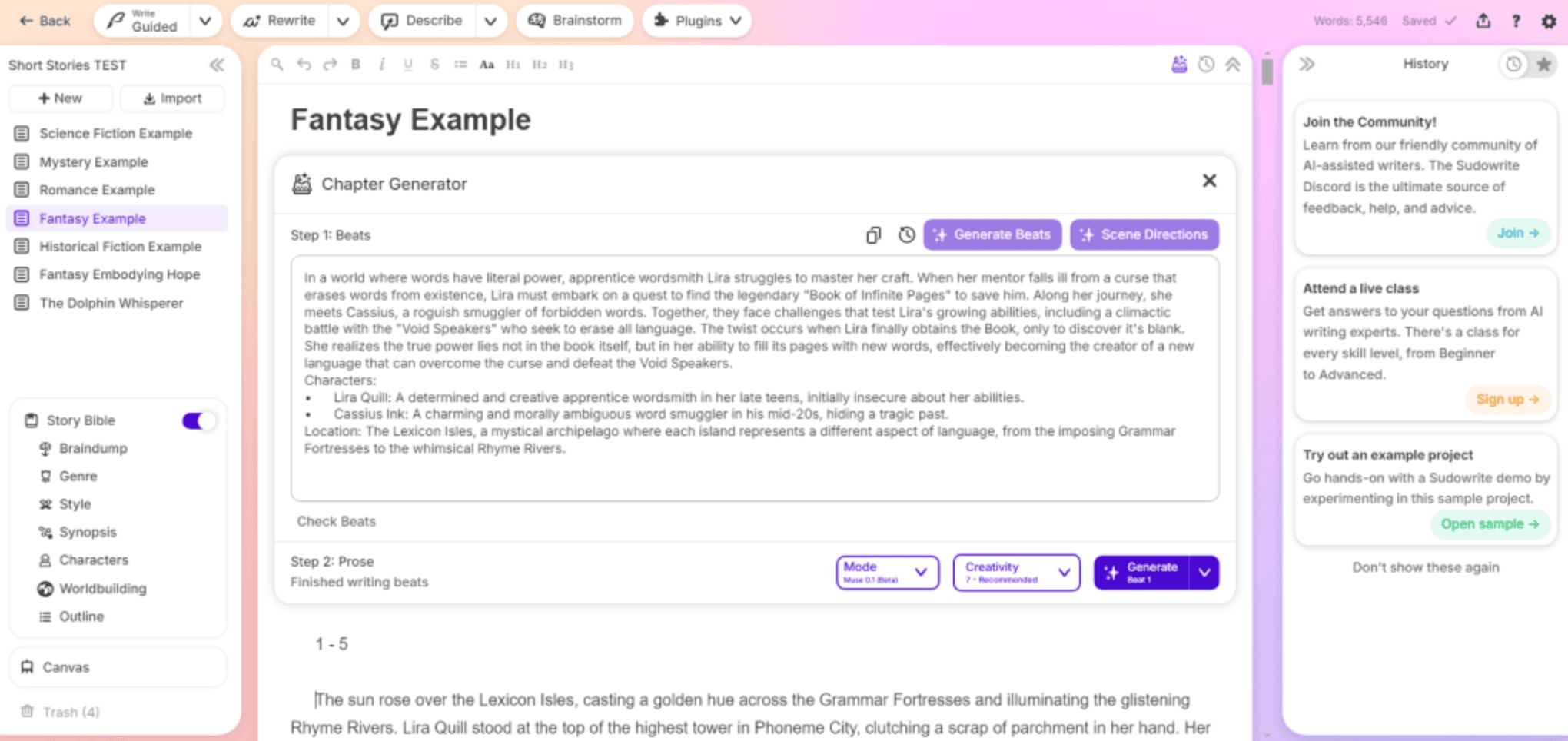
Sudowrite operates inside the creative writing layer rather than productivity automation. Sudowrite offers tools designed for storytelling, character arcs, and world-building. HyperWrite focuses on general writing assistance and automation, which does not address narrative structure or creative continuity in depth.
Core features in Sudowrite focus on storytelling mechanics. Write generates new passages, Rewrite adjusts style, Describe adds sensory detail, and Expand builds scenes. The Canvas visualizes plots and characters, while the Story Bible maintains consistency across settings, arcs, and character traits.
Sudowrite is a paid tool with pricing ranging from $10 to $44 per month. The $10 Hobby plan includes 225,000 monthly credits. The $22 Professional plan increases limits to 450,000 credits. The $44 Max plan provides 2,000,000 credits with annual rollover.
Pros of Sudowrite include strong creative brainstorming and narrative cohesion tools. Cons include a learning curve, occasional AI-styled phrasing, and the need for manual editing to preserve a distinct author voice.
23. Growthbar: Best HyperWrite Alternative for AI SEO Content Inside WordPress
GrowthBar is an AI writing and SEO platform designed for fast blog creation with built-in optimization tools. GrowthBar combines content generation, keyword research, and competitor analysis through a Chrome extension and a lightweight web app.
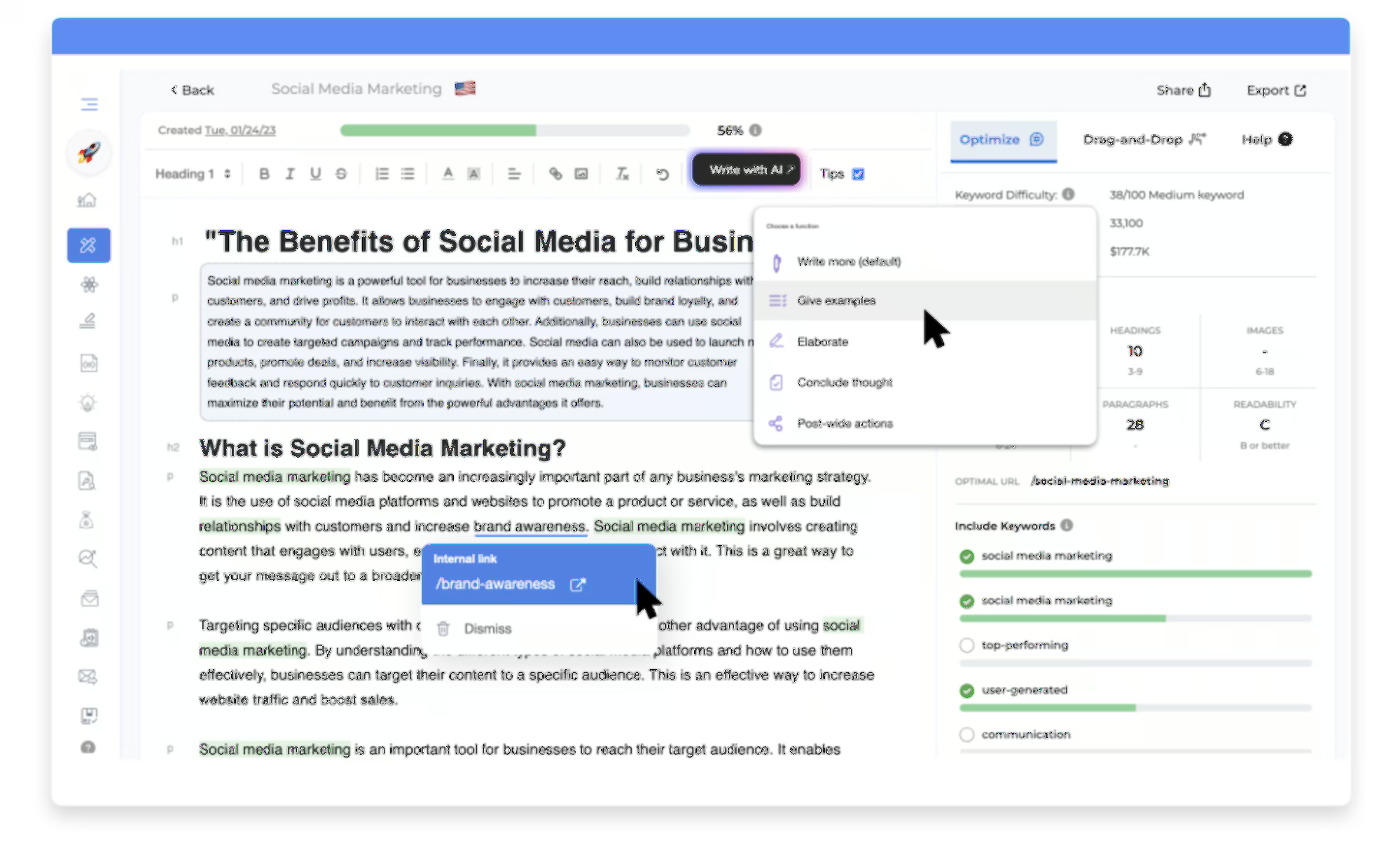
GrowthBar outperforms HyperWrite in AI SEO content inside WordPress. GrowthBar connects AI writing with keyword data, competitor insights, and direct WordPress publishing through its browser extension. HyperWrite operates as a general writing assistant, which separates drafting from CMS-level SEO execution.
Core features in GrowthBar focus on speed and simplicity. GrowthBar generates blog drafts, surfaces keyword opportunities, and analyzes competing pages directly from the browser. The Chrome extension connects research, writing, and publishing into a single workflow optimized for WordPress users.
GrowthBar is a paid tool with pricing ranging from $48 to $99 per month. The Standard plan offers core AI writing and SEO research. The Pro plan expands usage limits and competitive analysis capacity.
Pros of GrowthBar include quick AI blog generation, WordPress-focused workflows, Chrome extension convenience, and accessible pricing. Cons include shallow optimization depth, limited content scoring detail, and fewer advanced SEO capabilities.
24. Writecream: Best HyperWrite Alternative for Outreach Emails and Personalized Copy
Writecream is an AI-powered content creation platform built for personalized outreach and fast marketing copy. Writecream generates cold emails, LinkedIn messages, ads, scripts, and social content through a broad set of automation tools.
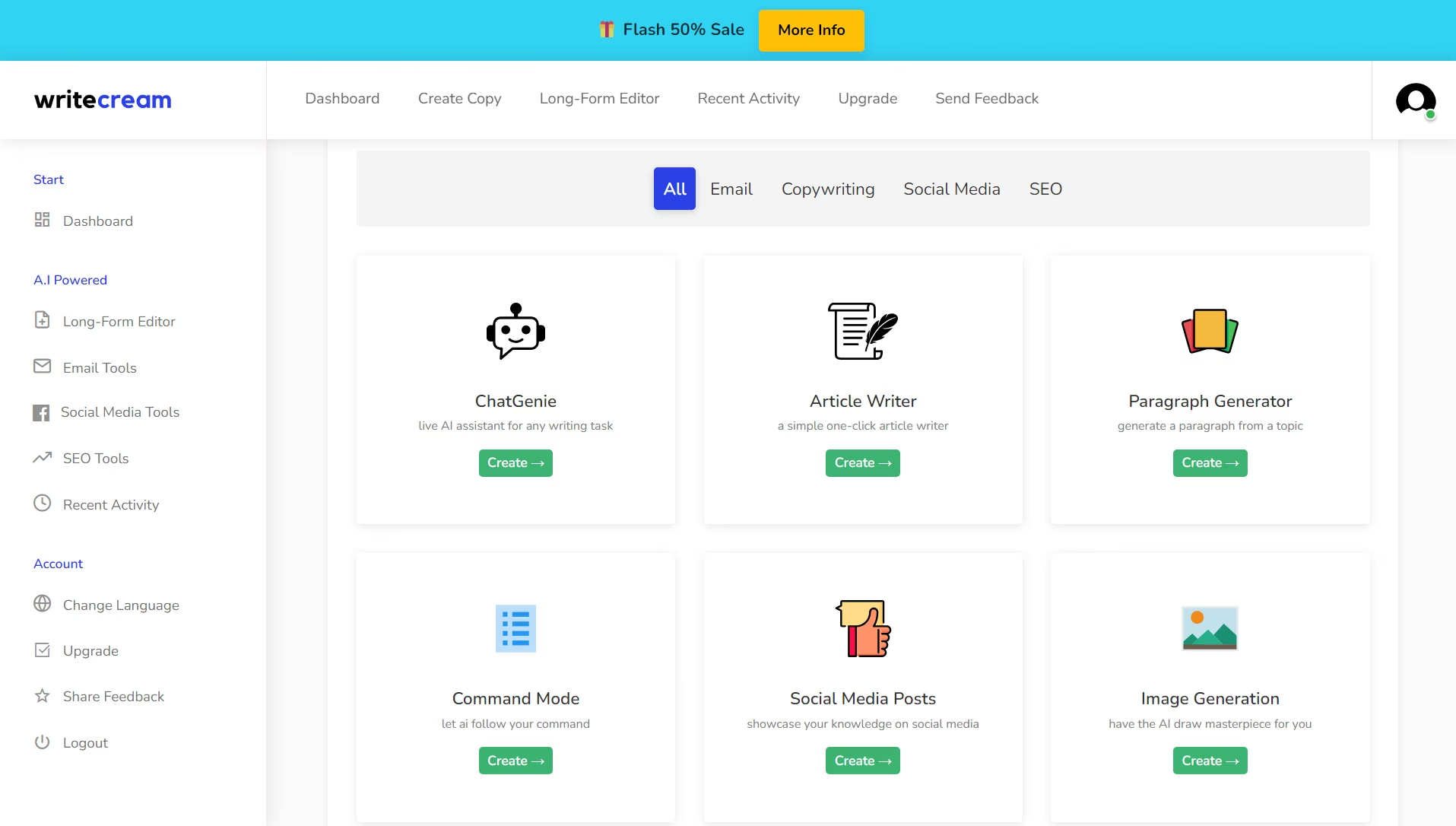
Writecream prioritizes personalization at scale rather than general writing assistance. Writecream generates custom icebreakers from prospect websites or LinkedIn profiles and offers bulk personalization through CSV uploads. HyperWrite emphasizes flexible writing support, which does not specialize in outreach personalization workflows.
Core features center on automated personalization and volume output. Writecream produces tailored intros for cold emails and backlink outreach, and extends beyond text into images and audio. A wide library of templates accelerates execution across marketing channels.
Writecream is a paid tool with pricing ranging from $0 to $49 per month. The free plan provides limited credits. The $29 Unlimited plan offers individual creators. The $49 Unlimited Pro Max plan adds team seats, faster processing, and expanded media generation.
Pros of Writecream include personalization depth, template variety, affordability, and fast turnaround. Cons include restrictive credit usage, inconsistent AI image quality, and the need for manual refinement on longer content.
25. WordHero: Best HyperWrite Alternative for All-Purpose Marketing Copy
WordHero is an AI-powered content creation tool built for fast, multi-format marketing copy. WordHero generates blog posts, ads, emails, landing page text, and social updates from short prompts using template-driven workflows.
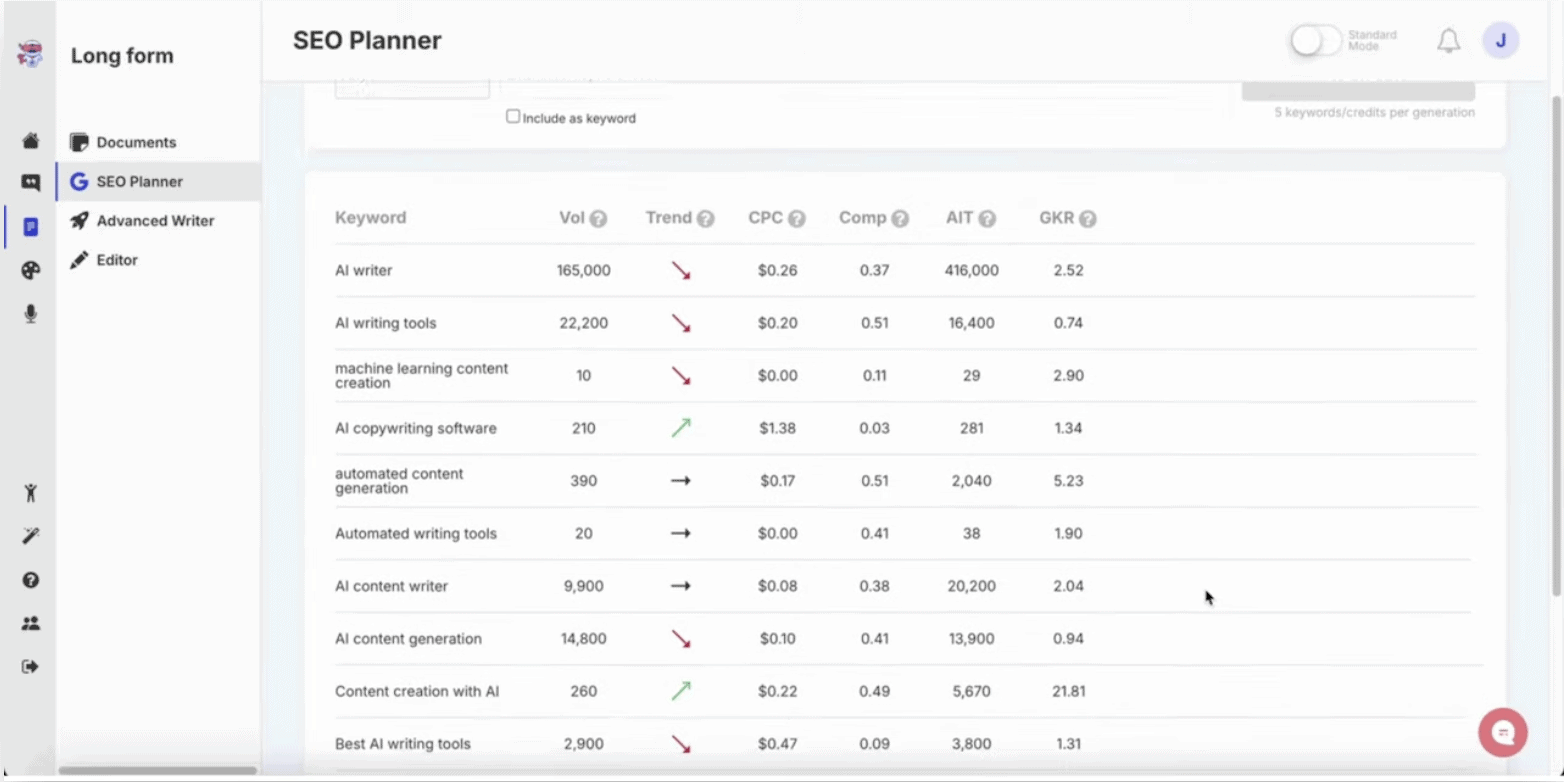
Unlike HyperWrite, WordHero prioritizes campaign-ready output and template breadth over flexible task automation. WordHero offers a wide library of marketing templates that reduce prompting effort and speed up production across channels. HyperWrite focuses on adaptive assistance, which requires more manual direction for repeatable marketing use cases.
Core features center on rapid content generation. WordHero offers one-click article creation, short-form marketing copy, and a long-form editor. Keyword assistance offers basic SEO alignment, while WordHero Art extends output into AI-generated images.
WordHero is a paid tool with pricing ranging from $29 to $79 per month. The $29 Creator plan includes unlimited content generation, SEO projects, and long-form tools. The $79 Infinity plan expands Enhanced Mode usage, brand voice limits, and AI image credits for teams.
Pros of WordHero include ease of use, unlimited content on select plans, broad language support, and fast idea generation. Cons include repetitive long-form output, higher pricing relative to depth, and the need for manual editing to achieve polished results.
26. Writer.com: Best HyperWrite Alternative for Brand-Safe Enterprise Writing
Writer.com is an enterprise-grade generative AI platform designed for brand-safe content creation and workflow automation. Writer.com emphasizes governance, security, and system integration for large organizations producing content at scale.
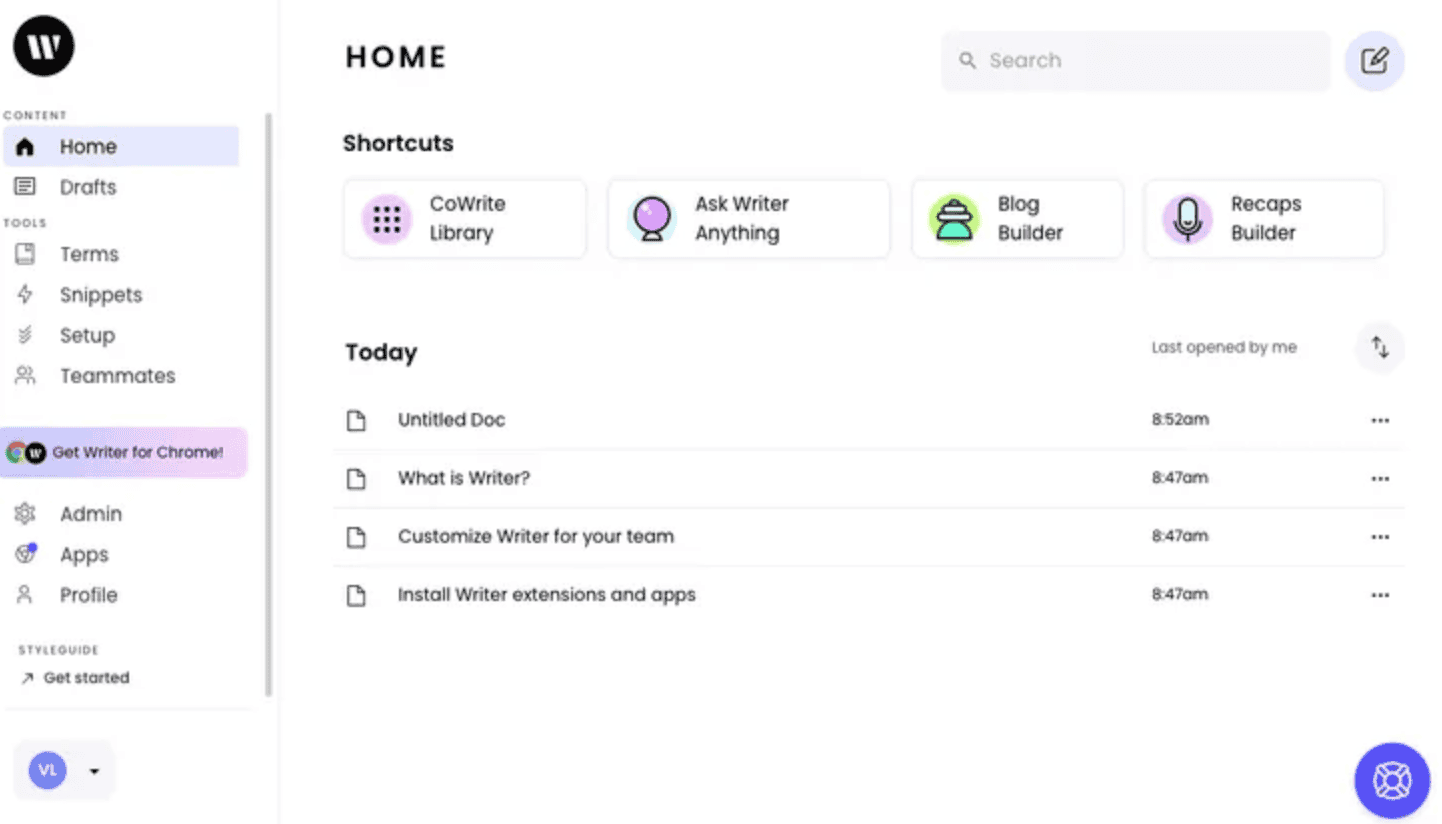
Writer.com addresses enterprise compliance and brand control rather than individual productivity. Writer.com enforces style guides, brand voice rules, and approval workflows across teams. HyperWrite operates as a personal AI assistant, which does not provide organization-wide governance or compliance controls.
Core features in Writer.com focus on controlled content production. The Brand Voice Engine applies company-specific tone and messaging rules across outputs. AI agents automate multi-step workflows while integrating with systems (Salesforce, HubSpot) and ground content in business data through a Knowledge Graph.
Writer.com is a paid tool with pricing based on custom enterprise plans. A Starter tier offers a 14-day free trial for up to 10 users with core agents and limited connectors. Enterprise plans scale users, workflows, governance controls, and support through custom contracts.
Pros of Writer.com include enterprise-grade governance, strong security, brand voice enforcement, and workflow automation through AI agents. Cons include enterprise-level pricing, higher setup complexity, and a steeper learning curve without mature internal AI operations.
27. Meta.ai: Best HyperWrite Alternative for Chat-Based Drafting and Q&A
Meta AI is a conversational AI assistant integrated across Meta platforms such as WhatsApp, Instagram, and Facebook. Meta AI offers chat-based drafting, question answering, and idea exploration through continuous, context-aware dialogue.

Meta AI stands apart from HyperWrite through real-time conversational interaction. Meta AI supports back-and-forth drafting, live Q&A, and iterative refinement inside messaging environments. HyperWrite relies on browser-based workflows, which limit conversational continuity and real-time dialogue.
Core features in Meta AI focus on conversational and multimodal interaction. The assistant generates text through ongoing dialogue, creates images, and retrieves real-time information across Meta apps. Responses adapt dynamically as conversations evolve using Meta’s Llama models.
Meta AI is available through a free tier integrated into Meta apps. Paid options expand capabilities through subscriptions with custom enterprise pricing, depending on model access, usage limits, and business needs.
Pros of Meta AI include ease of access, conversational flexibility, and zero-cost entry for everyday use. Cons include privacy considerations, occasional factual errors, and limited control for structured writing workflows.
28. Copysmith: Best HyperWrite Alternative for Ecommerce Product Descriptions
Copysmith is an AI copywriting platform built for ecommerce teams managing large product catalogs. Copysmith generates product descriptions, ads, and promotional copy through workflows designed for retail scale.
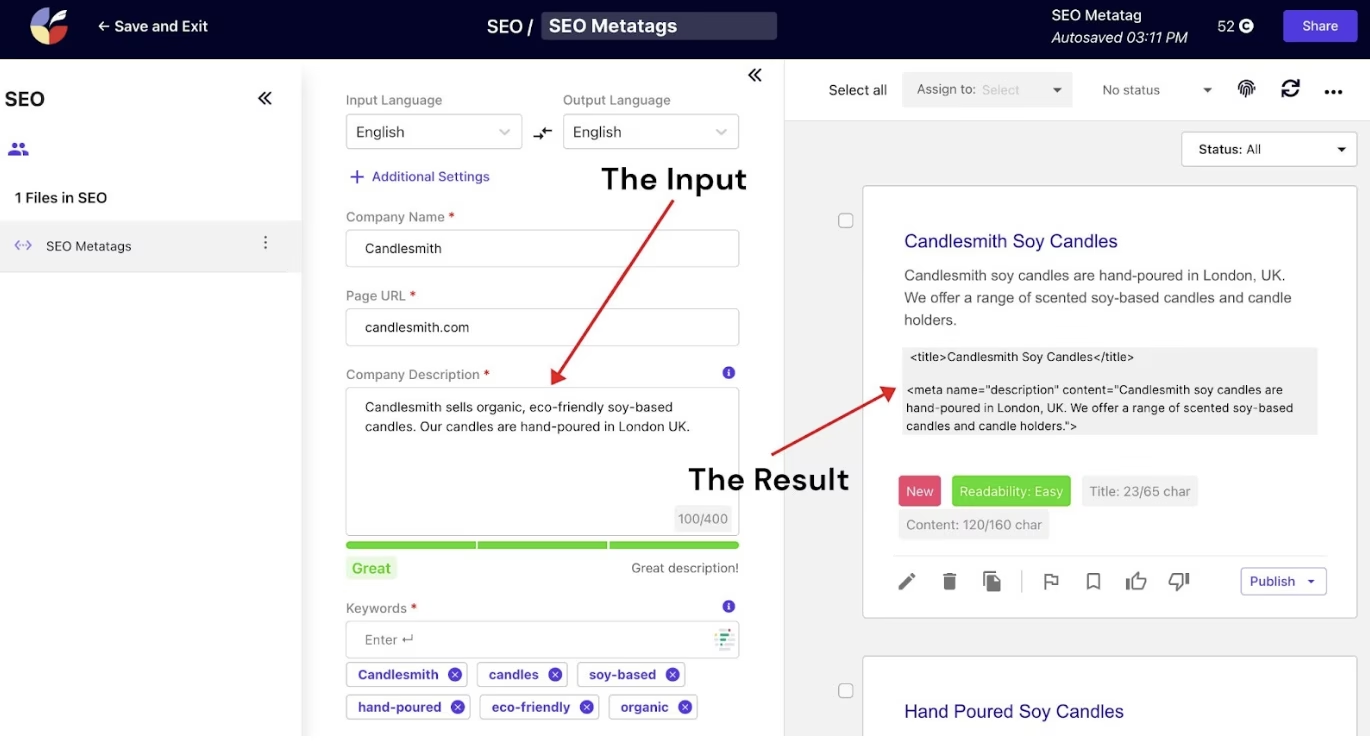
Copysmith exceeds HyperWrite in ecommerce-focused content production. Copysmith offers bulk generation, catalog-level workflows, and conversion-oriented templates for online stores.
Core features in Copysmith emphasize retail workflows. The platform generates bulk product descriptions, ad variations, and localized copy while maintaining a consistent tone across catalogs. Collaboration tools allow multi-user teams to manage high-volume inventories.
Copysmith is a paid tool with pricingrangings from $19 per month to custom enterprise plans. Higher tiers expand generation limits, collaboration capacity, and enterprise customization.
Pros of Copysmith include efficient bulk copy generation and reliable ad variant production. Cons include occasional repetition, limited SEO depth compared to specialized tools, and an interface that requires adjustment for new users.
29. Grammarly: Best HyperWrite Alternative for Grammar, Tone, and Clarity Adjustments
Grammarly is an AI writing platform focused on grammar accuracy, tone control, and clarity across documents and editors. Grammarly reviews text in real time, flags errors, restructures sentences, and improves readability at the sentence level.
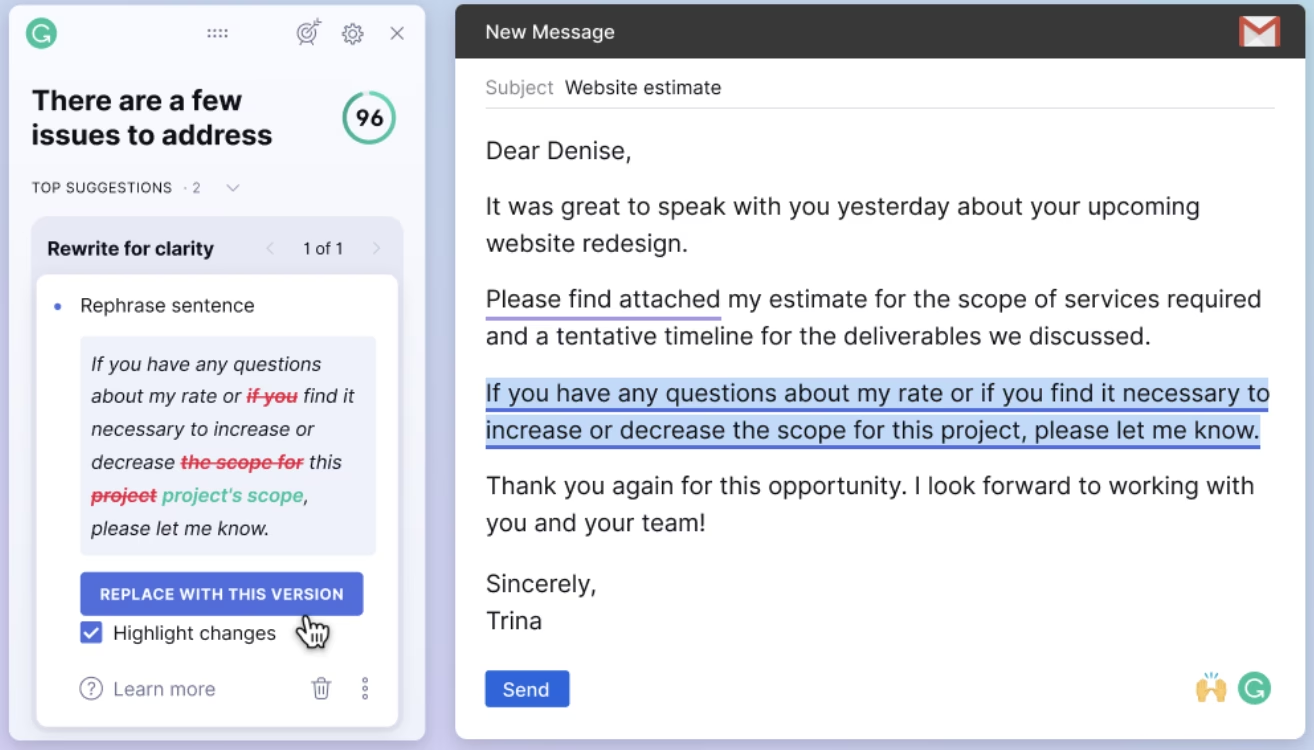
Grammarly outperforms HyperWrite in editorial refinement. Grammarly applies deeper linguistic analysis to grammar, tone, and clarity, while HyperWrite prioritizes drafting assistance over sentence-level correction.
Core features in Grammarly include real-time grammar checks, clarity rewrites, tone detection, plagiarism scanning, and AI-assisted suggestions. Desktop apps and browser extensions maintain consistent standards across environments.
Grammarly is a paid tool with pricing ranging from free access to $30 per month. Enterprise plans add administrative controls and customization.
Pros of Grammarly include precise corrections and broad device support. Cons include limited content creation depth and weaker SEO-focused capabilities.
30. LongShot AI: Best HyperWrite Alternative for Research-Backed Long-Form Articles
LongShot AI is a long-form content generation platform designed for factual accuracy and research-backed writing. LongShot AI combines research, drafting, verification, and optimization into a single workflow for extended articles.
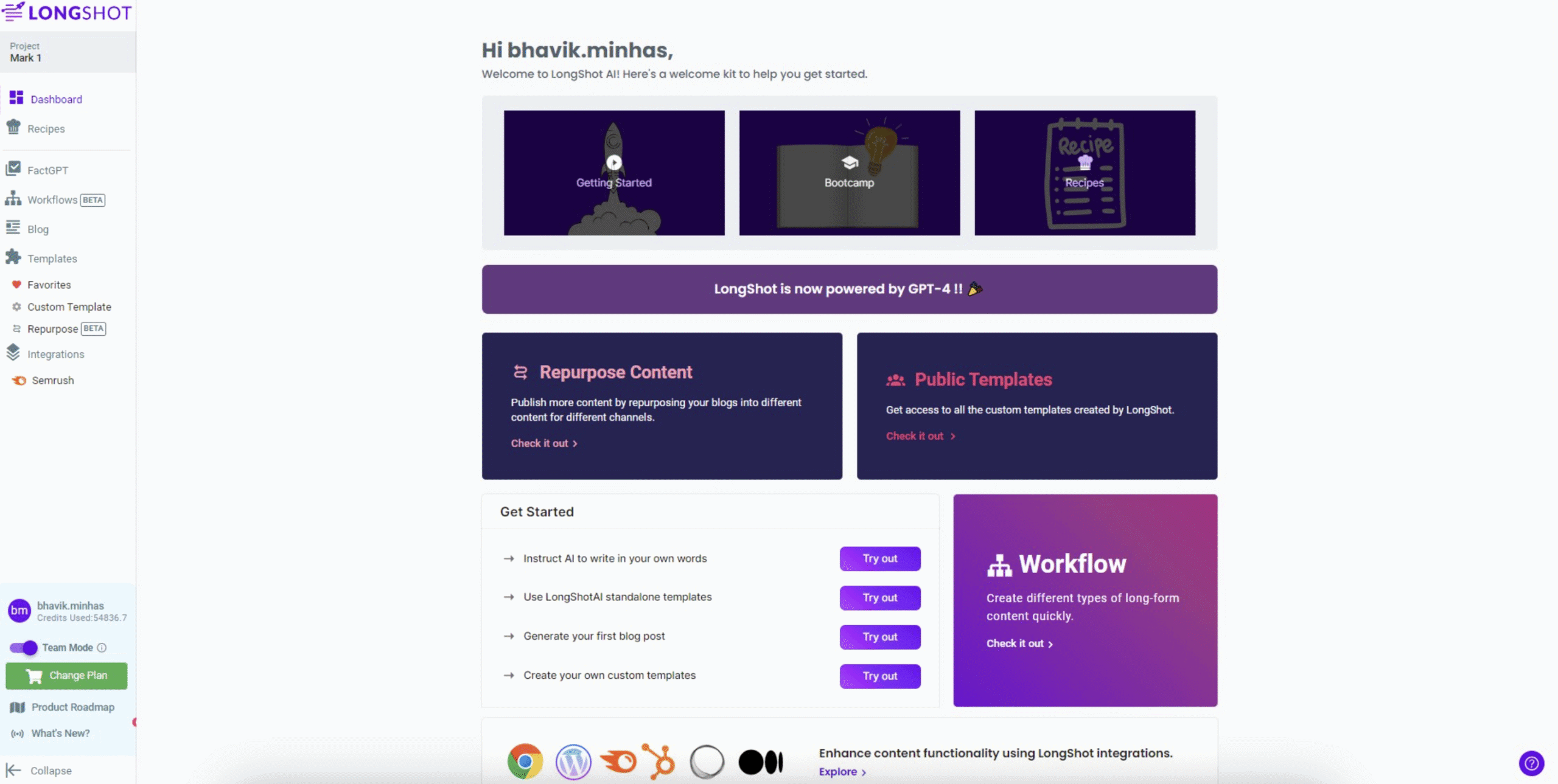
LongShot AI differentiates itself from HyperWrite through built-in fact validation. LongShot AI verifies claims, generates citations, and evaluates topical relevance. HyperWrite lacks native fact-checking and relies on manual review for research accuracy.
Core features in LongShot AI focus on accuracy and depth. FactGPT validates claims against trusted sources. Citation tools verify references. A Semantic SEO Checker compares drafts to ranking competitors. Publishing integrations connect content to WordPress and Google Docs.
LongShot AI is a paid tool with pricing ranging from $19 to $299 per month. A 5-day trial is available for $1.
Pros of LongShot AI include reliable long-form output and accessible pricing. Cons include credit-based usage, no mobile app, and interface limitations.
31. Ahrefs Content Helper: Best HyperWrite Alternative for Topic Research and Outlines
Ahrefs Content Helper is an AI-powered writing assistant embedded inside the Ahrefs platform. Ahrefs Content Helper analyzes top-ranking pages for a target keyword and translates competitive SEO data into topic coverage, structure guidance, and outline recommendations.
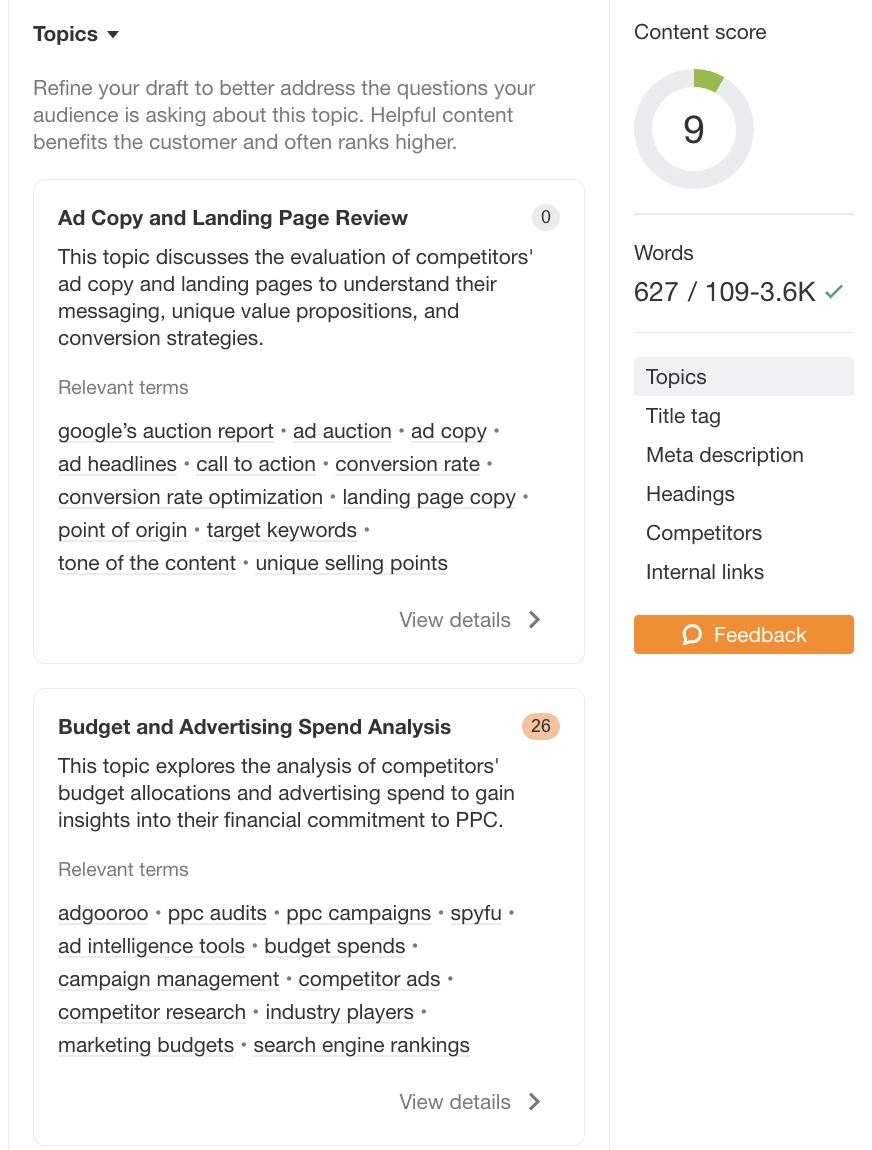
Ahrefs Content Helper outperforms HyperWrite in topic research and outline creation. Ahrefs Content Helper builds outlines using competitor analysis, topic gaps, and ranking signals drawn from Ahrefs datasets. HyperWrite operates without native SEO data, which separates drafting from search-driven research.
Core features in Ahrefs Content Helper focus on SEO-informed planning. The editor allows AI-assisted drafting and expansion. A real-time content score from 0 to 100 measures topical and keyword coverage against ranking pages. Topic gap analysis highlights missing subtopics and structural weaknesses before publication.
Ahrefs Content Helper is a paid tool with pricing ranging from $129 to $449 per month. The $129 Lite plan offers core workflows. The $249 Standard plan expands analysis depth. The $449 Advanced plan increases limits across the Ahrefs ecosystem.
Pros of Ahrefs review include direct access to Ahrefs data, strong topic gap detection, and efficiency for content refreshes. Cons include formulaic output when overused, average AI writing quality, performance issues at times, and higher cost as an add-on.
32. Semrush Writing Assistant: Best HyperWrite Alternative for Real-Time SEO Writing Guidance
Semrush Writing Assistant is an AI-powered editing tool within the Semrush ecosystem. Semrush Writing Assistant provides live SEO, readability, and keyword guidance inside Google Docs, WordPress, and Microsoft Word.
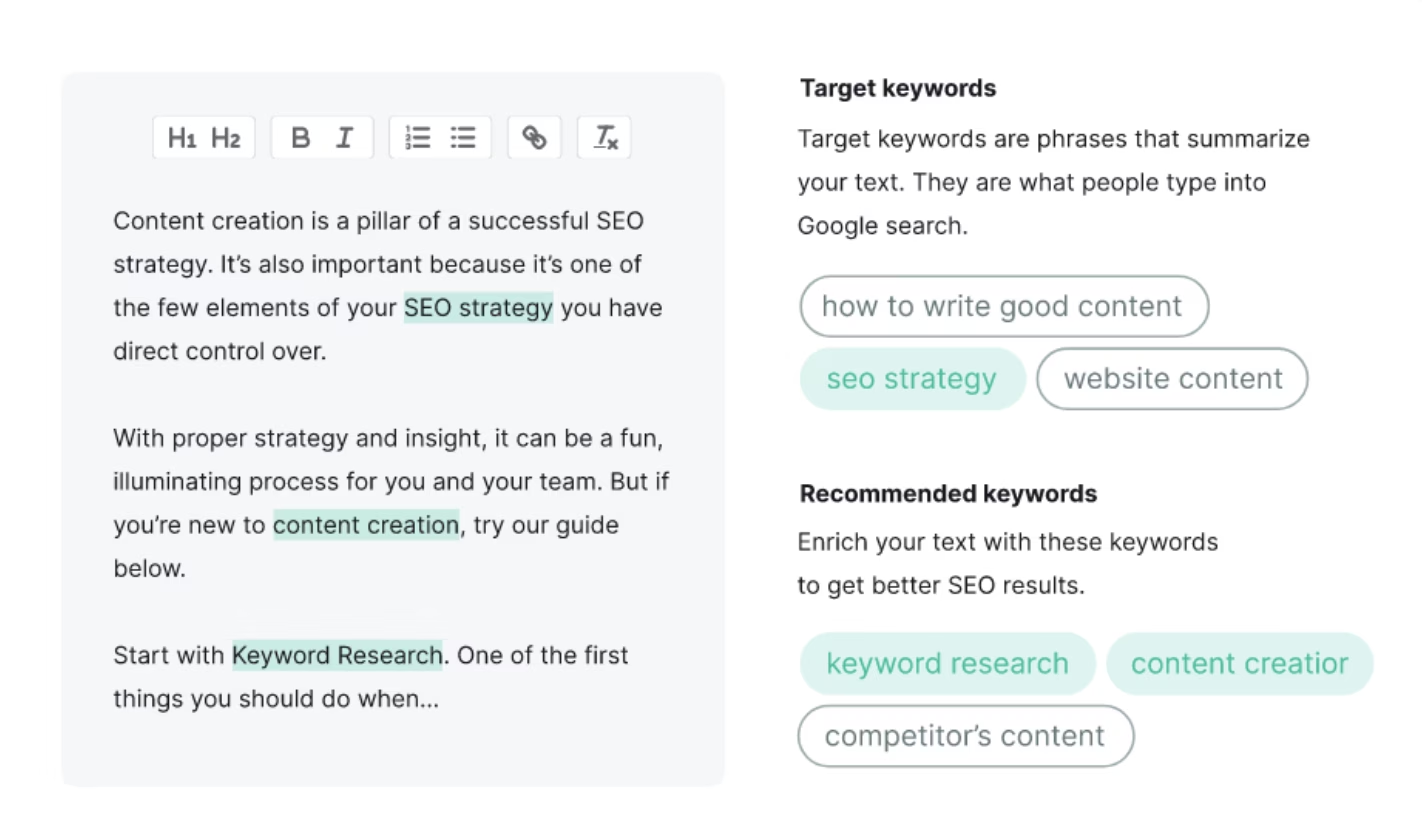
Semrush Writing Assistant outperforms HyperWrite in real-time SEO feedback. Semrush Writing Assistant applies keyword targets, readability benchmarks, and on-page checks as content is written. HyperWrite focuses on flexible drafting and automation, which does not include continuous SEO scoring tied to ranking criteria.
Core features in Semrush Writing Assistant center on in-editor optimization. The tool monitors readability, keyword density, tone consistency, and originality through plagiarism checks. Alerts flag keyword stuffing, recommend content length ranges, and highlight structural improvements for stronger on-page performance.
Semrush Writing Assistant is a paid tool with pricing ranging from $249 to $499 per month. An optional AI add-on costs $20 per month for 10,000 AI words, depending on the underlying Semrush plan.
Pros of Semrush review include accurate SEO scoring, smooth editor integrations, and guided optimization during drafting. Cons include additional AI costs, uneven tone analysis in formal writing, and feature limitations on lower-tier plans.
Why do People Seek Alternatives to Hyperwrite Tool?
People seek HyperWrite alternatives because its output prioritizes convenience over depth. The HyperWrite tool performs well for quick drafting and browser-based assistance, but the writing often requires additional editing to reach publish-ready quality. This slows workflows that depend on precision, structure, and consistency.
Cost creates another friction point. HyperWrite pricing feels high relative to the scope of features offered. Writers expect stronger returns at that level, especially when competing platforms provide deeper optimization, scoring, or workflow coverage at similar or lower price points.
Feature limitations push users to look elsewhere. HyperWrite centers on general writing assistance and automation, but it lacks robust SEO tooling, SERP-based research, content scoring, and structured outlining. Writers focused on ranking content or managing long-form assets outgrow the platform quickly.
Scalability becomes the final breaking point. HyperWrite does not allow end-to-end workflows for teams, high-volume production, or automated publishing. As content demands increase, users move toward platforms that combine research, optimization, governance, and execution in a single system.
What to Look for in a Hyperwrite Alternative?
The best HyperWrite alternatives extend beyond browser-based drafting and personal automation. A strong replacement adds research depth, SEO alignment, and scalable workflows that allow real publishing and marketing outcomes.
The 5 features to look for in a HyperWrite alternative are listed below.
- Research-Driven Content Foundations. Choose platforms that analyze SERPs, competitors, and sources before writing. Research-first systems reduce guesswork and improve accuracy from the first draft.
- Long-Form Control and Structural Depth. Look for tools that manage full articles, landing pages, and outlines with consistent structure, section flow, and topic coverage instead of isolated paragraphs.
- Built-In SEO and Content Intelligence. Prioritize alternatives with keyword research, topical mapping, content scoring, and SERP comparison. SEO-aware writing replaces manual optimization steps.
- Scalable Automation and Workflows. Select platforms that automate outlining, drafting, optimization, updates, and publishing. Scalable workflows matter once volume and team collaboration increase.
- Clear Value and Transparent Pricing. Avoid tools that charge premium prices for basic drafting. Strong alternatives justify cost through measurable improvements in quality, efficiency, and visibility.
What is the Difference Between Hyperwrite vs. Sudowrite?
The difference between HyperWrite and Sudowrite is that HyperWrite focuses on general-purpose writing assistance and productivity, while Sudowrite is built specifically for creative and narrative storytelling.
HyperWrite offers emails, research, blog drafts, and everyday writing tasks through browser-based assistance and flexible prompts. Sudowrite concentrates on fiction workflows, offering tools for plot expansion, character development, scene building, and narrative continuity through features (Canvas, Story Bible).
Both HyperWrite vs Sudowrite use AI for writing, but they serve different creative goals. HyperWrite fits broad, task-oriented writing needs, while Sudowrite addresses long-form fiction where structure, imagination, and narrative depth matter most.
Why is Search Atlas the Best Hyperwrite Alternative?
Search Atlas is the best HyperWrite alternative because it connects writing directly to SEO performance, page-level optimization, and automated execution in one system. Search Atlas improves drafts through semantic analysis, SERP alignment, and measurable scoring rather than focusing only on browser-based drafting and productivity.
HyperWrite centers on general writing assistance, which often requires separate tools for SEO audits, content planning, and optimization. Search Atlas goes further by analyzing live SERP data, identifying on-page gaps, and aligning every section with search intent and ranking signals.
Search Atlas adds a critical layer that HyperWrite does not offer. Search Atlas On-Page SEO Audits evaluate content depth, structure, internal linking, metadata, schema, technical health, and UX signals for any URL. OTTO SEO applies approved fixes directly to live pages, removing manual optimization work.
Search Atlas pricing starts at $99 per month and includes rewriting, long-form content optimization, content scoring, keyword clustering, on-page audits, and automated execution. Every plan delivers SEO workflows that HyperWrite does not provide.
For teams replacing HyperWrite, Search Atlas offers deeper optimization, clearer performance signals, and complete content-to-ranking workflows inside one platform. Explore Search Atlas and see how writing, auditing, and automation connect to measurable search visibility.