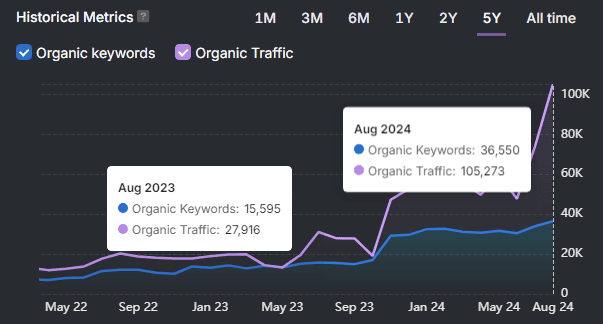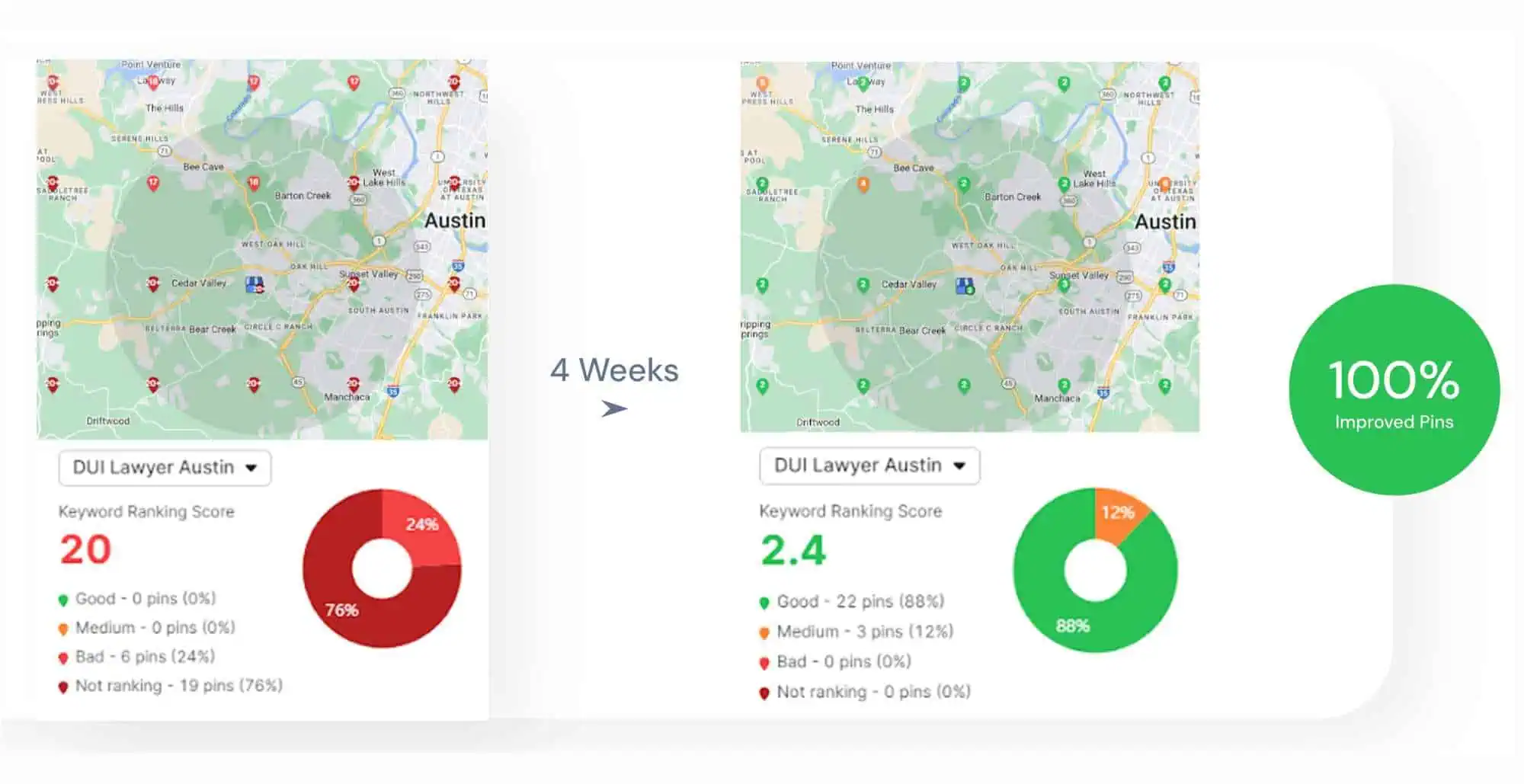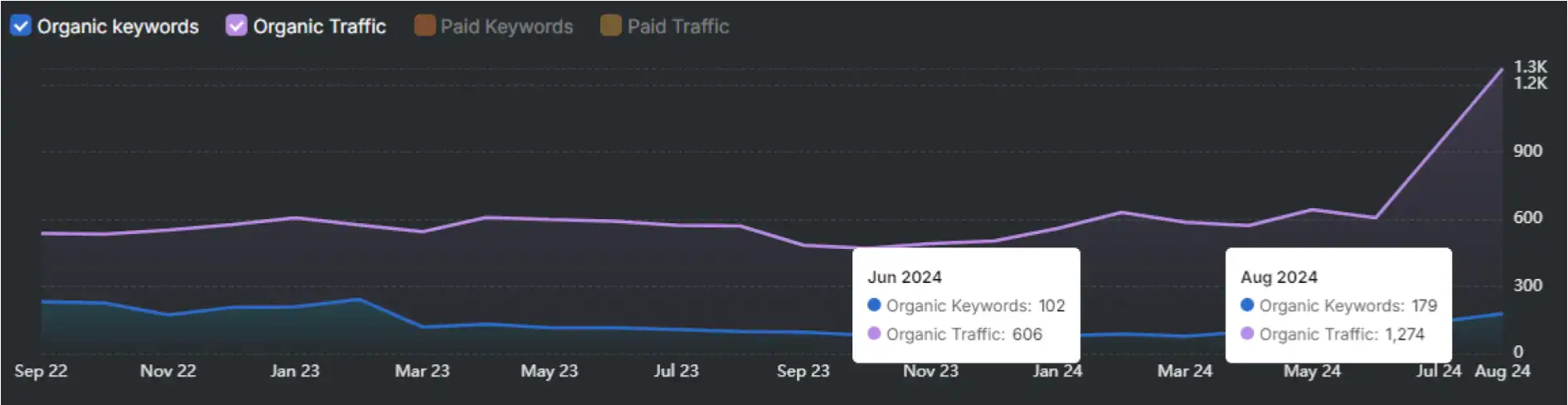
Content Harmony alternatives are SEO and content platforms that replace Content Harmony in tasks such as content briefing, SERP analysis, optimization scoring, and AI drafting. These tools extend beyond briefing by connecting research to execution, measurement, and scale.
Many Content Harmony reviews point to structural limits rather than quality gaps. The platform focuses on research-driven briefs and optimization guidance, but separates briefing from drafting, rank tracking, and technical context. Teams often add extra tools to cover keyword research and performance monitoring, which increases cost and workflow complexity.
Operational scale creates another gap. Teams managing large content programs often need clustering, AI-assisted drafting, performance monitoring, and competitive intelligence tied directly to briefs, which pushes them toward broader or more automated platforms.
Writers, SEO teams, agencies, and enterprises choose a Content Harmony alternative when they need content planning connected to execution and performance. The best Content Harmony alternatives in 2026 are Search Atlas, Surfer SEO, and Clearscope.
What are the Best Content Harmony Alternatives?
The top 39 best Content Harmony alternatives for 2026 cover content briefing, SERP analysis, AI drafting, content scoring, topic strategy, rank tracking, and enterprise content operations.
The top 39 best Content Harmony alternatives for 2026 are listed below.
| # | Content Harmony Alternative | Best For | Price |
| 1 | Search Atlas | Best Content Harmony alternative | $99 to $399/month |
| 2 | Clearscope | Editorial-grade content optimization quality | $189 to $399/month |
| 3 | Scalenut | AI writing and content workflow automation | $49 to $149/month |
| 4 | MarketMuse | Topic clusters and sitewide content strategy | $99 to $499/month |
| 5 | Frase | Fast briefs and AI-assisted drafting | $45 to $115/month |
| 6 | Surfer SEO | Real-time on-page optimization | $79 to $179/month |
| 7 | Page Optimizer Pro | Pure on-page SEO scoring | $56/month to custom |
| 8 | Wordtracker Scout | Competitor keyword insights | Free extension; $17 to $54/month platform |
| 9 | Jasper AI | Brand voice AI content creation | $59 per seat/month to custom |
| 10 | Ubersuggest | Budget keyword research and content ideas | $29 to $99/month |
| 11 | BuzzSumo | Trending topic research | $199 to $999/month |
| 12 | Contently | Managed enterprise content production | Custom pricing |
| 13 | Dashword | Lightweight briefs and performance monitoring | $99 to $349/month |
| 14 | NeuronWriter | Affordable SERP driven optimization | $23 to $117/month |
| 15 | WriterZen | Keyword clustering and brief generation | $75 to $225 lifetime |
| 16 | Rankability | NLP-driven content recommendations | $124 to $374/month |
| 17 | Grammarly | Grammar and readability editing | Free to $30/month |
| 18 | Usetopic | Simple topic suggestions and lightweight grading | $99 to $299/month |
| 19 | LongShot AI | AI long-form SEO content | $19 to $299/month |
| 20 | Conductor | Enterprise content workflows | Custom pricing |
| 21 | Contentbird | Enterprise content operations | €135 to €550/month |
| 22 | Copywritely | Basic optimization and plagiarism checks | Free tier; $29/month |
| 23 | GrowthBar | Quick AI drafts and simple optimization | $48 to $99/month |
| 24 | Content at Scale | High volume AI long form output | $250 to $1,500+/month |
| 25 | SpyFu | Competitor keyword and SERP insights | $39 to $79/month |
| 26 | seoClarity | Enterprise SEO and content intelligence | $2,500 to $4,500/month |
| 27 | Majestic | Link-based SERP and topic context | $49.99 to $399.99/month |
| 28 | Searchmetrics | Enterprise content analytics | Custom pricing |
| 29 | Moz Pro | Keyword and SERP understanding | $49 to $179/month |
| 30 | RobotSpeed | Technical issues that affect content | CHF 99/month to custom |
| 31 | AccuRanker | Rank tracking impact on content strategy | $129/month+ |
| 32 | AnswerThePublic | Search question research | $6.67 to $20/month |
| 33 | QuestionDB | User question content ideas | $9.99 to $69.99/month |
| 34 | Semrush Writing Assistant | Built-in content tools in a marketing suite | $249 to $499/month |
| 35 | Serpstat | Briefing inside a full SEO platform | $50/month+ |
| 36 | SEO.AI | AI-generated SEO articles | $149 to $299/month |
| 37 | Mangools | Keyword discovery to build briefs | $19.43 to $58.44/month |
| 38 | Ahrefs Content Helper | Competitor SERP and keyword intelligence | $129 to $449/month |
| 39 | SE Ranking | Content briefing | $65 to $359/month |
1. Search Atlas: Best Content Harmony Alternative
Search Atlas is a complete AI-powered SEO and content platform built to manage content strategy from research to execution and performance. Search Atlas unifies keyword intelligence, semantic optimization, content creation, scoring, and automation inside one system designed for editorial scale and measurable search visibility.
Search Atlas surpasses Content Harmony by connecting planning, creation, optimization, and deployment inside one workflow. While Content Harmony specializes in research-driven briefs, Search Atlas improves entire articles through semantic restructuring, intent alignment, competitive refinement, and automated implementation based on live SERP behavior.

At the core of the platform sits OTTO SEO, the autonomous AI system that executes optimizations directly on websites. OTTO applies changes to title tags, internal links, page structure, and technical elements in real time. This automation extends Search Atlas far beyond Content Harmony, which focuses on research and briefs without executing changes on-site.
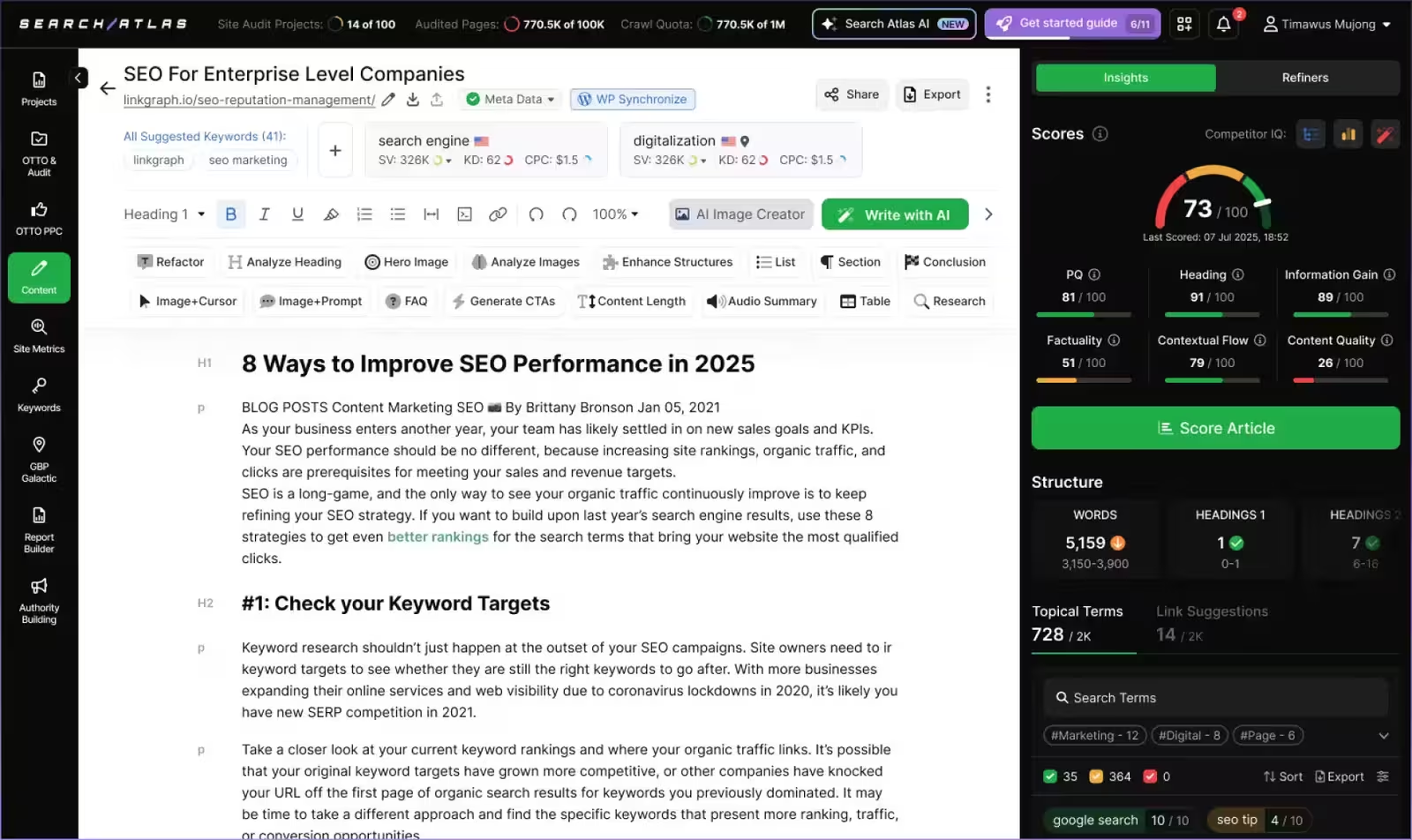
At the center of content optimization is Content Genius, the semantic AI editor that analyzes live SERPs, maps keywords and entities, and applies passage-level optimization. Content Genius strengthens topical depth, improves relevance, and highlights exact changes that influence rankings, rather than stopping at guidance.
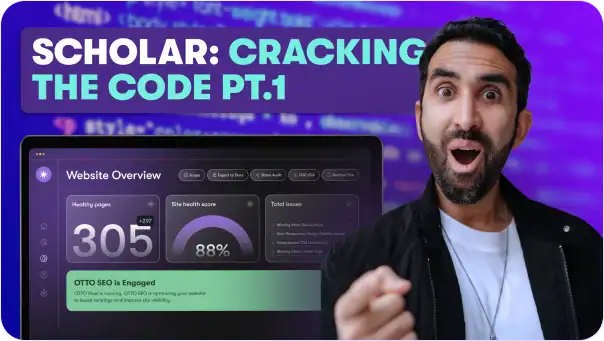
Search Atlas extends evaluation through Scholar, the content scoring engine. Scholar measures clarity, intent satisfaction, information gain, accuracy, and structural completeness using ranking-aligned signals. This scoring replaces manual review cycles and provides a clear quality benchmark beyond Content Harmony’s optimization suggestions.
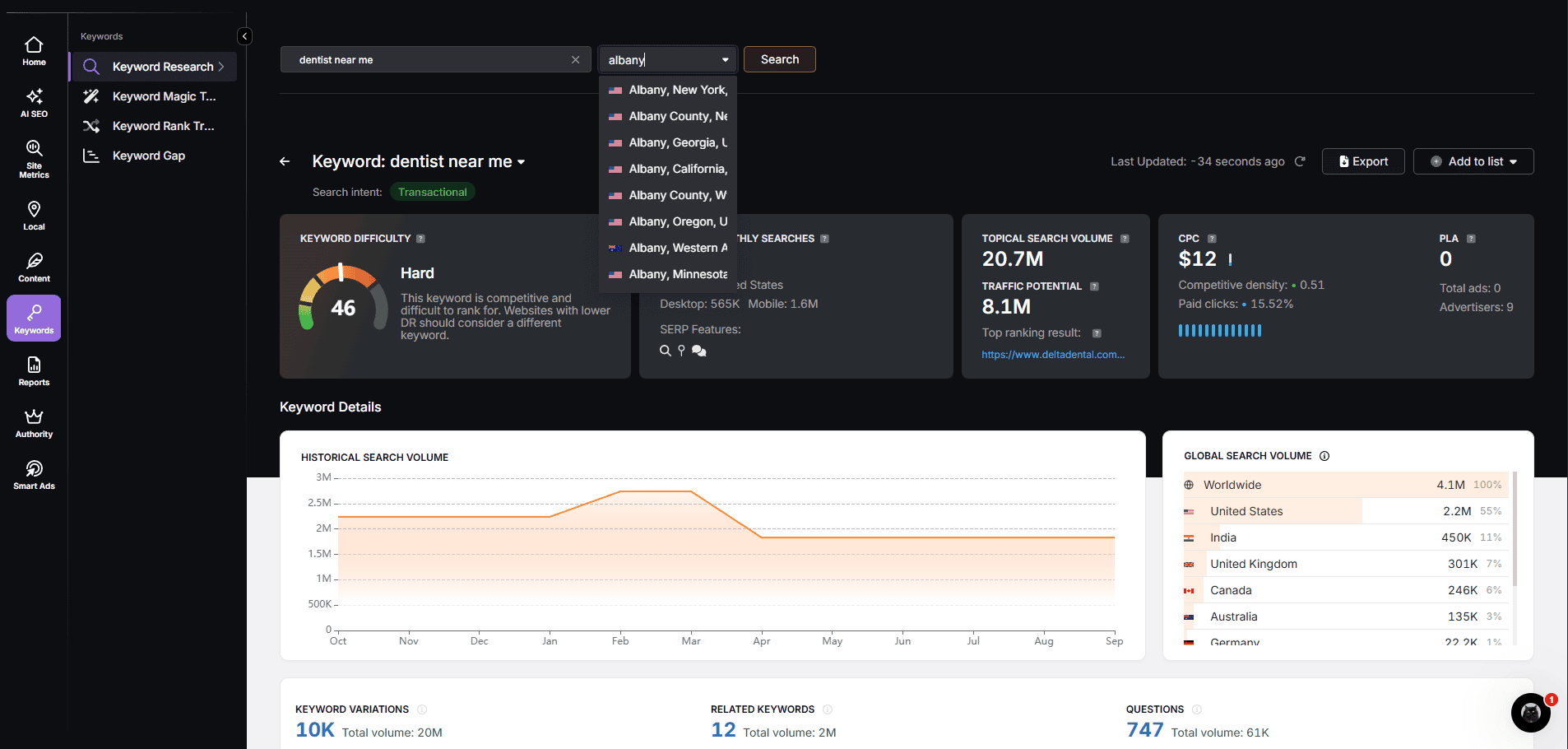
The Keyword Research Tool strengthens strategy with verified keyword volume, CPC, and ranking difficulty sourced from Google data. Keyword Gap reveals terms competitors rank for that your site misses, while question-based and long-tail discovery supports FAQ and informational content planning.
Search Atlas pricing ranges from $99 to $399 per month, which replaces Content Harmony plus multiple add-on tools for keyword research, AI writing, optimization, scoring, and execution.
Pros of Search Atlas review include end-to-end execution, semantic depth, objective scoring with Scholar, verified keyword intelligence, automated implementation via OTTO SEO, and scalable planning through Content Planner. The con is a learning curve for teams new to data-driven SEO systems, though structured onboarding reduces ramp-up time.
2. Clearscope: Best Content Harmony Alternative for Editorial-Grade Content Optimization Quality
Clearscope is a content optimization platform built for teams that require precise alignment between editorial standards and SERP expectations. Clearscope analyzes top-ranking pages to identify term usage and topical depth signals that influence ranking performance.
As a Content Harmony alternative, Clearscope delivers stronger editorial-grade optimization through stricter scoring logic and clearer relevance signals. Clearscope emphasizes linguistic precision and topic coverage accuracy rather than generalized recommendations.
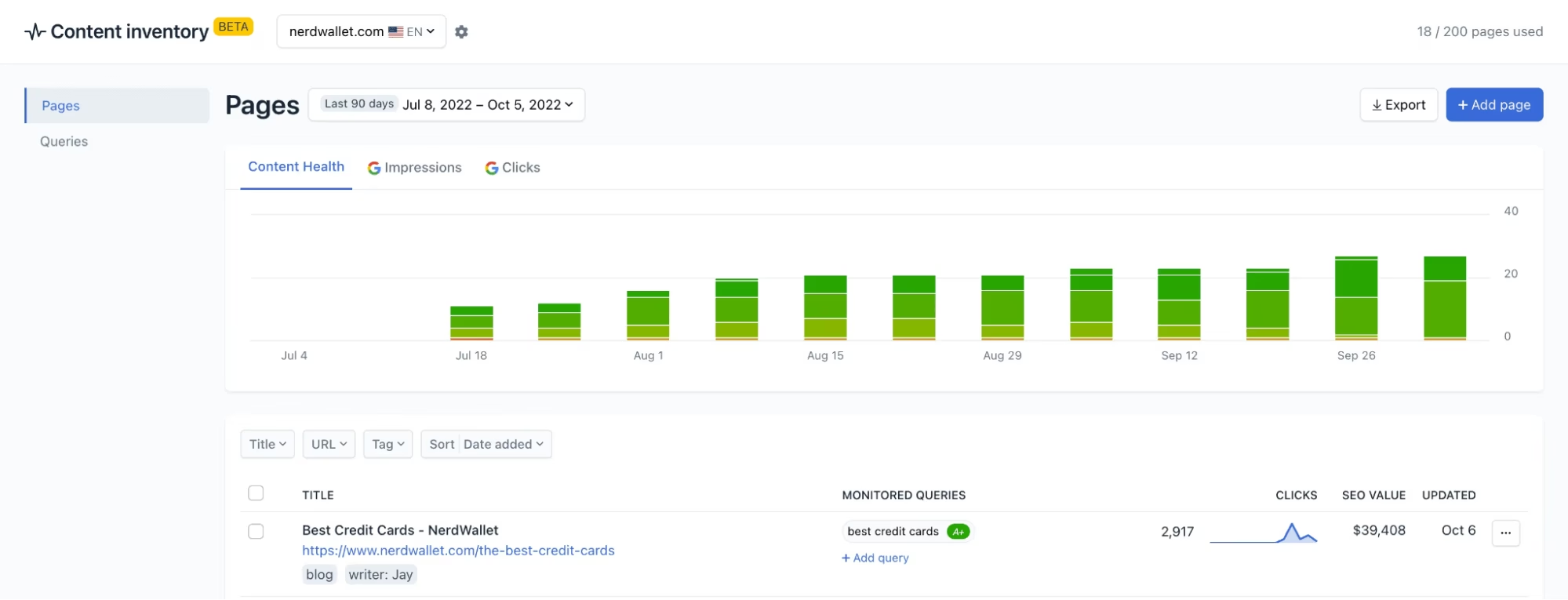
Core features include a Content Editor, which evaluates readability, keyword balance, and semantic coverage within a streamlined interface. The Term Map features reveal how competing pages organize topics, while Content Reports outline headings, related questions, and priority terms based on live SERP analysis.
Clearscope is a paid tool with pricing ranging from $189 to $399 per month. Lower tiers focus on content grading and reports, while higher plans expand limits and enterprise controls.
Pros of Clearscope review include a clean interface, consistent SERP-driven scoring, and reliable editorial guidance. Cons include limited technical SEO capabilities and the risk of rigid optimization when content grades become the primary objective.
3. Scalenut: Best Content Harmony Alternative for AI Writing & Content Workflow Automation
Scalenut is an AI-driven SEO platform that connects keyword research, SERP analysis, and guided content creation inside one workflow. Scalenut interprets search intent, builds structured outlines, and applies real-time scoring to keep drafts aligned with ranking patterns.
Scalenut outperforms Content Harmony for automated writing workflows and production speed. Scalenut moves content from keyword discovery to publish-ready drafts without breaking the process across separate tools.
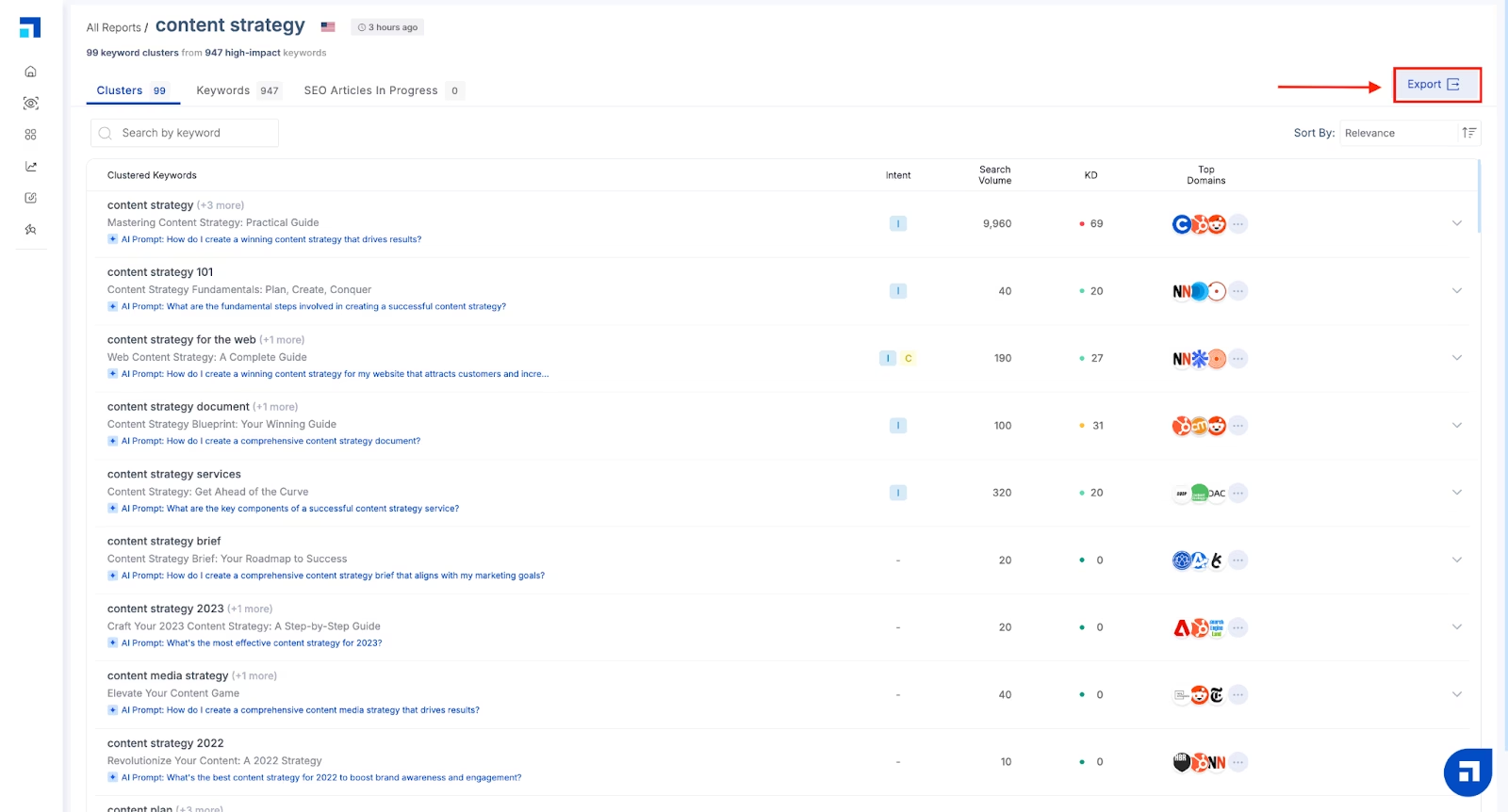
Core features include keyword clustering with intent classification, a live SEO editor, and a SERP analyzer that compares ranking competitors. The AI Copywriter handles short-form generation, while the SEO Assistant evaluates long-form content using NLP-based structure and relevance checks.
Scalenut is a paid tool with pricing ranging from $49 to $149 per month. Lower tiers limit content credits, while higher plans increase article volume, analysis depth, and workflow capacity.
Pros of Scalenut include fast topic discovery, unified optimization workflows, and built-in SERP comparisons. Cons include inconsistent AI tone in generated drafts and reduced rewriting depth on entry plans.
4. MarketMuse: Best Content Harmony Alternative for Topic Clusters & Sitewide Content Strategy
MarketMuse is an AI content intelligence platform focused on building topical authority across entire domains. MarketMuse evaluates semantic depth, coverage gaps, and topic relationships using advanced NLP models.
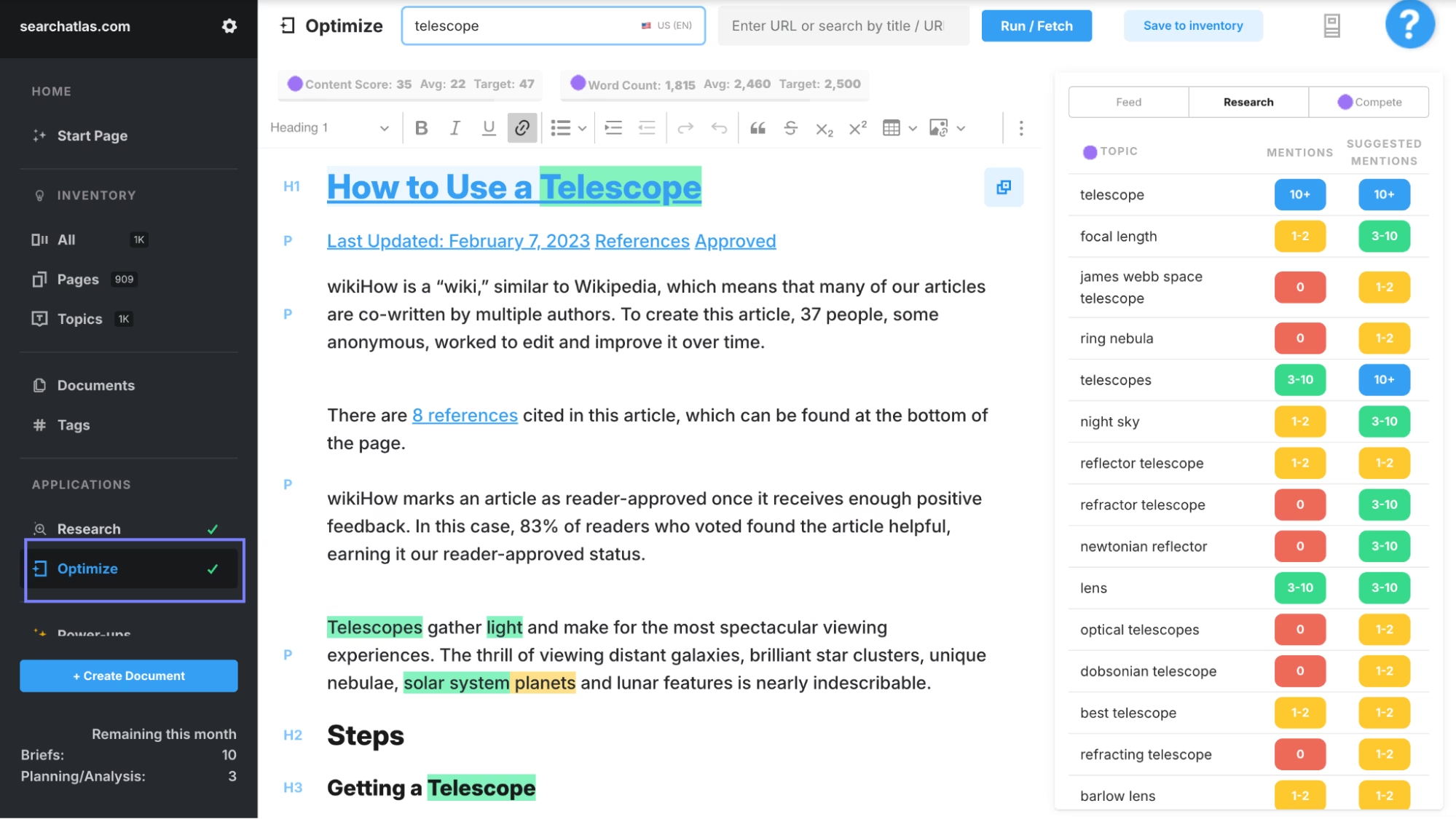
For teams replacing Content Harmony, MarketMuse excels at strategic planning rather than page-level briefing alone. The platform prioritizes cluster development, content prioritization, and long-term authority growth instead of isolated content optimization.
Core features include full content inventory assessments to detect decay, and inline optimization scores inside the Optimize workspace. Competitive Content Analysis evaluates SERPs at the topic level, recommending structure and relevance thresholds for long-term authority gains.
MarketMuse is a paid tool with pricing that ranges from $99 to $499 per month. Plans scale from Optimize at $99 to Strategy at $499, with enterprise tiers available. A limited free tier provides restricted topic modeling access.
Pros of MarketMuse include domain-level authority modeling, proprietary topic analysis, and personalized difficulty scoring. Cons include higher pricing and limited keyword discovery for lean workflows.
5. Frase: Best Content Harmony Alternative for Fast Briefs & AI-Assisted Drafting
Frase is an AI research and content briefing platform built to convert SERP data and competitor insights into structured outlines quickly. Frase surfaces questions, subtopics, and intent patterns that shape long-form SEO content with speed and clarity.
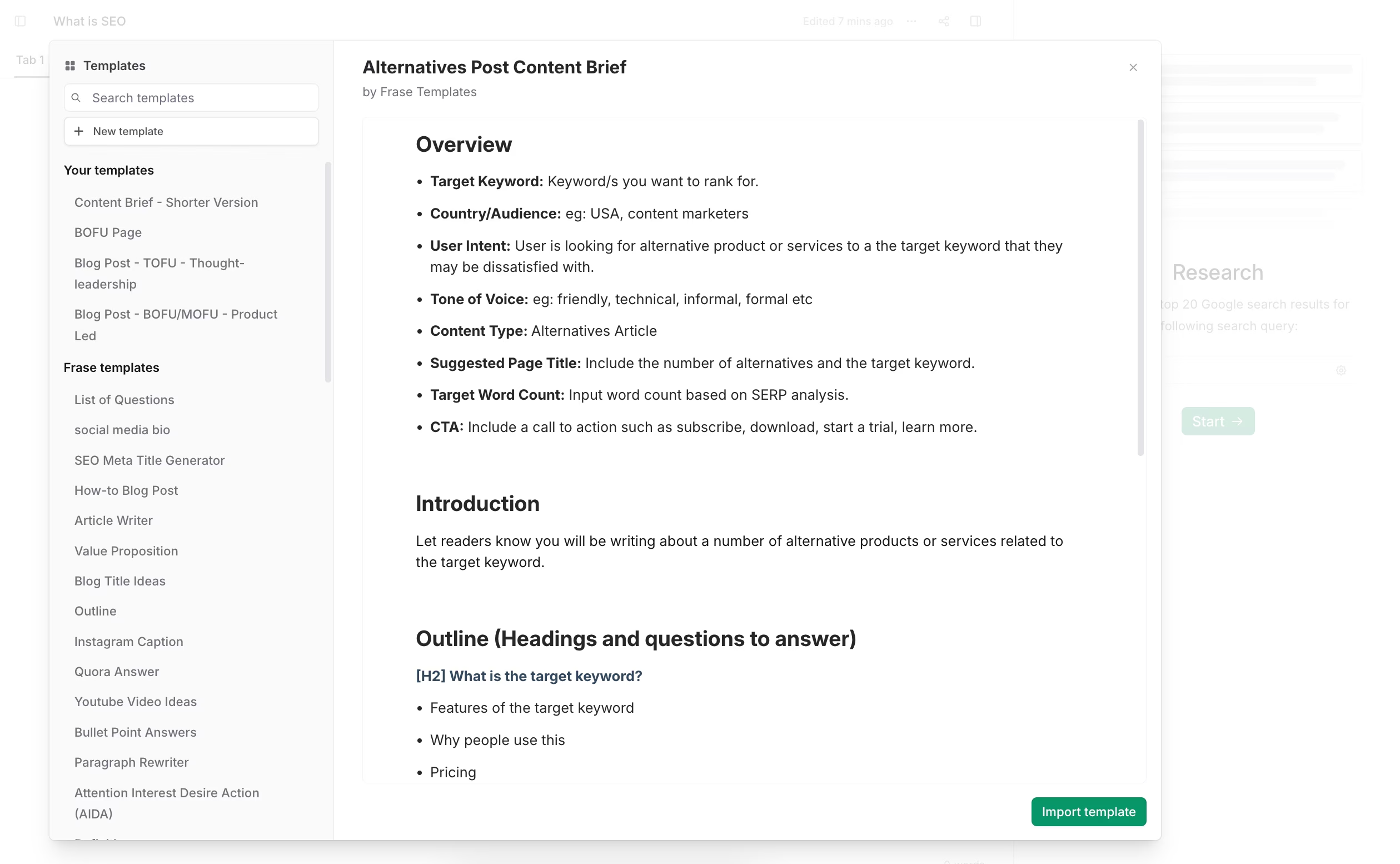
Within the Content Harmony landscape, Frase emphasizes rapid research and early-stage drafting rather than deep editorial orchestration. The platform prioritizes speed in brief creation and outline generation over extended planning workflows.
Core features include automated content brief generation, competitor page summaries, and SERP-driven outline recommendations. A collaborative editor allows multi-author drafting, while integrations with Google Docs and WordPress keep writing and publishing connected.
Frase is a paid tool with pricing that ranges from $45 to $115 per month. Entry plans focus on individual creators, while the Team tier expands contributor access and shared workflows. A free trial provides full platform access before subscription.
Pros of Frase review include fast research execution, clean brief structures, and efficient SERP analysis. Cons include project limits on lower plans, additional costs for advanced AI documents, and limited technical SEO depth.
6. Surfer SEO: Best Content Harmony Alternative for Real-Time On-Page Optimization
Surfer SEO is a content optimization platform focused on aligning on-page structure with ranking signals during the writing process. Surfer SEO evaluates competing pages for a target query and translates SERP patterns into actionable content guidance.
Compared with Content Harmony, Surfer SEO centers on live optimization rather than planning-first workflows. The platform adjusts content direction while text is written, reinforcing alignment with ranking factors in real time.
Core features include a Content Editor with keyword placement guidance, topic depth metrics, and competitor benchmarks that shape article structure. NLP-based recommendations expose semantic gaps, while other modules extend into audits and structured planning.
Surfer SEO is a paid tool with pricing ranging from $79 to $179 per month. Entry plans cover optimization and keyword research, while higher tiers expand collaboration capacity, unlock AI modules, and add API access.
Pros of Surfer SEO review include precise content scoring, strong international search support, and a focused optimization interface. Cons include a steeper learning curve for new teams and limited flexibility for highly specialized tone requirements.
7. Page Optimizer Pro: Best Content Harmony Alternative for Pure On-Page SEO Scoring
Page Optimizer Pro is an on-page SEO platform grounded in controlled experimentation and repeatable testing. Page Optimizer Pro evaluates page structure and SERP competitors to generate optimization targets backed by hundreds of documented SEO tests.
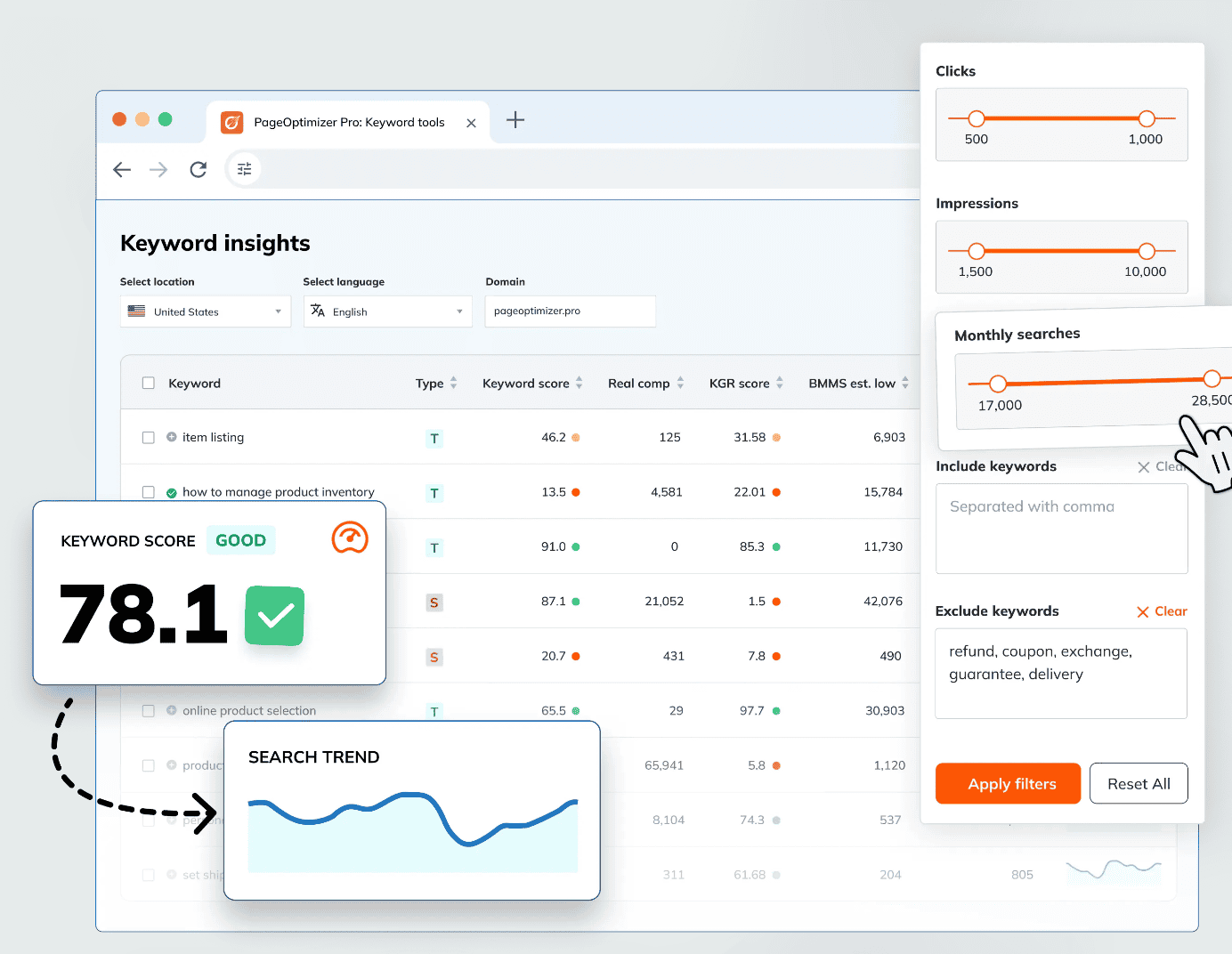
As a Content Harmony alternative, Page Optimizer Pro focuses on measurable on-page precision rather than editorial planning depth. The platform validates optimization decisions through mathematical scoring models instead of collaborative briefing workflows.
Core features include a real-time Content Editor that scores keyword usage and structural strength at the page level. Competitor Analysis reviews top-ranking pages across on-page factors, producing a data-driven roadmap for targeted optimization changes.
Page Optimizer Pro is a paid tool with pricing ranging from $56 per month to custom done-for-you plans. Higher tiers expand managed optimization.
Pros of Page Optimizer Pro include test-backed recommendations and a strong ranking lift for individual URLs. Cons include a narrow scope and reliance on external tools for technical audits, keyword tracking, and reporting.
8. Wordtracker Scout: Best Content Harmony Alternative for Competitor Keyword Insights
Wordtracker Scout is a Chrome extension designed for rapid competitor keyword discovery. Wordtracker Scout scans live web pages to extract relevant terms, displaying keyword prominence, opportunity metrics, and search volume directly from competitor content.

In contrast to Content Harmony, Wordtracker Scout concentrates on immediate competitive keyword visibility. The extension prioritizes fast insight into what pages already rank for rather than structured content workflows.
Core features include a browser-based page scanner that generates keyword clouds, ranked term lists, and opportunity metrics from active URLs. Wordtracker Scout connects to the broader Wordtracker database to surface terms with measurable demand and lower competition.
Wordtracker Scout is free to install, while the full Wordtracker platform is a paid tool with pricing ranging from $17 to $54 per month. Annual plans provide discounted rates, and a low-cost trial is available before subscription.
Pros of Wordtracker Scout include instant competitor insights, simple setup, and free access at the extension level. Cons include shallow analytics depth, an aging interface, and limited strategic modeling compared to larger platforms.
9. Jasper AI: Best Content Harmony Alternative for Brand-Voice AI Content Creation
Jasper AI is a marketing-focused AI platform built for producing on-brand content across multiple formats at scale. Jasper AI generates ads, emails, product descriptions, landing pages, and social copy with a consistent tone across high-volume marketing operations.
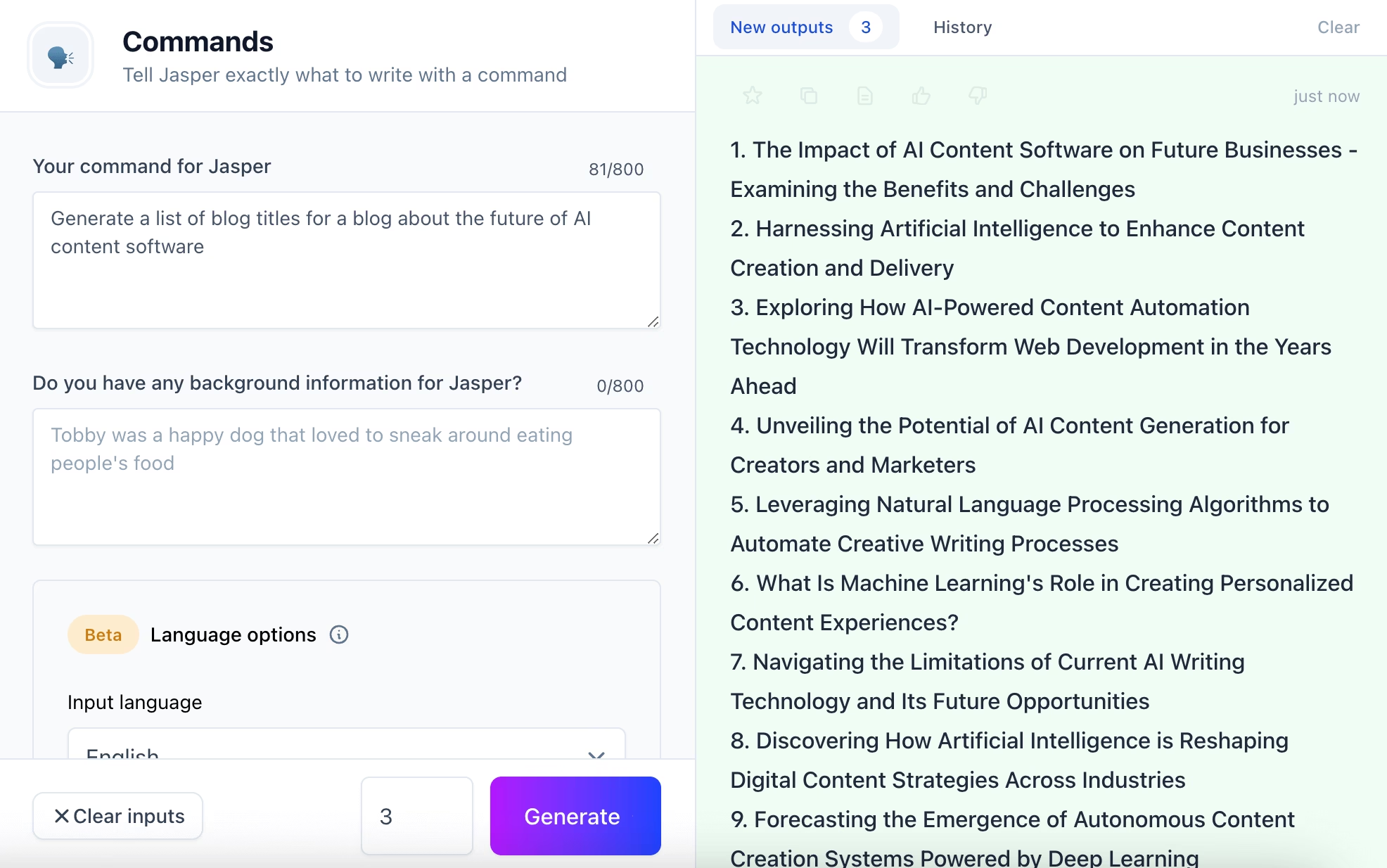
As a Content Harmony alternative, Jasper AI emphasizes brand voice control and campaign execution rather than SERP-driven editorial planning. The platform centers on message consistency and output velocity instead of research-heavy content frameworks.
Core features include a long-form canvas for structured drafting and brand voice profiles that preserve tone consistency across teams. Jasper Chat offers ideation and natural-language drafting, while Knowledge assets store company context, product details, and messaging rules that guide every output.
Jasper AI is a paid tool with pricing ranging from $59 per seat per month to custom enterprise plans. The Pro plan starts at $59 per month, while Business tiers expand brand controls, knowledge management, and no-code AI builders.
Pros of Jasper AI include strong brand consistency, extensive template libraries, and fast multi-channel production. Cons include higher pricing, required manual review for precision, and additional costs for advanced safeguards and specialized features.
10. Ubersuggest: Best Content Harmony Alternative for Budget Keyword & Content Ideas
Ubersuggest is an SEO platform designed for individuals and small teams that need affordable keyword and content discovery tools. Ubersuggest surfaces keyword data, topic ideas, backlink insights, and AI-assisted suggestions through a simple, browser-based interface.

Ubersuggest outperforms Content Harmony in budget-friendly keyword discovery and early-stage content ideation. The platform emphasizes opportunity identification and competitive awareness before drafting, while Content Harmony concentrates on structured briefing.
Core features include keyword discovery with volume and difficulty metrics, AI-generated content ideas, and backlink monitoring with domain and anchor text filters. Browser extensions for Chrome and Edge expose keyword metrics and technical signals directly on live SERPs.
Ubersuggest is a paid tool with pricing ranging from $29 to $99 per month. Plans scale from Individual at $29 to Enterprise at $99, with lifetime purchase options available across tiers.
Pros of Ubersuggest include intuitive navigation, accessible pricing, and built-in AI copy tools. Cons include smaller backlink datasets, slower refresh cycles, and limited scalability for agency-level workflows.
11. BuzzSumo: Best Content Harmony Alternative for Trending Topic Research
BuzzSumo is a content intelligence and PR platform that tracks content performance, audience engagement, and influencer activity across social channels. BuzzSumo detects emerging topics, measures engagement velocity, and reveals what audiences actively share in real time.
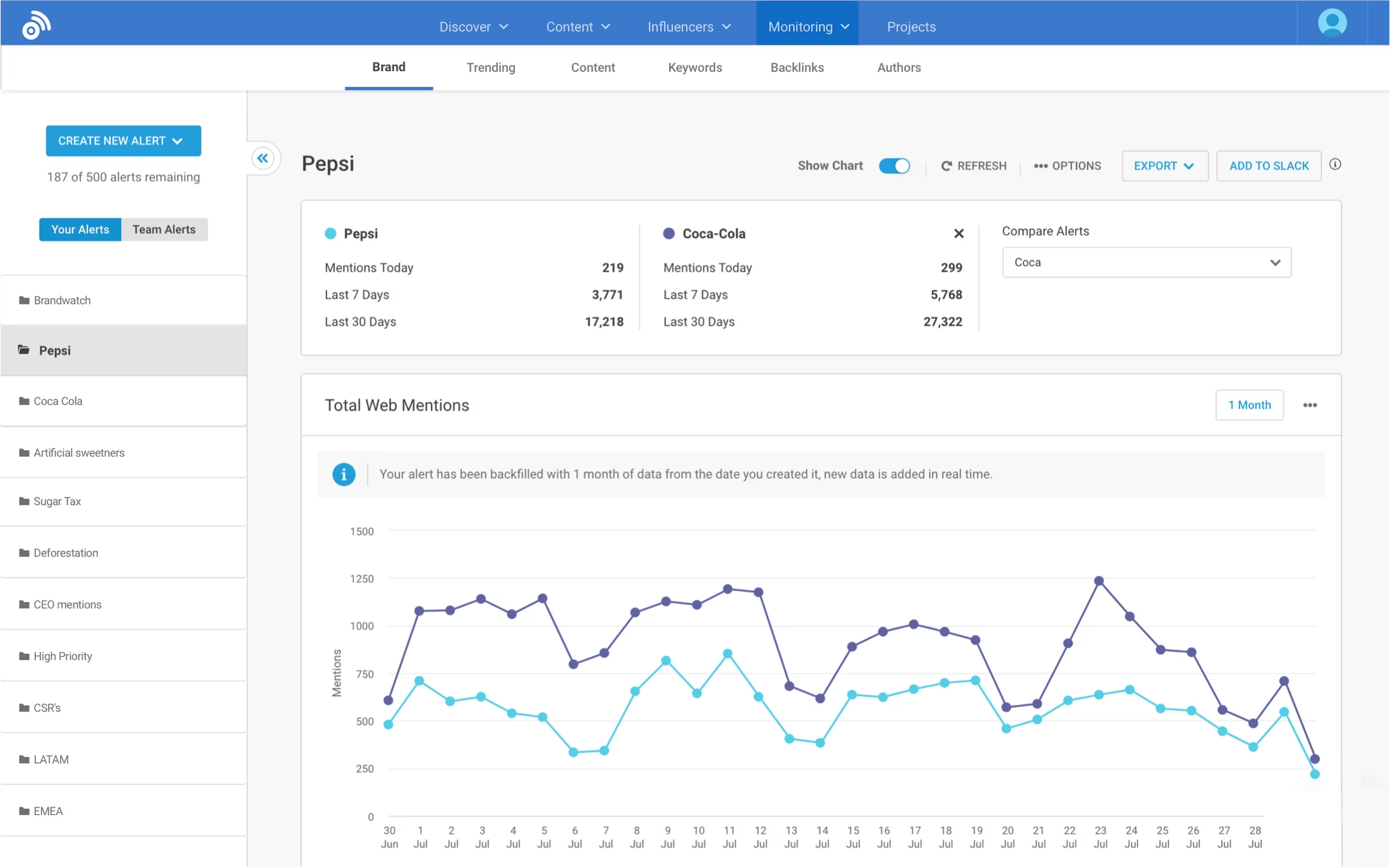
BuzzSumo outperforms Content Harmony for trending topic discovery and content demand analysis. The platform specializes in surfacing what gains traction across social networks and media outlets, while Content Harmony concentrates on structuring and optimizing content after a topic is chosen.
Core features include the Content Analyzer, which surfaces high-performing articles based on shares and backlinks, and the Question Analyzer, which reveals rising and recurring audience queries. Additional modules cover competitive intelligence, influencer discovery, media monitoring, and link alerts connected to PR outreach workflows.
BuzzSumo is a paid tool with pricing ranging from $199 to $999 per month. Higher tiers expand media databases, journalist discovery, and alert volumes for enterprise-scale research.
Pros of BuzzSumo include real-time trend detection, deep engagement metrics, and access to a journalist database exceeding 700,000 contacts. Cons include limited SEO-focused analysis and restricted access to outreach features on lower plans.
12. Contently: Best Content Harmony Alternative for Managed Enterprise Content Production
Contently is an enterprise content marketing platform built to manage the entire content lifecycle from strategy through distribution and measurement. Contently combines AI optimization and a vetted creator network to execute large-scale editorial programs with consistency.
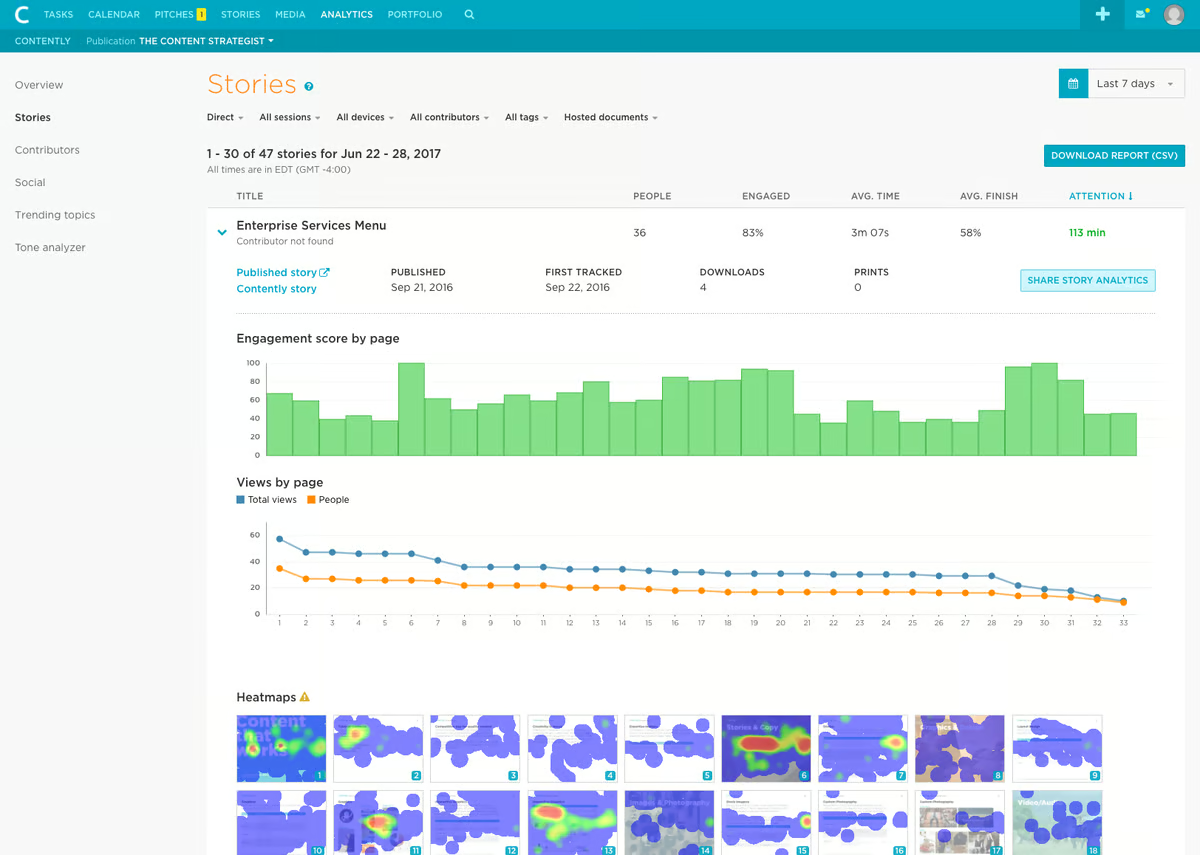
Contently goes beyond Content Harmony for enterprise content execution and managed production. The platform delivers fully managed services, professional creators, and operational oversight, while Content Harmony concentrates on planning frameworks and briefing workflows.
Core features include workflow management for large editorial teams, an integrated network of vetted writers and designers, and AI-driven optimization and performance analytics. The Content Calendar centralizes scheduling and publishing, while strategy tools allow audits, audience definition, and idea generation aligned with business objectives.
Contently is a paid tool with custom pricing based on organizational needs and program scale. Standard pricing is not publicly listed and requires direct consultation with sales.
Pros of Contently include access to high-quality creative talent, structured governance for large teams, and strong account support. Cons include higher cost, operational complexity for smaller organizations, and slower turnaround when sourcing or assigning creators.
13. Dashword: Best Content Harmony Alternative for Lightweight Briefs & Performance Monitoring
Dashword is a lightweight content optimization tool built for teams that want fast briefs and post-publish tracking inside a clean workflow. Dashword emphasizes speed by combining SERP-based suggestions, keyword tracking, and brief sharing with Google Docs integration.
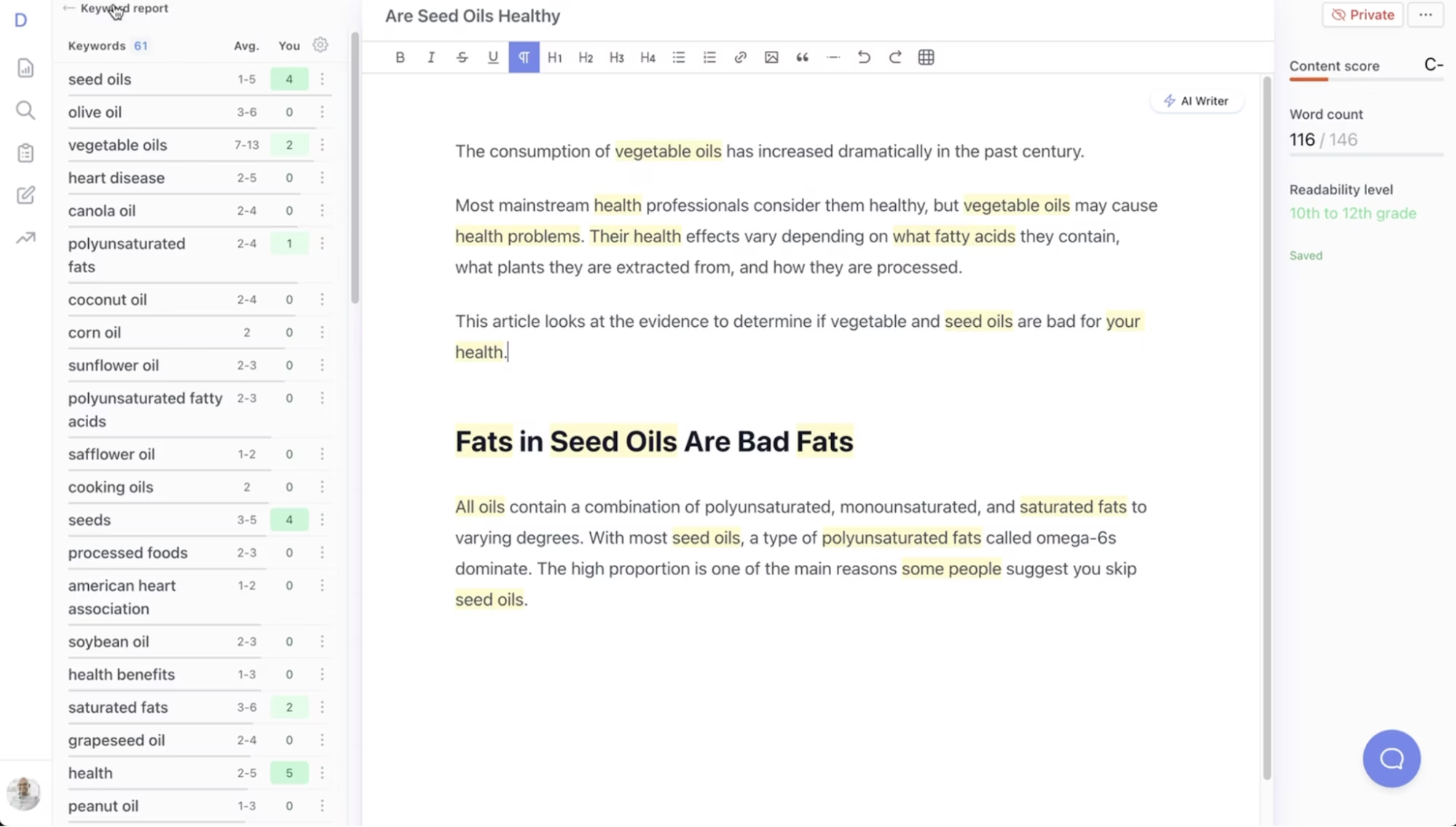
Dashword differentiates itself from Content Harmony through simplicity and execution speed. The platform reduces planning overhead and favors quick optimization and monitoring rather than deep content orchestration or multi-stage workflows.
Core features include automated brief generation based on top-ranking competitors, real-time content scoring, and keyword coverage tracking. Google Docs integration allows collaborative writing, while post-publish monitoring tracks ranking and performance changes over time.
Dashword is a paid tool with pricing ranging from $99 to $349 per month. The Startup plan begins at $99, while the Business plan expands to 100 content reports, bulk creation, API access, and SSO. A free first report is available without a credit card.
Pros of Dashword include a fast, brief builder, low learning curve, and clear paragraph-level feedback. Cons include the absence of advanced NLP models, no topic clustering, and limited technical or schema-related capabilities.
14. NeuronWriter: Best Content Harmony Alternative for Affordable SERP-Driven Optimization
NeuronWriter is an NLP-focused content optimization platform designed to align articles with search intent and semantic structure. NeuronWriter analyzes Google SERPs to extract entities, phrases, and heading patterns used by top-ranking pages
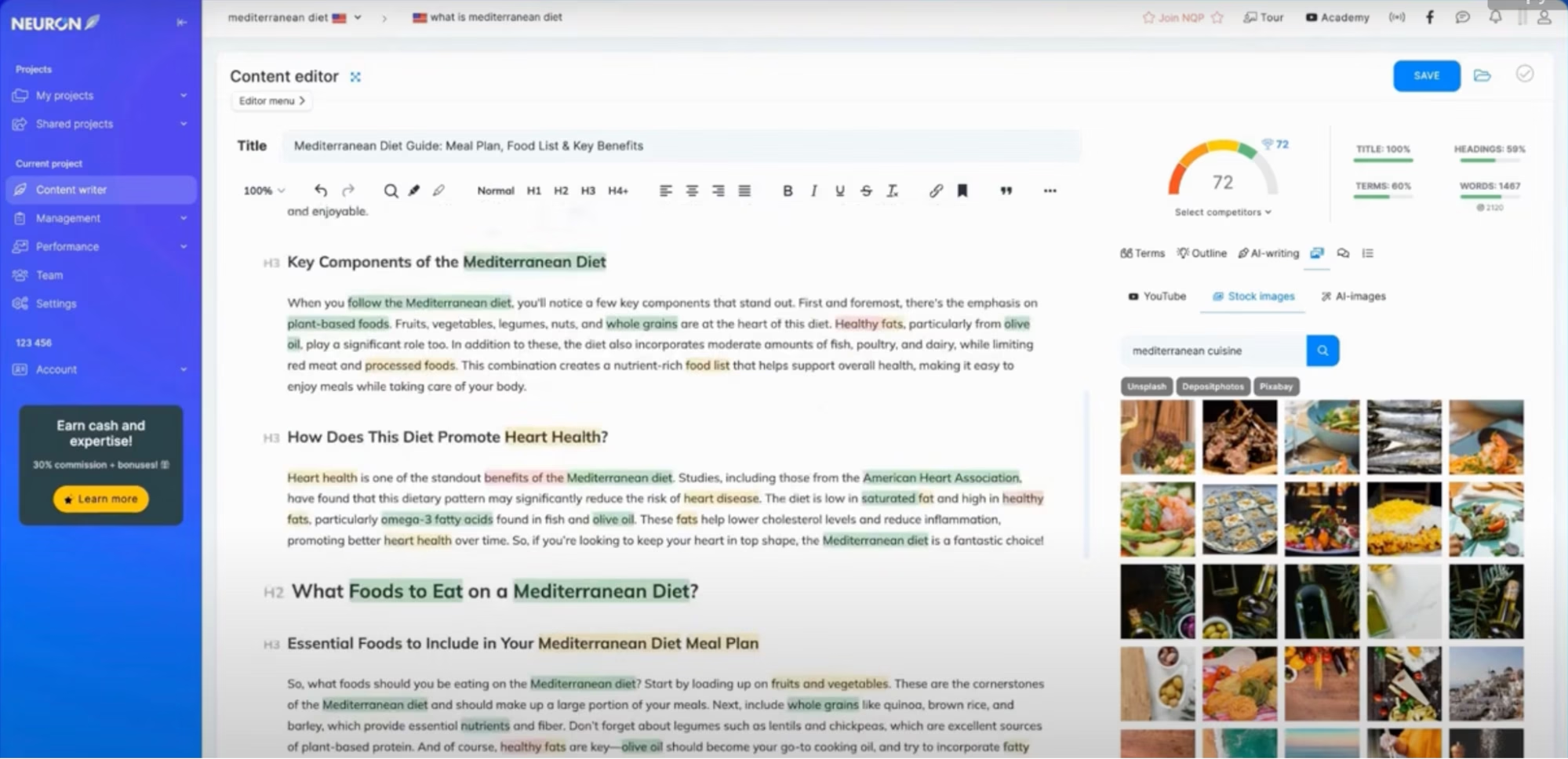
NeuronWriter offers a cost-efficient path beyond Content Harmony for SERP-based optimization and entity coverage. The platform focuses on relevance signals and structured guidance without the pricing and complexity associated with enterprise tools.
Core features include SERP-derived keyword insights, semantic content scoring, plagiarism checks, and AI-assisted drafting through structured templates. Integrations with Google Search Console (GSC) and WordPress streamline publishing, while higher tiers introduce API access, OpenAI key support, and bulk operations within the Contadu ecosystem.
NeuronWriter is a paid tool with pricing ranging from $23 to $117 per month. All plans include NLP guidance and content scoring, with higher tiers expanding limits and AI credit allocation.
Pros of NeuronWriter include strong semantic direction, clear intent mapping, and affordable NLP-driven optimization. Cons include limited automation, a less polished interface, and reduced efficiency when managing content at scale.
15. WriterZen: Best Content Harmony Alternative for Keyword Clustering and Brief Generation
WriterZen is a workflow-based SEO content platform that connects keyword research, topic clustering, and AI-assisted drafting. WriterZen offers topic discovery, outline creation, and scalable content planning for teams and solo operators managing high-volume SEO production.
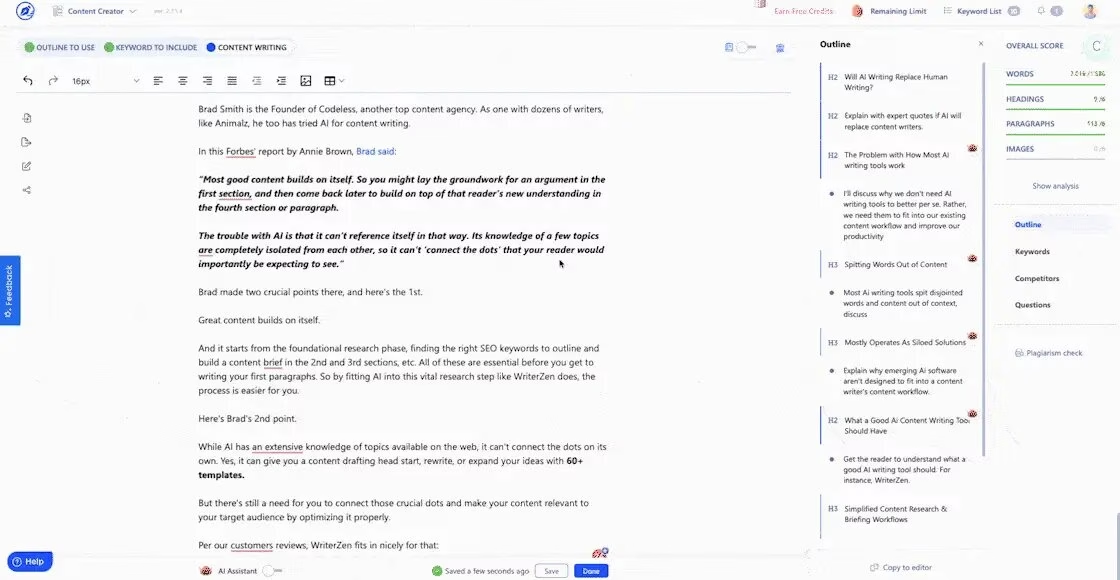
WriterZen takes the lead over Content Harmony for keyword clustering and large-scale brief creation. The platform emphasizes grouping keywords into structured topic clusters and translating those clusters into actionable content plans.
Core features include Topic Discovery for cluster-based idea generation, Keyword Explorer with difficulty and revenue scoring, and a Content Creator that links outlines directly to a GPT-powered editor. WriterZen allows internal linking guidance, team collaboration, and plagiarism detection within the same workflow.
WriterZen is available through a one-time payment model ranging from $75 to $225, with no recurring subscription fees. A 15-day free trial is available.
Pros of WriterZen include strong topic clustering, guided outline workflows, and low lifetime cost. Cons include the absence of technical SEO and backlink analysis, dependence on GPT output quality, and limited flexibility for advanced on-page configurations.
16. Rankability: Best Content Harmony Alternative for NLP-Driven Content Recommendations
Rankability is an SEO platform designed to blend AI optimization with live SERP intelligence. Rankability unifies keyword research, structured brief creation, and on-page recommendations inside a single drafting environment.
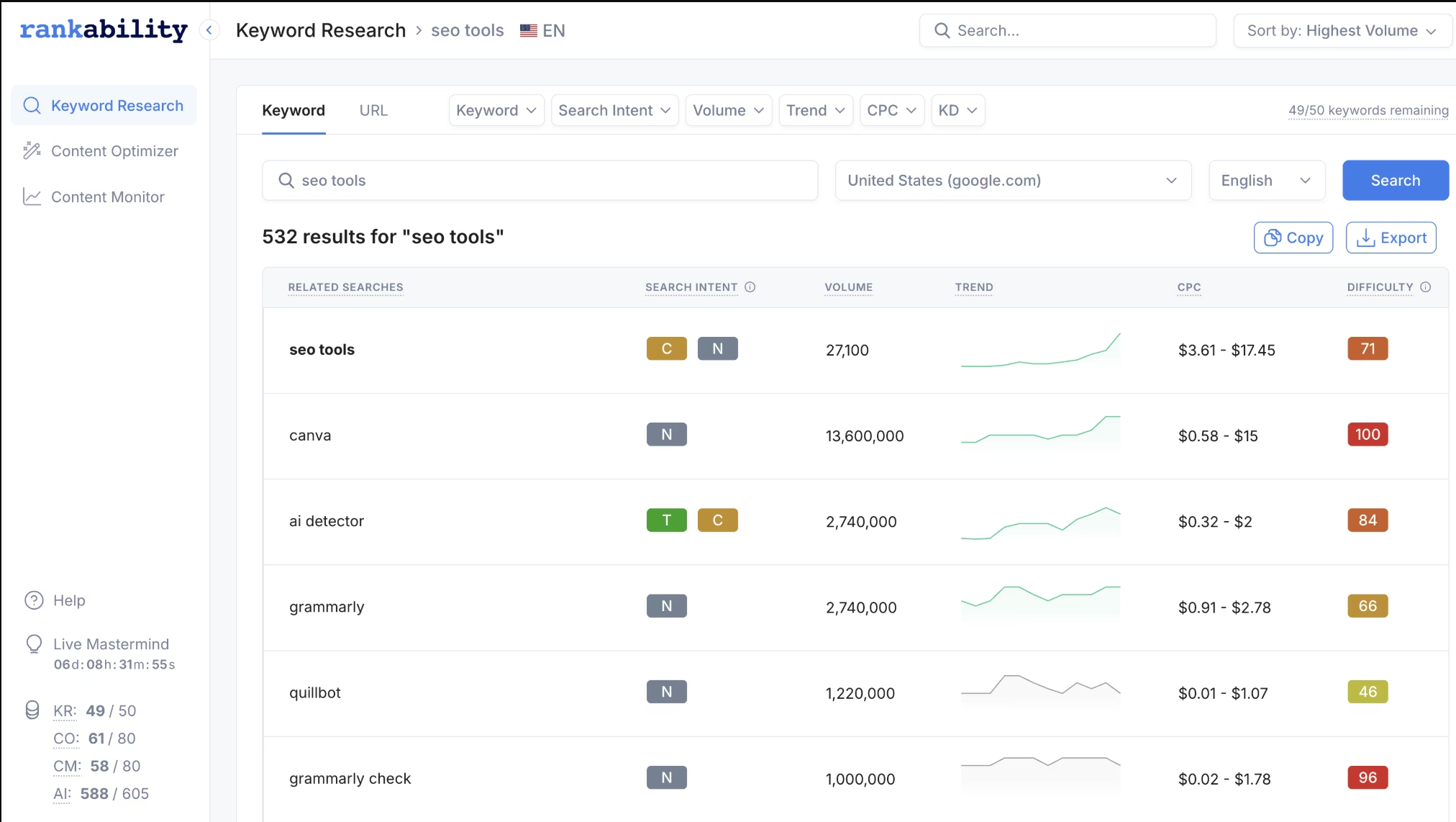
Rankability excels beyond Content Harmony for NLP-driven optimization and entity-based guidance. The platform prioritizes semantic coverage, checklist-driven execution, and real-time SERP alignment rather than collaborative briefing depth.
Core features include real-time on-page scoring, entity-focused recommendations, and structured AI briefs that guide writers during drafting. SERP data informs each optimization prompt, tying recommendations directly to ranking signals and content structure requirements.
Rankability is a paid tool with pricing that ranges from $124 to $374 per month. Plans scale by seats, monitored content, and keyword limits, with annual billing offering discounted pricing.
Pros of Rankability include an intuitive interface and consistent optimization for both search engines and generative systems. Cons include limited page-level technical auditing, higher costs on upper tiers, and no API access for large-scale automation.
17. Grammarly: Best Content Harmony Alternative for Grammar and Readability Editing
Grammarly is an AI-powered writing assistant designed to improve grammar, punctuation, and tone across documents and digital communication. Grammarly functions as a real-time editor that flags errors, restructures sentences, and improves clarity while text is being written.
Grammarly specializes beyond Content Harmony for writing quality and readability refinement. The platform focuses on linguistic accuracy and tone consistency, while Content Harmony centers on SEO research, brief creation, and on-page optimization workflows.
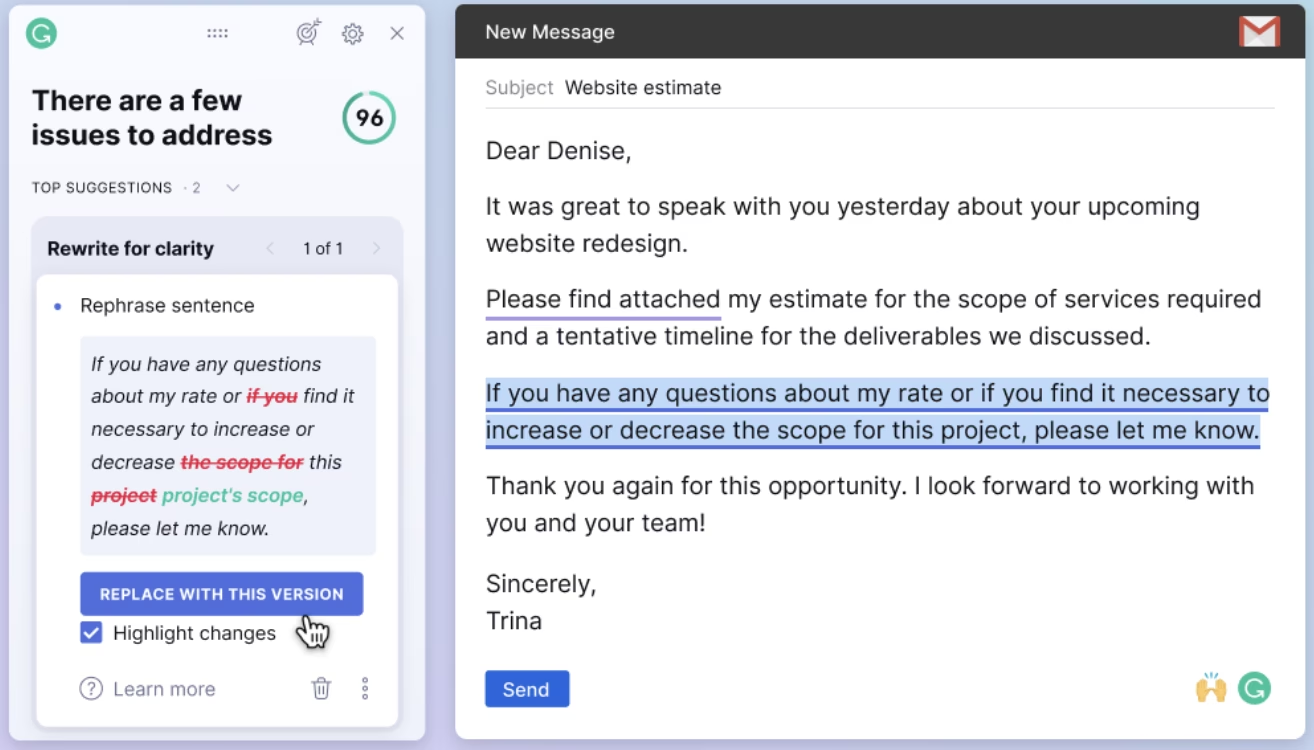
Core features include real-time grammar and clarity checks, tone adjustments, plagiarism detection, and AI-assisted text generation. Grammarly operates through a desktop app, browser extensions, and direct integrations with Google Docs and Gmail to maintain consistent writing quality across environments.
Grammarly is a paid tool with pricing ranging from free access to $30 per month. The Pro plan unlocks advanced suggestions and AI prompts, while the Enterprise tier adds administrative controls, security features, and organization-wide customization.
Pros of Grammarly include precise grammar correction, reliable tone analysis, and broad platform availability. Cons include limited content planning depth, occasional incorrect suggestions, and weaker SEO alignment than a dedicated optimization platform.s
18. Usetopic: Best Content Harmony Alternative for Simple Topic Suggestions and Content Grading
Usetopic, often referred to as Topic, is an AI-driven SEO tool built for fast content research and scoring. Usetopic analyzes top-ranking pages to surface topics, questions, and keywords that shape comprehensive articles without complex workflows.
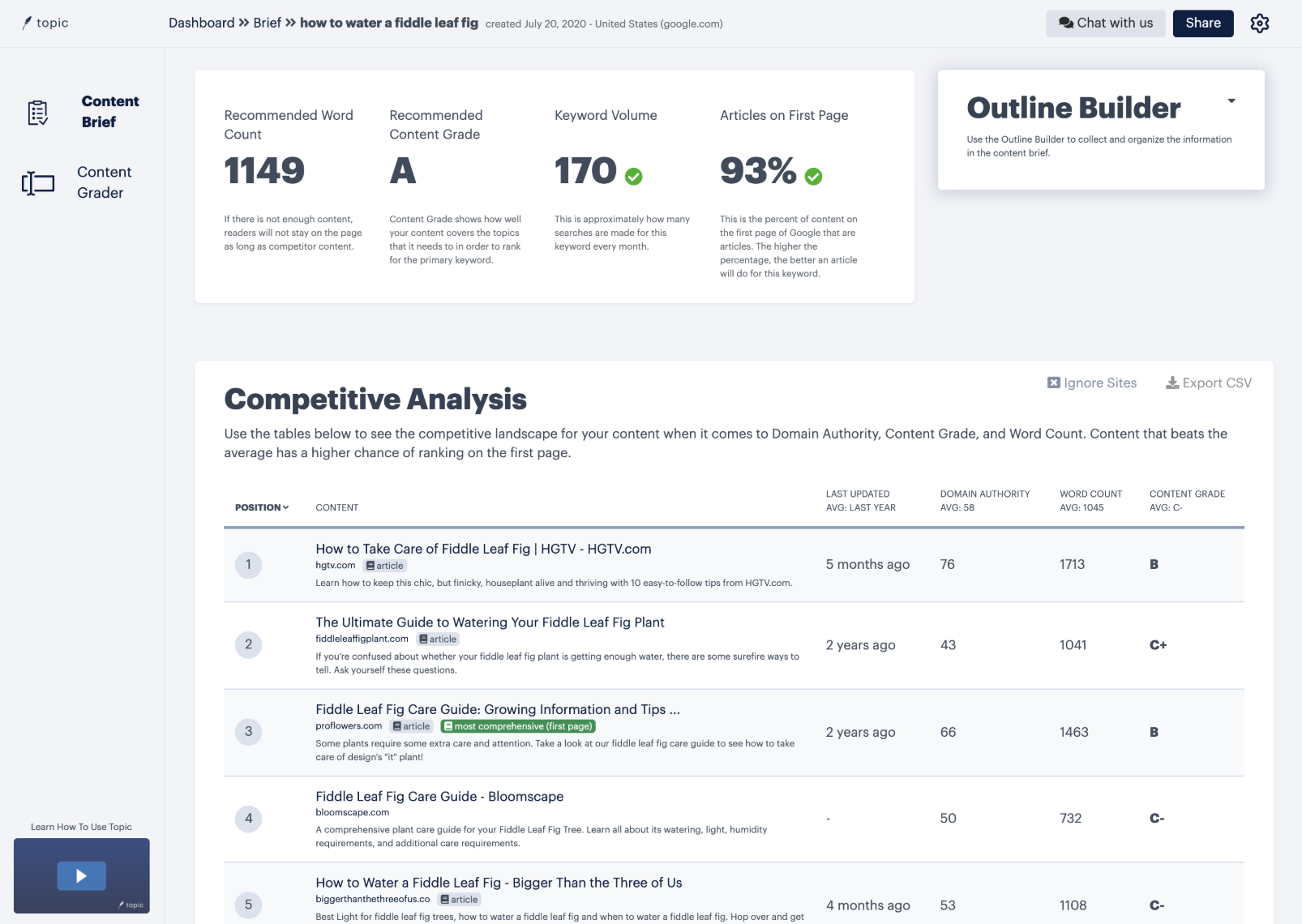
Usetopic favors simplicity over Content Harmony for topic discovery and basic content grading. The platform delivers fast feedback and straightforward guidance, while Content Harmony offers deeper planning and structured editorial execution.
Core features include automated research and outline generation based on top-ranking pages, a real-time content grader that evaluates topical completeness and readability, and keyword discovery that highlights common questions tied to search intent.
Usetopic is a paid tool with pricing ranging from $99 to $299 per month. Starter plans offer individual workflows, while higher tiers expand brief limits and access for agency teams.
Pros of Usetopic include ease of use and clear grading signals. Cons include limited workflow customization, lighter optimization depth, and reduced scalability for advanced SEO operations.
19. LongShot AI: Best Content Harmony Alternative for AI Long-Form SEO Content
LongShot AI is a long-form content generation platform designed to produce research-backed, SEO-focused articles with an emphasis on factual accuracy. LongShot AI combines research, drafting, verification, and optimization into a single writing workflow.
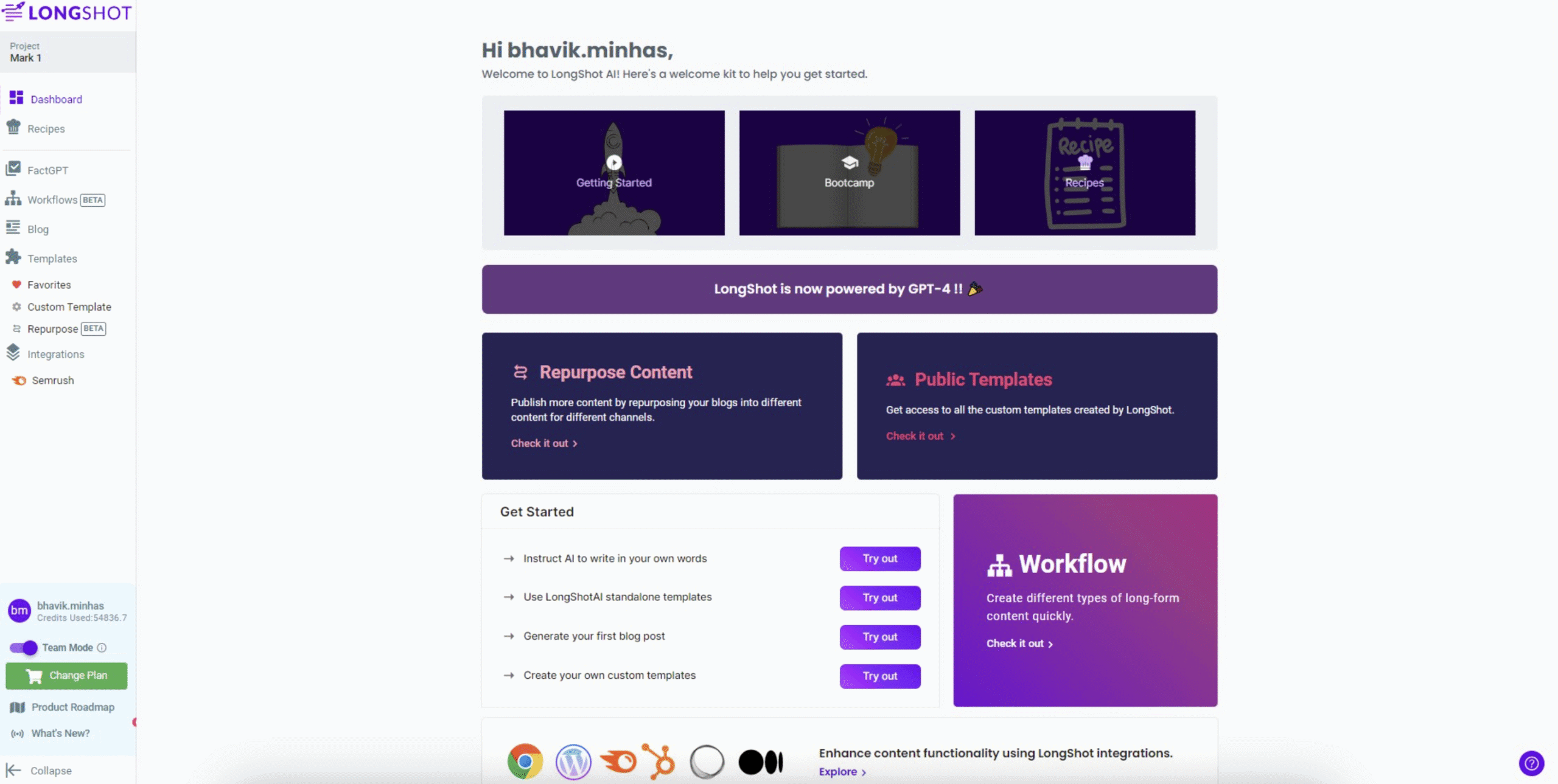
LongShot AI stands ahead of Content Harmony for end-to-end long-form AI content creation. The platform handles drafting, fact validation, and optimization, while Content Harmony concentrates on research, planning, and content grading rather than full article generation.
Core features include FactGPT for automated fact checking, citation generation that validates claims against trusted sources, and a Semantic SEO Checker that compares drafts against top-ranking pages. Additional features cover keyword planning, internal linking suggestions, and publishing integrations with WordPress and Google Docs.
LongShot AI is a paid tool with pricing ranging from $19 to $299 per month. The Pro plan starts at $19, Team plans expand collaboration at $49, and Agency plans increase limits for large organizations. Enterprise options add API access and higher deployment capacity.
Pros of LongShot AI include strong long-form generation and an intuitive interface. Cons include limited free usage, credit-based constraints, and minor UI refinement needs.
20. Conductor: Best Content Harmony Alternative for Enterprise Content Workflows
Conductor is an enterprise SEO and content intelligence platform built for organizations managing large websites and complex content ecosystems. Conductor unifies keyword research, rank tracking, competitive intelligence, site auditing, and performance measurement at enterprise scale.
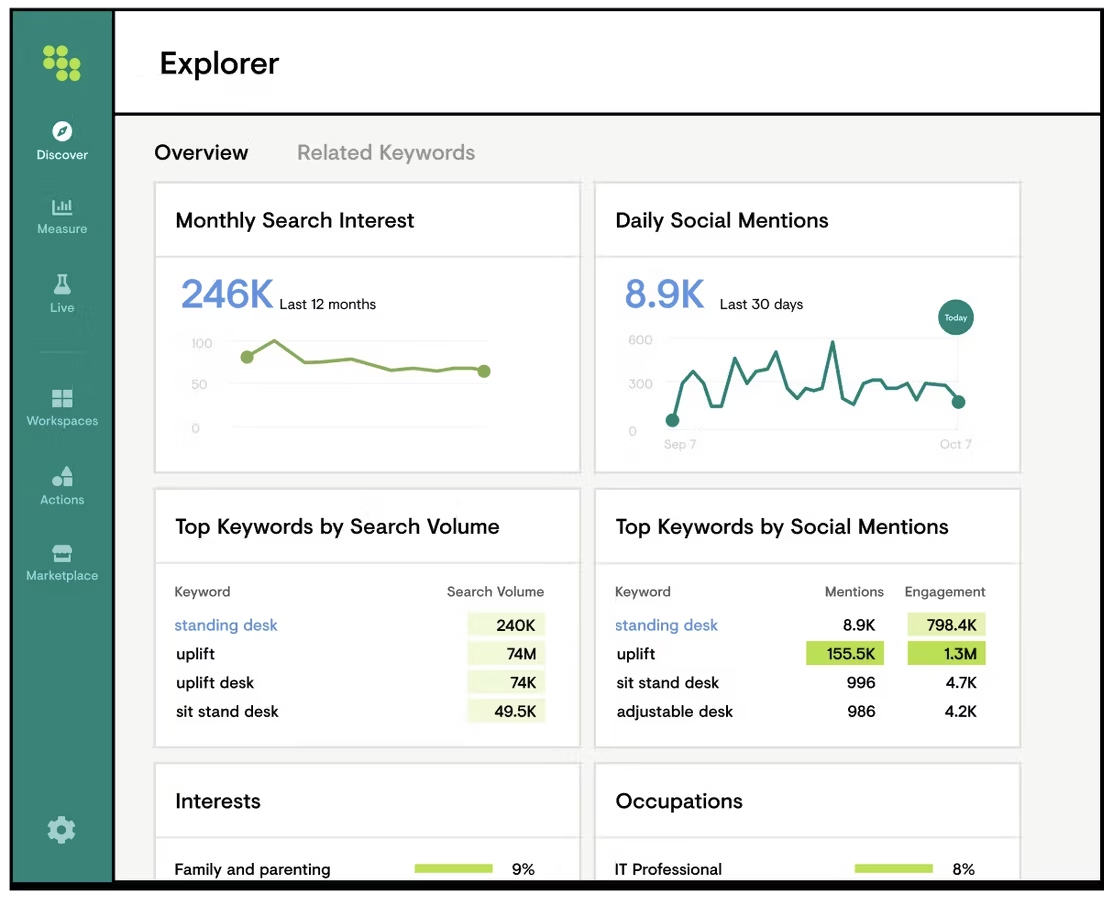
Conductor operates at a different tier than Content Harmony for large-scale content operations. The platform offers enterprise governance, cross-team workflows, and technical SEO coordination, while Content Harmony focuses on content planning and optimization at the editorial level.
Core features include SERP visualization, content opportunity analysis, and integrations with workflow platforms such as Asana, Trello, and Jira. Real-time performance dashboards and optional consulting services guide teams through technical SEO challenges, migrations, and strategic initiatives.

Conductor is a paid tool with custom pricing based on site complexity, content volume, and organizational requirements. A three-week free trial is available. Enterprise plans increase depth through strategic consulting and advanced reporting.
Pros of Conductor review include enterprise-grade content intelligence, competitive benchmarking, real-time reporting, and strong workflow integration. Cons include higher costs, a steeper onboarding curve, occasional platform speed limitations, and contract rigidity.
21. Contentbird: Best Content Harmony Alternative for Enterprise Content Operations
Contentbird is an AI-driven content marketing and operations platform built to manage the full content lifecycle at enterprise scale. Contentbird connects strategy planning, AI-assisted creation, workflow coordination, and performance analysis inside one centralized system.
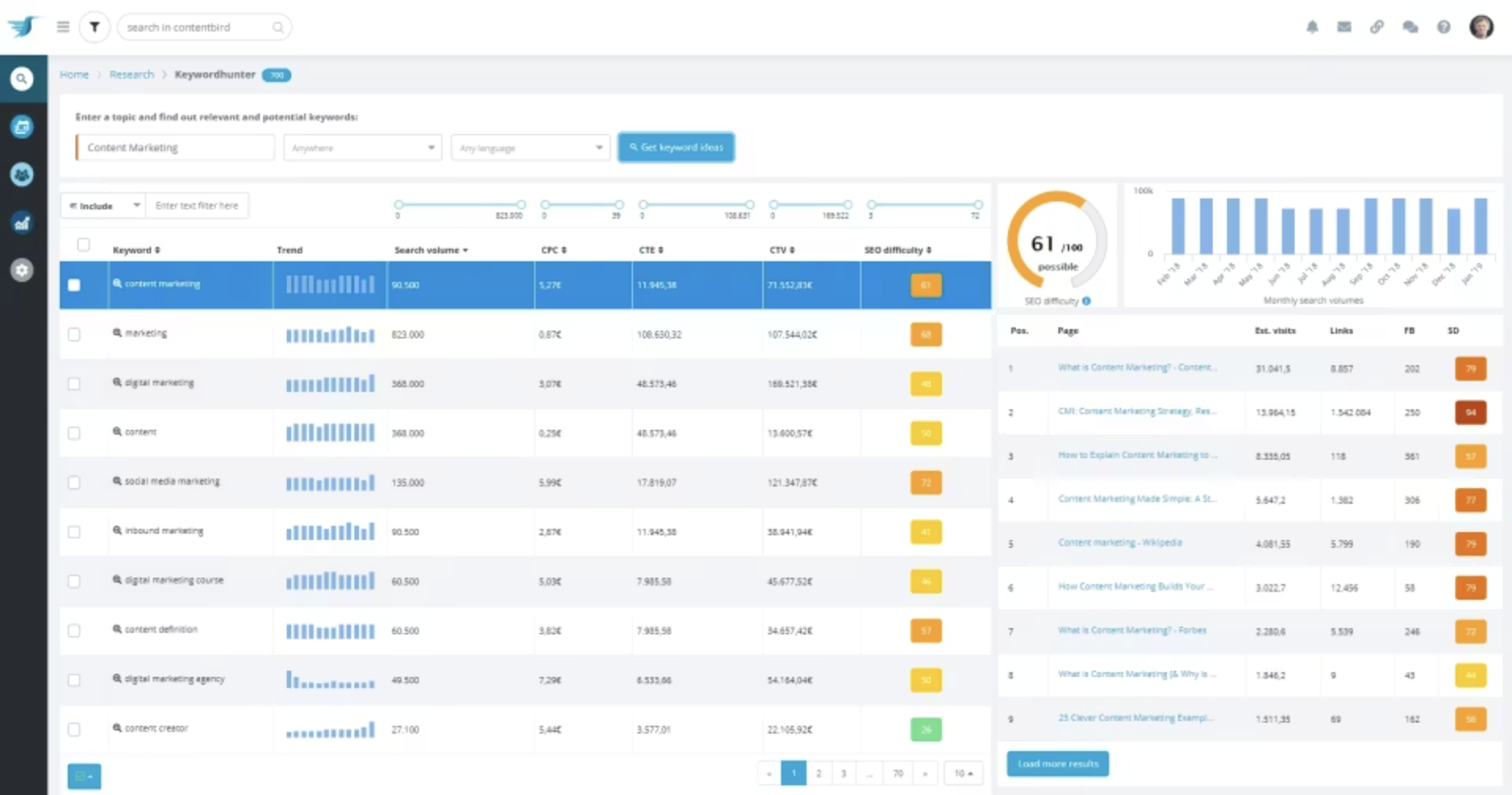
Contentbird extends beyond Content Harmony for enterprise-level content operations and cross-team coordination. The platform emphasizes campaign planning, editorial governance, and operational visibility across large organizations.
Core features include AI-assisted strategy development, campaign and editorial planning tools, collaborative calendars, and workflow governance for distributed teams. An AI Assistant allows ideation, keyword research, content drafting, personalization, and optimization across blogs, product pages, and social content.
Contentbird is a paid tool with pricing ranging from €135 to €550 per month. The Starter plan begins at €135 for a single user and project, Team plans expand collaboration, and Business tiers add advanced workflows and scalability for larger organizations.
Pros of Contentbird include centralized content operations, strong planning and governance features, and improved cross-team alignment. Cons include a steeper learning curve and limited native integrations compared to broader enterprise ecosystems.
22. Copywritely: Best Content Harmony Alternative for Basic Optimization and Plagiarism Checks
Copywritely is a lightweight SEO content checker focused on improving foundational writing quality. Copywritely evaluates drafts for plagiarism, readability, keyword density, and structural issues before publication.
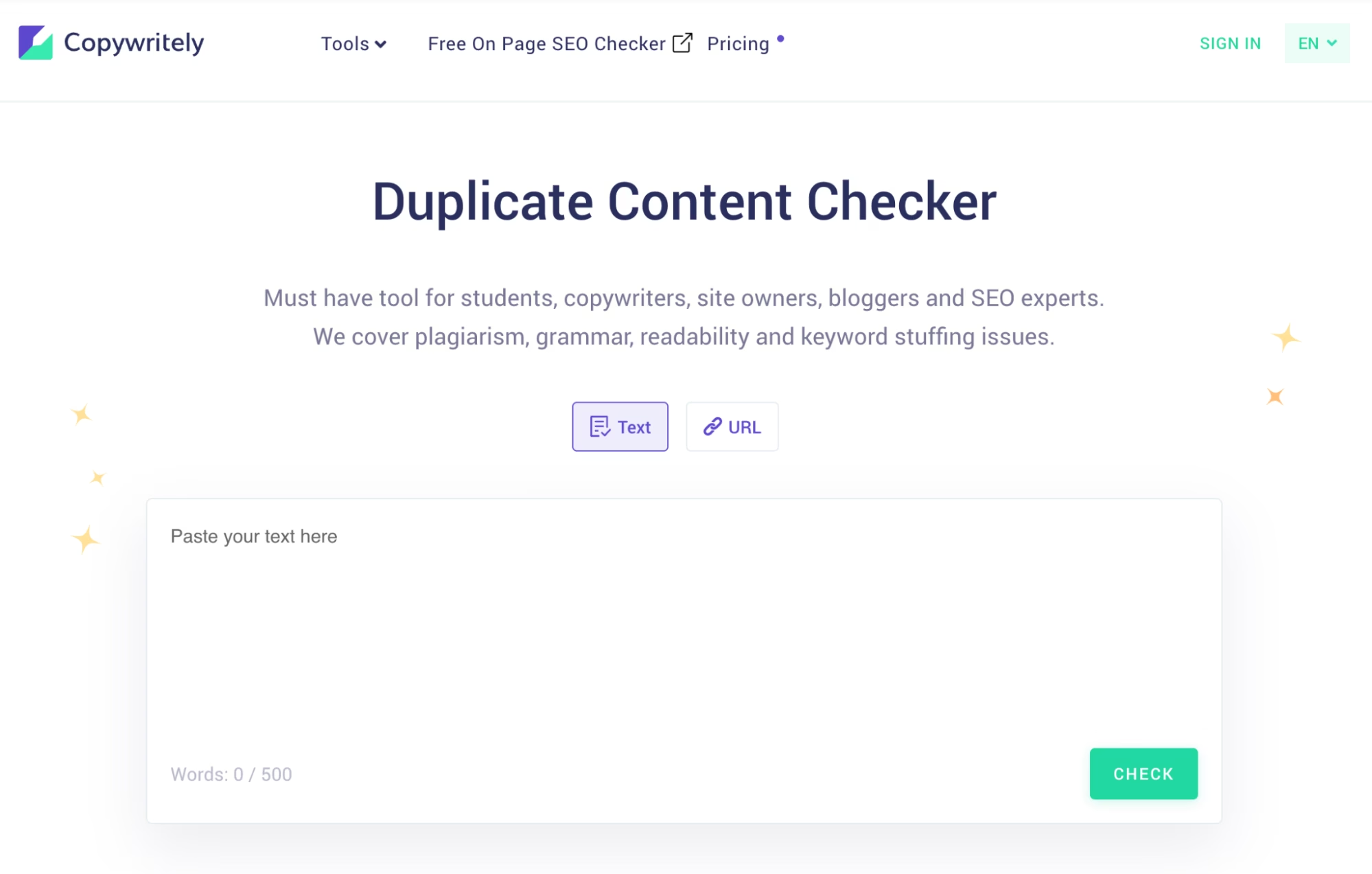
Copywritely serves a different purpose than Content Harmony by prioritizing content hygiene over strategic planning. The platform targets fast cleanup and compliance checks, while Content Harmony focuses on research-driven content development and optimization frameworks.
Core features include plagiarism detection, grammar and readability analysis, keyword density monitoring, and basic SEO rule checks. A web-based editor delivers inline suggestions, paraphrasing, and readability scoring to refine drafts efficiently.
Copywritely is a paid tool with pricing starting at $29 per month. Lower pricing positions the platform as an accessible option for writers and small teams.
Pros of Copywritely include quick plagiarism checks, ease of use, and fast feedback cycles. Cons include limited competitive insights, no advanced SERP or NLP analysis, and shallow optimization depth for strategic SEO work.
23. GrowthBar: Best Content Harmony Alternative for Quick AI Drafts and Simple Optimization
GrowthBar is an AI writing and SEO platform built for rapid blog creation with lightweight optimization. GrowthBar combines content generation, keyword research, and competitor insights through a Chrome extension and a streamlined web app.
GrowthBar prioritizes speed over Content Harmony when fast drafts matter more than structured planning. GrowthBar favors immediate content creation and basic optimization, while Content Harmony emphasizes detailed research and agency-oriented workflows.
Core features include keyword opportunity discovery and competitor page analysis delivered directly inside the browser. The Chrome extension links research, drafting, and publishing into one flow, with WordPress-focused tooling that accelerates deployment.
GrowthBar is a paid tool with pricing ranging from $48 to $99 per month. The Standard plan covers core AI writing and SEO research, while the Pro plan increases usage limits and competitive analysis depth.
Pros of GrowthBar include fast AI drafting, simple workflows, Chrome extension convenience, and accessible pricing. Cons include shallow optimization depth, limited content scoring detail, and fewer advanced SEO capabilities.
24. Content at Scale: Best Content Harmony Alternative for High-Volume AI Long-Form Output
Content at Scale is an AI-powered content generation platform built for producing large volumes of long-form, SEO-focused articles. Content at Scale automates research, drafting, and optimization to generate full articles from minimal input.
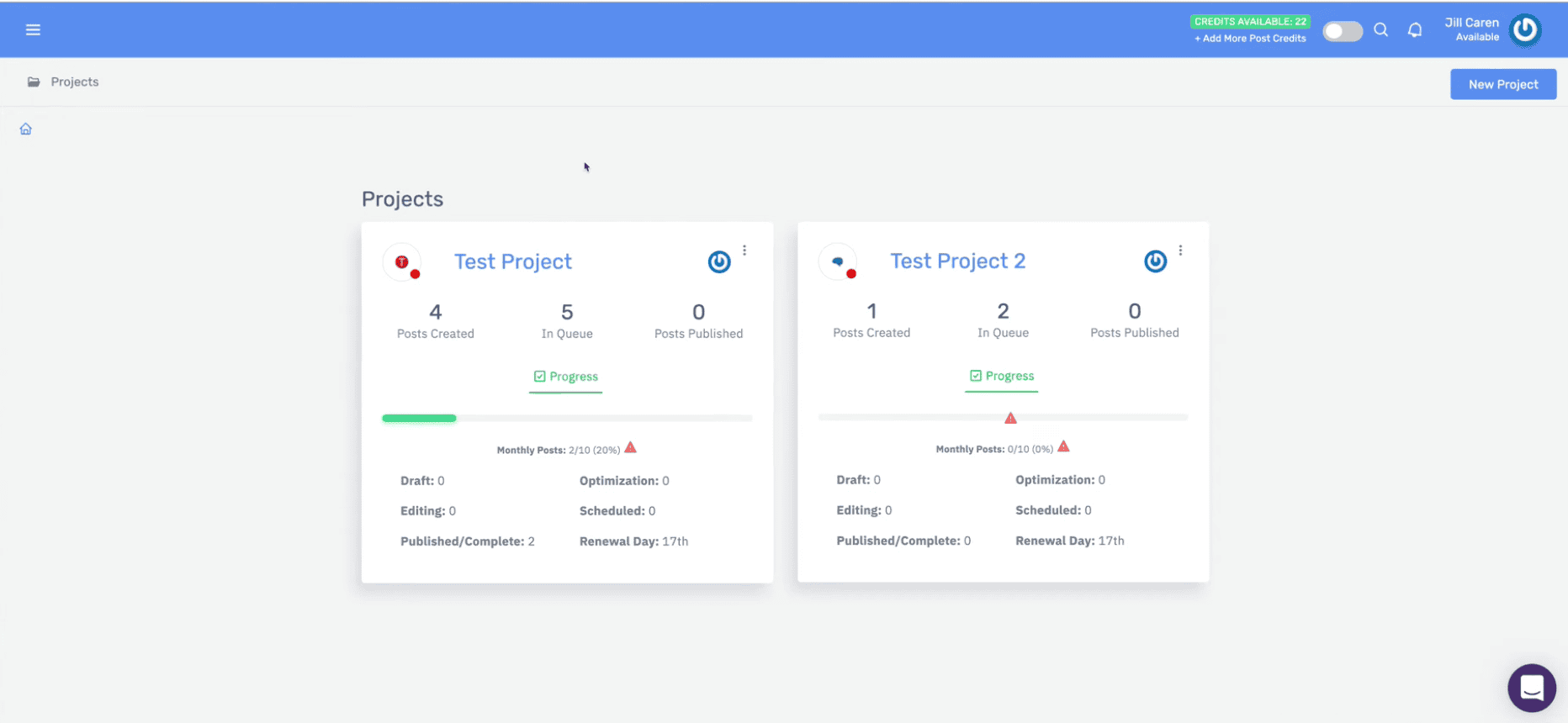
Content at Scale leads Content Harmony for mass long-form production. The platform focuses on automated article generation at scale, while Content Harmony concentrates on planning, outlining, and optimizing content rather than writing complete drafts.
Core features include AI-driven long-form article creation using multiple language models, semantic SEO optimization based on top-ranking pages, and built-in AI detection tools to assess originality. Additional tools offer custom voice training, meta optimization, and publishing-ready formatting.
Content at Scale is a paid tool with pricing ranging from $250 to $1,500+ per month. Entry plans start around $250 for solo use, while higher tiers scale to agency-level output with optional add-ons for expanded AI and SEO capabilities.
Pros of Content at Scale include high-speed long-form generation, strong originality controls, and minimal manual setup. Cons include higher costs, reliance on human review for quality control, and word-based limits that reduce flexibility for extended content.
25. SpyFu: Best Content Harmony Alternative for Competitor Keyword and SERP Insights
SpyFu is a competitive research platform designed to expose how rivals acquire traffic across organic and paid search. SpyFu analyzes keyword overlap, ranking history, and advertising behavior to reveal competitive strategies before content creation begins.
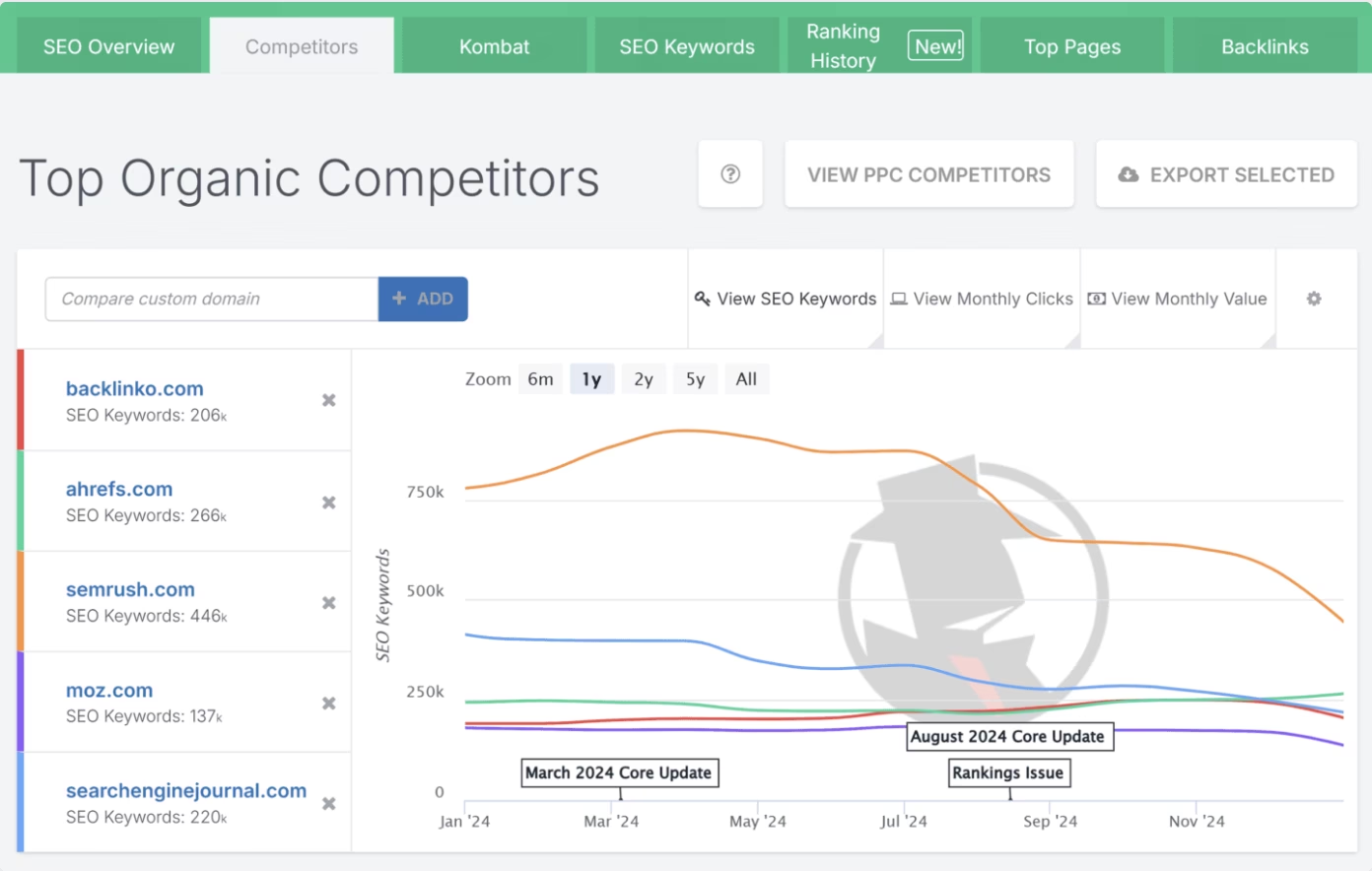
SpyFu takes the advantage over Content Harmony for competitor intelligence and historical SERP analysis. The platform emphasizes understanding how competitors win visibility through keywords and ads, while Content Harmony focuses on building and optimizing content once topics are selected.
Core features include competitor keyword overlap analysis, historical ranking data, and Google Ads research that reveals ad spend patterns and tested messaging. Additional tools surface long-term keyword performance and competitive threat indicators across SERPs.
SpyFu is a paid tool with pricing that ranges from $39 to $79 per month. A limited free tier allows basic keyword searches without a subscription.
Pros of SpyFu review include unlimited searches, deep historical datasets, and detailed competitor advertising insights. Cons include limited technical SEO functionality and minimal on-page optimization.
26. SEOClarity: Best Content Harmony Alternative for Enterprise SEO and Content Intelligence
SEOClarity is an enterprise SEO platform built for organizations managing large, complex search programs. seoClarity unifies crawl data, content intelligence, keyword tracking, and AI-driven insights into customizable dashboards designed for scale.
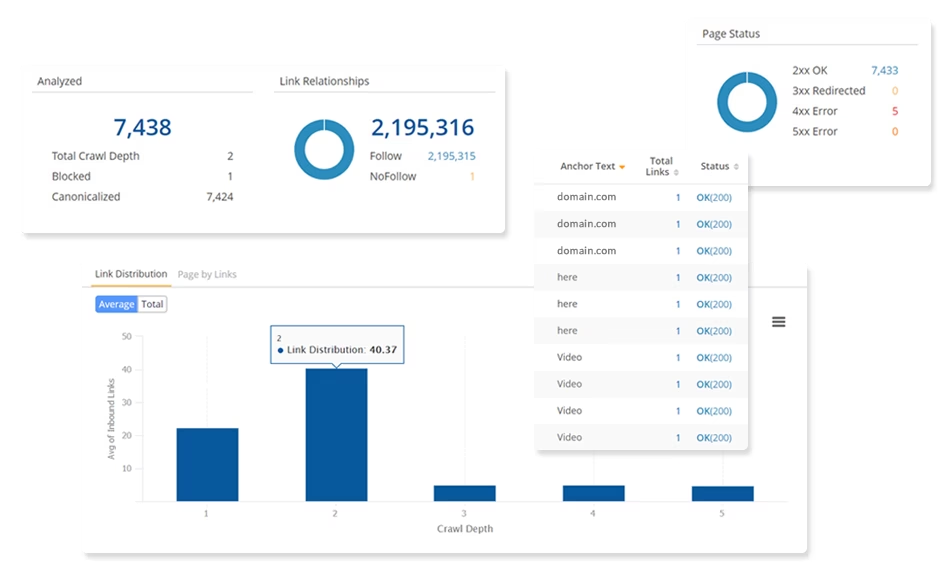
seoClarity operates at an enterprise level beyond Content Harmony for large-scale SEO management. The platform offers sitewide analysis, forecasting, and automation across thousands of URLs, while Content Harmony concentrates on content research and editorial optimization workflows.
Core features include Clarity 360 for URL-level performance tracking, enterprise crawls with JavaScript rendering, and technical audits covering over one hundred SEO checks. Additional capabilities include internal link analysis, log-file monitoring, SEO split testing, PCC-SEO comparisons, schema deployment, and AI search optimization through Clarity ArcAI.
seoClarity is a paid tool with pricing starting at $2,500 per month, scaling to $4,500 per month for enterprise packages. Custom pricing applies for advanced ranking and data access needs.
Pros of seoClarity review include unified enterprise data management, access to massive keyword databases, AI search optimization features, and SEO split testing. Cons include high entry cost, a steep learning curve, and feature depth that exceeds the needs of mid-market teams.
27. Majestic: Best Content Harmony Alternative for Link-Based SERP and Topic Context
Majestic is a backlink intelligence platform built to analyze link profiles, trust signals, and domain authority at scale. Majestic visualizes backlink relationships and preserves historical link data to explain how authority develops over time.
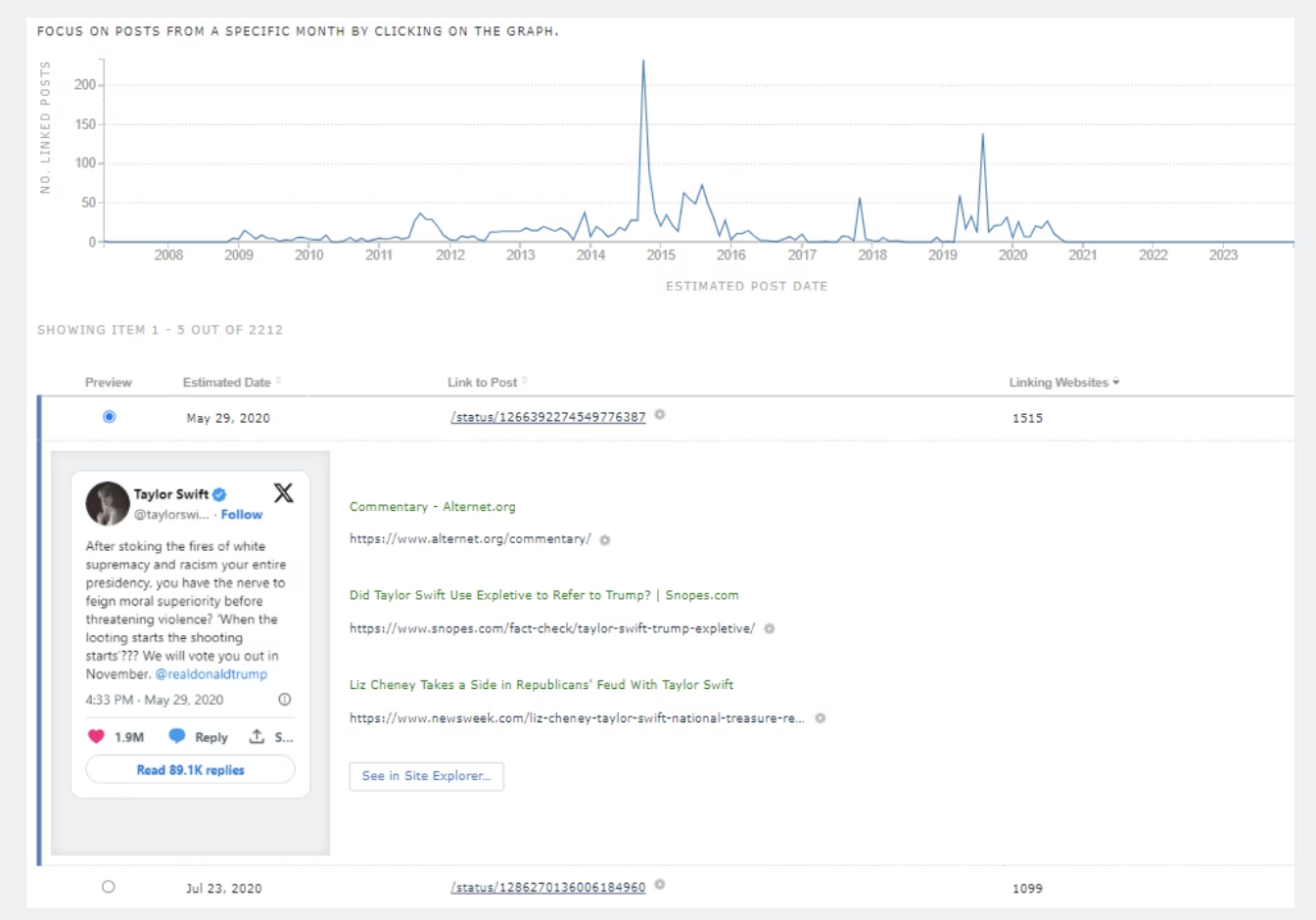
Majestic brings capabilities Content Harmony does not address when backlink-driven context matters. The platform explains SERP positioning through link equity, topical trust flow, and citation signals, while Content Harmony concentrates on on-page optimization.
Core features include a Backlink Checker for detailed profile analysis, historical link tracking across domains, and link discovery tools that reveal new authority opportunities. Advanced visualizations map linking domains and highlight high-trust sources that influence topical relevance.
Majestic is a paid tool with pricing ranging from $49.99 to $399.99 per month. Higher tiers unlock advanced datasets and full API access. A seven-day money-back guarantee is available.
Pros of Majestic review include deep backlink intelligence, proprietary trust metrics, long-term historical reporting, and specialized link visualizations. Cons include limited non-link SEO features and a steeper learning curve for new users.
28. Searchmetrics: Best Content Harmony Alternative for Enterprise Content Analytics
Searchmetrics is an enterprise content and SEO analytics platform that delivers market-level visibility, performance benchmarking, and forecasting insights. The technology now operates within the Conductor ecosystem following its acquisition, extending enterprise analytics and strategic planning capabilities.
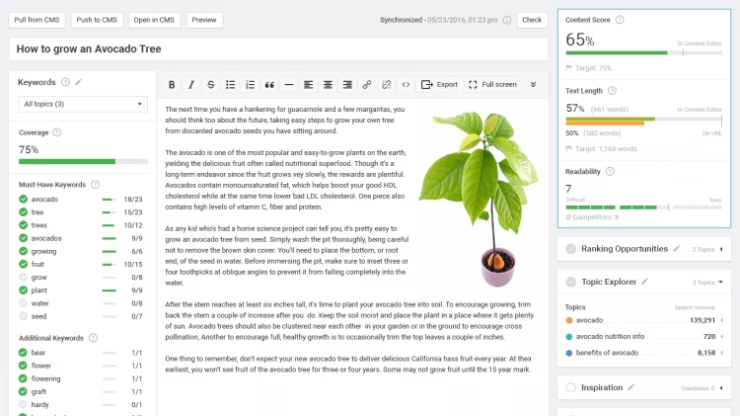
Searchmetrics operates at a broader analytical level than Content Harmony for enterprise content measurement and forecasting. The platform guides large organizations through what to create, optimize, and scale using predictive insights, while Content Harmony focuses on content planning and optimization workflows.
Core features include global keyword and competitor tracking, audience behavior insights, AI-driven content optimization, and technical site auditing. API access enables custom reporting, while integration with Conductor strengthens benchmarking, forecasting, and large-scale performance monitoring.
Searchmetrics follows custom enterprise pricing based on site size, content scope, and operational requirements. A three-week free trial is available.
Pros of Searchmetrics include comprehensive market analytics, AI-powered recommendations, and enterprise consulting support. Cons include high custom pricing, interface complexity, reliance on Google data sources, and annual contract commitments.
29. Moz Pro: Best Content Harmony Alternative for Keyword and SERP Understanding
Moz Pro is an all-in-one SEO platform that combines keyword research, rank tracking, link analysis, and technical audits inside a centralized dashboard. Moz Pro emphasizes clarity in search metrics and competitive context through accessible interfaces and well-documented scoring systems.
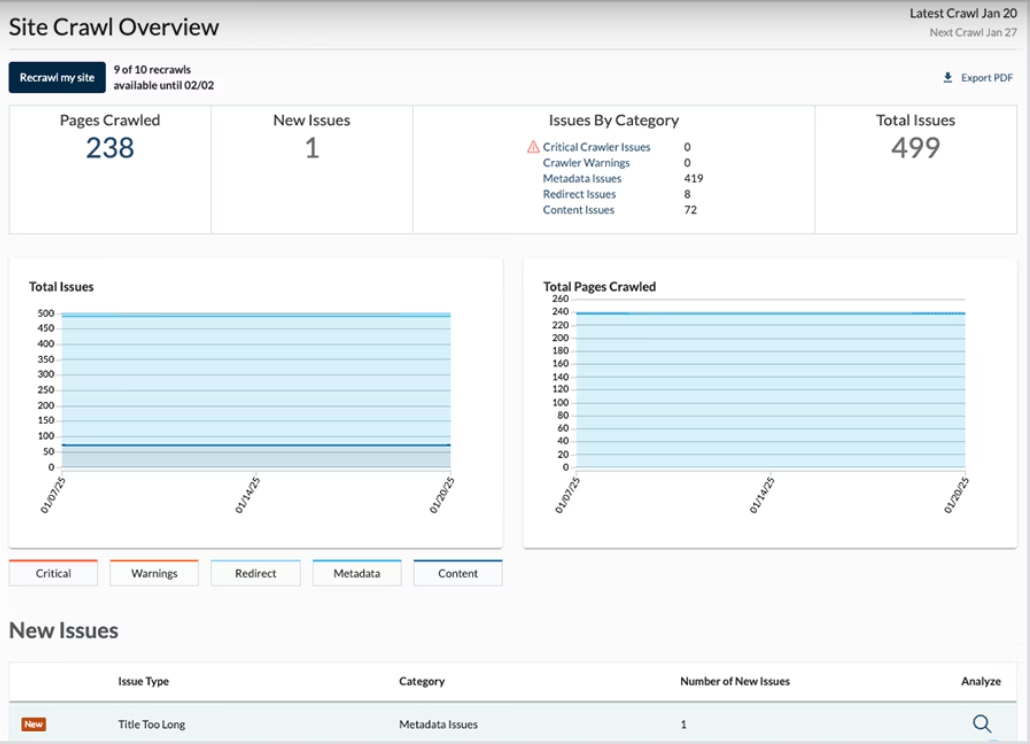
Moz Pro provides stronger keyword and SERP context than Content Harmony during early research stages. The platform clarifies search intent, ranking difficulty, and SERP composition before content planning begins.
Core features include Keyword Explorer for difficulty and opportunity analysis, True Competitors for SERP-based competitive discovery, Link Intersect for backlink gap analysis, and Site Crawl for technical issue detection.
Moz Pro is a paid tool with pricing starting at $49 per month. Mid-tier plans reach $179 per month with expanded site and keyword limits, while higher tiers increase tracked domains and reporting capacity.
Pros of Moz review include an intuitive interface, reliable rank tracking, and clear competitive context through proprietary metrics. Cons include a smaller keyword and backlink index compared to enterprise platforms, which limits depth for large-scale or long-tail research.
30. RobotSpeed: Best Content Harmony Alternative for Technical Issues That Affect Content
RobotSpeed is an AI-driven SEO automation platform designed to manage content creation, backlink acquisition, and publishing within a single system. RobotSpeed focuses on execution speed and technical performance signals that influence content visibility.
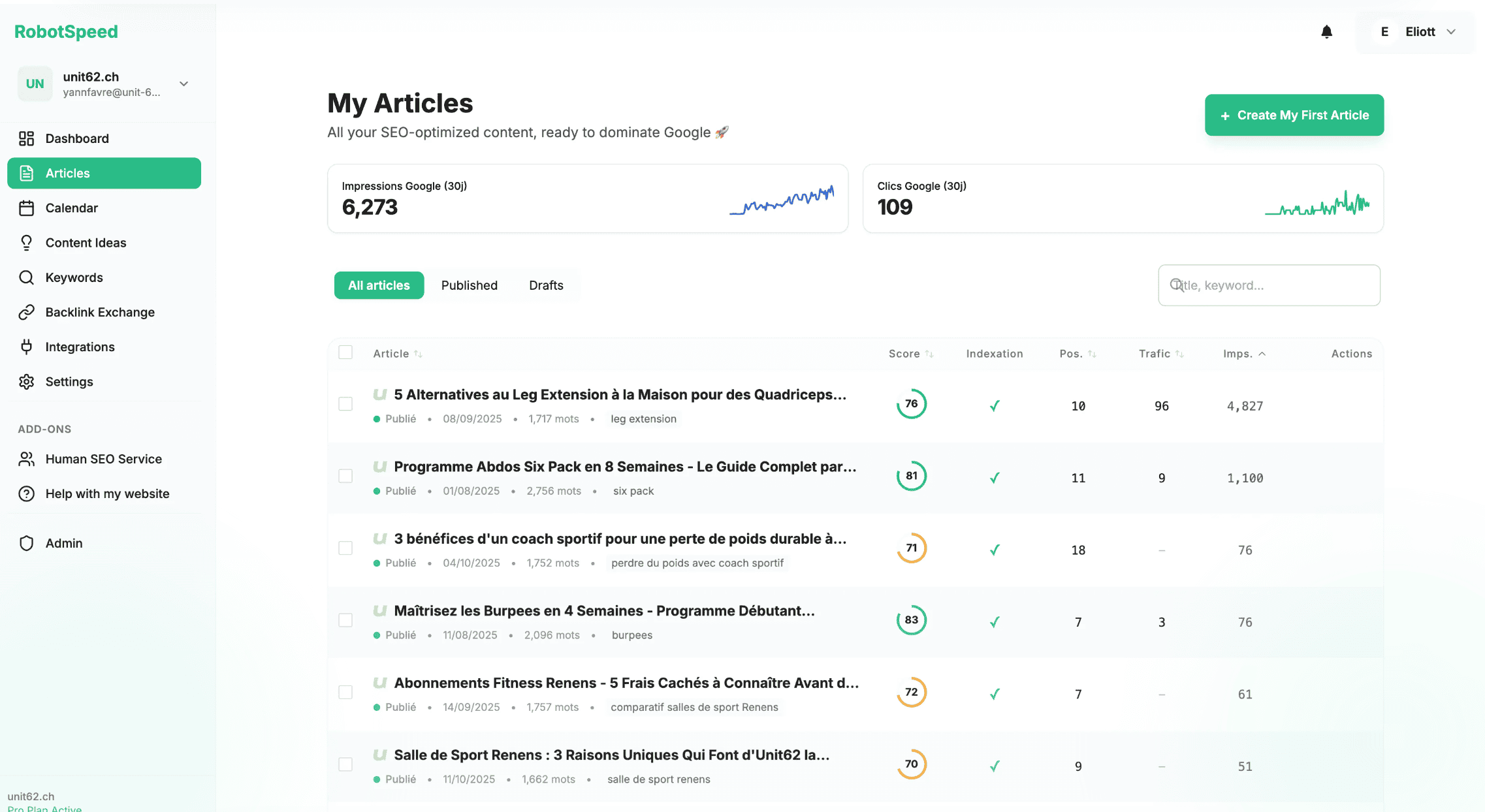
RobotSpeed addresses areas Content Harmony does not cover when technical health constrains content performance. The platform monitors speed metrics, Core Web Vitals, and site diagnostics that directly influence how content ranks and performs.
Core features include automated technical audits, Core Web Vitals monitoring, and performance alerts that flag issues affecting visibility. AI-driven content generation produces long-form articles at scale, automated backlink acquisition strengthens authority signals, and direct CMS publishing streamlines deployment across platforms such as WordPress and Shopify.
RobotSpeed is a paid tool with pricing ranging from CHF 99 per month to custom enterprise plans. The Pro plan at CHF 99 includes AI content production, SEO analytics, and automated publishing, while enterprise tiers expand domain coverage, output volume, and API integrations.
Pros of RobotSpeed include rapid execution, full lifecycle automation, and integrated technical monitoring. Cons include reliance on automation for content quality and the risk of prioritizing volume without strong human editorial oversight.
31. AccuRanker: Best Content Harmony Alternative for Rank Tracking Impact on Content Strategy
AccuRanker is a rank tracking platform built for SEO professionals and agencies that require fast, precise keyword position updates. AccuRanker tracks rankings across devices, locations, and search engines, with hyper-local targeting down to ZIP codes.
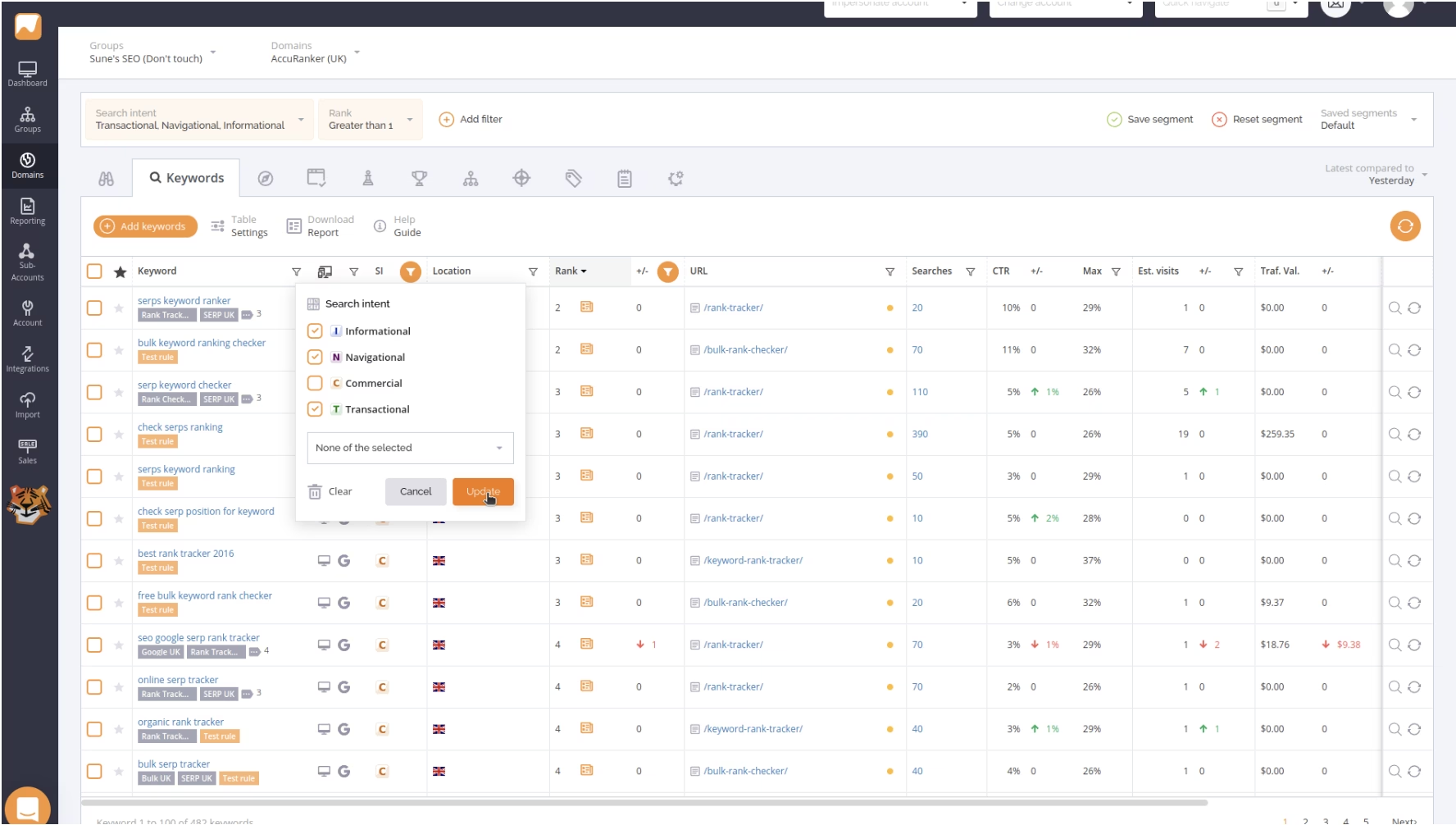
AccuRanker focuses on performance measurement, where Content Harmony does not compete. The platform connects ranking movement, SERP features, and visibility shifts directly to content updates and strategic changes.
Core features include high-frequency rank refreshes, Share of Voice metrics, AI-powered click-through rate estimates, and competitor segmentation. Dynamic tagging and pixel-level SERP analysis expose ranking changes across desktop and mobile results, while SERP feature tracking highlights visibility in snippets, local packs, and rich results.
AccuRanker is a paid tool with pricing starting at $129 per month for 1,000 tracked keywords. Plans scale by keyword volume and include unlimited users and domains across all tiers.
Pros of AccuRanker include exceptional update speed, granular geo and device segmentation, unlimited seats, and strong integrations. Cons include a steeper onboarding curve for new users and limited functionality outside rank tracking.
32. AnswerThePublic: Best Content Harmony Alternative for Search Question Research
AnswerThePublic is a visual keyword research and search listening tool designed to surface real questions, phrases, and comparisons people type into search engines. AnswerThePublic organizes query data into intuitive visual formats that reveal audience intent before content planning begins.
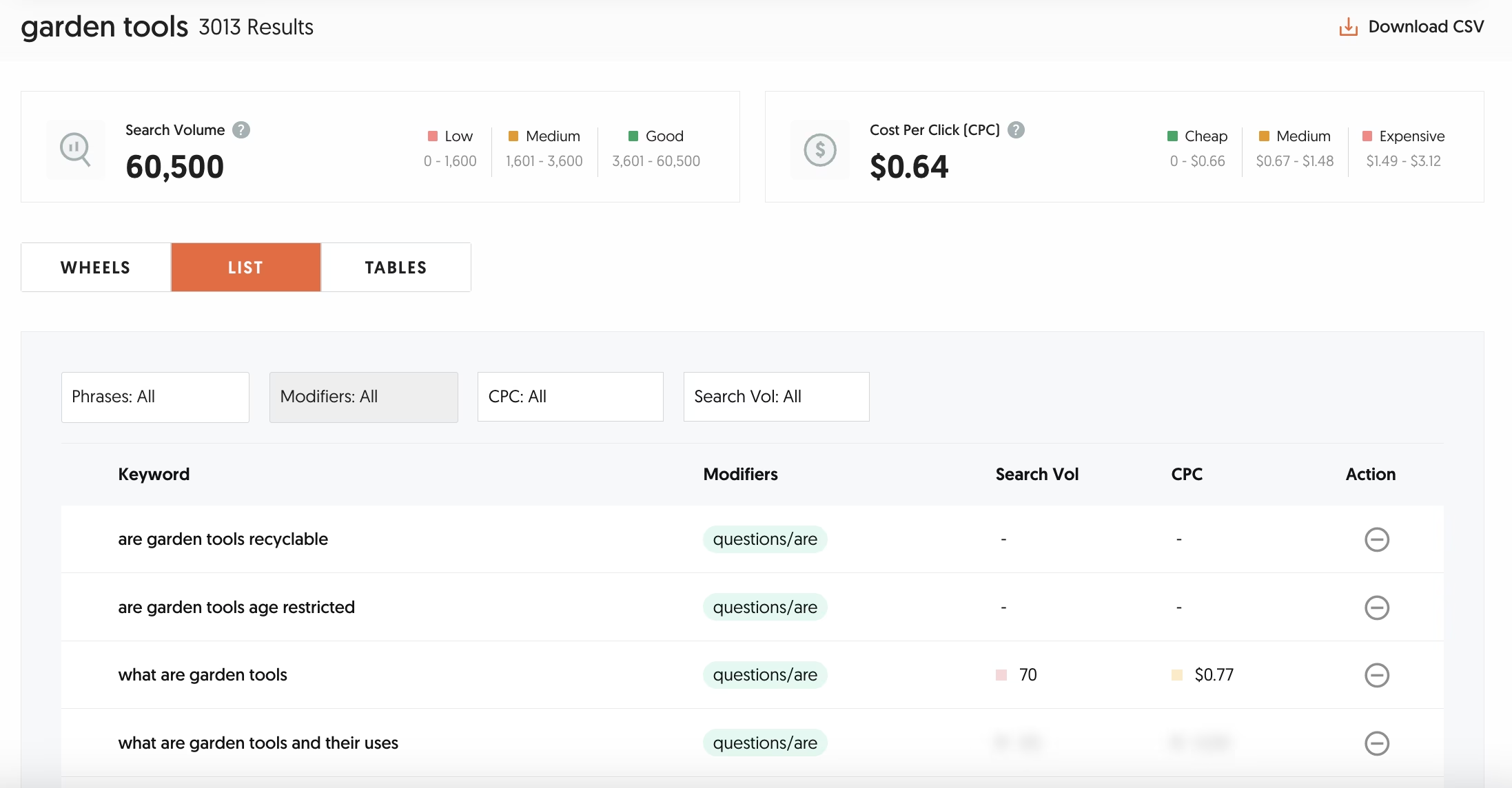
AnswerThePublic specializes in discovery earlier than Content Harmony in the ideation process. The platform exposes how audiences phrase questions and concerns, while Content Harmony structures and optimizes content after topics are selected.
Core features include search query visualizations that group keywords into questions, prepositions, and comparisons. The platform maps autocomplete data into wheel-based diagrams, and surfaces prompt suggestions alongside search volume and CPC indicators.
AnswerThePublic is a paid tool with pricing ranging from $6.67 to $20 per month when billed annually. Plans scale by search limits and users, with Starter, Growth, and Business tiers available.
Pros of AnswerThePublic include fast idea generation, clear audience-intent visualization, and an intuitive interface. Cons include limited depth in SEO metrics and usage caps on lower plans.
33. QuestionDB: Best Content Harmony Alternative for User Question Content Ideas
QuestionDB is a keyword research platform built to surface real audience questions from search engines, forums, and Q&A communities. QuestionDB focuses on long-tail, low-competition queries that reflect how people actually phrase problems and information needs.

QuestionDB specializes in early-stage ideation, where Content Harmony plays a different role. The platform excels at uncovering raw audience questions and turning them into FAQ sections and content angles.
Core features include a question research engine that pulls data from People Also Ask results, Google SERPs, related searches, Reddit, and Quora. Multiple views group questions by topic and intent, which allows fast brainstorming and audience-driven content planning.
QuestionDB is a paid tool with pricing that ranges from $9.99 to $69.99 per month based on usage limits. A restricted free plan allows limited searches for evaluation before upgrading.
Pros of QuestionDB include affordable pricing, access to community-driven insights, and a simple interface for FAQ-focused workflows. Cons include limited advanced SEO metrics, capped results on free tiers, and no broader optimization features.
34. Semrush: Best Content Harmony Alternative for Built-In Content Tools in a Marketing Suite
Semrush Writing Assistant is an AI-powered editing tool embedded within the Semrush marketing platform. Semrush delivers real-time SEO, readability, and keyword guidance directly inside Google Docs, WordPress, and Microsoft Word.
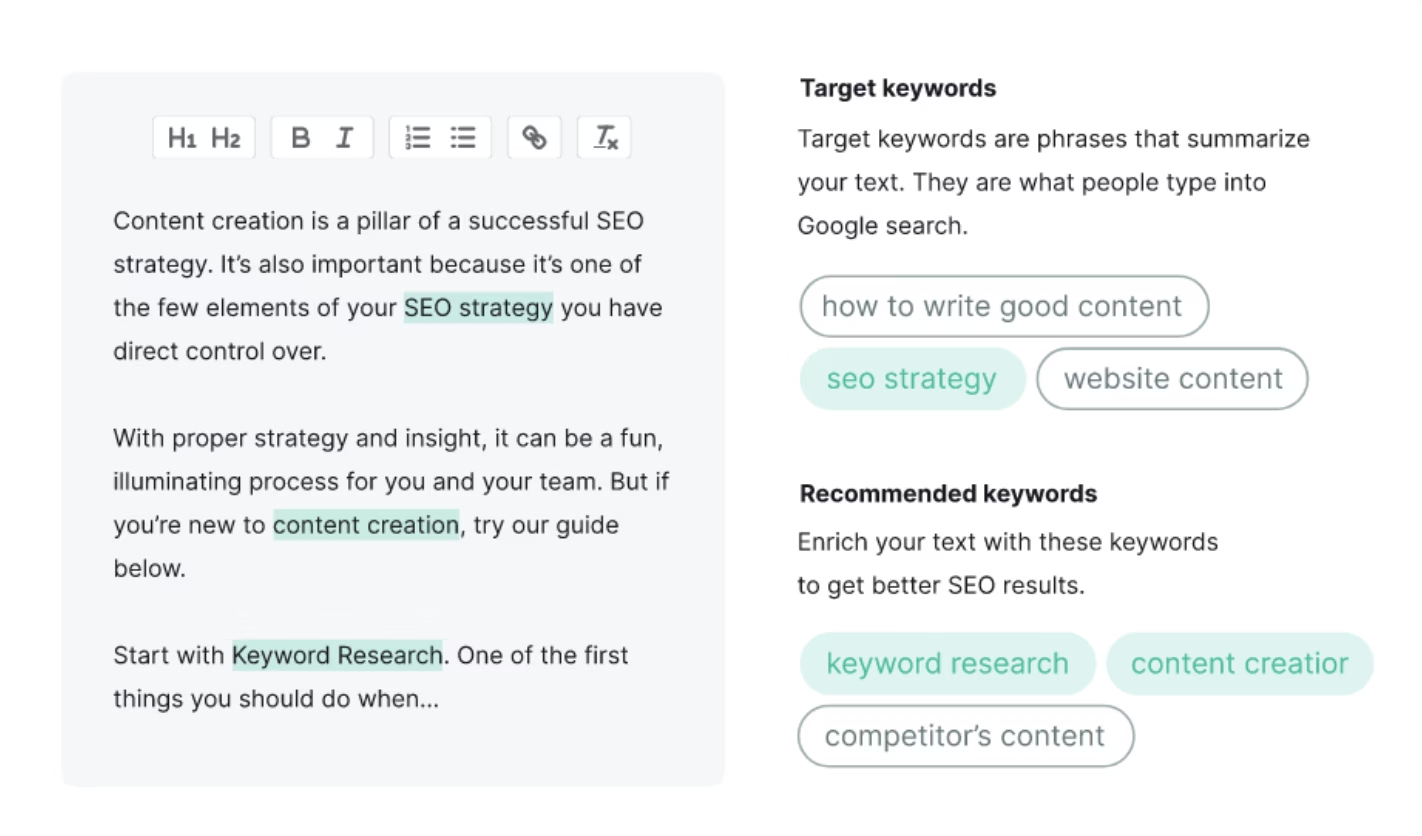
Semrush approaches content optimization from a broader marketing suite perspective than Content Harmony. Semrush integrates content guidance with extensive SEO research, competitive analysis, and campaign management.
Core features include in-editor SEO scoring, readability analysis, keyword density monitoring, tone checks, and plagiarism detection. The assistant flags keyword stuffing, suggests content length ranges, and highlights structural improvements aligned with on-page performance signals.
Semrush Writing Assistant is available within Semrush plans priced from $249 to $499 per month. An optional AI add-on costs $20 per month for 10,000 AI-generated words, depending on the selected plan.
Pros of Semrush review include accurate optimization feedback, smooth editor integrations, and unified access to marketing data. Cons include additional AI costs, uneven tone analysis for formal content, and feature restrictions on lower-tier plans.
35. Serpstat: Best Content Harmony Alternative for Briefing Inside a Full SEO Platform
Serpstat is an SEO platform that combines keyword research, backlink analysis, and content optimization inside one system. Serpstat offers SEO and PPC workflows across more than 230 regions and multiple languages, which suits international and multilingual campaigns.
Serpstat delivers a broader briefing context than Content Harmony through its full-platform approach. Content planning stays connected to live ranking data, technical diagnostics, and competitor insights.
Core features include keyword clustering by intent, rank tracking across devices and regions, and backlink comparison based on link type. Site Audit categorizes issues by severity and tracks fixes over time, which strengthens diagnostic clarity during content planning.
Serpstat is a paid tool with pricing starting at $50 per month. Higher tiers unlock API access, white-label reporting, expanded limits, and AI modules for growing teams.
Pros of Serpstat review include scalable keyword clustering, strong regional databases, and integrated SEO workflows. Cons include backlink datasets that fall short of enterprise depth and keyword volume estimates derived from Google Ads data.
36. SEO.AI: Best Content Harmony Alternative for AI-Generated SEO Articles
SEO.AI is an AI-native content workflow platform built to automate keyword-driven SEO content production. SEO.AI generates full articles and product descriptions using intent analysis, structured outlines, and optimization controls designed for scale.
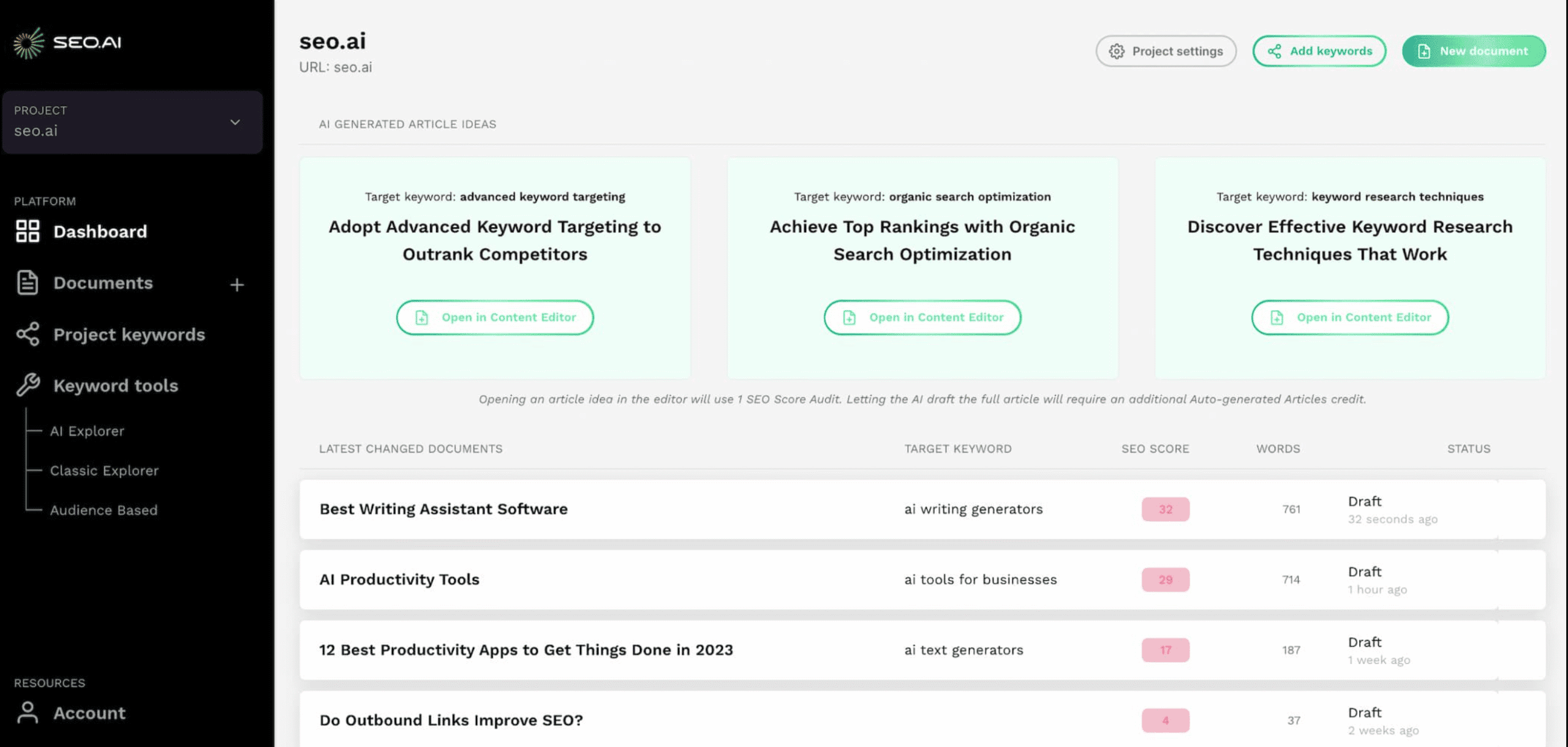
SEO.AI accelerates content creation beyond Content Harmony through automated drafting. The platform produces complete SEO articles at volume, while Content Harmony focuses on research, briefing, and optimization rather than full content generation.
Core features include AI-powered article generation, bulk product description creation for ecommerce catalogs, and brand voice training to maintain tone consistency. Optimization workflows align structure, entities, and keywords with search intent across large content sets.
SEO.AI is a paid tool with pricing ranging from $1 for a 7-day trial to $299 per month. Single Site plans start at $149 per month, while Multi Site plans allow multiple websites and languages.
Pros of SEO.AI include speed, scalability, and efficiency for repetitive SEO content tasks. Cons include accuracy risks without editorial review, reduced creative nuance, and potential over-optimization that conflicts with E-E-A-T expectations.
37. Mangools: Best Content Harmony Alternative for Keyword Discovery to Build Briefs
Mangools is an SEO toolkit that bundles keyword research, rank tracking, backlink analysis, and domain metrics inside a simplified interface. Mangools targets beginners, bloggers, and small agencies that prefer clarity and speed over complex technical workflows.
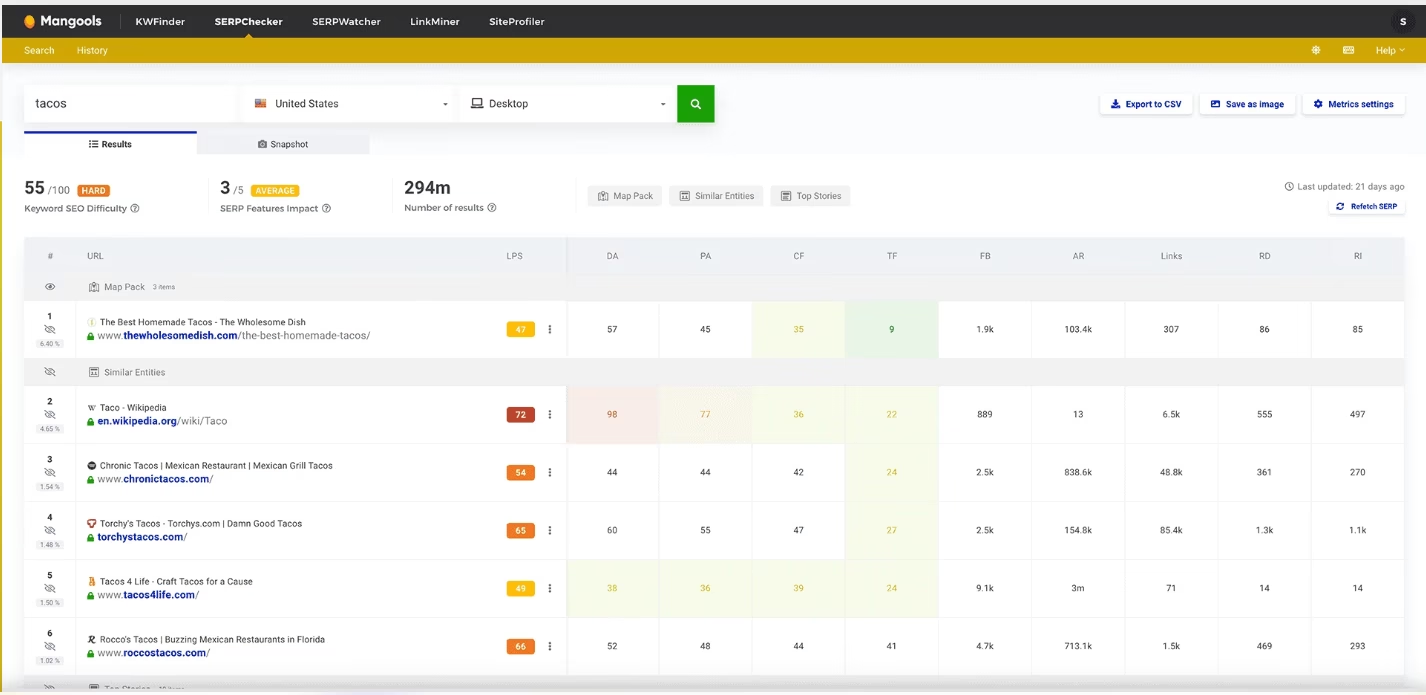
Mangools brings stronger standalone keyword discovery than Content Harmony at the research stage. The platform focuses on identifying viable keywords and competitive context first, while Content Harmony emphasizes transforming selected topics into structured briefs and optimized content.
Core features include KWFinder for keyword suggestions with volume and difficulty scores, SERPChecker for competitive SERP analysis, and SERPWatcher for tracking ranking changes across locations and devices. Additional tools cover backlink insights and domain strength evaluation through a unified dashboard.
Mangools is a paid tool with pricing ranging from $19.43 to $58.44 per month when billed annually. A 14-day free trial is available without a credit card.
Pros of Mangools review include a clean interface, efficient keyword research, and accessible pricing for entry-level users. Cons include limited data depth and fewer technical SEO capabilities, which restrict suitability for large teams or enterprise campaigns.
38. Ahrefs: Best Content Harmony Alternative for Competitor SERP and Keyword Intelligence
Ahrefs Content Helper is an AI-powered planning and optimization tool embedded within the Ahrefs platform. Ahrefs analyzes top-ranking pages for a target keyword and converts competitive data into topic coverage guidance and structural recommendations.
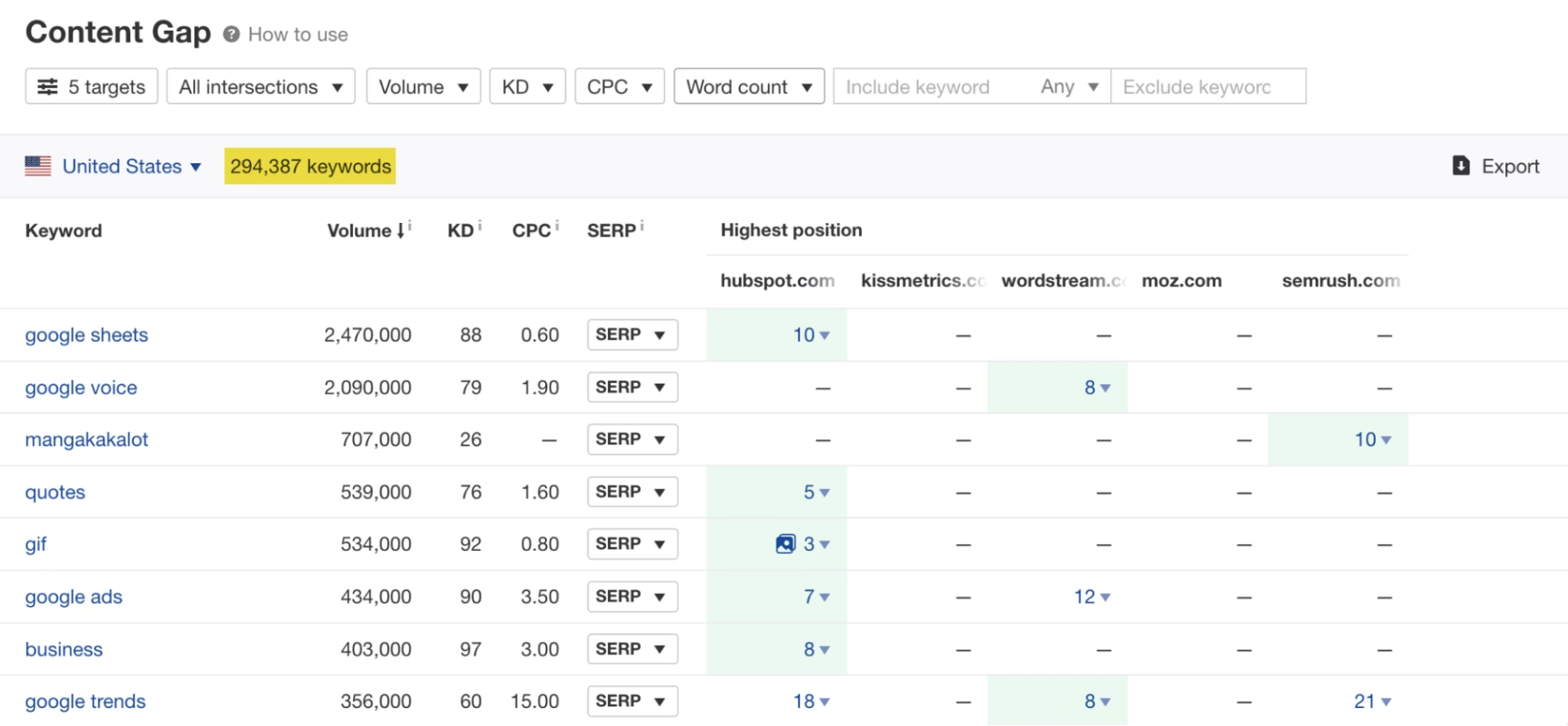
Ahrefs provides deeper competitor intelligence than Content Harmony through its extensive keyword and backlink datasets. The platform emphasizes SERP analysis, gap detection, and competitive benchmarking, while Content Harmony concentrates on intent modeling and editorial workflows.
Core features include AI-assisted drafting inside the editor, a real-time content score measuring topical coverage, and topic gap analysis that highlights missing subtopics before publication. Integration with Ahrefs data sources strengthens planning with ranking insights.
Ahrefs Content Helper is available through Ahrefs plans, with pricing ranging from $129 to $449 per month. Higher tiers expand access to keyword databases, backlink analysis, and content intelligence across the platform.
Pros of Ahrefs review include access to industry-leading datasets, strong topic gap detection, and efficiency for content refresh workflows. Cons include higher cost, occasional performance slowdowns, and AI outputs that require human refinement to avoid formulaic results.
39. SE Ranking: Best Content Harmony Alternative for Briefing
SE Ranking is an all-in-one SEO platform that centralizes rank tracking, site auditing, backlink monitoring, and competitor research inside a single dashboard. SE Ranking is built for teams that need clear performance visibility across keywords, pages, and markets.
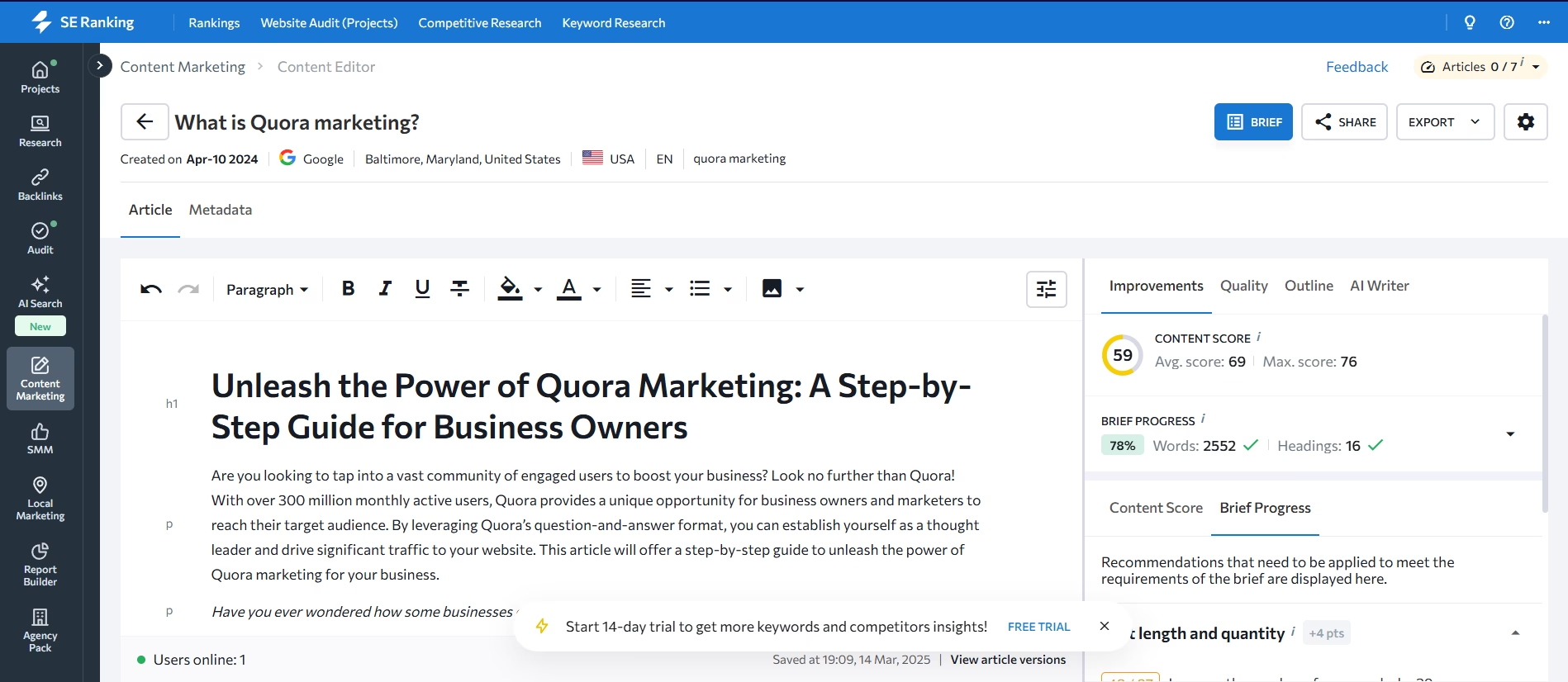
SE Ranking positions are closer to live performance data than Content Harmony. The platform connects content briefs directly to keyword research, ranking trends, and competitor signals, while Content Harmony concentrates on optimization frameworks.
Core features include a site audit system that classifies errors, warnings, and notices with actionable fixes, a rank tracker that monitors visibility across Google, Bing, Yahoo, and YouTube, and backlink monitoring that evaluates domain quality metrics. Competitor analysis and white-label reporting allow agencies to manage multiple sites and clients.
SE Ranking is a paid tool with pricing ranging from $65 to $359 per month, based on keyword limits and user seats. A free trial provides temporary access to core functionality.
Pros of SE Ranking review include intuitive navigation, reliable rank tracking accuracy, and flexible reporting options. Cons include a smaller backlink index than dedicated link platforms and fewer advanced controls for deep technical auditing.
Why do People Seek Alternatives to Content Harmony Tool?
People seek Content Harmony alternatives because the platform centers on briefing and optimization rather than full execution. Teams that need keyword research, AI drafting, rank tracking, and technical context inside one workflow often add extra tools to fill gaps, which increases cost and complexity.
Pricing pressure drives another shift. Content Harmony targets mid to enterprise budgets, which creates friction for freelancers, small teams, and agencies that need scalable usage without high per-seat costs or rigid plans.
Workflow depth creates limitations for some teams. Content Harmony excels at research-driven briefs, but stops short of automated writing, performance monitoring, and continuous optimization tied to rankings or traffic outcomes.
Interface and flexibility influence tool changes. Some teams prefer faster, lighter editors or platforms that combine briefing with drafting, scoring, and publishing rather than switching between systems.
That mix of execution gaps, pricing constraints, workflow separation, and scaling friction pushes many teams toward Content Harmony alternatives that connect research, creation, optimization, and performance inside a single platform.
What to Look for in a Content Harmony Alternative?
The best Content Harmony alternatives extend beyond briefing into execution, measurement, and scale. A strong replacement connects research, creation, optimization, and performance without forcing teams to stack multiple tools.
The 5 features to look for in a Content Harmony alternative are listed below.
- Integrated Keyword Research and Topic Modeling. Choose platforms that unify keyword discovery, clustering, and intent analysis inside the same workflow used for briefing and optimization.
- Content Briefs Connected to Performance Signals. Look for tools that tie briefs to rankings, SERP features, and competitor data so planning stays anchored to measurable outcomes.
- AI and NLP Capabilities for Creation and Optimization. Strong alternatives apply NLP for semantic coverage, entity alignment, and content scoring, with options for AI-assisted drafting where needed.
- Flexible Integrations and Editing Workflows. Prioritize platforms that integrate with Google Docs, WordPress, or in editor environments to reduce friction during drafting and publishing.
- Team Collaboration and Scalable Workflows. Effective replacements offer sharing, versioning, permissions, and multi-sitemanagement so teams scale content operations without bottlenecks.
Why is Search Atlas the Best Content Harmony Alternative?
Search Atlas is the best Content Harmony alternative because it turns content planning into execution. The platform connects keyword research, semantic optimization, content scoring, and automated on-site changes inside one system.
Content Harmony stops at briefs and guidance. Search Atlas goes further by analyzing live SERPs, improving semantic depth with Content Genius, scoring quality with Scholar, and applying optimizations directly through OTTO SEO.
Search Atlas starts at $99 per month and includes keyword intelligence, clustering, AI-assisted writing, optimization, and execution. Every plan replaces multiple tools Content Harmony requires alongside it.For teams replacing Content Harmony, Search Atlas delivers execution, not just direction.