Writing high-quality content with ChatGPT refers to a structured process where ChatGPT content creation focuses on usefulness, clarity, and alignment with user intent rather than surface-level fluency. High-quality content is defined by relevance, structure, accuracy, and human validation, because ChatGPT generates probable text, not verified truth. This makes quality dependent on how to use ChatGPT effectively through prompt control, editing, and validation, which ensures content delivers real value instead of polished but incorrect information.
Writing high-quality content with ChatGPT is important because quality directly impacts trust, engagement, and search performance. High-quality ChatGPT content creation maintains human judgment, reduces bias and hallucinations, and ensures factual accuracy through validation. Content that aligns with E-E-A-T principles improves credibility and ranking potential, while poor-quality AI content reduces trust and visibility. Human oversight, fact-checking, and strategic intent transform AI output into reliable and authoritative content.
How to use ChatGPT effectively for high-quality content involves a structured workflow that combines prompt engineering, iteration, SEO optimization, and human editing. This process includes defining persona and niche, generating structured outlines, writing first drafts quickly, refining outputs through iterative prompting, and enhancing authenticity through human input. The key takeaway formula follows a multi-step system of topic definition, structured drafting, iterative refinement, and final validation, which improves clarity, depth, and consistency while avoiding common mistakes like vague prompts, lack of structure, and generic tone.
ChatGPT content creation performs best when applied to specific use cases, brainstorming ideas, creating content briefs, writing drafts, editing content, generating metadata, producing social media copy, and repurposing content across formats. These applications improve efficiency, scalability, and consistency, while maintaining control over messaging and structure. Avoiding common mistakes, unclear prompts, overloading instructions, and poor writing style ensures higher output quality, while structured workflows and human validation ensure ChatGPT produces accurate, engaging, and optimized content.
What Defines “High-quality” Content When Using ChatGPT?
High-quality content when using ChatGPT is content that fits the user’s purpose, answers the user’s intent, and stays useful for the specific task. High-quality content when using ChatGPT is not defined by truth alone. ChatGPT predicts probable word sequences, so ChatGPT produces fluent language even when facts fail.
What properties define high-quality content when using ChatGPT? High-quality content when using ChatGPT has 5 core properties. The properties are clear purpose, strong structure, useful depth, natural language, and verified accuracy. The structure needs a clear header hierarchy, tight paragraph flow, and direct answers. The language needs concise wording, clear value, and terms that match the search intent.
Why does truth not define high-quality content by itself in ChatGPT? Truth does not define high-quality content by itself because ChatGPT writes probable language, not guaranteed facts. ChatGPT connects concepts well and presents polished wording. That polished wording creates risk because bad information appears credible in clean language.
What does Google treat as quality in AI-written content? Google treats quality as the main standard, not the writing method. Google does not classify AI-generated content as low quality by default. Google prioritizes useful, original, trustworthy content and evaluates quality through signals tied to experience, expertise, authority, and trust.
What limits content quality in ChatGPT output? ChatGPT output loses quality when the output contains vague wording, stale information, hallucinations, repetition, or weak context. ChatGPT writes coherent text, but ChatGPT does not hold personal experience or first-hand judgment. The output stays incomplete without factual review, editorial control, and contextual direction.
What human input defines high-quality content after generation? Human input defines high-quality content through review, fact-checking, personalization, and editorial judgment. Human editors align the draft with brand voice, audience needs, and credible sources. Human expertise adds first-hand experience, sharper nuance, and stronger trust signals that ChatGPT does not produce on its own.
What is the practical definition of high-quality content when using ChatGPT? High-quality content when using ChatGPT is useful, well-structured, accurate, and edited with human expertise for a specific purpose. High-quality content needs strong language quality and strong information quality. The content fails that standard when it reads well but says the wrong thing.
Why Is Important to Write High-Quality Content With ChatGPT?
Writing high-quality content with ChatGPT is important because ChatGPT produces fluent text without guaranteeing accuracy, so human-controlled quality determines trust, usability, and ranking outcomes. ChatGPT generates probable word sequences, so strong output depends on validation, structure, and intent alignment.
What are the main reasons high-quality content matters when using ChatGPT? The six main reasons high-quality content matters are human judgment, bias control, accuracy control, plagiarism prevention, reference verification, and data protection. These factors define whether content remains reliable, original, and safe for publication.
Why does human judgment and critical thinking matter in ChatGPT content? Human judgment matters because ChatGPT does not evaluate meaning, intent, or argument quality. ChatGPT generates text based on patterns, while human writers interpret, evaluate, and structure ideas into coherent arguments. Human input maintains clarity, logic, and contextual accuracy.
Why is addressing bias and inaccuracy necessary in ChatGPT output? Addressing bias and inaccuracy is necessary because ChatGPT reflects patterns from training data, not verified truth. ChatGPT produces incorrect facts, biased perspectives, and fabricated data. Content quality improves when manual validation removes false or misleading information.
Why do accuracy and message control define content quality? Accuracy and message control define content quality because ChatGPT does not guarantee that output matches the intended meaning. ChatGPT suggests phrasing, but human review ensures factual correctness and precise communication. This process aligns the final message with real expertise and intent.
Why does plagiarism prevention improve ChatGPT content quality? Plagiarism prevention improves content quality because repeated or derivative phrasing reduces originality and credibility. ChatGPT generates text from existing patterns, which increases similarity risk on common topics. Checking originality protects integrity and avoids duplication issues.
Why is verifying references critical in ChatGPT-generated content? Verifying references is critical because ChatGPT generates references without guaranteed validity. ChatGPT outputs incorrect citations, fake links, or nonexistent sources. Manual verification ensures that every reference supports factual accuracy and authority.
Why does protecting confidential data affect content quality? Protecting confidential data affects content quality because sensitive input creates legal, ethical, and ownership risks. ChatGPT processes input data during interactions, so exposing proprietary or private information risks intellectual property loss. Secure input practices maintain content integrity and compliance.
How to Write High-Quality Content With ChatGPT?
Writing high-quality content with ChatGPT requires structured prompting, controlled iteration, and strict human validation to ensure accuracy, usefulness, and clarity. ChatGPT generates language based on patterns, so quality depends on how input, refinement, and editing control the output.
What are the main steps to write high-quality content with ChatGPT? There are 10 main steps to write high-quality content with ChatGPT, listed below.
- Master Prompt Engineering.
- Implement Iterative and Chain-of-Thought Techniques.
- Ensure Authenticity and Human Touch.
- Optimize for SEO and Structure.
- Essential Human Editing and Polishing.
- Define Your Persona & Niche.
- Overcome “Blank Page” Syndrome.
- Repurpose Content.
- Customize the Output.
- Use Tables for Planning.
1. Master Prompt Engineering
Mastering prompt engineering improves content quality because prompt engineering defines how ChatGPT interprets intent, structure, and output requirements. Prompt engineering is the process of writing precise instructions with context, constraints, and format rules, which increases relevance and reduces ambiguity.
What is the impact of prompt engineering on AI content quality? Prompt engineering improves AI content quality by increasing accuracy, relevance, and control over generated responses. Prompt engineering transforms vague queries into targeted instructions. For instance, refining a broad query into a specific request produces focused and usable output.
How does specificity and clarity improve AI responses? Specificity and clarity improve AI responses because clear instructions reduce irrelevant output and guide precise generation. Specific prompts define topic, format, and depth. Clear wording removes ambiguity and increases informational value.
What role does context play in prompt engineering? Context improves prompt engineering because context defines audience, purpose, and constraints for the output. Context includes background details, goals, and conditions. Strong context produces tailored and situation-aware responses instead of generic text.
How do examples improve prompt engineering results? Examples improve prompt engineering results because examples show the exact structure, tone, and format required. Providing 1–3 examples aligns output with expectations. Balanced example use prevents overfitting and maintains flexibility.
What are role-based prompts in prompt engineering? Role-based prompts improve prompt engineering because role assignment defines expertise, tone, and perspective. Role-based prompting assigns ChatGPT a function, for instance, a technical writer or an SEO strategist. This structure increases authority and consistency.
How does structured output improve prompt engineering performance? Structured output improves prompt engineering performance because structured prompts break tasks into controlled steps. Structured prompting uses sections, steps, or tags to organize output. This process improves logical flow and reduces misinterpretation.
How does iterative refinement improve prompt engineering quality? Iterative refinement improves prompt engineering quality because repeated adjustments increase precision and depth. Iteration involves testing prompts, reviewing outputs, and refining instructions. This cycle improves alignment with the intended result.
Why is human oversight required in prompt engineering? Human oversight is required in prompt engineering because ChatGPT does not validate truth, accuracy, or intent. Human review corrects errors, aligns messaging, and ensures factual correctness.
What challenges does prompt engineering solve in AI content generation? Prompt engineering solves challenges like vague output, hallucinations, tone inconsistency, and bias. Clear prompts define expectations, reduce errors, and improve consistency across outputs.
Examples of a High-Quality Prompt
Examples of a high-quality prompt show how structured instructions control output clarity, depth, and accuracy. A high-quality prompt includes clear intent, defined format, explicit constraints, and contextual details.
What is a real example of a specific and clear prompt? A specific and clear prompt defines the topic, scope, and constraints in one instruction. An example would be, “Write a 500-word article explaining how technical SEO improves crawl efficiency for e-commerce websites, focus on site structure, internal linking, and XML sitemaps, use H2 and H3 headings.”
What is a real example of a context-driven prompt? A context-driven prompt includes background information that defines the scenario and goal. An example would be, “You are writing for a SaaS company blog targeting beginner marketers. Explain what keyword research is, why it matters for SEO, and include 3 beginner mistakes. Use simple language and short paragraphs.”
What is a real example of a role-based prompt? A role-based prompt assigns a persona to control tone, expertise, and structure. An example would be, “Act as a senior SEO strategist. Explain how to build topical authority using content clusters. Provide a step-by-step process with numbered steps and real SEO terminology.”
What is a real example of a structured output prompt? A structured output prompt defines the exact format of the response. An example would be, “Create a comparison table between SEO and PPC. Include 5 rows: cost, time to results, scalability, traffic type, and long-term value. Keep each explanation under 20 words.”
What is a real example of inclusion and exclusion in a prompt? An inclusion and exclusion prompt defines required and restricted elements. An example would be, “Write a product description for a protein powder. Include benefits, ingredients, and usage instructions. Do not mention medical claims, weight loss guarantees, or brand comparisons.”
What is a real example of few-shot prompting? A few-shot prompt provides examples to control structure and style. An example would be,
“Example 1: ‘SEO improves visibility by increasing rankings on search engines.’
Example 2: ‘Content marketing builds authority by providing valuable information.’
Write a third sentence following the same structure about link building.”
What is a real example of tone and audience control? A tone and audience prompt define communication style and reader level. An example would be, “Explain artificial intelligence to a 10-year-old. Use simple words, short sentences, and one real-life example.”
What is a real example of iterative prompting? An iterative prompt refines output step by step to improve quality. An example would be “Step 1: “Generate 5 blog topic ideas about email marketing.” Step 2: “Expand topic 3 into a detailed outline with H2 and H3 headings.” Step 3: “Write the introduction using a professional tone and under 120 words.”
What is a real example of chain-of-thought prompting? A chain-of-thought prompt forces step-by-step reasoning for accuracy. An example would be, “Explain how Google indexes a webpage. Break the explanation into 5 sequential steps and explain each step in 2 sentences.”
What is a real example of AI-assisted prompt generation? An AI-assisted prompt asks ChatGPT to improve or generate prompts. An example would be, “Generate a high-quality prompt to write a long-form SEO article about local SEO for dentists. Ask for any missing details before creating the prompt.”
What is a real example of token or length control? A length-controlled prompt defines the exact output size for consistency. An example would be, “Explain what backlinks are in 120 words. Use 2 short paragraphs and avoid technical jargon.”
2. Implement Iterative and Chain-of-Thought Techniques
Implementing iterative and Chain-of-Thought techniques improves content quality because these techniques increase accuracy, logical structure, and output reliability through controlled refinement and step-by-step reasoning. Iterative prompting refines outputs through repeated adjustments, while Chain-of-Thought prompting structures reasoning into clear sequences.
What is iterative prompt refinement in content generation? Iterative prompt refinement is a process where prompts are repeatedly adjusted based on output performance to improve accuracy and relevance. Iterative prompt refinement reviews results, identifies gaps, and updates instructions. This cycle aligns outputs with specific goals and reduces errors over time.
What benefits does iterative prompt refinement provide for content quality? Iterative prompt refinement improves content quality through 5 main benefits. The benefits are higher accuracy, fewer errors, better consistency, improved structure, and deeper context. Each iteration adds clarity and detail. This process strengthens logical flow and expands content depth with each revision.
How does iterative refinement improve content structure? Iterative refinement improves content structure because repeated adjustments organize ideas into clearer and more logical sequences. Each iteration refines headings, flow, and argument order. This process produces well-structured and easy-to-follow content.
What is Chain-of-Thought prompting in content generation? Chain-of-Thought prompting is a method that forces ChatGPT to break down problems into sequential reasoning steps. Chain-of-Thought prompting structures output into logical stages. This structure improves comprehension and reduces incomplete answers.
How does Chain-of-Thought prompting improve accuracy and reliability? Chain-of-Thought prompting improves accuracy and reliability by breaking complex problems into smaller steps that reduce reasoning errors. Step-by-step reasoning increases attention to each part of the task. This method produces more precise and consistent outputs.
What measurable impact does Chain-of-Thought prompting have on performance? Chain-of-Thought prompting improves performance with measurable gains, reaching up to 76.6% accuracy in multi-step reasoning tasks and increasing results by over 20% on complex problems. Performance gains increase as task complexity increases. Structured reasoning produces stronger results than single-step answers.
What is Iterative Chain-of-Thought (Iter-CoT)? Iterative Chain-of-Thought (Iter-CoT) is a method that combines iteration with step-by-step reasoning to refine both logic and output accuracy. Iter-CoT improves reasoning chains through repeated correction. This method increases generalizability across different task types.
How does Chain-of-Thought improve transparency in AI content? Chain-of-Thought improves transparency because it exposes intermediate reasoning steps before the final answer. This visibility makes outputs easier to evaluate and debug. Transparent reasoning builds trust in the generated content.
What techniques exist within Chain-of-Thought prompting? The 6 main Chain-of-Thought techniques are standard CoT, zero-shot CoT, self-consistency CoT, least-to-most reasoning, Tree of Thoughts, and Chain-of-Knowledge. Each technique addresses different reasoning complexity levels. Structured selection improves task performance.
What role does few-shot learning play in iterative and Chain-of-Thought techniques? Few-shot learning improves content quality by providing 2–3 examples that guide reasoning patterns and output structure. Examples define expectations and reduce variability. This method increases consistency and accuracy.
What are the best practices for applying iterative and Chain-of-Thought techniques? The 3 best practices are to use clear step-based instructions, test and refine prompts continuously, and break complex tasks into smaller parts. Firstly, define steps explicitly. Secondly, evaluate outputs after each iteration. Thirdly, refine prompts based on errors.
What limitations affect iterative and Chain-of-Thought techniques? Iterative and Chain-of-Thought techniques face limitations from prompt complexity, model capability, and resource cost. Complex prompts require more effort and time. Smaller models produce weaker reasoning chains. Multi-step reasoning increases processing time.
3. Ensure Authenticity and Human Touch
Ensuring authenticity and a human touch improves content quality because authenticity builds trust, increases engagement, and adds real experience that ChatGPT cannot generate. Authenticity refers to content grounded in real human perspective, emotion, and expertise, which increases credibility and connection.
What impact does authenticity have on audience trust? Authenticity improves audience trust because authentic content feels transparent, credible, and human-driven. Authenticity reduces skepticism toward AI-generated text. Data shows 71% of consumers question AI content legitimacy, while 78% respond better to human-driven communication, which increases trust and loyalty.
How do authenticity and human touch improve engagement metrics? Authenticity and human touch improve engagement metrics because emotionally resonant content increases interaction and retention. Content with emotional depth performs 2x better in engagement. Higher engagement improves dwell time, click-through rate, and backlink generation, which strengthens SEO performance.
What limitations of ChatGPT reduce content authenticity? ChatGPT reduces content authenticity because ChatGPT generates a generic tone, lacks personal experience, and repeats existing patterns. ChatGPT output often appears predictable, neutral, and surface-level. This limitation reduces emotional connection and memorability.
What elements define authentic and human-centric content? Authentic and human-centric content includes 5 elements. The elements are personal experience, emotional nuance, clear point of view, contextual awareness, and specific insights. These elements create depth and relatability. Human-centric content reflects real challenges, opinions, and expertise.
How does human touch improve content differentiation? Human touch improves content differentiation because human input introduces unique insights, storytelling, and brand voice. Human writers create original narratives and culturally aware messaging. This differentiation makes content more memorable and competitive.
How can AI support authenticity without replacing it? AI supports authenticity when AI handles structure, data processing, and drafting, while humans control voice, narrative, and meaning. AI accelerates production, while humans maintain originality and emotional depth. This balance improves efficiency without reducing authenticity.
What principles maintain authenticity when using ChatGPT? The 4 principles that maintain authenticity are human ownership, editorial control, transparency, and human-in-the-loop validation. Human ownership ensures a real perspective. Editorial control ensures accuracy and tone. Transparency prevents deception. Human validation ensures ethical and factual integrity.
4. Optimize for SEO and Structure
Optimizing for SEO and structure improves content quality because SEO optimization increases visibility, while structure improves readability, engagement, and information clarity. SEO optimization aligns content with search intent, while structure organizes information for both users and search systems.
What are the main benefits of SEO optimization for content quality? SEO optimization improves content quality through 4 main benefits. The benefits are higher visibility, better targeting, increased traffic, and stronger ranking performance. SEO ensures content reaches the correct audience. Data shows 90% of users stay on the first page, which makes ranking critical.
What characteristics define high-quality SEO content? The 6 characteristics of high-quality SEO content include relevance, readability, originality, freshness, E-E-A-T, and comprehensive coverage. Relevance aligns with search intent. Readability improves understanding. Originality differentiates content. Freshness signals relevance. E-E-A-T strengthens credibility. Coverage ensures complete answers.
How does readability improve SEO and content quality? Readability improves SEO and content quality because clear structure and simple language increase user engagement and comprehension. Readable content uses headings, short sentences, and logical flow. Data shows 43% of marketers prioritize readability for better performance.
How does content structure improve SEO performance? Content structure improves SEO performance because structured content helps search engines understand hierarchy and context. Structure uses H1, H2, and H3 headings to define sections. Clear hierarchy improves indexing and user navigation.
What technical elements optimize SEO and content quality? There are 10 main technical elements that optimize SEO and content quality, listed below.
- Keyword targeting.
- Site organization.
- Descriptive URLs.
- Title tags.
- Meta descriptions.
- Image optimization.
- Mobile optimization.
- Page speed.
- Schema markup.
- Backlinks.
Firstly, keyword targeting defines the main topic and improves discoverability. Secondly, site organization and internal linking clarify relationships between pages. Thirdly, descriptive URLs and titles improve click-through rate and relevance.
How does freshness impact SEO and AI visibility? Freshness improves SEO and AI visibility because updated content signals relevance and increases citation likelihood. Data shows AI systems prefer content updated between 2023 and 2025. Regular updates improve ranking potential.
How does E-E-A-T improve content quality in SEO? E-E-A-T improves content quality because experience, expertise, authority, and trust increase credibility and ranking signals. E-E-A-T includes expert insights, credible sources, and author transparency. This improves trust and long-term performance.
What factors do not significantly impact SEO performance? The 8 factors that do not significantly impact SEO performance are meta keywords, keyword stuffing, domain keywords, TLDs, word count, subdomains vs subdirectories, heading count, and duplicate content penalties. These factors do not directly improve rankings and can reduce quality when misused.
How does structure improve AI and LLM visibility? Structure improves AI and LLM visibility because structured content is easier to parse, extract, and cite. Clear sections, direct answers, and logical flow increase the probability of being selected in AI-generated responses.
5. Essential Human Editing and Polishing
Essential human editing and polishing improve content quality because human editing adds accuracy, credibility, emotional depth, and strategic intent that ChatGPT does not produce. Human editing is the process of reviewing, correcting, and enhancing AI-generated text to align with factual truth, brand voice, and audience expectations.
What is the impact of human editing on AI-generated content quality? Human editing improves AI-generated content quality by increasing trust, fixing inaccuracies, and aligning content with real audience needs. Data shows 90% of marketers confirm human editing improves content quality. Human editing ensures emotional resonance, which 60% of consumers trust more.
What are the core contributions of human editing to content quality? The 6 core contributions of human editing that improve content quality are accuracy validation, tone control, structural improvement, contextual alignment, originality, and authority building. Human editors verify facts, refine tone, organize structure, align messaging, add unique insights, and strengthen credibility.
How does human editing improve factual accuracy? Human editing improves factual accuracy because human editors verify data, sources, and claims against reliable references. ChatGPT generates plausible text without guaranteed correctness. Human validation removes false information, outdated data, and fabricated references.
How does human editing improve tone and brand voice? Human editing improves tone and brand voice because human editors align language with brand identity and audience expectations. Human editors adjust wording, style, and messaging. This process ensures consistent communication across all content.
How does human editing improve structure and readability? Human editing improves structure and readability because human editors reorganize content into clear, logical sections. Editors refine headings, remove redundancy, and improve flow. This process increases clarity and engagement.
What AI content issues does human editing fix? Human editing fixes 6 common AI issues. They are repetition, vague language, hallucinations, generic tone, weak structure, and missing context. Editors replace surface-level insights with specific examples and correct inconsistencies.
What workflow ensures high-quality human-edited content? The 4 steps in the human editing workflow are draft, refine, edit, and validate. Firstly, generate a draft using AI. Secondly, refine for clarity and flow. Thirdly, edit for meaning, tone, and accuracy. Fourthly, validate facts and finalize content.
What skills define effective human editing for AI content? Effective human editing requires 5 skills. The skills are fact-checking, subject expertise, brand voice control, strategic thinking, and attention to detail. These skills ensure content meets quality standards and business objectives.
6. Define Your Persona & Niche
Defining your persona and niche improves content quality because persona definition increases relevance, while niche focus increases specificity and authority. A client persona is a data-based profile of an ideal customer, and a niche is a clearly defined subject area, which together aligns content with real audience needs.
What are the main benefits of defining a persona and niche for content quality? There are 4 main benefits of defining a persona and niche listed below.
- Higher relevance.
- Stronger engagement.
- Better targeting.
- Improved conversion rates.
Firstly, higher relevance ensures content matches real audience needs. Secondly, stronger engagement increases interaction and retention. Thirdly, better targeting reduces wasted effort on irrelevant topics.
What is a client persona in content creation? A client persona is a semi-fictional profile based on real customer data that defines audience characteristics, behaviors, and goals. A client persona includes demographic data, job roles, goals, and challenges. This data ensures content aligns with actual audience expectations.
What information defines a strong client persona? A strong client persona includes 9 key attributes. The attributes are age, job role, location, goals, pain points, information sources, communication preferences, interests, and values. These attributes provide a complete audience profile. This structure improves message precision and clarity.
How do client personas improve content relevance and engagement? Client personas improve content relevance and engagement because personas align content with specific audience needs and pain points. Content becomes focused on solving real problems. This alignment increases interaction, shares, and conversions.
How does defining a niche improve content authority? Defining a niche improves content authority because niche focus concentrates expertise within a specific subject area. Niche content builds depth and topical authority. This focus improves credibility and search performance.
How do client personas improve content strategy development? Client personas improve content strategy development because personas define topics, formats, and messaging direction. Personas guide content decisions based on audience goals and challenges. This process removes guesswork and increases efficiency.
What role do personas play in content format and distribution? Client personas improve content distribution because personas identify preferred channels, formats, and communication styles. Personas define where and how content appears. This improves reach and engagement.
What are the steps to build a persona-driven content strategy? There are 3 main steps to build a persona-driven content strategy listed below.
- Identify communication channels.
- Define content, purpose, and voice.
- Align messaging with pain points.
Firstly, identify platforms where the audience is active. Secondly, define tone, format, and objectives. Thirdly, create content that solves specific problems.
How do client personas improve content planning and optimization? Client personas improve content planning because personas map the customer journey and identify content gaps. Journey mapping reveals questions and needs at each stage. This process improves topic selection and content coverage.
How do client personas improve business performance? Client personas improve business performance because persona-based content attracts higher-quality leads and increases conversion rates. Data shows 71% of high-performing companies use defined personas. This approach improves efficiency and ROI.
How are client personas refined over time? Client personas are refined over time through continuous data updates, performance analysis, and audience feedback. Regular updates ensure relevance. This process maintains content accuracy and alignment with evolving audience needs.
7. Overcome “Blank Page” Syndrome
Overcoming “blank page” syndrome improves content quality because starting a draft enables iteration, refinement, and structured improvement instead of stalled production. “Blank page” syndrome refers to the inability to begin writing, which blocks content creation and reduces output consistency.
What are the main benefits of overcoming “blank page” syndrome for content quality? There are 4 main benefits of overcoming “blank page” syndrome listed below.
- Faster draft creation.
- Improved iteration.
- Higher content consistency.
- Stronger creative confidence.
Firstly, faster draft creation reduces the time to the first draft. Secondly, improved iteration enables structured refinement. Thirdly, higher consistency maintains publishing frequency.
How does overcoming “blank page” syndrome improve content quality through iteration? Overcoming “blank page” syndrome improves content quality because a draft creates a base for editing, restructuring, and polishing. A first draft does not need perfection. Editing transforms rough ideas into structured, high-quality content.
How do LLMs reduce “blank page” syndrome in content creation? LLMs reduce “blank page” syndrome because LLMs generate initial drafts, outlines, and topic ideas instantly. LLMs lower time to first draft and shift focus from creation to editing. This process increases productivity and content depth.
How does overcoming perfectionism improve content quality? Overcoming perfectionism improves content quality because removing first-draft pressure increases output speed and idea generation. Writing imperfect drafts allows expansion and refinement. This approach produces more complete and developed content.
What strategies overcome “blank page” syndrome effectively? There are 5 strategies to overcome “blank page” syndrome listed below.
- Start with a rough draft.
- Break content into sections.
- Write the easiest section first.
- Use timed writing sessions.
- Generate outlines before writing.
Firstly, starting with a rough draft removes hesitation. Secondly, breaking content into sections simplifies complexity. Thirdly, writing easier sections builds momentum.
How does idea generation improve content quality? Idea generation improves content quality because consistent topic flow prevents gaps and supports relevance. Reading, research, and conversations generate new content angles. This process improves originality and depth.
How do structure-first approaches improve content quality? Structure-first approaches improve content quality because outlines organize ideas before drafting begins. Outlines define hierarchy and flow. This structure reduces rewriting and improves clarity.
What role does confidence play in content quality? Confidence improves content quality because confident writing produces clearer, more decisive, and engaging content. Confidence grows through repetition and iteration. This process strengthens writing ability over time.
How do external activities improve content quality? External activities improve content quality because mental breaks and diverse inputs increase creativity and idea generation. Activities like reading, walking, or discussion stimulate new perspectives. This improves originality.
What preventative methods maintain consistent content quality? There are 4 preventative methods to maintain content quality listed below.
- Build a writing routine.
- Reduce distractions.
- Practice daily writing.
- Capture ideas consistently.
Firstly, a routine ensures consistent output. Secondly, reducing distractions improves focus. Thirdly, daily practice strengthens writing skills.
8. Repurpose Content
Repurposing content improves content quality because content repurposing increases relevance, expands reach, and strengthens message consistency across formats. Content repurposing refers to transforming existing content into new formats, angles, or contexts while maintaining core information.
What are the main benefits of content repurposing for content quality? There are 4 main benefits of content repurposing listed below.
- Improved content freshness.
- Expanded audience reach.
- Stronger content consistency.
- Increased production efficiency.
Firstly, improved freshness ensures updated and relevant information. Secondly, expanded reach distributes content across multiple platforms. Thirdly, stronger consistency reinforces core messaging.
How does content repurposing improve content freshness and relevance? Content repurposing improves freshness and relevance because content updates include new data, insights, and perspectives. Updated content aligns with current trends and user expectations. This process maintains accuracy and search relevance.
How does content repurposing improve engagement and user experience? Content repurposing improves engagement because different formats match different audience preferences. Content appears as articles, videos, or visuals. This variation increases interaction and shareability.
How does content repurposing expand reach and visibility? Content repurposing expands reach because the same core message appears across multiple platforms and formats. Multiple formats create more touchpoints. This repetition increases brand recognition and audience exposure.
What are the SEO benefits of content repurposing? Content repurposing improves SEO because multiple content assets target related keywords and create additional indexing opportunities. Repurposed content increases internal linking and keyword coverage. This process improves discoverability.
How does content repurposing avoid duplicate content issues? Content repurposing avoids duplicate content because content is rewritten, reformatted, and adapted for different contexts. Each version changes structure, tone, and format. Search engines treat these variations as unique content.
How does content repurposing improve content efficiency? Content repurposing improves efficiency because existing content reduces the need for new idea generation. This process saves time and resources. Teams focus on optimization and distribution instead of creation from scratch.
How does content repurposing support content strategy? Content repurposing supports content strategy because structured reuse aligns messaging across channels and stages of the customer journey. Repurposing organizes content into scalable systems. This improves planning and consistency.
What role does AI play in content repurposing? AI improves content repurposing because AI accelerates the transformation of long-form content into multiple formats. AI extracts key points, generates summaries, and adapts tone. This process increases speed while maintaining structure.
9. Customize the Output
Customizing the output improves content quality because output customization increases clarity, ensures brand alignment, and improves relevance to the target audience. Output customization refers to controlling tone, structure, format, and intent through detailed prompts and guidelines.
What are the main benefits of customizing the output for content quality? There are 4 main benefits of customizing the output listed below.
- Higher clarity.
- Better accuracy.
- Stronger brand consistency.
- Improved audience alignment.
Firstly, higher clarity reduces ambiguity in responses. Secondly, better accuracy improves relevance and correctness. Thirdly, stronger consistency aligns content with brand guidelines.
How do customized prompts improve clarity and accuracy? Customized prompts improve clarity and accuracy because detailed instructions reduce ambiguity and guide precise responses. Clear prompts define scope, format, and intent. This process improves output quality by up to 25%.
How do customized prompts prevent poor AI output? Customized prompts prevent poor AI output because structured instructions eliminate vague, irrelevant, or incomplete responses. Customization reduces inconsistencies and improves workflow reliability by 15–20%.
How does customization ensure brand alignment? Customization ensures brand alignment because structured guidelines define tone, terminology, and messaging rules. AI-ready style guides standardize communication. This process increases perceived credibility by 29.4%.
What are the key elements of an AI-ready style guide? An AI-ready style guide includes 4 key elements. The elements are tone of voice, terminology, formatting rules, and approved examples. These elements define acceptable outputs. This structure ensures consistent content quality.
How does customization improve audience targeting and engagement? Customization improves audience targeting and engagement because detailed audience inputs align content with specific needs and preferences. Audience-focused prompts increase engagement by 18%.
How does defining context and messaging improve output quality? Defining context and messaging improves output quality because clear objectives guide content direction and relevance. Context includes purpose, use case, and format. This process improves quality by up to 22%.
How does structured content improve customized output? Structured content improves customized output because defined frameworks organize information into logical and complete sections. Structured prompts improve completeness by 30%.
What is the role of quality control in customized output? Quality control improves customized output because review workflows ensure content meets accuracy, brand, and performance standards. Regular audits and feedback loops refine output quality over time.
What are the stages of a quality control workflow? There are 5 stages in a quality control workflow listed below.
- Initial review.
- Technical validation.
- Brand alignment check.
- Expert validation.
- Final approval.
Firstly, the initial review checks basic quality. Secondly, technical validation verifies accuracy. Thirdly, brand alignment ensures consistency.
How does human input improve customized AI output? Human input improves customized AI output because human expertise adds creativity, emotion, and strategic judgment. AI handles structure and drafting, while humans refine meaning and authenticity.
What are the roles of AI and humans in customized content creation? AI handles research, drafting, and pattern recognition, while humans handle strategy, creativity, and validation. This division improves efficiency and quality.
How do governance frameworks improve customized output quality? Governance frameworks improve customized output quality because defined rules control how AI content is created, reviewed, and approved. These frameworks ensure consistency and compliance.
What is a content playbook in AI customization? A content playbook is a structured system that defines tools, prompts, guidelines, and workflows for consistent AI content creation. Content playbooks standardize processes and improve scalability.
How does a creative brief improve customized output? A creative brief improves customized output because a creative brief defines objectives, audience, constraints, and expected outcomes. This structure ensures alignment from the start.
What is dual-mode customization in AI output? Dual-mode customization is a system that defines two output modes. The modes are a structured mode for precision and a softer mode for general communication. Structured mode improves analytical tasks, while softer mode improves readability and tone.
How does iterative refinement improve customized output? Iterative refinement improves customized output because repeated adjustments align output with exact requirements. This process reduces gaps by 10–15% and improves final quality.
10. Use Tables for Planning
Using tables for planning improves content quality because tables structure content strategy, define clear objectives, and ensure alignment with audience intent and SEO goals. Tables for planning refer to structured frameworks that organize page purpose, messaging, and content elements before writing begins.
What are the main benefits of using tables for planning content quality? There are 4 main benefits of using tables for planning listed below.
- Clear content direction.
- Improved relevance.
- Stronger structural consistency.
- Better content efficiency.
Firstly, a clear direction defines what each page must achieve. Secondly, improved relevance aligns content with audience needs. Thirdly, a stronger consistency standardizes structure across pages.
What is a page table in content planning? A page table is a structured content planning framework that defines page purpose, audience, messaging, and SEO elements. A page table acts as a blueprint. This structure ensures every content element serves a defined goal.
What elements define a high-quality page table? There are 10 key elements in a high-quality page table listed below.
- Page purpose.
- Target audience.
- User tasks.
- Call to action.
- SEO keywords.
- Core words.
- Key messages.
- Content notes.
- Multimedia notes.
- Related links.
Firstly, the page’s purpose defines the goal of the page. Secondly, the target audience specifies who the content targets. Thirdly, user tasks identify what the audience wants to achieve.
How do tables improve content relevance and alignment? Tables improve content relevance because tables map content directly to audience needs, goals, and search intent. Structured planning prevents irrelevant content. This alignment increases usefulness and engagement.
How do tables improve content structure and consistency? Tables improve content structure because tables define sections, hierarchy, and key messages before writing begins. This predefined structure reduces inconsistencies. Content becomes easier to read and scale.
What happens when tables are not used in content planning? Lack of structured tables reduces content quality because unplanned content becomes inconsistent, unclear, and misaligned with user intent. Missing structure creates confusion and weak messaging.
How do tables improve SEO performance? Tables improve SEO performance because tables define keywords, internal links, and content hierarchy during planning. This preparation improves discoverability and indexing.
What types of tables are used in content planning? There are 5 main table types used in content planning, listed below.
- Comparison tables.
- Dimensional tables.
- Alternative list tables.
- Spectrum tables.
- Matrix tables.
How do tables improve content scalability and management? Tables improve content scalability because standardized templates allow repeatable and consistent content creation. Templates simplify updates and reuse. This structure supports large-scale content operations.
How do tables of contents improve content quality? Tables of contents improve content quality because they provide a scannable structure and direct navigation. Users locate information faster. This improves engagement and usability.
What are the risks of poorly designed tables? Poorly designed tables reduce content quality because complex or unclear tables decrease readability and usability. Overloaded tables confuse users and reduce comprehension.
What are the best practices for using tables in content planning? There are 5 best practices for using tables in content planning listed below.
- Keep structure simple and clear.
- Use consistent formatting.
- Focus on relevant data only.
- Align tables with user intent.
- Update tables regularly.
A simple structure improves readability. Consistent formatting ensures clarity, and relevant data maintains focus.
Key Takeaway Formula
The key takeaway formula for writing high-quality content with ChatGPT is a structured, multi-step workflow that combines iterative prompting, structured output control, and human editing to produce accurate, relevant, high-quality content. The key takeaway formula defines how ChatGPT generates, refines, and validates content through controlled stages instead of single prompts.
What are the main components of the key takeaway formula? There are 3 main components of the key takeaway formula listed below.
- Iterative prompting.
- Structured generation.
- Human refinement.
Iterative prompting improves output through repeated adjustments. Structured generation controls format, depth, and clarity, and human refinement ensures accuracy and authenticity.
What is the step-by-step formula for writing high-quality content with ChatGPT? There are 8 steps in the key takeaway formula listed below.
- Define topic and intent.
- Generate entities and key concepts.
- Create a structured outline.
- Draft content in sections.
- Expand with depth and examples.
- Refine with iterative prompts.
- Add human insights and expertise.
- Edit and validate the final output.
How does iterative prompting improve the formula outcome? Iterative prompting improves the formula because each interaction refines accuracy, clarity, and depth. Iterative prompting builds content progressively. This process increases output quality and reduces generic responses.
Why is human refinement essential in the formula? Human refinement is essential because human input validates facts, adds expertise, and ensures originality. Human refinement removes errors and improves tone. This step transforms AI drafts into authoritative content.
How does structured prompting improve content quality in this formula? Structured prompting improves content quality because structured instructions define format, tone, and required elements. Structured prompts reduce ambiguity. This process improves output quality by 2–3 levels compared to generic prompts.
How does this formula differ from single-prompt content generation? This formula differs because the key takeaway formula uses multi-step interaction instead of a single instruction. Single prompts produce generic outputs. Multi-step workflows produce detailed and controlled content.
What are the key characteristics of the key takeaway formula? There are 3 key characteristics of the key takeaway formula listed below.
- Multi-step interaction.
- Human-in-the-loop validation.
- Structured prompt control.
How does the key takeaway formula improve SEO and AI visibility? The key takeaway formula improves SEO and AI visibility because structured, high-quality content aligns with search intent and ranking signals. This method improves relevance, readability, and authority. These factors increase ranking potential and AI citation likelihood.
What Are the Best Ways to Use ChatGPT for Content Creation?
The best ways to use ChatGPT for content creation involve structured tasks that improve speed, clarity, and scalability while maintaining human control over quality. ChatGPT functions as a content generation and optimization system that supports ideation, drafting, editing, and distribution.
What are the best ways to use ChatGPT for content creation? There are 7 best ways to use ChatGPT for content creation listed below.
- Brainstorming blog and content ideas.
- Creating structured content briefs.
- Writing first drafts faster.
- Editing or rewriting existing content.
- Creating meta titles and descriptions.
- Generating social media copy.
- Repurposing content into different formats.
1. Brainstorming Blog and Content Ideas
Brainstorming blog and content ideas is one of the best ways to use ChatGPT for content creation because ChatGPT generates high-volume, relevant, and goal-driven ideas that accelerate the entire content workflow. Brainstorming with ChatGPT refers to using AI to generate topics, angles, and content directions based on specific inputs and objectives.
What makes ChatGPT an effective content idea generator? ChatGPT functions as an effective content idea generator because ChatGPT produces large volumes of topic ideas based on keywords, trends, and user intent. ChatGPT processes patterns from large datasets to suggest diverse angles. This capability supports over 400 million weekly users generating ideas efficiently.
How does brainstorming with ChatGPT reduce writer’s block? Brainstorming with ChatGPT reduces writer’s block because ChatGPT generates outlines, prompts, and starting points instantly. ChatGPT removes the need to start from zero. This process increases writing speed by up to 5x during early-stage drafting.
How does ChatGPT improve efficiency during content ideation? ChatGPT improves efficiency during content ideation because ChatGPT reduces the time spent on manual research and idea generation. Faster ideation creates more time for strategy, creativity, and refinement. This shift increases overall content quality.
Why is brainstorming the most critical stage in content creation? Brainstorming is the most critical stage because brainstorming defines topic direction, search intent, and content structure. Strong ideas lead to stronger content outcomes. ChatGPT strengthens this stage by generating scalable and structured ideas.
How does ChatGPT generate actionable and goal-oriented content ideas? ChatGPT generates actionable content ideas because ChatGPT aligns topics with specific goals, formats, and audience intent. ChatGPT produces ideas for blogs, videos, social posts, and podcasts. This alignment improves usability and execution.
How does ChatGPT help define content purpose? ChatGPT helps define content purpose because ChatGPT generates ideas based on objectives like education, traffic growth, or engagement. Clear purpose improves content direction. This process ensures each idea supports a measurable outcome.
How does ChatGPT support multi-platform content planning? ChatGPT supports multi-platform content planning because ChatGPT adapts ideas across formats and channels. ChatGPT generates variations for blogs, YouTube, LinkedIn, and TikTok. This flexibility increases reach and consistency.
2. Creating Structured Content Briefs
Creating structured content briefs is one of the best ways to use ChatGPT for content creation because ChatGPT organizes strategy, structure, and SEO requirements into a clear content blueprint. A structured content brief is a document that defines the topic, audience, format, and objectives, which ensures consistent and high-quality content production.
What makes creating structured content briefs with ChatGPT highly efficient? Creating structured content briefs improves efficiency because ChatGPT generates outlines, headings, and key points in minutes. ChatGPT reduces manual planning time. This process allows more focus on strategy and execution.
Why is consistency and structure important in content briefs? Consistency and structure are important because structured briefs ensure uniform content quality across multiple writers and projects. ChatGPT standardizes headings, tone, and flow. This structure improves readability and scalability.
How does ChatGPT improve strategic focus in content creation? ChatGPT improves strategic focus because ChatGPT handles repetitive planning tasks while humans focus on high-level decisions. ChatGPT builds frameworks, while humans refine direction. This division improves content effectiveness.
What elements can ChatGPT generate within a structured content brief? There are 8 key elements ChatGPT generates within a structured content brief listed below.
- Titles.
- Topic overview.
- Content format.
- Target word count.
- Content goals.
- Audience persona.
- Keyword list.
- Call-to-action.
Each element defines a specific part of the content strategy. This structure ensures clarity and completeness.
How do structured briefs improve content quality? Structured briefs improve content quality because they align content with search intent, audience needs, and business goals. Clear direction reduces irrelevant content. This alignment improves performance.
Why is ChatGPT considered a productivity booster for content briefs? ChatGPT is a productivity booster because ChatGPT accelerates brief creation while maintaining structure and detail. Faster workflows increase output capacity. This process improves team efficiency.
Why is human oversight still required in content brief creation? Human oversight is required because ChatGPT does not validate data accuracy, competitive context, or strategic nuance. Human review ensures accuracy, relevance, and alignment. This step finalizes content quality.
3. Writing First Drafts Faster
Writing first drafts faster is one of the best ways to use ChatGPT for content creation because ChatGPT generates complete drafts instantly, which increases speed, removes creative friction, and enables faster refinement cycles. Writing first drafts faster refers to using ChatGPT to produce initial content versions that serve as a foundation for editing and optimization.
What makes ChatGPT effective for boosting efficiency and speed in drafting? ChatGPT boosts efficiency and speed because ChatGPT generates up to 1,000-word drafts in seconds instead of hours. ChatGPT reduces time spent on introductions, hooks, and structure. This speed allows full content calendars to be planned in minutes.
How does writing first drafts faster help overcome writer’s block? Writing first drafts faster reduces writer’s block because ChatGPT provides immediate starting points, angles, and phrasing options. ChatGPT generates multiple openings, perspectives, and questions. This process removes hesitation and unlocks idea flow.
What first-draft applications make ChatGPT highly effective? The 4 key first-draft applications that ChatGPT supports are outlines, meta descriptions, FAQs, and topic generation. ChatGPT creates structured outlines, generates SEO-ready meta descriptions under 160 characters, builds FAQ sections, and produces 20 topic ideas in seconds.
How does ChatGPT function as a productivity booster in drafting? ChatGPT functions as a productivity booster because ChatGPT automates repetitive writing tasks while humans focus on strategy and refinement. ChatGPT handles initial drafting. Human input improves meaning and quality.
How does writing first drafts faster amplify human creativity? Writing first drafts faster amplifies creativity because ChatGPT removes manual effort and generates diverse idea variations. ChatGPT produces multiple angles, from standard to unconventional. This process allows humans to select and expand the strongest ideas.
Why is human input still required after generating fast drafts? Human input remains required because ChatGPT drafts include generic phrasing, inaccuracies, and weak nuance. Human editing ensures accuracy, tone, and originality. This step finalizes high-quality content.
4. Editing or Rewriting Existing Content
Editing or rewriting existing content is one of the best ways to use ChatGPT for content creation because ChatGPT improves clarity, increases engagement, and enhances accuracy while preserving the original intent. Editing or rewriting refers to refining pre-written content to improve structure, readability, and performance.
What makes editing or rewriting with ChatGPT highly efficient? Editing or rewriting with ChatGPT improves efficiency because ChatGPT reduces content production time from hours to seconds. ChatGPT processes and refines large text blocks instantly. This efficiency saves up to 10 hours per week in content workflows.
How does editing or rewriting improve content quality and engagement? Editing or rewriting improves content quality because ChatGPT enhances readability, vocabulary variation, and sentence structure. Studies show up to 25% improvement in content retention and a 15% increase in readability scores. Higher readability increases time on page and reduces bounce rates.
How does maintaining brand voice improve performance in rewritten content? Maintaining brand voice improves performance because a consistent tone increases audience trust and engagement. Data shows a 25% increase in engagement and a 32% increase in trust when content includes accurate and verified information.
How does ChatGPT improve customization and adaptability in rewriting? ChatGPT improves customization because ChatGPT adapts content for different audiences, tones, and platforms. Content shifts from technical to conversational formats. This flexibility supports multi-channel distribution.
Why does ChatGPT function effectively as an assistant editor? ChatGPT functions as an assistant editor because ChatGPT reviews, rewrites, and refines content like a second layer of editing. ChatGPT improves phrasing, corrects structure, and enhances flow. This process improves overall writing quality.
How does ChatGPT improve content length and clarity? ChatGPT improves content length and clarity because ChatGPT removes unnecessary wording and simplifies complex sentences. Rewritten content is reduced to 69% of the original length while improving clarity. This process creates concise and impactful content.
Why is human validation still required after rewriting? Human validation is required because ChatGPT does not guarantee factual accuracy or contextual nuance. Human review ensures correctness, intent alignment, and credibility.
5. Creating Meta Titles and Descriptions
Creating meta titles and descriptions is one of the best ways to use ChatGPT for content creation because ChatGPT increases efficiency, improves search visibility, and boosts click-through rates through optimized and structured outputs. Meta titles and descriptions are SERP elements that define how a page appears in search results and influence user clicks.
What makes ChatGPT efficient for generating meta titles and descriptions? ChatGPT improves efficiency because ChatGPT generates multiple titles and description variations in seconds, reducing content creation time by up to 50%. ChatGPT automates repetitive SEO tasks. This speed improves workflow scalability across many pages.
How does ChatGPT improve search engine visibility through keyword optimization? ChatGPT improves search visibility because ChatGPT integrates primary and secondary keywords naturally into meta tags. Keyword optimization increases relevance signals. This process can improve visibility by up to 55% and improve rankings.
How do meta titles and descriptions improve click-through rate (CTR)? Meta titles and descriptions improve CTR because optimized snippets attract attention and match user intent. Strong titles act as the first interaction point. Optimized descriptions provide context and increase clicks by up to 20%.
How does customization improve meta content quality? Customization improves meta content quality because specific prompts define tone, keywords, length, and format. Detailed instructions produce usable outputs. This process ensures alignment with SEO goals and brand voice.
Why is generating multiple variations important for optimization? Generating multiple variations improves performance because testing different versions identifies the highest-performing option. ChatGPT produces many variations instantly. This approach supports A/B testing and continuous improvement.
Why is human validation still required for meta titles and descriptions? Human validation is required because ChatGPT does not evaluate real-time competition, intent precision, or brand nuance. Human review ensures accuracy, differentiation, and strategic alignment.
6. Generating Social Media Copy
Generating social media copy is one of the best ways to use ChatGPT for content creation because ChatGPT produces platform-specific, high-engagement content quickly while maintaining consistency and structure. Social media copy refers to short-form content tailored for platforms like LinkedIn, Twitter, Instagram, and TikTok, optimized for engagement and interaction.
What makes generating social media copy with ChatGPT highly efficient? Generating social media copy improves efficiency because ChatGPT creates multiple posts, hooks, and variations in minutes instead of hours. ChatGPT reduces manual writing time by 5–7 hours per week. This efficiency improves consistency and posting frequency.
How does ChatGPT improve customization and brand consistency in social media content? ChatGPT improves customization and consistency because ChatGPT follows defined tone, voice, and messaging guidelines. Prompt customization aligns outputs with brand identity. This process ensures consistent communication across platforms.
How does ChatGPT improve social media content quality and structure? ChatGPT improves content quality and structure because ChatGPT generates hooks, formats posts, and adapts content to platform-specific styles. ChatGPT creates up to 15 hooks and multiple variations. Structured formatting improves readability and engagement.
How does ChatGPT support platform-specific optimization? ChatGPT supports platform-specific optimization because ChatGPT adapts tone, length, and formatting for each platform. ChatGPT formats threads for Twitter, posts for LinkedIn, and captions for Instagram. This alignment improves performance on each channel.
How does ChatGPT enable a collaborative content workflow? ChatGPT enables a collaborative workflow because ChatGPT acts as a co-creator that expands ideas, refines messaging, and generates alternatives. Creators provide direction, and ChatGPT generates options. This collaboration improves creativity and output quality.
Why is generating social media copy considered a core use case for ChatGPT? Generating social media copy is a core use case because ChatGPT directly supports high-frequency, scalable content production for audience growth. Social media requires consistent output and variation. ChatGPT fulfills both requirements efficiently.
7. Repurposing Content Into Different Formats
Repurposing content into different formats is one of the best ways to use ChatGPT for content creation because ChatGPT scales content production, extends content lifespan, and maintains consistent messaging across channels. Content repurposing refers to transforming one core asset into multiple formats tailored for different platforms and audiences.
What makes content repurposing highly efficient and scalable with ChatGPT? Content repurposing improves efficiency and scale because ChatGPT converts one core asset into multiple formats in minutes, increasing output by 2–4x. ChatGPT reduces manual rewriting time. This process enables 10+ content formats to be created in under 1 hour.
Why does repurposing content extend content impact and lifespan? Repurposing content extends impact because repurposed content reuses existing assets across different stages of the buyer journey. This approach maximizes ROI from a single asset. Content remains relevant longer and reaches more users.
How does ChatGPT enable versatile format generation? ChatGPT enables versatile format generation because ChatGPT converts content into multiple formats across 10+ channels. Formats include blog posts, LinkedIn posts, Twitter threads, email campaigns, video scripts, and FAQs. This flexibility increases distribution opportunities.
How does repurposing maintain consistent messaging and brand voice? Repurposing maintains consistency because ChatGPT applies defined tone, style, and messaging rules across all formats. Consistent voice improves brand recognition. This alignment ensures uniform communication across 3–4 primary channels.
Why is overcoming manual repurposing bottlenecks important? Overcoming manual repurposing bottlenecks improves content quality because ChatGPT replaces repetitive manual tasks that delay production. Manual workflows slow campaigns and reduce output. ChatGPT accelerates production and allows focus on strategy and refinement.
How does repurposing improve overall content strategy? Repurposing improves content strategy because repurposing aligns content with multiple channels, formats, and audience touchpoints. This approach increases reach and engagement. Structured repurposing supports scalable content systems.
What Are the Common Mistakes When Writing With ChatGPT?
Common mistakes when writing with ChatGPT are errors in prompting, usage, and writing style that reduce output quality, accuracy, and relevance. Common mistakes when writing with ChatGPT occur when instructions lack clarity, structure, or alignment with user intent, which leads to weak or incorrect outputs.
What are the main categories of mistakes when writing with ChatGPT? There are 3 main categories of mistakes when writing with ChatGPT, listed below.
- Prompting mistakes.
- Usage mistakes.
- Writing style mistakes.
Prompting mistakes affects input quality. Usage mistakes affect interaction flow. Writing style mistakes affect final readability.
What are the prompting mistakes in ChatGPT content creation? Prompting mistakes are errors in how instructions are written, which reduce clarity, structure, and output control. Prompting mistakes occur when prompts fail to guide ChatGPT effectively.
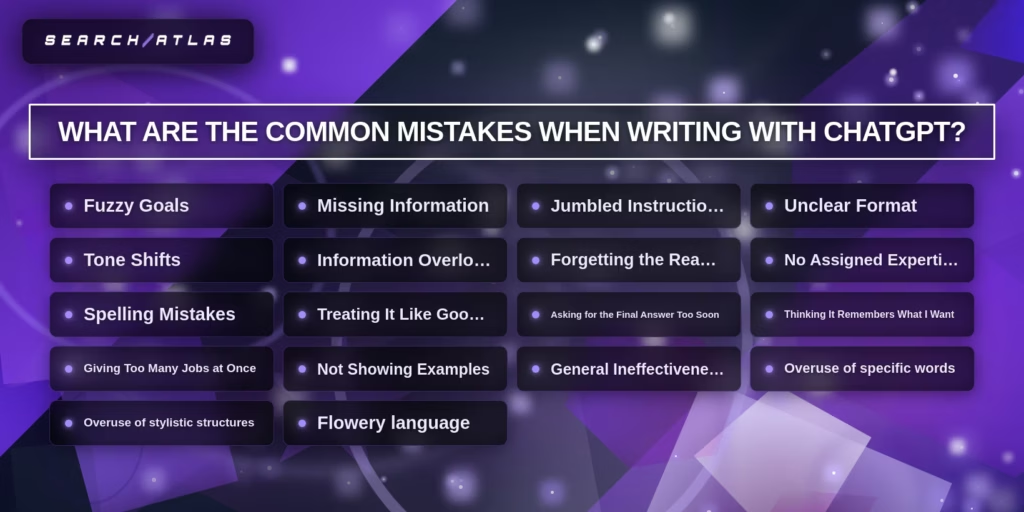
What mistakes reduce content quality the most? There are 8 prompting mistakes that reduce content quality listed below.
- Fuzzy goals.
- Missing information.
- Jumbled instructions.
- Unclear format.
- Tone shifts.
- Information overload.
- Forgetting the reader.
- No assigned expertise.
What are the usage mistakes when working with ChatGPT? Usage mistakes are errors in how ChatGPT is used during the workflow, which reduces efficiency and output accuracy. Usage mistakes occur when users misunderstand how ChatGPT processes input.
What usage mistakes reduce output effectiveness? There are 6 usage mistakes that reduce output effectiveness listed below.
- Treating it like Google.
- Asking for the final answer too soon.
- Thinking it remembers preferences.
- Giving too many tasks at once.
- Not showing examples.
- General ineffectiveness.
Treating ChatGPT like a search engine reduces depth. Asking for final answers early reduces refinement.
What are the writing style mistakes in ChatGPT output? Writing style mistakes are issues in tone, wording, and structure that reduce readability and engagement. Writing style mistakes occur when the output sounds unnatural or repetitive.
What writing style mistakes reduce content quality? There are 3 writing style mistakes that reduce content quality listed below.
- Overuse of specific words.
- Overuse of stylistic structures.
- Flowery language.
Overuse of words creates repetition. Overuse of structure reduces variation. Flowery language reduces clarity.
Why do these mistakes reduce overall content quality? These mistakes reduce content quality because these mistakes create unclear instructions, inconsistent output, and poor readability. Clear prompts, structured workflows, and controlled writing style improve ChatGPT performance.
Is AI-Generated Content Automatically Low Quality?
No, AI-generated content is not automatically low quality because content quality depends on prompt quality, human oversight, and validation, not the generation method itself. AI-generated content refers to text produced by large language models, which vary in accuracy and usefulness depending on how the system is used.
Why does AI-generated content sometimes produce low-quality results? AI-generated content produces low-quality results because AI models generate probable text, not verified facts, which leads to hallucinations and inaccuracies. AI-generated content fabricates information in over one-third of cases. This limitation affects reliability, especially in specialized topics.
What risks affect the quality of AI-generated content? There are 3 main risks that affect AI-generated content quality listed below.
- Hallucinated information.
- Inaccurate or outdated data.
- Lack of real-world experience.
Hallucinated information creates false claims. Inaccurate data reduces trust. Lack of experience limits depth and nuance.
When does AI-generated content achieve high quality? AI-generated content achieves high quality when structured prompting, human editing, and fact validation are applied. Human input corrects errors and adds expertise. This process transforms AI drafts into reliable content.
How do marketers benefit from AI-generated content despite limitations? Marketers benefit from AI-generated content because it increases production speed and idea generation. Data shows 73% of marketers report improved content quality. AI-generated content enables scalable content creation for blogs and product descriptions.
What is Google’s position on AI-generated content quality? Google evaluates AI-generated content based on quality, not origin, and assigns low ratings only to content with little value. Google prioritizes E-E-A-T, which includes experience, expertise, authority, and trust. AI-generated content performs well when it meets these criteria.
What is the conclusion about AI-generated content quality? AI-generated content is not inherently low quality because quality depends on how AI-generated content is created, reviewed, and validated. Proper use produces high-quality content, while poor use produces unreliable output.
Does Providing Detailed Instructions Improve Output Quality?
Yes, providing detailed instructions improves output quality because detailed instructions reduce ambiguity, increase accuracy, and guide structured responses. Detailed instructions refer to clear prompts that define context, format, and constraints for ChatGPT output.
How do detailed instructions improve clarity and accuracy? Detailed instructions improve clarity and accuracy because precise prompts reduce ambiguity and guide relevant responses. Clear inputs define scope and structure. This process improves consistency by up to 35%.
What limitations affect detailed instruction effectiveness? Detailed instructions lose effectiveness when constraints become overly rigid or complex. Strict formats like XML or JSON reduce flexibility. Over-constrained prompts limit completeness and quality.
Do persona and tone instructions improve output quality? No, persona and tone instructions do not consistently improve output quality because they increase confident errors or have no effect on accuracy. Persona prompts to amplify hallucinations. Tone adjustments do not improve factual correctness.
How Do You Prevent Hallucinations in AI-Written Content?
You prevent hallucinations in AI-written content by combining prompt control, validation processes, and external data grounding, because hallucinations cannot be fully eliminated. AI hallucinations refer to incorrect or fabricated outputs generated due to probabilistic text prediction.
What causes AI hallucinations? AI hallucinations are caused by 6 main factors. The factors are context overload, training data issues, retrieval errors, prompting issues, model design, and pattern limitations. These factors reduce accuracy and increase fabricated responses.
What are the main risks of AI hallucinations? AI hallucinations create 5 major risks. The risks are misinformation, trust loss, bias amplification, legal issues, and poor decision-making. These risks affect reliability and credibility in real-world applications.
What backend strategies reduce hallucinations? Backend strategies reduce hallucinations through 6 main methods. The methods are Retrieval Augmented Generation (RAG), guardrails, fine-tuning, validation systems, multi-agent checks, and monitoring. RAG grounds outputs in real data. Validation systems verify correctness.
What prompt strategies reduce hallucinations? Prompt strategies reduce hallucinations by using clear instructions, adding context, limiting scope, and applying step-by-step reasoning. Providing data and examples improves accuracy. Breaking tasks into smaller steps reduces errors.
Why is verification required for all AI content? Verification is required because hallucinations cannot be fully prevented and occur in 2.5% to 22.4% of outputs. AI does not verify truth. Human validation ensures accuracy and reliability.