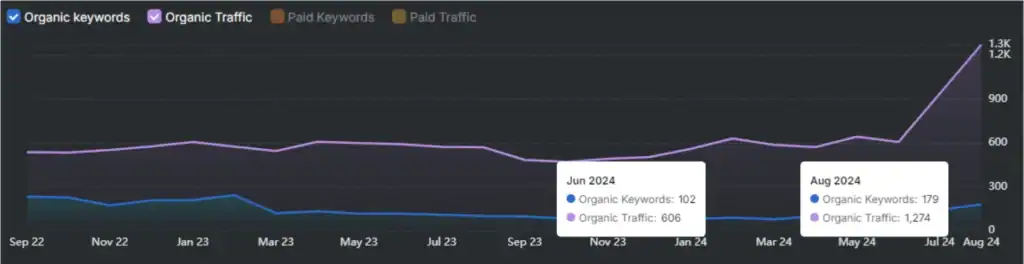
Typewise alternatives are AI writing platforms, SEO content systems, customer communication tools, and workflow automation software that replace Typewise for tasks (predictive typing, grammar correction, message drafting, and response standardization). These platforms offer tone control, SEO optimization, structured content briefs, sales automation, support ticketing, and performance analytics.
Many Typewise reviews note that the tool performs well for typing efficiency and privacy focused communication. However, Typewise remains centered on keyboard based prediction and structured response snippets. Teams that require long form drafting, SERP driven optimization, multilingual editing, CRM integration, or automated publishing often adopt additional tools, which increases workflow fragmentation and subscription costs.
Marketing teams, agencies, support departments, and sales organizations frequently require AI systems tied to measurable output (rankings, conversions, ticket resolution, or campaign performance). These operational needs push users toward platforms built for content production, structured optimization, automation, and cross channel execution rather than standalone keyboard assistance.
Writers, marketers, support teams, and business operators choose a Typewise alternative when they need AI connected to performance, and scale, instead of isolated typing enhancement. The best Typewise alternatives in 2026 are Search Atlas, Grammarly, and Jasper.
What are the Best Typewise Alternatives?
The top 30 best Typewise alternatives for 2026 cover AI SEO platforms, grammar correction tools, marketing copy generators, SERP driven optimization systems, and bulk publishing engines. Some platforms specialize in inline writing and tone refinement, while others focus on SEO first drafting, long form automation, structured briefs, or enterprise messaging workflows.
The top 30 best Typewise alternatives for 2026 are listed below.
| # | Typewise Alternative | Best For | Price |
|---|---|---|---|
| 1 | Search Atlas | AI SEO content and automation platform | $99 to $399/month |
| 2 | Grammarly | Grammar correction and tone control | $0 to $30/month |
| 3 | Intercom | AI-driven customer support messaging | $29 to $132/seat/month |
| 4 | Linguix | Business communication and team writing | $10 to $30/month |
| 5 | PerfectIt | Technical and legal text consistency | $10 to $583/month |
| 6 | LanguageTool | Multilingual grammar checking | $69.90 to $132.80/year |
| 7 | Simplified | AI writing and design workflows | $0 to $20/month |
| 8 | Jasper | On-brand marketing copy and long-form content | $49/month to custom |
| 9 | Rytr | Affordable short-form AI copy | $9 to $29/month |
| 10 | Apollo.io | AI-assisted sales outreach and messaging | $0 to $119/user/month |
| 11 | Notion | AI documentation and knowledge management | $0 to $20/member/month |
| 12 | Zendesk | Customer service communication and ticketing | $19 to $169/agent/month |
| 13 | Fin by Intercom | Autonomous AI customer support agents | $0.99/resolution + seat pricing |
| 14 | Writesonic | SEO-focused AI content and marketing copy | $39 to $399/month |
| 15 | Copy.ai | Fast short-form marketing copy | $49 to $249/month |
| 16 | Anyword | Conversion-optimized ad and landing page copy | $49 to $499/month |
| 17 | Frase | AI content briefs and SEO research writing | $45 to $115/month |
| 18 | Surfer SEO | SERP-driven content optimization and scoring | $79 to $179/month |
| 19 | Scalenut | Full content workflows and topic clusters | $49 to $149/month |
| 20 | WordAI | Advanced content rewriting and paraphrasing | $27 to $57/month |
| 21 | Article Forge | One-click automated article generation | $27 to $57/month |
| 22 | Smodin | Academic, structured, and multilingual writing | $0 to R$133/month |
| 23 | Bertha AI | WordPress-native AI writing | $0 to $45/month |
| 24 | Outranking | SEO briefs and first-draft generation | $19 to $159/month |
| 25 | NeuralText | AI copywriting and keyword clustering | $19 to $119/month |
| 26 | SEO.ai | SEO-first AI article creation | $1 trial to $299/month |
| 27 | Autoblogging.ai | Bulk AI content publishing | $19 to $999/month |
| 28 | Compose AI | Inline AI writing inside the browser | $0 to $29.99/month |
| 29 | WriteGenius | Structured marketing and promotional copy | €49.80 to €85.80/month |
| 30 | Klevere.ai | Simple, fast AI copy workflows | Custom pricing |
1. Search Atlas: Best Typewise Alternative
Search Atlas is an AI driven SEO and content execution platform built for full stack search performance. Search Atlas connects keyword research, structured drafting, semantic optimization, and automated technical fixes inside one unified system. Search Atlas targets businesses that require measurable visibility growth rather than isolated writing assistance.
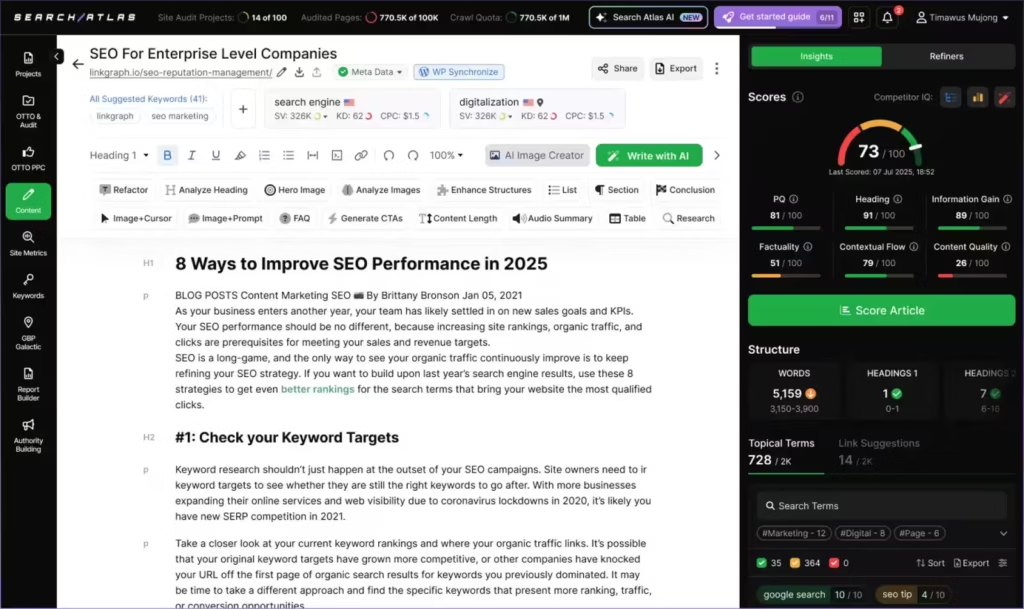
Search Atlas surpasses Typewise in content depth, SEO execution, and performance intelligence. Search Atlas controls how content is researched, structured, optimized, scored, and deployed before and after publication. This structural difference positions Search Atlas as the strongest Typewise alternative for search driven teams.
At the core of Search Atlas workflows is Content Genius, the AI drafting engine. Content Genius generates structured articles based on SERP analysis, search intent mapping, and entity coverage modeling. Drafts align with ranking logic at the heading and passage level rather than sentence level prediction.
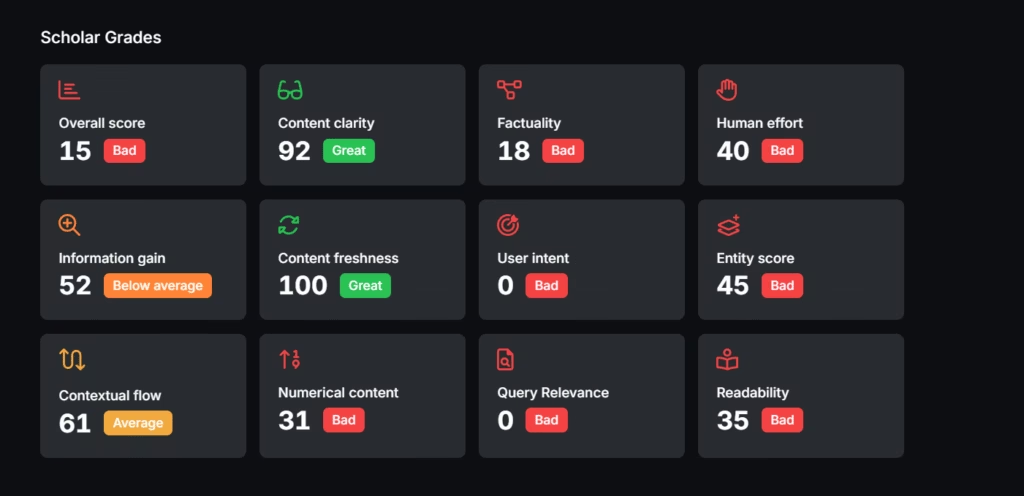
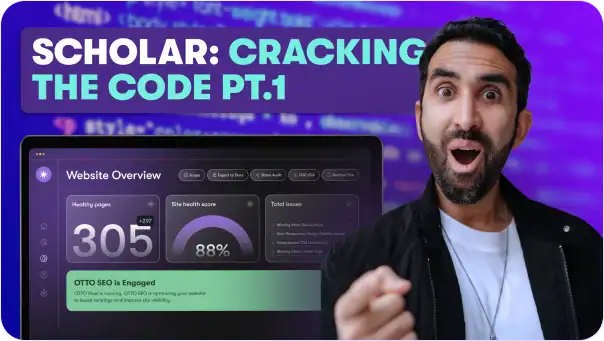
Search Atlas Scholar strengthens this process through semantic evaluation. Scholar measures topical depth, intent alignment, structural completeness, and ranking signal coverage against live search behavior. This scoring framework connects writing decisions to measurable search impact.
Search Atlas OTTO SEO extends execution into automation. OTTO applies technical fixes, internal linking updates, and on page adjustments without manual configuration. Keyword clustering tools and LLM visibility tracking reinforce authority across content ecosystems.
Search Atlas is a paid tool with pricing ranges from $99 to $399 per month. This pricing consolidates writing, optimization, automation, and reporting inside one platform.
Pros of Search Atlas review include SERP aligned drafting, semantic scoring, automation through OTTO SEO, keyword clustering at scale, and integrated LLM visibility tracking. Cons is a structured onboarding process required for teams transitioning from basic writing tools.
2. Grammarly: Best Typewise Alternative for Grammar Correction and Tone Control
Grammarly is an AI writing platform that operates as a full writing review system focused on grammar precision and tone accuracy across digital platforms. Grammarly scans text instantly and detects grammatical faults, punctuation mistakes, awkward phrasing, and clarity gaps. The platform standardizes communication quality in professional emails, academic papers, client proposals, and internal documentation.
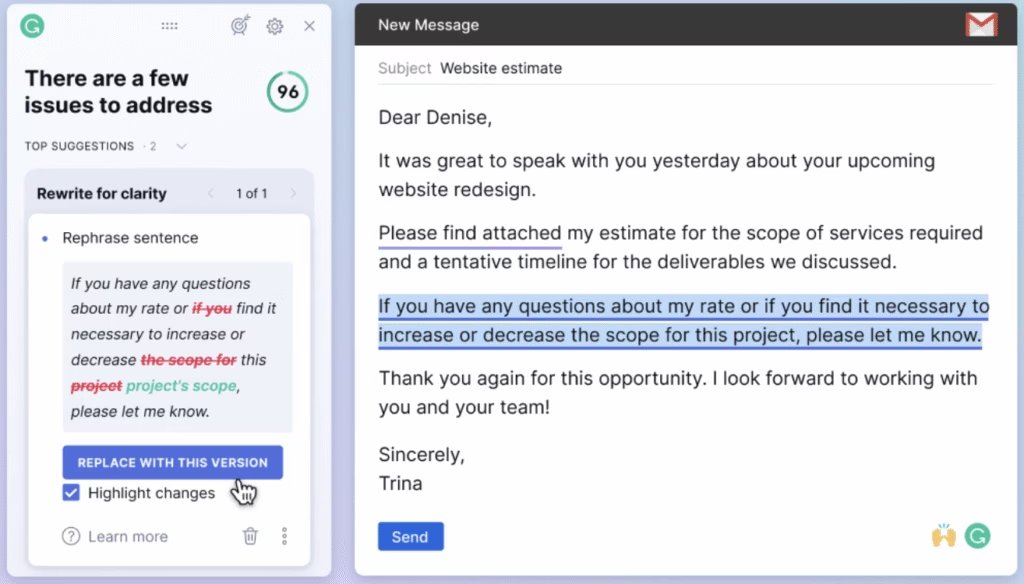
Grammarly demonstrates broader editing depth than Typewise in grammar correction and tone control. Grammarly prioritizes sentence level refinement and document wide consistency. This distinction defines Grammarly as a stronger Typewise alternative for grammar correction and tone control.
Core features include contextual grammar analysis, sentence restructuring recommendations, tone evaluation metrics, originality verification, and guided AI drafting. The grammar system evaluates verb tense alignment and subject agreement. The tone module classifies intent categories, confidence signals, and politeness levels. The originality scanner compares submissions against online databases to detect duplication.
Grammarly is a paid tool with pricing ranges from $0 to $30 per month. The Free tier covers essential grammar and spelling detection. The Premium plan unlocks advanced clarity improvements, tone refinement tools, and AI composition features. The Business plan introduces centralized management, usage analytics, and organizational controls.
Pros of Grammarly include high detection accuracy, structured tone monitoring, and consistent cross platform integration. Cons include limited SEO optimization features, restricted bulk content workflows, and periodic rigidity in stylistic recommendations.
3. Intercom: Best Typewise Alternative for AI-Driven Customer Support Messaging and Live Chat
Intercom operates as an AI-first customer messaging platform built for live chat, automated conversations, and structured support operations. Intercom centralizes web chat, mobile messaging, email tickets, and social communication inside one unified inbox. The system connects automation and human agents inside the same workflow environment.
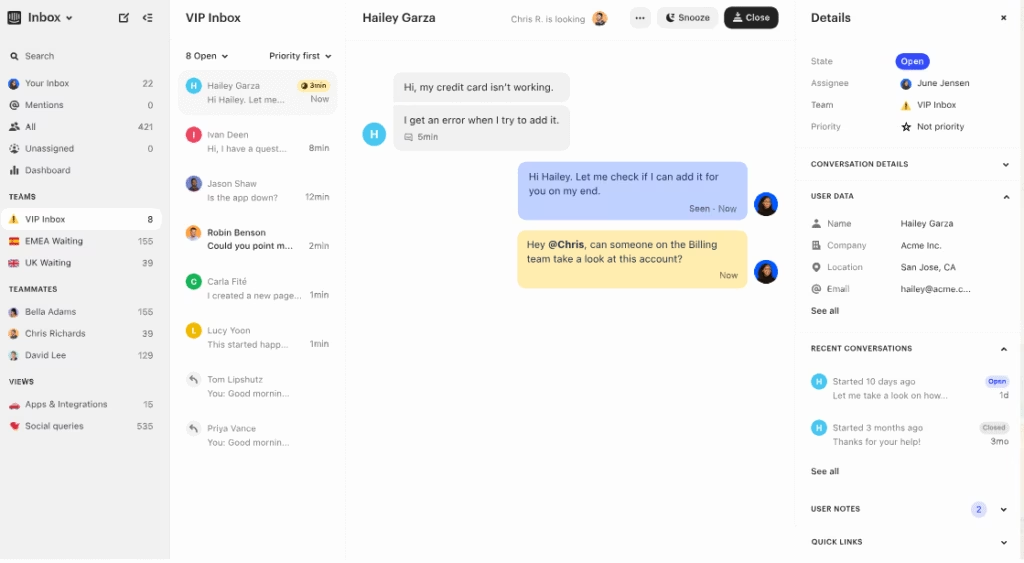
Intercom provides broader AI driven customer support messaging and live chat functionality than Typewise. Typewise concentrates on predictive keyboard suggestions and response snippets for typing efficiency. Intercom concentrates on full conversation management, smart routing logic, and automated resolution flows. This structural difference defines Intercom as a stronger Typewise alternative for AI driven customer support messaging and live chat.
Core capabilities inside Intercom include real time live chat, automated chatbot responses through Fin AI, shared inbox management, workflow automation, and product tours for onboarding. The routing engine distributes conversations based on logic rules and agent availability. The Fin AI agent answers repetitive questions using trained knowledge sources. The reporting dashboard tracks response time, resolution rate, and customer satisfaction metrics.
Intercom is a paid tool with pricing ranges from $29 to $132 per seat per month plus $0.99 per Fin AI resolution. The Essential plan includes Messenger, shared inbox, ticketing, reports, and a public Help Center. The Advanced plan adds workflow automation, round robin assignment, multilingual Help Centers, and Lite seats. The Expert plan introduces SSO, HIPAA configuration, SLA management, and multibrand messaging environments.
Pros of Intercom include strong automation depth, scalable live chat infrastructure, and omnichannel communication inside one inbox. Cons include higher operational cost, complex configuration for advanced workflows, and variability in AI response accuracy.
4. Linguix: Best Typewise Alternative for Business Communication and Team-Based Writing
Linguix functions as an AI writing assistant built for business communication and structured team collaboration. Linguix evaluates grammar, punctuation, and clarity during the drafting process. Linguix displays corrections instantly inside browser based editors and online platforms.

Linguix provides stronger business communication controls and team based writing oversight than Typewise. Typewise emphasizes predictive typing and mobile keyboard efficiency. Linguix emphasizes structured editing, shared style governance, and communication standardization across teams. This difference positions Linguix as a stronger Typewise alternative for business communication and team based writing.
Core features inside Linguix include real time grammar detection, contextual vocabulary upgrades, sentence rewrites, and tone refinement suggestions. The rewriting engine restructures unclear phrasing into direct alternatives. The style guidance system highlights informal wording in professional contexts. Text shortcuts and reusable templates accelerate repetitive communication tasks across sales, support, and operations teams.
Linguix is a paid tool with pricing ranges from $10 to $30 per month. Monthly plans provide full grammar correction, rewriting tools, and productivity shortcuts. Annual billing lowers the effective monthly rate while maintaining identical feature access.
Pros of Linguix include affordable pricing, immediate browser based corrections, and centralized team writing standards. Cons include occasional missed complex grammar scenarios, limited multilingual coverage, and the absence of a standalone desktop editor.
5. PerfectIt: Best Typewise Alternative for Technical, Legal, and Compliance-Focused Text Consistency
PerfectIt functions as a professional proofreading system built to enforce document level consistency and editorial standards. PerfectIt integrates directly into Microsoft Word and PowerPoint as an add-in. The software automates repetitive checks that editors traditionally perform manually across long technical files.

PerfectIt provides stronger technical, legal, and compliance focused text consistency than Typewise. Typewise concentrates on predictive typing and short message optimization. PerfectIt concentrates on rule based validation and document wide standardization. This distinction positions PerfectIt as a stronger Typewise alternative for technical, legal, and compliance focused text consistency.
Core features inside PerfectIt include capitalization consistency checks, hyphenation validation, number formatting review, abbreviation alignment, and customizable style sheets. The consistency engine scans the entire document instead of isolated sentences. Custom style guides enforce organization specific terminology and compliance standards across regulated industries.
PerfectIt is a paid tool with pricing ranges from $10 to $583 per month. Individual licenses target freelance editors and legal professionals. Enterprise tiers expand into team deployments, structured onboarding, and organization wide configuration.
Pros of PerfectIt include unmatched consistency enforcement, structured compliance validation, and significant time savings in technical editing. Cons include limited grammar intelligence, no AI based rewriting, and lower relevance for creative or informal writing contexts.
6. LanguageTool: Best Typewise Alternative for Multilingual Grammar and Style Checking
LanguageTool operates as a multilingual grammar and style checking system built for writers working across languages and regions. LanguageTool analyzes grammar, spelling, punctuation, and vocabulary across more than 30 languages. The engine adapts to regional variations and dialect specific conventions.
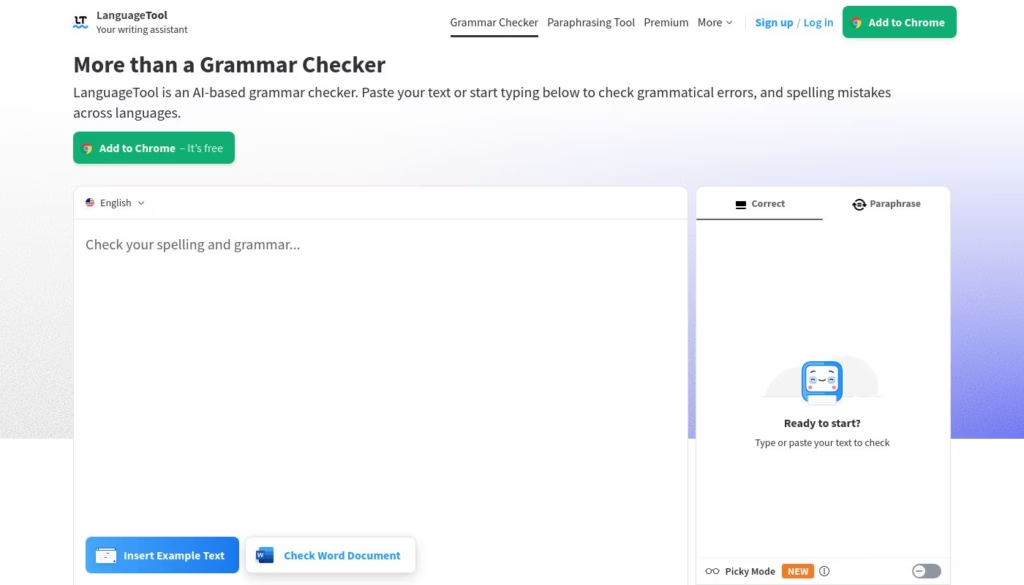
LanguageTool provides broader multilingual grammar and style checking coverage than Typewise. Typewise emphasizes mobile keyboard predictions and short form text suggestions. LanguageTool emphasizes cross language editing, structured proofreading, and style precision. This difference positions LanguageTool as a stronger Typewise alternative for multilingual grammar and style checking.
Core features inside LanguageTool include AI driven grammar correction, spelling validation, Picky Mode for advanced stylistic refinement, paraphrasing suggestions, and personal dictionaries for terminology control. Integrations extend across Google Docs, Microsoft Word, Gmail, and major browsers. The open source architecture reinforces privacy standards and flexible team customization.
LanguageTool is a paid tool with pricing ranges from $69.90 to $132.80 per year. The Premium plan unlocks deeper grammar analysis and AI rewriting functions. The Teams plan introduces shared dictionaries, centralized management, and collaborative configuration.
Pros of LanguageTool include extensive multilingual coverage, strong privacy orientation, and wide integration availability. Cons include limited plagiarism detection, reduced performance on highly technical long form documents, and restricted functionality inside the free version.
7. Simplified: Best Typewise Alternative for AI Writing, Marketing Content, and Design Workflows
Simplified operates as an integrated AI platform that combines writing, design, video production, and social publishing inside one workspace. Simplified centralizes creative production instead of separating writing and visual tools across different systems. The workspace connects content drafting, asset creation, and publishing execution in a continuous workflow.
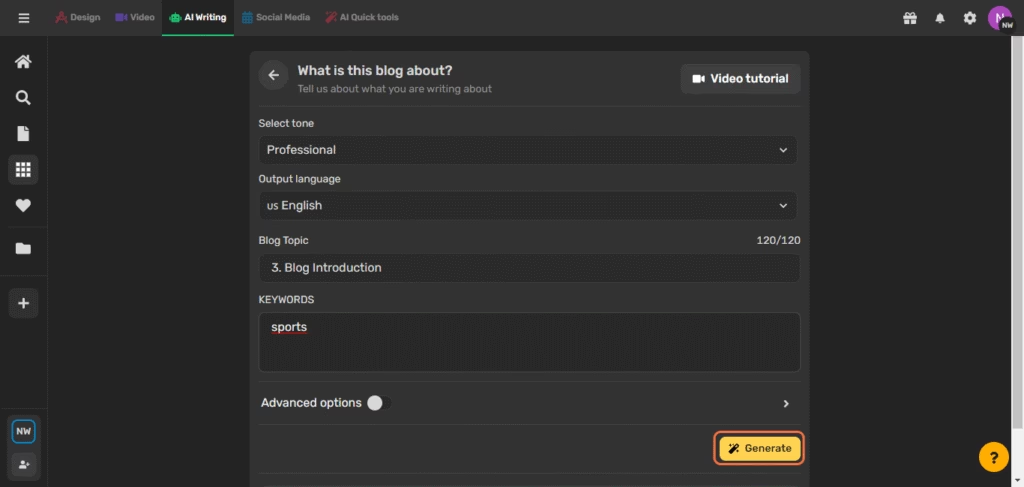
Simplified delivers broader marketing content and creative workflow capability than Typewise. Typewise concentrates on predictive typing and short message enhancement. Simplified concentrates on campaign level asset production, coordinated brand visuals, and structured publishing flows. This difference defines Simplified as a stronger Typewise alternative for AI writing, marketing content, and design workflows.
Core features span the full marketing lifecycle. AI writing tools generate ad copy, blog drafts, product captions, and campaign messaging. The visual editor creates graphics, banners, and branded social assets without external software. Video templates produce short form promotional content inside the same interface. Built-in social scheduling connects content creation directly to distribution across channels. Collaboration dashboards track approvals, revisions, and contributor roles.
Simplified is a paid tool with pricing ranges from $0 to $20 per month. The Free plan provides essential creation tools with usage limits. Paid tiers expand design assets, publishing quotas, and team collaboration controls.
Pros of Simplified include unified creative management, accessible pricing tiers, and integrated publishing workflows. Cons include limited keyword intelligence, shallow SEO analytics, and reduced depth for complex long form editorial projects.
8. Jasper: Best Typewise Alternative for On-Brand Marketing Copy and Long-Form Content Generation
Jasper functions as a marketing focused content automation platform built for structured, brand aligned output at scale. Jasper organizes AI writing, brand governance, and campaign workflows inside a centralized production system. Jasper platform standardizes messaging across long form and short form marketing assets.
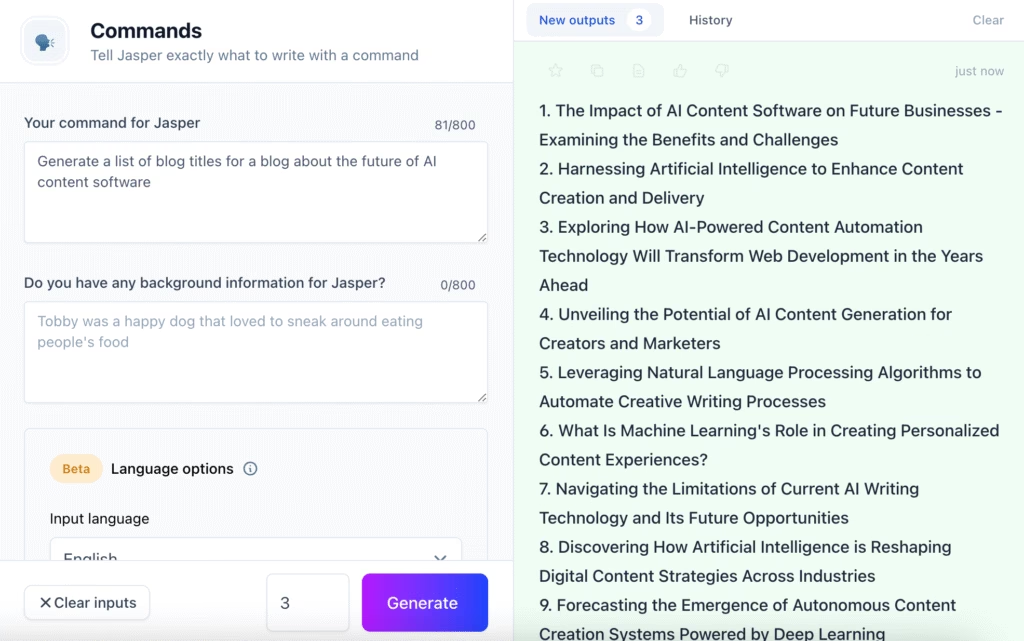
Jasper provides stronger brand marketing copy control and long form generation than Typewise. Typewise improves typing speed and short text prediction. Jasper produces campaign sequences, structured blog posts, landing pages, and email funnels. This structural contrast positions Jasper as a stronger Typewise alternative for on brand marketing copy and long form content generation.
Core features inside Jasper emphasize workflow driven creation. Guided templates structure blog articles, ad campaigns, email sequences, and landing page drafts from outline to revision. Brand voice settings enforce tone, terminology, and messaging consistency across multiple contributors. Collaboration features coordinate approvals and editing cycles within marketing teams. Image generation modules expand creative campaign production inside the same environment.
Jasper is a paid tool with pricing ranges from $49 per month to custom enterprise plans. The Creator plan at $49 provides core AI writing functionality. The Pro plan at $69 expands collaboration tools, brand voice management, and image generation. Enterprise plans introduce API access, advanced permissions, and enterprise grade security.
Pros of Jasper include strong long form quality, structured brand governance, and scalable marketing workflows. Cons include higher entry pricing, absence of a free tier, and limited native SEO performance analytics.
9. Rytr: Best Typewise Alternative for Affordable, Quick AI Copy Generation
Rytr operates as a lightweight AI writing platform built for fast, low cost copy production. Rytr generates ads, emails, headlines, and product descriptions across more than 30 languages. The system targets freelancers, founders, and marketers who prioritize speed and affordability over deep editorial control.
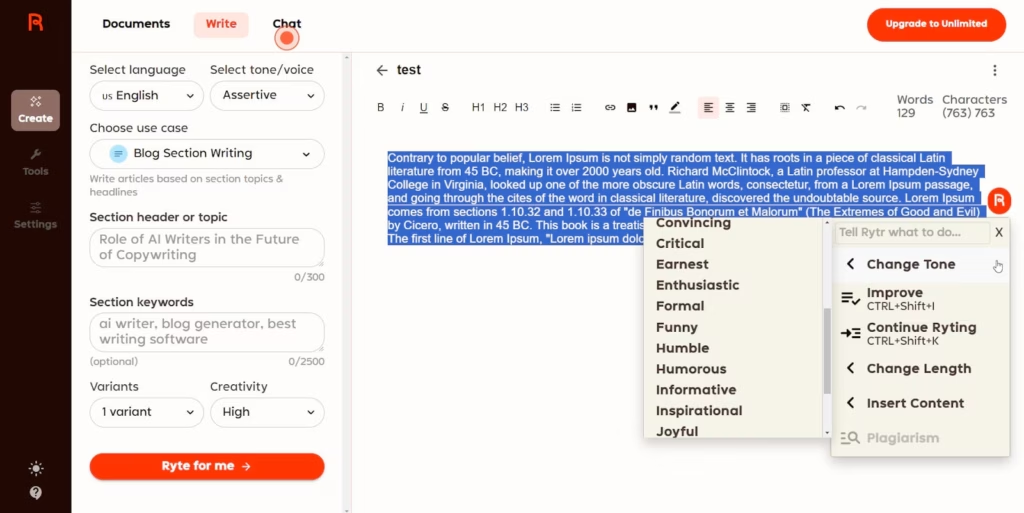
Rytr provides a more economical solution than Typewise for affordable, quick AI copy generation. Typewise improves predictive typing and short message drafting. Rytr produces structured marketing copy from predefined templates in seconds. This difference positions Rytr as a stronger Typewise alternative for affordable, quick AI copy generation.
Core features inside Rytr include paragraph drafting, rewriting tools, tone customization, and 40 plus structured use case templates. The tone system adjusts messaging across more than 20 voice variations. Custom tone presets simplify multi-project workflows. The browser extension enables writing across web applications without switching platforms.
Rytr is a paid tool with pricing ranges from $9 to $29 per month. Entry plans provide unlimited character generation with one custom tone. Higher tiers unlock additional tones, expanded language access, and increased flexibility for higher volume content workloads.
Pros of Rytr include low monthly pricing, rapid content turnaround, and broad template availability. Cons include repetitive phrasing in long drafts, weaker long form coherence, and limited SEO analysis depth.
10. Apollo.io: Best Typewise Alternative for AI-Assisted Sales Outreach and Messaging
Apollo.io functions as a sales intelligence and engagement platform built for structured B2B outreach. Apollo.io combines lead discovery, contact enrichment, and multichannel messaging inside a single system. The platform connects prospect data and automated outreach workflows in one environment.

Apollo.io delivers stronger AI assisted sales outreach and messaging automation than Typewise. Typewise improves typing speed and predictive responses. Apollo.io scales personalized campaigns across email, calls, and LinkedIn sequences. This distinction defines Apollo.io as a stronger Typewise alternative for AI assisted sales outreach and messaging.
Core features inside Apollo.io include a large B2B contact database, advanced search filters, multi step outreach sequences, AI generated follow ups, call summaries, and prospect enrichment tools. The data intelligence engine filters contacts by industry, job title, company size, and region. The sequencing system automates email and calling cadences with performance tracking dashboards.
Apollo.io is a paid tool with pricing ranges from $0 to $119 per user per month. The Free plan includes 900 credits per user per year. The Basic plan at $49 provides 30,000 credits annually. The Professional plan at $79 increases credits to 48,000 per year. The Organization plan at $119 offers 72,000 credits per user annually with a three user minimum.
Pros of Apollo.io include an extensive contact database, detailed prospect filters, CRM integrations with HubSpot and Salesforce, and scalable outreach automation. Cons include inconsistent data accuracy in certain regions, workflow complexity for new users, and additional costs for expanded exporting and calling features.
11. Notion: Best Typewise Alternative for AI Writing, Documentation and Knowledge Management
Notion integrates AI writing, structured documentation, and knowledge management inside a unified workspace. Notion AI operates directly within pages, databases, and collaborative documents. The system uses workspace context to generate drafts, summaries, task lists, and structured research outputs.
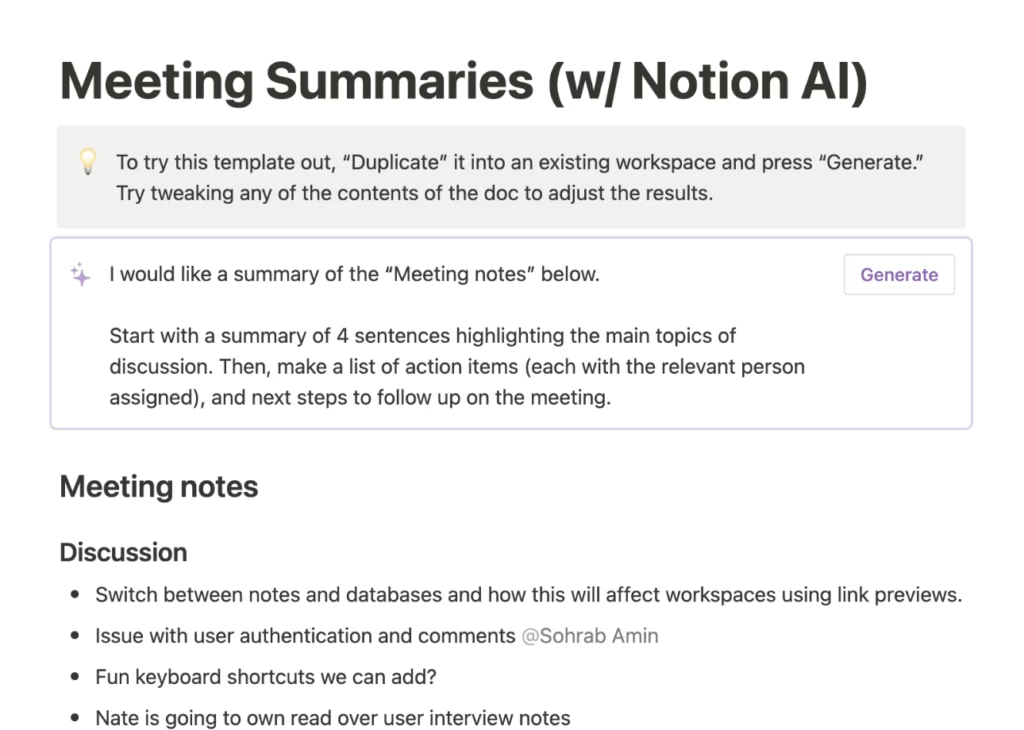
Notion provides broader AI writing and documentation workflows than Typewise. Typewise enhances predictive typing and short message composition. Notion enhances long form drafting, structured databases, and cross team knowledge organization. This difference positions Notion as a stronger Typewise alternative for AI writing, documentation, and knowledge management.
Core features inside Notion AI include automatic meeting transcription, AI generated summaries with action points, contextual content drafting, brainstorming prompts, translation tools, and structured database automation. The summarization engine condenses long meeting notes into searchable highlights. The drafting system produces outlines, reports, and internal documentation directly within collaborative pages. Integrated search scans across pages, projects, and connected applications to retrieve relevant workspace knowledge.
Notion is a paid tool with pricing ranges from $0 to $20 per member per month. The Free plan covers individual usage with basic collaboration. The Plus plan at $10 per member per month expands sharing controls and version history. The Business plan at $20 per member per month introduces advanced permissions and administrative features for growing teams.
Pros of Notion include seamless workspace integration, strong summarization performance, and structured knowledge organization. Cons include dependency on the Notion ecosystem, limited specialization for advanced SEO writing, and additional cost for expanded AI usage.
12. Zendesk: Best Typewise Alternative for Customer Service Communication
Zendesk operates as a cloud based customer experience platform built for structured customer service communication. Zendesk centralizes email, live chat, phone, and social conversations inside a unified ticketing system. The platform converts every interaction into a trackable record inside one operational workspace.

Zendesk delivers broader customer service communication and support workflow management than Typewise. Typewise improves predictive typing and response drafting speed. Zendesk manages tickets, escalations, routing logic, and reporting dashboards across multiple channels. This structural contrast positions Zendesk as a stronger Typewise alternative for customer service communication.
Core features inside Zendesk include a centralized ticketing system, automated routing rules, agent workspace dashboards, and self service help center creation. The ticketing engine assigns, prioritizes, and tracks requests from submission to resolution. The help center builder publishes FAQs and knowledge base articles for customer self resolution. The agent workspace consolidates full conversation history across channels to preserve context and continuity.
Zendesk is a paid tool with pricing ranges from $19 to $169 per agent per month. The Support Team plan at $19 covers email, ticketing, and basic reporting. The Suite Team plan at $55 expands into AI agents, live chat, messaging, phone support, and a help center. The Suite Professional plan at $115 adds advanced reporting, workflows, CSAT tracking, and IVR. The Suite Enterprise plan at $169 introduces enterprise governance and security controls.
Pros of Zendesk include strong omnichannel management, scalable automation, and robust analytics dashboards. Cons include complex configuration, higher cost at advanced tiers, and limited customization inside entry level plans.
13. Fin by Intercom: Best Typewise Alternative for Autonomous AI Customer Support Agents
Fin functions as an autonomous AI customer support agent built to resolve inquiries using a company knowledge base and large language models. Fin operates across live chat, email, and messaging channels. The system automates repetitive support conversations while escalating complex cases to human agents.

Fin provides deeper autonomous AI customer support automation than Typewise. Typewise improves text prediction and typing efficiency. Fin resolves customer questions, drafts contextual replies, and executes automated actions inside support workflows. This difference positions Fin as a stronger Typewise alternative for autonomous AI customer support agents.
Core features inside Fin include LLM powered chat responses, automated refunds and account updates, conversation summaries inside the inbox, and intelligent routing to human agents. The AI engine references help center documentation to maintain accuracy. Brand voice controls standardize tone across automated replies. Integrations connect Fin with platforms such as Zendesk and Salesforce for synchronized case management.
Fin is a paid tool with pricing ranges from $0.99 per resolution with a 50 resolution minimum to $29 per seat per month for Helpdesk access. The Copilot add on costs $35 per user per month for AI assisted agent workflows.
Pros of Fin include strong automation of repetitive inquiries and measurable reduction in manual workload. Cons include variable cost based on resolution volume, dependency on high quality documentation, and limited transparency into AI decision logic.
14. Writesonic: Best Typewise Alternative for SEO-Focused AI Content and Marketing Copy
Writesonic operates as an AI content automation platform built for SEO focused publishing and structured marketing workflows. Writesonic generates blog posts, landing pages, ad copy, and campaign assets using advanced language models. The platform aligns drafting and optimization inside one production system.
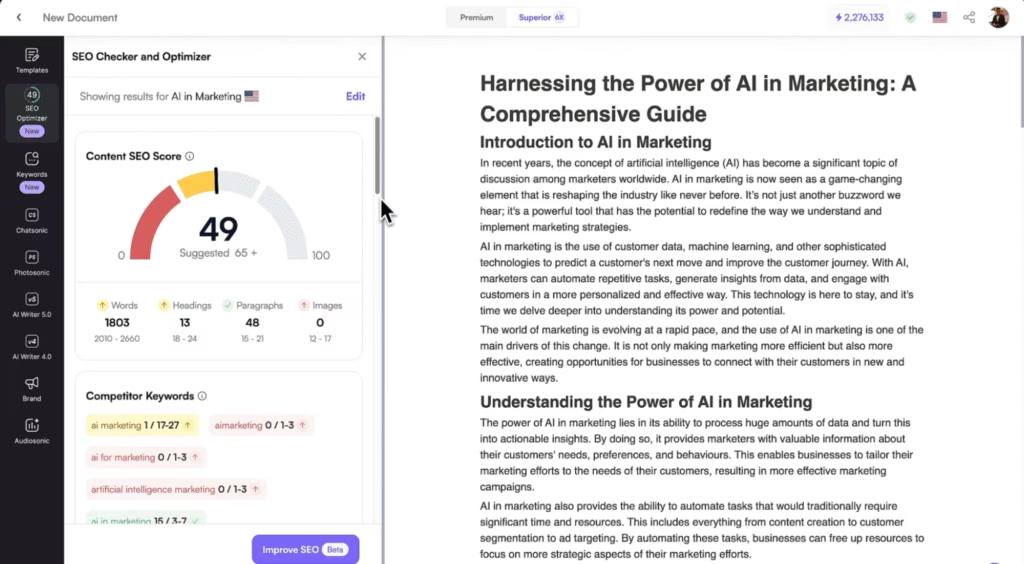
Writesonic provides stronger SEO focused AI content generation and long form drafting than Typewise. Typewise improves predictive typing and short text suggestions. Writesonic produces search optimized articles with scoring guidance and topic coverage insights. This distinction positions Writesonic as a stronger Typewise alternative for SEO focused AI content and marketing copy.
Core features inside Writesonic include an SEO Optimizer that evaluates keyword coverage, content depth, and structure alignment. Chatsonic connects with Google Search Console, Ahrefs, and WordPress for synchronized publishing workflows. Idea generators, outline builders, and rewriting tools refine drafts while maintaining brand consistency. GEO capabilities structure content for AI driven search visibility.
Writesonic is a paid tool with pricing ranges from $39 to $399 per month. Entry plans target individual creators with limited usage. Higher tiers expand user access, reporting features, API integrations, and publishing capacity.
Pros of Writesonic review include integrated SEO scoring, rapid long form drafting, and cross platform publishing support. Cons include inconsistent quality in extended articles, restricted credits in lower tiers, and an interface that presents dense feature navigation.
15. Copy.ai: Best Typewise Alternative for Fast Ideation and Short-Form Marketing Copy
Copy.ai functions as an AI writing system designed for rapid marketing ideation and short form campaign production. Copy.ai transforms brief prompts into structured paragraphs, headlines, and ad variations. The platform standardizes messaging across sales and marketing workflows.
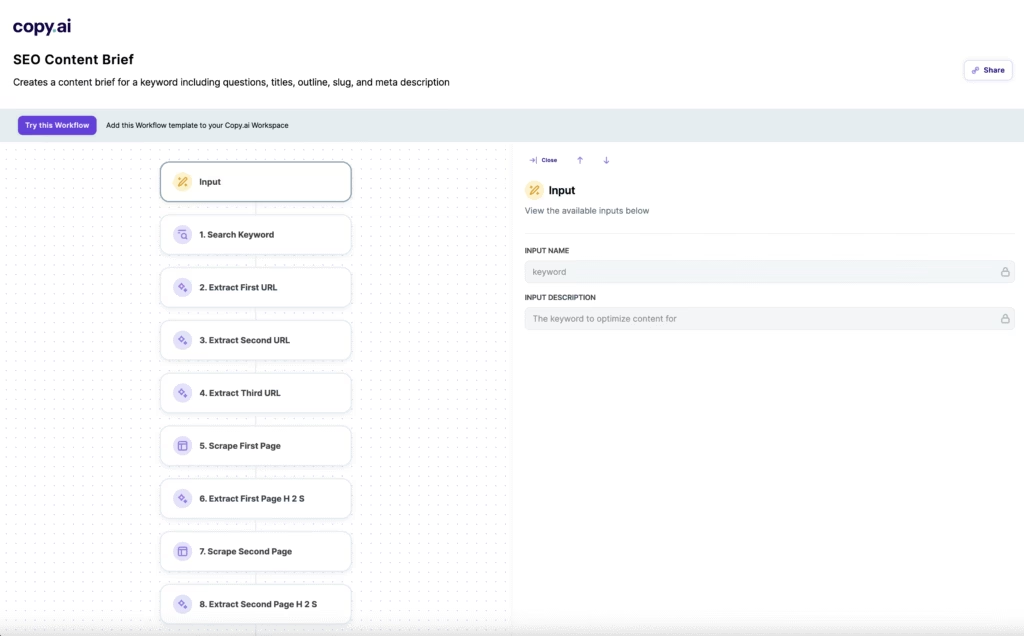
Copy.ai delivers faster ideation and structured short form marketing copy than Typewise. Typewise enhances typing efficiency and predictive suggestions. Copy.ai generates ready to use campaign content across multiple marketing formats. This difference positions Copy.ai as a stronger Typewise alternative for fast ideation and short form marketing copy.
Core features inside Copy.ai include template libraries for ads, email sequences, product descriptions, and blog intros. Workflow automation tools coordinate multi step campaign drafting. Tone customization controls align messaging across regions and audiences. Localization features adapt language and style for international markets.
Copy.ai is a paid tool with pricing ranges from $49 to $249 per month. The entry plan provides unlimited word generation. Higher tiers expand automation workflows, collaboration credits, and advanced integrations for larger marketing teams.
Pros of Copy.ai include rapid content generation, structured template access, and multilingual adaptability. Cons include limited SEO analysis depth, repetitive phrasing in longer drafts, and higher pricing for advanced automation features.
16. Anyword: Best Typewise Alternative for Conversion-Optimized Ad and Landing Page Copy
Anyword operates as a performance driven AI copywriting system built for paid advertising and landing page optimization. Anyword generates marketing copy and evaluates its projected impact using predictive scoring models. The platform connects audience data, historical performance signals, and benchmarking metrics inside one analytics framework.
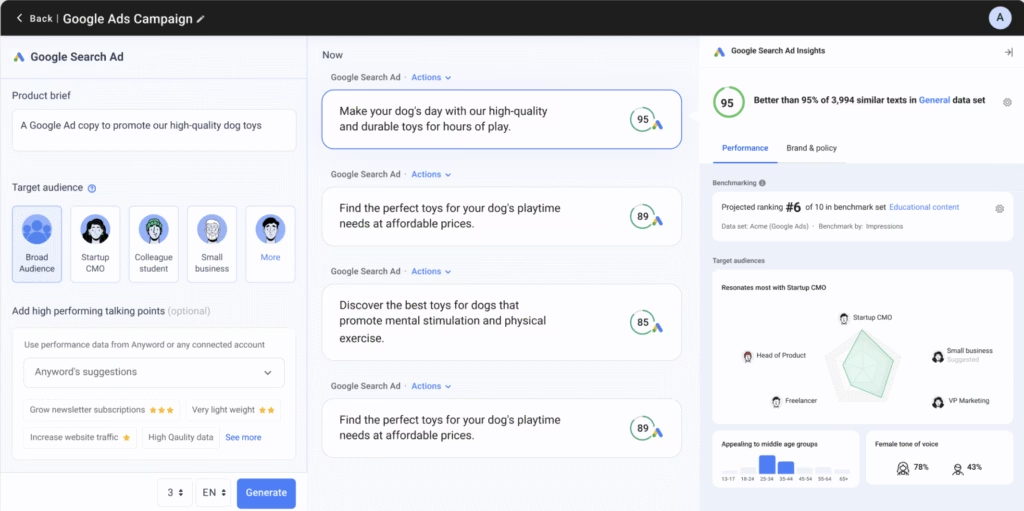
Anyword provides stronger conversion optimized ad and landing page copy capabilities than Typewise. Typewise improves predictive typing and communication efficiency. Anyword predicts engagement likelihood and conversion probability before campaigns launch. This distinction positions Anyword as a stronger Typewise alternative for conversion optimized ad and landing page copy.
Core features inside Anyword include predictive performance scoring, copy intelligence recommendations, audience segment targeting, and brand voice configuration. The scoring engine estimates click through rate and engagement potential. The copy intelligence system highlights clarity improvements and tone alignment adjustments. The brand voice editor standardizes messaging across campaigns. Support for more than 30 languages expands global advertising workflows.
Anyword is a paid tool with pricing ranges from $49 to $499 per month. Entry plans target individual marketers with limited prediction volume. Business tiers expand access to advanced AI models, deeper analytics rows, and higher generation limits.
Pros of Anyword include data driven scoring, audience specific recommendations, and structured brand governance. Cons include limited native SEO tooling, higher pricing at scale, and occasional instability during live editing sessions.
17. Frase: Best Typewise Alternative for AI Content Briefs and SEO Research-Driven Writing
Frase functions as an AI powered SEO content platform built for research driven article creation and structured optimization. Frase analyzes top ranking search results to identify topic coverage, question clusters, and keyword gaps. The platform transforms search intelligence into organized writing briefs.
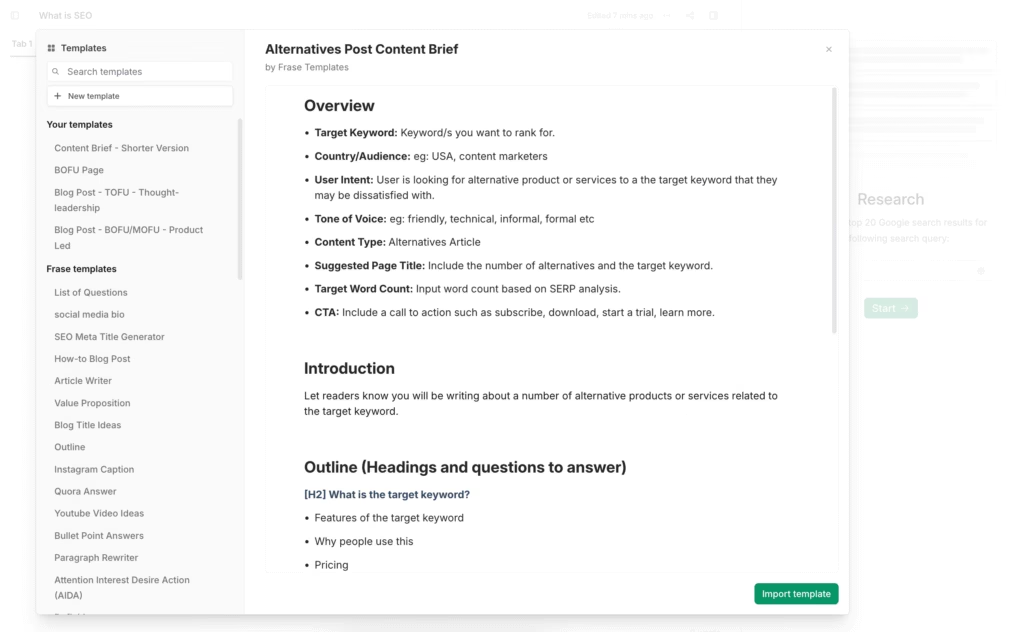
Frase delivers stronger AI content briefs and SEO research driven writing workflows than Typewise. Typewise enhances predictive typing and mobile text efficiency. Frase aligns article structure with real search demand and competitor benchmarks. This structural contrast positions Frase as a stronger Typewise alternative for AI content briefs and SEO research driven writing.
Core features inside Frase include AI generated content briefs, SERP analysis tools, question extraction modules, and a collaborative editor for structured drafting. The SERP analyzer identifies recurring headings, semantic entities, and ranking patterns. Google Docs and WordPress integrations streamline publishing workflows. Team dashboards coordinate reference materials and maintain brand alignment across contributors.
Frase is a paid tool with pricing ranges from $45 to $115 per month. Entry plans target individual writers with limited document allowances. The team plan expands user access and collaborative features. A free trial provides full platform testing before subscription commitment.
Pros of Frase review include fast competitive research, structured brief automation, and real time content optimization insights. Cons include project limits on lower tiers, separate pricing for advanced AI documents, and fewer technical SEO diagnostics compared to specialized audit platforms.
18. SurferSEO: Best Typewise Alternative for SERP-Driven Content Optimization and Scoring
Surfer SEO operates as a search focused content optimization platform built around SERP analysis and structured scoring. Surfer SEO evaluates top ranking pages for a target keyword and extracts structural, lexical, and semantic patterns. The system transforms ranking signals into measurable writing guidelines.
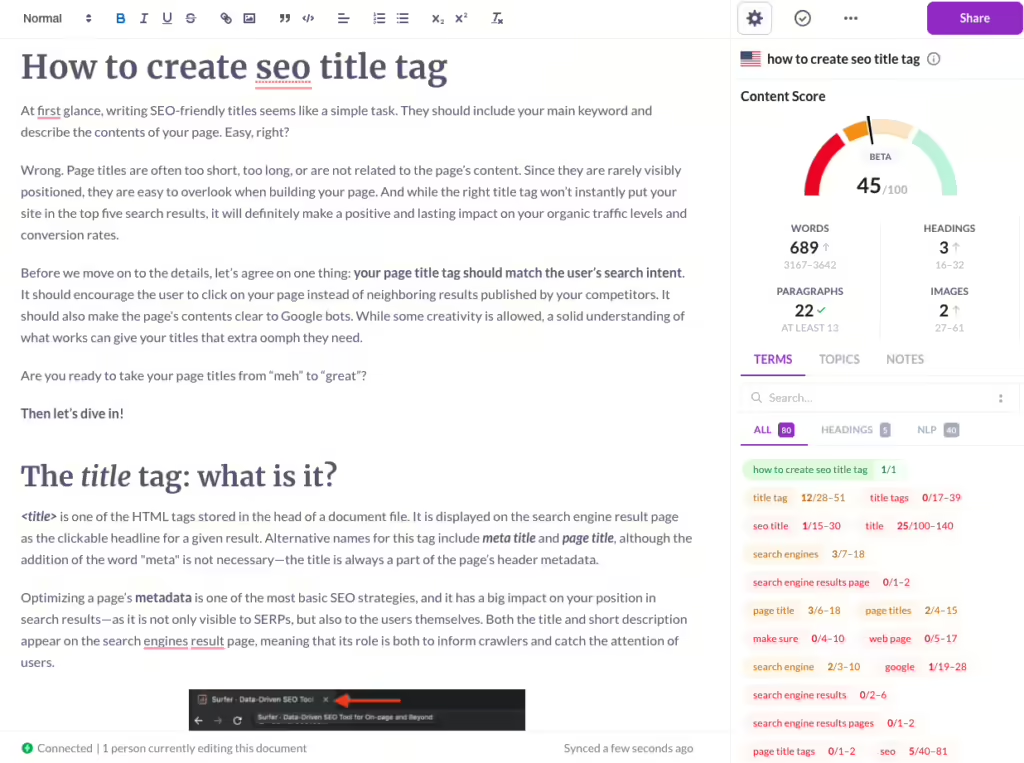
Surfer SEO delivers stronger SERP driven content optimization and scoring than Typewise. Typewise enhances typing prediction and short message drafting. Surfer SEO aligns article structure with competitor benchmarks and real time keyword usage metrics. This contrast positions Surfer SEO as a stronger Typewise alternative for SERP driven content optimization and scoring.
Core features inside Surfer SEO include the Content Editor, SERP Analyzer, keyword research tools, and audit modules. The Content Editor provides live keyword coverage metrics and structure recommendations during drafting. The SERP Analyzer reverse engineers top results using more than 500 ranking signals. NLP integration highlights semantic terms that strengthen topic coverage and search alignment.
Surfer SEO is a paid tool with pricing ranges from $79 to $179 per month. Entry plans include content audits, keyword research, and optimization scoring. Higher tiers expand collaboration access, unlock AI modules, and introduce API connectivity for advanced workflows.
Pros of Surfer SEO review include precise content scoring, international SEO compatibility, and structured optimization insights. Cons include a learning curve for new writers, rigid scoring frameworks, and limited tone flexibility for niche subject matter.
19. Scalenut: Best Typewise Alternative for Full Content Workflows and Topic Clusters
Scalenut functions as an AI powered SEO platform designed to manage the complete content lifecycle from research to optimization. Scalenut connects keyword discovery, SERP analysis, drafting assistance, and scoring inside one unified interface. The platform structures content production around topical authority and search intent alignment.
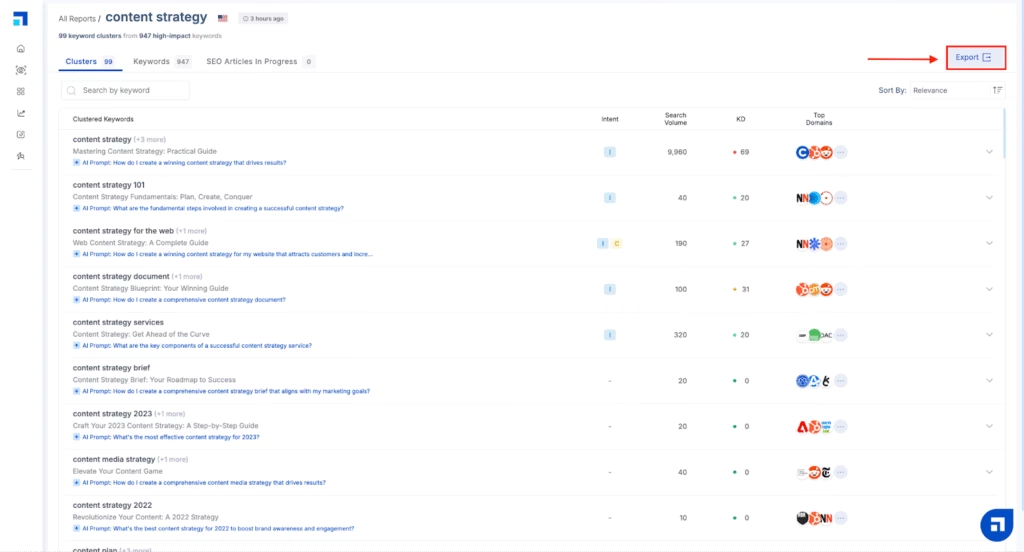
Scalenut provides broader full content workflows and topic cluster development than Typewise. Typewise focuses on communication enhancement and predictive typing workflows. Scalenut builds structured keyword clusters, assigns intent labels, and guides long form SEO article creation. This structural difference positions Scalenut as a stronger Typewise alternative for full content workflows and topic clusters.
Core features inside Scalenut include keyword clustering with intent tagging, live SEO scoring, SERP comparison tools, and AI drafting assistance. The clustering engine groups keywords based on search intent and semantic proximity. The SEO editor evaluates structure, coverage depth, and ranking alignment during drafting. Topic cluster exports support structured content planning across large websites.
Scalenut is a paid tool with pricing ranges from $49 to $149 per month. Entry plans provide limited content credits. The Growth tier expands article generation allowances. The Pro tier introduces deeper analysis tools and expanded reporting.
Pros of Scalenut include rapid topic clustering, structured optimization workflows, and integrated SERP evaluation. Cons include occasional tone inconsistency in AI outputs and limited rewriting refinement in lower subscription tiers.
20. WordAI: Best Typewise Alternative for Advanced Content Rewriting and Paraphrasing
WordAI operates as an AI rewriting system built for advanced content transformation and large scale paraphrasing workflows. WordAI analyzes sentence meaning and reconstructs passages from scratch rather than replacing isolated words. The platform generates multiple unique variations suitable for SEO campaigns and content syndication.

WordAI delivers stronger advanced content rewriting and paraphrasing than Typewise. Typewise enhances predictive typing and short message drafting. WordAI restructures entire paragraphs while preserving semantic meaning. This structural difference positions WordAI as a stronger Typewise alternative for advanced content rewriting and paraphrasing.
Core features inside WordAI include semantic sentence reconstruction, bulk article processing, Copyscape safe output, and API access for automation. The semantic engine interprets context before rewriting phrasing. Bulk upload tools process multiple articles simultaneously for high volume production. AI detection bypass mechanisms produce text that reads naturally and avoids robotic structure.
WordAI is a paid tool with pricing ranges from $27 to $57 per month. The Yearly plan averages $27 per month. The Monthly plan costs $57 per month. Enterprise plans expand rewrite limits, user seats, and integration flexibility.
Pros of WordAI include rapid rewriting speed, high volume scalability, and diverse output variations. Cons include occasional mechanical phrasing, limited creative expansion, and the need for editorial oversight to confirm factual accuracy.
21. Article Forge: Best Typewise Alternative for One-Click Automated Article Generation
Article Forge functions as an automated article generation platform built for one click long form drafting. Article Forge transforms a single keyword into a structured article with headings, paragraphs, and basic optimization signals. The platform emphasizes speed and volume over granular editing.

Article Forge produces stronger one click automated article generation and long form SEO drafting than Typewise. Typewise focuses on predictive typing and incremental text refinement. Article Forge generates full length articles in a single workflow. This contrast positions Article Forge as a stronger Typewise alternative for one click automated article generation.
Core features inside Article Forge include automated article creation from a keyword, bulk generation capabilities, live topic research, and WordPress publishing integration. The generation engine structures introductions, body sections, and conclusions without manual outline input. Bulk mode produces multiple articles simultaneously for scaled content deployment.
Article Forge is a paid tool with pricing ranges from $27 to $57 per month. Annual billing averages $27 per month for fixed word limits. Monthly plans cost around $57 per month for the base tier. Higher business plans expand word capacity, user seats, and API access.
Pros of Article Forge include fast bulk production, scalable output volume, and direct CMS connectivity. Cons include inconsistent article depth, limited brand voice configuration, and variable performance on technical or specialized topics.
22. Smodin: Best Typewise Alternative for Academic, Structured, and Multilingual Writing
Smodin operates as an AI writing platform designed for academic, structured, and multilingual writing workflows. Smodin centralizes drafting, paraphrasing, citation formatting, and originality analysis inside one workspace. The platform targets students, researchers, and formal writers who require structured output and reference accuracy.

Smodin delivers broader academic and multilingual writing functionality than Typewise. Typewise improves predictive typing and communication speed. Smodin structures essays, research summaries, translations, and formatted references inside guided academic workflows. This structural difference positions Smodin as a stronger Typewise alternative for academic, structured, and multilingual writing.
Core capabilities inside Smodin include an AI Writer for essays and reports, a paraphrasing engine that restructures sentences while preserving meaning, and a citation generator that formats references automatically. Summarization tools condense long research materials into structured highlights. Translation modules adapt content across multiple languages. Plagiarism detection and AI detection review modules evaluate originality before submission.
Smodin is a paid tool with pricing ranges from $0 to R$133 per month. The Free tier limits usage across rewriting and generation modules. The Ultimate plan unlocks full access to advanced drafting, citation formatting, multilingual tools, and plagiarism analysis.
Pros of Smodin include comprehensive academic features, integrated citation tools, and multilingual coverage. Cons include restricted free usage, occasional citation formatting inconsistencies, and the need for manual fact verification in complex research contexts.
23. Bertha AI: Best Typewise Alternative for WordPress-Native AI Writing
Bertha AI functions as an AI writing and image assistant built specifically for WordPress based publishing workflows. Bertha AI operates directly inside the WordPress editor through a native plugin and browser extension. The system eliminates the need to switch between external drafting platforms and the CMS.

Bertha AI provides deeper WordPress native AI writing integration than Typewise. Typewise enhances predictive typing across applications. Bertha AI generates blog posts, landing pages, product descriptions, and marketing copy directly inside WordPress blocks. This contrast positions Bertha AI as a stronger Typewise alternative for WordPress native AI writing.
Core features inside Bertha AI emphasize in editor workflow speed. The AI Writing Assistant drafts structured content within posts and pages. Built in templates follow messaging frameworks such as AIDA and PAS for persuasive copy development. Bertha Chat and brainstorming modules generate ideas without leaving the CMS. Image generation tools create supporting visuals inside the same environment.
Bertha AI is a paid tool with pricing ranges from $0 to $45 per month. The Free plan includes limited monthly word generation. Paid tiers starting around $10 to $20 per month expand word limits and image generation capacity. Higher plans increase collaboration flexibility and usage volume.
Pros of Bertha AI include seamless WordPress integration, direct CMS drafting, and reduced workflow friction. Cons include limited functionality outside WordPress and narrower applicability for multi platform content strategies.
24. Outranking: Best Typewise Alternative for SEO Briefs and First-Draft Generation
Outranking operates as an AI driven SEO platform built for structured brief development and execution ready first drafts. Outranking begins with live SERP analysis before content production starts. The system extracts headings, entities, intent signals, and ranking patterns directly from search results. The platform then converts that search intelligence into guided writing workflows.
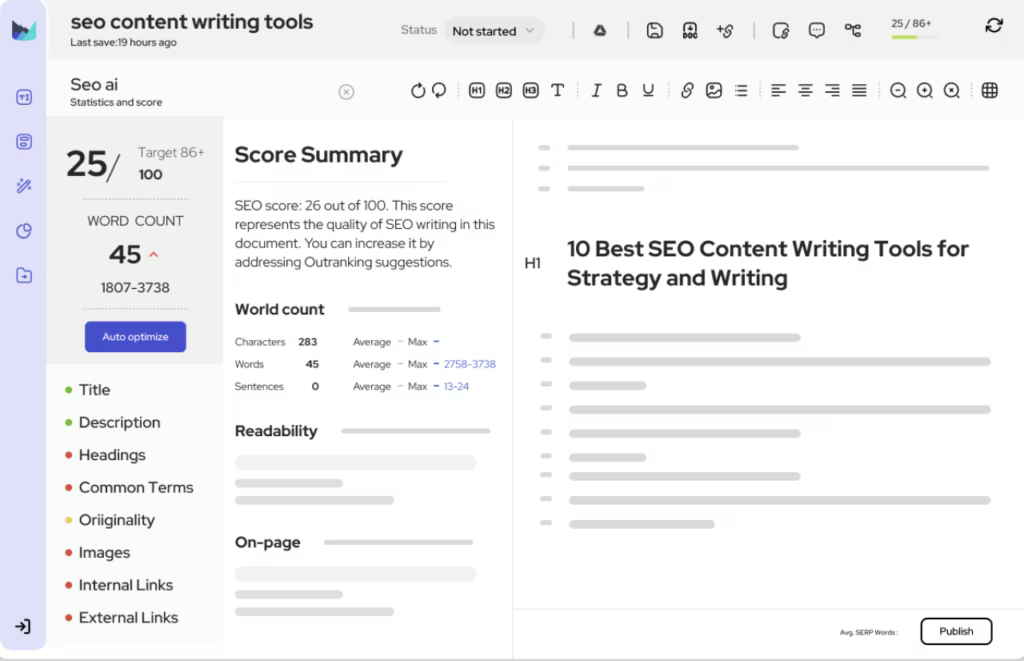
Outranking provides stronger SEO briefs and first draft generation than Typewise. Typewise enhances predictive typing and short message drafting. Outranking builds SERP aligned outlines and converts them into structured, optimization ready articles. This structural difference positions Outranking as a stronger Typewise alternative for SEO briefs and first draft generation.
Core features focus on guided SEO execution from research to publishing. Automated content briefs define required headings, topic depth, and intent coverage based on competitor analysis. Keyword clustering tools group related queries to reinforce topical authority. Internal linking suggestions strengthen site structure alignment. WordPress integration connects drafting directly to publishing workflows.
Outranking is a paid tool with pricing ranges from $19 to $159 per month. Lower tiers limit the number of SEO documents and workflow capacity. Higher plans expand document volume, collaboration features, and automation depth. Agency plans use custom pricing for scaled operations.
Pros of Outranking include clear step by step SEO workflows, strong SERP driven brief automation, and structured first draft generation. Cons include credit based usage limits and the absence of built in backlink or rank tracking modules.
25. NeuralText: Best Typewise Alternative for AI Copywriting and Keyword Clustering
NeuralText functions as an AI powered content marketing and SEO workflow platform designed to unify keyword research, clustering, and article production. NeuralText connects search data analysis directly to structured drafting environments. The platform reduces separation between planning, outlining, and writing.
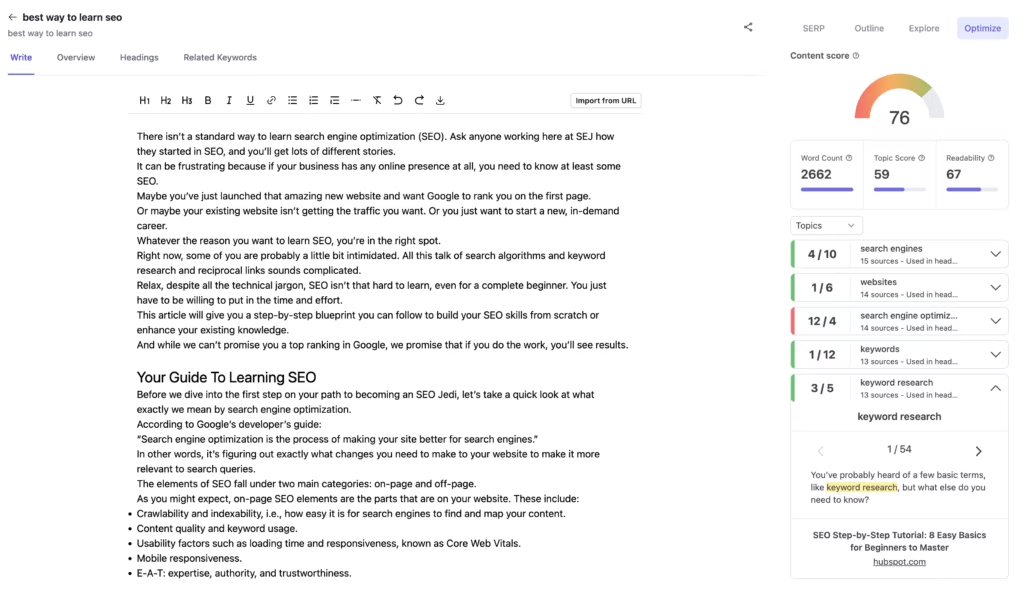
NeuralText delivers broader AI copywriting and keyword clustering capability than Typewise. Typewise focuses on predictive typing and communication refinement. NeuralText structures topic clusters around intent groups and generates drafts aligned with defined keyword strategies. This contrast positions NeuralText as a stronger Typewise alternative for AI copywriting and keyword clustering.
Core features emphasize SEO driven organization and structured planning. Keyword discovery modules identify opportunities across semantic themes and search intent categories. Clustering tools group related queries into topical frameworks that guide content hubs. Content brief generators translate clusters into structured outlines with coverage requirements. AI assisted drafting accelerates article production inside defined frameworks. Real time optimization scoring evaluates semantic depth, keyword placement, and topic completeness.
NeuralText is a paid tool with pricing ranges from $19 to $119 per month. The $19 plan includes 100,000 AI generated words and five briefs. The $49 plan expands briefs to forty. The $119 plan increases limits to 300,000 words and one hundred briefs.
Pros of NeuralText include efficient keyword clustering, integrated brief to draft workflows, and accessible entry pricing. Cons include occasional AI inconsistency in longer drafts, slower feature expansion, and limited advanced technical SEO diagnostics in lower subscription tiers.
26. SEO.ai: Best Typewise Alternative for SEO-First AI Article Creation
SEO.ai operates as an SEO first AI writing platform built to align article creation with search intent from the start. SEO.ai structures drafting around keyword patterns, entity coverage, and ranking benchmarks before content expands into full paragraphs. The platform embeds optimization into generation instead of applying edits after drafting.

SEO.ai delivers stronger SEO first AI article creation than Typewise. Typewise improves predictive typing and short message composition. SEO.ai generates structured long form drafts aligned with ranking signals and intent mapping. This structural distinction positions SEO.ai as a stronger Typewise alternative for SEO first AI article creation.
Core features focus on intent led execution and structured optimization. AI powered article generation produces search aligned drafts with defined heading hierarchies. Keyword led outlines determine coverage scope before writing begins. Bulk product description tools generate ecommerce content at scale. Brand voice training standardizes tone across domains and languages. Optimization workflows evaluate entity inclusion, keyword distribution, and structural completeness across large content sets.
SEO.ai is a paid tool with pricing ranges from $1 for a 7 day trial to $299 per month. Single Site plans start at $149 per month. Multi Site plans expand usage across multiple domains with broader limits.
Pros of SEO.ai include high speed drafting, scalable content production, and embedded optimization workflows. Cons include accuracy risks without editorial oversight, reduced stylistic nuance, and over optimization exposure that requires disciplined governance.
27. Autoblogging.ai: Best Typewise Alternative for Bulk AI Content Publishing
Autoblogging.ai functions as a bulk content automation system built for high volume blog and niche site publishing. Autoblogging.ai converts keywords into structured articles with formatting, images, and HTML markup. The platform integrates directly with WordPress to streamline mass deployment.

Autoblogging.ai provides stronger bulk AI content publishing capability than Typewise. Typewise enhances predictive typing inside communication environments. Autoblogging.ai generates full length SEO aligned articles in batches through automated workflows. This difference positions Autoblogging.ai as a stronger Typewise alternative for bulk AI content publishing.
Core features center on production scale and publishing speed. Multiple generation modes adjust output depth according to search intent. Quick Mode produces concise foundational articles. Godlike Mode analyzes ranking pages to create comprehensive drafts. Bulk Generation Mode processes up to 500 articles per batch through CSV uploads. Automated scheduling and WordPress integration reduce manual publishing friction across large content networks.
Autoblogging.ai is a paid tool with pricing ranges from $19 to $999 per month. The $19 plan includes 40 generation credits. Mid tier plans expand bulk workflows and SEO analysis capacity. Higher tiers unlock topical mapping tools, API access, and enterprise level publishing limits.
Pros of Autoblogging.ai include extreme output speed, scalable batch generation, and direct CMS automation. Cons include inconsistent article depth without human editing, repetitive phrasing risk, and limited expertise for highly specialized subject matter.
28. Compose AI: Best Typewise Alternative for Inline AI Writing Inside the Browser
Compose AI operates as a browser native AI writing assistant designed for inline drafting across web applications. Compose AI functions primarily through a Chrome extension that embeds directly into Gmail, Google Docs, and web based forms. The system generates text inside active fields instead of requiring a separate editor.

Compose AI provides stronger inline AI writing and in browser assistance than Typewise. Typewise enhances predictive keyboard typing and short message completion. Compose AI generates complete sentences, rewrites paragraphs, and adapts tone directly inside web apps. This structural difference positions Compose AI as a stronger Typewise alternative for inline AI writing inside the browser.
Core features emphasize continuity and speed. AI Autocomplete predicts phrases and full sentences during live typing. Slash commands generate structured emails or paragraphs without leaving the application. Rephrase tools adjust tone, clarity, and length instantly. Personalization models adapt suggestions to individual writing habits over time, reinforcing consistency across tools.
Compose AI is a paid tool with pricing ranges from $0 to $29.99 per month. The Free plan includes limited monthly AI word generation. The $9.99 plan expands usage limits and unlocks unlimited rewrites. The $29.99 plan removes generation caps and enables unrestricted editing workflows.
Pros of Compose AI include seamless browser integration, real time drafting assistance, and measurable time efficiency. Cons include occasional context misalignment, dependency on human oversight for precision, and potential privacy concerns in sensitive workflows.
29. WriteGenius: Best Typewise Alternative for Structured Marketing and Promotional Copy
WriteGenius functions as an AI powered writing platform built for structured long form marketing and promotional content. WriteGenius integrates over 150 SEO signals into its drafting engine. The platform guides users through defined stages of title creation, outline structure, keyword configuration, and final optimization.

WriteGenius delivers stronger structured marketing and promotional copy workflows than Typewise. Typewise focuses on predictive typing and short form communication assistance. WriteGenius generates campaign aligned blog posts, landing pages, and promotional assets through guided frameworks. This distinction positions WriteGenius as a stronger Typewise alternative for structured marketing and promotional copy.
Core features emphasize controlled long form execution. The Instant Blog Writer generates drafts exceeding 2,500 words in minutes. The SEO Blog Writer structures articles through defined configuration stages and supports drafts up to 10,000 words. The Blog Optimizer refines existing URLs through instant or advanced optimization modes to strengthen ranking alignment. WordPress and Google Docs integrations connect drafting directly to publishing environments.
WriteGenius is a paid tool with pricing ranges from €49.80 to €85.80 per month. The €49.80 plan includes limited output and coaching access. Mid tier plans expand weekly content volume and support hours. The €85.80 plan provides the highest output limits and expert guidance.
Pros of WriteGenius include structured SEO alignment, long form drafting depth, and guided configuration stages. Cons include inconsistent AI predictability, limited multilingual coverage, and required editorial review for factual precision and brand alignment.
30. Klevere.ai: Best Typewise Alternative for Simple, Fast AI Copy Workflows
Klevere.ai operates as an AI workflow automation platform built to execute multi step business tasks across departments. Klevere.ai positions itself as a virtual AI workforce that performs structured actions instead of acting as a standalone writing tool. The platform connects marketing, sales, HR, and finance workflows inside one automation layer.

Klevere.ai delivers broader simple and fast AI copy workflows than Typewise. Typewise enhances predictive typing and keyboard level text suggestions. Klevere.ai executes template driven content generation inside automated task chains. This structural difference positions Klevere.ai as a stronger Typewise alternative for simple, fast AI copy workflows.
Core features focus on automation speed and live operational support. Pre built AI agents execute defined workflows across marketing, sales, and recruitment processes. Bulk processing allows multiple SEO blogs, product descriptions, or outreach messages to generate simultaneously. Prospect research modules scan websites, LinkedIn profiles, and public news to surface contextual insights before outreach. Live assistance tools provide real time prompts and talking points during sales calls. Connected knowledge sources inform suggested responses inside active conversations.
Klevere.ai uses custom pricing based on workflow complexity and usage volume. Plans vary according to department coverage, automation depth, and live assistance configuration. Higher usage tiers expand processing limits and workflow capacity.
Pros of Klevere.ai include comprehensive workflow automation, bulk execution capability, and real time operational guidance. Cons include limited creative depth for nuanced copywriting, uneven output quality in complex tasks, and strict usage limits in lower tier plans.
Why do People Seek Alternatives to Typewise Tool?
People seek alternatives to the Typewise tool because it prioritizes keyboard efficiency over full writing and workflow depth. Teams that require structured content creation, SEO optimization, or integrated automation encounter limits inside a keyboard centered environment.
Feature scope gaps influence switching decisions. Typewise improves typing precision and privacy controls, yet it does not provide built in SEO scoring, structured content briefs, long form drafting systems, or SERP aligned optimization guidance. Writers and marketers seek platforms that connect drafting directly to ranking signals, performance metrics, and structured publishing workflows.
Workflow integration limits create another split. Typewise operates primarily as a keyboard enhancement tool. It does not centralize CRM communication, sales sequencing, blog production, content clustering, or automated publishing. Platforms that combine drafting, research, analytics, and execution reduce tool fragmentation for agencies, ecommerce brands, and marketing teams.
Licensing structure and platform constraints contribute to movement. The Pro license remains separate across iOS and Android ecosystems. Users switching operating systems face repurchasing requirements. Professionals evaluating value often compare pricing against broader AI writing systems that bundle optimization, automation, and analytics inside one subscription.
This combination of layout adaptation, missing swipe functionality, limited SEO and workflow depth, platform constraints, and licensing structure drives many users to explore Typewise alternatives aligned with their operational scale and content strategy.
What to Look for in a Typewise Alternative?
The best Typewise alternatives extend beyond keyboard level prediction and deliver broader writing intelligence, workflow integration, and measurable productivity gains. A strong replacement improves how teams draft, edit, optimize, and publish content instead of only accelerating typing accuracy.
There are 5 main features to look for in a Typewise alternative.
- Advanced AI Writing Assistance. Choose platforms that provide grammar correction, tone adjustment, clarity rewrites, and contextual editing inside full documents. Tools that analyze sentence structure and intent improve communication quality beyond autocorrect.
- Integrated Workflow and Platform Compatibility. Select solutions that operate across browsers, CRMs, CMS platforms, and collaboration tools. Inline drafting inside Google Docs, WordPress, email clients, and support systems reduces friction between writing and execution.
- Predictive Text and Context Awareness. Prioritize systems that combine autocomplete with contextual sentence generation. Context aware drafting improves continuity inside emails, reports, and long form documents.
- Customization and Brand Control. Look for tools that allow tone configuration, style presets, and terminology rules. Brand voice enforcement ensures consistent messaging across departments and campaigns.
- Scalable Pricing and Cross-Platform Access. Evaluate licensing models that support multiple devices and operating systems under one plan. Flexible pricing aligned with usage volume or team size prevents friction during growth.
This combination of intelligent drafting, workflow integration, contextual prediction, brand governance, and scalable access defines a strong Typewise alternative aligned with modern writing and communication demands.
What is the Difference Between Typewise vs Rytr?
The difference between Typewise and Rytr is that Typewise prioritizes enterprise level customer communication and automation, while Rytr emphasizes affordable, short form AI copy generation.
Typewise focuses on document centric workflows and structured customer support automation. Typewise integrates with CRM and ERP systems to standardize replies, enforce tone control, and automate repetitive service communication. The platform targets support teams that require controlled messaging across high ticket volumes.
Rytr concentrates on lightweight, budget friendly content creation for individuals and small teams. Rytr generates ads, emails, social posts, and short articles through predefined templates. The platform prioritizes speed and affordability rather than enterprise integration depth.
Both Typewise vs Rytr improve writing efficiency, but they serve different operating models. Typewise aligns with structured CX workflows and multi agent environments. Rytr aligns with solo creators and marketers who need fast content output at low monthly cost.
Search Atlas moves beyond this split by combining AI drafting, SEO optimization, automation, and performance tracking inside one execution platform built for scalable search growth.
Why is Search Atlas the Best Typewise Alternative?
Search Atlas is the best Typewise alternative because it upgrades writing from keyboard level prediction to full scale content strategy and SEO execution. Search Atlas improves how content is researched, structured, optimized, automated, and measured instead of only accelerating typing accuracy.
Search Atlas analyzes live SERP behavior and search intent before drafting begins. Content Genius generates structured articles based on topical depth, entity coverage, and ranking logic derived from real search results. Writers produce content aligned with search systems and LLM interpretation instead of relying on predictive text suggestions.
Search Atlas surpasses Typewise in evaluation and optimization depth through Scholar. Typewise enhances communication efficiency without measuring search performance impact. Scholar scores drafts from 0 to 100 using ranking signals tied to Google content systems, evaluating accuracy, intent satisfaction, semantic completeness, and structural integrity.
Search Atlas extends execution beyond drafting with OTTO SEO automation. OTTO applies internal linking updates, technical fixes, and optimization improvements directly to pages. Keyword clustering and LLM visibility tracking reinforce authority across entire content ecosystems rather than isolated documents.
For teams replacing Typewise, Search Atlas delivers structured drafting, semantic validation, automated optimization, and measurable search growth inside one unified platform. Move beyond predictive typing toward full performance driven execution, try Search Atlas free for 7 days!