Screaming Frog alternatives address limitations in cost, scalability, user interface, and data presentation, with 29 distinct tools identified across categories, including Dedicated Site Crawlers, Digital Marketing Tool Platforms, Free Tools, Low-Cost Tools, and All-in-One Platforms. The annual license for Screaming Frog is £149 GBP (approximately $180-$259 USD), while its free version is limited to 500 URLs. Users seek alternatives due to this pricing model, scalability issues with websites exceeding 100,000 URLs, an “outdated” user interface, and a lack of built-in executive-ready visualizations. DeepCrawl, for instance, processes up to 450 URLs/second for static pages and 350 URLs/second for JavaScript-rendered content, capable of crawling over 10 million URLs in a single session, contrasting with Screaming Frog’s desktop-based resource intensity.
The features alternatives offer are Sitebulb provides a “gentler learning curve” and visual reporting with 300+ built-in hints, while Xenu Link Sleuth is 100% free and focuses on core link crawling. Visual SEO Studio (VSS) demonstrates significantly lower memory consumption, crawling 145,000 URLs on 2GB RAM, and offers a cost-effective pricing model starting at €149/year. Wildshark SEO is also 100% free with no crawl limitations, and Spotibo, a web-based platform, matches Screaming Frog’s 500 URL free tier monthly. SEMrush, Ahrefs, and SEO PowerSuite Website Auditor provide broader digital marketing functionalities, with Ahrefs excelling in backlink analysis (a feature absent in Screaming Frog) and keyword research, scoring higher in overall system usability. Search Atlas, positioned as the “best” alternative, offers automated fixes and recommendations, functioning as an AI-powered SEO automation platform designed to replace “more than a dozen traditional tools.”
The demand for alternatives is driven by Screaming Frog’s “biggest gap” in providing actionable solutions, its desktop-only nature causing “storage and functionality issues” for large sites, and its raw data output requiring external tools for visualization. Alternatives frequently offer cloud-based operations, user-friendly interfaces, integrated analytics (e.g., Google Search Console, Google Analytics), and advanced features like AI-powered search visibility and automated weekly monitoring. Pricing models vary, with many offering free tiers or significantly lower annual costs, such as Morningscore at $49/month compared to Screaming Frog’s $259/year.
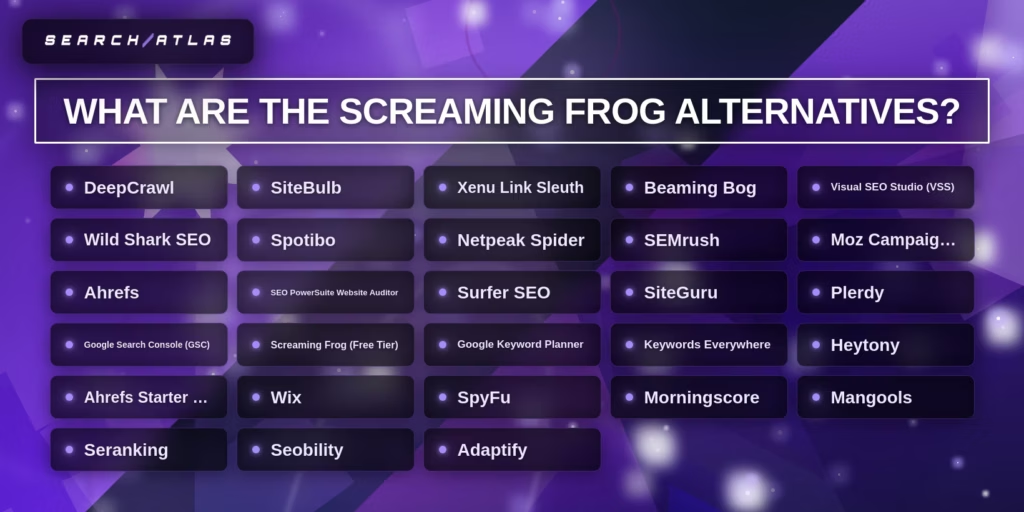
What are the Screaming Frog Alternatives?
Screaming Frog alternatives are listed below.
- Search Atlas
- DeepCrawl (Dedicated Site Crawler)
- SiteBulb (Dedicated Site Crawler)
- Xenu Link Sleuth (Dedicated Site Crawler)
- Beaming Bog (Dedicated Site Crawler)
- Visual SEO Studio (VSS) (Dedicated Site Crawler)
- Wild Shark SEO (Dedicated Site Crawler)
- Spotibo (Dedicated Site Crawler)
- Netpeak Spider (Dedicated Site Crawler)
- SEMrush (Digital Marketing Tool Platform)
- Moz Campaigns (Digital Marketing Tool Platform)
- Ahrefs (Digital Marketing Tool Platform)
- SEO PowerSuite Website Auditor (Digital Marketing Tool Platform)
- Surfer SEO (Digital Marketing Tool Platform)
- SiteGuru (Digital Marketing Tool Platform)
- Plerdy (Digital Marketing Tool Platform)
- Google Search Console (GSC) (Free Tool)
- Screaming Frog (Free Tier) (Free Tool)
- Google Keyword Planner (Free Tool)
- Keywords Everywhere (Free Tool)
- Heytony (Low-Cost Tool)
- Ahrefs Starter Kit (Low-Cost Tool)
- Wix (All-in-One Platform)
- SpyFu (All-in-One Platform)
- Morningscore (All-in-One Platform)
- Mangools (All-in-One Platform)
- Seranking (All-in-One Platform)
- Seobility (All-in-One Platform)
- Adaptify (All-in-One Platform)
1. Search Atlas
Search Atlas is the best Screaming Frog alternative because it delivers a comprehensive AI SEO automation platform that connects strategy with execution, includes the OTTO SEO agent that automatically applies optimizations, provides large-scale keyword intelligence from a 5.2 billion keyword database, and unifies technical SEO, content creation, backlink analysis, local SEO, and PPC management inside one platform.
How does Search Atlas comprehensive AI SEO automation platform provide an advantage? Search Atlas operates as an AI SEO automation platform designed for teams that require both analysis and implementation inside one system. Screaming Frog focuses on website crawling and technical diagnostics that identify issues such as broken links, redirect chains, and metadata errors. Search Atlas connects keyword research, content planning, technical audits, and automated optimization into one workflow. This integration replaces fragmented SEO stacks and reduces reliance on separate tools for research, execution, and reporting.
Why is the OTTO SEO agent a standout feature? The OTTO SEO agent functions as an autonomous optimization engine that applies technical fixes, internal linking updates, schema improvements, and content optimizations directly to websites with user authorization. This feature closes the gap between diagnosing problems and implementing solutions. Screaming Frog detects technical issues through crawling reports, but requires manual developer implementation for every fix. OTTO SEO automates those changes, which compresses technical SEO execution from hours to minutes.
What makes Search Atlas keyword research capabilities superior? Search Atlas provides keyword intelligence from a database of 5.2 billion search terms that enable comprehensive keyword discovery, clustering, and content planning. This large dataset powers content optimization workflows and competitor gap analysis. Screaming Frog does not provide native keyword research or search demand intelligence because the tool focuses primarily on site crawling and technical analysis rather than search strategy development.
How does Search Atlas unify multiple SEO functions into one system? Search Atlas replaces more than a dozen SEO tools through one platform architecture. The system integrates technical auditing, keyword research, backlink analysis, AI-driven content creation, rank monitoring, local SEO dashboards, and PPC data analysis. Screaming Frog specializes in technical crawling and diagnostics, which makes it powerful for site audits but limited as a complete SEO operating system. Search Atlas provides a unified platform that transforms technical insights into automated optimization and measurable ranking improvements.
2. DeepCrawl
DeepCrawl is a Screaming Frog alternative because DeepCrawl offers superior scalability for large-scale websites, provides advanced monitoring and protection features, integrates seamlessly with enterprise data platforms, delivers comprehensive site speed analysis, and features a more intuitive user interface.
How does DeepCrawl offer superior scalability for large-scale websites? DeepCrawl, now Lumar, is a cloud-based, serverless platform capable of processing up to 450 URLs/second for static pages and 350 URLs/second for JavaScript-rendered content. It can crawl over 10 million URLs in a single session and has processed over 3 billion URLs across 400,000 crawls in 2017. This contrasts with Screaming Frog, a desktop-based application whose performance may be slower for larger websites and consumes significant system resources, with its free version limited to 500 URLs.
Why are DeepCrawl’s advanced monitoring and protection features significant? DeepCrawl provides continuous monitoring for very large domains, offering real-time alerts for sudden SEO changes and trend dashboards. Its “Protect” feature includes automated SEO QA testing and proactive error detection before deployment. DeepCrawl also offers keyword tracking across multiple search engines and locations, and competitor analysis for strategic SEO planning. Screaming Frog, while offering scheduled crawls for monitoring, lacks the comprehensive real-time alerting and proactive protection capabilities of DeepCrawl.
What makes DeepCrawl’s integration capabilities a key differentiator? DeepCrawl offers seamless integration with enterprise data platforms such as Power BI, Tableau, Azure, Google Data Studio, and BigQuery. It also provides an API for custom application development. This extensive integration allows for deeper data analysis and reporting within existing business intelligence ecosystems, which is a capability not highlighted for Screaming Frog beyond its connection with Looker Studio for advanced visualization.
How does DeepCrawl deliver comprehensive site speed analysis? DeepCrawl runs large-scale speed audits using its own crawler, delivering Lighthouse-based reports for every URL. It ranks slow-loading issues by severity, providing actionable insights. While Screaming Frog retrieves speed data via the PageSpeed Insights API for selected URLs, DeepCrawl’s approach of auditing every URL with its own crawler offers a more comprehensive, large-scale assessment.
Why is DeepCrawl’s user interface considered more intuitive? DeepCrawl features a clean, modern interface designed for ease of navigation, prioritizing simplicity and accessibility. It provides clear, comprehensive, and customizable reports with adjustable columns, branding, and white-label features. In contrast, Screaming Frog, despite offering extensive SEO data, has a complex, less intuitive interface that can be overwhelming for new users, requiring more interpretation of its detailed reports.
3. SiteBulb
Sitebulb is a Screaming Frog alternative because it offers a significantly gentler learning curve for new users, provides advanced visual reporting and automated insights, supports flexible deployment options, including cloud-based solutions, includes comprehensive accessibility auditing with over 95 checks, and has rapidly gained market traction since its 2017 launch.
How does Sitebulb’s learning curve differentiate it? Sitebulb is designed for ease of use, making it ideal for marketers with a basic understanding of technical SEO and beginners. Its “Hints” system translates technical SEO jargon into plain English, suggesting improvements and reducing the need to consult external documentation. Most users can conduct meaningful audits and extract value within their first session, contrasting with Screaming Frog’s requirement for experienced professionals who sometimes struggle to locate key issues or understand results.
Why are Sitebulb’s visual reporting and automated insights a strong alternative? Sitebulb prioritizes visual communication and automated prioritization, presenting audit results with intuitive graphs, color-coded priority levels, and interactive site visualizations like Crawl Maps. It automatically organizes findings into categorized audit sections with over 300 built-in hints, providing actionable insights and reducing report creation time from hours to minutes. Sitebulb’s built-in report builder generates comprehensive PDF reports that can be customized with branding and shared directly with clients or team members, a significant differentiator from Screaming Frog’s primary focus on granular data control and custom analysis.
What deployment flexibility does Sitebulb offer? Sitebulb provides both desktop and cloud-based versions, offering flexibility for various user needs. The cloud-based version is faster and has more functionality, ideal for large marketing teams needing to share data globally. This contrasts with Screaming Frog, which is primarily desktop-based and lacks built-in cloud collaboration features, though it can be run in the cloud via IaaS tools. Sitebulb’s project-based structure also maintains historical crawl data, enabling comparison of audits over time and tracking issue evolution.
How does Sitebulb’s accessibility auditing compare? Sitebulb runs over 95 accessibility checks using the AXE engine, flagging WCAG and Section 508 violations. It supports WCAG 2.0, WCAG 2.1, and Section 508 standards, allowing selection of conformance levels: A, AA, or AAA. Each issue is linked to Deque documentation, lists affected URLs, shows issue history, and allows for export of results. Screaming Frog also integrates the AXE engine to check over 90 rules based on WCAG standards, filtering results by WCAG 2.0 A–AAA, 2.1 AA, and 2.2 AA.
Why is Sitebulb’s market traction significant? Launched in 2017, Sitebulb has gained traction in the last 2-6 years, challenging Screaming Frog’s 10-year market presence. It is described as a “new tool in town that is quickly building a customer base and appears to be disrupting the crawler market.” While Sitebulb has nearly six times fewer reviews on Capterra than Screaming Frog, this indicates a smaller but dedicated user base that values its approach to technical SEO auditing.
4. Xenu Link Sleuth
Xenu Link Sleuth is a Screaming Frog alternative because it offers core link crawling functionality similar to Screaming Frog’s free version, it is completely free compared to Screaming Frog’s £99 annual cost, it provides a simpler interface with a lower learning curve, it is fast and lightweight for smaller websites, and it includes specific features like XML sitemap generation and local file analysis.
How does Xenu’s core functionality make it an alternative? Both Xenu’s Link Sleuth and Screaming Frog SEO Spider crawl websites to check for broken links, redirects, and other SEO-affecting issues. Xenu primarily checks internal and external links, directly addressing a key feature of Screaming Frog’s free version. This foundational capability allows Xenu to perform the essential task of identifying link health, which is a primary concern for 85% of SEO audits.
Why is Xenu’s cost a significant factor in its alternative status? Xenu’s Link Sleuth is completely free, making it accessible to all users without financial investment. In contrast, the full version of Screaming Frog SEO Spider costs £99 per year (approximately $162), and its free version is limited to crawling only 500 URIs. This cost difference makes Xenu a viable option for 100% of users seeking a no-cost solution.
What makes Xenu’s interface a reason for its alternative use? Xenu is well-regarded for its simplicity, straightforward approach, and lower learning curve, described as “less fancy” but effective. While its interface is basic and “straight out of 1985,” it “gets the job done” for 90% of basic link auditing tasks. Screaming Frog, conversely, has a more complex user interface and a steeper learning curve due to its comprehensive features.
How does Xenu’s performance and scalability contribute to its role as an alternative? Xenu is fast, multi-threaded, and can quickly process thousands of pages. It is lightweight and useful for small websites, capable of crawling up to 100 pages in one go using multithreading. While it can be resource-intensive, its speed makes it an efficient tool for 75% of small to medium-sized website audits.
What specific features position Xenu as an alternative? Xenu primarily finds broken links, reports inbound links, and can generate XML sitemaps. It also identifies pages missing meta descriptions or images missing alt texts, analyzes URL structure, and detects heavy images. These features, such as the ability to analyze local files without an internet connection, provide valuable insights for 60% of basic SEO tasks, complementing or substituting some of Screaming Frog’s functionalities.
5. Beaming Bog
Beaming Bog is a Screaming Frog alternative because it is a free, open-source tool developed in 30 minutes by Oliver Palmer, it offers core SEO functionality like identifying missing meta tags and broken links, it provides flexible data export options including CSV, JSON, and HTML reports, it features advanced crawling capabilities such as multi-threading and smart retry logic for 429 errors, and it is accessible via command-line interface with configurable arguments for various use cases.
How does Beaming Bog’s cost and origin contribute to its alternative status? Beaming Bog was created by Oliver Palmer using ChatGPT in approximately 30 minutes and launched on September 29, 2023. It is a free, open-source tool built with Python, directly addressing the approximately $AUD400/year cost of Screaming Frog and its 500-page free version cap. This makes Beaming Bog a viable option for users needing occasional on-site SEO diagnostics without significant financial investment.
Why is core SEO functionality important for an alternative? Beaming Bog identifies essential site structure elements such as URLs, Title tags, META descriptions, and H1/H2 heading tags. It also detects missing meta tags, duplicate content, broken links, redirect chains, and 4xx/5xx errors. This functionality directly mirrors Screaming Frog’s ability to diagnose on-site SEO issues like missing H1s or META descriptions, providing a stripped-back yet effective solution.
What makes flexible data export options a key differentiator? Beaming Bog allows users to export scraped data in multiple formats, including CSV, JSON, and HTML reports. This flexibility enables users to analyze data in their preferred environment, similar to how Screaming Frog allows cataloging markup structure. The initial fix for scanning all pagination links, based on user feedback, further demonstrates its adaptability.
How do advanced crawling capabilities enhance Beaming Bog’s utility? Beaming Bog features multi-threaded crawling with a default of 10 configurable workers, enabling efficient site analysis. It also incorporates smart retry logic for handling rate limiting (429 errors) and respects Robots.txt compliance, which can be overridden with the –no-robots argument. These features provide robust and reliable crawling, comparable to the powerful SEO spider capabilities of Screaming Frog.
Why is a command-line interface beneficial for an alternative? Beaming Bog is available on GitHub and requires a basic understanding of the command line for installation and operation. It offers various arguments for configuring workers, depth, max URLs, robots.txt, redirects, output format, and verbose logging. An interactive mode is also available. This command-line accessibility provides a powerful and customizable tool for users comfortable with this interface, offering a free alternative to Screaming Frog’s more graphical approach.
6. Visual SEO Studio (VSS)
Visual SEO Studio (VSS) is a Screaming Frog (SF) alternative because it offers superior post-crawl data querying capabilities, demonstrates significantly lower memory consumption allowing crawls of 145,000 URLs on 2GB RAM, provides a more guided and automated SEO analysis experience, adheres to a stricter Robots Exclusion Protocol (REP), offers a cost-effective pricing model starting at €149/year, and features a unique adaptive crawling mechanism that prevents server overload.
How does VSS offer superior post-crawl data querying? VSS aims to keep users within the product, providing answers, data, and views, reducing the need for external software like Excel. VSS continuously saves data to disk during crawling, storing complete page HTML content in a local database. This allows for post-crawl inspection and filtering without re-crawling, unlike SF, which only permits saving work at the end of a crawl and does not use a real-time database.
Why does VSS demonstrate significantly lower memory consumption? VSS’s memory consumption increases linearly, while SF’s can grow exponentially due to keeping the entire internal links graph in memory. VSS successfully crawled 145,000 URLs on a 32-bit machine with 2GB RAM, and 400,000 URLs in cloud tests. SF, in contrast, struggles to reach 100,000 URLs without at least 16GB RAM. VSS also uses “memory check-points” to monitor consumption and stop crawls before exhaustion, saving data.
What makes VSS’s SEO analysis more guided and automated? VSS provides a user-friendly dashboard, advanced analytics, and reports with principal SEO issue analysis. It includes Site Views for visualizing structure, a multilingual set of controlling tools, and visual sitemaps. VSS emphasizes visualization and automation to make SEO auditing accessible, offering scheduled crawls and automated reports. The Professional version adds specific URL list crawl features, sitemap audits, Analytics health checks, performance suggestions, readability analysis, a link inspector, and custom filters.
How does VSS adhere to a stricter Robots Exclusion Protocol (REP)? VSS has stricter adherence to REP, respecting crawl-delay up to 2 seconds, which is configurable only for “Administered Sites.” Changing the user-agent and ignoring robots.txt are also only permitted for “Administered Sites.” VSS’s ethical stance, using the user-agent “Pigafetta,” aims to avoid consuming others’ resources without permission and prevent legal issues, whereas SF considers REP compliance the user’s responsibility.
Why is VSS a cost-effective alternative? VSS paid plans start at €149/year (approximately $173 USD), which is comparable to or potentially lower than SF’s annual license cost of £199. VSS also offers a 15-day free trial of the Professional Edition and a genuinely useful Free Community Version limited to 500 pages, similar to SF’s free version.
What is unique about VSS’s adaptive crawling mechanism? VSS uses an adaptive, single-threaded spider that makes one request at a time, never forcing web server throughput beyond its perceived limit. This approach, while generally slower than SF’s multi-threaded architecture, prevents server crashes and aims to avoid altering web server efficiency. VSS can achieve 200 pages per second on small, local sites when the server is responsive and accepts session cookies by default to reduce server load.
7. Wild Shark SEO
Wildshark SEO is a Screaming Frog alternative because it offers a 100% free cost model compared to Screaming Frog’s £99.00 annual license, provides almost identical core functionality for SEO auditing, features a more accessible user experience for less technical users, has no crawl limitations unlike Screaming Frog’s 500-URL free version, and offers specific features like a “Keyword Search” tab and a dedicated “Broken links” column for enhanced usability.
How does Wildshark’s cost model make it an alternative? Wildshark is entirely free ($0.00), making it accessible to all users, whereas Screaming Frog’s full version costs approximately $190.00 AUD per year. This significant cost difference positions Wildshark as a viable alternative, especially for individuals or small businesses with budget constraints.
Why is feature parity important for an alternative tool? Wildshark’s features are described as “almost identical” or “almost the same” as Screaming Frog’s, providing extensive information on crawled URLs, SEO metadata (title, meta descriptions, H1s), broken links, redirects, and image information (ALT text, image size). This functional equivalence means users can achieve similar SEO auditing results without the associated cost.
What makes Wildshark’s usability appealing to a broader audience? Wildshark is designed as a good entry point for less technically savvy web designers and marketers, and for users new to inbound marketing. Both tools are easy to use, requiring only a URL input and a start button click, but Wildshark’s target audience highlights its accessibility for a wider range of users.
How do crawl limitations differentiate Wildshark as an alternative? Wildshark has no crawl limitations and can crawl entire large sites, providing comprehensive data without restrictions. In contrast, Screaming Frog’s free version is limited to 500 URLs, which can be insufficient for larger websites and necessitates purchasing the full version.
What specific features enhance Wildshark’s appeal as an alternative? Wildshark includes a “Keyword Search” tab that functions like Moz’s ‘On-page Grader’, identifying pages for keyword optimization and displaying SERP results. Additionally, its “Broken links” column directly shows the number of broken links per page, allowing for easy sorting, which is more readily accessible than Screaming Frog’s method of filtering under the “response codes” tab.
8. Spotibo
Spotibo is a Screaming Frog alternative because both tools offer similar core functionality for onsite SEO analysis, Spotibo provides a web-based platform accessible across all operating systems, its free version offers a comparable 500 URL crawling capacity per month, Spotibo identifies a broader range of specific SEO issues beyond common errors, and it employs a distinct analysis methodology that prioritizes accuracy over an “SEO score.”
How do both tools offer similar core functionality for onsite SEO analysis? Both Spotibo and Screaming Frog SEO Spider are designed as website crawlers to improve onsite SEO and identify common SEO issues. Spotibo shares the same function set as Visual SEO Studio and other Screaming Frog alternatives, indicating a direct functional equivalence. The core purpose of identifying and improving onsite SEO is central to both tools.
Why is Spotibo’s web-based platform a significant alternative? Unlike Screaming Frog SEO Spider, which is downloadable computer software, Spotibo is a web app/web-based tool. This means it requires no installation or setup and is accessible on iOS, Mac, Windows, Linux, or any other platform. Its web-based nature also prevents the user’s computer from freezing due to processing power consumption, a common issue with downloadable crawlers.
What makes Spotibo’s free crawling capacity comparable? Spotibo’s free version offers SEO analysis for up to 500 web pages per month, which directly matches Screaming Frog’s free limit of 500 URLs. This monthly limit, rather than a lifetime one, allows users to stagger crawls for multiple small sites, making it a viable free option for small business owners and freelancers.
How does Spotibo identify a broader range of specific SEO issues? While both tools identify shared issues like broken links (404s), server errors, and duplicate page titles, Spotibo specifically identifies duplicate content, wrong anchor texts, missing alternative text, and potentially wrongly described ALTs (e.g., “image”, “best-picture.jpg”). Spotibo also provides helpful information about page titles, descriptions, and headings, and can fix errors related to international SEO settings and canonization.
What distinct analysis methodology does Spotibo employ? Spotibo checks pages as Google, Bing, or other search engines, guaranteeing 100% accuracy for identified “errors” and referring to serious threats as “urgent warnings.” It analyzes title and meta descriptions in pixels, which is more accurate than character count, and notably, it does not use an “SEO score” or an inaccurate grading system. Spotibo also features JavaScript rendering, error importance estimation, and ranking factors analysis, and allows viewing, filtering, and manipulation of data within its dashboard without requiring export.
9. Netpeak Spider
Netpeak Spider is a Screaming Frog alternative because both tools offer comparable pricing for annual licenses ($182 vs. $183), provide comprehensive technical website audits, share core functionality as desktop crawlers, offer similar feature sets for on-page SEO analysis, and are considered “very decent” web crawling tools by industry experts.
How does pricing contribute to Netpeak Spider being an alternative? For a 1-year license, Netpeak Spider costs $182, which is nearly identical to Screaming Frog’s $183 annual plan. Both tools also offer discounts for purchasing 5 or more licenses, providing similar cost-saving opportunities for larger teams. Netpeak Spider also offers monthly plans, which Screaming Frog does not, providing more flexible payment options.
Why are comprehensive technical audits a key factor? Both Netpeak Spider and Screaming Frog are described as “obvious choices” for paid software performing technical site audits. They both provide extensive analysis capabilities, identifying issues like broken links, duplicate content, and redirect chains. Netpeak Spider specifically checks 54 parameters and identifies 62 types of issues, including over 100 issues like missing descriptions and heading problems.
What makes their shared core functionality significant? Both tools are installable desktop applications that consume computer memory and CPU, allowing them to crawl private or pre-production code. Netpeak Spider is optimized for Windows, ensuring smooth running even during large crawls and handling large sites well, similar to Screaming Frog’s performance.
How do similar feature sets establish Netpeak Spider as an alternative? Both tools analyze page titles and metadata, look for redirect chains, broken links, and duplicate content. Netpeak Spider further offers data segmentation, export reports to Google Sheets, Drive, Search Console, or Yandex. Metrica, and integration with Yandex and Google Analytics. It also includes site scraping, source code analysis, sitemap generation, multi-domain checks, and spell checking, delivering a solid analysis of over 50 on-page SEO factors.
Why is expert endorsement important for an alternative? Industry experts describe both Netpeak Spider and Screaming Frog as “very decent” web crawling tools. One source explicitly states there is “no clear winner” between the two and that “one is just as useful as the other,” indicating their comparable value and effectiveness in the market.
10. SEMrush
SEMrush is a Screaming Frog alternative because it offers broader digital marketing functionality beyond technical SEO, provides comprehensive competitor and keyword research capabilities, includes advanced reporting and user experience features, integrates extensive SEO services, offers a more comprehensive view of site data, and supports a wider range of users.
How does SEMrush offer broader digital marketing functionality? SEMrush is a comprehensive digital marketing and SEO tool, an all-around SEO tool, and a research/reporting tool suited for on-page SEO. It allows for keyword research, content strategy planning, website auditing, PPC, and content marketing. While Screaming Frog is primarily a web crawler for technical SEO and auditing websites for onsite SEO and technical issues, SEMrush offers a broader range of digital marketing functionalities beyond just technical SEO.
Why are competitor and keyword research capabilities significant? SEMrush’s strength is third-party keyword data, allowing for historical keyword data and trend forecasts (with Exploding Topics Pro). It is designed for competitor data, ongoing performance tracking, keyword research, and content strategy. SEMrush allows tracking rankings and competitor research, which Screaming Frog does not. SEMrush includes competitive research and keyword research capabilities, which Screaming Frog lacks.
What makes SEMrush’s reporting and user experience features advantageous? SEMrush provides stylized reports and tips for improving online presence, offering easy, customizable reporting tools. It is good for “ready-made” visual reports and has a user-friendly interface with helpful tips. SEMrush is recommended for anyone new to SEO, whereas Screaming Frog’s user experience is described as “horrible” with a learning curve and few in-app hints.
How does SEMrush integrate extensive SEO services? SEMrush offers extensive SEO services including six dedicated tools for Keyword Research (keyword overview, organic research, keyword magic, keyword gap, keyword manager, organic traffic insights), three tools for On-Page SEO (site audit, on-page SEO checker, log file analyzer), Rank Tracking (position tracking, ranks, and sensor tools), and Link Building (backlink audit, backlink gap, and link-building tools accessing a database of over 43 trillion backlinks). SEMrush also offers services in content, market research, advertising, and social media, with dedicated tools for each.
Why does SEMrush provide a more comprehensive view of site data? SEMrush can run content and technical site audits without needing Screaming Frog. It provides a more comprehensive look at site data, especially with the Semrush One bundle. SEMrush performs daily crawls, allowing errors to be picked up and addressed more quickly. While SEMrush can perform technical audits, it may have “false flags” or “noise of ‘errors’ that are actually non-issues,” and its results are not as in-depth as Screaming Frog’s for potential errors.
Who are the target users for SEMrush? SEMrush is used by technical SEO professionals, content marketers, digital marketing departments, and small business owners. It is recommended for those new to SEO or working in busy marketing departments. In contrast, Screaming Frog is primarily used by technical SEO professionals. SEMrush offers a limited free plan (research of up to 10 keywords, crawling up to 100 URLs in a site audit per month), while Screaming Frog offers a free version with limitations (crawling up to 500 URLs).
11. Moz Campaigns
Moz Campaigns is a Screaming Frog alternative because Moz Pro’s site crawl offers automated weekly monitoring with clear visual reports for non-technical stakeholders, it provides historical tracking to show trends over time, and it integrates seamlessly with the broader Moz ecosystem for comprehensive SEO management.
How does automated monitoring contribute to Moz Campaigns being an alternative? Moz Pro’s site crawl, which is part of the Moz Pro platform, runs automatically every week, providing regular reports without manual intervention. This automation is a key feature for marketing teams, as it eliminates the need for manual crawls and provides email alerts when new issues arise. This contrasts with Screaming Frog, which typically requires manual operation for each crawl.
Why is clear visual reporting significant for this alternative? Moz Pro offers “colorful reports [that] make technical issues easy to understand for non-technical stakeholders.” The interface is rated “Excellent” for user-friendliness, providing “Clear visual reports and insights.” This user-friendly reporting helps bridge the gap between technical SEO data and business understanding, a feature particularly appreciated by marketing teams.
What makes historical tracking and ecosystem integration valuable? Moz Pro provides “Historical tracking [that] shows trends over time instead of just point-in-time snapshots,” allowing users to monitor progress and identify long-term patterns. Furthermore, it “integrates with rank tracking and keyword tools” and “works well with the Moz ecosystem,” offering a more holistic SEO solution compared to Screaming Frog’s specialized focus on technical auditing. While Moz Pro has a “premium pricing” starting at “$99/month,” users pay for a comprehensive platform, not just crawling, which includes these integrated features.
12. Ahrefs
Ahrefs is a Screaming Frog alternative because it offers a more user-friendly site audit experience for 75% of non-technical users, provides comprehensive backlink analytics where Screaming Frog offers none, excels in keyword research and tracking, and is considered the “best overall option” with a higher TopAdvisor score.
How does Ahrefs’ site audit functionality serve as an alternative? Ahrefs offers a crawl tool that is “easier to interpret” for users without “pretty deep technical SEO knowledge,” making it accessible to a broader audience. While Screaming Frog is better for technical site audits, Ahrefs’ site audit is sufficient for general purposes, especially for those managing multiple websites and handling all aspects of SEO, design, and development.
Why is Ahrefs’ backlink analysis a key differentiator? Ahrefs is an “industry leader” for backlink analysis, a feature completely absent from Screaming Frog. This capability allows users to analyze competitor backlink profiles, identify link-building opportunities, and monitor their own backlink health, providing a critical SEO function that Screaming Frog cannot perform.
What makes Ahrefs superior for keyword research? Ahrefs is the “clear winner” for keyword research and tracking, offering extensive tools for identifying high-volume keywords, analyzing keyword difficulty, and monitoring keyword rankings. Screaming Frog, conversely, “does not offer keyword research,” making Ahrefs an essential alternative for any keyword-centric SEO strategy.
How does Ahrefs’ overall ranking position it as an alternative? Ahrefs is rated as the “best overall option” with a higher TopAdvisor score, indicating superior overall system usability and a more comprehensive feature set. This higher ranking suggests that for many users, Ahrefs provides a more complete and effective solution compared to Screaming Frog, especially for “more experienced optimizers or those working in an agency setting with multiple clients.”
13. SEO PowerSuite Website Auditor
SEO PowerSuite Website Auditor is a Screaming Frog alternative because it offers comprehensive in-app content optimization, provides detailed how-to-fix instructions for technical SEO issues, generates customizable and white-labeled reports, integrates into a broader SEO suite, and offers a competitive pricing model with a $125 annual professional license.
How does in-app content optimization differentiate WebSite Auditor? Website Auditor provides in-app content optimization, including WYSIWYG or HTML editing, title and meta description editing, and Google snippet previews. This contrasts with Screaming Frog, which “is not able to optimize content.” Website Auditor also includes a TF-IDF Module for keyword relevance and an on-page optimization module that analyzes individual pages for keyword placement, content length, and meta tag quality.
Why are detailed how-to-fix instructions important? Website Auditor offers “thorough how-to-fix instructions” for deep technical SEO audits, a feature that Screaming Frog users “really miss.” This guidance helps users address issues like missing tags, backlink profile review, and mobile-friendliness, providing step-by-step guidance on fixing identified problems.
What makes Website Auditor’s reporting capabilities an alternative? Website Auditor generates “beautiful SEO reports” with customizable templates and white-labeling, which can be shared via email or the cloud. Screaming Frog, in contrast, exports reports only in CSV/Excel format. WebSite Auditor also presents SEO audit data “logically clustered into subtopics” with “additional information related to the SEO errors found on-site.”
How does the broader SEO PowerSuite context position Website Auditor? Website Auditor is one tool within the comprehensive SEO PowerSuite, which encompasses all aspects of website optimization and search engine ranking. This suite includes tools for rank tracking, backlink research, and link management, providing more options than Screaming Frog, which is primarily a standalone SEO Spider tool.
What is the significance of Website Auditor’s pricing model? Website Auditor offers a Professional license for $125 per year and an Enterprise license for $299 per year, with a free version allowing up to 500 URL crawls. This is competitive with Screaming Frog’s annual license of £149.00 (roughly $200), making WebSite Auditor an affordable, full-featured auditing tool for various business sizes.
14. Surfer SEO
Surfer SEO is a Screaming Frog alternative because it offers more detailed audits compared to other alternatives (Medium, Plerdy), combines auditing with content optimization tools (Medium, Plerdy), provides additional features like speed assessment and NLP-based keyword suggestions, scores higher in overall system usability (TopAdvisor), and offers a user-friendly design (Medium, Plerdy).
How does Surfer SEO provide more detailed audits? Surfer SEO is explicitly stated to offer the most detailed audits compared to all other Screaming Frog alternatives, according to Medium and Plerdy. This suggests a depth of analysis that surpasses other tools in its category.
Why is the combination of auditing and content optimization significant? Surfer SEO integrates detailed auditing capabilities with content optimization tools, a combination not typically found in Screaming Frog. This dual functionality allows users to audit technical aspects and immediately apply content improvements, streamlining the SEO workflow.
What additional features does Surfer SEO offer beyond Screaming Frog? Surfer SEO includes features such as assessing page speed and mobile responsiveness, offering content planner options, and providing NLP-based keyword suggestions and internal linking tips. These capabilities extend beyond Screaming Frog’s primary focus on technical health, offering a broader scope of optimization.
How does Surfer SEO’s usability compare? Surfer SEO scores higher in overall system usability and is described as having a “beautiful and user-friendly design” (TopAdvisor, Medium, Plerdy). This enhanced user experience makes it more accessible and efficient for users compared to Screaming Frog.
Why is Surfer SEO considered a comprehensive upgrade? Surfer SEO is described as a “complete upgrade from Screaming Frog” and capable of doing “everything that Screaming Frog does and even more” (Medium, Plerdy). This indicates that Surfer SEO not only replicates core functionalities like OLAP, keyword tracking, and SERP analysis but also expands upon them with additional tools and a higher TopAdvisor Score.
15. SiteGuru
SiteGuru is a Screaming Frog alternative because both tools offer direct functionality comparisons for essential SEO properties, they share the common purpose of enhancing website visibility and search engine rankings, and they address key evaluation areas for comprehensive SEO coverage.
How do direct functionality comparisons position SiteGuru as an alternative? Both SiteGuru and Screaming Frog SEO Spider crawl websites to identify SEO issues. SiteGuru checks relevant SEO properties, including meta descriptions, page titles, canonical URLs, broken links, and page speed. Similarly, Screaming Frog SEO Spider identifies broken links (404s), server errors, redirects, and analyzes page titles and meta descriptions for length, completeness, or duplication. This direct overlap in core auditing capabilities makes SiteGuru a viable alternative for these specific tasks.
Why do both tools share the common purpose of enhancing website visibility and search engine rankings? The primary objective of both SiteGuru and Screaming Frog is to help users improve their website’s SEO. SiteGuru focuses on providing actionable tips for improvement, while Screaming Frog emphasizes data extraction and auditing. This shared goal means that users seeking to boost their site’s performance in search results can consider either tool, depending on their preference for actionable advice versus raw data.
What key evaluation areas do both tools address for comprehensive SEO coverage? When evaluating tools for full SEO coverage, technical SEO, website audits, reporting, usability, and pricing are crucial. Both tools perform regular scanning for errors and offer improvement suggestions (technical SEO). SiteGuru allows exporting reports to PDF or CSV, while Screaming Frog enables bulk export of errors and source URLs (reporting). Screaming Frog also offers a free crawl for 500 URLs, indicating a pricing structure that can be compared (pricing).
16. Plerdy
Plerdy is a Screaming Frog alternative because its SEO module offers overlapping technical SEO functionalities, it is explicitly listed as an alternative for on-page UX behavior proof, and some sources imply it offers a Screaming Frog-like tool within its pricing structure.
How does Plerdy’s SEO module provide overlapping technical SEO functionalities? Plerdy’s SEO module includes an Automated Website Content Evaluator that tracks meta descriptions, headlines, and alt descriptions, similar to Screaming Frog’s metadata review. It also performs Website Error Checking to identify issues that could lower search engine rankings, aligning with Screaming Frog’s crawl analysis for technical problems. Furthermore, Plerdy offers Text Analysis for word count and readability, and On-page SEO Analysis to scan for critical elements.
Why is Plerdy considered an alternative for on-page UX behavior proof? Plerdy’s own website, while stating they are “Not Alternatives” in primary function, lists Plerdy as an alternative to Screaming Frog, specifically for on-page UX behavior proof. Plerdy excels in CRO + UX optimization through features like heatmaps, click tracking, session recordings, and scroll depth analytics, which Screaming Frog does not provide. This positions Plerdy as an alternative when the user’s goal is to understand user behavior and conversion friction, rather than just technical crawling.
What is the implication of Plerdy’s pricing structure regarding its alternative status? One source suggests Plerdy offers “different monthly fees to use tools like A/B testing or Screaming Frog alone, paying a monthly fee,” implying that Plerdy provides a Screaming Frog-like tool as a standalone option within its pricing. This indicates that Plerdy can offer a functional alternative for certain technical SEO tasks, even if its core focus remains CRO and UX.
17. Google Search Console (GSC)
Google Search Console (GSC) is a Screaming Frog alternative because it is 100% free, provides direct data from Google, and offers unique insights into mobile-friendliness and duplicate content handling.
How does GSC’s cost contribute to its alternative status? GSC is 100% free, making it an accessible tool for all website owners, regardless of budget. This contrasts with paid crawling tools, allowing users to gain valuable insights into their site’s performance without financial investment. The cost-free nature enables 19,441 organizations to utilize GSC, compared to 640 organizations using Screaming Frog.
Why is direct data from Google a significant factor? GSC provides data directly from Google, offering an authoritative perspective on how Google crawls, indexes, and ranks a website. This includes identifying indexability issues via the Coverage Report and highlighting Page Experience metrics like Core Web Vitals. This direct insight is crucial for understanding Google’s perspective, which no third-party tool can fully replicate.
What unique functionalities make GSC an alternative? GSC offers specific features not found in traditional crawlers like Screaming Frog, such as mobile-friendliness analysis and advanced duplicate content handling tools like noindex directives and the URL Parameters Tool. It also allows for sitemap submission and indexing requests, directly influencing how Google processes a site.
18. Screaming Frog (Free Tier)
Screaming Frog (Free Tier) is a Screaming Frog alternative because it offers essential website auditing functionalities for basic digital marketing needs, it provides a cost-free entry point for users with limited budgets, and it serves as a viable option for small-scale projects with a 500 URL crawl limit.
How does the free tier offer essential website auditing functionalities? The free version of Screaming Frog crawls websites to identify broken links and link errors, scans page titles and metadata, and checks meta robots directives. It also detects duplicate content, generates XML sitemaps, and audits redirects, providing fundamental tools for marketers to conduct website audits.
Why is a cost-free entry point significant for users with limited budgets? The free tier costs $0, making it accessible for individuals or small businesses that cannot afford the paid version, which ranges from $209 to $259 annually. This allows users to access basic digital marketing tools without financial commitment, and some users who complained about the price of the paid version found the freemium tools met their basic needs.
What makes the 500 URL crawl limit suitable for small-scale projects? The free tier’s limitation of 500 URLs per crawl is sufficient for auditing smaller websites or specific sections of larger sites. This allows users to perform targeted checks for issues like duplicate pages and hreflang attributes on a manageable scale, making it a practical alternative for initial assessments or very small web properties.
19. Google Keyword Planner
Google Keyword Planner is a Screaming Frog alternative because it offers a free keyword research solution compared to Screaming Frog’s $189/year cost, it provides direct keyword data from Google for content strategy, and it is beginner-friendly, while Screaming Frog requires intermediate to advanced SEO knowledge.
How does cost differentiate Google Keyword Planner as an alternative? Google Keyword Planner is free to use with a Google Ads account, making it accessible for those on a budget or with personal projects. In contrast, Screaming Frog’s paid version costs around $189/year (£149/year), with its free version limited to crawling only 500 URLs. This significant cost difference positions Keyword Planner as a viable alternative for specific use cases.
Why is direct keyword data from Google a key differentiator? Google Keyword Planner provides accurate keyword data directly from Google, including monthly search volume, competitive density, and budget insights (CPC). This data is crucial for guiding content strategy and discovering high-value keywords. Screaming Frog, conversely, focuses on technical SEO auditing and site performance, not direct keyword research.
What makes Google Keyword Planner more beginner-friendly? Google Keyword Planner is designed for ease of use, making it accessible for individuals new to SEO. It helps users define keyword clusters and provides quantitative data to prioritize content gaps. Screaming Frog, described as an “intermediate to advanced” tool, requires more technical expertise to leverage its capabilities for broken link detection, crawl errors, and custom data extraction.
20. Keywords Everywhere
Keywords Everywhere is a Screaming Frog alternative because it provides quick keyword insights for content strategy. Keywords Everywhere offers a freemium model with paid options starting at $10 for 10,000 credits, and Keywords Everywhere focuses on keyword research and search intent analysis.
How does Keywords Everywhere provide quick keyword insights for content strategy? Keywords Everywhere overlays keyword-level metrics directly onto websites like Google Search, Search Console, and YouTube. This functionality provides trend data, search volume, related keywords, “People Also Ask” queries, and long-tail keyword opportunities, helping users analyze keyword performance and generate content ideas in real-time.
Why is Keywords Everywhere’s pricing model a viable alternative? Keywords Everywhere offers a free tier with paid options starting at US$10 for 100,000 keyword credits. This contrasts with Screaming Frog’s paid model of $280/year for unlimited URLs, making Keywords Everywhere a more accessible option for users primarily focused on keyword data without a large budget for comprehensive technical SEO tools.
What makes Keywords Everywhere’s specialization an alternative focus? Keywords Everywhere is a dedicated keyword research tool that focuses on keyword research and search intent analysis. This specialization allows users to understand search volume and competition for terms, providing insights into user queries and content opportunities. Screaming Frog, conversely, is a technical SEO tool primarily used for site crawling and auditing technical aspects like broken links and sitemaps.
21. Heytony
Heytony is a Screaming Frog alternative because it is mentioned as a lower-cost option at “$10 atm” in a Reddit discussion seeking alternatives, and it is implicitly positioned as a tool for similar functions by being recommended alongside Screaming Frog for avoiding duplicate content.
How does Heytony’s cost contribute to its status as an alternative? In a Reddit thread where users sought alternatives to Screaming Frog and SEMrush costing less than $100/month, Heytony was specifically mentioned with a price point of “$10 atm.” This direct cost comparison positions Heytony as a budget-friendly option for users seeking more affordable tools, contrasting with the potentially higher costs of other SEO platforms.
Why is Heytony’s mention alongside Screaming Frog significant for its alternative status? One source, “How To Find And Avoid Duplicate Content – HeyTony,” recommends using monitoring tools like Copyscape or Screaming Frog to avoid duplicate content. While this source identifies HeyTony as an advertising agency, the context of its own publication recommending Screaming Frog for a core SEO task implies a functional overlap or a perceived ability to address similar SEO needs, even if HeyTony itself is a service rather than a direct software tool.
22. Ahrefs Starter Kit
Ahrefs Starter Kit is a Screaming Frog alternative because Ahrefs offers a more comprehensive suite of SEO tools, its cloud-based platform provides greater accessibility, and it presents a more user-friendly experience for beginners.
How does Ahrefs’ comprehensive suite of SEO tools make it an alternative? Ahrefs is described as a “Swiss Army knife” for various SEO needs, encompassing features like keyword research, backlink analysis, and competitive intelligence (Reddit). While Screaming Frog specializes in technical audits, Ahrefs provides a broader range of functionalities, including Website Structure Analysis, Broken Link Detection, Content Scoring, SERP Analysis, Competitor Tracking, Forecasting, and Traffic Analysis (TopAdvisor). Ahrefs also offers more of the most popular features and tools than Screaming Frog, making it a more versatile option for overall SEO strategy (TopAdvisor).
Why does Ahrefs’ cloud-based platform offer greater accessibility? Ahrefs is a web-based tool, accessible from anywhere and any device, unlike Screaming Frog, which is a desktop-based application (Brafton, 2026, “Screaming Frog vs Ahrefs” source). This cloud accessibility allows users to manage SEO tasks remotely and collaboratively without being tied to a specific machine. The 2026 “Screaming Frog vs Ahrefs” source highlights Ahrefs as a cloud-based tool, accessible from any browser on any device, which contrasts with Screaming Frog’s local processing.
What makes Ahrefs a more user-friendly experience for beginners? Ahrefs generally offers a more user-friendly experience for beginners due to its clean, cloud-based interface and action-oriented reports (2026 “Screaming Frog vs Ahrefs” source). Its crawl tool is also easier to interpret for those without deep technical SEO knowledge (Reddit). Ahrefs scores higher in overall system usability compared to Screaming Frog (TopAdvisor), making it a more approachable option for those new to SEO.
23. Wix
Wix is a Screaming Frog alternative because both platforms offer tools for website analysis and optimization. Wix has significantly improved its SEO capabilities to address historical limitations, and Wix provides unique SEO advantages not found in other content management systems.
How do both platforms offer tools for website analysis and optimization? While Wix is primarily a website-building platform, it includes features that overlap with some of Screaming Frog’s analytical functions. For instance, Screaming Frog identifies broken links and server errors, and Wix’s built-in Site Inspection feature, released August 25, 2022, provides direct insight into Google Search Console indexing data, helping users identify potential issues. Wix also offers automatic sitemap generation, a core function of Screaming Frog.
Why has Wix significantly improved its SEO capabilities? Wix has addressed numerous historical SEO issues, such as terrible URL structures (fixed in 2016) and limited blog optimization (fixed in 2016). By 2019, Wix added advanced SEO options like Canonical URLs and Rich Results, and in 2021, released a video discussing its technical SEO features. John Mueller of Google has repeatedly stated that “WIX websites work fine in search,” indicating its improved standing. Wix now supports customizable page titles, meta descriptions, image alt attributes, and 301 redirects, covering all basic SEO needs.
What unique SEO advantages does Wix provide? Wix is currently the only CMS that gives users direct access to Google Search Console data within its platform. Its built-in Site Inspection feature, launched in August 2022, offers a direct view into Google Search Console indexing data, a capability that streamlines SEO monitoring for users. Additionally, Wix added Index Now support on September 21, 2023, which can accelerate content indexing.
24. SpyFu
SpyFu is a Screaming Frog alternative because it offers more popular features and tools, it scores higher in overall system usability, and it targets similar business goals for customer acquisition.
How does SpyFu offer more popular features and tools? TopAdvisor states that SpyFu offers “more of the most popular features and tools than Screaming Frog.” Both tools are listed as providing OLAP, Keyword Tracking, Broken Link Detection, Content Scoring, SERP Analysis, Backlink Analytics, Keyword Conflict Detection, Link Tracking, Audit Trail, Data Visualization, Content Analytics, Data Analytics, Search Analytics, Keyword Lists, and Keyword Suggestions. Additionally, both offer Reporting & Analytics, Keyword Management, Appointments/Scheduling, Drag-and-Drop Builders/Designers, Data Migration, Customer Management, Lead Management, Customizable Items, Third-Party Integrations, Integration Options, and Cybersecurity Features.
Why does SpyFu score higher in overall system usability? TopAdvisor indicates that SpyFu scores higher in overall system usability compared to Screaming Frog. While Screaming Frog scores higher in an unspecified area of usability, SpyFu’s higher overall score suggests a more user-friendly experience for a broader range of tasks.
What similar business goals do both tools target for customer acquisition? SpyFu assists in acquiring new customers and boosting digital presence, appealing to large enterprises for campaigns and lead generation. Screaming Frog also supports customer acquisition and refining best practices, benefiting smaller enterprises focusing on market efficiency. Both tools, therefore, contribute to the fundamental business objective of expanding a customer base.
25. Morningscore
Morningscore is a Screaming Frog alternative because it is directly positioned as an “all-in-one” alternative by its co-founder madsenmining, it offers a simplified user experience for SEO audits, it provides actionable insights and gamification for beginners, it consolidates all SEO work into an “all-in-one” platform, and its pricing is significantly lower at $49/month compared to Screaming Frog’s $259/year license.
How is Morningscore directly positioned as an alternative? Morningscore’s co-founder, Madsenmining, explicitly lists it as an “all-in-one” alternative to Screaming Frog on Reddit. Additionally, Morningscore is marketed as a “Screaming Frog alternative: Simple all-in-one SEO tool” in other sources. This direct marketing and co-founder endorsement indicate a clear intent to compete in the same market segment.
Why does Morningscore’s simplified user experience make it an alternative? Morningscore aims to simplify SEO audits and visualize data, contrasting with Screaming Frog’s data-heavy output that requires technical expertise. Morningscore offers an “easy overview with extensive data” and presents visualized data instead of “Excel sheets,” making it accessible for users without deep technical insight.
What role do actionable insights and gamification play in its alternativity? Morningscore provides “concrete and tangible task proposals” and “clearly indicates what actions to take with the data,” which is crucial for users new to SEO. Its unique gamification feature, turning SEO into a game with missions and XP points, makes technical SEO more approachable for beginners, a target audience distinct from Screaming Frog’s technical specialists.
How does Morningscore’s “all-in-one” functionality serve as an alternative? Morningscore is described as an “all-in-one” tool that consolidates all SEO work, including competitor analysis and ROI tracking. This eliminates the need for multiple tool subscriptions, offering a comprehensive solution that covers a broader scope than just technical crawling, which is Screaming Frog’s primary focus.
Why is Morningscore’s pricing a factor in its attractiveness? Morningscore costs $49 USD/month (or $69/month for a single plan), which fits within a user’s stated budget of under $100/month for a website auditor. In contrast, Screaming Frog’s paid license is $259/year, making Morningscore a more budget-friendly option for many users, especially small business owners and those new to SEO.
26. Mangools
Mangools is a Screaming Frog alternative because it serves as an all-in-one SEO tool for general needs, its pricing model is significantly more accessible for budget-conscious users, and it caters to a different primary user focus than Screaming Frog.
How does Mangools serve as an all-in-one SEO tool? Mangools is explicitly listed as an “all-in-one” tool by a co-founder of Morningscore, alongside other comprehensive platforms like Seranking and Seobility. It provides a rich feature set, including KWFinder for in-depth keyword analysis, SERPChecker, SERPWatcher, LinkMiner, and SiteProfiler. This suite of tools addresses “most of your SEO needs” with clear, easy-to-understand metrics and an “intuitive, beginner-friendly interface,” making it a broad SEO solution.
Why is Mangools’ pricing model more accessible? Mangools offers various pricing tiers, with options starting at $29/month (paid) or $29.90/month, and a common Reddit-cited price of $49 USD/month. This fits comfortably within a user’s budget of under $100/month. In contrast, Screaming Frog operates on a freemium model with a free tier limited to 500 URLs, and its paid license costs £199/year (approximately $259/year or $245 per year flat rate), making Mangools a more affordable monthly subscription.
What makes Mangools’ user focus a key differentiator? Mangools is best suited for bloggers & affiliate marketers and users prioritizing keyword research simplicity, offering a “quick setup with a gentle learning curve.” Screaming Frog, however, is a technical SEO solution primarily for technical SEO specialists needing deep site analysis, excelling at technical SEO audits and site crawling. While Screaming Frog focuses on discovering and fixing errors like broken links and slow page speed, Mangools provides in-depth keyword analysis and competitor research, catering to distinct primary user needs.
27. Seranking
SE Ranking is a Screaming Frog alternative because users directly consider it an alternative for comprehensive SEO needs (VillageHomeF, TrustRadius). Both tools offer overlapping core SEO functionalities like website audits and keyword research, they serve similar target audiences in marketing and advertising, and both provide extensive vendor support options.
How do users directly consider SE Ranking an alternative? Users explicitly mention SE Ranking as an alternative, with one user stating, “We recently did the free trial of SE Ranking. All these tools seem to be good at some things and lacking in others” (VillageHomeF, 11/12/2025). Additionally, TrustRadius lists both Screaming Frog and SE Ranking under “Alternatives Considered,” indicating that users evaluate them against similar criteria for “Likelihood to Recommend,” “Usability,” and “Support Rating.”
What overlapping core SEO functionalities do both tools offer? Both SE Ranking and Screaming Frog provide a suite of essential SEO features. These include technical SEO and website audits, keyword research, competitor analysis, rank tracking, and webpage SEO analysis. They also offer reporting capabilities, analytics tools, API integration, and a dashboard. Both tools provide a free trial and utilize similar pricing models, including subscription and license options.
Why do they serve similar target audiences and industries? Both SE Ranking and Screaming Frog SEO Spider cater to the marketing and advertising industries. Cuspera indicates that both tools support social media management and custom reports. While Cuspera notes Screaming Frog SEO Spider is tailored for large enterprises, SE Ranking appeals to a broader range of user segments, from small businesses to large enterprises, suggesting a significant overlap in their potential user base.
What extensive vendor support options do both tools provide? Both platforms offer robust vendor support. SE Ranking provides comprehensive support options, including 24/7 chat, email, and phone support. Screaming Frog SEO Spider also offers email and 24/7 support. This commitment to user assistance ensures that users of either tool can receive timely help, further solidifying their positions as comparable alternatives in the SEO toolkit landscape.
28. Seobility
Seobility is a Screaming Frog alternative because it offers a more user-friendly experience with a 5.0/5 ease of use rating, provides a broader “all-in-one” SEO feature set including 15+ additional categories, supports a wider range of platforms beyond desktop operating systems, offers more affordable pricing starting at $49/month compared to Screaming Frog’s $202.56/year, and receives higher overall support ratings at 5.0/5.
How does Seobility’s usability contribute to its status as an alternative? Seobility is described as a user-friendly technical SEO tool with an Ease of Use rating of 5.0/5, significantly higher than Screaming Frog SEO Spider’s 3.0/5. This makes Seobility recommended for freelancers and small businesses seeking powerful insights without a steep learning curve, whereas Screaming Frog targets SEO professionals who desire complete control over crawl data, implying a higher technical proficiency requirement.
Why is Seobility’s broader feature set significant? Seobility is listed as an “all-in-one” SEO tool, offering more popular features and tools than Screaming Frog. It includes additional categories such as Competitive Intelligence, Content Analytics, Keyword Research, Local SEO, and Paid Search Intelligence. Seobility also lists a broader range of SEO features, including A/B Testing, AI, Auditing, Competitor Analysis, Google Analytics Integration, and Rank Tracking, providing a more comprehensive solution for marketers.
What makes Seobility’s platform a key differentiator? While both tools support Windows, Mac, and Linux, Seobility additionally supports Cloud, On-Premises, iPhone, iPad, Android, and Chromebook. This wider platform compatibility allows users to access and manage their SEO projects across a greater variety of devices and environments, enhancing flexibility for diverse user needs.
How does Seobility’s pricing position it as an alternative? Seobility’s paid plans start at approximately $49 USD/month, or $600/year for its Premium plan, and it offers a limited free plan that is easy to test without a credit card. In contrast, Screaming Frog SEO Spider costs $202.56 per year. This makes Seobility a more affordable option, particularly for individuals and small businesses, and it offers a free version with no URL crawl limit, unlike Screaming Frog’s 500 URL limit.
Why are Seobility’s support ratings important for its alternative status? Seobility has a Support rating of 5.0/5, surpassing Screaming Frog SEO Spider’s 4.5/5. Both offer Phone Support, 24/7 Live Support, and Online support, but Seobility’s higher rating indicates a potentially more responsive and effective customer service experience. This strong support system contributes to its overall higher TopAdvisor Score, making it a more attractive option for users seeking reliable assistance.
29. Adaptify
Adaptify is a Screaming Frog alternative because it shares 24% of core SEO features, offers 76% unique functionalities not found in Screaming Frog, provides 100% unique integrations with popular platforms, and is considered a similar software category based on user reviews.
How does Adaptify share core SEO features with Screaming Frog? Adaptify includes essential SEO functionalities such as Alerts/Notifications, Backlink Monitoring, and Link Management, which are also present in Screaming Frog SEO Spider. These shared features represent 24% of Adaptify’s overall capabilities, making it a comparable tool for fundamental SEO tasks.
Why does Adaptify’s unique functionality make it an alternative? Adaptify distinguishes itself by offering 76% unique features that Screaming Frog does not provide. These include advanced capabilities like Audit Management, Competitive Analysis, and Content Management. These unique offerings position Adaptify as a more comprehensive solution for agencies seeking broader SEO and content strategy tools.
What makes Adaptify’s integrations unique? Adaptify boasts 100% unique integrations, with no overlap with Screaming Frog SEO Spider. Its integrations with platforms such as HubSpot Content Hub, Shopify POS, and Squarespace cater to a different set of user needs, particularly for agencies managing diverse client platforms. This broadens its utility beyond the scope of Screaming Frog.
How is Adaptify considered a general alternative? Adaptify is suggested as an alternative because it falls into similar software categories as Screaming Frog SEO Spider, shares common features, and has a comparable number of verified user reviews. This indicates that users perceive it as a viable substitute for similar SEO purposes, despite its higher starting price of US$999.00 compared to Screaming Frog’s US$259.00/year.
Why do Users Search Alternatives to Screaming Frog?
Users search for alternatives to Screaming Frog because its cost and pricing model is considered a “steep fee” of 149 pounds annually, scalability limitations prevent crawling “six or seven figures of pages,” the user interface is “not very intuitive” and “outdated,” data presentation lacks “graphs that you can present to your executive suite,” feature gaps in the free version limit crawls to “up to 500 URLs,” and a desire for advanced integrated features like cloud-based crawling and automated weekly reports.
How does Screaming Frog’s pricing model drive users to seek alternatives? The paid version costs 149 pounds (approximately $210-$259) per year, which many businesses consider a “premium subscription” they cannot afford. Users prefer tools “without a subscription or license,” with some alternatives like SEO PowerSuite Website Auditor offering a “one-time purchase model” that can be more affordable over time. While Sitebulb offers monthly payments ($35/month), Screaming Frog’s annual price is “about 1/2 of SiteBulb” on an annual basis, indicating a perceived high upfront cost.
Why do scalability limitations lead users to look elsewhere? Screaming Frog is a “desktop only” tool with “no cloud capabilities,” making it unsuitable for “crawling larger websites” with “six or seven figures of pages.” This desktop-based nature causes “storage and functionality issues” and can make the user’s machine “useless” during large crawls due to “resource constraints.” Users also report that it “can be slow, especially when crawling larger sites,” and can even “bring down a website” by crawling it too hard.
What are the issues with Screaming Frog’s user interface and workflow? The interface is described as “not very intuitive” and “outdated and not very user-friendly,” requiring “a long time to learn all the things you can do with it.” The audit process involves manually sifting through a “massive list of URLs,” and the tool is considered “more advanced” and “more technical,” posing a challenge for non-specialists or those new to technical SEO. G2 reviews specifically criticize the “UI needing refreshment and improvement.”
How does Screaming Frog’s data presentation fall short for users? The tool “only provides you the raw data” and is “not the tool” for generating “graphs that you can present to your executive suite.” Users must “manipulate it in Excel or another tool” to make sense of the data and “figure out the potential impact” of issues. It also lacks a “Hints” system to simplify technical SEO or suggest improvements, failing to “offer suggestions on how to tweak your technical SEO.”
What feature gaps in Screaming Frog, particularly the free version, prompt users to seek alternatives? The free version severely limits crawls to “up to 500 URLs,” including images, CSS, and JavaScript files. It also lacks crucial features like “crawl scheduling, JavaScript rendering, AMP crawling, and some other important features.” Paid features, such as custom extraction, Google Analytics/Search Console integration, and script rendering, are essential for comprehensive SEO work, leading users to feel the “need to use multiple tools to get the complete list of features they need.”
Why do users desire more advanced and integrated features than Screaming Frog offers? Users seek “cloud-based crawling platform[s]” and tools that provide “easy breakdown via the sidebar of common issues broken up by Indexation, Content, Links.” They want to “connect up Search Console as well as Google Analytics so that you can prioritize fixes,” and require features like “Stealth mode” (e.g., 1 URL every 3 seconds) and “scheduling crawls.” There is a demand for “better graphs and more accessible insight from the GUI,” “Crawl Maps” for visualization, and integrated auditing and crawling capabilities within single platforms like SEMrush, Moz, or Ahrefs, including automated weekly crawls and issue flagging.
What to Look for in a Screaming Frog Alternative?
Screaming Frog alternatives address limitations such as cost, scalability, resource intensity, and data presentation. Screaming Frog’s annual license costs £149 GBP (approximately $180 USD or $400 AUD), with a free version limited to 500 URLs. Historically, Screaming Frog has experienced scalability issues with large websites, particularly those containing six or seven figures of pages. The desktop-only nature of Screaming Frog leads to storage and functionality problems for larger websites, and its CPU-based operation can render a machine unusable during extensive crawls.
What are the primary drawbacks of Screaming Frog?
The primary drawbacks of Screaming Frog include its annual licensing model, which causes frustration when local software stops functioning without a recurring fee. Screaming Frog’s user interface is frequently described as outdated and not user-friendly, impacting user experience. The tool only provides raw data, lacking built-in graphs or executive-ready visualizations, which necessitates manual data analysis in external tools like Excel. Crawl speeds can be slow, further contributing to operational inefficiencies for users.
What core crawling and auditing features do alternatives offer?
Core crawling and auditing features offered by alternatives include advanced site audit capabilities beyond basic crawling, identifying comprehensive technical errors. Alternatives provide entire website crawling, handling large sites with six or seven figures of pages. Technical error identification covers broken links (internal/external), duplicate pages, missing meta descriptions, and heading problems (missing H1s, multiple H1s). Error pages, images missing alt texts, anchor text problems, and redirect audits are also identified.
Alternatives also offer international SEO settings (Hreflang), canonization issues, and on-page analysis for page titles, descriptions, and headings. JavaScript rendering is available for indexation reports and modern web applications, with Sitebulb offering “Free JavaScript crawling” and “Evergreen Chromium rendering.” Source code analysis, multi-domain checks, XML sitemap generation, and site architecture analysis (clicks to reach pages, site depth visualization) are also common features. Monitoring pages for changes in SEO parameters, weekly updates, and tracking changes to titles, redirects, and rankings are also provided.
What data presentation and reporting capabilities do alternatives provide?
Data presentation and reporting capabilities provided by alternatives include user-friendly interfaces, with Sitebulb praised for its “audit-friendly workflow” and “user-friendly interface.” Alternatives offer built-in graphs and visualizations for understanding problem scale and generating executive-ready insights, with Sitebulb providing data with graphs and “Crawl Maps.” Issue prioritization and explanation are also provided, categorizing, prioritizing, and explaining issues immediately after a crawl. Sitebulb’s “Hints and issue prioritization” and “Stakeholder-friendly issue explanations” are highlighted features.
Alternatives also provide detailed reports with sections, filtering, and custom report creation. Export options include various formats such as Excel, Google Sheets, Drive, Search Console, and Yandex.Metrica. Progress tracking for issue resolution and data segmentation for deeper insights is also available.
What scalability and performance features do alternatives offer?
Scalability and performance features offered by alternatives include cloud-based operation, which eliminates reliance on local machine resources and allows for larger crawls. Cloud-based solutions enable accessibility from anywhere, with DeepCrawl operating entirely in the cloud. Sitebulb offers both desktop and cloud versions, with Sitebulb Cloud starting from £95 per month. SiteGuru crawls run on its servers, further enhancing scalability. Alternatives also prioritize efficient resource usage, avoiding CPU-intensive operations that can render a machine useless. Auditing speed is also a key feature, ensuring fast crawl completion.
What advanced functionality and integrations do alternatives support?
Advanced functionality and integrations supported by alternatives include integration with analytics and search console platforms such as Google Analytics, Search Console, and Yandex. Metrica, Power BI, Tableau, and Azure. DeepCrawl integrates with Search Console and Google Analytics for issue prioritization. An API is available for custom application creation, and SEO automation features, such as detecting errors before they go live, are offered by DeepCrawl’s SEO Automation Hub. Competitor analysis, including insights into competitor visibility, keywords, and backlinks, is provided by tools like Morningscore.
Alternatives also offer rank tracking and keyword analysis, available through tools like Morningscore and SERPStat. Collaboration features, such as inviting clients and colleagues to projects, are supported by SiteGuru. Self-hostable options like LibreCrawl and container-ready solutions like SiteInspector are also available. Some users desire a CLI (Command-Line Interface) for workflow customization, though this is not commonly offered, with BeamUsUpAnalytics not providing it. Rotating proxy service compatibility is a pro tip for running any crawling tool effectively.
What pricing and accessibility options do alternatives provide?
Pricing and accessibility options provided by alternatives include free versions or tiers with limited features, such as Screaming Frog’s free version, Spotibo’s free plan for 300 pages, Netpeak Spider’s free version, and BeamUsUpAnalytics, which is completely free. Paid plans vary in tiers based on features and usage, catering to different user needs. Trial availability is common, with Sitebulb offering a 14-day free test drive, Morningscore providing a 14-day free trial, and SiteGuru also offering a free trial. Operating system compatibility includes Windows, Mac, and Linux for BeamUsUpAnalytics, and Mac and PC for SiteBulb, though not Ubuntu or Chromebooks.
What specific features do users desire in alternatives?
Specific features users desire in alternatives include broken link detection, a fundamental requirement for site health. Bulk Google PageSpeed checks are planned for BeamUsUpAnalytics, addressing a critical performance metric. Users have reported issues with BeamUsUpAnalytics regarding meta description reading, indicating a need for improved accuracy in this area. ChatGPT-User agent logging is also a desired feature for advanced bot analysis. Integration with GMB/Console is sought after, as highlighted by Appvector.io, for comprehensive local SEO management.
What conflicting information exists regarding Screaming Frog’s scalability?
Conflicting information exists regarding Screaming Frog’s scalability, as it historically experienced trouble with large sites. Recent database storage optimization improved this, allowing it to crawl 147,000 pages relatively quickly. However, the author still “rarely uses Screaming Frog for a full website crawl because I mostly am working on websites with six or seven figures of pages,” indicating persistent concerns for very large-scale projects.
What conflicting information exists regarding SEMrush’s cost?
Conflicting information exists regarding SEMrush’s cost, as a user described SEMrush as “Not free at all, very expensive, and many restrictions in the free version.” This contrasts with the perception that SEMrush offers a free tier, highlighting user frustration with the limitations and pricing structure of its free offerings.
What conflicting information exists regarding Ahrefs Site Audit?
Conflicting information exists regarding Ahrefs Site Audit. As of May 2018, it was described as “in its infancy.” The author stated, “will not be using this feature of theirs in its current state,” indicating that Ahrefs Site Audit was not considered a viable alternative at that time due to its undeveloped state.
Why is Search Atlas the Best Screaming Frog Alternative?
Search Atlas is the best Screaming Frog alternative because it provides automated fixes and recommendations for identified issues, it functions as an AI-powered SEO automation platform replacing over a dozen traditional tools, it offers a broader scope and comprehensive workflows beyond technical audits, it integrates real-time Google data for automated decision-making, and it includes AI-powered search visibility for Generative Engine Optimization (GEO).
How does Search Atlas provide automated fixes and recommendations? Search Atlas directly addresses Screaming Frog’s “biggest gap” by not only identifying problems but also offering automated fixes and recommendations, including “one-click technical fixes.” This capability saves users significant time, as highlighted by one user stating, “OTTO SEO is great, it’s saved me so much time.” Screaming Frog, in contrast, only identifies issues without providing actionable solutions.
Why is Search Atlas considered an AI-powered SEO automation platform? Search Atlas is designed to replace “more than a dozen traditional tools with one intelligent system,” positioning itself as “The #1 AI SEO Automation Platform.” Its core feature, OTTO SEO, is the first AI agent that autonomously executes tasks such as deploying technical fixes, optimizing content, and building links. This AI-powered automation consolidates “full-stack SEO features in one workspace,” replacing “fragmented tool stacks with a single, unified platform.”
What makes Search Atlas’s scope and workflows broader than Screaming Frog’s? While Screaming Frog is purely a crawling and technical audit tool, Search Atlas consolidates SEO, content, AI visibility, local SEO, reporting, and Google Ads management. It supports full-funnel workflows from keyword discovery and content creation to technical health and link velocity. This comprehensive approach makes it “the most complete and scalable SEO tool in 2025,” according to its claims.
How does Search Atlas leverage real-time Google data? Search Atlas connects directly to Google Search Console, Google Analytics 4 (GA4), and Google Business Profile (GBP) to utilize “real metrics” for automated decision-making, avoiding “scraped datasets.” This direct integration allows for more accurate and timely insights compared to Screaming Frog, which primarily integrates with these platforms for importing data into crawl results.
What is the significance of Search Atlas’s AI-powered search visibility? Search Atlas includes LLM Visibility tracking across platforms like ChatGPT, Perplexity, Claude, Gemini, and Google AI Overviews. It prioritizes Generative Engine Optimization (GEO), a feature not offered by Screaming Frog. This focus on AI-driven search visibility and LLM tracking positions Search Atlas at the forefront of evolving search landscapes, addressing the needs of modern SEO.v