ProWritingAid alternatives are writing enhancement and editing platforms that replace ProWritingAid for grammar correction, style improvement, readability analysis, and content refinement across academic, professional, and creative writing workflows. ProWritingAid alternatives extend beyond basic grammar checking by adding AI-powered rewriting, plagiarism detection, SEO optimization, and specialized writing modes for fiction, technical documentation, and marketing content.
ProWritingAid pricing operates on a freemium model where the free tier provides basic writing suggestions with limits on word count and daily tools, while paid plans unlock unlimited editing, advanced style reports, AI-powered rephrasing, and enhanced critique tools starting at $30 monthly.
ProWritingAid reviews note that the platform performs well for detailed style analysis and long-form editing, but limitations appear in processing speed with large documents, restrictive free tier word counts, and the absence of mobile applications. Teams that need faster performance, unlimited word processing, or mobile access often require different solutions.
Users seek alternatives to ProWritingAid when they need faster document processing, mobile editing capabilities, stronger AI writing assistance, or specialized features for academic writing, fiction editing, or content marketing, rather than report-heavy style analysis alone.
The best ProWritingAid alternatives in 2026 are Search Atlas, Grammarly, and Hemingway Editor.
What are the Best ProWritingAid Alternatives?
The 44 best ProWritingAid alternatives for 2025 are listed below.
| # | ProWritingAid Alternative | Best For | Price |
|---|---|---|---|
| 1 | Search Atlas | Best ProWritingAid alternative | $99 to $399/month |
| 2 | Grammarly | Real-time grammar, style, clarity, and translation | $12/month |
| 3 | Hemingway Editor | Readability and simplifying sentences | $10month |
| 4 | Ginger Software | Grammar, style, translation, rephrasing | $19.90/month |
| 5 | Slick Write | Readability with a minimalist interface | Free |
| 6 | WhiteSmoke | Grammar and templates | $10/month |
| 7 | Reverso | Context suggestions and language learning | $9.99/month |
| 8 | LanguageTool | Multi-language checking | $19.90/month |
| 9 | PerfectIt | Professional editing | $10/month |
| 10 | Linguix | Grammar and plagiarism detection | $15 to $20/month |
| 11 | PaperRater | Grammar and originality analysis | $14.95/month |
| 12 | AutoCrit | Fiction pacing and dialogue | $30month |
| 13 | Outwrite | Grammar and clarity | $24.95/month |
| 14 | StyleWriter | Professional writing analysis | $90 to $190 one-time licence |
| 15 | Scribens | Bilingual checking | €9.90(≈ $12)/month |
| 16 | Writer | AI style and grammar | Custom |
| 17 | Trinka | Academic and technical writing | $20/month |
| 18 | Sapling | AI writing suggestions | $25/month |
| 19 | GrammarCheck | Quick online checks | Free |
| 20 | SpellCheckPlus | Grammar verification | $15.99/annually |
| 21 | QuillBot | Paraphrasing and summarisation | $19.95/month |
| 22 | Wordtune | Rewriting with tone options | $$13.99month |
| 23 | Paraphraser.io | Sentence-level paraphrasing | $23/month |
| 24 | QuillWord | Rewriting and content variation | $29.99/month |
| 25 | Anyword | Data-driven copywriting | $49/month |
| 26 | Copy.ai | AI marketing copy | $49 |
| 27 | Jasper AI | AI content generation | $59/month |
| 28 | Writesonic | AI article creation | $39/month |
| 29 | TypeShare | Social media writing | $20/month |
| 30 | Jotbot | Chat-style generation | $20/month |
| 31 | Letterdrop | Editorial workflows | $299 to custom |
| 32 | Outranking | SEO-optimized content | $19 |
| 33 | Frase | SEO briefs and optimization | $49/month |
| 34 | INK For All | AI content optimization | 39/month |
| 35 | Writeseed | Content ideation | $20/month |
| 36 | Claude | AI writing assistance | $17 to $150/month |
| 37 | Doco | Writing and documentation | Custom |
| 38 | Compose | Content refinement | $9.99/month |
| 39 | RewriteBar | Rewriting and editing | $29/month |
| 40 | Harper | AI content generation | Free |
| 41 | MerciApp | French grammar correction | $16/month |
| 42 | DeepL Write | AI translation assistance | $7.49 to $49.99/monthly |
| 43 | Scrivener | Long-form project management | $59.99 one-time |
| 44 | Notion | Team knowledge and project management | $10/month |
1. Search Atlas: Best ProWritingAid Alternative
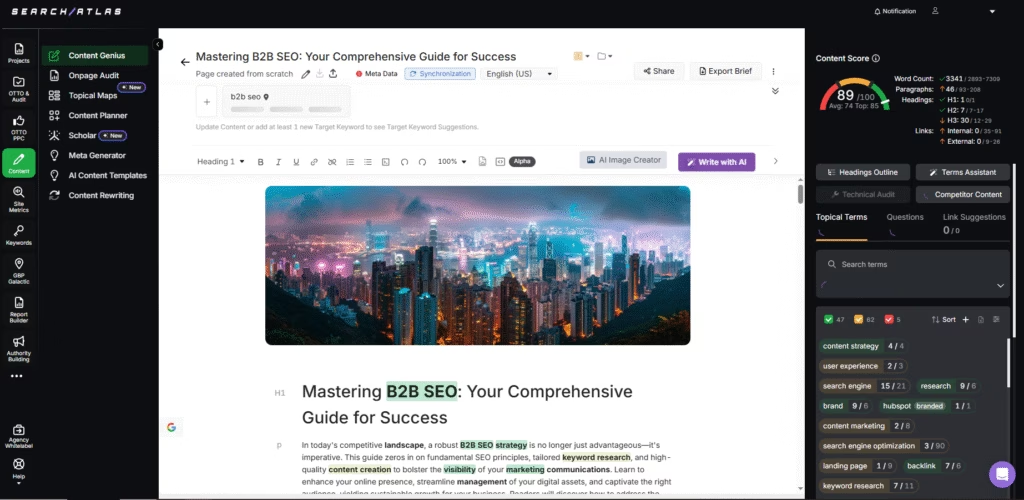
Search Atlas is the best ProWritingAid Alternative. Search Atlas is an agentic SEO and content execution platform built for teams that need predictable organic growth rather than isolated grammar correction. Search Atlas connects keyword research, SERP intelligence, LLM visibility tracking, semantic optimization, backlink data, and on-site execution inside one unified system.
Search Atlas surpasses ProWritingAid by shifting content from style analysis into search-driven performance. ProWritingAid evaluates writing through readability reports and grammar suggestions. Search Atlas builds pages around live ranking patterns, competitor benchmarks, and topical authority signals, so content earns visibility instead of only correcting errors.
Search Atlas Content Genius operates as the semantic writing engine. Content Genius creates and expands drafts using SERP analysis, keyword mapping, and passage-level guidance. The editor highlights missing subtopics, restructures headings, and increases topical depth based on how ranking pages actually perform.
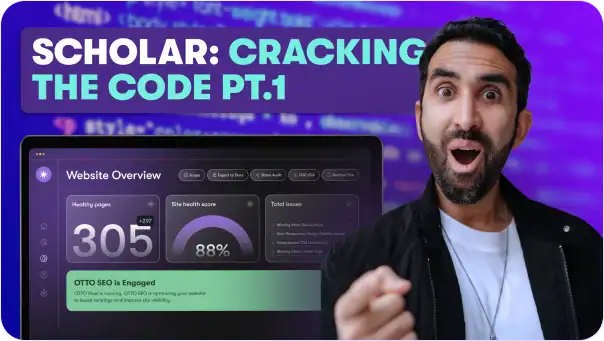
Search Atlas measures quality through Scholar, the content scoring system that grades pages from 0 to 100 for clarity, intent match, accuracy, and information gain. ProWritingAid provides style reports without search visibility metrics.
OTTO SEO powers execution. OTTO applies optimizations directly on the website by updating titles, internal links, schema, page structure, and creating and optimizing content in real time. That removes the manual work and publishing gap that exists in ProWritingAid’s editing-only workflow.
Search Atlas is a paid tool with pricing ranging from $99 to $399 per month. That cost replaces separate tools for keyword research, SEO optimization, content scoring, and on-site execution. Search Atlas contrasts with the pricing and focus of ProWritingAid. Search Atlas is priced for broader marketing operations, which makes Search Atlas a higher-cost choice when compared to writing editors, but one that consolidates SEO, content strategy, and optimization functions into a single suite. ProWritingAid’s lower pricing reflects its specialization in writing enhancement rather than full SEO operations.
Pros mentioned in the Search Atlas review include autonomous SEO optimization, SERP-driven writing, and scalable topic planning. The primary limitation of Search Atlas is a learning curve for teams new to system-level SEO automation, but guided onboarding simplifies adoption.
2. Grammarly: Best ProWritingAid Alternative for Real-time Grammar, Style, Clarity, and Translation Suggestions
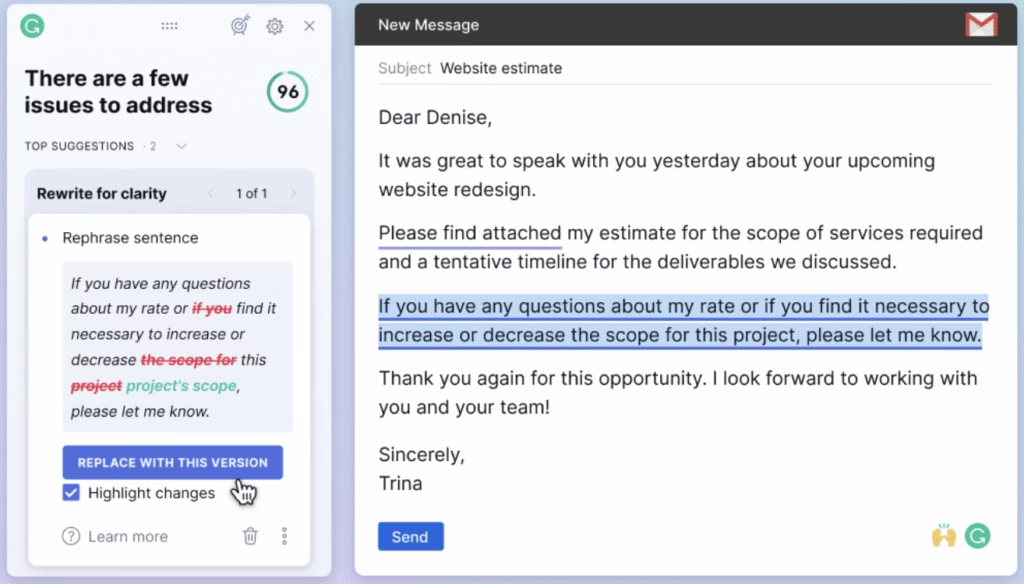
Grammarly is a real-time writing assistant that provides grammar corrections, style suggestions, clarity improvements, and in-line translation across multiple languages. Grammarly is designed to enhance written communication accuracy and readability through automated suggestions that apply across browsers, documents, and apps. Grammarly matters for users who need immediate feedback on written text quality in professional, academic, or casual contexts.
Grammarly is widely adopted across individuals and teams who require immediate, AI-powered corrections for syntax, punctuation, and style while drafting text in English and other languages. Grammarly provides suggestion layers that operate in real time across text fields and editors, aiming at reducing errors and elevating clarity for global communication workflows.
Core features include real-time grammar checks, style adjustments, clarity recommendations, tone detection, plagiarism detection, and translation suggestions in numerous languages (Spanish, French, German, Portuguese, Italian). Grammarly’s AI assistant (GrammarlyGO) generates and rewrites text based on context, enabling responsive editing workflows across browsers and desktop applications.
Grammarly differs from ProWritingAid in feedback timing and delivery model. ProWritingAid emphasizes post-draft analysis through detailed reports that evaluate readability, pacing, and stylistic patterns. Grammarly applies in-line suggestions during writing, which positions Grammarly as a stronger option for users who prioritize immediate correction and productivity across emails, documents, and web applications.
Grammarly is a freemium tool with pricing tiers of $12/month and higher for teams and organisations. The free plan provides basic grammar and spelling corrections with tone insights and a limited set of AI prompts. The pro plan adds full-sentence rewrites, advanced tone and style adjustments, vocabulary suggestions, plagiarism detection with 2,000 monthly AI prompts. Business and Enterprise plans offer team style guides, analytics dashboards, and enterprise-grade controls.
Pros of Grammarly include robust real-time grammar and style suggestions, wide platform support (browser extensions, desktop apps), and multilingual writing assistance with translation features. Cons of Grammarly include reported aggressive suggestions that alter voice, relatively higher subscription cost for Pro compared to basic competitors, and occasional user frustration with suggestion accuracy.
3. Hemingway Editor: Best ProWritingAid Alternative for Improving Readability and Simplifying Complex Sentences
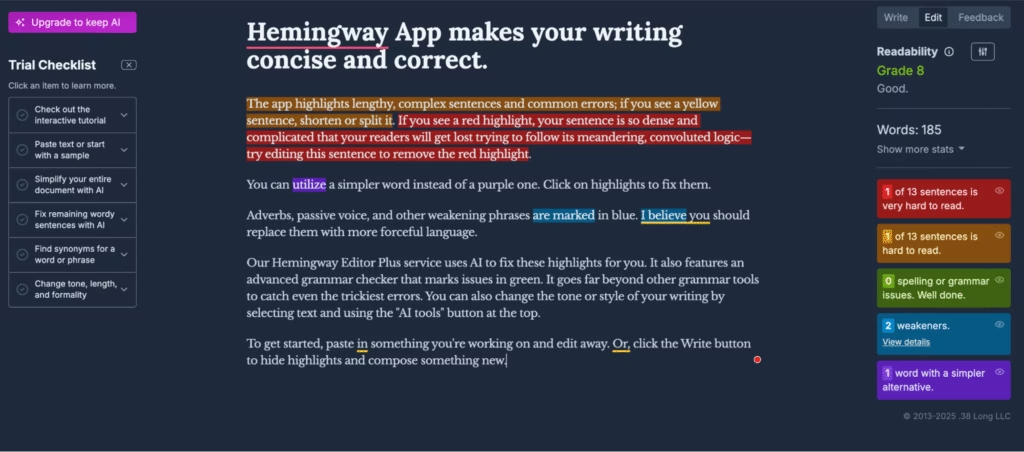
Hemingway Editor is a readability optimization tool that identifies complex sentence structures, highlights problematic text, and suggests simplification to enhance clarity. Hemingway Editor tracks sentence complexity with colour-coded feedback that marks hard-to-read sentences and weak wording, enabling writers to improve readability at scale. Hemingway Editor matters for writers, editors, and communicators who prioritise clear and accessible text over advanced stylistic optimization.
Hemingway Editor is designed to remove convoluted structures and simplify sentences that hinder reader comprehension, which contrasts with comprehensive grammar platforms that address broader stylistic and semantic corrections. Hemingway Editor highlights overly complex sentences in red and yellow, flags adverbs and weak wording, and detects passive voice to prompt clearer rewriting.
Core features include sentence complexity highlighting with a readability grade score, color-coded feedback that shows issues in real time, passive voice detection, and simplified word suggestions to reduce cognitive load for readers. Hemingway Editor offers AI-powered sentence rewrites, advanced grammar fixes, and tone and style adjustment when used with its Plus subscription.
Hemingway Editor works as an alternative to ProWritingAid in analytical scope and intent. ProWritingAid delivers multi-layered reports that examine grammar, pacing, repetition, and stylistic patterns across long documents. Hemingway Editor concentrates on surface-level clarity and sentence simplicity, which positions Hemingway Editor as a stronger option for users who need fast readability improvement rather than comprehensive writing diagnostics.
Hemingway Editor is available in both free and paid formats, with pricing from $0 for the free online editor to subscription tiers of $10 per month for AI-assisted editing and higher allowances on sentence rewrites.
Pros of Hemingway Editor include clear visualisation of readability issues, automatic readability grade assessment, and simplified rewriting suggestions that improve reader comprehension. Cons of Hemingway Editor include limited advanced grammar diagnostics compared to full proofing engines and constrained collaboration features for team editorial workflows.
4. Ginger Software: Best ProWritingAid Alternative for Grammar Correction, Style Suggestions, Translation, and Sentence Rephrasing
Ginger Software is an AI-powered writing assistant that combines grammar correction, style suggestions, translation, and sentence rephrasing in one platform. Ginger Software applies context-aware analysis to written text to improve clarity, accuracy, and multilingual expression across browsers, desktop, and mobile devices. Ginger Software matters for users who require broad writing enhancements with translation capabilities without steep pricing overhead.
Ginger Software targets writers, students, and non-native English speakers who want integrated language checks with rephrasing tools that reduce manual editing time. Ginger Software performs grammar and punctuation fixes, offers alternative phrasing options, and converts text between 40+ languages, increasing usability for cross-language communication tasks.
Core features include grammar and spelling error detection, sentence rephrasing to enhance expression, real-time translation across multiple languages, contextual synonym suggestions, and platform integration through browser extensions and Microsoft Office add-ins.
Ginger Software differs from ProWritingAid in language scope and workflow focus. ProWritingAid concentrates on English-only writing with detailed reports that analyze readability, pacing, and stylistic patterns across long documents. Ginger Software prioritizes multilingual correction and sentence-level rephrasing, which positions Ginger Software as a stronger option for non-native speakers and cross-language communication rather than manuscript-level analysis.
Ginger Software is a freemium tool with a free plan that permits limited grammar checks and basic rephrasing, and a Premium subscription priced at roughly $19.90 per month, $9.99 per month when billed annually, or around $7.99 per month on a two-year plan for unlimited corrections and translation.
Pros of Ginger Software include robust grammar correction with rephrasing functionality, translation capabilities in over 40 languages, and multi-platform access through extensions and apps. Cons of Ginger Software include occasional unnatural rephrasing output, limited advanced stylistic analysis compared to full editorial suites, and varied user satisfaction with customer service responsiveness.
5. Slick Write: Best ProWritingAid Alternative for Readability and Grammar Analysis with a Minimalist Interface
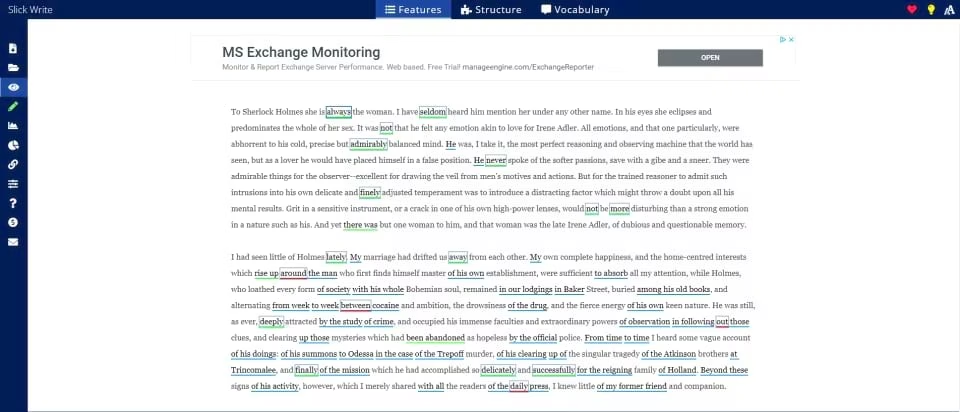
Slick Write is a free grammar checking and readability analysis tool designed for writers who need straightforward error detection without subscription fees or feature complexity. Slick Write identifies grammar mistakes, structural issues, and stylistic weaknesses through a clean, distraction-free interface.
Slick Write functions as a ProWritingAid alternative by eliminating subscription costs and simplifying the editing interface. Slick Write operates entirely through a web browser without installation requirements. ProWritingAid requires paid plans for full functionality and generates detailed multi-report analysis that increases complexity.
Core features revolve around structural and statistical analysis. Grammar and spelling checker identifies basic errors. Readability statistics calculate sentence length averages and word count metrics. Prepositional phrase detection flags excessive usage. Passive voice identification encourages active construction. Repeated word highlighting prevents redundancy. Flow visualisation displays sentence structure patterns.
Slick Write differs from ProWritingAid in depth and delivery. ProWritingAid provides extensive reports, AI suggestions, and long-form writing diagnostics designed for iterative editing. Slick Write focuses on immediate surface-level analysis, which positions Slick Write as a simpler alternative for quick readability checks rather than comprehensive manuscript refinement.
Slick Write is a free tool with no paid tiers or premium features. All functionality remains accessible without payment, registration, or usage limits.
Pros of Slick Write include zero cost, fast processing, a clean, minimalist interface, no account creation requirement, and strong structural analysis features. Cons of Slick Write include basic grammar checking compared to premium tools, no plagiarism detection, no browser extension or desktop application, limited style suggestions, and the absence of AI-powered rewriting features.
6. WhiteSmoke: Best ProWritingAid Alternative for Grammar, Punctuation, and Writing Enhancement with Templates

WhiteSmoke is a grammar correction and writing improvement platform that combines error detection with pre-built templates for business communication, academic writing, and creative content. WhiteSmoke identifies grammatical errors, punctuation mistakes, and style issues while providing structured templates for letters, reports, essays, and correspondence.
WhiteSmoke operates as a ProWritingAid alternative through template-driven writing assistance. WhiteSmoke includes hundreds of templates for business letters, cover letters, thank you notes, condolence messages, job applications, and academic papers. ProWritingAid focuses on editing existing text without providing structural templates or document frameworks.
Core features combine correction with composition assistance. Grammar and punctuation checker identifies errors across sentence structures. Spell checker corrects misspellings and typos. Style checker suggests improvements for clarity and readability. Translation tool converts text between multiple languages. The template library provides formatted structures for common document types (business correspondence, legal documents, resumes, and academic essays).
WhiteSmoke differs from ProWritingAid in workflow emphasis and tooling. ProWritingAid delivers detailed reports that evaluate readability, pacing, repetition, and style across long documents. WhiteSmoke prioritizes template-driven writing and surface-level correction, which positions WhiteSmoke as a practical alternative for users who draft emails, letters, resumes, and business documents that follow standardized formats.
WhiteSmoke is a paid tool with pricing ranging from $10 to $22.99 per month and higher tiers for team and corporate subscriptions that include enhanced template libraries and priority assistance.
Pros of WhiteSmoke include an extensive template library, built-in translation functionality, affordable annual pricing, and support for business communication formats. Cons of WhiteSmoke include outdated user interface design, limited browser integration compared to modern tools, weaker grammar detection than Grammarly or ProWritingAid, and no mobile application availability.
7. Reverso: Best ProWritingAid Alternative for Grammar Checking with Context Suggestions and Language Learning
Reverso is a grammar and spell checker that provides contextual suggestions, language learning insights, and bilingual examples to improve written accuracy. Reverso applies contextual analysis to errors and pairs corrections with examples drawn from real usage, enabling a deeper understanding of grammar in applied contexts. Reverso matters for writers who want immediate correction plus educational feedback that clarifies why a form is correct or incorrect.
Reverso is designed for users who require both error detection and language learning reinforcement through context examples in English and other languages. Reverso locates grammar mistakes, suggests revisions, and provides conjugation and translation tools that reinforce correct usage across linguistic boundaries.
Core features include contextual grammar checks with real usage examples, bilingual translation, conjugation tables, pronunciation guides, and interactive language exercises that reinforce correct structures. Reverso provides browser and mobile extensions that embed checks directly into text Entry interfaces.
Reverso differs from ProWritingAid in purpose and depth. ProWritingAid concentrates on English-only writing with detailed analytical reports for style, readability, and structure. Reverso emphasizes contextual understanding and multilingual learning, which positions Reverso as a stronger option for language learners and non-native writers rather than authors who need deep, long-form diagnostics.
Reverso is a freemium tool with free grammar, spelling, and context suggestions available online, and Premium subscription tiers that add extended translations, longer text checks, and priority processing. Pricing typically ranges from $9.99 per month for Premium access when billed annually.
Pros of Reverso include deep contextual examples that clarify grammar rules, integrated language learning modules, and multi-language translation that aids cross-lingual writing. Cons of Reverso include limited advanced style suggestions compared to full editorial suites, constrained large-text processing in free tiers, and occasional inconsistencies in automated translations.
8. LanguageTool: Best ProWritingAid Alternative for Multi-language Grammar and Style Checking
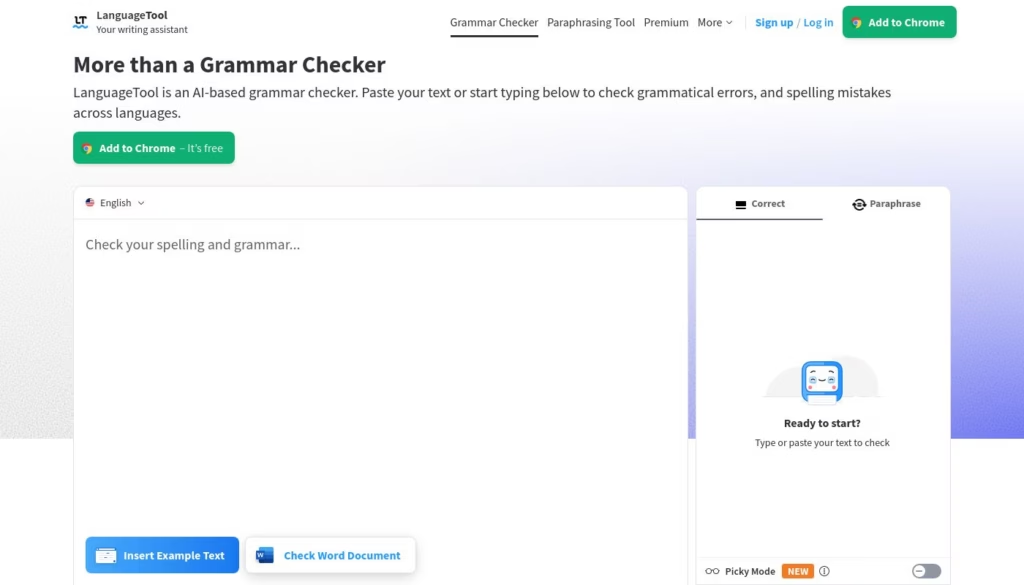
LanguageTool is a multi-language writing assistant that detects grammar errors, style issues, and tone inconsistencies across 30+ languages. LanguageTool applies rule-based and statistical analysis to written text to identify grammatical mistakes and stylistic weaknesses. LanguageTool matters for users who require broad language coverage with clear grammar and style checks across different linguistic environments.
LanguageTool is designed for individuals, educators, and global teams who require checking beyond English with accurate suggestions for grammar and style in multiple languages. LanguageTool finds agreement errors, punctuation faults, and stylistic mismatches that general checkers often overlook, and offers browser, desktop, and integration extensions for cross-platform evaluation.
Core features include multi-language grammar detection, real-time style suggestions, tone assessment indicators, customizable rule sets for domain-specific checks, and integrations with browsers, MS Office, Google Docs, and APIs for automated pipelines.
LanguageTool differs from ProWritingAid in linguistic scope and prioritization. ProWritingAid focuses on deep English prose analysis with extensive reports for readability, pacing, and repetition. LanguageTool emphasizes cross-language correctness and accessibility, which positions LanguageTool as a stronger option for international communication, multilingual content, and localization workflows rather than long-form English manuscript refinement.
LanguageTool is a freemium platform with a free tier for basic grammar and style checks and a Premium subscription that ranges from $4.92 per month when billed annually, which increases character limits per check and adds advanced typo detection and priority processing. Enterprise plans scale with team size and API usage volumes.
Pros of LanguageTool include broad language support with consistent grammar and style feedback, flexible rule adjustment for domain needs, and wide integration availability. Cons of LanguageTool include occasional false positives in style suggestions, less advanced rewriting guidance compared to full editing suites, and performance variance across languages with complex syntax rules.
9. PerfectIt: Best ProWritingAid Alternative for Advanced Editing in Professional Writing Projects

PerfectIt is a professional proofreading and editing tool that enforces consistency, style rules, and formatting accuracy across long documents. PerfectIt applies rule-based checks for abbreviations, hyphenation, list formatting, and style guide adherence, which differs from general grammar engines. PerfectIt matters for editors, legal professionals, and technical writers who require project-level quality control rather than basic grammar suggestions.
PerfectIt outperforms ProWritingAid in advanced consistency analysis and professional editing workflows. ProWritingAid focuses on grammar, style suggestions, and readability reports. PerfectIt targets structural and style rule enforcement, which makes PerfectIt a stronger choice for high-stakes editing where brand guidelines, style manuals, and document formatting consistency strictly matter.
Core features inside PerfectIt center on exhaustive consistency checks and style rule validation. PerfectIt locates inconsistent abbreviations, undefined acronyms, misplaced hyphens, variant spellings (US vs CA vs UK English), and formatting violations. Users link custom style guides (UN Style, Chicago Manual of Style) to enforce domain norms. PerfectIt integrates directly with Microsoft Word and offers a 14-day free trial with full features for evaluation.
PerfectIt is a paid tool with pricing of $10 per month for the Professional plan when billed annually for 1 yo 3 users. Enterprise and elite plans add PowerPoint access, team training sessions, and deployment support for larger organizations. Annual updates and support are included in the subscription.
Pros of PerfectIt include deep consistency enforcement across long and technical documents, extensive style rule customization, and Microsoft Word integration for seamless professional editing. Cons of PerfectIt include the absence of real-time grammar and spelling correction found in ProWritingAid, limited standalone platform support outside Word, and less emphasis on basic style suggestions for general writers.
10. Linguix: Best ProWritingAid Alternative for Grammar, Style, and Plagiarism Detection

Linguix is an AI-driven writing assistant that provides grammar correction, style suggestions, sentence rephrasing, and optional plagiarism detection with a browser-based workflow. Linguix uses machine learning and rule-based checks to identify errors and enhance text clarity while offering shortcuts and content scoring feedback. Linguix matters for writers and communicators who want a balanced mix of error detection and rewriting flexibility combined with plagiarism insights.
Linguix positions itself against ProWritingAid by focusing on streamlined correction and rewriting in real time instead of deep stylistic reporting across many document metrics. ProWritingAid generates extensive reports on style, readability scores, and writing health that suit long-form projects. Linguix delivers more immediate grammar suggestions and paraphrasing options, which makes Linguix a stronger choice for writers who prioritize speed and simplicity over detailed analytical reporting.
Core features inside Linguix center on grammar and spelling checks, contextual style suggestions, sentence rephrasing, plagiarism alerts, snippet shortcuts for repeated phrases, and AI-based writing prompts. Linguix integrates with browsers and offers extensions for major editors, and it provides a content score that quantifies writing quality against internal benchmarks.
Linguix is a paid tool with personal plan pricing at $30 per month and $140 per year.
Pros of Linguix include real-time grammar detection with paraphrasing tools, competitive pricing relative to full editorial suites, and additional plagiarism signals. Cons of Linguix include less comprehensive stylistic analysis than ProWritingAid, fewer deep writing reports, and review-noted gaps in capturing fine-grained errors compared to some competitors.
11. PaperRater: Best ProWritingAid Alternative for Combined Grammar, Style, and Originality Analysis

PaperRater is a web-based writing evaluation platform that performs grammar checks, style analysis, and plagiarism detection within a single automated workflow. PaperRater analyzes submitted text against grammar rules, readability metrics, and originality databases to generate instant feedback. PaperRater matters for students and educators who require fast quality checks without complex configuration.
PaperRater differs from ProWritingAid in scope and depth. ProWritingAid focuses on advanced stylistic reports, long-form writing diagnostics, and detailed sentence-level analysis. PaperRater concentrates on combined surface-level quality signals, which positions PaperRater as a simpler alternative for quick validation rather than deep editorial refinement.
Core features inside PaperRater include automated grammar and spelling correction, readability scoring, vocabulary usage analysis, and plagiarism detection against online sources. PaperRater provides automated writing feedback summaries that assess word choice, sentence variation, and overall writing grade level (grammar analysis, plagiarism scan, readability score).
PaperRater operates as a freemium tool. The Free version limits plagiarism checks and document length. The Premium plan costs $14.95 per month or $95.40 per year ($7.95 per month equivalent) and unlocks unlimited plagiarism detection, advanced grammar suggestions, and expanded submission limits. PaperRater remains cheaper than ProWritingAid Premium Pro, which targets higher annual pricing for advanced reports and AI features.
Pros of PaperRater include fast combined analysis, integrated plagiarism detection, and simple browser-based access without installation. Cons of PaperRater include limited deep style guidance compared to ProWritingAid, weaker support for long professional documents, and basic rewriting capabilities that require manual revision.
12. Autocrit: Best ProWritingAid Alternative for Fiction-focused Style Analysis Including Pacing and Dialogue

AutoCrit is a fiction editing platform that analyzes narrative structure, pacing, dialogue balance, and genre-specific writing patterns across long manuscripts. AutoCrit evaluates fiction against statistical benchmarks derived from published novels, which differentiates craft issues from basic grammar problems. AutoCrit matters for novelists and fiction writers who require story-level diagnostics rather than general writing feedback.
AutoCrit approaches editing differently from ProWritingAid. ProWritingAid concentrates on grammar, readability, and broad style reports that apply across content types. AutoCrit concentrates on fiction mechanics, which positions AutoCrit as a stronger option for authors who write novels, short stories, or genre fiction and need insight into pacing, repetition, and dialogue distribution rather than sentence-level polish alone.
Core features inside AutoCrit focus on narrative analytics. AutoCrit measures pacing through sentence length variation, dialogue ratio, and paragraph flow. Repetition analysis identifies overused words and phrases. Genre comparison reports benchmark manuscripts against genre norms. Chapter-level analysis highlights momentum shifts and structural imbalances (pacing analysis, dialogue tracking, repetition detection).
AutoCrit is a paid tool with pricing of $30 per month on a monthly plan, to lower effective rates on annual subscriptions. Free trials provide limited access to core reports. AutoCrit pricing remains comparable to ProWritingAid Premium tiers but directs value toward fiction-specific insights rather than general writing improvement.
Pros of AutoCrit include deep fiction analytics, clear pacing and dialogue diagnostics, and genre-based benchmarking that ProWritingAid does not emphasize. Cons of AutoCrit include weaker grammar correction than ProWritingAid, limited usefulness for non-fiction or business writing, and reports that require interpretation rather than direct rewrite suggestions.
13. Outwrite: Best ProWritingAid Alternative for Grammar, Style, and Clarity Improvement
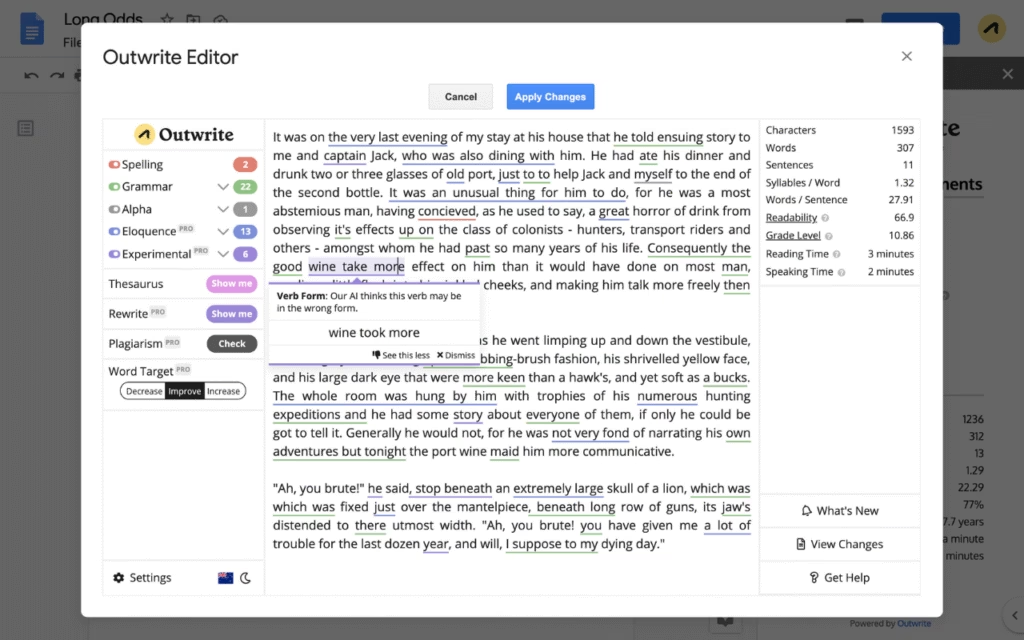
Outwrite is an AI writing assistant that improves grammar accuracy, sentence clarity, and stylistic consistency across professional and academic text. Outwrite evaluates writing for structure, readability, and tone, and applies direct rewrite suggestions that increase clarity without extensive analytical reports. Outwrite matters for users who want practical sentence-level improvement instead of complex writing diagnostics.
Outwrite differs from ProWritingAid in editing depth and delivery. ProWritingAid emphasizes multi-layered reports that analyze readability, pacing, repetition, and stylistic patterns across long documents. Outwrite focuses on actionable corrections and rewrites that apply instantly inside documents, which makes Outwrite more suitable for business writing, emails, and academic submissions where clarity and correctness outweigh stylistic exploration.
Core features inside Outwrite center on real-time grammar correction, sentence rewriting, clarity improvement, and style suggestions. Outwrite provides structure feedback, word choice refinement, and plagiarism detection on higher plans. Integrations operate inside Google Docs, Microsoft Word, and browser environments, which keep editing embedded in active writing workflows (grammar correction, rewrite suggestions, clarity feedback).
Outwrite offers tiered monthly pricing plans that scale from basic grammar checks to advanced stylistic and clarity features. The Pro plan costs $21.95 per month when billed monthly and unlocks advanced writing tools that include style improvement suggestions, structural sentence enhancements, sentence rewrites, and up to 50 plagiarism checks per month.
Pros of Outwrite include clear rewrite suggestions, strong clarity improvements, and low-cost access for professional writing tasks. Cons of Outwrite include limited deep style analytics compared to ProWritingAid, reduced usefulness for creative or long-form fiction, and fewer advanced reports for writers who want diagnostic insights rather than direct edits.
14. StyleWriter: Best ProWritingAid Alternative for Professional-level Writing Analysis

StyleWriter is a professional desktop editing software that evaluates clarity, sentence structure, readability, and writing strength through rule-based linguistic analysis. StyleWriter analyzes text against plain-English, business, and technical writing standards to identify weak phrasing, passive constructions, and unnecessary complexity. StyleWriter matters for professionals who require prescriptive writing guidance rather than AI-generated rewrites.
StyleWriter differs fundamentally from ProWritingAid in methodology and delivery. ProWritingAid relies on cloud-based processing, AI suggestions, and multi-report dashboards that suit creative and long-form writing workflows. StyleWriter applies deterministic rules and readability formulas that prioritize precision, compliance, and consistency. That distinction positions StyleWriter as a stronger option for regulated, professional, and corporate writing where clarity standards outweigh stylistic experimentation.
Core features inside StyleWriter center on professional clarity enforcement. StyleWriter flags long sentences, passive voice, abstract wording, jargon, and redundancies. Readability scoring aligns documents with audience education levels. Sentence-level explanations describe why edits matter, which reinforces disciplined writing practices (readability scoring, sentence strength analysis, plain-English enforcement).
StyleWriter uses one-time licensing rather than subscriptions. The Starter Edition costs $90 and focuses on plain-English editing without advanced customization. The Standard Edition costs $150 and adds advanced editing techniques, writing-style graphs, and extensive configuration controls. The Professional Edition costs $190 and extends the Standard Edition with the Editor’s List, which supports advanced word-choice enforcement for legal, technical, and journalistic writing. This pricing model contrasts with ProWritingAid, which requires recurring annual payments for continued access.
Pros of StyleWriter include strict professional writing standards, deterministic feedback that avoids AI variability, and offline desktop operation. Cons of StyleWriter include no cloud access, no collaboration features, no AI rewriting tools, and limited suitability for creative or narrative writing compared to ProWritingAid.
15. Scribens: Best ProWritingAid Alternative for Bilingual Grammar and Style Checking

Scribens is a bilingual grammar and style checker that analyzes English and French text for syntax errors, punctuation faults, and stylistic inconsistencies through rule-based linguistic analysis. Scribens evaluates sentence structure, verb agreement, typography, and readability while operating inside a browser-based editor and extensions. Scribens matters for users who write in two primary languages and require consistent grammar enforcement without advanced AI rewriting.
Scribens contrasts with ProWritingAid in language scope and analytical depth. ProWritingAid concentrates on English-only writing with extensive reports for style, pacing, and readability across long documents. Scribens emphasizes bilingual correctness and accessibility, which positions Scribens as a stronger option for users who write regularly in both English and French rather than authors who need deep manuscript-level diagnostics.
Core features inside Scribens focus on bilingual accuracy and style control. Scribens detects grammar and spelling errors, punctuation mistakes, typography issues, and sentence repetition. Style suggestions improve clarity and conciseness. A plagiarism checker verifies originality. Integrations operate through browser extensions and a web editor that applies feedback in real time (grammar checking, style suggestions, plagiarism detection).
Scribens operates as a freemium tool. The free version provides grammar and spelling checks with limited text length. The premium version costs €9.90 (≈ $12) per month and unlocks advanced style corrections, extended text limits, plagiarism detection, and priority processing. Scribens remains cheaper than ProWritingAid subscription tiers, which charge higher annual fees for advanced reporting and AI features.
Pros of Scribens include strong bilingual grammar accuracy, a simple interface, and low pricing. Cons of Scribens include limited advanced style analytics, no deep long-form writing reports, and fewer customization options compared to ProWritingAid.
16. Writer: Best ProWritingAid Alternative for AI-powered Style, Grammar, and Clarity Suggestions
Writer is an AI-powered writing platform that enforces grammar accuracy, style consistency, and clarity through customizable language rules and brand governance. Writer evaluates text against organization-defined standards rather than generic writing rules. Writer matters for teams that require a consistent voice, terminology control, and compliance-aligned writing across business communication.
Writer differs from ProWritingAid in its control model and target audience. ProWritingAid focuses on individual writers with descriptive reports that analyze readability, pacing, and stylistic patterns. Writer applies prescriptive enforcement at scale, which positions Writer as a stronger option for organizations that require governed writing systems instead of exploratory style feedback.
Core features inside Writer center on controlled AI and governance. Writer provides real-time grammar and clarity suggestions, customizable style guides, terminology enforcement, inclusive language checks, and AI-assisted generation constrained by rules. Integrations operate across browsers, Google Docs, Microsoft Word, enterprise platforms, and APIs (style guide enforcement, terminology control, AI rewriting).
Writer uses custom pricing available on request. Plans depend on team size, feature scope, governance requirements, and deployment model. This pricing structure differs from ProWritingAid, which publishes fixed individual subscription tiers. Writer targets organizations that value centralized control and compliance over per-user affordability.
Pros of Writer include strong brand governance, scalable enforcement across teams, and rule-constrained AI output. Cons of Writer include a higher entry cost for individual users, limited suitability for creative writing, and reduced emphasis on narrative or exploratory style diagnostics compared to ProWritingAid.
17. Trinka: Best ProWritingAid Alternative for Academic and Technical Writing Improvement

Trinka is an AI writing assistant designed for academic and technical documents that applies discipline-specific grammar, style, and compliance checks. Trinka evaluates manuscripts against formal writing conventions used in research, engineering, and medical fields. Trinka matters for authors who publish scholarly or technical content where precision, formality, and consistency determine acceptance.
Trinka contrasts with ProWritingAid in audience and rule depth. ProWritingAid targets general writing improvement with readability and stylistic reports suited to creative and long-form prose. Trinka enforces academic and technical standards, which positions Trinka as a stronger option for researchers and professionals who need journal-aligned language rules rather than narrative style exploration.
Core features inside Trinka focus on academic rigor. Trinka detects advanced grammar issues, discipline-specific style errors, and formal tone violations. Technical checks validate subject-verb agreement in complex sentences, article usage, and domain terminology. A publication readiness module reviews language against academic conventions. Add-ons extend functionality for plagiarism checking and citation integrity (grammar enforcement, academic tone control, technical consistency).
Trinka operates as a freemium platform. The free plan provides basic grammar checks with limited features. Trinka’s monthly subscription costs $20. Paid plans use tiered pricing that unlocks advanced academic corrections, full document analysis, and add-on modules for plagiarism and compliance, with pricing published on request and varying by feature scope. Trinka pricing aligns with specialized academic tools rather than consumer writing editors, while ProWritingAid publishes fixed subscription tiers for general use.
Pros of Trinka include strong academic and technical language enforcement, formal tone control, and suitability for research manuscripts. Cons of Trinka include limited creative writing applicability, fewer narrative-style insights than ProWritingAid, and advanced features that require paid access or add-ons.
18. Sapling: Best ProWritingAid Alternative for AI-powered Writing Suggestions

Sapling is an AI-powered writing assistant that provides real-time grammar correction, clarity improvements, and sentence-level suggestions optimized for professional communication. Sapling evaluates text as users write and applies context-aware recommendations that increase accuracy and consistency. Sapling matters for teams that require fast, in-line writing guidance inside operational tools rather than post-draft analysis.
Sapling contrasts with ProWritingAid in delivery and use case. ProWritingAid emphasizes post-write reports that analyze readability, pacing, and stylistic patterns across long documents. Sapling applies real-time suggestions within live workflows, which positions Sapling as a stronger option for customer support, sales, and internal communication where speed and consistency outweigh deep manuscript diagnostics.
Core features inside Sapling focus on real-time assistance and automation. Sapling provides grammar and spelling correction, clarity suggestions, autocomplete, and rewrite recommendations. Team features add shared snippets, response macros, and performance analytics. Integrations operate across browsers and business platforms that embed writing directly into workflows (Chrome extension, CRM integrations, messaging tools).
Sapling operates with a freemium model. The free plan provides basic grammar and spelling checks, and the pro version costs $25per month. Paid plans use subscription pricing with custom quotes available on request, which scale by user count, integrations, and advanced analytics. This pricing model differs from ProWritingAid’s fixed individual tiers and aligns with Sapling’s focus on team-based operational writing.
Pros of Sapling include fast real-time suggestions, strong integrations for business communication, and scalable team features. Cons of Sapling include limited deep style analytics, reduced usefulness for long-form creative writing, and fewer narrative diagnostics compared to ProWritingAid.
19. GrammarCheck: Best ProWritingAid Alternative for Quick Online Grammar and Punctuation Checks

GrammarCheck is a browser-based grammar and punctuation checker that performs fast surface-level error detection through a simple online editor. GrammarCheck scans pasted text for basic grammatical mistakes, spelling errors, and punctuation faults without account setup or configuration. GrammarCheck matters for users who need immediate corrections for short text rather than comprehensive writing analysis.
GrammarCheck contrasts with ProWritingAid in scope and depth. ProWritingAid delivers detailed reports that analyze readability, sentence structure, repetition, and stylistic patterns across long documents. GrammarCheck focuses on rapid validation of grammar and punctuation, which positions GrammarCheck as a lightweight alternative for quick checks rather than iterative editing or manuscript refinement.
Core features inside GrammarCheck center on speed and simplicity. GrammarCheck detects spelling errors, grammar mistakes, and punctuation issues through an online editor. A premium redirect option connects users to expanded correction tools for deeper review. The interface prioritizes fast paste-and-check workflows over guided rewriting or analytics (grammar detection, punctuation checking, spelling validation).
GrammarCheck operates primarily as a free online tool for basic checks. Advanced correction options redirect to paid partner services rather than native subscription plans. This pricing and feature structure contrasts with ProWritingAid, which provides an integrated paid platform with advanced reports, AI features, and long-form document analysis.
Pros of GrammarCheck include instant access, no registration requirements, and fast grammar validation for short text. Cons of GrammarCheck include no style analysis, no AI rewriting, limited context awareness, and minimal usefulness for professional or long-form writing compared to ProWritingAid.
20. SpellCheckPlus: Best ProWritingAid Alternative for Grammar and Spelling Verification

SpellCheckPlus is an online grammar and spelling verification system that checks text accuracy through rule-based linguistic analysis. SpellCheckPlus scans sentences for spelling mistakes, grammar errors, and punctuation faults inside a lightweight web editor. SpellCheckPlus matters for users who require fast correctness checks without stylistic interpretation or AI rewriting.
SpellCheckPlus contrasts with ProWritingAid in analytical scope and purpose. ProWritingAid evaluates writing quality through readability reports, repetition analysis, and style diagnostics across long documents. SpellCheckPlus concentrates on correctness validation, which positions SpellCheckPlus as a practical option for students and general users who need reliable grammar and spelling confirmation rather than deep editorial insight.
Core features inside SpellCheckPlus focus on verification accuracy. SpellCheckPlus detects spelling errors, grammar mistakes, punctuation problems, and common word misuse. Premium access adds expanded grammar rules, detailed error explanations, and higher text limits. The workflow prioritizes paste-and-check usage instead of guided rewriting or scoring dashboards (grammar checking, spelling verification, punctuation correction).
SpellCheckPlus provides free basic checking and a Premium plan priced at $15 per year, which unlocks advanced grammar rules, full explanations, and extended usage limits. This pricing sits far below ProWritingAid subscription tiers, which charge recurring monthly or annual fees for advanced reports and AI-driven analysis.
Pros of SpellCheckPlus include low annual cost, clear error explanations, and fast verification for short text. Cons of SpellCheckPlus include no style analysis, no sentence rewriting, limited long-document handling, and minimal value for professional or creative writing compared to ProWritingAid.
21. QuillBot: Best ProWritingAid Alternative for Paraphrasing, Summarization, and Sentence Refinement
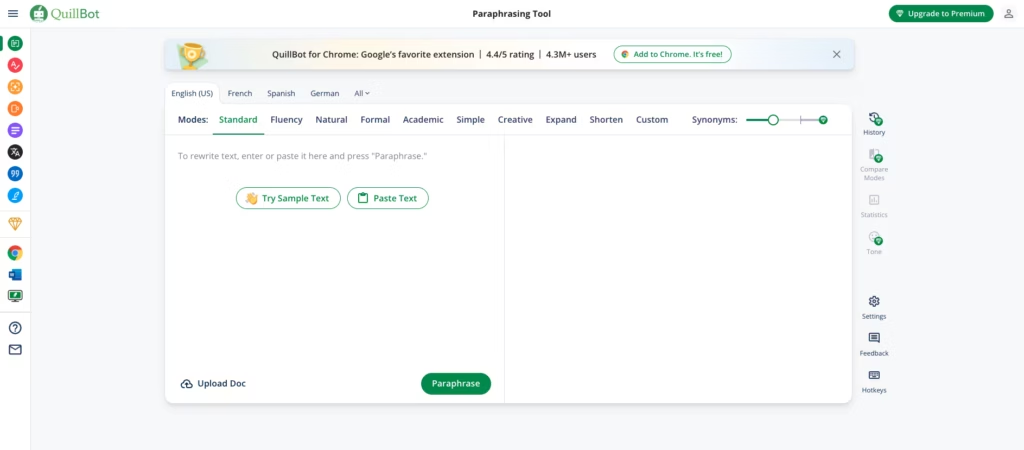
QuillBot is an AI-powered language processing platform that rewrites, summarizes, and refines sentences through controlled paraphrasing modes. QuillBot transforms existing text into alternative formulations that preserve meaning while adjusting structure and tone. QuillBot matters for users who focus on rewriting efficiency rather than deep grammatical diagnostics.
QuillBot surpasses ProWritingAid in rewrite-focused workflows and text transformation speed. ProWritingAid evaluates writing quality through reports that assess grammar, readability, and stylistic patterns. QuillBot operates as a transformation engine that reformulates sentences, condenses passages, and restructures phrasing on demand. That structure positions QuillBot ahead for users who need rapid paraphrasing and summarization rather than analytical writing feedback.
Core features inside QuillBot center on text transformation. Paraphraser modes adjust fluency, formality, and creativity. A summarizer condenses long passages into key points. A grammar checker reviews rewritten output. Citation generation formats references for academic use. A co-writer interface combines rewriting and drafting tools (paraphrasing modes, summarization, sentence refinement).
QuillBot is a paid platform with tiered pricing. Monthly plans start at approximately $19.95, while annual plans reduce the effective monthly cost to $8.33. Paid access unlocks unlimited paraphrasing, extended summarization limits, advanced modes, and plagiarism detection. QuillBot pricing remains lower than ProWritingAid Premium Pro for users who prioritize rewriting over report-based analysis.
Pros of QuillBot include fast paraphrasing, multiple rewrite modes, and strong summarization accuracy. Cons of QuillBot include limited deep grammar analysis, reduced usefulness for long-form stylistic development, and rewrite outputs that require manual review for tone consistency compared to ProWritingAid.
22. Wordtune: Best ProWritingAid Alternative for Rewriting and Improving Style with Tone Options
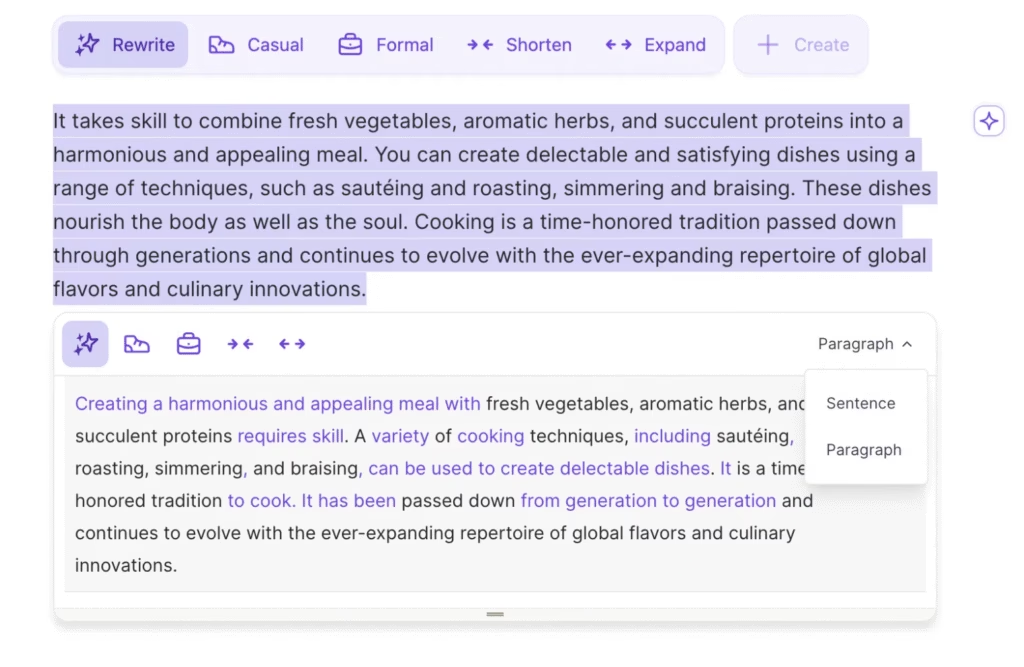
Wordtune is an AI rewriting system that refines sentences through tone-controlled paraphrasing and clarity-focused restructuring. Wordtune rewrites existing text to improve flow, adjust formality, and increase readability without generating long analytical reports. Wordtune matters for users who prioritize sentence refinement and tone control during drafting rather than post-write diagnostics.
Wordtune advances beyond ProWritingAid for rewrite-centric workflows and tone adjustment. ProWritingAid emphasizes grammar correction and report-based style analysis across long documents. Wordtune operates as an in-line rewriting layer that reshapes sentences instantly with selectable tones. That structure places Wordtune ahead for writers who need fast stylistic variation and clarity improvement rather than deep document-level analysis.
Core features inside Wordtune drive sentence-level transformation. Rewrite suggestions offer multiple alternatives per sentence. Tone options adjust formality and directness. A summarization tool condenses paragraphs. A grammar layer validates rewritten output. Browser and editor integrations apply changes during writing sessions, sentence rewriting, tone adjustment, summarization.
Wordtune operates with subscription-based pricing. Monthly plans start at $13.99. Paid access unlocks unlimited rewrites, advanced tone options, extended summarization limits, and priority processing. Wordtune pricing sits above ProWritingAid entry tiers but targets users who value rewrite speed over analytical depth.
Pros of Wordtune include fast sentence rewriting, clear tone control, and strong usability inside browsers and editors. Cons of Wordtune include limited deep grammar diagnostics, no long-form style reports, and rewrite outputs that require manual review for consistency compared to ProWritingAid.

23. Paraphraser.io: Best ProWritingAid Alternative for Sentence-level Paraphrasing and Rewriting

Paraphraser.io is an AI paraphrasing system that rewrites sentences through controlled transformation modes that preserve meaning while altering structure. Paraphraser.io processes existing text and produces alternative phrasings at the sentence level with adjustable intensity. Paraphraser.io matters for users who require fast rewriting and variation rather than document-level writing analysis.
Paraphraser.io prioritizes rewrite execution over analytical depth, which differentiates it from ProWritingAid. ProWritingAid evaluates grammar, readability, repetition, and style through multi-report analysis. Paraphraser.io applies direct sentence transformation without diagnostics, which places Paraphraser.io ahead for users who need rapid paraphrasing instead of iterative editing and reporting.
Core features inside Paraphraser.io focus on sentence transformation. Multiple paraphrasing modes adjust fluency and structure. A grammar layer validates rewritten output. A plagiarism checker verifies originality on paid tiers (sentence rewriting, text variation, originality validation). The workflow centers on paste, rewrite, and export rather than guided revision.
Paraphraser.io operates with subscription-based pricing. Paid plans start at $23 per month, with higher tiers that increase rewrite limits, unlock advanced modes, and expand plagiarism checks. This pricing remains lower than ProWritingAid Premium Pro for users who prioritize rewriting speed over comprehensive writing analysis.
Pros of Paraphraser.io include fast sentence rewriting, multiple transformation modes, and simple operation. Cons of Paraphraser.io include limited grammar diagnostics, no long-form style reports, and rewrite outputs that require manual review for consistency compared to ProWritingAid.
24. QuillWord: Best ProWritingAid Alternative for Rewriting, Paraphrasing, and Content Variation

QuillWord is an AI rewriting platform that produces sentence-level paraphrases and content variations through direct text transformation. QuillWord rewrites existing content to generate alternative phrasing that preserves semantic meaning while changing structure. QuillWord matters for users who require fast content variation rather than analytical writing evaluation.
QuillWord prioritizes rewrite execution over diagnostic analysis, which differentiates it from ProWritingAid. ProWritingAid evaluates grammar quality, readability metrics, repetition frequency, and stylistic patterns through structured reports. QuillWord applies immediate paraphrasing without scoring or reporting layers, which places QuillWord ahead for workflows that require rapid rewriting and content diversification instead of iterative editorial review.
Core features inside QuillWord focus on controlled transformation. Multiple paraphrasing modes adjust sentence structure and wording intensity. A variation engine outputs several rewritten options per input. Export tools enable reuse across formats.
QuillWord uses subscription-based access with a monthly plan priced at $29.99 per month. Paid access unlocks unlimited paraphrasing, advanced rewrite modes, and higher output limits. This pricing remains lower than ProWritingAid Premium Pro, which targets long-form analysis and report-based editing rather than rewrite-centric workflows.
Pros of QuillWord include fast sentence rewriting, multiple variation outputs per input, and simple operational flow. Cons of QuillWord include no grammar diagnostics, no readability analysis, and rewrite outputs that require manual review for consistency compared to ProWritingAid.
25. Anyword: Best ProWritingAid Alternative for Data‑Driven AI Copywriting & Performance Optimization

Anyword is a data-driven AI copywriting platform that generates marketing text and predicts performance through predictive scoring models. Anyword analyzes copy variants against historical conversion data and audience signals to estimate engagement potential before publication. Anyword matters for marketing teams that require measurable performance signals rather than post-write language diagnostics.
Anyword operates against ProWritingAid with a fundamentally different objective. ProWritingAid evaluates grammar accuracy, readability metrics, repetition frequency, and stylistic patterns through analytical reports. Anyword optimizes copy outcomes through predictive performance scores, which positions Anyword ahead for paid media, landing pages, and conversion-focused messaging rather than general writing quality improvement.
Core features inside Anyword focus on performance optimization. Predictive Performance Score ranks copy variants before launch. Audience targeting aligns language with personas and channels. A/B variant generation produces multiple copy options per prompt. Data-backed insights guide wording decisions across campaigns, performance scoring, audience targeting, variant generation.
Anyword is a paid platform with subscription pricing that ranges from $49 per month, depending on credit volume, data features, and team access. Entry plans limit monthly generation and data usage. Higher tiers expand predictive analytics, audience targeting depth, and collaboration features. Anyword pricing exceeds ProWritingAid tiers, reflecting its focus on revenue-driven copy optimization rather than language correction.
Pros noted in the Anyword review include predictive scoring based on performance data, strong alignment with conversion-focused workflows, and rapid variant generation for testing. Cons of Anyword include limited long-form writing control, weaker grammar diagnostics than ProWritingAid, and dependency on sufficient data context for accurate performance prediction.
26. Copy.ai: Best ProWritingAid Alternative for AI-powered Marketing Copy Creation
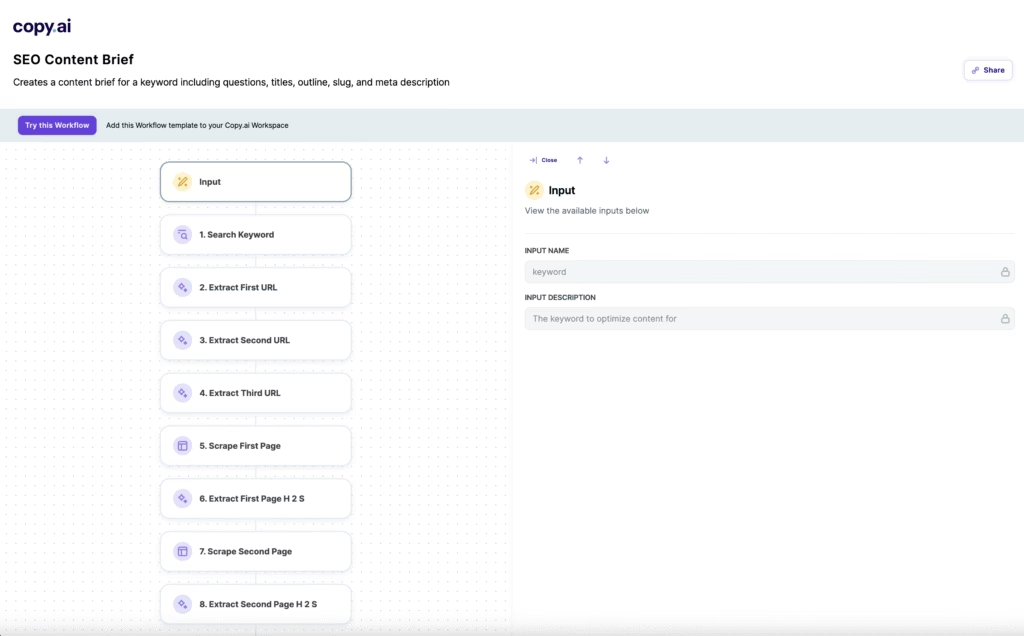
Copy.ai is an AI marketing copy generation platform that produces short-form promotional text through prompt-driven content automation. Copy.ai converts brief instructions into ready-to-publish copy across common marketing formats with emphasis on speed and variation. Copy.ai matters for teams that need rapid creation of campaign assets rather than sentence-level language diagnostics.
Copy.ai operates against ProWritingAid with a different production model. ProWritingAid evaluates grammar accuracy, readability metrics, repetition frequency, and stylistic patterns through analytical reports. Copy.ai generates marketing-ready copy at scale without report layers, which places Copy.ai ahead for workflows that prioritize ideation velocity and message variation over editorial refinement.
Core features inside Copy.ai focus on marketing output. Structured templates generate ads, emails, social captions, and landing page sections. Brand voice controls enforce terminology and tone across outputs. Workflow tools organize projects and automate batch generation ad templates, email sequences, and social captions. Localization options adapt copy for regional markets.
Copy.ai is a paid platform with subscription pricing that ranges from $29, depending on feature access, automation depth, and team usage. Entry tiers target individual marketers with template access and generation limits. Higher tiers add workflow automation, collaboration, and system integrations. Copy.ai pricing exceeds ProWritingAid entry plans, reflecting its role as a marketing production engine rather than a writing analysis tool.
Pros of Copy.ai include fast copy generation, broad template coverage, and consistent brand voice controls. Cons of Copy.ai include limited grammar diagnostics, weak long-form editing, and recurring phrasing during extended generation compared to ProWritingAid.
27. Jasper AI: Best ProWritingAid Alternative for AI Content Generation for Blogs, Marketing, and Social Media
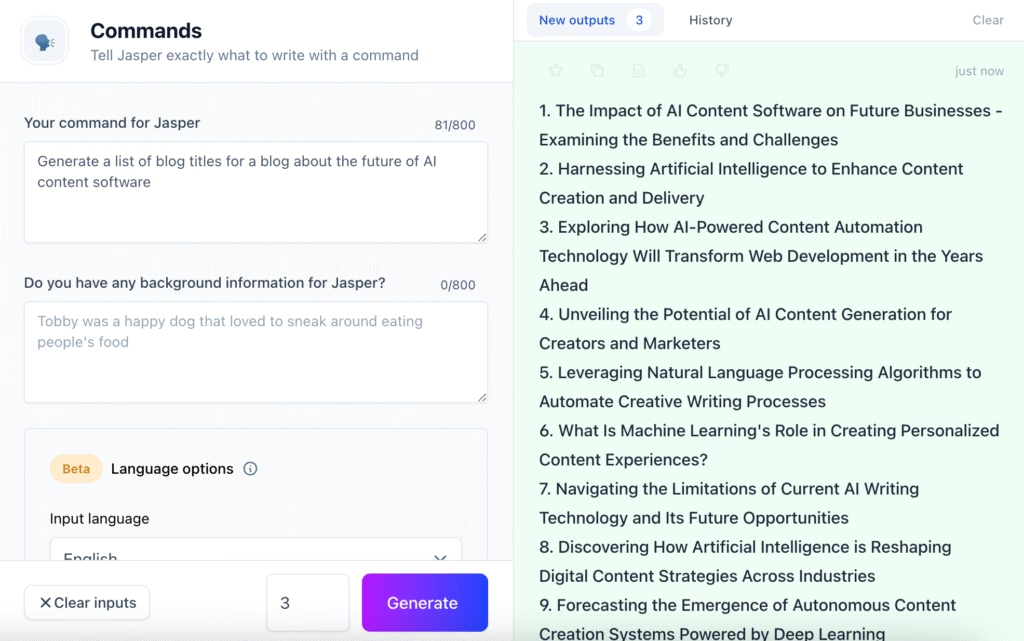
Jasper AI is an AI content generation platform that produces long-form and short-form content across blogs, marketing assets, and social channels through prompt-driven automation. Jasper AI converts structured inputs into publish-ready drafts that scale production volume. Jasper AI matters for teams that require rapid content output across multiple formats rather than sentence-level language diagnostics.
Jasper AI operates against ProWritingAid with a production-first model. ProWritingAid evaluates grammar accuracy, readability metrics, repetition frequency, and stylistic patterns through analytical reports. Jasper AI generates complete content assets at scale without report layers, which places Jasper AI ahead for workflows that prioritize content volume and speed over editorial diagnostics.
Core features inside Jasper AI drive multi-format production. Long-form editors generate blog articles. Brand voice controls enforce terminology and tone across assets. Campaign tools organize content across channels. Integrations connect research and publishing systems (blog drafts, ad copy, social posts). Collaboration features coordinate team workflows across projects.
Jasper AI is a paid platform with subscription pricing that typically ranges from $59 per month, depending on plan tier and collaboration scope. Entry plans target individual creators with core generation features. Higher tiers add team collaboration, brand governance, and advanced workflows. Jasper AI pricing exceeds ProWritingAid entry tiers, which reflects Jasper AI focus on content generation rather than writing analysis.
Pros noted in the Jasper AI review include fast content production, strong brand voice enforcement, and broad format coverage. Cons of Jasper AI include limited grammar diagnostics, variable output quality on complex topics, and reliance on manual review compared to ProWritingAid.
28. Writesonic: Best ProWritingAid Alternative for AI-assisted Article and Marketing Content Creation
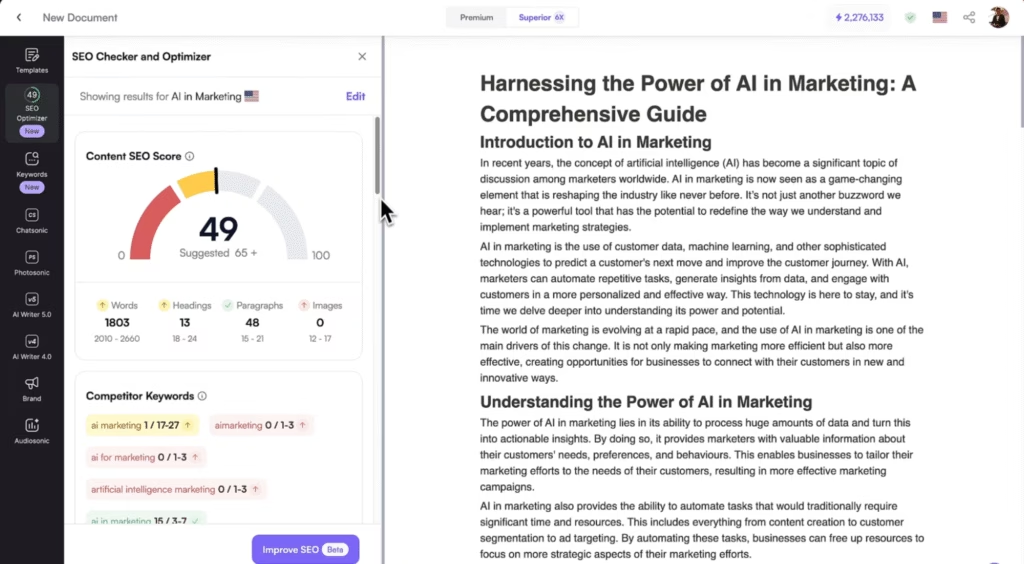
Writesonic is an AI-assisted content generation platform that produces long-form and marketing content through data-enhanced automation and optimization workflows. Writesonic generates articles, blog drafts, ad copy, and social media content at scale while integrating SEO and brand voice controls that increase output relevance. Writesonic matters for teams that require high-volume, performance-focused content rather than sentence-level writing diagnostics that prioritize stylistic reporting.
Writesonic surpasses ProWritingAid for content production scale and outcome optimization. ProWritingAid evaluates grammar quality, readability metrics, repetition frequency, and stylistic patterns through analytical reports. Writesonic synthesizes templates, optimization signals, and generative models to deliver content assets faster, which places Writesonic ahead for workflows that prioritize article generation and marketing outreach over detailed editorial analysis.
Core features inside Writesonic drive format-agnostic content creation. The AI Article Writer produces structured, long articles and blog drafts. SEO and AI Search Visibility tools benchmark content against search and AI discovery systems. Template libraries and workflow automation enable mass deployment of marketing text (article generation, SEO optimization, template automation).
Writesonic uses tiered subscription pricing. A Free plan costs $0 per month with basic access and limited generation credits. Entry plan, such as Lite, starts at $39 per month when billed annually, provides defined monthly articles and AI agent generations. Enterprise pricing varies by organization requirements and scales with seats and limits. These pricing tiers reflect Writesonic’s broader content creation and optimization focus relative to ProWritingAid’s writing analysis model.
Pros of Writesonic include fast multi-format content generation, integrated SEO optimization, and brand voice control. Cons of Writesonic include variable output quality for complex topics that require manual editing, pricing that scales with usage intensity, and weaker deep grammar diagnostics compared to ProWritingAid.
29. TypeShare: Best ProWritingAid Alternative for Amplifying Writing for Social Media and Messaging

TypeShare is a writing distribution and amplification platform that converts written ideas into optimized social media posts and message-ready content. TypeShare structures text for engagement across social channels and newsletters while emphasizing clarity, cadence, and audience fit. TypeShare matters for writers who prioritize reach and distribution rather than grammatical diagnostics or stylistic scoring.
TypeShare operates against ProWritingAid with a distribution-first workflow. ProWritingAid analyzes grammar accuracy, readability metrics, repetition frequency, and stylistic patterns through analytical reports. TypeShare formats and amplifies content for social publishing and messaging, which places TypeShare ahead for creators who focus on audience engagement and content reuse rather than editorial refinement.
Core features inside TypeShare center on amplification and reuse. A writing editor structures posts for social feeds. Content repurposing tools convert long text into short-form outputs. Scheduling and publishing features distribute content across channels (social post formatting, content repurposing, audience distribution). A creator dashboard tracks output organization and publishing cadence.
TypeShare provides tiered pricing. A Free plan costs $0 per month and allows limited writing and publishing features. The Pro plan costs $20 per month, which unlocks unlimited writing, advanced publishing tools, content repurposing, and analytics. Annual billing reduces the effective monthly rate. This pricing remains lower than ProWritingAid’s paid tiers and reflects TypeShare’s focus on amplification rather than language analysis.
Pros of TypeShare include strong social formatting, efficient content reuse, and streamlined publishing workflows. Cons of TypeShare include no grammar diagnostics, no readability or style reports, and limited usefulness for long-form editing compared to ProWritingAid.
30. Jotbot: Best ProWritingAid Alternative for Quick, Simple, Chat-style Content Generation

Jotbot is a chat-style AI writing tool that generates short-form content through prompt-based conversational input with minimal configuration. Jotbot produces paragraphs, rewrites, and idea expansions through an interactive editor that prioritizes speed and simplicity. Jotbot matters for users who require fast draft generation without analytical reports or structured editing workflows.
Jotbot operates against ProWritingAid with a generation-first approach. ProWritingAid analyzes grammar accuracy, readability metrics, repetition frequency, and stylistic patterns through structured reports. Jotbot generates text directly from prompts without diagnostic layers, which places Jotbot ahead for workflows that prioritize rapid drafting and idea expansion rather than editorial evaluation.
Core features inside Jotbot focus on conversational generation. A chat-based editor generates text from prompts. Rewrite tools adjust phrasing and length. Idea expansion features extend short inputs into paragraphs (chat-style generation, sentence rewriting, idea expansion). A distraction-free interface keeps interaction minimal and output immediate.
Jotbot provides tiered pricing. A Free plan costs $0 per month with limited usage. The Pro plan costs $20 per month, which unlocks higher generation limits, faster responses, and priority access to new features. This pricing remains lower than ProWritingAid’s paid tiers and reflects Jotbot’s focus on lightweight generation rather than deep writing analysis.
Pros of Jotbot include fast prompt-based output, a simple interface, and a low monthly cost. Cons of Jotbot include no grammar diagnostics, no readability or style reports, and limited usefulness for long-form or professional editing compared to ProWritingAid.
31. Letterdrop: Best ProWritingAid Alternative for Content Marketing and Editorial Workflows
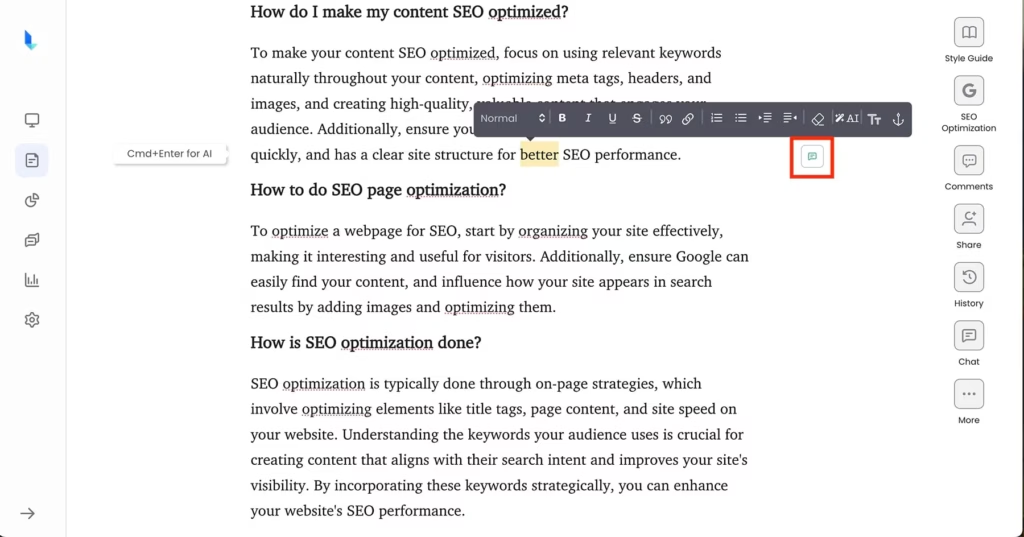
Letterdrop is a content marketing and editorial workflow platform that organizes planning, creation, and distribution inside a unified system. Letterdrop aligns content output with strategic objectives by providing structured editorial tracking, SEO automation, and publishing orchestration. Letterdrop matters for marketing teams that require end-to-end operational control rather than sentence-level writing diagnostics.
Letterdrop operates against ProWritingAid with a workflow-oriented design that focuses on content output and performance rather than language analysis. ProWritingAid evaluates grammar quality, readability metrics, repetition frequency, and stylistic patterns through analytical reports. Letterdrop integrates planning, SEO execution, and multi-channel distribution, which places Letterdrop ahead for organizations that manage content programs and growth objectives instead of grammar accuracy. (Apollo.io, HubSpot Marketing Hub, Semrush)
Core features inside Letterdrop direct editorial production. Firstly, planning tools map content to business objectives and pipelines. Secondly, SEO and optimization modules refine content relevance. Thirdly, distribution and publishing workflows coordinate output across blogs, newsletters, and social channels to increase visibility (editorial planning, SEO optimization, multi-channel publishing).
Letterdrop uses subscription pricing that starts at $299 per month with core editorial and SEO workflow features. Higher tiers use custom pricing on request for Enterprise, which adds advanced analytics, governance controls, and integration scale. A Free trial allows prospective evaluation before subscription. This pricing structure reflects Letterdrop’s enterprise-oriented feature set relative to ProWritingAid’s individual and team subscription tiers, which focus on writing analysis rather than content operations.
Pros of Letterdrop include integrated content workflows, combined SEO optimization, and structured multi-channel publishing. Cons of Letterdrop include high entry cost for smaller teams, absence of deep sentence-level grammar diagnostics, and reliance on broader strategy planning rather than editorial refinement.
32. Outranking: Best ProWritingAid Alternative for SEO-optimized Content Creation with Research Support
Outranking is an AI-driven SEO content creation and optimization platform that integrates SERP research data with automated drafting and on-page scoring to improve search performance. Outranking uses advanced analysis of search engine results pages (SERPs), keyword correlations, and competitor content metrics to produce briefs, outlines, and optimized drafts through AI-assisted workflows.
Outranking matters for content marketers and SEO professionals who prioritize search visibility and user intent alignment over sentence-level writing diagnostics.
Outranking positions itself against ProWritingAid with a research-centric SEO toolkit that generates data-informed content rather than grammar and style reports. ProWritingAid evaluates grammar quality, readability metrics, repetition frequency, and stylistic patterns in long text. Outranking performs SERP analysis, keyword clustering, automated optimization, and draft generation that increase organic reach potential. That structure places Outranking ahead for teams that integrate research signals and SEO execution into content production rather than focus solely on writing quality improvement.
Core features inside Outranking combine content research and SEO optimization. Firstly, SERP analysis identifies ranking patterns and keyword opportunities. Secondly, content briefs and outlines align content structure with search intent models. Thirdly, AI content generation produces first drafts with on-page SEO scoring and optimization suggestions that align with ranking factors (SERP analysis, keyword optimization, automated briefing).
Outranking uses subscription pricing with tiered access that starts at $19 per month for the Starter plan, which provides limited SEO documents and basic AI drafting. Higher tiers include SEO Writer at $79 per month with expanded document quotas, automatic optimization, unlimited drafts, and internal linking automation. The SEO Wizard plan costs $159 per month and increases usage limits and team access.
Custom enterprise plans provide large-scale SEO project capabilities with tailored terms on request. This pricing structure contrasts with ProWritingAid tiers, which focus on grammar and stylistic analysis for individual and team writing improvement rather than SEO success.
Pros of Outranking include deep SERP research integration, combined drafting and optimization workflows, and automatic content scoring based on ranking data. Cons of Outranking include less emphasis on grammar refinement, steep pricing for higher tiers relative to basic writing tools, and complexity that requires onboarding for full utilization.
33. Frase: Best ProWritingAid Alternative for AI-assisted SEO Briefs and Content Optimization
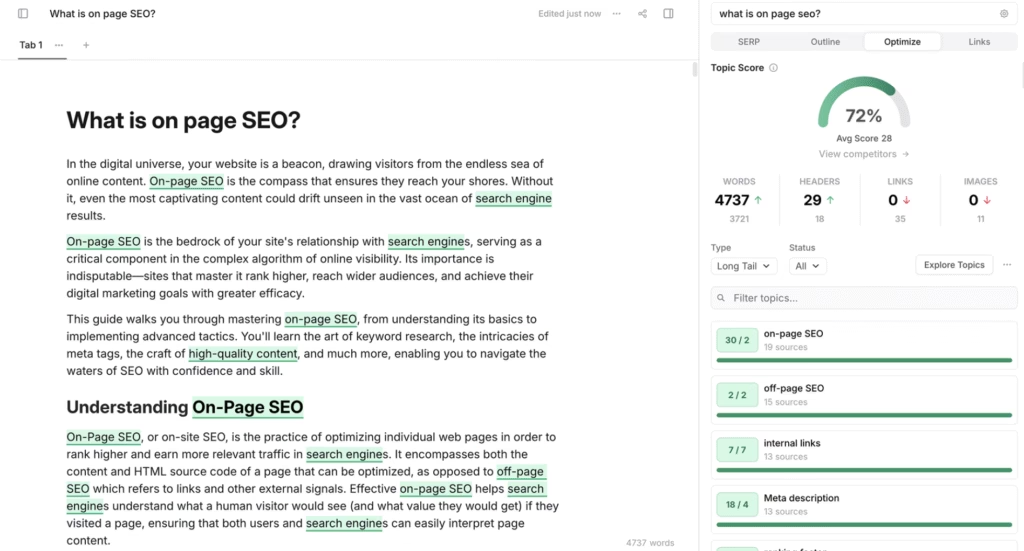
Frase is an AI-assisted SEO research and content optimization platform that builds search-driven briefs and optimizes drafts through SERP data analysis. Frase analyzes ranking pages, extracts topical coverage requirements, and applies optimization guidance during drafting. Frase matters for content teams that require search intent alignment and topic completeness rather than sentence-level grammar diagnostics.
Frase operates against ProWritingAid with a research-first optimization workflow. ProWritingAid evaluates grammar accuracy, readability metrics, repetition frequency, and stylistic patterns through analytical reports. Frase constructs content from SERP evidence, topical entities, and competitor coverage, which positions Frase ahead for teams that connect research and optimization before writing rather than refine language after drafting (Search Atlas, Semrush, Clearscope).
Core features inside Frase structure SEO-led production. Firstly, SERP analysis extracts headings, entities, and questions from ranking pages. Secondly, AI-generated briefs define scope, structure, and subtopics. Thirdly, a content editor applies real-time optimization signals during drafting to increase topical coverage (SERP research, content briefing, on-page optimization).
Frase uses subscription pricing with transparent tiers. The Starter plan costs $49 per month. Enterprise plan uses custom pricing with custom seats, custom domains, custom article volumes, AI Search Visibility across 8 platforms, single sign-on, security assertion markup language authentication, application programming interface access, white-label reports, and a dedicated account manager. This pricing remains above ProWritingAid entry tiers and reflects Frase’s focus on SEO research and optimization rather than grammar analysis.
Pros noted in the Frase review include strong SERP-driven briefs, efficient topic coverage analysis, and integrated optimization during drafting. Cons of Frase include limited grammar diagnostics, dependence on search data quality, and reduced value for creative or non-SEO writing compared to ProWritingAid.
34. INK For All: Best ProWritingAid Alternative for AI-driven Content Optimization

INK For All is an AI-driven content optimization platform that evaluates readability, semantic relevance, and search alignment through predictive scoring models. INK For All analyzes text against search intent signals and user engagement factors that guide optimization decisions. INK For All matters for writers and marketers who prioritize content performance and search visibility rather than grammar-only correction.
INK For All operates against ProWritingAid with an optimization-first framework. ProWritingAid evaluates grammar accuracy, readability metrics, repetition frequency, and stylistic patterns through analytical reports. [INK For All] applies predictive scoring, semantic analysis, and search alignment checks during drafting, which positions [INK For All] ahead for workflows that connect writing quality with ranking and engagement outcomes rather than post-write diagnostics.
Core features inside INK For All focus on performance-driven optimization. Firstly, AI content scoring measures readability and engagement probability. Secondly, SEO optimization evaluates topical coverage and semantic relevance. Thirdly, writing guidance enforces clarity and structure through live recommendations that align text with search intent.
INK For All uses subscription-based pricing with clear tiers. The Professional plan costs $39 per month and unlocks unlimited AI content scoring, SEO optimization, paraphrasing tools, and readability guidance. Enterprise plans use custom pricing and add advanced collaboration, governance controls, and priority access. This pricing structure aligns with optimization platforms rather than ProWritingAid tiers, which emphasize grammar and stylistic reporting.
Pros of INK For All include strong SEO-driven optimization, predictive performance scoring, and real-time writing guidance. Cons of INK For All include limited deep grammar diagnostics, dependence on SEO context accuracy, and reduced value for creative or narrative writing compared to ProWritingAid.
35. Writeseed: Best ProWritingAid Alternative for Content Ideation and Generation

Writeseed is an AI content ideation and generation platform that produces articles, marketing copy, and creative drafts through prompt-based automation. Writeseed converts short inputs into structured outlines and complete text with emphasis on output volume and language range. Writeseed matters for writers and teams who require high-volume content generation rather than deep grammatical analysis.
Writeseed operates against ProWritingAid with a generation-centric workflow. ProWritingAid evaluates grammar accuracy, readability metrics, repetition frequency, and stylistic patterns through report-based analysis. Writeseed applies generative models to produce text directly from prompts, which places Writeseed ahead for workflows that prioritize rapid draft output and idea generation rather than editorial diagnostics.
Core features inside Writeseed focus on content production and reach. Firstly, an AI writing generator produces unlimited words across domains. Secondly, SEO integration ensures draft optimization for search engines. Thirdly, multi-format support expands output across media and languages.
Writeseed uses subscription pricing that costs $20 per month for the Monthly Unlimited plan, which provides unlimited words from the AI writing generator, unlimited AI images, WordPress integration, SEO-optimized text generation, support for 35+ languages, over 100 fine-tuned AI templates, and a Chrome extension. This pricing remains below many entry tiers of ProWritingAid and reflects Writeseed focus on generative throughput rather than detailed analytic reporting.
Pros of Writeseed include broad generative output, multi-language and SEO functionality, and integrated platform tools for content deployment. Cons of Writeseed include limited deep grammar diagnostics, absence of structured readability scores, and draft quality that can require manual refinement compared to ProWritingAid.
36. Claude: Best ProWritingAid Alternative for AI Writing Assistance
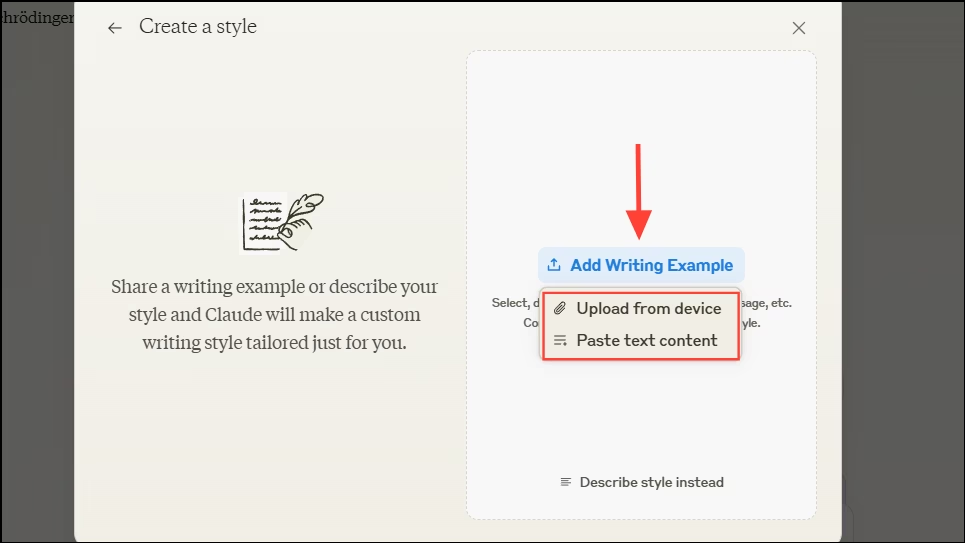
Claude is an AI assistant built for writing, analysis, and complex content creation. Claude generates marketing materials, technical documentation, research summaries, and detailed analytical projects through conversational interaction.
Claude operates against ProWritingAid with a generation-first architecture. ProWritingAid evaluates grammar accuracy, readability metrics, repetition frequency, and stylistic patterns through structured reports. Claude generates and revises content directly through conversational prompts, which positions Claude ahead for workflows that prioritize drafting, ideation, and revision over post-write diagnostic analysis
Core features in Claude emphasize sustained understanding. Advanced reasoning modes guide analysis. Extended context windows manage long documents. Multilingual comprehension enables cross-language editing.
Claude is a paid tool with pricing ranging from $17 to $150 per month. Individual plans range from $17 to $100. Team plans range from $25 to $150. A Free plan provides limited access for light tasks.
Pros of Claude include strong reasoning, and smooth conversational refinement across complex writing projects. Cons of Claude include cautious response behavior, usage caps on paid tiers, and reduced performance on highly niche or ambiguous topics.
37. Doco: Best ProWritingAid Alternative for Writing and Documentation Support

Doco is an AI-powered writing and documentation assistant that generates, explains, and structures technical and knowledge-based content through prompt-driven workflows. Doco converts questions, notes, and rough drafts into structured documentation with emphasis on clarity and contextual accuracy. Doco matters for users who create internal documentation, product guides, and knowledge bases rather than polished editorial prose.
Doco operates against ProWritingAid with a documentation-first orientation. ProWritingAid evaluates grammar accuracy, readability metrics, repetition frequency, and stylistic patterns through analytical reports. Doco focuses on content explanation, documentation structure, and contextual drafting, which positions Doco ahead for workflows that prioritize knowledge transfer and documentation clarity over stylistic refinement .
Core features inside Doco concentrate on documentation workflows. Firstly, AI drafting generates structured documentation from prompts and notes. Secondly, explanation tools clarify complex concepts and processes. Thirdly, formatting logic organizes output into readable sections suitable for knowledge bases and internal guides.
Doco provides access through a subscription model with pricing available on request, which scales based on usage volume, feature access, and team requirements. Public pricing tiers remain undisclosed as of January 2026. This pricing approach contrasts with ProWritingAid fixed individual and team plans and reflects Doco focus on specialized documentation workflows rather than general writing analysis.
Pros of Doco include strong documentation structuring, effective explanation of technical concepts, and fast draft generation for knowledge content. Cons of Doco include no advanced grammar diagnostics, limited stylistic analysis, and reduced relevance for creative or long-form editorial writing compared to ProWritingAid.
38. Compose: Best ProWritingAid Alternative for Writing Assistance and Content Refinement

Compose is an AI writing assistance platform that accelerates drafting and refines text through real-time autocomplete and rewrite suggestions. Compose inserts sentence completions and phrasing improvements directly into the writing flow across browsers and applications. Compose matters for users who require speed and fluency during drafting rather than post-draft analytical reports.
Compose operates against ProWritingAid with an in-line assistance model. ProWritingAid evaluates grammar accuracy, readability metrics, repetition frequency, and stylistic patterns through structured reports after drafting. Compose provides immediate text completion and refinement during writing, which positions Compose ahead for workflows that prioritize drafting velocity and message clarity over retrospective analysis.
Core features inside Compose focus on real-time refinement. Firstly, autocomplete predicts full sentences from partial input. Secondly, rewrite tools adjust tone and phrasing at sentence level. Thirdly, cross-app integration enables consistent writing assistance across email, documents, and web forms.
Compose provides transparent subscription pricing. A Free plan costs $0 per month and offers basic autocomplete with limited usage. The Pro plan costs $9.99 per month and unlocks unlimited AI autocomplete, advanced rewrites, and priority processing. Team plans use custom pricing and add collaboration and administrative controls. This pricing remains lower than ProWritingAid paid tiers and reflects Compose focus on real-time assistance rather than deep writing diagnostics.
Pros of Compose include fast sentence completion, low learning curve, and broad application coverage. Cons of Compose include no readability reports, no long-form style diagnostics, and limited value for structured editorial analysis compared to ProWritingAid.
39. RewriteBar: Best ProWritingAid Alternative for Rewriting and Content Editing

RewriteBar is a macOS-based AI rewriting and content editing tool that refines selected text through inline rewrite commands. RewriteBar integrates directly into native and web applications and rewrites content without switching interfaces. RewriteBar matters for users who require fast sentence revision and tone adjustment during active writing sessions rather than post-draft report analysis.
RewriteBar operates against ProWritingAid with an execution-first editing model. ProWritingAid analyzes grammar accuracy, readability metrics, repetition frequency, and stylistic patterns through structured reports after drafting. RewriteBar rewrites selected text instantly inside the writing environment, which positions RewriteBar ahead for workflows that prioritize live editing and rapid revision instead of analytical feedback.
Core features inside RewriteBar focus on in-context editing. Firstly, inline rewrite commands modify tone and clarity for highlighted text. Secondly, prompt-based editing enables targeted revisions without full document analysis. Thirdly, system-wide integration allows rewriting across browsers, editors, and productivity tools on macOS.
RewriteBar uses simple subscription pricing. The standard plan costs $29 per month, which provides unlimited rewrites, access to multiple AI models, and full system-wide integration on macOS. No annual tier or enterprise plan exists as of January 2026. This pricing remains lower than ProWritingAid paid tiers and reflects RewriteBar focus on lightweight rewriting rather than comprehensive writing diagnostics.
Pros of RewriteBar include fast inline rewriting, minimal interface friction, and broad application compatibility on macOS. Cons of RewriteBar include no grammar reports, no readability scoring, platform limitation to macOS, and reduced usefulness for long-form analytical editing compared to ProWritingAid.
40. Harper: Best ProWritingAid Alternative for AI-driven Content Generation

Harper is a privacy-first, open-source grammar and writing enhancement tool that processes text locally with minimal latency. Harper runs sentence analysis and grammar correction inside the user’s device without sending data to external servers or requiring an account. Harper matters for users who require fast and secure in-context corrections rather than centralized AI models for generative content.
Harper operates against ProWritingAid with a lightweight local architecture that focuses on error detection and inline correction rather than comprehensive stylistic diagnostics. ProWritingAid evaluates grammar quality, readability metrics, repetition frequency, and stylistic patterns through structured reports. Harper performs device-internal parsing and error highlighting, which positions Harper ahead for workflows that prioritize privacy and speed instead of deep report-based analysis.
Core features inside Harper concentrate on concise error identification and correction. Firstly, grammar and spell checking flags mistakes in real time. Secondly, offline operation ensures local data processing. Thirdly, integrations work across text editors and browsers that maintain user privacy.
Harper provides its full feature set at no cost with open-source access under the Apache-2.0 license. This free pricing contrasts with ProWritingAid’s paid subscription tiers, which charge ongoing fees for advanced reporting, style suggestions, and multi-report analysis.
Pros of Harper include full offline operation that preserves privacy, fast grammar and spelling detection, and broad editor integration. Cons of Harper include limited generative AI features, no deep stylistic or readability reports, and narrower language support compared to ProWritingAid.
41. MerciApp: Best ProWritingAid Alternative for French Grammar and Spelling Correction

MerciApp is a French grammar and spelling correction platform that applies advanced linguistic rules and contextual text analysis to eliminate errors and improve written quality. MerciApp detects spelling, syntax, grammar, and typographic errors across text inflows and provides style suggestions that align with linguistic standards derived from decades of research. MerciApp matters for French writers and teams who require precise context-aware correction rather than general English-focused grammar diagnostics.
MerciApp operates against ProWritingAid with a language-specific correction model that focuses on French orthography and grammar rather than broad stylistic reporting. ProWritingAid evaluates grammar accuracy, readability metrics, repetition frequency, and stylistic patterns through multi-layer reports. MerciApp applies over 30 years of linguistic engineering to real-time correction and style suggestions, which places MerciApp ahead for native French communication workflows that require deep orthographic and syntactic precision.
Core features inside MerciApp center on error detection and refinement. Real-time spelling and grammar correction flags incorrect forms and contextual mistakes. Style and typography suggestions refine readability and fluency of text segments. Reformulation tools adjust phrasing to improve clarity and tone for professional writing.
MerciApp uses subscription pricing with tiered access. A Free tier costs $0 per month with basic online spell checking and error suggestions up to daily limits. The Correct plan costs $16 per month and unlocks advanced grammar correction, style suggestions, and broader integration across platforms. This pricing contrasts with ProWritingAid, which charges recurring fees for comprehensive English grammar analysis and multi-report outputs, reflecting MerciApp focus on French language precision and correction breadth.
Pros of MerciApp include strong French grammar accuracy, contextual style suggestions, and real-time corrections across tools. Cons of MerciApp include limited coverage beyond French, some user reports of occasional false positives, and less emphasis on long-form stylistic diagnostics compared to ProWritingAid.
42. DeepL Write: Best ProWritingAid Alternative for AI-powered Writing and Translation Assistance

DeepL Write is an AI-powered writing and translation assistant that refines text clarity and accuracy while enabling multilingual rewriting through neural language models. DeepL Write revises sentences for tone, fluency, and correctness and pairs those edits with high-accuracy translation across supported languages. DeepL Write matters for users who require precise language refinement and translation rather than stylistic reporting across long documents.
DeepL Write operates against ProWritingAid with a language-precision and translation-first model. ProWritingAid evaluates grammar accuracy, readability metrics, repetition frequency, and stylistic patterns through analytical reports. DeepL Write rewrites text and translates content in real time with emphasis on linguistic correctness, which positions DeepL Write ahead for workflows that combine writing refinement with multilingual communication.
Core features inside DeepL Write focus on refinement and translation. Firstly, sentence rewriting improves clarity and tone through AI suggestions. Secondly, translation engines convert text across supported languages with contextual accuracy. Thirdly, integrations enable direct use inside desktop apps, browsers, and application programming interfaces, which streamline multilingual writing workflows.
DeepL Write operates alongside DeepL Pro subscription pricing. DeepL pricing plan starts from $7.49 per month to $49.99 per month, with higher tiers expanding translation limits, data security, and application programming interface access. This pricing differs from ProWritingAid subscriptions, which focus on grammar analysis and writing reports rather than translation and multilingual refinement.
Pros of DeepL Write include high translation accuracy, strong sentence-level rewriting, and reliable multilingual output. Cons of DeepL Write include limited stylistic analytics, no long-form writing reports, and reduced usefulness for narrative or creative writing compared to ProWritingAid.
43. Scrivener: Best ProWritingAid Alternative for Long-form Projects Like Novels, Research Papers, or Books

Scrivener is a long-form writing and project management application that provides structural control, research organization, and manuscript assembly, which matters for complex writing projects that exceed linear document workflows. Scrivener enables writers to break large works into modular sections, manage research alongside drafts, and compile outputs into multiple publication formats. Scrivener matters for authors and academics who prioritize document architecture, version control, and large-scale text management over sentence-level grammar analytics.
Scrivener operates against ProWritingAid as a structural writing environment rather than a grammar analysis engine. ProWritingAid evaluates grammar accuracy, readability metrics, repetition frequency, and stylistic patterns through automated reports. Scrivener organizes chapters, scenes, and references before refinement, which places Scrivener ahead for workflows that require planning, drafting, and restructuring at scale instead of iterative language diagnostics.
Core features inside Scrivener address long-form production. Firstly, the Binder structures manuscripts into sections and subsections with drag-and-drop control. Secondly, the Corkboard and Outliner visualize narrative flow and argument hierarchy. Thirdly, Compile exports projects into multiple formats from one source file.
Scrivener uses one-time licensing rather than subscriptions. Scrivener for macOS and Windows costs $59 one-time per license, with discounted education pricing available. Scrivener for iOS costs $23.99 one-time. This pricing contrasts with ProWritingAid recurring plans, which charge monthly or annual fees for continuous grammar analysis, reinforcing Scrivener focus on project structure rather than automated language correction.
Pros of Scrivener include deep long-form organization, offline access, and flexible export control. Cons of Scrivener include lack of native grammar scoring, a steeper learning curve, and limited AI-based writing assistance compared to ProWritingAid.
44. Notion: Best ProWritingAid Alternative for Integrating Writing with Team Knowledge and Project Management
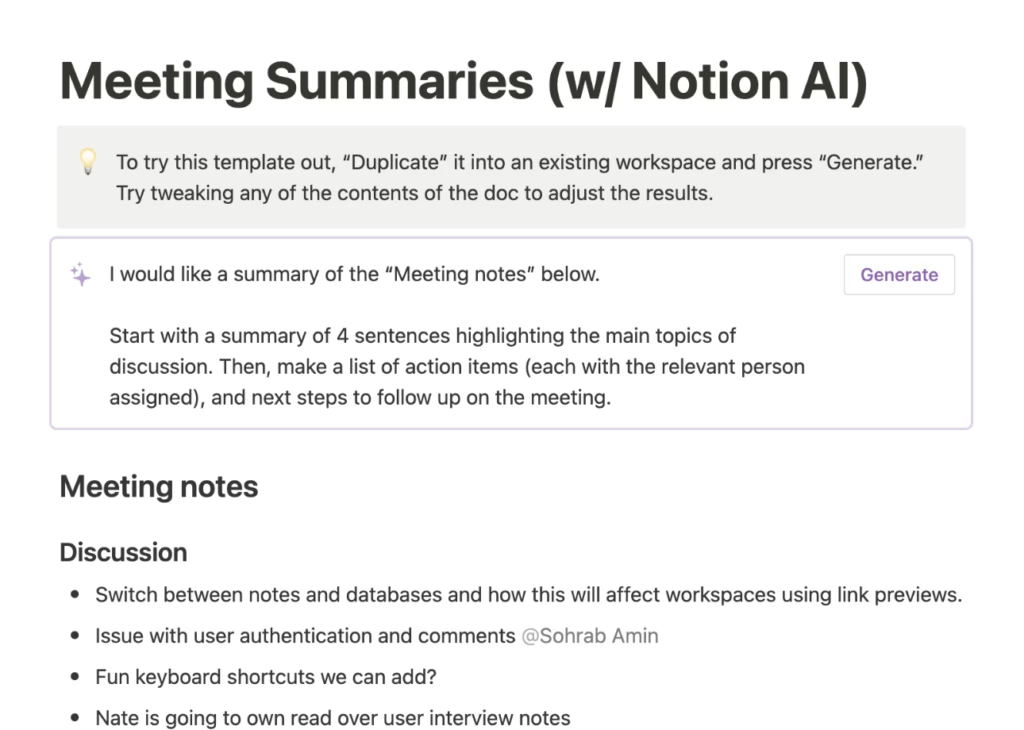
Notion is a modular workspace platform that combines document writing, structured databases, and collaborative project management, which matters for teams that treat writing as part of an operational knowledge system rather than a standalone editing task. Notion centralizes content creation, task tracking, and shared documentation inside one environment that connects text with execution context. Notion matters for organizations that require writing workflows to align with planning, ownership, and cross-team visibility.
Notion operates against ProWritingAid as a knowledge and collaboration system rather than a language analysis engine. ProWritingAid analyzes grammar accuracy, readability scores, repetition frequency, and stylistic patterns through automated reports. Notion structures writing around databases, permissions, and workflows, which places Notion ahead for teams that prioritize shared knowledge, editorial coordination, and project execution over sentence-level diagnostics.
Core features in Notion define its writing ecosystem. Firstly, pages and blocks enable modular document construction with nested hierarchies. Secondly, databases connect writing to metadata, ownership, and status tracking. Thirdly, collaboration tools provide real-time editing, comments, and version history.
Notion uses tiered subscription pricing. The Free plan supports individual use with limited collaboration. The Plus plan costs $10 per user per month billed annually or $12 billed monthly and adds unlimited blocks and file uploads. The Business plan costs $18 per user per month billed annually or $20 billed monthly and expands permissions, analytics, and collaboration controls. Enterprise pricing remains custom. This pricing contrasts with ProWritingAid recurring plans, which focus exclusively on automated writing analysis rather than integrated knowledge management.
Pros of Notion include flexible document structure, strong collaboration controls, and deep workflow customization. Cons of Notion include absence of native grammar scoring, limited stylistic analysis, and reliance on integrations for advanced writing refinement compared to ProWritingAid.
Why do People Seek Alternatives to Pro Writing Aid Tool?
People seek ProWritingAid alternatives because ProWritingAid focuses on language diagnostics rather than end-to-end content execution, which matters for teams that connect writing with SEO, publishing, and performance workflows. ProWritingAid evaluates grammar accuracy, readability metrics, and stylistic patterns, but ProWritingAid does not manage research, structure creation, or content deployment, which fragments production pipelines.
Workflow isolation drives platform changes. ProWritingAid analyzes drafts after writing occurs, but teams still create outlines, briefs, and content architecture in external systems. Platforms that integrate research, drafting, optimization, and publishing reduce handoffs and editing cycles for long-form assets.
SEO capability gaps influence adoption decisions. ProWritingAid reviews language quality, but lacks keyword clustering, SERP analysis, internal linking recommendations, and ranking-based optimization signals. Teams that depend on organic acquisition prefer platforms that tie writing directly to search performance.
Scope and pricing alignment affect purchasing behavior. ProWritingAid pricing reflects advanced editorial analysis, but many teams require broader content production layers such as AI drafting, research automation, and workflow collaboration within the same budget. That mismatch increases total tool spend.
This combination of diagnostic focus, workflow separation, SEO limitations, and pricing scope leads teams to choose ProWritingAid alternatives that scale across research, writing, optimization, and publication within unified systems.
What to Look for in a Pro Writing Aid Alternative?
Teams evaluate ProWritingAid alternatives by prioritizing platforms that extend beyond language diagnostics into full content execution, which matters for scalable, search-aligned production. A ProWritingAid alternative must unify research, drafting, and optimization rather than operate as a post-writing checker. Systems that centralize these stages reduce workflow fragmentation and editorial rework.
The 4 main features to look for in a ProWritingAid alternative are listed below.
- End-to-end content execution. A ProWritingAid alternative must move beyond sentence diagnostics and provide full content workflows that cover research, structuring, drafting, and revision. Platforms that manage long-form creation reduce rebuild effort and editorial friction (blog frameworks, pillar outlines, product guides).
- Search engine optimization integration. A ProWritingAid alternative must connect writing directly to search performance through keyword clustering, SERP analysis, and internal linking logic. Tools that align content with ranking signals (Search Atlas, Semrush, SE Ranking) outperform grammar-only systems (Grammarly, Quillbot, Hemingway).
- Scalable workflow architecture. A ProWritingAid alternative must centralize AI drafting, optimization feedback, and collaboration inside one environment. Unified workflows standardize output and shorten production cycles across teams (content calendars, version control, role-based access).
- Pricing aligned with scope. A ProWritingAid alternative must justify cost through broad execution coverage rather than isolated language analysis. Teams prioritize platforms that replace multiple tools while maintaining predictable budgets and measurable output efficiency.
What is the Difference Between Pro Writing Aid vs Grammarly?
ProWritingAid and Grammarly differ in depth, delivery, and intended use. ProWritingAid emphasizes report-based analysis that evaluates structure, readability, and stylistic patterns across long drafts. Grammarly emphasizes real-time grammar, clarity, and tone corrections that operate inline during writing.
ProWritingAid suits users who require detailed editorial diagnostics, while Grammarly suits users who need fast, surface-level corrections across emails and documents. Both tools lack native SEO research, SERP analysis, and ranking-driven optimization, which limits use for organic content workflows. Pricing reflects that split, with ProWritingAid favoring advanced analysis and Grammarly favoring broad, everyday writing coverage.
Why is Search Atlas the Best Pro Writing Aid Alternative?
Search Atlas stands out as the best ProWritingAid alternative because it connects AI writing with SEO intelligence and live execution inside one operating system. Instead of limiting analysis to grammar, readability, and stylistic reports, Search Atlas turns every page into part of a measurable search growth strategy driven by real SERP data.
ProWritingAid focuses on linguistic quality, repetition analysis, and style consistency for drafts. Search Atlas goes further by shaping content through keyword demand, competitor analysis, and topical authority before writing begins. That structure produces pages designed to rank in organic search rather than documents optimized only for readability.
Search Atlas removes the execution gap that exists in ProWritingAid workflows. OTTO SEO applies titles, internal links, schema, and structural changes directly on the website, which eliminates manual publishing and optimization steps that slow down teams using analysis-only writing tools.
Search Atlas creates a unified SEO environment that links research, writing, scoring, and on-site optimization inside one system. That structure delivers faster iteration, stronger organic visibility, and scalable content growth from every article. Try Search Atlas free for 7 days!