Pepper Content is a content marketing and creation platform that combines generative AI workflows with expert-led editorial processes to produce SEO-optimized content, briefs, and full-stack campaign assets across multiple formats. Pepper Content provides AI-assisted writing, content planning tools, editorial workflows, and talent network access that matter for teams that coordinate strategy, creation, and delivery on one platform. Pepper Content matters because it unifies ideation, drafting, optimization, and review with configurable AI + human collaboration.
Pepper Content pricing varies by plan and usage, ranging from $99 per month for essential content workflows up to $1,000 per month for enterprise-grade capabilities; a free trial exists, but detailed tiers require vendor consultation.
Users seek alternatives to Pepper Content because its pricing and custom plans often exceed budgets for small or agile teams, its human + AI blend may slow workflows that need pure automation, and its integration with external SEO and publishing tools can feel limited compared to dedicated all-in-one stacks.
The 3 best alternatives to Pepper Content for content creation, automation, and organic growth are Search Atlas, Jasper, and Anyword.
What are the Best Pepper Content Alternatives?
The 36 best Pepper Content alternatives are listed below.
| # | Pepper Content Alternative | Best For | Price |
|---|---|---|---|
| 1 | Search Atlas | Overall | $99 to $399/monthly |
| 2 | Contently | Enterprise content ops and editorial workflows | Custom pricing |
| 3 | MarketMuse | Content strategy and topic authority planning | Custom pricing |
| 4 | Anyword | Predictive performance copy and audience targeting | $49 to $499/monthly |
| 5 | ContentFly | Subscription-based human-written content | $375 to $3,000/monthly |
| 6 | Compose.ly | Scaling managed content production with structured briefs | ~$999 to ~$5,000/month |
| 7 | Frase | SERP-based content research and optimization | $49/monthly |
| 8 | Blaze | Content repurposing and fast multi-format output | $34 to $399/monthly |
| 9 | Reword | Research-backed AI writing | $48 to $359/month |
| 10 | Writesonic | AI content generation plus optional managed service | $20/monthly |
| 11 | Jasper | Creative long-form content and content marketing | $49/monthly |
| 12 | Rytr | Fast ideation and short-form content | $9/monthly |
| 13 | Grammarly | Grammar, clarity, and readability improvement | $12/monthly |
| 14 | Scalenut | End-to-end AI SEO content workflow | $29/monthly |
| 15 | Simplified | Collaborative AI writing and ideation | $29.99/monthly |
| 16 | LongShot (Discontinued) | Fact-checked long-form SEO content | Discontinued (no price listed) |
| 17 | Linguix | Grammar and writing analytics | $30/monthly |
| 18 | TextCortex | Rewriting and converting research into content | $6.99 to $119.99/monthly |
| 19 | RELAYTO | Interactive content experiences | $65/monthly |
| 20 | Katteb | Fact-checked SEO long-form content | $29/monthly |
| 21 | Blogely | Content planning and SEO brief creation | $29/monthly |
| 22 | Narrato Workspace | Full content operations, research, and collaboration | $36/monthly |
| 23 | ChatSonic | On-the-fly ideation and draft generation | $16/monthly |
| 24 | TextWizard | Structured draft generation from notes | $49 to $99/monthly |
| 25 | Smart Copy by Unbounce | Conversion-focused marketing copy | $9 to $49/monthly |
| 26 | Outranking | SEO outlines and optimization | $19/monthly |
| 27 | NeuronWriter | Semantic SEO content optimization | $19 to $97/monthly |
| 28 | Transformo | Rewriting and campaign content generation | $49/monthly |
| 29 | Contentoo | Outsourced research content programs | Custom pricing |
| 30 | ClearVoice | Freelance content collaboration and workflow | Variable subscription pricing |
| 31 | Verblio | High-quality researched content from professional writers | $49.50/monthly |
| 32 | WriterAccess | Commissioning research-based professional content | $49/monthly |
| 33 | Neuroflash | Brand-aligned AI ideation and messaging | $28/month |
| 34 | HubSpot Content Hub | Integrated content strategy + CRM | $9/monthly |
| 35 | CoSchedule Marketing Suite | Content calendar planning and editorial workflow | $19/monthly |
| 36 | Confluence | Content research repository and team collaboration | $5.42/monthly |
1. Search Atlas: Best Pepper Content Alternative

Search Atlas is the best Pepper Content alternative. Search Atlas is an AI-powered SEO and content execution platform that centralizes keyword research, AI visibility tracking, content optimization, technical audits, and on-site execution into one operational system, which matters for teams that require measurable organic growth instead of managed content delivery. Search Atlas replaces fragmented content workflows with automated SEO execution that scales across campaigns, sites, and teams. Search Atlas matters because it connects research, writing, optimization, and publishing through one data-driven engine rather than layered services.
Search Atlas integrates directly with Google Search Console, Google Analytics 4, and Google Business Profile, which ensures real-time accuracy without reporting delays or manual exports. That integration positions Search Atlas as a performance platform rather than a content marketplace.
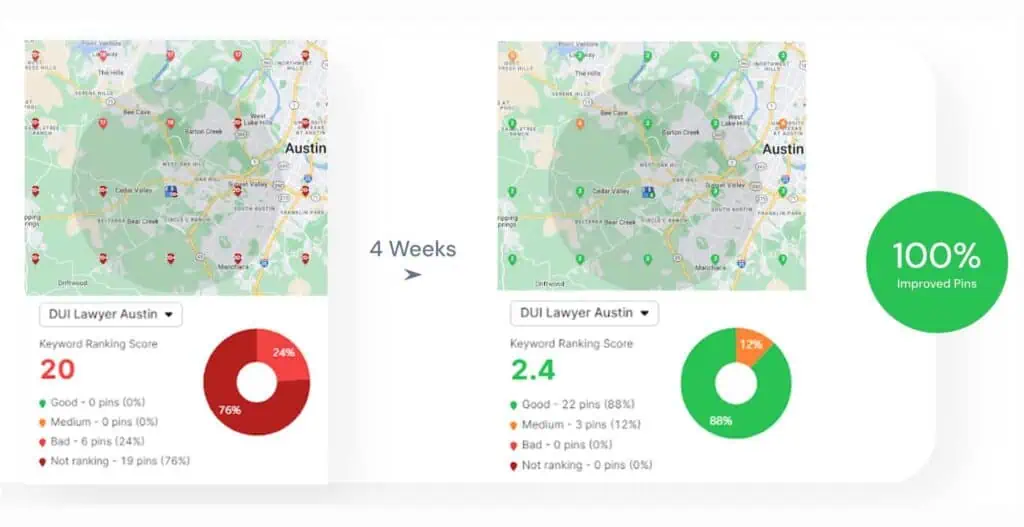
Core features inside Search Atlas focus on execution depth and automation. Keyword research spans over 5.2 billion keywords. LLM visibility tracking measures rankings across ChatGPT, AI Overviews, and search-generated answers. AI content creation through Content Genius produces outlines, drafts, and optimization layers aligned to SERP intent. Technical SEO audits, backlink analysis, and PR outreach complete the workflow. Local SEO features extend coverage through heatmaps, citation management, and regional keyword clustering (franchise networks, retail chains, service providers).
Search Atlas operates as a Pepper Content alternative because it removes the service-based content bottleneck and replaces it with software-driven execution. Pepper Content centers on managed content creation through AI plus human editors, which suits brands that outsource production but limits speed, iteration, and direct SEO control. Search Atlas applies keyword demand, competitor analysis, and topical authority before writing begins, which produces pages designed to rank rather than content reviewed after publication.
Search Atlas eliminates dependency on editorial queues by automating research, drafting, and optimization. OTTO SEO applies titles, internal links, schema, and structural changes directly on the website, which removes manual publishing steps common in Pepper Content workflows. Search Atlas unifies research, content scoring, and on-page execution inside one system, which shortens iteration cycles and improves scalability.
Search Atlas is the strongest Pepper Content alternative for agencies and in-house teams that require full-funnel SEO execution rather than managed content delivery. Search Atlas prioritizes measurable rankings, traffic growth, and automation instead of editorial oversight.
Search Atlas pricing begins at $99 per month for the Starter plan with 2,000 tracked keywords and 2 user seats. Growth costs $199 per month with 3,500 keywords and 3 seats. Pro costs $399 per month with 6,000 keywords and 5 seats. Enterprise pricing uses custom quotes for API access and expanded limits. Compared to Pepper Content plans that start at $99 per month but scale rapidly with usage and human involvement, Search Atlas provides predictable pricing tied to execution capacity rather than content volume. The 7-day free trial provides full feature access without credit card requirements.
Pros mentioned in the Search Atlas review include unified SEO automation that reduces tool fragmentation, real-time Google data integrations that eliminate reporting delays, OTTO SEO recognition as Best AI Search Software at the Global Search Awards 2025, accurate keyword difficulty scoring through proprietary algorithms, and advanced local SEO capabilities across unlimited locations. Cons of Search Atlas include an initial learning curve for teams new to AI-driven execution and higher entry pricing than content-only platforms, which reflects broader functional scope rather than managed services.
2. Contently: Best PepperContent Alternative for Enterprise Content Ops and Editorial Workflows
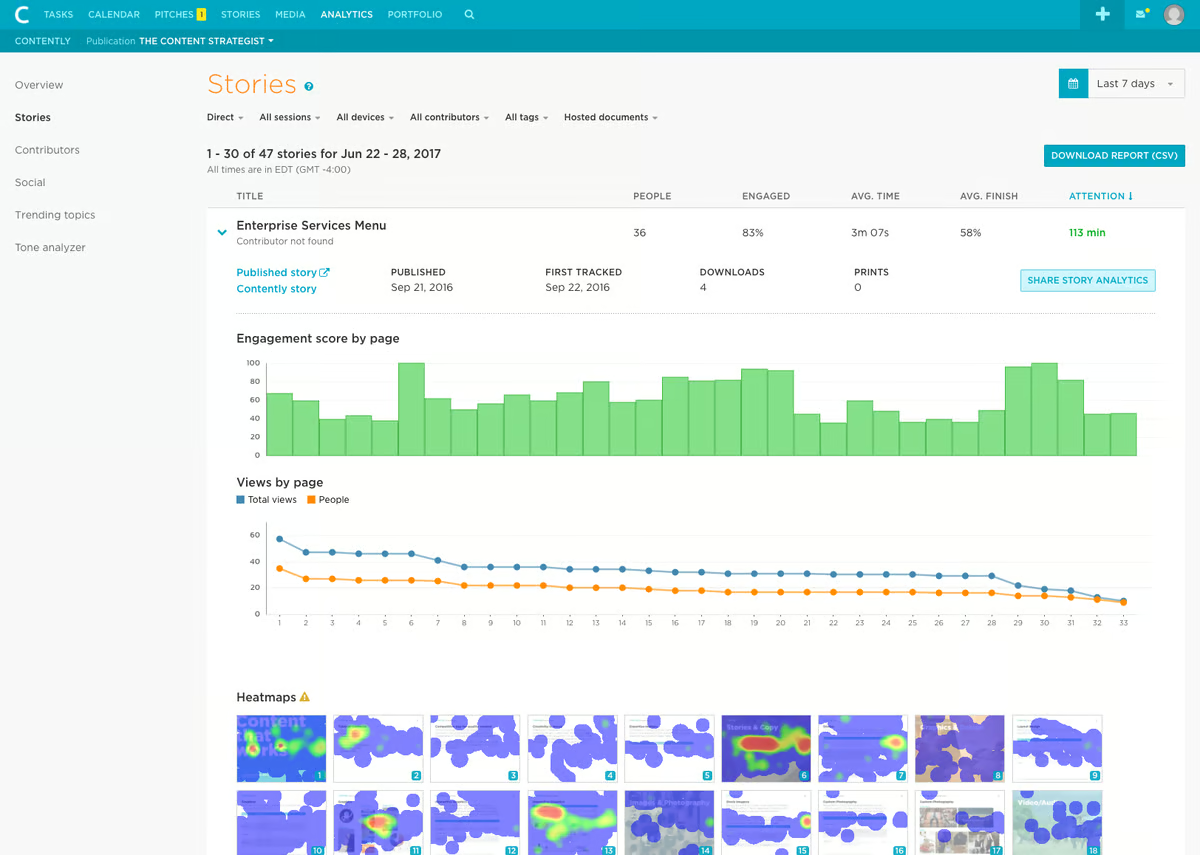
Contently is a full-stack content marketing platform that blends Agentic AI systems with a vetted creator marketplace. Contently differentiates itself through LLM Optimization (LLMO) consulting, which helps brands improve visibility across AI discovery channels.
Contently provides access to a network of more than 165,000 expert creators across industries, which supports high-quality, subject-matter-accurate content production for complex enterprise needs. The platform integrates intelligent talent recommendation to automatically match projects with best-fit creators, content optimization and governance to enforce SEO and compliance standards, and a voice and tone analyzer to maintain brand consistency across large content portfolios.
Contently includes Prism, which repurposes long-form content into platform-specific social posts for LinkedIn, Twitter, Facebook, Instagram, and YouTube, and content planning tools for managing calendars, campaigns, and content libraries. Its analytics suite tracks ROI, engagement, and conversions through heatmaps and performance metrics, enabling teams to tie content output directly to business outcomes.
Compared to Pepper Content, Contently places stronger emphasis on AI-human collaboration at the enterprise level, LLM-focused optimization strategies, and measurable performance reporting. However, some users report that third-party integrations feel less seamless, and the analytics interface can be difficult to navigate at first.
Contently uses custom pricing rather than fixed plans. Pricing is set per team instead of per user and requires defining subscription needs and a separate content creation budget for freelancer payments. While considered expensive, Contently targets large organizations that prioritize governance, AI search visibility, and scalable content operations with clear ROI measurement.
Pros of Contently include enterprise-grade editorial workflows that standardize content production across large teams, access to vetted professional writers and subject-matter experts that ensure consistent quality, robust governance features that enforce brand guidelines and compliance, and integrated performance analytics that tie content output to business outcomes. Cons of Contently include enterprise-level pricing that exceeds Pepper Content and AI-first platforms, slower turnaround times due to human-led production models, limited native SEO automation such as keyword clustering and SERP-driven optimization, and higher operational complexity that makes Contently less suitable for small teams or fast-moving content programs.
3. MarketMuse: Best PepperContent Alternative for SEO-Driven Content Planning and Deep Research
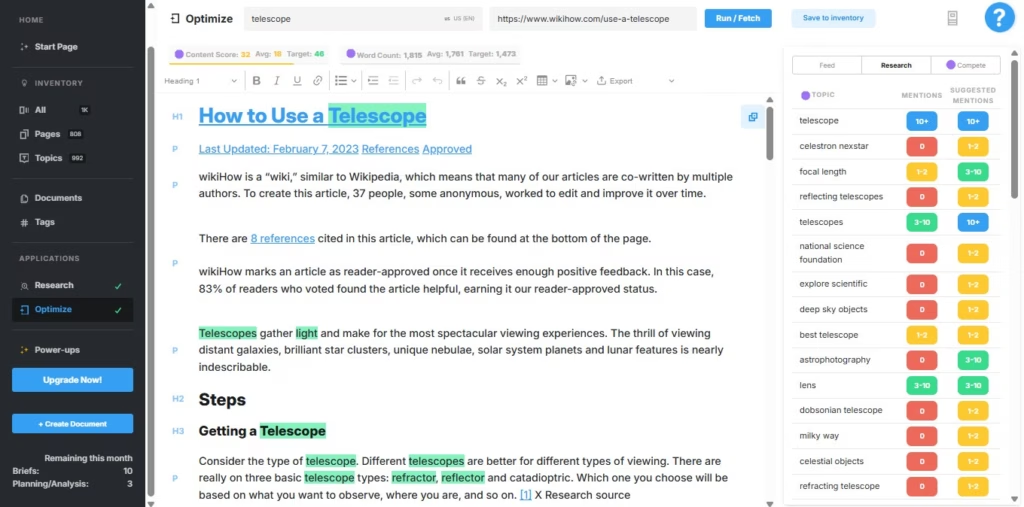
MarketMuse is an AI-driven content intelligence platform that performs deep topical analysis, competitive benchmarking, and search-driven content planning, which matters for teams that prioritize ranking authority over managed content production. MarketMuse evaluates content quality through semantic depth, topical coverage, and competitive gaps rather than editorial review. MarketMuse matters because it replaces outsourced writing workflows with data-driven planning that guides internal or external writers toward ranking outcomes.
MarketMuse operates as a cloud platform that analyzes entire domains, topic clusters, and competitor pages to calculate authority gaps and prioritization scores. That approach positions MarketMuse as a strategic planning layer rather than a content delivery service.
Core MarketMuse capabilities focus on research depth and scoring precision. Topic modeling evaluates coverage across entities and subtopics. Content briefs define word count ranges, heading structures, and term usage based on top-ranking pages. Competitive analysis benchmarks difficulty and authority requirements. Inventory analysis audits existing content to identify decay and expansion opportunities (pillar pages, supporting articles, content refresh targets).
MarketMuse operates as a Pepper Content alternative because it shifts control from service-based content creation to internal strategy ownership. Pepper Content emphasizes managed writing through AI plus human editors, which suits brands that outsource execution but limit direct SEO insight. MarketMuse defines what to publish, how deeply to cover topics, and where authority gaps exist before writing begins, which reduces revision cycles and content waste.
MarketMuse pricing follows a tiered subscription model that scales by tracked topics, content briefs, and strategy documents rather than content volume. MarketMuse offers a Free plan for 1 user with 10 queries per month and limited applications, which suits individuals with low publishing frequency. MarketMuse pricing contrasts directly with Pepper Content pricing, which scales by managed content production rather than research depth. Pepper Content bundles AI writing, human editors, and workflow management into usage-based plans, while MarketMuse allocates cost toward topic modeling, SERP X-ray analysis, and authority gap measurement. That difference positions MarketMuse as a planning and research system, while Pepper Content operates as a content execution service.
Pros of MarketMuse include industry-leading topical authority modeling, precise content brief generation, strong competitive benchmarking, and clear prioritization frameworks for large content portfolios (Search Atlas, Semrush, Clearscope). Cons of MarketMuse include a higher cost compared to writing-focused platforms, a research-heavy interface that requires SEO expertise, limited built-in writing automation, and no managed content services, which shifts execution responsibility to internal teams or partners.
4. Anyword: Best PepperContent Alternative for Predictive Copy Performance and Audience-Targeted Content
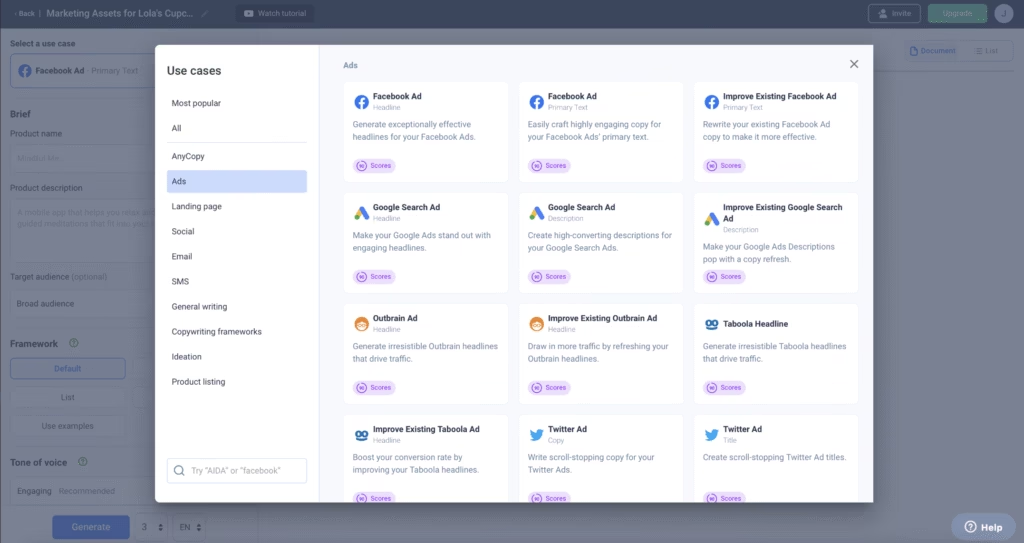
Anyword is a data-driven AI copywriting platform that generates marketing text and predicts copy performance through predictive scoring models trained on historical conversion and audience data. Anyword analyzes copy variants against channel, audience, and intent signals, which matters for teams that optimize messaging before launch rather than revising language quality after publication. Anyword focuses on outcome probability, not stylistic correctness.
Core features of Anyword center on pre-publication performance forecasting. Predictive Performance Score ranks copy variants before launch. Audience targeting aligns messaging with personas and channels. Variant generation produces multiple copy options per prompt. Data insights guide wording decisions across campaigns (performance scoring, audience targeting, variant generation).
Anyword operates as an alternative to Pepper Content with a different execution model. Pepper Content combines AI writing with human editors and managed workflows, which suits teams that outsource production at scale. Anyword surpasses Pepper Content for predictive copy testing, audience-specific messaging, and rapid iteration, which fits paid media, landing pages, and conversion-focused campaigns rather than long-form SEO execution. Compared to Pepper Content, Anyword performs best for performance-driven copy where testing speed and audience alignment outweigh editorial depth.
Anyword is a paid platform with pricing that typically ranges from $49 to $499 per month, depending on credit volume, predictive data access, and team seats. Entry plans limit monthly generations and analytics depth. Higher tiers expand audience targeting, predictive insights, and collaboration. Anyword pricing often sits above basic Pepper Content plans focused on AI drafting, while remaining cheaper than fully managed Pepper Content packages that include human writers and editors.
Pros of Anyword include predictive scoring grounded in conversion data, strong alignment with performance marketing workflows, and rapid variant generation for testing. Cons of Anyword include limited long-form structure control, weaker grammar and style diagnostics than editorial platforms, and dependence on sufficient context and data for accurate prediction.
5. ContentFly: Best PepperContent Alternative for Research-Driven Human-Written Content
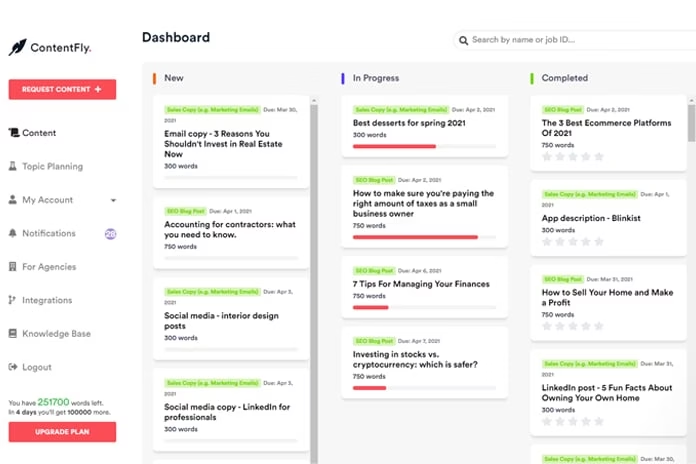
ContentFly is a subscription-based content creation platform that provides research-driven, human-written content through a vetted pool of professional writers, which matters for teams that require bespoke articles without managing individual freelancers. ContentFly pairs clients with expert writers who produce blog posts, guides, email copy, and other formats that integrate research and brand context into deliverables. ContentFly matters because it combines human editorial capability with structured workflow management to deliver consistent, publish-ready content.
Core features inside ContentFly focus on high-touch content production. Writer matching connects briefs to creators with relevant experience. Research-oriented writing integrates source validation and topic context. Delivery and revision tracking ensure quality alignment before publication. The platform handles briefing, creation, editorial revision, and delivery under a single subscription.
ContentFly operates as a Pepper Content alternative because both platforms provide human-produced content with research depth rather than purely generative AI outputs. Pepper Content couples AI drafting with human touchpoints, which suits teams that require volume with quality oversight. ContentFly delivers content through a professional writer network with embedded research, which positions it ahead for organizations that prioritize bespoke perspective, depth, and industry nuance in each piece. ContentFly is the better Pepper Content alternative for research-driven, human-crafted articles where strategic insight and writer expertise outweigh automated draft approaches.
ContentFly is a paid platform with subscription pricing tied to word volume per month. A package that provides 4,000 words per month costs $375, and larger plans scale up to $3,000 per month for 32,000 words, with unused words typically rolling over. These rates reflect a model where cost correlates with output capacity and writer allocation. Compared to Pepper Content pricing, ContentFly pricing can be cheaper for moderate word volumes while remaining higher for enterprise-scale deliverables. ContentFly offers a free trial with refund guarantees for early usage below the defined word limits.
Pros of ContentFly include straightforward pricing, access to a large writer pool, quick turnaround, and research-integrated writing that produces publish-ready content (trusted by many businesses). Cons include potential variability in individual writer style, subscription commitment for consistent output, and pricing that may exceed lighter DIY or AI-only content solutions when scaling volume.
6. Compose.ly: Best PepperContent Alternative for Scaling Content Production With Structured Briefs
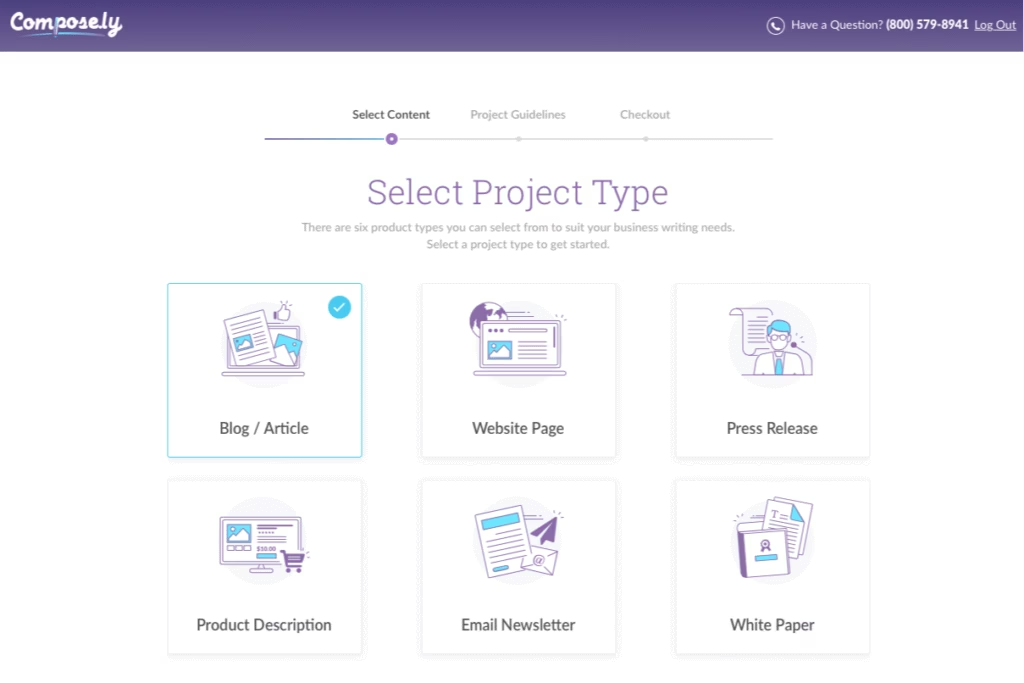
Compose.ly is a managed content production platform that connects businesses with vetted SEO-savvy writers and editors who produce high-quality, research-driven content with structured briefs and editorial oversight. Compose.ly pairs brand goals with expert creators who tailor content to audience needs, which matters for organizations that require consistent, publish-ready content without hiring internal writers. Compose.ly matters because it combines writer matching, project management, and SEO guidance into one service that scales with editorial demand.
Core features inside Compose.ly focus on premium content execution. Writer matching assigns briefs to vetted writers with relevant expertise. Project management tracks deliverables, revisions, and quality checkpoints. SEO-oriented briefs embed keyword guidance and structure for search performance. Editorial oversight ensures final deliverables align with brand guidelines and topic strategy.
Compose.ly operates as a Pepper Content alternative because both provide human-written content with research depth rather than purely generative AI drafts. Pepper Content blends AI with human editing for efficiency and scalability. Compose.ly delivers content through dedicated writer teams with deeper briefing and editorial involvement, which positions Compose.ly ahead when strategic research, nuanced tone, and in-depth industry expertise outweigh AI draft automation. Compose.ly is the best Pepper Content alternative for teams that prioritize structured briefs, human insight, and editorial control over AI-first generation workflows.
Compose.ly is a paid platform with managed pricing that starts at approximately $999 per month for standard managed content plans. Larger agency plans scale to about $5,000 per month for enterprise-level writer teams and SEO strategy services. Compared to Pepper Content pricing, which often starts near $99 per month for AI + human workflows and scales with content volume and human editing, Compose.ly is more expensive at standard tiers but provides deeper human editorial involvement, customized briefs, and project management.
Pros of Compose.ly include access to experienced, vetted writers who produce SEO-optimized content, integrated project management that reduces administrative overhead, and reliable delivery of publish-ready assets that align with briefs. Cons include higher cost relative to AI-first alternatives, longer turnaround times for complex briefs, and commitment requirements for ongoing managed services.
7. Frase: Best PepperContent Alternative for SEO Content Research and Optimization
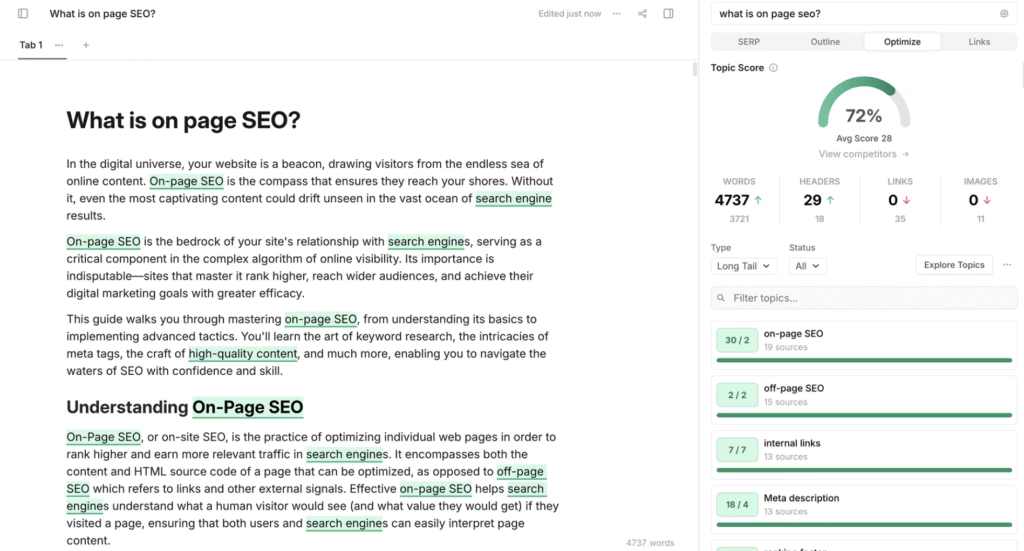
Frase is an AI-assisted SEO research and content optimization platform that builds search-driven briefs from SERP evidence, which matters for teams that require search intent alignment and topical completeness rather than managed writing services. Frase analyzes ranking pages, extracts entities and coverage gaps, and applies optimization guidance during drafting. Frase matters because it prioritizes research-first execution that connects content planning directly to organic visibility outcomes.
Frase operates against Pepper Content with a fundamentally different workflow. Pepper Content emphasizes managed production through AI drafts and human writers. Frase constructs content from SERP data, topical entities, and competitor coverage, which positions Frase ahead for in-house teams that require research control and optimization precision before writing rather than outsourced fulfillment (Search Atlas, Semrush, Clearscope).
Core features inside Frase structure SEO-led production through a clear triad. Firstly, SERP analysis extracts headings, entities, and questions from ranking pages. Secondly, AI-generated briefs define scope, structure, and subtopics. Thirdly, a content editor applies real-time optimization signals during drafting to increase topical coverage (SERP research, content briefing, on-page optimization).
Frase uses subscription pricing with transparent tiers. The Starter plan costs $49 per month for a single user and core research and briefing capabilities. Enterprise uses custom pricing with custom seats, custom domains, expanded article volumes, AI Search Visibility across multiple platforms, single sign-on, Security Assertion Markup Language authentication, application programming interface access, white-label reports, and a dedicated account manager. Frase pricing remains lower than Pepper Content managed services while exceeding basic AI-only tiers, reflecting its focus on SEO research and optimization rather than human content delivery.
Pros noted in the Frase review include strong SERP-driven briefs, efficient topic coverage analysis, and integrated optimization during drafting. Cons of Frase include limited value for teams that require human-written content at scale, reliance on search data quality, and reduced usefulness for creative or non-SEO workflows compared to managed content platforms.
8. Blaze: Best PepperContent Alternative for Fast Content Creation and Ideation
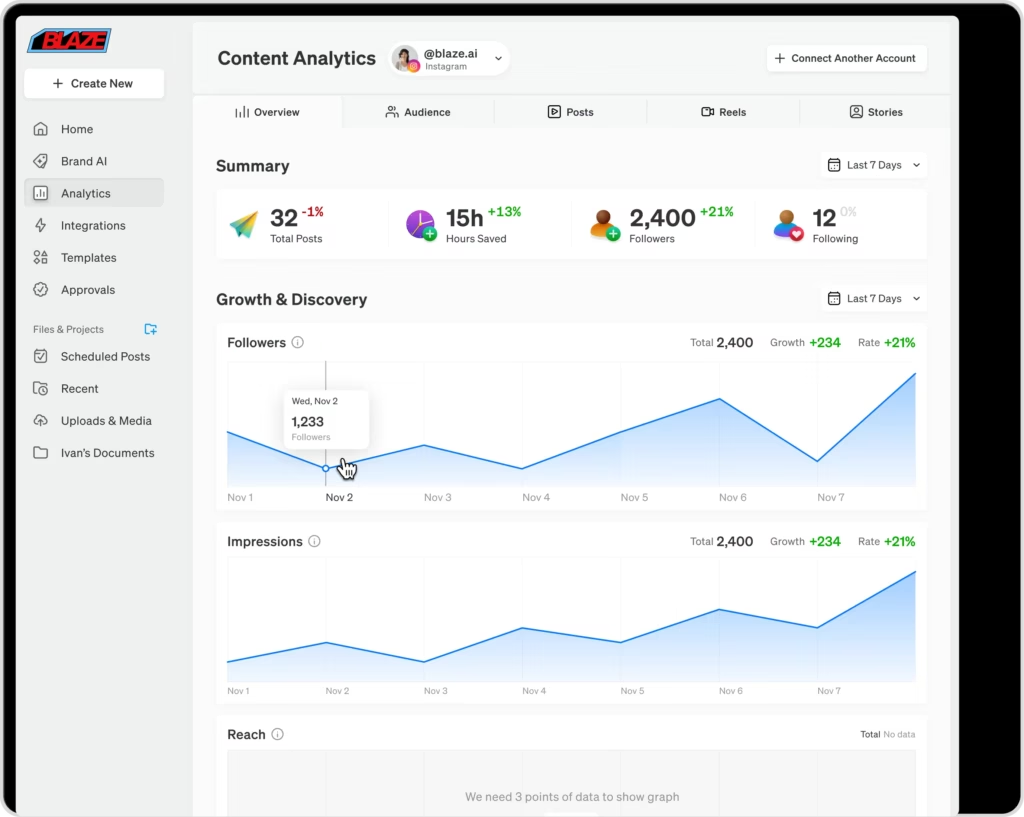
Blaze is a content repurposing and distribution platform that transforms one source asset into multi-format outputs, which matters for teams that require speed, consistency, and cross-channel execution rather than managed human writing. Blaze converts a single idea into blogs, newsletters, social posts, videos, and website-ready HTML. Blaze matters because it reduces production time while expanding content reach across platforms.
Blaze operates against Pepper Content with a workflow-first automation model. Pepper Content prioritizes human-driven creation through managed writers and editorial layers. Blaze focuses on repurposing, automation, and workflow simplification, which positions Blaze ahead for small teams, startups, and freelancers that need rapid multi-channel output instead of custom-written long-form pieces.
Core features inside Blaze center on scalable reuse and distribution. Multi-platform generation creates over 100 content types per source asset. Automated posting schedules content across channels to maximize timing and visibility. SEO-oriented generation applies keyword integration, structured headings, and metadata to improve search alignment (content repurposing, automated scheduling, SEO optimization).
Blaze uses transparent subscription pricing that remains cheaper than Pepper Content managed plans. Creator starts at $34 per month for 1 seat and core generation features. Pro costs $49 per month with expanded seats, brand voices, and AI capacity. Startup reaches $79 per month with unlimited content and collaboration tools. Agency costs $200 per month with advanced onboarding and scalability. Enterprise starts at $399 per month with security and custom training. Blaze pricing undercuts Pepper Content service-based costs while delivering faster execution for ideation-heavy workflows.
Pros noted in Blaze reviews include fast content repurposing, strong automation for publishing, consistent brand voice control, and broad format coverage across channels. Cons of Blaze include a limited component library, slower in-editor performance reported by some users, and reduced suitability for teams that require original human-written content at scale rather than AI-led ideation and reuse.
9. Reword: Best PepperContent Alternative for Research-Driven Credible Content

Reword is an AI writing and research collaboration platform that adapts to human writing style and enforces source-backed content creation, which matters for teams that prioritize credibility, accuracy, and authorial voice over outsourced production. Reword uses a Cowriter system that learns stylistic patterns and applies them consistently across drafts. Reword matters because it reduces generic AI output while preserving editorial trust.
Reword operates against Pepper Content with an author-centric collaboration model. Pepper Content relies on managed human writers and editorial workflows to produce content at scale. Reword embeds AI directly into the writer workflow, which positions Reword ahead for teams that want to retain authorship, control sourcing, and refine drafts internally rather than outsource execution.
Core features inside Reword emphasize research integrity and strategic planning. Search-intent scoring evaluates alignment between draft content and user demand. Built-in research tools surface credible sources and citations directly within the editor. Topic cluster tools organize articles into structured thematic groups to strengthen topical authority (search intent scoring, built-in research, and topic clustering).
Reword uses paid subscription pricing that competes with the Pepper Content service costs. The Grow plan costs $48 per month for 1 seat with usage-based limits up to 80 drafts, with additional seats priced at $30 each. The Pro plan costs $359 per month and removes draft limits while adding collaboration, article tracking, and unlimited projects. Reword remains cheaper than Pepper Content managed content packages for teams that prefer in-house production with AI augmentation.
Pros of Reword include strong voice adaptation, integrated citation workflows that reduce misinformation risk, effective topic clustering, and direct use of Google search data for optimization. Cons of Reword include limited customization depth for advanced editors and reduced effectiveness for highly technical subjects that require domain-specific expertise beyond AI-assisted research.
10. Writesonic: Best PepperContent Alternative for Scalable Content Generation and Ideation
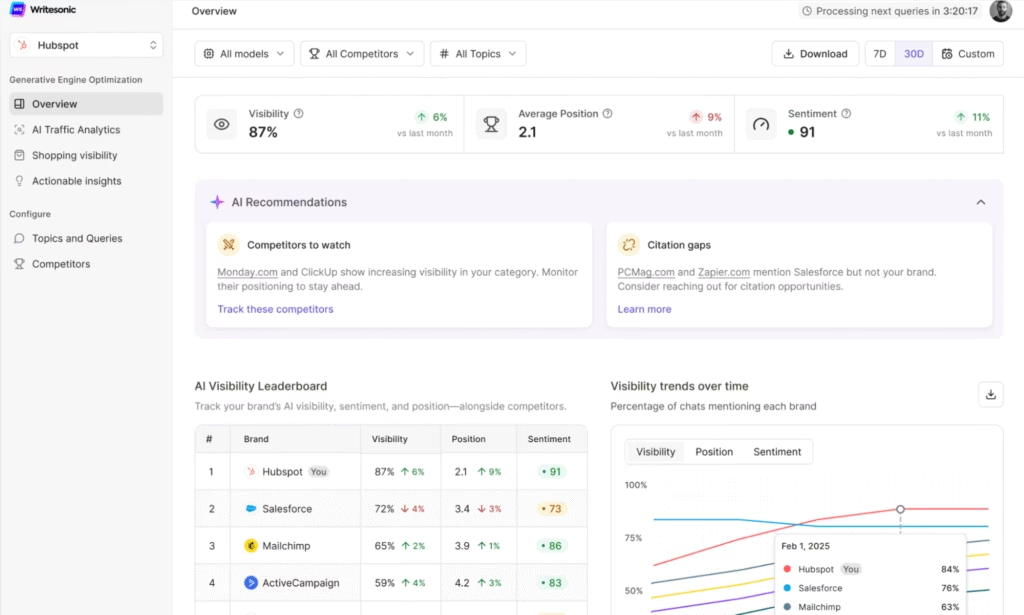
Writesonic is an AI-powered content generation and marketing platform that combines multi-model artificial intelligence, real-time search data, and automation workflows, which matters for teams that require fast, scalable content production without relying on managed writing services. Writesonic operates through Chatsonic, which integrates live Google Search data and multiple large language models to generate research-backed marketing content. Writesonic matters because it enables rapid ideation, drafting, and optimization inside a single system.
Writesonic operates against Pepper Content with a product-led automation approach. Pepper Content depends on human writers, editors, and managed workflows to deliver content outputs. Writesonic replaces outsourced execution with AI-driven generation that adapts to different marketing use cases, which positions Writesonic ahead for teams that prioritize speed, iteration, and internal control over human-written content pipelines.
Core features inside Writesonic focus on scalable production and research integration. Multi-model AI access enables switching between GPT-4o, Claude 3.5, and Gemini to match task requirements. Real-time web search connects drafts to current Google Search data for accuracy. SEO and marketing integrations connect keyword research, content creation, and performance analysis into one workflow (multi-model AI access, real-time web search, SEO automation).
Writesonic uses tiered subscription pricing that undercuts Pepper Content’s managed services. A Free plan costs $0 with limited credits and capped usage. The Individual plan costs $20 per month and supports small-scale content needs. The Standard plan costs $99 per month and expands usage with team seats, unlimited AI generations under fair use, SEO tooling, and automation. Enterprise pricing uses custom quotes, while the AI plus Human Content Service costs $2,000 per month, which remains competitive compared to Pepper Content’s fully managed content packages.
Pros mentioned in the Writesonic review include access to multiple AI models, real-time search integration, strong SEO tooling, deep marketing platform integrations, and rapid content ideation at scale. Cons of Writesonic include restrictive limits on the free tier, variable quality in AI-generated images, and reduced editorial depth compared to Pepper Content’s human-written content for authority-driven or highly specialized topics.
11. Jasper: Best PepperContent Alternative for Creative Long-Form Content and Content Marketing
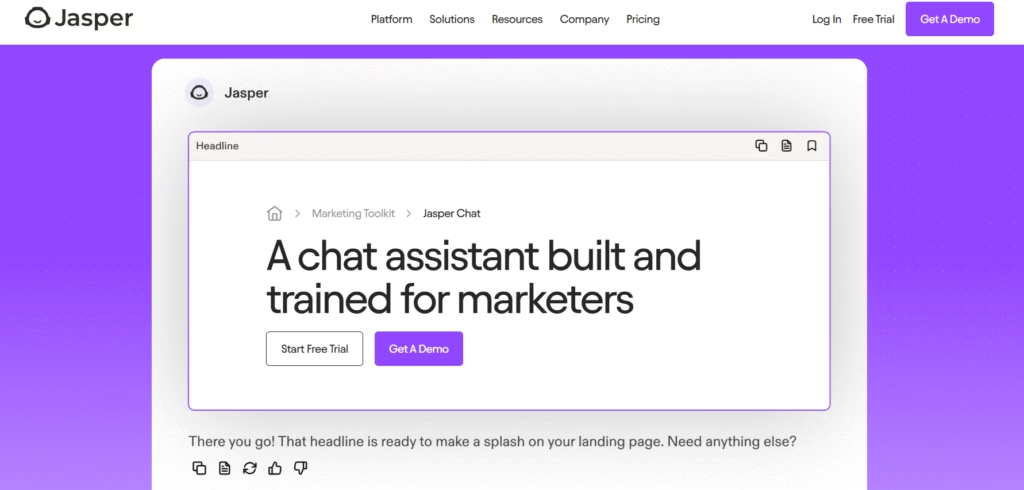
Jasper is an AI-powered content marketing platform that produces creative long-form content, multi-format assets, and brand-aligned messaging, which matters for teams that scale marketing output without managed writer marketplaces. Jasper generates blogs, landing pages, ads, and campaigns through AI workflows that maintain brand consistency across channels. Jasper matters because it accelerates ideation, drafting, and repurposing for marketing teams that require speed and creative control.
Jasper operates against Pepper Content through AI-led content automation rather than human-managed production. Pepper Content relies on vetted writers, editors, and editorial coordination to deliver finished content. Jasper replaces that dependency with AI-driven creation that marketers control directly, which positions Jasper ahead for teams that prioritize rapid iteration, brand consistency, and internal content velocity over outsourced writing.
Core features inside Jasper focus on creative scalability and marketing execution. Jasper Studio enables no-code creation of AI workflows and apps for custom marketing use cases. The Marketing AI Toolkit centralizes chat, document editing, image generation, and brand governance. Content automation repurposes assets across formats, languages, and platforms to extend reach efficiently (long-form writing, campaign repurposing, brand voice control).
Jasper uses per-seat subscription pricing that remains lower than Pepper Content’s managed services at scale. The Creator plan costs $49 per month per seat and covers core writing and brand voice features. The Pro plan costs $69 per month per seat and expands collaboration, campaign tools, and AI image generation. Business pricing uses custom quotes with enterprise security, application programming interface access, and dedicated account management. Jasper remains more cost-predictable than Pepper Content, which prices content per word, per asset, or through custom service contracts.
Pros of Jasper include strong long-form generation quality, effective brand voice consistency, powerful content repurposing, and broad marketing-focused tooling. Cons of Jasper include a steeper learning curve than simpler AI writers, occasional platform stability issues, and limited native SEO depth compared to research-first platforms, which often leads teams to pair Jasper with separate SEO tools.
12. Rytr: Best PepperContent Alternative for Fast Ideation and Short-Form Content
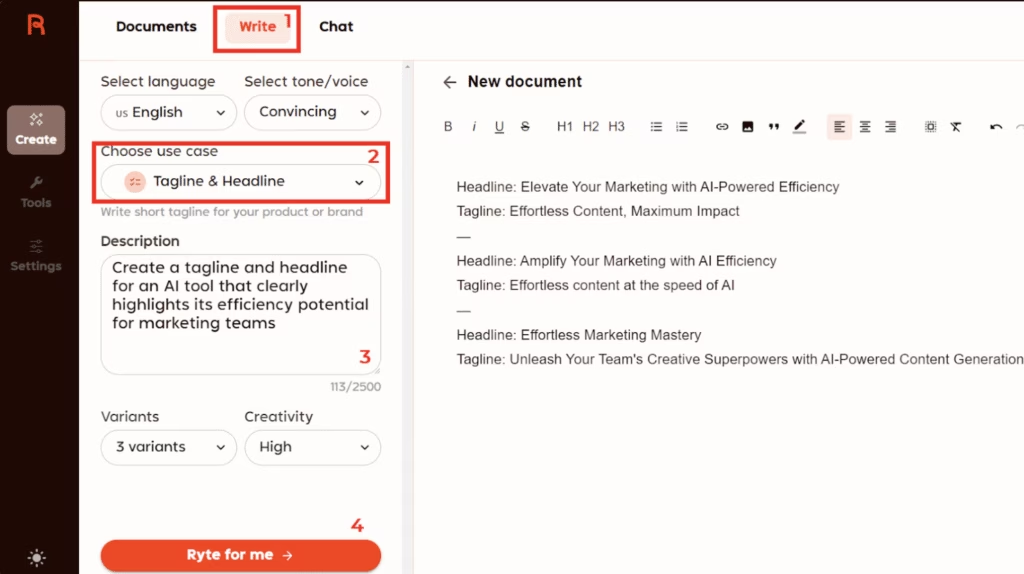
Rytr is an AI writing platform that generates short-form marketing content through templates and rapid AI execution, which matters for teams that require speed and affordability rather than managed human writing services. Rytr produces social posts, ads, blog sections, emails, and landing copy with built-in optimization suggestions. Rytr matters because it reduces content turnaround time for creators who prioritize volume and cost control.
Rytr operates against Pepper Content with an automation-first model instead of a human writer marketplace. Pepper Content coordinates freelancers, editors, and project workflows to deliver long-form and editorial content. Rytr removes that layer entirely by enabling instant AI-generated output, which positions Rytr ahead for quick ideation, short-form execution, and lightweight marketing needs rather than research-heavy or editorially managed production.
Core features inside Rytr focus on speed and accessibility. Template-based generation accelerates creation across common marketing formats. AI-driven ideation produces headlines, hooks, and variations on demand. Built-in optimization guidance improves clarity and basic SEO alignment during drafting (ad copy, social captions, short blog sections).
Rytr uses low-cost subscription pricing that undercuts Pepper Content by a wide margin. Rytr pricing starts at $9 per month, which includes AI content generation, optimization suggestions, and access to multiple writing templates. Pepper Content pricing typically reflects per-word or per-asset human production costs, which makes Rytr significantly cheaper for ongoing short-form output at scale.
Pros of Rytr include very affordable pricing, fast content generation, ease of use, and broad template coverage for marketing use cases. Cons of Rytr include limited long-form control, shallow research depth, and weaker SEO and editorial rigor compared to Pepper Content, which remains better suited for research-driven, human-written content projects.
13. Grammarly: Best PepperContent Alternative for Polishing and Improving Content Readability
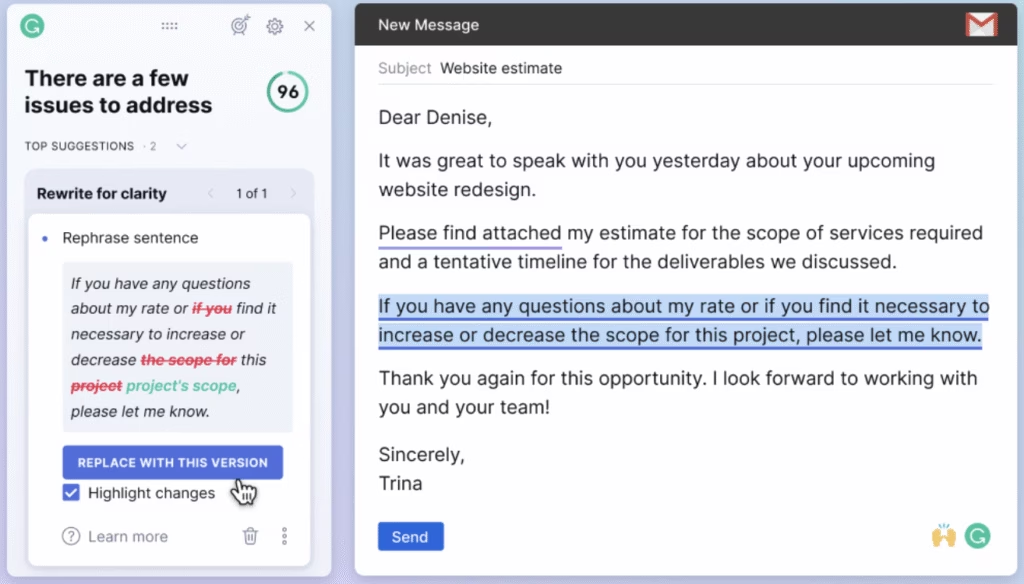
Grammarly is a real-time writing quality platform that applies in-line grammar correction, clarity rewrites, and tone controls, which matters for teams that need fast draft polishing across channels. Grammarly operates directly inside editors and browsers, which reduces revision cycles and enforces consistency across business communication (emails, landing pages, internal documents). Grammarly focuses on immediate text correction rather than managed content production, which differentiates Grammarly from Pepper Content.
Grammarly functions as a Pepper Content alternative for post-draft refinement rather than end-to-end content creation. Pepper Content organizes content through briefs, creator networks, and managed delivery, which suits scaled production. Grammarly improves existing drafts through automated quality layers, which places Grammarly ahead for teams that already generate content and need fast readability gains instead of sourcing writers (marketing teams, sales teams, operations teams).
Core Grammarly features apply three quality layers. Real-time grammar and syntax correction removes structural errors. Clarity rewrites shortened sentences and reduces redundancy. Tone and style controls align language with brand intent (grammar correction, sentence rewrites, tone detection).
Grammarly provides a freemium model. Grammarly offers a free plan with basic grammar and spelling checks. Grammarly Pro costs $12 per user per month on annual billing or $30 per user per month on monthly billing, which makes Grammarly cheaper than managed Pepper Content subscriptions but more expensive than basic grammar tools.
Pros of Grammarly include fast in-editor corrections, wide editor coverage, and consistent sentence rewrites that increase readability. Cons of Grammarly include aggressive rewrite suggestions that alter author voice, limited content ideation features, and reduced value for teams that require original long-form production rather than draft polishing.
14. Scalenut: Best PepperContent Alternative for Integrated Research and Content Workflow
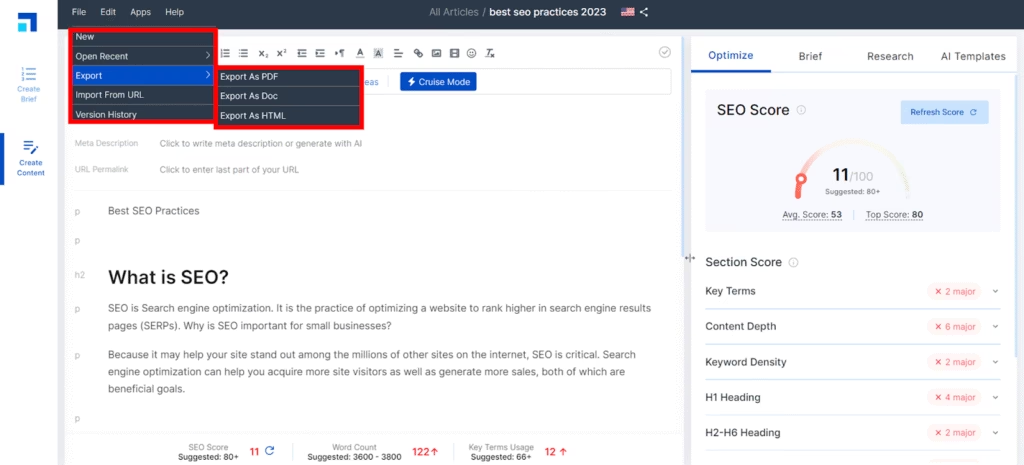
Scalenut is an AI-powered content marketing platform that unifies research, planning, writing, and SEO optimization inside a single workflow, which matters for teams that require structured output without managing human writer marketplaces. Scalenut generates content ideas, builds SEO briefs, produces drafts, and applies optimization signals directly during writing. Scalenut matters because it replaces fragmented content stacks with one execution system.
Scalenut operates against Pepper Content through automation rather than managed human production. Pepper Content relies on vetted writers, editors, and project coordinators to deliver long-form assets. Scalenut removes that dependency by using AI to plan, write, and optimize content end-to-end, which positions Scalenut ahead for teams that prioritize speed, consistency, and scalable SEO execution over editorial outsourcing.
Core features inside Scalenut focus on workflow integration. Keyword research and clustering define search intent and topical structure before writing begins. AI-generated content briefs and drafts accelerate production across blogs and landing pages. Live SEO optimization applies NLP and competitor benchmarks during drafting to improve ranking alignment (keyword clustering, SERP analysis, content optimization).
Scalenut uses subscription pricing that remains significantly cheaper than Pepper Content. Scalenut pricing starts at $29 per month for entry plans that include AI content generation, SEO optimization tools, and planning features. Pepper Content pricing typically reflects per-word or per-project human content costs, which makes Scalenut materially cheaper for continuous content production at scale.
Pros of Scalenut include strong end-to-end workflows, integrated SEO research, automated content generation, and clear value for small teams. Cons of Scalenut include occasional AI quality variance, limited editorial nuance compared to human writers, and fewer advanced analytics than enterprise-grade content intelligence platforms.
15. Simplified: Best PepperContent Alternative for Collaborative AI Writing and Ideation
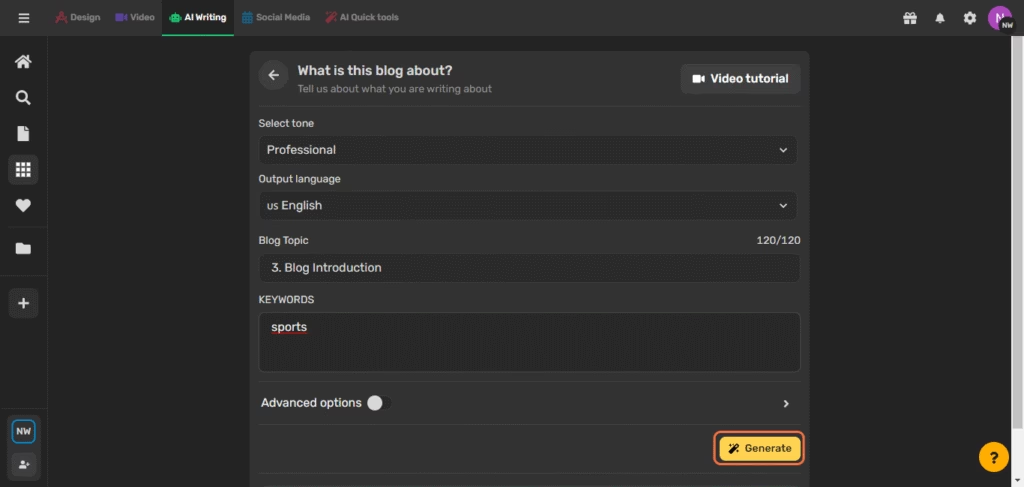
Simplified is an AI-powered content creation platform that combines collaborative writing, chatbot automation, and multi-format ideation inside one workspace, which matters for teams that require speed and shared execution rather than managed writer networks. Simplified generates marketing copy, blog articles, and campaign assets while allowing teams to customize tone and workflows. Simplified matters because it replaces external content coordination with in-platform collaboration.
Simplified operates against Pepper Content through AI-first production instead of human-led marketplaces. Pepper Content relies on assigning briefs to writers, editors, and reviewers. Simplified enables teams to generate, edit, and iterate content internally with AI trained on proprietary data, which positions Simplified ahead for organizations that prioritize control, iteration speed, and collaborative drafting over outsourced writing.
Core features inside Simplified focus on collaborative generation. The AI Article Writer produces drafts with adjustable tone and style. A custom AI chatbot trains on business data and URLs to deliver context-aware outputs. Collaboration tools enable real-time planning, editing, and approval across teams (AI writing, chatbot automation, and team collaboration).
Simplified uses subscription pricing that undercuts Pepper Content’s human production costs. Simplified One costs $29.99 per month, while Simplified Growth costs $119.99 per month with expanded seats, storage, and AI word limits. Enterprise plans use custom pricing. Pepper Content pricing typically scales per project or per word, which makes Simplified cheaper for ongoing content creation and ideation at scale.
Pros noted in Simplified reviews include fast multi-format content generation, strong collaboration features, AI training on proprietary data, and flexible use across channels. Cons of Simplified include frequent manual edits for AI outputs, word and feature limits on lower tiers, weaker long-form structure control, and limited design customization compared to specialized platforms.
16. LongShot (Discontinued): Best PepperContent Alternative for Fact-Checked Long-Form SEO Content
LongShot is a fact-checked AI writing platform that focused on long-form SEO content with citation control and factual verification, which mattered for teams that prioritized accuracy and source attribution over generic AI drafting. LongShot differentiated through real-time fact extraction, citation insertion, and anti-hallucination controls that aligned AI output with verified sources, which positioned LongShot as a stronger Pepper Content alternative for research-heavy articles rather than managed human writing services.
LongShot discontinued active development and commercial availability during 2024, and LongShot no longer offers new subscriptions, updates, or customer support. Product shutdown resulted from a combination of rising infrastructure costs for real-time fact verification, increasing competition from multi-function SEO platforms that bundled research, drafting, and optimization, and limited scalability compared to full content operations providers and AI-SEO suites (Search Atlas, Frase, MarketMuse). Reviews and community discussions referenced reduced update cadence, stalled roadmap delivery, and migration guidance toward broader content intelligence platforms, which confirmed the discontinuation trajectory. LongShot no longer represents a viable Pepper Content alternative, and teams that require fact-checked long-form SEO content now adopt platforms that integrate SERP research, entity coverage, and optimization workflows inside actively maintained systems rather than discontinued point solutions.
17. Linguix: Best PepperContent Alternative for Grammar and Writing Analytics Support

Linguix is an AI-powered writing assistant that focuses on real-time grammar correction, tone control, and team-level writing analytics, which matters for organizations that prioritize consistent, error-free communication over outsourced content production. Linguix improves business writing across emails, support tickets, internal documents, and marketing copy. Linguix matters because it standardizes language quality at scale without relying on external writers.
Linguix operates against Pepper Content through automation rather than managed human workflows. Pepper Content centers on briefing, assigning, and reviewing human-written content. Linguix enables teams to write internally with instant corrections, paraphrasing, and tone adjustments, which positions Linguix ahead for customer support, HR, sales, and operations teams that require fast, compliant communication instead of long-form editorial content.
Core features inside Linguix emphasize operational writing efficiency. Real-time grammar correction fixes errors during typing. AI-powered paraphrasing rewrites text for clarity, tone, and engagement. Team features apply custom style guides and analytics to enforce consistent communication standards (grammar correction, paraphrasing, tone adjustment).
Linguix uses simple subscription pricing that remains significantly cheaper than Pepper Content’s managed writing services. Linguix costs $30 per month on a monthly plan or $140 annually for individual users, while Business plans cost $10 per user per month with centralized billing, analytics, and integrations. Pepper Content pricing scales by content volume and human labor, which makes Linguix a lower-cost alternative for continuous internal writing needs.
Pros of Linguix include fast real-time corrections, strong integrations with Google Docs, LinkedIn, Salesforce, and MS Office, practical tone control for business contexts, and lightweight API deployment. Cons of Linguix include the absence of plagiarism detection, limited long-form content planning, and weaker research and SEO capabilities compared to Pepper Content.
18. TextCortex: Best PepperContent Alternative for Rewriting and Converting Research Into Content

TextCortex is an AI-powered content creation and customization platform that enables enterprises to generate tailored, on-brand content through configurable personas, templates, and internal knowledge bases, which matters for teams that require controlled AI outputs rather than outsourced writing services. TextCortex allows organizations to adapt tone, style, and intent across marketing, customer service, and internal communications. TextCortex matters because it replaces repetitive content workflows with configurable AI systems aligned to brand and operational requirements.
TextCortex operates against Pepper Content through internal enablement rather than human-managed production. Pepper Content focuses on briefing external writers and editors to produce finished content assets. TextCortex enables in-house teams to generate content directly through AI personas, reusable templates, and connected data sources, which positions TextCortex ahead for enterprises that prioritize speed, customization, and internal ownership over editorial outsourcing.
Core features inside TextCortex emphasize AI customization and workflow efficiency. Customizable templates standardize content creation through reusable prompts with dynamic fields. AI personas adjust tone, voice, and intent to match brand guidelines. Integrated knowledge bases and workflow automation connect internal documents with AI outputs to increase relevance and accuracy (custom templates, AI personas, knowledge integration).
TextCortex uses a flexible pricing model that scales by usage and remains cheaper than Pepper Content’s managed services. TextCortex offers a Free plan at $0 per month, while Premium pricing ranges from $6.99 to $119.99 per month, depending on creation volume and storage. Enterprise plans use custom pricing with advanced security and support. Pepper Content pricing increases with content volume and human labor, which makes TextCortex a more cost-efficient alternative for continuous content generation at scale.
Pros noted in TextCortex reviews include strong AI customization, multilingual support across 25 languages, seamless browser extension access across thousands of tools, and effective brand voice control. Cons of TextCortex include delayed real-time search results, limited advanced SEO tooling, and reduced effectiveness for deep research-driven or editorial long-form content compared to Pepper Content.
19. RELAYTO: Best PepperContent Alternative for Interactive Content and Storytelling
RELAYTO is an interactive content experience platform that converts static documents into dynamic, engaging experiences with analytics and interactivity, which matters for teams that require audience engagement and narrative control rather than managed writing services. RELAYTO transforms PDFs, presentations, videos, and images into interactive experiences that guide viewers through tailored paths that increase retention and comprehension. RELAYTO matters because it extends content beyond linear text and enables measurable interaction across channels.
RELAYTO operates against Pepper Content through audience-centric design rather than production pipelines. Pepper Content focuses on creating written assets through creator networks and editorial workflows. RELAYTO enables the creation of interactive hubs, content portals, and immersive journeys, which positions RELAYTO ahead for teams that require narrative engagement, visual storytelling, and interactive deployment instead of purely text-based delivery.
Core features inside the RELAYTO structure include interactive storytelling with clear triads. Interactivity workflows enable embedding of videos, forms, charts, and hotspots to create rich experiences. Analytics track user engagement with detailed metrics that inform iteration and optimization. Multi-format hubs centralize documents, portals, and campaigns into secure, branded ecosystems (interactive workflows, engagement analytics, content hubs).
RELAYTO uses tiered subscription pricing with accessible entry and advanced options. Relayto offers a Free plan at $0 per month with core interactivity tools and audience reach. Professional pricing starts near $65 per month for expanded interactive content and analytics. Team and Enterprise plans scale significantly larger for branded content hubs, security controls, integrations, and enterprise governance, with custom quotes available from sales. Pricing varies with feature breadth and seat counts, which reflects RELAYTO’s focus on interactive deployment rather than purely text creation.

Pros of RELAYTO include strong interactivity tools that boost engagement, seamless transformation of static documents, and detailed analytics that track audience behavior. Cons of RELAYTO include a learning curve for non-technical users, occasional slow load times for media-rich content, and higher seat-based pricing for advanced brands.
20. Katteb: Best PepperContent Alternative for Research-Based Long-Form Content
Katteb is an AI-driven SEO content creation and optimization platform that produces long-form, fact-checked articles with semantic relevance and citations, which matters for teams that require credible, search-aligned material rather than human-managed writing services. Katteb combines entity analysis, competitive insights, and automated SEO recommendations to plan and generate optimized drafts. Katteb matters because it delivers research-based long-form content workflows at accessible pricing for creators and small teams.
Katteb operates against Pepper Content through software-first automation rather than marketplace-driven human production. Pepper Content organizes briefs, editors, and freelance writers to deliver finished assets. Katteb enables internal teams to produce SEO-optimized long-form content directly, which positions Katteb ahead for individual creators, small businesses, and in-house marketing teams that prioritize speed, fact verification, and search relevance over external writer coordination.
Core features inside Katteb emphasize research and optimization workflows. Fact-checked article generation uses AI with automatic in-text citations to increase content trustworthiness. SEO editor integration analyzes top-ranking content and semantic structures to guide headings and coverage. Multi-format generators produce blog posts, product reviews, news reports, URL-based drafts, and internal linking suggestions to support varied content formats (fact-checked article writer, SEO analysis, structured outputs).
Katteb uses subscription pricing with flexible tiers. A monthly unlimited plan costs $29 per month for full long-form and fact-checked content access, and an annual unlimited plan costs $99, each providing unrestricted AI writing, built-in proofreading, plagiarism checks, internal linking tools, and export options to platforms like WordPress, Blogger, or file formats. This pricing remains significantly lower than Pepper Content’s managed services and reflects a focus on accessible long-form AI workflows rather than curated human writing.
Pros of Katteb include strong SEO-focused content quality, automatic fact checking, built-in plagiarism detection, multilingual generation with 100+ supported languages, and WordPress export capability. Cons of Katteb include occasional limitations in content creativity for niche subjects, the learning curve for new users, and variable editorial flow that may require manual refinement for high-authority publications.
21. Blogely: Best PepperContent Alternative for Content Planning and SEO Brief Creation
Blogely is a content planning and management platform that integrates topic research, SEO briefs, writing workflows, and publishing tools into a unified system, which matters for teams that require structured editorial planning without relying on external writer marketplaces. Blogely consolidates research documents, keyword insights, competitive data, and editorial calendars to streamline content development. Blogely matters because it reduces tool fragmentation and centralizes planning to execution in one workspace.
Blogely operates against Pepper Content through software-centric planning rather than managed content production. Pepper Content organizes briefs, creators, and editors to deliver written assets. Blogely enables internal teams to research topics, draft SEO briefs, plan editorial schedules, and manage content lifecycles directly, which positions Blogely ahead for users that prioritize in-platform planning and optimization over external talent coordination.
Core features inside Blogely focus on research and workflow orchestration. Topic research aggregates data and competitive insights to define scope and keyword relevance. Content planning workflows organize article blocks, editorial calendars, and status tracking to guide execution. On-page SEO and optimization tools assist draft scoring and readiness prior to publication (research insights, editorial calendars, SEO optimization).
Blogely uses tiered subscription pricing with accessible entry points. A Free plan costs $0 per month for basic planning, research docs, and a limited content portfolio. Starter costs $29 per month with expanded research and publishing limits. Solo costs $59 per month with unlimited publishing and multi-site support. Growth costs $99 per month with broader capacity for research docs, SEO credits, and team seats. This pricing remains lower than typical Pepper Content managed writing costs and reflects Blogely’s focus on planning, drafting, and in-platform execution rather than task outsourcing.
Pros of Blogely include comprehensive research tools, integrated SEO optimization with competitor analysis, collaborative workflows that organize teams around content schedules, and direct publishing integrations to CMS platforms. Cons of Blogely include occasional content-fetching issues during research runs, platform learning curves for new users, and a focus on editorial planning over deep AI-generated writing assistance.
22. Narrato Workspace: Best PepperContent Alternative for Full Content Operations, Research, and Collaboration
Narrato Workspace is an AI-driven content operations platform that unifies content planning, creation, optimization, collaboration, and workflow management in one system, which matters for teams that require coordinated execution without external writer marketplaces. Narrato Workspace centralizes content calendars, project boards, SEO briefs, AI writing tools, editorial assignments, team messaging, and publishing controls. Narrato Workspace matters because it enables internal teams to manage the entire content lifecycle from ideation through publication.
Narrato Workspace operates against Pepper Content through software-oriented collaboration rather than marketplace-based content delivery. Pepper Content organizes briefs, writer assignments, and edits through a network of creators. Narrato Workspace enables internal teams to plan topics, assign tasks, draft content, optimize for SEO, and track progress in one environment, which positions Narrato Workspace ahead for organizations that prioritize integrated planning and execution over outsourced writing coordination.
Core features inside Narrato Workspace enforce full content operations with triads that cover planning, creation, and collaboration. Research tools generate topic ideas, SEO content briefs, and keyword plans to define scope and relevance. AI-assisted writing and optimization bring automated draft generation, grammar and readability checks, and plagiarism evaluation into the editor. Collaboration tools enable team messaging, task tracking, calendars, and revision histories that maintain visibility across contributors (topic generation, SEO briefs, team workflows).
Narrato Workspace uses tiered subscription pricing that begins well below typical managed content costs. A Free plan costs $0 per month with up to 25 content items, basic AI writing characters, and collaboration features. Pro plans start at approximately $36 per month per workspace with 4 user seats and expanded AI limits, briefs, and media assets. Business plans start near $96 per month per workspace with unlimited AI writing, more SEO briefs, broader image generation, workflow automations, API access, publishing integrations, and freelancer payment management. Enterprise options use custom pricing for high feature limits and dedicated support.
Pros of Narrato Workspace include comprehensive full-lifecycle content operations, strong AI-assisted drafting tools, built-in SEO and content analytics, and robust collaboration that replaces multiple point tools. Cons of Narrato Workspace include user learning curves for complex workflow features, occasional variability in AI draft quality that still requires human editing, and pricing that can rise quickly with added seats and automation needs.
23. ChatSonic: Best PepperContent Alternative for On-The-Fly Ideation and Draft Generation
ChatSonic is an AI-powered ideation and draft generation tool that produces real-time content using live web data, multi-model language engines, and rapid prompt execution, which matters for teams that require speed, topical freshness, and flexible drafting rather than managed human content pipelines.
ChatSonic operates as part of the Writesonic ecosystem and focuses on immediate content creation through conversational prompts, live search integration, and multi-format output that spans blogs, ads, emails, and social posts. ChatSonic prioritizes fast ideation and draft velocity, which positions ChatSonic for marketers and creators who need instant drafts tied to current information rather than editor-managed workflows.
ChatSonic contrasts directly with Pepper Content in execution model and scope. Pepper Content centers on human-led content creation through managed marketplaces, editorial workflows, and talent coordination. ChatSonic replaces that model with automated AI drafting that generates content on demand without human assignment cycles, which places ChatSonic ahead for speed-sensitive campaigns, rapid experimentation, and short turnaround timelines rather than curated expert writing.
Core features inside ChatSonic emphasize rapid generation and flexibility. Real-time web search pulls current data from Google to inform outputs. Multi-model AI access switches between GPT-4o, Claude, and Gemini for task-specific drafting. Automated workflows generate and refine drafts across formats in a single interface (blog drafts, ad copy, social captions). Additional capabilities include brand voice configuration, AI image generation, SEO-focused article writing, and integrations with Ahrefs, Google Search Console, and WordPress.
ChatSonic operates as a free and paid platform with tiered pricing. The Free plan costs $0 and provides limited credits with capped generations. Paid plans start at $16 per month for individual users with expanded credits and full model access. Compared to Pepper Content pricing, which scales with human writer rates and managed services, ChatSonic remains cheaper for high-volume draft generation but does not replace expert-led content depth.
Pros of ChatSonic include rapid ideation speed, real-time data access, and multi-model flexibility that accelerates draft production across channels. Cons of ChatSonic include limited editorial depth compared to human-written Pepper Content deliverables, quality variance on complex topics, and dependency on prompt quality for reliable outputs.
24. TextWizard: Best PepperContent Alternative for Transforming Research Notes Into Structured Content

TextWizard is an AI-driven content generation platform that transforms research notes, prompts, and context into structured written outputs with flexible formatting and optimization tools, which matters for creators who require rapid draft production instead of managed writing services. TextWizard enables users to generate high-quality blog posts, SEO copy, emails, and multi-format content with minimal manual drafting effort. TextWizard matters because it consolidates idea translation, structure creation, and language refinement within a single AI-centric workflow.
TextWizard operates against Pepper Content through automated generation rather than external creator coordination. Pepper Content organizes briefs, assignable creators, editors, and delivery milestones. TextWizard produces structured drafts from input notes or prompts without manual assignment cycles, which positions TextWizard ahead for teams and individuals that need to convert research notes or outlines into full drafts on demand, rather than hiring and managing human content creators.
Core features inside TextWizard emphasize transformation and structure. Sentence rephraser and style editor refine tone, clarity, and format. Multi-language generation produces outputs for a broad audience reach. Plagiarism checks and engagement metrics ensure original and audience-fit text (sentence rephrasing, tone control, plagiarism detection).
TextWizard uses tiered subscription pricing with transparent entry points and scalability. A Free Forever plan costs $0 per month with limited text generation credits. The Pro plan costs $49 per user per month for full AI tools, multi-language generation (up to 25 languages), document saving, editing, and team management. The Team plan costs $99 per user per month with expanded seats and priority support. This pricing remains more cost-efficient than Pepper Content’s managed writing costs for high-volume in-house draft generation.
Pros of TextWizard include rapid content generation, broad language support, built-in plagiarism checks, and team collaboration workflows. Cons of TextWizard include variable output quality depending on prompt detail, limited advanced SEO research tools compared with dedicated SEO platforms, and a lack of deep editorial review features that human-led services like Pepper Content provide.
25. Smart Copy By Unbounce: Best PepperContent Alternative for Conversion-Focused Content Based On Research

Smart Copy by Unbounce is an AI-driven content generation platform that produces conversion-focused marketing copy, audience-aligned messaging, and high-impact landing page text from research inputs, which matters for teams that require compelling, performance-oriented content instead of managed writing services. Smart Copy generates high-converting ad text, emails, blog drafts, and landing page content with template-rich workflows that emphasize persuasive language and conversion outcomes (headlines, calls to action, feature copy). Smart Copy matters because it combines AI drafting with conversion intelligence tied directly into marketing execution.
Smart Copy operates against Pepper Content through execution emphasis rather than creator marketplace workflows. Pepper Content assigns briefs and human creators to produce assets over time, which suits long-form editorial planning. Smart Copy generates optimized copy on demand that aligns with conversion goals, which positions Smart Copy ahead for teams that need rapid output of performance-driven text rather than coordination of external writing talent.
Core features inside Smart Copy focus on conversion alignment. Template-based generation produces headlines, value propositions, and persuasive paragraphs that reflect user intent. Remix and expand tools convert existing drafts into variants optimized for audience outcomes. Direct integration with Unbounce’s landing page workflows enables seamless copy deployment onto pages designed for conversion (landing pages, emails, ads).
Smart Copy uses a freemium and subscription model. Yes, Smart Copy is available free with limited weekly credits and a single project, and unlimited credits require paid plans that vary by tier (Essential or Unlimited), with prices around $9 per month for essential access and $49 per month for unlimited credits when billed monthly, which provides lower entry costs than full-service content marketplaces.
Pros of Smart Copy include strong template coverage for conversion-focused marketing text, real-time generation with minimal setup, and multi-format output readiness (ads, landing pages, emails). Cons of Smart Copy include limited long-form content depth compared to human-driven platforms, variability in narrative coherence on complex topics, and dependency on prompt quality for consistent output performance.
26. Outranking: Best PepperContent Alternative for SEO Outline Creation and Content Optimization
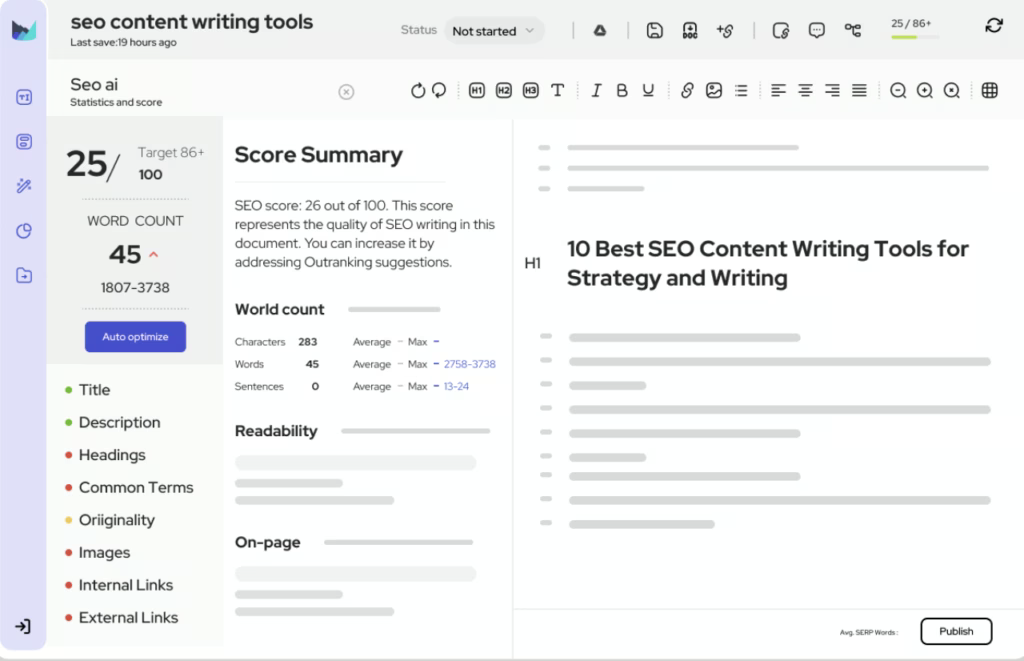
Outranking is an AI-powered content optimization platform that generates search-aligned content structures, automated outlines, and draft frameworks based on competitive SERP analysis, which matters for teams that need scalable SEO content production without relying on managed writer marketplaces. Outranking analyzes top-ranking pages, extracts structural patterns, and applies optimization logic before writing begins. Outranking matters because it transforms SEO research into executable content frameworks that writers or teams can deploy immediately.
Outranking operates against Pepper Content through automation rather than human coordination. Pepper Content relies on briefing, assigning, editing, and managing human writers through a marketplace model. Outranking enables internal teams to generate optimized content structures, headings, and AI-assisted drafts directly, which positions Outranking ahead for organizations that prioritize speed, repeatability, and in-house execution over editorial outsourcing.
Core features inside Outranking focus on AI-led content execution. Competitive SERP analysis extracts headings, entities, and structure from ranking pages. AI-generated outlines and briefs define scope, hierarchy, and topical depth. Automated draft creation and optimization guidance accelerate content production with search alignment (SERP analysis, content structuring, AI drafting).
Outranking uses subscription pricing based on content volume and AI feature access. Pricing starts at $19 per month, with higher tiers expanding article limits, optimization depth, and collaboration features. Compared to Pepper Content, which scales costs through per-asset human production and editorial overhead, Outranking provides a cheaper and more predictable alternative for continuous SEO content creation at scale.
Pros of Outranking include strong AI-generated content structures, rapid outline creation, effective competitive analysis, and reduced dependency on external writers. Cons of Outranking include reliance on AI output quality, fewer deep analytics than enterprise content intelligence platforms, and limited value for non-SEO or purely creative content compared to Pepper Content.
27. NeuronWriter: Best PepperContent Alternative for SEO Content Analysis and Optimized Content Structure
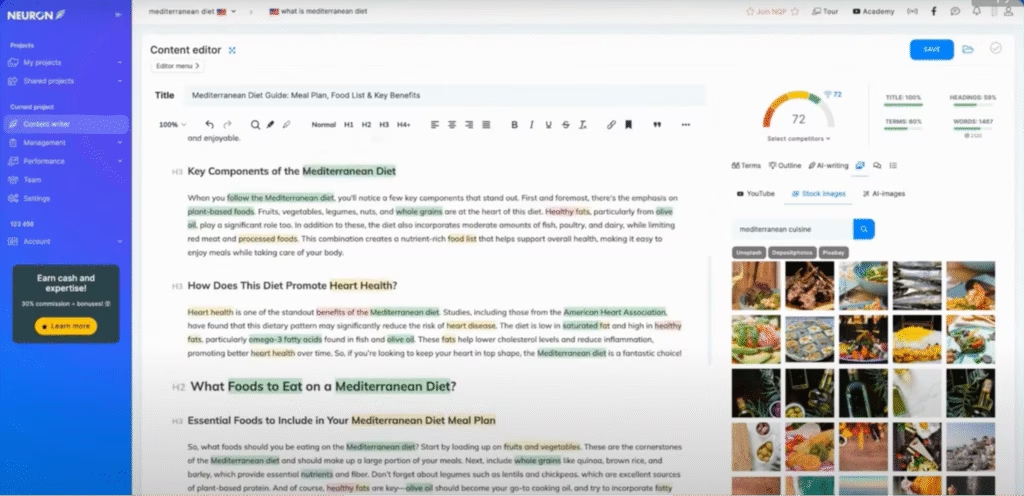
NeuronWriter is an SEO-focused content optimization platform that combines semantic analysis, user-intent scoring, and AI-assisted writing guidance at budget-friendly pricing, which matters for teams that need scalable optimization without marketplace-driven content costs. NeuronWriter analyzes search intent, topical coverage, and semantic relevance to guide content planning and drafting. NeuronWriter matters because it enables in-house teams to produce search-aligned content without relying on managed human writers.
NeuronWriter operates against Pepper Content through software-led optimization rather than human content delivery. Pepper Content centers on briefing, assigning, and editing content through a writer marketplace. NeuronWriter enables users to plan, write, and optimize content directly, which positions NeuronWriter ahead for individuals and small teams that prioritize cost control, speed, and internal execution over editorial outsourcing.
Core features inside NeuronWriter focus on intent-driven optimization. Semantic SEO analysis identifies entities, terms, and topical gaps from ranking pages. Content scoring evaluates relevance and completeness against search intent. AI-powered suggestions guide structure, headings, and paragraph expansion during drafting (semantic analysis, content scoring, AI guidance).
NeuronWriter uses tiered subscription pricing with flexible entry points. Plans start at $19 to $23 per month, with higher tiers scaling to $97 per month based on project limits, optimization depth, and AI usage. Compared to Pepper Content, which scales costs per asset through human production, NeuronWriter remains significantly cheaper for continuous SEO content creation and ongoing optimization.
Pros of NeuronWriter include affordable pricing, strong semantic SEO coverage, clear user-intent guidance, and accessibility for small teams. Cons of NeuronWriter include fewer advanced analytics than enterprise platforms, limited automation on lower tiers, and reduced value for non-SEO or brand-led content compared to Pepper Content.
28. Transformo: Best PepperContent Alternative for Rewriting and Reformatting Research Content
Transformo is an AI-powered content transformation platform that rewrites and reformats research-driven material into structured marketing assets, which matters for teams that convert existing knowledge into campaigns at speed. Transformo focuses on rewriting, restructuring, and format conversion rather than original drafting, which positions Transformo as a Pepper Content alternative for reuse-first workflows.
Transformo differs from Pepper Content in execution model and ownership. Pepper Content operates through managed human writers, editorial review, and service-based delivery. Transformo executes automated transformation inside one system, which reduces turnaround time and removes reliance on external contributors. That difference positions Transformo ahead for organizations that already own research and require rapid downstream content production.
Core features inside the Transformo structure campaign-level transformation. Campaign inputs collect research notes, offers, and ideal customer profiles. AI rewriting converts inputs into complete campaign assets with a consistent structure. Reformatting outputs adapts content across use cases such as VSL funnels, lead magnets, webinars, and product launches (campaign frameworks, structured copy blocks, multi-format outputs).
Transformo operates as a paid platform with a single Pro plan priced at $49 per month when billed monthly, with a discounted yearly option that saves 17%. One subscription covers the entire company with unlimited users, unlimited campaigns, all campaign types, custom brand voice, voice input, and reusable ICP and offer libraries. A 7-day free trial provides full access, while credit card billing remains transparent without setup fees. This pricing remains lower than Pepper Content service contracts that scale with word count, writer tiers, and editorial overhead.
Pros of Transformo include unlimited users per account, rapid campaign generation from minimal inputs, and consistent structure across formats (VSL funnels, webinars, lead magnets). Cons of Transformo include reduced suitability for original research writing, dependence on input quality, and limited use cases for purely narrative or editorial content compared to human-led services.
29. Contentoo: Best PepperContent Alternative for Outsourcing Researched Content With Structured Briefs

Contentoo is a managed content outsourcing platform that delivers researched content through structured briefs and vetted creators, which matters for teams that scale expert content without internal hiring. Contentoo connects companies with industry-experienced writers, designers, and translators while enforcing structured briefs, editorial workflows, and delivery timelines that align content output with business goals. Contentoo matters for marketing teams that require consistent quality, research depth, and multi-market execution rather than ad-hoc freelance production (blog programs, multilingual landing pages, long-form guides).
Contentoo operates as a Pepper Content alternative through subscription-based outsourcing rather than marketplace task assignment. Pepper Content emphasizes volume production through a managed talent network. Contentoo prioritizes tailored briefs, editorial oversight, and campaign-level alignment, which positions Contentoo ahead for organizations that require researched content tied to strategy instead of transactional content orders.
Core features inside the Contentoo structure for enterprise content delivery. Vetted creators execute content based on structured briefs and industry context. Dedicated success managers coordinate onboarding, feedback loops, and delivery schedules. Platform access enables collaboration across markets and tools through workflow synchronization.
Contentoo uses custom subscription pricing based on monthly budget rather than fixed tiers. Each plan includes unlimited platform access, access to vetted creators, dedicated success management, multi-language and multi-market coverage, and turnaround times aligned with publishing cadence. Pricing exceeds entry-level Pepper Content packages but provides higher editorial control, broader geographic reach, and structured outsourcing for ongoing programs rather than per-asset fulfillment.
Pros of Contentoo include access to experienced creators, structured briefs that reduce revision cycles, and strong coordination across regions and languages. Cons of Contentoo include the absence of self-serve fixed pricing and higher cost thresholds compared to marketplace-driven content platforms focused on individual assignments.
30. ClearVoice: Best PepperContent Alternative for Content Marketing and Freelance Collaboration
Contentoo ClearVoice is a managed content marketing and freelance collaboration platform that connects teams to vetted creators, structured briefs, and editorial workflows for high-quality researched content, which matters for brands that require both strategic planning and expert execution. Contentoo ClearVoice operates content pipelines, brief management, and freelance coordination while ensuring alignment with brand goals, SEO signals, and project milestones through an integrated platform that spans ideation to publish-ready delivery. ClearVoice matters for marketing teams that need vetted freelance talent with collaboration controls rather than ad-hoc self-service posting (writer discovery, editor review, approval workflows).
Contentoo ClearVoice functions as a Pepper Content alternative through hybrid team collaboration and managed workflows rather than pure marketplace fulfillment. Pepper Content matches briefs to a talent pool, editorial review, and publishing services in a managed way. ClearVoice combines a vetted freelance network, structured content briefs, and platform workflow tools that scale with content complexity and volume, which positions ClearVoice ahead for organizations that require both talent flexibility and editorial control across campaigns (blog programs, case studies, long-form guides).
Core features inside Contentoo ClearVoice emphasize collaboration and campaign continuity. Talent network access filters creators by expertise and industry fit (voice alignment, technical depth, topic coverage). Structured briefs and editorial frameworks enforce content consistency and SEO fidelity from draft to delivery (brief templates, SEO targets, revision rounds). Workflow tools integrate feedback, approvals, and publishing pipelines that align internal teams and external contributors (editor chat, revision tracking, CMS integration).
Contentoo ClearVoice uses flexible pricing through plan tiers that scale with content needs rather than fixed package rates. Managed plans involve monthly fees that vary with content volume and editorial support level (Managed, Managed Lite, DIY), while ClearVoice project costs derive from monthly subscriptions plus content costs that clients negotiate with the platform. Compared to Pepper Content, which uses service-based pricing per assignment or retainer, ClearVoice provides broader workflow automation, talent collaboration, and editorial features for comprehensive content marketing.
Pros of Contentoo ClearVoice include a large vetted freelance network, structured content briefs that reduce revision cycles, and comprehensive workflow integration for collaboration across teams and markets. Cons include variable pricing that depends on content volume and editorial complexity, potential coordination overhead with multiple freelancers, and pricing tiers that may exceed self-serve marketplace rates for low-volume content needs.
31. Verblio: Best PepperContent Alternative for High-Quality Researched Content From Professional Writers
Verblio is a freelance content creation platform that connects businesses to vetted professional writers for researched, SEO-ready content at scale, which matters for teams that require human quality and subject-matter expertise rather than purely automated outputs. Verblio’s workflow pairs clients with experienced writers and editors who produce high-quality blogs, articles, landing page copy, white papers, and other long-form content that aligns with brand goals and search performance patterns (self-serve content, hybrid AI+human workflows, managed services).
Verblio operates as a Pepper Content alternative through human-centric execution rather than marketplace-only task assignment. Pepper Content organizes briefs and content production through its talent pool with editorial reviews. Verblio expands that model by providing flexible self-service ordering, hybrid AI-assisted writing with human refinement, and fully human-only content creation, which positions Verblio ahead for teams that prioritise professional writing depth, niche expertise, and quality over turnaround speed alone.
Core features inside Verblio unify content expertise, SEO alignment, and flexible delivery. Hybrid content combines AI output with human editing at approximately $0.06 per word plus a monthly platform fee that begins after the first trial period. 100 % human-written content is available at about $0.16 per word for fully bespoke writing. Managed services scale programs for enterprise workloads through custom quotes tailored to content volume and editorial complexity (hybrid pricing, human pricing, managed plans).
Verblio’s pricing operates on a usage basis rather than fixed monthly tiers, with the platform fee typically around $49.50 per month after the first free month for self-serve content orders. Pay-per-word models keep initial costs variable and tied to content length and quality level, which can deliver lower entry pricing than agency-level subscriptions used by some Pepper Content clients.
Pros of Verblio include access to a large network of vetted writers with subject-matter expertise, flexible pricing that adjusts to content volume and format, and SEO-focused writing workflows that integrate with editorial goals. Cons of Verblio include variable per-word pricing that may be higher for premium human-only content, potential inconsistency in tone if multiple writers contribute, and reliance on client brief quality to guide writer output.
32. WriterAccess: Best PepperContent Alternative for Commissioning Research-Based Professional Content

WriterAccess is a freelance content commissioning platform that connects businesses with vetted professional writers through structured briefs, tiered workflows, and research-driven execution, which matters for teams that require scalable human-written content instead of AI-only output. WriterAccess enables direct access to subject-matter experts, quality controls, and SEO-aware briefing systems that transform research requirements into publish-ready assets. WriterAccess fits organizations that prioritize credibility, depth, and brand alignment across long-form content.
WriterAccess operates as a Pepper Content alternative through a marketplace-first model rather than a managed content network. Pepper Content emphasizes coordinated writer pools and service-led delivery. WriterAccess provides direct commissioning, writer selection, and pricing transparency, which positions WriterAccess ahead for teams that require granular control over expertise, tone, and research depth (Search Atlas, Semrush, SpyFu).
Core features inside WriterAccess focus on structured human execution. AI Topic Wizard, AI Brief Wizard, and AI Persona Wizard translate research goals into precise assignments. Writers and subject-matter experts execute content with verified originality and SEO alignment. Integrated workflows manage revisions, exports, and publishing through platform connectors (WordPress integration, HubSpot integration, SERP tracking).
WriterAccess uses subscription pricing plus per-word content fees. The Basic plan costs $49 per month with flat-rate content at $0.05 per word. The Pro plan costs $79 per month with variable content pricing from $0.04 to $1.00+ per word, which reflects expertise, depth, and specialization. Managed services start at $449 per month with content priced separately. WriterAccess costs more than Pepper Content entry tiers for raw volume but provides higher control over writer expertise, tooling depth, and commissioning flexibility.
Pros of WriterAccess include access to proven professional writers, flexible per-word pricing tied to expertise, and advanced briefing tools that align research with execution. Cons of WriterAccess include higher costs at scale, variable pricing complexity on Pro tiers, and reliance on human turnaround times compared to AI-only platforms.
33. Neuroflash: Best PepperContent Alternative for AI-Driven Brand-Aligned Ideation and Messaging Research

Neuroflash is an AI-driven content ideation and messaging research platform that aligns brand voice, audience intent, and SEO workflows through configurable AI systems, which matters for teams that require consistent brand-aligned output at scale. Neuroflash combines brand governance, audience modeling, and research-backed generation into one environment that reduces manual briefing and revision cycles. Neuroflash fits organizations that prioritize controlled messaging and repeatable ideation rather than marketplace-based content outsourcing.
Neuroflash operates as a Pepper Content alternative through automation and brand intelligence rather than human writer networks. Pepper Content coordinates human creators through managed workflows. Neuroflash uses brand voice rules, knowledge resources, and audience profiles to generate aligned drafts instantly, which positions Neuroflash ahead for teams that require speed, consistency, and internal content autonomy (Search Atlas, Semrush, Clearscope).
Core features inside the Neuroflash structure include brand-led ideation. Brand Voice and Advanced Brand Voice Rules enforce tone, terminology, and messaging constraints across outputs. Knowledge Resources and Research Flash ground content in internal data and validated sources. SEO workflows and content analysis connect ideation with search performance signals (brand governance, audience modeling, SEO optimization).
Neuroflash uses tiered subscription pricing. The Free plan costs $0 per month with 1,000 words and limited assets. Starter costs $28 per month with 20,000 words. Essential costs $46 per month with unlimited words and basic workflows. Pro costs $74 per user per month with unlimited words, unlimited SEO analyses, plagiarism checks, and team collaboration. Business starts at $220 per month with enterprise security, premium models, performance analytics, and dedicated customer success. Neuroflash prices remain lower than Pepper Content managed services while delivering higher automation depth for internal teams.
Pros of Neuroflash include strong brand voice enforcement, scalable AI ideation without writer dependency, and integrated SEO analysis for research-backed messaging. Cons of Neuroflash include reduced suitability for fully human-written editorial content, onboarding complexity for advanced brand rules, and limited value for teams that require outsourced expert authorship rather than internal generation.
34. HubSpot Content Hub: Best PepperContent Alternative for Integrated Content Strategy and CRM
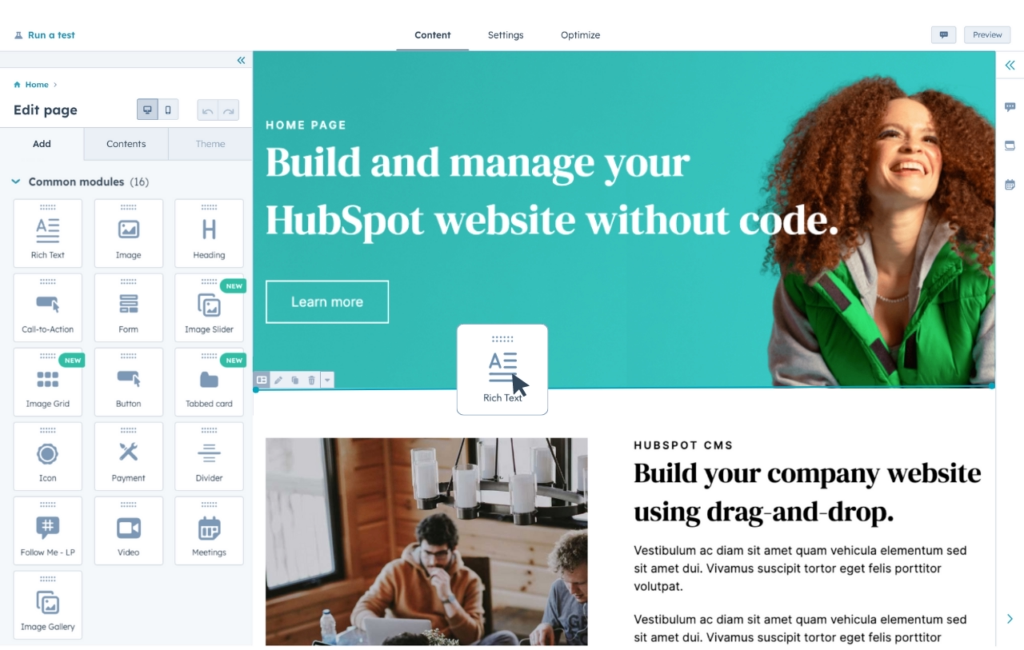
HubSpot Content Hub is an integrated content management and CRM platform that unifies content creation, SEO, automation, and customer data, which matters for teams that require content tied directly to revenue outcomes. HubSpot Content Hub centralizes publishing, optimization, and analytics inside the HubSpot CRM, which reduces tool sprawl and manual handoffs. HubSpot Content Hub fits organizations that prioritize lifecycle marketing, attribution, and governance over outsourced content production.
HubSpot Content Hub operates as a Pepper Content alternative through system integration rather than managed creator networks. Pepper Content focuses on briefing, commissioning, and delivering human-written content. HubSpot Content Hub embeds content inside CRM-driven workflows that track contacts, campaigns, and conversions, which positions HubSpot Content Hub ahead for teams that require ownership of strategy, execution, and performance measurement inside one platform.
Core features inside the HubSpot Content Hub structure are integrated for execution. CMS tools publish blogs, landing pages, and websites connected directly to CRM records. Built-in SEO, workflows, and automation align content with demand generation and nurturing. Reporting links content output to leads, pipeline, and revenue attribution (content management, marketing automation, CRM analytics).
HubSpot Content Hub uses clear annual pricing tiers. Free Tools cost $0 per month for up to 2 seats with basic CMS and CRM access, no AI, no analytics, and HubSpot branding. Content Hub Starter costs $9 per seat per month with limited AI features and no workflows. Content Hub Professional costs $450 per month with 3 seats included and access to AI writing, SEO tools, and workflows. Content Hub Enterprise costs $1,500 per month with 5 seats included, full AI capabilities, advanced governance, and sandbox partitioning. No onboarding fees apply. This pricing exceeds Pepper Content entry packages but replaces multiple systems with one governed platform.
Pros of HubSpot Content Hub include native CRM integration, end-to-end content attribution, scalable automation, and enterprise governance. Cons of HubSpot Content Hub include a higher upfront cost at Professional and Enterprise tiers, limited value for teams that only need outsourced writing, and reduced flexibility for creator-led content marketplaces compared to Pepper Content.
35. CoSchedule Marketing Suite: Best PepperContent Alternative for Content Calendar Planning and Editorial Workflow
CoSchedule Marketing Suite is a marketing calendar and workflow platform that centralizes content planning, scheduling, and approvals, which matters for teams that require operational control over editorial execution. CoSchedule Marketing Suite organizes campaigns, social posts, and projects inside a single calendar, which reduces coordination friction across contributors. CoSchedule Marketing Suite fits teams that manage publishing velocity, deadlines, and approvals rather than outsourced content creation.
CoSchedule Marketing Suite operates as a Pepper Content alternative through workflow ownership and planning depth. Pepper Content focuses on sourcing writers and delivering finished content through managed services. CoSchedule Marketing Suite prioritizes internal execution with structured calendars, task dependencies, and approval workflows, which positions CoSchedule Marketing Suite ahead for organizations that already own content creation and require predictable delivery at scale (Asana, Trello, Monday).
Core features inside the CoSchedule Marketing Suite structure editorial operations. Drag-and-drop calendars visualize campaigns, posts, and deadlines across channels. Workflow tools manage tasks, approvals, and dependencies with role-based permissions. Social automation schedules, recycles, and analyzes posts across networks (editorial planning, social publishing, workflow governance).
CoSchedule Marketing Suite uses tiered pricing. Free Calendar costs $0 per month for 1 user with 1 social profile and up to 15 scheduled messages. Social Calendar costs $19 per user per month, billed annually, with up to 3 social profiles and expanded automation. Agency Calendar costs $59 per user per month, billed annually, with unlimited client calendars and white-label features. Content Calendar and Marketing Suite require custom quotes and add campaign reporting, approvals, asset management, and single sign-on. This pricing remains lower than Pepper Content managed services for teams that execute content internally.
Pros of CoSchedule Marketing Suite include strong calendar visibility, mature approval workflows, and scalable social automation. Cons of CoSchedule Marketing Suite include no built-in writing or research services, limited value for teams that outsource content production, and increasing cost with additional users and profiles.
36. Confluence: Best PepperContent Alternative for Content Research Repository and Team Collaboration

Confluence is a team knowledge management and collaboration platform that centralizes research, documentation, and shared content inside structured workspaces, which matters for organizations that require durable knowledge retention rather than outsourced content production. Confluence enables teams to store, organize, and collaboratively edit research assets, process documents, and editorial resources across departments. Confluence matters for teams that prioritize internal content ownership, traceability, and cross-team alignment over managed writing services.
Confluence operates as a Pepper Content alternative through infrastructure rather than execution. Pepper Content delivers researched content through external writers and editors. Confluence enables internal teams to create, review, and maintain research-driven content inside shared Spaces and Pages, which positions Confluence ahead for organizations that require a long-term content repository instead of per-piece content outsourcing (Jira, Notion, Google Workspace).
Core features inside Confluence structure research, collaboration, and content governance. Spaces and Pages organize content into topic-specific repositories that mirror team functions. Real-time editing, comments, and version history enable multi-author collaboration with auditability. Templates, whiteboards, and automation rules standardize research documentation and editorial workflows (marketing templates, product documentation, program management).
Confluence uses transparent, per-user subscription pricing. The Free plan costs $0 per month for up to 10 users with Pages, Spaces, templates, limited automation, and 2 GB storage. Standard costs $5.42 per user per month with AI-powered Rovo Search, advanced permissions, 250 GB storage, and expanded automation. Premium costs $10.44 per user per month with unlimited Pages, unlimited Spaces, unlimited storage, advanced admin controls, and 24/7 support. Enterprise uses custom pricing with advanced analytics, identity management, unlimited automations, and multi-site governance. Confluence pricing remains lower than Pepper Content retainers, but requires internal resources to execute content creation.
Pros of Confluence include centralized knowledge storage, strong collaboration controls, and scalable documentation frameworks for research-heavy teams. Cons of Confluence include no built-in content production services, a learning curve for structured workspace setup, and reliance on internal contributors for writing execution.
Why do People Seek Alternatives to the Pepper Content Tool?
People seek Pepper Content alternatives because Pepper Content centers on managed content outsourcing rather than scalable, system-driven content execution, which matters for teams that require speed, control, and repeatable workflows. Pepper Content relies on human writers, editors, and account management to deliver researched content, but Pepper Content limits direct control over research depth, iteration speed, and real-time optimization, which slows content operations at scale.
Operational friction drives platform changes. Pepper Content requires briefing, writer assignment, review cycles, and revisions across multiple handoffs. Teams report in reviews that turnaround times vary by writer availability and topic complexity, which delays publishing schedules. Platforms that unify research, drafting, optimization, and revision inside one interface reduce dependency on external coordination.
SEO execution gaps influence migration decisions. Pepper Content produces researched articles, but Pepper Content does not provide native keyword clustering, live SERP analysis, internal linking automation, or performance feedback loops after publication. Teams that rely on organic growth prefer tools that connect content creation directly to rankings, impressions, and topical authority (Search Atlas, MarketMuse, Frase).
Cost and scalability misalignment affect adoption. Pepper Content pricing scales with word count, writer tier, and managed services, which increases costs as content volume grows. Reviews frequently cite budget inefficiency for high-output teams compared to AI-assisted or hybrid platforms that enable unlimited drafts and faster iteration within fixed subscriptions.
What to Look for in a Pepper Content Alternative?
Teams evaluate Pepper Content alternatives by prioritizing platforms that replace outsourced production with scalable, system-driven content execution, which matters for speed, control, and cost efficiency. A Pepper Content alternative must reduce dependency on external writers and account management while increasing in-house velocity, visibility, and repeatability across research, drafting, and optimization. Platforms that centralize these stages shorten turnaround times and eliminate coordination overhead.
The 4 main features to look for in a Pepper Content alternative are listed below.
- End-to-end content execution. A Pepper Content alternative must shift content creation from managed fulfillment to self-serve execution that covers research, structuring, drafting, and revision in one system. Platforms that automate long-form creation reduce briefing cycles and revision delays (pillar pages, blog series, landing pages).
- SEO and research automation. A Pepper Content alternative must integrate keyword clustering, SERP analysis, topical coverage modeling, and internal linking logic. Systems that connect writing directly to search performance outperform human-only workflows that stop at delivery (Search Atlas, MarketMuse, Frase).
- Scalable workflow architecture. A Pepper Content alternative must centralize AI drafting, optimization feedback, collaboration, and publishing inside a unified environment. Standardized workflows increase output consistency and shorten production cycles across teams (content calendars, approval flows, version control).
- Pricing aligned with volume. A Pepper Content alternative must replace per-word or per-asset pricing with predictable subscriptions that scale output without proportional cost increases. Teams prioritize platforms that maintain fixed budgets while increasing content throughput and iteration speed.
What is the Difference Between Pepper Content vs Jasper?
Pepper Content and Jasper differ in execution model, control, and scalability, which matters for teams deciding between managed production and AI-led content systems. Pepper Content operates as a human-driven content marketplace that delivers finished assets through managed workflows, editors, and vetted writers. Jasper operates as an AI-first content platform that enables in-house teams to generate, repurpose, and scale content directly inside a software environment.
Pepper Content suits organizations that prefer outsourced writing with human oversight and fixed deliverables, while Jasper suits teams that prioritize speed, iteration, and internal ownership of content creation. Pepper Content emphasizes briefing, assignment, and delivery cycles, whereas Jasper emphasizes AI-driven drafting, brand voice consistency, and multi-format reuse. That difference affects turnaround time, cost structure, and creative control.
Pricing reflects this split. Pepper Content relies on subscription tiers combined with per-asset or managed service costs, which scale with volume and complexity. Jasper uses per-seat software pricing that scales output without per-word fees, which favors high-frequency publishing teams. This contrast positions Pepper Content for managed content fulfillment and Jasper for scalable, AI-driven content production workflows.
Why is Search Atlas the Best Pepper Content Alternative?
Search Atlas is the best Pepper Content alternative because Search Atlas replaces managed content outsourcing with a unified AI-powered SEO execution system that connects research, creation, optimization, and deployment inside one platform. Pepper Content coordinates human writers through briefs and delivery cycles, while Search Atlas enables teams to plan, write, optimize, and publish content directly from search intelligence. That shift matters for organizations that require speed, scale, and measurable organic performance rather than vendor-managed fulfillment.
Search Atlas eliminates workflow fragmentation that defines Pepper Content operations. Pepper Content separates briefing, writing, editing, and publishing across managed processes, which increases turnaround time and limits iteration. Search Atlas centralizes keyword research, content structuring, AI drafting, and on-site execution through OTTO SEO automation, which applies titles, internal links, schema, and page updates directly on live sites. This execution model reduces handoffs and accelerates content velocity.
Search Atlas surpasses Pepper Content on SEO depth and measurability. Search Atlas provides exact search volumes, keyword clustering, SERP analysis, competitor gap analysis, and LLM visibility tracking across ChatGPT and AI Overviews. Pepper Content emphasizes content quality and editorial management but lacks native keyword intelligence, ranking diagnostics, and automated optimization. Search Atlas connects every article to ranking signals before and after publication, which improves predictability and ROI.
Search Atlas scales across teams and clients without per-asset fees. Transparent pricing across Starter ($99 monthly), Growth ($199 monthly), and Pro ($399 monthly) plans includes full SEO research, AI content creation, rank tracking, and automation without output caps that penalize growth. Pepper Content pricing increases with volume and complexity through managed services, which constrains scale. The 7-day free trial with full access enables evaluation without commitment.
Search Atlas enables teams to increase organic visibility, compress production cycles, and replace outsourced writing pipelines with a complete AI-powered SEO operating system built for scalable execution.
Start your free trial with Search Atlas and replace Pepper Content with a unified platform that transforms research into rankings through automated content execution.