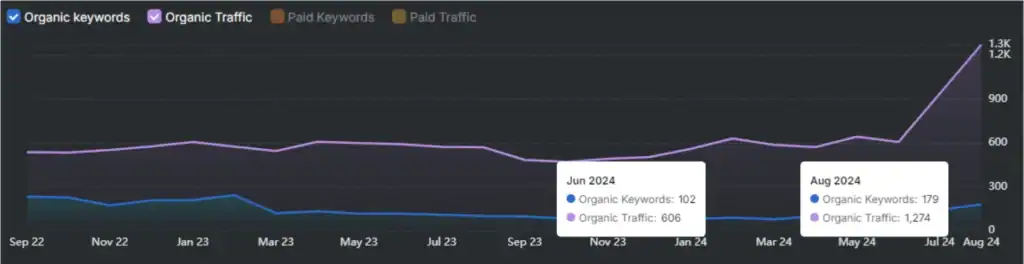
The impact of AI engines on SEO is the transformation of search from keyword-based ranking systems into AI-driven answer systems that interpret intent, synthesize information, and recommend sources. An AI search engine is a search system that uses machine learning and natural language processing (NLP) to analyze queries, understand context, and generate summarized answers instead of simply listing webpages. This shift changes AI search engine optimization because visibility now depends on whether content is extracted, cited, or referenced inside AI responses. As a result, the future of SEO focuses on authority, semantic clarity, and structured information that AI systems can interpret and reuse when generating answers.
The SEO evolution shows a clear progression from keyword manipulation before 2010 to quality-driven ranking systems between 2010 and 2020, followed by the current AI-driven discovery environment. Early search engines relied on keyword density and link signals, while modern search systems evaluate semantic meaning, entity relationships, and user intent. Artificial intelligence now shapes the future of SEO by powering search algorithms, predictive analytics, and generative summaries. This transition introduces AI SEO strategies where content must function as an authoritative information source rather than simply a keyword-optimized page.
SEO trends and innovations in 2026 reflect this transformation through AI Overviews, Answer Engine Optimization, Search Everywhere Optimization, zero-click search strategies, conversational search, and hyper-personalization. Traditional SEO ranking factors emphasize backlinks, keyword relevance, and technical performance, while AI engines prioritize trust signals, semantic structure, and extractable answers. Success increasingly depends on citation probability within AI-generated responses instead of only ranking positions. Businesses adopt AI-powered SEO tools and services (Search Atlas OTTO SEO, Ahrefs AI Content Helper, Semrush One, MarketMuse, Clearscope, and Chatsonic) to analyze AI visibility, automate optimization workflows, and detect emerging search patterns.
Effective AI search engine optimization now requires content designed for both human readers and AI models. Structured content uses front-loaded answers, clear heading hierarchies, self-contained content units, semantic richness, schema markup, and FAQ sections to improve extractability and comprehension. These structural practices allow AI systems to parse information accurately while maintaining readability for users. The impact of AI engines on SEO extends beyond ranking mechanics and reshapes how information is created, structured, measured, and discovered across modern search ecosystems.
What Is an AI Engine?
An AI engine is a computational core that processes data, executes algorithms, and makes intelligent decisions by learning from data instead of relying only on predefined rules. An AI engine belongs to artificial intelligence infrastructure and differs from traditional software because an AI engine handles complex, unstructured data and adapts through machine learning models.
What defines an AI engine? An AI engine is defined by data-driven learning, workload-specific optimization, and contextual processing. Data-driven learning lets an AI engine detect patterns from past behavior and live activity. Workload-specific optimization gives an AI engine higher efficiency than general-purpose CPUs and GPUs for inference, signal processing, and machine learning operations.
What is the origin of the AI engine? The AI engine emerged with artificial intelligence and gained strong relevance after neural network breakthroughs in 2012. The term became more prominent as machine learning and deep learning moved into core AI applications. AMD expanded this category through AMD AI Engine technology in the Versal architecture after AMD acquired Xilinx in 2022.
What are the main types of AI engines? There are 3 main AI engine implementations in the provided context. The types are listed below.
- AIE (AI Engine, first generation) accelerates machine learning inference and high-performance digital signal processing. AIE supports INT8/16/32, CINT16, CINT32, and FP32, with 128 INT8 MACs per tile and 32 KB of local memory. Initial Versal systems contained 400 AI engines.
- AIE-ML (AI Engine for Machine Learning, second generation) increases machine learning performance through a stronger compute core and larger memory architecture. AIE-ML reaches 256 INT8 MACs per cycle per tile and 64 KB of local memory, while AIE-MLv2 reaches 512 INT8 MACs per cycle per tile and adds BFLOAT16, FP8, FP16, MX4, MX6, and MX9 support.
- AMD XDNA Architecture combines Compute Tiles, Memory Tiles, and ShimTiles for AI processing on Ryzen AI systems. XDNA 1 appeared on Ryzen AI Phoenix PCs, and XDNA 2 was integrated into Ryzen AI Strix systems for large language model inference workloads.
Why does data-driven learning matter in an AI engine? Data-driven learning matters because an AI engine identifies patterns and converts raw activity into usable decisions. An AI engine can detect unusual login behavior by comparing normal access patterns with abnormal location, time, and device signals. This pattern analysis matters because it turns raw logs into actionable outputs.
Why do scalability and performance matter in an AI engine? Scalability and performance matter because an AI engine must process large data volumes with high throughput and low latency. AMD AI Engines use 2D arrays of tiles that scale from tens to hundreds of engines in one device. Each tile runs up to 1.3 GHz, which gives the architecture strong throughput for compute-intensive workloads.
Why does contextual processing matter in an AI engine? Contextual processing matters because an AI engine evaluates where, when, how, and by whom an event occurs. This contextual analysis improves decision quality in identity security and real-time access control. The contextual model flags anomalies without applying only static rule checks.
What does an AI engine depend on? An AI engine depends on algorithms, machine learning models, inference systems, and specialized hardware. These dependencies allow an AI engine to process inputs, learn patterns, and execute decisions across heterogeneous compute environments. AMD Versal adaptive SoCs illustrate this dependency because the hardware combines programmable logic and processing systems for AI workloads.
What does an AI engine enable? An AI engine enables real-time AI execution across communications, security, transportation, and healthcare. AI engines run beamforming and massive MIMO in 5G wireless processing. AI engines run convolutional neural networks in automated driving, video analysis, and medical imaging workloads.
How does an AI engine compare with CPUs and GPUs? An AI engine differs from CPUs and GPUs because an AI engine is optimized specifically for AI workloads. CPUs and GPUs remain peer compute entities, but AI engines focus on inference efficiency, signal processing, and workload acceleration. This specialization matters because AI demand increases faster than general-purpose compute gains in many AI use cases.
What Is the Role of AI in Shaping the Future of SEO?
Artificial Intelligence (AI) shapes the future of Search Engine Optimization (SEO) by improving intent understanding, automating optimization tasks, and enabling predictive analysis of search behavior. Artificial Intelligence systems process large datasets, detect patterns in queries, and generate insights that refine content strategy, keyword targeting, and search experience personalization.
What are the main ways AI changes SEO processes? There are 5 main ways Artificial Intelligence changes Search Engine Optimization processes. The methods are listed below.
- Intent analysis improves query interpretation because machine learning models analyze semantic relationships within search queries.
- Content optimization improves relevance because AI systems evaluate structure, keywords, and topical coverage against ranking patterns.
- Predictive search analysis identifies emerging search trends because AI models analyze historical query data and behavioral signals.
- Workflow automation accelerates repetitive SEO tasks because AI systems process technical audits, keyword clustering, and data analysis automatically.
- Personalized search results improve user experience because AI systems analyze user context, behavior signals, and device data.
What is the role of AI in content creation and optimization? Artificial Intelligence transforms content creation and optimization by generating structured, relevant content aligned with search intent. Artificial Intelligence systems process search datasets to identify topical gaps, keyword relationships, and content opportunities. ChatGPT is an example of an Artificial Intelligence language model that generates blog posts, product descriptions, and social media captions aligned with search queries. Artificial Intelligence systems analyze query trends and content structures, which improves topic coverage and keyword placement across multilingual content.
How has AI changed search algorithms? Artificial Intelligence changed search algorithms by shifting ranking systems from keyword matching to semantic query understanding. Google integrated machine learning into ranking systems through multiple algorithm updates.
The main AI-driven search algorithms are listed below.
- RankBrain (2015) introduced machine learning to interpret unknown search queries and match them with relevant results.
- BERT (Bidirectional Encoder Representations from Transformers, 2019) improved natural language understanding by analyzing the context of words within queries.
- MUM (Multitask Unified Model, 2021) expanded semantic understanding across multiple languages and content formats.
These algorithms process meaning and context instead of simple keyword frequency, which requires content that answers real search questions.
What is Google Search Generative Experience and AI Overviews? Google Search Generative Experience (SGE) refers to an AI-powered search interface that combines traditional search results with generative AI summaries. AI Overviews refer to AI-generated answer summaries that appear at the top of Search Engine Results Pages (SERPs). AI Overviews extract information from authoritative websites and present direct answers for complex queries. Approximately 19% of search keywords trigger an AI Overview, which introduces a new search interaction pattern where users receive summarized information before clicking websites.
How do AI Overviews affect Click-Through Rate and brand visibility? AI Overviews reduce Click-Through Rate (CTR) because users receive answers directly inside the search interface. AI Overview presence reduces CTR by up to 64% in some query categories. Search impressions and brand visibility increase despite reduced clicks because websites appear as cited sources within AI summaries. Zero-click search interactions increase brand recognition and early-stage user awareness within the search funnel.
What is the future of keyword research with AI? Artificial Intelligence changes keyword research by analyzing large datasets and predicting search demand patterns. Artificial Intelligence systems process millions of queries to identify emerging keywords, topic clusters, and semantic relationships. AI-powered keyword analysis identifies hidden opportunities and predicts search trends within minutes. This predictive capability improves topic planning and increases the accuracy of keyword targeting.
What is the role of AI for SEO professionals? Artificial Intelligence changes the role of SEO professionals by shifting focus from manual execution to strategic analysis. Artificial Intelligence systems perform repetitive tasks, keyword grouping, technical audits, and search data analysis. SEO professionals focus on intent modeling, content strategy, and performance analysis because Artificial Intelligence handles operational processes. Strategic planning, creative messaging, and brand positioning remain human responsibilities.
What capabilities does AI provide for SEO tasks? Artificial Intelligence performs large-scale data analysis and accelerates technical and content SEO tasks. Artificial Intelligence systems process search data, detect ranking patterns, and identify performance issues. Gemini Deep Research and ChatGPT Deep Research generate structured research outputs with cited sources. These Artificial Intelligence systems accelerate information analysis and content planning across large datasets.
What are the limitations of AI in SEO? Artificial Intelligence lacks human insight, narrative judgment, and brand voice interpretation. Artificial Intelligence systems generate content and analyze data, but do not interpret emotional nuance, brand positioning, or strategic messaging. Human oversight remains necessary because Artificial Intelligence systems produce generic outputs without contextual experience or brand perspective.
What is Google’s position on AI-generated content? Google evaluates content quality rather than the production method of the content. Google does not penalize content solely because Artificial Intelligence generated the content. Google penalizes low-quality content that lacks originality, accuracy, or user value. High-quality content that demonstrates Experience, Expertise, Authoritativeness, and Trustworthiness (E-E-A-T) receives positive ranking signals regardless of production method.
How do consumers adopt AI search tools? Consumers increasingly adopt Artificial Intelligence search tools because AI search systems provide faster and more contextual answers. Consumer research shows strong interest in AI-powered search interfaces.
The main adoption indicators are listed below.
- 66% of consumers believe AI replaces traditional search within 5 years.
- 82% of consumers report that AI-powered search provides more useful answers than traditional SERPs.
- 49% of consumers still click traditional blue links for deeper information.
Current usage patterns show hybrid search behavior where users combine AI answers and traditional search results.
How are marketers adapting to AI-driven SEO? Marketers integrate Artificial Intelligence into SEO workflows to automate analysis and content production. Survey data shows 74% of marketers use Artificial Intelligence tools in at least one SEO workflow stage. AI workflow adoption remains early in monitoring AI search visibility. Approximately 22% of marketers track Large Language Model brand visibility, while 53% remain in exploration phases for AI-driven search monitoring.
What are the strategic implications of AI for businesses in SEO? Artificial Intelligence changes SEO strategy because search traffic patterns, discovery channels, and user behavior shift toward AI interfaces. Businesses require a broader measurement model that evaluates impressions, brand exposure, and assisted conversions. Conversion optimization increases in importance because fewer clicks arrive with stronger intent signals. Integrated omnichannel strategy strengthens brand discovery across search engines, AI platforms, and content ecosystems.
What principles define SEO success in the AI era? Three principles define SEO success in the Artificial Intelligence search era. The principles are listed below.
- Authority improves citation probability in both search engines and generative AI systems.
- Clarity improves machine interpretation because structured answers simplify information extraction.
- Usefulness improves ranking signals because algorithms evaluate real user satisfaction.
Search optimization shifts from keyword manipulation toward authoritative information that algorithms consistently recognize across traditional search engines and generative AI systems.
What Is the Difference Between AI Engines Ranking Factors vs Traditional SEO Ranking Factors?
The difference between AI engine ranking factors and traditional SEO ranking factors lies in the optimization target, evaluation signals, and content interpretation methods. Traditional Search Engine Optimization (SEO) ranks web pages in Search Engine Results Pages (SERPs), while AI engine optimization ranks content for citation, recommendation, and answer generation in Artificial Intelligence systems.
What is the core objective difference between traditional SEO and AI engine optimization? Traditional SEO focuses on ranking web pages in search results, while AI engine optimization focuses on becoming the recommended answer inside AI-generated responses. Traditional SEO evaluates ranking signals that determine page position in SERPs. AI engines evaluate knowledge extraction signals that determine whether a source becomes part of the generated answers. Traditional ranking systems prioritize page authority, backlink profiles, and keyword relevance. AI engines prioritize answer clarity, semantic understanding, and knowledge reliability.
What are the main structural differences between traditional SEO and AI engine optimization? There are 7 main differences between AI engine ranking factors and traditional SEO ranking factors. The comparison is listed below.
| Feature / Aspect | Traditional SEO | AI Engine Optimization |
|---|---|---|
| Core focus | Improves web page ranking visibility in SERPs. | Improves the probability of being cited in AI-generated answers. |
| Content optimization | Optimizes title tags, headings, internal links, and keyword targeting. | Writes modular sections with direct answers and self-contained explanations. |
| Query research | Research keyword phrases typed in search engines. Average keyword length equals 4 words. | Research conversational prompts used in AI tools. Average prompt length equals 8 words. |
| Technical optimization | Optimizes crawlability, site speed, indexation, mobile performance, HTTPS, and Core Web Vitals. | Maintains technical SEO foundation and ensures AI crawlers remain accessible in robots.txt and structured data clarifies entity relationships. |
| Authority signals | Builds backlinks from high-authority websites. | Builds brand mentions, citations, and references across forums, directories, and review platforms. |
| Performance measurement | Measures rankings, organic traffic, click-through rate, and conversions. | Measures AI citations, AI mentions, sentiment analysis, and share of voice in AI responses. |
| Optimization logic | Optimizes crawler signals and ranking metrics. | Optimizes knowledge extraction, semantic clarity, and recommendation probability. |
What ranking factors define traditional SEO? Traditional SEO ranking factors prioritize authority signals, keyword relevance, and technical performance. Search engines evaluate page credibility and relevance through measurable ranking signals.
The main traditional ranking factors are listed below.
- Backlinks measure authority through external references from other domains.
- Keyword relevance measures query alignment between search queries and page content.
- Page speed measures loading performance through Core Web Vitals metrics.
- Mobile friendliness measures usability across mobile devices.
- Site architecture measures internal linking structure and crawlability.
- E-E-A-T signals measure Experience, Expertise, Authoritativeness, and Trustworthiness.
What ranking factors define AI engine visibility? AI engine ranking factors prioritize trust signals, answer clarity, semantic understanding, and brand credibility. Artificial Intelligence systems extract information from content that demonstrates a reliable knowledge structure.
The main AI engine ranking factors are listed below.
- Trust and authority signals evaluate credibility and source reliability through E-E-A-T indicators.
- Content clarity and structure evaluate whether information appears in modular, direct-answer sections.
- Citations and mentions evaluate brand references across authoritative digital sources.
- Semantic understanding evaluates topical relationships and entity context.
- Training data presence evaluates whether content appears in datasets used for model knowledge retrieval.
- User engagement signals evaluate dwell time and bounce rate behavior.
- Answerability optimization evaluates whether a section provides clear, extractable answers.
What performance differences exist between traditional SEO and AI engine optimization? Traditional SEO performance appears gradually, while AI engine optimization produces faster visibility signals. Traditional SEO results require months of ranking improvements because search engines update ranking signals slowly. AI engine optimization produces measurable signals within 30 days through citation appearance, AI Overview inclusion, or AI-generated answer mentions.
What cost and workflow differences exist between the two strategies? Traditional SEO requires ongoing manual optimization processes, while AI engine optimization integrates automation and data analysis workflows. Traditional SEO requires continuous keyword research, link acquisition, content production, and technical audits. AI engine optimization prioritizes structured content, entity clarity, and digital public relations for brand mentions. Automation tools perform semantic analysis and predictive trend detection.
When does a business need to prioritize traditional SEO? A business prioritizes traditional SEO when the primary objective is traffic acquisition through search engine results pages. Traditional SEO performs best when keyword-driven search behavior generates traffic and conversions. Businesses with established websites benefit from traditional SEO because ranking improvements increase visibility for targeted keywords.
When does a business need to prioritize AI engine optimization? A business prioritizes AI engine optimization when brand recommendation and AI citation become strategic goals. AI engines influence purchasing decisions because users request product recommendations directly from AI systems. Brands that appear consistently in AI-generated answers gain authority within conversational search environments.
When do traditional SEO and AI engine optimization work best together? Traditional SEO and AI engine optimization work best together because strong search rankings increase the probability of AI citations. Artificial Intelligence systems frequently extract information from high-ranking webpages. A strong technical SEO foundation improves crawlability, authority signals, and structured knowledge extraction. AI engine optimization builds on this foundation by improving answer clarity and entity structure.

How Does the Evolution of SEO Look Like: From Keywords to AI-Driven Strategies?
The evolution of Search Engine Optimization (SEO) progressed because keyword manipulation before 2010, quality-focused search between 2010 and 2020, and AI-driven optimization after 2020. Search engines initially ranked pages based on keyword frequency, then shifted toward content quality and user experience, and now evaluate semantic understanding, entity relationships, and AI-generated answer extraction.
What defined the early SEO era before 2010? Early Search Engine Optimization relied on keyword frequency and easily manipulated ranking signals. Search engines evaluated pages primarily through keyword matching, which allowed websites to influence rankings through repeated keyword usage rather than useful information. Search engines, AltaVista and early Google, ranked pages based on keyword density and simple relevance signals. The ranking system produced a poor user experience because many pages were ranked through manipulation instead of providing useful answers.
What manipulative tactics dominated early SEO practices? Early Search Engine Optimization used several manipulative tactics designed to artificially increase keyword relevance. The tactics are listed below.
- Keyword stuffing increased keyword frequency across page text and metadata.
- Meta keyword tags inserted large keyword lists inside HTML metadata fields.
- Doorway pages created low-quality pages targeting specific keywords.
- Hidden text placed keywords in invisible page elements.
- Link farms and Private Blog Networks (PBNs) generated artificial backlink networks.
- Comment spam and forum spam distribute links across user-generated platforms.
These tactics exploited algorithm weaknesses because early search engines evaluated keyword frequency instead of content quality.
What search engine developments shaped early SEO systems? Several search engine innovations introduced new ranking models during the early SEO era. The milestones are listed below.
- Archie (1990) indexed FTP files and became the first search engine.
- WebCrawler (1994) introduced full-text search indexing for webpages.
- Google PageRank (1998) evaluated page authority based on incoming links.
- Google Florida Update (2003) penalized keyword stuffing and low-quality sites.
- The nofollow attribute (2005) reduced spam link manipulation by limiting link equity transfer.
Google PageRank introduced link-based authority signals, which significantly reduced keyword manipulation influence.
How did SEO change between 2010 and 2020? Search Engine Optimization shifted toward content quality, user experience, and authoritative backlinks between 2010 and 2020. Search engines started evaluating whether content solved user problems rather than simply matching keywords. Content marketing, structured data implementation, and improved website usability became central ranking factors. Search engines introduced new algorithms that evaluated semantic meaning, expertise signals, and user behavior metrics.
What Google algorithm updates defined the 2010 to 2020 SEO transition? Several major Google algorithm updates redefined ranking evaluation between 2010 and 2020. The updates are listed below.
- Google Panda Update (2011) penalized duplicated, thin, and low-value content.
- Google Penguin Update (2012) penalized manipulative link-building strategies.
- Google Hummingbird Update (2013) introduced natural language processing for intent understanding.
- Google RankBrain (2015) integrated machine learning to interpret unfamiliar queries.
- Google Mobilegeddon (2015) prioritized mobile-friendly websites.
- Google Medic Update (2018) strengthened Expertise, Authoritativeness, and Trustworthiness signals.
- Google Mobile-First Indexing (2018) ranked websites based on mobile versions.
- Google BERT Update (2019) improved contextual understanding of words in queries.
These updates transformed search evaluation from keyword matching into semantic query interpretation.
How did AI transform SEO after 2020? Artificial Intelligence transformed Search Engine Optimization by introducing machine learning, natural language processing, and generative search systems. AI systems analyze large datasets to detect intent patterns, contextual meaning, and emerging search trends. Google introduced the Helpful Content Update (2022) to reduce low-quality AI-generated content and reward content written for human audiences. Google also introduced Search Generative Experience (SGE) and AI-generated summaries inside search results. AI Overviews now appear in approximately 47% of search queries, which changes how users consume search information.
How has AI changed user search behavior? Artificial Intelligence changed search behavior by increasing zero-click searches and conversational search interactions. Many users receive answers directly within search interfaces instead of clicking websites.
The main behavior changes are listed below.
- 58.5% of Google searches end without a click.
- ChatGPT receives nearly 5 billion visits per month.
- 71% of consumers prefer voice search interactions over typing.
- 73% of users trust AI-generated responses.
These behavioral changes shift optimization goals from page ranking toward answer visibility.
What defines Generative Engine Optimization in the AI era? Generative Engine Optimization (GEO) refers to optimization strategies designed for AI-generated answers and conversational search systems. Generative Engine Optimization focuses on entity clarity, structured information, and authoritative content that AI systems can cite.
The main GEO focus areas are listed below.
- Entity-based content structure organizes information around clearly defined concepts.
- Citation visibility measures how often AI systems reference a source.
- Multimodal search optimization targets voice search, visual search, and conversational interfaces.
- Structured content architecture improves extraction for featured snippets, AI Overviews, and knowledge panels.
- Technical infrastructure includes schema markup, Core Web Vitals, mobile optimization, API-first architecture, and edge computing.
These optimization signals allow AI systems to extract reliable information for generated answers.
What roles do AI systems and human expertise play in modern SEO? Artificial Intelligence performs data analysis and automation, while human expertise defines strategy, credibility, and brand authority. Artificial Intelligence systems analyze search data, detect patterns, and generate draft content. Human expertise establishes Experience, Expertise, Authoritativeness, and Trustworthiness signals and maintains brand voice consistency. Experiments conducted by Neil Patel show human-written content often performs better than purely AI-generated content.
How do businesses need to adapt to the AI-driven SEO landscape? Businesses adapt to the AI-driven SEO landscape by focusing on expertise-based content, structured answers, and strong trust signals. Content strategy answers real user questions and provides clear, verifiable information. Small businesses strengthen AI visibility through local optimization, fast website performance, and credibility signals. Success measurement focuses on relevant traffic, engagement, conversions, local visibility, and repeat visits rather than rankings alone.
What Are SEO Trends and Innovations in 2026?
Search Engine Optimization (SEO) trends in 2026 focus on AI-driven search interfaces, entity-based content structures, and visibility across multiple discovery platforms. Search engines and Artificial Intelligence systems evaluate structured information, authority signals, and contextual relevance rather than simple keyword matching.
There are 6 main SEO trends and innovations shaping search visibility in 2026. The trends are listed below.
- AI Overviews and Answer Engine Optimization (AEO)
- Search Everywhere Optimization
- E-E-A-T as a Non-Negotiable Ranking Factor
- Zero-Click Strategies
- Vertical and Conversational Search
- Hyper-Personalization
1. AI Overviews and Answer Engine Optimization (AEO)
AI Overviews and Answer Engine Optimization (AEO) are part of SEO trends and innovation in 2026 because search engines increasingly deliver direct AI-generated answers instead of directing users to web pages. AI Overviews refer to generative summaries placed above traditional Search Engine Results Pages (SERPs), while Answer Engine Optimization (AEO) refers to content optimization designed for extraction and citation by AI systems.
How do AI Overviews change traditional search behavior? AI Overviews change search behavior because AI systems answer queries directly within the search interface. The traditional search model relied on ranking web pages and generating clicks. AI Overviews shift the model toward answer visibility because users receive information instantly without visiting a webpage. Research confirms the behavioral shift. Organic click-through rate (CTR) decreases significantly when AI Overviews appear. Seer Interactive reported a decline from 1.41% CTR to 0.64% CTR year over year when AI Overviews appear. Ahrefs research shows the top organic result receives 34.5% fewer clicks when an AI Overview appears.
Why does the growth of AI Overviews matter for SEO? The growth of AI Overviews matters because the feature rapidly expands across search results and industries. Independent tracking platforms show 400–500% year-over-year growth in AI Overview visibility across desktop and mobile search. AI Overviews appear in approximately 21% of all search queries. Information-heavy industries show higher rates. Health-related queries trigger AI Overviews in up to 82.5% of searches, according to SE Ranking research. Google expanded AI Overviews internationally on March 26, 2025, launching the feature across Germany, Switzerland, Austria, Italy, and Spain. The expansion confirms that AI-generated summaries form a permanent layer of modern search results.
Why does zero-click search redefine SEO success? Zero-click search redefines SEO success because users increasingly receive answers without visiting websites. Zero-click searches occur when search engines provide information directly inside the results interface. Approximately 60% of searches end without a click. Visibility inside AI Overviews creates brand exposure even when users do not visit a webpage. AI citations build authority signals, voice search recognition, and assisted conversions later in the customer journey.
Why does traditional SEO alone no longer guarantee visibility? Traditional SEO alone does not guarantee visibility because AI answer modules select sources differently than traditional ranking systems. Analysis of millions of queries shows only 8–12% overlap between results appearing in AI modules and results appearing in traditional search rankings. Traditional SEO still captures bottom-of-funnel demand where users search for brands, products, or services. Answer Engine Optimization expands visibility at the research stage, where users explore questions, comparisons, and educational topics.
How is consumer behavior integrating AI search systems? Consumer behavior integrates AI search systems because users increasingly request answers from conversational interfaces. AI platforms generate synthesized responses that compress the research process.
Consumer adoption metrics confirm the trend. They are listed below.
- 72% of consumers plan to use AI-powered search for shopping more frequently.
- AI chat systems (ChatGPT, Gemini, Perplexity, and Google AI Overviews) deliver synthesized answers instead of lists of links.
- Queries inside AI interfaces are 2–3 times longer than traditional search queries.
Google introduced AI Mode powered by Gemini 2.5 to all United States users in May 2025, which supports complex conversational queries.
What optimization strategies increase visibility in AI search systems? Answer Engine Optimization (AEO) and Generative Engine Optimization (GEO) are optimization strategies designed for AI-driven search environments. Answer Engine Optimization (AEO) structures content for extraction by AI systems, while Generative Engine Optimization focuses on citation visibility in AI-generated answers.
AI search environments prioritize content that contains clear answers, structured entities, and credible information sources.
2. Search Everywhere Optimization
Search Everywhere Optimization is part of SEO trends and innovation in 2026 because search behavior now occurs across multiple digital platforms rather than only traditional search engines. Search Everywhere Optimization refers to a visibility strategy that optimizes brand presence across search engines, social platforms, AI assistants, marketplaces, and content platforms where users actively discover information.
How has user behavior changed across search platforms? User behavior changed because audiences now discover information across many digital platforms instead of relying on one search engine. Younger audiences frequently search inside social platforms rather than traditional search engines. Research shows the shift clearly. Only 61% of Gen-Z users use Google Search to find local businesses, while 67% use Instagram and 62% use TikTok. Product discovery shows a similar trend. Instagram generates 30.4% of Gen-Z product discovery, TikTok generates 23.2%, and Google generates 18.8%.
Audience attention spreads across several platforms each day. Platforms are listed below.
- TikTok’s average daily usage equals 52 minutes.
- YouTube’s average daily usage equals 46 minutes.
- Instagram’s average daily usage equals 33.1 minutes.
Modern audiences interact with 7 or more platforms daily and spend more than 4 hours across digital platforms. This fragmented discovery behavior requires brand visibility across multiple search environments.
Why does AI-driven search increase the importance of Search Everywhere Optimization? AI-driven search increases the importance of Search Everywhere Optimization because conversational AI systems change how people retrieve information. AI chat interfaces generate summarized answers rather than lists of links. Gartner predicts a 25% decline in traditional search engine volume by 2026 due to the growth of AI chat systems. A survey conducted in July 2025 shows 770 out of 1,000 respondents used ChatGPT as a search engine.
Generative Engine Optimization (GEO) emerges from this change. Generative Engine Optimization focuses on producing content with information gain, which means providing new and unique data that Large Language Models (LLMs) extract when generating answers.
Why do diversified content strategies matter for search visibility? Diversified content strategies matter because visibility now depends on presence across multiple content ecosystems. Search Everywhere Optimization requires brands to publish and distribute content where audiences actively search. Original content creation remains the strongest performance driver. 66% of professionals report original content creation as the top contributor to SEO success in 2026. A strong presence across multiple platforms increases the probability that AI systems recognize brand authority when generating responses.
Why does cross-functional collaboration support Search Everywhere Optimization? Cross-functional collaboration supports Search Everywhere Optimization because brand authority now develops across multiple digital channels simultaneously. Search visibility no longer depends only on technical SEO teams.
Organizations adopt a unified strategy where SEO teams coordinate content, social media, product marketing, and digital public relations. The unified approach aligns brand presence across the 4S Framework, which includes the environments listed below.
- Streaming platforms.
- Scrolling environments, social feeds.
- Search platforms, including traditional and AI search.
- Shopping platforms, marketplaces.
Approximately 37% of companies plan to increase cross-department collaboration to strengthen brand visibility across these digital environments.
Why does capturing real-time trends create a competitive advantage? Capturing real-time trends creates a competitive advantage because early content publication increases visibility during emerging search interest. This advantage is known as the 10-Minute Advantage, where early content publication captures attention before competitors react. Breakout trends often grow extremely quickly. Breakout trends exceed 5,000% growth in search interest, which creates opportunities to gain visibility before the topic becomes competitive. The Google Trends API entered Alpha development in 2025, which enables automation systems to detect trend signals and publish content aligned with rising interest patterns.
What role does User-Generated Content play in Search Everywhere Optimization? User-Generated Content (UGC) strengthens Search Everywhere Optimization because user content produces authentic signals and conversational text that AI systems evaluate. User reviews, forum discussions, and community posts generate natural language content that matches real user queries. User-generated content increases consumer trust and conversion performance. Research shows consumers become 161% more likely to convert when verified user-generated content appears during the purchase process.
3. E-E-A-T as a Non-Negotiable Ranking Factor
Experience, Expertise, Authoritativeness, and Trustworthiness (E-E-A-T) is part of SEO trends and innovation in 2026 because search engines use E-E-A-T signals to filter credible content from low-quality or automated information. Experience, Expertise, Authoritativeness, and Trustworthiness define the credibility framework that Google uses to evaluate whether a page qualifies for visibility in both traditional search results and AI-generated answers.
How did E-E-A-T evolve into a functional ranking filter? Experience, Expertise, Authoritativeness, and Trustworthiness evolved into a functional ranking filter because search systems evaluate credibility signals before allowing pages to compete in rankings. Google added Experience to the E-E-A-T framework in December 2022, strengthening the evaluation of real-world knowledge and firsthand insights. Industry research describes the framework as a filtering mechanism that determines whether content qualifies for ranking eligibility. Content that lacks clear expertise signals, verified authorship, and credible sourcing frequently fails to rank regardless of keyword optimization.
Why does E-E-A-T directly influence content quality evaluation? Experience, Expertise, Authoritativeness, and Trustworthiness directly influence Google’s content quality assessment because the framework measures accuracy, credibility, and helpfulness. Pages that display strong E-E-A-T signals often gain ranking improvements faster than pages optimized only for keywords. Clear author attribution and authoritative citations strengthen credibility signals. One health-industry website recorded 20% to 30% growth in clicks after adding expert author profiles, LinkedIn verification, and professional references. These signals improved perceived trust and authority.
Why does the AI content boom increase the importance of E-E-A-T? Experience, Expertise, Authoritativeness, and Trustworthiness became more important because the rapid growth of AI-generated content created large volumes of generic information. Search engines evaluate patterns that indicate low-value automated content. The addition of Experience prioritizes real case studies, firsthand insights, and practical knowledge. Content that lacks real examples or authentic expertise often contains repetitive structures that machine learning systems identify as low-quality outputs.
Why does E-E-A-T matter most for YMYL content? Experience, Expertise, Authoritativeness, and Trustworthiness are essential for Your Money or Your Life (YMYL) topics because misinformation in these categories creates real-world risk. Your Money or Your Life content includes health, finance, legal information, and safety guidance. Search engines demand strong evidence of expertise and credibility in these topics. The Google Medic Update reinforced this requirement by prioritizing authoritative medical sources and filtering unreliable health information.
How does E-E-A-T shift SEO from keyword optimization to authority building? Experience, Expertise, Authoritativeness, and Trustworthiness shift SEO strategy from keyword optimization toward credibility demonstration. Modern content strategies emphasize original research, case studies, expert commentary, and firsthand experience. These credibility signals function as authority indicators similar to backlinks. High-quality experiential content generates stronger trust signals, which increases the probability of ranking stability and AI citation visibility.
Why is E-E-A-T considered more important than technical speed factors? Experience, Expertise, Authoritativeness, and Trustworthiness are considered more important than page speed because credibility determines whether content qualifies for ranking evaluation. Technical performance factors influence ranking order, but credibility determines ranking eligibility.
Search systems increasingly prioritize trustworthy information in both traditional results and AI-generated answers. Content lacking clear credibility signals rarely achieves stable visibility even when technical optimization is strong.
4. Zero-Click Strategies
Zero-click strategies are part of SEO trends and innovation in 2026 because search engines increasingly provide answers directly within search interfaces instead of sending users to websites. Zero-click search occurs when a user receives information on the results page without clicking a link.
Why does the rise of zero-click searches drive this SEO trend? Zero-click searches drive this trend because a majority of search queries now end without a website visit. By March 2025, nearly 60% of Google searches ended without a click, and projections indicate the rate will exceed 70% by mid-2026. Mobile search environments show even higher zero-click behavior. Approximately 77% of mobile searches end without visiting another website. This behavior shift requires content optimized for visibility within search interfaces rather than only webpage traffic.
Why do AI Overviews significantly increase zero-click search behavior? AI Overviews increase zero-click rates because AI summaries answer queries directly on the search results page. When an AI Overview appears, the median zero-click rate increases to 80% to 83%, compared to approximately 60% in traditional search results. Google launched AI Overviews globally in May 2024, and the feature now appears in approximately 29% of non-logged search sessions. Some query categories exceed 50% AI Overview coverage, especially informational searches.
What impact do zero-click results have on organic click-through rates? Zero-click results significantly reduce organic click-through rates because users receive answers without visiting websites. Organic CTR for queries that trigger AI Overviews declined by 61% since mid-2024, dropping from 1.76% to 0.61%. Individual websites often experience large CTR reductions. Many websites record an average CTR decline of 34.5%, while some top organic results lose up to 79% of clicks when AI Overviews appear for the same query.
How does search market fragmentation accelerate zero-click strategies? Search market fragmentation accelerates zero-click strategies because users increasingly rely on AI search platforms instead of traditional search engines. Google’s global search market share dropped below 90% in October 2024, marking the first decline below this threshold since 2015. Large Language Model platforms (ChatGPT, Perplexity, and Claude) provide conversational answers that replace traditional link-based search behavior. SEO strategies now expand visibility across these AI search environments.
Why do zero-click strategies still create business value? Zero-click strategies create business value because AI search traffic often produces stronger conversion intent. AI-referred visitors convert at 23 times the rate of traditional organic traffic, and the economic value of AI traffic is 4.4 times higher. AI search platforms generated 12.1% of total signups in studied campaigns despite representing only 0.5% of overall traffic. This performance indicates that lower traffic volumes can still generate stronger business outcomes through higher-intent visitors.
5. Vertical and Conversational Search
Vertical search and conversational search are part of SEO trends and innovation in 2026 because search behavior expands beyond traditional search engines and increasingly uses natural language queries. Vertical search refers to specialized search environments focused on specific content types or platforms, while conversational search refers to natural language queries where users ask complete questions instead of typing short keywords.
How does the expanding search landscape increase vertical search importance? Vertical search becomes important because search activity now occurs across many specialized platforms rather than only general search engines. Approximately 73% of search activity now occurs across platforms (TikTok, Reddit, Amazon, and AI assistants). Each platform functions as a search environment. Social platforms index video and discussion content, marketplaces index product queries, and forums index community knowledge. AI systems collect information from this broader ecosystem and treat public web content as searchable knowledge.
Visual search technology further expands vertical search. Google Lens allows users to photograph products and receive search results instantly, which changes brand discovery from text-based queries to image recognition.
Why does AI integration transform search behavior? Artificial Intelligence transforms search because AI systems generate answers directly inside search interfaces. AI Overviews appear in approximately 47% of Google searches, which significantly changes how users access information. AI search traffic increased 527% within a single year, showing rapid adoption of AI-driven search tools. Industry studies recorded 20% to 30% click-through rate declines for informational queries because AI summaries answer many questions directly.
Why does Generative Engine Optimization increase visibility in AI search? Generative Engine Optimization (GEO) increases visibility because GEO structures content for extraction and citation by AI systems. Generative Engine Optimization focuses on natural language clarity, structured data, and contextual entity relationships. Research shows GEO techniques increase visibility inside AI-generated responses by up to 40%. Content that contains verified statistics improves impression scores by 28% because AI systems prioritize precise data when generating answers. Generative Engine Optimization emphasizes information gain, which means publishing new insights or unique data that AI systems use to construct responses.
How has user search behavior evolved toward conversational queries? User search behavior evolved from short keyword queries toward longer natural language questions. Conversational search queries contain detailed context and specific constraints.
Example conversational queries contain detailed context.
- “What is the best content marketing tool for a startup with no marketing team and a $5K monthly budget?”
Voice search accelerates this behavior shift. Voice search now represents approximately 20% of all search queries, and many voice queries contain local intent. Younger audiences adopt conversational search quickly. 35% of Gen Z users already use AI chat systems as their primary search tool.
Why do AI interfaces accelerate conversational search behavior? AI interfaces accelerate conversational search because AI systems respond to full questions and context-rich prompts. Platforms (ChatGPT, Perplexity, and Google AI Mode, powered by Gemini 2.5) encourage users to ask detailed questions. AI search engines evaluate semantic meaning instead of keyword frequency. Generative systems summarize answers directly inside the search interface, which transforms search engines from keyword retrieval systems into intent-driven assistants.
6. Hyper-Personalization
Hyper-personalization is part of SEO trends and innovation in 2026 because Artificial Intelligence systems customize search results and digital experiences based on user behavior, preferences, and context. Hyper-personalization refers to dynamic content delivery where AI systems adjust search results, recommendations, and website experiences for each user.
How does hyper-personalization improve engagement and revenue? Hyper-personalization improves engagement because tailored experiences match individual user preferences and purchase intent. Personalized marketing campaigns increase conversion rates by more than 20%. Hyper-personalization increases customer loyalty and reduces churn because content aligns with individual interests. The AI-enabled eCommerce market reached $9.01 billion in 2025 and is projected to reach $41.42 billion by 2032.
Retail organizations report measurable business outcomes. They are listed below.
- Retail profits increase by up to 15% through AI personalization.
- Marketing costs decrease by nearly 20% through automated targeting.
Why do search engines prioritize personalized experiences? Search engines prioritize personalized experiences because modern ranking systems evaluate user context and behavior signals. Artificial Intelligence systems analyze browsing history, search patterns, device signals, and location data. Search engines increasingly deliver results that match the individual searcher rather than presenting identical results for every user. This shift moves SEO away from purely keyword-focused optimization toward user-intent alignment.
Why does Artificial Intelligence enable hyper-personalization? Artificial Intelligence enables hyper-personalization because machine learning systems analyze user behavior in real time. AI models track interactions, clicks, reading behavior, purchases, and ignored content. Artificial Intelligence systems perform several personalization actions. Actions are listed below.
- Predict the next likely user action.
- Adjust content tone and message timing.
- Generate multiple content variations for different audiences.
- Detect emerging behavior patterns and interest shifts.
How does Generative Engine Optimization contribute to personalized search? Generative Engine Optimization contributes to personalized search because GEO frameworks integrate user context and behavioral signals into content delivery. GEO systems analyze real-time signals, location, user preferences, and environmental context.
Why does user experience optimization influence hyper-personalized SEO? User experience optimization influences hyper-personalized SEO because engagement signals affect ranking and recommendation systems. High-quality user experiences reduce bounce rates and increase session engagement. Artificial Intelligence analytics tools analyze user navigation patterns and detect friction points in digital experiences. These insights improve site architecture, loading performance, and mobile usability, which strengthens engagement signals.
Why do conversational AI chatbots strengthen hyper-personalization? Conversational AI chatbots strengthen hyper-personalization because chatbots analyze user interactions and provide individualized responses. AI chat systems process natural language requests and respond with contextual recommendations. Modern AI chatbots handle 80% of routine customer inquiries without human intervention, according to Gartner. Chatbots provide real-time assistance, automated scheduling, personalized product recommendations, and continuous support across digital channels.
What Are the Best AI-Powered SEO Tools and Services?
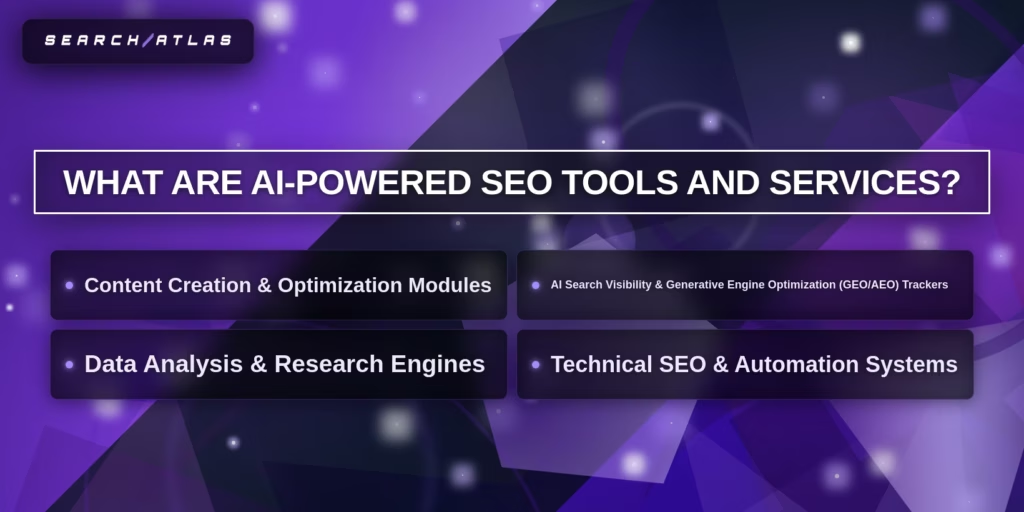
AI-powered SEO tools and services are software platforms that use Artificial Intelligence (AI) and machine learning to automate SEO analysis, content optimization, keyword research, and search performance monitoring. AI-powered SEO tools process large search datasets, detect ranking patterns, and generate optimization recommendations that improve visibility in search engines and AI-driven search systems.
There are 6 main AI-powered SEO tools and services widely used for search optimization workflows. The tools are listed below.
- OTTO SEO by Search Atlas
- AI Content Helper by Ahrefs
- Chatsonic by Writesonic
- Semrush One by Semrush
- MarketMuse
- Clearscope
1. OTTO SEO by Search Atlas
OTTO SEO by Search Atlas is the best AI-powered SEO tool because the platform automates SEO execution, deploys real-time optimizations, and performs continuous AI-driven search improvements across technical SEO, content optimization, and authority building. OTTO SEO by Search Atlas functions as an automated SEO operations system that analyzes website data, identifies optimization opportunities, and implements approved changes directly on the website.
How does OTTO SEO automate manual SEO work? OTTO SEO automates manual SEO work by performing website analysis, optimization planning, and implementation through Artificial Intelligence workflows. OTTO SEO automates approximately 99% of manual SEO tasks, which significantly reduces operational workload. The platform connects with Google Analytics, Google Search Console, and Google Business Profile to analyze real-time performance data. OTTO SEO processes competitor signals, website structure, and search visibility data to generate optimization actions automatically. The automation system can complete tasks that normally require approximately four months of manual SEO work within minutes.
Why is real-time deployment of SEO fixes important? Real-time deployment of SEO fixes is important because search performance improves when issues are corrected immediately. OTTO SEO monitors website performance continuously and applies approved optimizations instantly.
The platform manages multiple optimization categories. Categories are listed below.
- Technical SEO fixes.
- On-page content optimization.
- Schema markup generation.
- Instant indexing signals.
- Google Business Profile optimization.
- Link acquisition workflows.
- Digital public relations campaigns.
What full-stack SEO capabilities does OTTO SEO provide? OTTO SEO provides full-stack SEO capabilities by combining technical SEO, content optimization, link building, and digital marketing automation within one system. The platform executes search strategies across multiple search environments.
SEO functions OTTO SEO performs are listed below.
- Technical SEO analysis and automated fixes.
- Content creation and on-page optimization.
- Internal linking optimization.
- Link building outreach campaigns.
- Digital PR campaign automation.
- Local SEO optimization.
The platform includes LinkLaboratory, which analyzes domain relevance, identifies outreach opportunities, and filters spam signals during backlink acquisition workflows.
How does continuous AI optimization differentiate OTTO SEO from other SEO tools? Continuous AI optimization differentiates OTTO SEO because the system identifies issues, recommends improvements, and executes approved changes automatically. Traditional SEO tools generate reports that require manual implementation. OTTO SEO operates as an automated optimization system that continuously analyzes search algorithm signals and adjusts website elements. The platform provides Advanced AI Recommendations, Automatic Fixes, and Continuous Optimization for both traditional search and AI search environments.
The platform also improves visibility in AI-driven search platforms (ChatGPT, Gemini, and other generative systems) through entity optimization and structured data improvements.
How does OTTO SEO reduce SEO implementation costs? OTTO SEO reduces SEO implementation costs because automation replaces many manual SEO tasks normally performed by specialists. The automation system reduces implementation costs by more than 90% compared with traditional SEO workflows. The platform automates technical audits, content optimization, and internal linking adjustments. This automation significantly reduces the labor required for ongoing optimization compared with manual workflows inside platforms like Ahrefs or Semrush.
Why does consolidating SEO tools into one platform provide advantages? Consolidating SEO tools into one platform improves operational efficiency because multiple optimization processes operate inside a unified system. OTTO SEO combines keyword research, backlink analysis, technical audits, and content optimization within a single dashboard. The platform replaces multiple SEO subscriptions and creates a unified workflow environment. OTTO SEO operates as part of the OTTO ecosystem, which includes OTTO PPC for advertising automation, OTTO Agent for AI workflow management, and OTTO implementation services for execution support.
This integrated environment functions as an automated SEO operations team that manages technical optimization, content development, and authority building simultaneously.
2. AI Content Helper by Ahrefs
AI Content Helper by Ahrefs is one of the best AI-powered SEO tools because the platform integrates content optimization directly with keyword research, competitor analysis, and SERP data inside the Ahrefs ecosystem. AI Content Helper by Ahrefs analyzes top-ranking pages for a query and provides topic coverage recommendations, content gap detection, and optimization guidance based on real search performance data.
How does platform integration improve content optimization? Integration improves optimization because AI Content Helper by Ahrefs connects writing workflows with Ahrefs keyword research and SERP analysis data. The platform allows content planning and optimization inside the same interface used for backlink analysis, keyword discovery, and competitor research. The workflow starts with selecting a target keyword. AI Content Helper scans top-ranking pages and builds a writing environment that scores topic coverage, highlights missing information, and suggests improvements aligned with search intent.
Why does topic and coverage analysis improve ranking potential? Topic and coverage analysis improve ranking potential because AI Content Helper compares article coverage against top-ranking pages. The system evaluates topical completeness and identifies missing concepts that frequently appear in ranking content.
The tool provides several analysis outputs. The outputs are listed below.
- Content score that measures topical completeness.
- Recommended topics and related questions.
- Color-coded topic coverage visualization.
- Metadata suggestions for titles and meta descriptions.
What makes the repeatable content workflow effective? The repeatable workflow improves SEO execution because AI Content Helper organizes content development into a structured optimization process. The process follows a four-stage framework listed below.
- Keyword research.
- Content outline generation.
- Draft creation.
- Content optimization.
How does AI Content Helper improve existing content performance? AI Content Helper improves existing content performance by identifying topic gaps between an article and its current ranking competitors. The platform compares existing articles with top-ranking pages and produces a list of missing topics or outdated sections. Content teams can edit articles directly inside the optimization interface. This process allows websites to update high-authority pages with existing backlinks and domain authority, which frequently restores lost organic traffic.
Why does automated competitor analysis accelerate SEO research? Automated competitor analysis accelerates SEO research because AI Content Helper identifies ranking patterns across competing pages automatically. The tool scans top-performing pages and extracts topics, structural elements, and frequently covered concepts. This automation removes the need for manual SERP review. Content teams identify ranking gaps faster and develop outlines aligned with search intent.
Why does multilingual support increase global SEO capability? Multilingual support increases global SEO capability because AI Content Helper analyzes search intent across international search markets. AI Content Helper supports 173 or more languages, which allows content optimization for global audiences.
International SEO teams can evaluate SERP data and optimize content across multiple languages while maintaining search intent alignment within each regional search environment.
3. Chatsonic by Writesonic
Chatsonic by Writesonic is one of the best AI-powered SEO tools because the platform combines real-time search data, multiple AI models, Generative Engine Optimization tracking, and automated content production workflows. Chatsonic by Writesonic generates SEO content while simultaneously analyzing trends, competitor data, and AI search visibility.
How does real-time Google data improve SEO insights? Real-time Google data improves SEO insights because Chatsonic retrieves current search information directly from Google Search. Many AI platforms rely on static training data with knowledge cutoffs. Chatsonic retrieves live search data for statistics, trending topics, and current information. This capability improves content accuracy and ensures articles reflect current search demand patterns.
Why does multi-model AI generation improve content quality? Multi-model AI generation improves content quality because Chatsonic uses several large language models with different capabilities. Chatsonic processes prompts across multiple AI systems.
The supported models include the systems listed below.
- GPT-4o.
- Claude.
- Gemini.
- Flux 1.1.
- LLaMA.
- Mixtral.
Each model contributes different reasoning patterns and writing structures, which produce diverse and higher-quality SEO content.

Why does Generative Engine Optimization tracking increase AI visibility? Generative Engine Optimization tracking increases AI visibility because Chatsonic monitors brand presence across major AI search systems. The GEO tracking system evaluates citations, mentions, sentiment signals, and ranking presence.
Chatsonic tracks visibility across multiple AI platforms listed below.
- ChatGPT.
- Perplexity.
- Google AI Overviews.
- Gemini.
- Claude.
- Copilot.
- Grok.
- Meta AI.
The platform analyzes a proprietary dataset containing 120 million AI chatbot conversations, which provides insights into prompt demand and AI response behavior.
How does the content workflow improve content production? The content workflow improves production efficiency because Chatsonic guides content creation through a structured 10-step process. The workflow trains AI to replicate the user’s tone, style, and formatting patterns.
Chatsonic generates multiple content formats listed below.
- Blog articles.
- List-based articles.
- News articles.
- How-to guides.
- marketing copy.
Why do Chatsonic SEO research features strengthen strategy development? SEO research features strengthen strategy development because Chatsonic performs keyword research, competitor analysis, and technical audits inside the same platform. Chatsonic analyzes keyword clusters, identifies trending topics, and compares competitor performance. The platform runs site audits for up to 100 pages for free, with paid plans analyzing more than 200 pages. SEO professionals can identify technical issues, missed keyword opportunities, and content optimization gaps directly inside the platform.
SEO professionals frequently use Chatsonic for competitor analysis because the platform identifies high-performing pages, top keywords, and structural ranking patterns across competing websites.
4. Semrush One by Semrush
Semrush One by Semrush is one of the best AI-powered SEO tools because the platform combines traditional SEO analytics with AI visibility intelligence across search engines and AI-driven discovery platforms. Semrush One by Semrush unifies search performance monitoring, AI citation tracking, and content optimization into a single marketing intelligence system.
How does Semrush One provide unified visibility intelligence? Semrush One provides unified visibility intelligence because the platform integrates traditional SEO tracking and AI search visibility monitoring into one workflow. Semrush One launched in October 2025 as a platform designed to track visibility across both traditional search engines and AI-powered search interfaces.
The platform monitors brand presence across multiple discovery channels listed below.
- Google Search.
- Google AI Overviews.
- ChatGPT.
- Gemini.
- Perplexity.
Why is large-scale AI prompt tracking valuable for SEO teams? Large-scale AI prompt tracking improves SEO analysis because Semrush One monitors millions of AI queries that generate brand mentions. The platform analyzes more than 100 million Large Language Model prompts globally. The database includes over 90 million United States prompts and 29 million prompts from ChatGPT datasets. This dataset allows marketers to identify opportunities where competitors appear in AI-generated answers, but their brand does not.
Semrush One identifies two major opportunity categories listed below.
- Topic Opportunities where relevant queries exist, but content coverage remains weak.
- Source Opportunities where AI systems cite competitors instead of the user’s content.
How does Semrush integrate AI across its SEO toolkits? Semrush integrates Artificial Intelligence across multiple product modules to improve search optimization workflows. The platform expanded AI features across major Semrush tools.
Key AI integrations include the functions listed below.
- Site Audit for technical analysis, which performs AI search health checks for AI crawlers, ChatGPT-User, and Google-Extended.
- Content Toolkit for content optimization, which evaluates article drafts for AI search readiness.
- Advertising Toolkit for campaign creation, which generates ad assets and campaign recommendations using AI analysis.
How do AI-powered recommendations generate measurable results? AI-powered recommendations generate measurable results because Semrush One analyzes visibility patterns and recommends strategic content improvements. The platform produces multiple performance reports.
The reports include the following analysis categories listed below.
- Brand performance.
- Brand perception signals.
- Narrative drivers influencing search conversations.
- Frequently asked user questions.
Internal testing demonstrated strong improvements. Semrush increased its own AI share of voice from 13% to 32% within one month using these insights. External case studies show strong performance outcomes. One eCommerce retailer recorded 340% growth in AI-driven traffic and 25% improvement in conversion rates within six months.
Why does Semrush One have a competitive advantage over other SEO tools? Semrush One provides a competitive advantage because the platform combines traditional SEO analytics with AI visibility tracking in a single system. Many SEO tools focus only on search engine rankings. Platforms, Ahrefs and Moz Pro, focus primarily on traditional SEO metrics. Some platforms provide limited AI visibility tracking but do not combine large-scale prompt datasets with traditional SEO analysis. Semrush One provides broader visibility tracking across both search engines and AI platforms.
Why do enterprises trust Semrush One for SEO intelligence? Enterprises trust Semrush One because the platform provides large-scale marketing data and enterprise-grade analytics infrastructure. Semrush serves more than 10 million marketers worldwide and is used by 35% of Fortune 500 companies.
This widespread adoption demonstrates the platform’s credibility for large-scale digital marketing intelligence and cross-channel search visibility monitoring.
5. MarketMuse
MarketMuse is one of the best AI-powered SEO tools because the platform uses proprietary artificial intelligence to analyze topical authority, identify content gaps, and generate strategic content recommendations. MarketMuse focuses on improving website topical coverage and building authoritative content ecosystems rather than optimizing individual pages alone.
How does MarketMuse’s AI foundation differentiate the platform? MarketMuse differentiates itself because the platform has integrated Artificial Intelligence since its founding in 2013. MarketMuse uses proprietary topic modeling technology rather than relying only on keyword frequency metrics.
The system combines multiple AI technologies listed below.
- Bayesian statistical modeling.
- Natural Language Processing.
- Graph analysis.
- Neural network deep learning.
These technologies analyze semantic relationships between topics and evaluate how content coverage compares with competing websites.
Why does MarketMuse excel at strategic content planning? MarketMuse excels at strategic planning because the platform performs a full content inventory analysis for an entire website. The system evaluates existing content and identifies missing topics required for topical authority.
MarketMuse produces several strategic outputs listed below.
- Topic cluster recommendations.
- Content opportunity reports.
- Competitive heatmaps.
The heatmaps highlight uncovered topics as red squares, which indicate areas where competitors lack content coverage.
How does MarketMuse optimize content through semantic analysis? MarketMuse optimizes content using semantic topic modeling rather than simple keyword density analysis. The platform generates a Content Score that measures topical depth and coverage relative to its quality model. MarketMuse identifies up to 50 semantically related topics that appear in an article. These topics include multi-word phrases and contextual concepts frequently used by authoritative sources.
Why are MarketMuse content briefs valuable for writers? MarketMuse content briefs guide writers by providing detailed structural instructions for each article. MarketMuse generates comprehensive briefs that include writing guidance and SEO requirements.
The briefs contain several components listed below.
- Target topic and search intent.
- Recommended word count.
- Suggested headings and subtopics.
- Related keywords and semantic phrases.
- Internal linking guidance.
- Target content score benchmarks.
Higher-tier plans provide multiple brief formats that include audience targeting, marketing funnel stage, and messaging guidelines.
What results demonstrate MarketMuse performance benefits? MarketMuse demonstrates measurable SEO results through improvements in traffic and ranking performance. Case studies show strong growth when websites implement MarketMuse content strategies. A SaaS company increased organic traffic by 150% within six months after implementing MarketMuse-driven content optimization. Personalized difficulty scores also guide content teams toward topics that match their domain authority level.
Why does MarketMuse scale effectively for enterprise content teams? MarketMuse scales effectively because the platform analyzes large content libraries and provides strategic recommendations for entire websites. Enterprise teams use MarketMuse to manage large editorial calendars and content clusters. MarketMuse supports SEO specialists, editors, and strategists who manage large content ecosystems. After the October 2024 acquisition by SiteImprove, MarketMuse integrates with broader digital experience tools that include SEO analytics, accessibility monitoring, and cross-channel marketing analysis.
6. Clearscope
Clearscope is one of the best AI-powered SEO tools because the platform specializes in AI-driven content optimization and semantic relevance analysis based on top-ranking search results. Clearscope analyzes high-performing pages and provides actionable recommendations that improve topical coverage and ranking potential.
How does Clearscope’s AI foundation improve content optimization? Clearscope improves optimization because the platform analyzes search results using machine learning and natural language processing. Clearscope processes data from the top 30 search results and evaluates semantic relationships between terms. The system integrates IBM Watson and Google Natural Language Processing technologies to generate recommendations aligned with modern search intent evaluation.
Why does Clearscope consistently produce strong traffic improvements? Clearscope produces strong traffic improvements because the platform identifies missing topics and semantic relationships in existing content. Websites frequently observe large traffic increases after updating content using Clearscope recommendations.
Case studies report several results listed below.
- Websites achieving 2 times traffic growth after improving articles to an A- grade.
- A Webflow website increased blog traffic by 130% within one year.
- Content optimization experiments showing 25% average ranking improvements.
- A German content strategy generating 721% growth in organic clicks.
These results demonstrate how improved topical coverage increases search visibility.
Why does Clearscope’s Google Docs integration improve content workflows? Clearscope’s Google Docs integration improves workflows because writers receive optimization feedback directly while writing. The integration provides real-time scoring and topic suggestions within the writing document. Writers view recommended keywords, topical coverage guidance, and structural suggestions without leaving the document environment.
Why did Clearscope evolve into a broader discoverability platform? Clearscope evolved into a broader discoverability platform because search visibility now includes AI-driven search environments. The platform expanded features beyond keyword grading.
New features include the capabilities listed below.
- AI-assisted content drafting.
- Topic exploration tools.
- LLM visibility tracking across AI search systems.
- Answer Engine Optimization analysis.
Why does multilingual optimization matter for global SEO teams? Multilingual optimization matters because global websites must align content with search intent across different languages. Clearscope supports 12 or more languages, which allows international SEO teams to optimize content across regional markets. International marketing teams use Clearscope to analyze language-specific search results and adapt content to regional search behavior.
Why does Clearscope’s real-time content grading guide guide writers effectively? Clearscope’s real-time content grading guides writers because the platform evaluates articles against top-ranking competitors. The platform assigns a letter grade from A+ to F based on topical relevance and completeness.
The grading system analyzes multiple signals listed below.
- Keyword coverage frequency.
- Semantic topic relationships.
- Content depth and comprehensiveness.
- Questions appearing in People Also Ask results.
The score updates continuously while writers edit content, which allows immediate improvements in topical coverage and search relevance.
How to Structure Content for Both Human Readers and AI Models?
Content structure for both human readers and AI models refers to organizing information in a clear, modular, and semantically rich format that improves readability for people and extractability for Artificial Intelligence systems. Search engines and AI systems analyze headings, entities, structured answers, and semantic relationships to interpret meaning and generate responses.
There are 9 main methods for structuring content for both human readers and AI models. The methods are listed below.
- Use Front-Load Information
- Utilize Clear Hierarchy and Headings
- Create Self-Contained Content Units (SCUs)
- Format for Readability and Parsing
- Implement Schema Markup
- Use Explicit Signposts
- Avoid Ambiguity
- Maintain Semantic Richness
- Include FAQs
1. Use Front-Load Information
Using front-load information is important for structuring content for both human readers and AI models because placing the main answer at the beginning of a section improves comprehension, extraction, and citation. Front-load information means presenting the primary conclusion, definition, or key insight in the first sentence before supporting explanations.
Why do AI models prefer front-loaded information? AI models prefer front-loaded information because AI systems process content in a top-down reading order. Artificial Intelligence models begin evaluating a page from the top and move sequentially downward. Important information located at the beginning of paragraphs increases the probability of extraction for AI-generated answers. If key insights appear deep in the page structure, AI systems often skip the information and retrieve content from other sources that provide faster answers.
Why do AI assistants segment pages during analysis? AI assistants segment pages because Large Language Models evaluate content in small chunks rather than entire documents. AI systems divide content into segments, paragraphs, list items, and table rows. Concise paragraphs between 40 and 70 words improve segmentation because each section communicates one clear idea. Short recap statements reinforce the key point and help AI models correctly interpret the content structure.
How does the F-shaped reading pattern affect human readers? Human readers follow an F-shaped reading pattern where attention concentrates on the top and left areas of a page. The F-shaped scanning pattern was documented by the Nielsen Norman Group in 2006.
The pattern follows three scanning stages listed below.
- Readers scan horizontally across the top lines of text.
- Readers scan a shorter horizontal section below the first line.
- Readers scan vertically along the left margin.
This behavior means the first two paragraphs receive the most visual attention, while deeper content often receives significantly fewer views.
Why do direct answers improve AI quotation and citation? Direct answers improve AI quotation because AI systems prioritize content that clearly resolves a question. Generative AI platforms frequently extract short answers or structured summaries when responding to prompts. Sections that start with a clear answer followed by supporting details resemble conversational query responses. AI systems can quote these segments directly when generating answers for us.
Why do clear formatting and structure increase citation probability? Clear formatting increases citation probability because structured content requires less computational processing for AI systems. Organized content formats allow AI systems to interpret relationships between ideas quickly.
Content structures that improve AI interpretation include the elements listed below.
- Numbered lists for processes.
- Bullet lists for attributes.
- Tables for structured comparisons.
- Question-and-answer sections.
Structured formatting improves token efficiency because AI systems parse organized information faster than unstructured text.
Why does a human-led strategy strengthen front-loaded content? Human-led strategy strengthens front-loaded content because strategic direction introduces perspective, expertise, and credibility. Artificial Intelligence models reproduce patterns from training data but do not produce an independent viewpoint.
Human writers define the audience, tone, message, and key insights before AI-assisted drafting occurs. Research published by Microsoft in 2022 indicates that human-guided content strategies improve search performance by approximately 40%.
2. Utilize Clear Hierarchy and Headings
Utilizing clear hierarchy and headings is important for structuring content for both human readers and AI models because hierarchical structure organizes information into logical sections that improve comprehension, indexing, and retrieval. Clear hierarchy refers to a structured heading system that organizes topics from general concepts to detailed subtopics.
How does hierarchical structure improve AI interpretation? Hierarchical structure improves AI interpretation because AI systems divide documents into sections when analyzing information. Large Language Models scan content by identifying headings and grouping related paragraphs under each section. Structured headings define topic boundaries, which allows AI systems to interpret the intent of each section. Experiments comparing structured and unstructured articles show that the structured version performs better in AI summaries, search snippets, and content analysis tools.
Why do hierarchical headings improve human readability? Hierarchical headings improve readability because readers use headings to understand relationships between topics and subtopics. Clear heading levels signal which ideas represent main concepts and which ideas provide supporting explanations.
The hierarchy structure follows a consistent pattern listed below.
- H1 defines the main page topic.
- H2 defines major sections of the topic.
- H3 defines subtopics expanding each section.
This structure improves scanning behavior and allows readers to navigate complex topics efficiently.
Why does avoiding hidden content improve AI content capture? Avoiding hidden content improves AI capture because AI crawlers frequently fail to process dynamic or interactive elements. Content hidden behind JavaScript-based tabs or collapsible elements often becomes invisible to AI extraction systems. Publishing content in plain text formats or structured markup improves accessibility for AI models. Documentation frameworks using Markdown structures allow AI systems to parse content reliably.
How does structured formatting improve large knowledge bases? Structured formatting improves knowledge base organization because AI systems categorize information based on headings and topic relationships. Large documentation libraries frequently contain hundreds or thousands of pages. Hierarchical tagging organizes content into categories and subcategories. This structure improves navigation for users and improves information retrieval accuracy for AI models.
Why do headings improve discoverability for SEO and GEO? Headings improve discoverability because search engines analyze heading tags to understand content structure and topical relevance. Heading tags communicate which sections represent key concepts on a page. SEO specialists place relevant keywords inside headings so search engines can identify the focus of each section. This structure improves both Search Engine Optimization (SEO) and Generative Engine Optimization (GEO) visibility.
Why does hierarchy act as a roadmap for AI algorithms? Hierarchy acts as a roadmap because structured headings reveal relationships between topics and supporting information. AI systems use heading structures to identify major ideas and locate supporting explanations.
This roadmap allows AI engines, ChatGPT and Gemini, to retrieve specific sections when generating answers. Clear hierarchy improves citation accuracy, reduces misinterpretation, and increases the probability that a section becomes a referenced source.
3. Create Self-Contained Content Units (SCUs)
Creating Self-Contained Content Units (SCUs) is important for structuring content for both human readers and AI models because SCUs provide complete, independent explanations that AI systems can extract and readers can understand quickly. A Self-Contained Content Unit (SCU) is a short section that includes a clear subject, verb, and object and communicates one idea without requiring external context.
Why do SCUs improve AI extractability in generative search systems? SCUs improve AI extractability because AI engines prefer modular sections that maintain meaning when extracted. Generative systems follow a structure known as Generative Engine Answer Format (GEAF), where AI extracts small text blocks to build responses. SCUs are “snippable” because each section contains a complete explanation. AI systems can quote a sentence, list item, or paragraph without losing the original meaning. Structured content with modular sections consistently performs better in AI summaries, featured snippets, and generative answers.
Why do SCUs reduce ambiguity for AI interpretation? SCUs reduce ambiguity because each sentence contains a clear subject, verb, and object structure. AI systems analyze language through pattern recognition rather than human interpretation. Short, structured sentences clarify relationships between entities and actions. SCUs allow AI systems to differentiate between definitions, explanations, and examples with higher precision. This structure transforms content into a machine-readable format where meaning and relationships remain explicit.
Why do SCUs improve factual accuracy in AI outputs? SCUs improve factual accuracy because simplified statements reduce the probability of misinterpretation by AI systems. Complex sentences containing multiple clauses increase interpretation difficulty. Breaking complex ideas into short statements produces clearer information units. AI systems process these units more reliably, which reduces hallucination risk when generating responses. Clear information boundaries improve the accuracy of extracted knowledge.
Why do SCUs lower AI risk scores for content selection? SCUs lower AI risk scores because structured, factual content appears more reliable for AI summarization systems. AI systems prioritize content that contains short sentences, simple explanations, and structured lists. Low-risk content formats include structures listed below.
- Definitions.
- Numbered lists.
- Short explanatory paragraphs.
- Fact-based statements.
AI systems, Google AI Overviews and Perplexity, frequently extract individual SCU sentences and display them with source citations.
Why do SCUs improve scannability for human readers? SCUs improve scannability because short paragraphs create visual whitespace that simplifies content navigation. Large text blocks reduce readability and discourage engagement. SCUs divide information into small sections that readers can scan. Mobile readability improves because short paragraphs display clearly on small screens. More than 50% of web traffic originates from mobile devices, which increases the importance of modular content formatting.
Why do SCUs increase human comprehension? SCUs increase comprehension because short, focused sections reduce cognitive load during reading. Cognitive load refers to the mental effort required to process information. Content with higher readability scores improves understanding and retention. Writers often target a Flesch Reading Ease score of 60 or higher to maintain accessible writing. Improved comprehension increases engagement metrics, time on page, and reduces bounce rates.
4. Format for Readability and Parsing
Formatting for readability and parsing is important for structuring content for both human readers and AI models because structured formatting improves comprehension for readers and improves information extraction for AI systems. Readable formatting organizes content into structured visual patterns that simplify interpretation.
Why must content support both human readability and machine parsing? Content must support both audiences because modern search systems use AI as an intermediary between users and information. AI systems analyze content before presenting answers to users. Readable content with clear definitions and logical structure benefits both audiences. Humans read the content directly, while AI systems extract the same information to generate responses. This dual structure increases both discoverability and usability.
Why does formatting improve human engagement and comprehension? Formatting improves engagement because visually structured content is easier to scan and understand. Readers rarely read entire webpages sequentially. Research from the Nielsen Norman Group shows that most users scan web pages instead of reading every sentence. Effective formatting divides content into scannable segments.
Formatting elements that improve engagement include structures listed below.
- Short paragraphs.
- Bullet lists.
- Numbered processes.
- Subheadings separating concepts.
These structures reduce bounce rates and increase reading time.
Why does structured formatting increase AI visibility? Structured formatting increases AI visibility because AI systems prefer content that can be segmented and interpreted efficiently. Content optimized for Answer Engine Optimization (AEO) achieves approximately 35% higher visibility in AI search environments compared with traditional SEO-only strategies. Content containing statistics, quotes, and verified sources performs even better. Research shows that 86% of AI citations originate from brand-controlled sources, which emphasizes the importance of structured, authoritative content.
Why does formatting improve AI-generated insight accuracy? Formatting improves accuracy because structured documents clarify relationships between concepts and data points. AI systems evaluate content through entities and relationships. Clear headings, lists, and tables allow AI models to extract information and identify how concepts connect. Structured formatting produces more reliable AI-generated summaries.
Why does formatting solve AI limitations with unstructured content?
Formatting solves AI limitations because Large Language Models struggle to interpret long, unstructured text blocks. Dense paragraphs create ambiguity and reduce extraction accuracy.
Unstructured content introduces several interpretation challenges listed below.
- Important ideas become hidden within long paragraphs.
- Vague headings reduce contextual clarity.
- Interactive components sometimes block AI crawlers.
Clear formatting removes these obstacles and improves information clarity.
Why does readability formatting influence SEO performance? Readability formatting influences SEO performance because search engines reward content that delivers answers quickly and clearly. Readable content improves engagement metrics that influence ranking signals.
Readable content produces measurable outcomes listed below.
- Lower bounce rates.
- Higher dwell time.
- Increased content sharing.
Generative AI traffic increased 1200% between July 2024 and February 2025, while AI referral traffic increased 800% year over year. These trends reinforce the importance of structured, readable content for modern search visibility.
5. Implement Schema Markup
Implementing Schema Markup is important for structuring content for both human readers and AI models because Schema Markup provides structured data that explains entities, relationships, and content meaning to search engines and AI systems. Schema Markup is a standardized vocabulary that converts web page information into machine-readable structured data.
Why does schema markup provide a shared vocabulary for search systems? Schema markup provides a shared vocabulary because it defines standardized terms that search engines use to interpret web page information. Schema.org launched in 2011 through collaboration between Google, Bing, Yahoo, and Yandex. Schema markup shifts search interpretation from keyword recognition toward contextual understanding. Search engines evaluate not only what the content says but also what the content represents.
Why does schema increase the chance of appearing in rich results and AI summaries? Schema increases visibility because structured signals make content easier for search engines to interpret and reuse. Pages that include schema markup are more likely to appear in the formats listed below.
- Rich search results.
- Knowledge panels.
- Featured snippets.
- AI Overviews.
Why does schema markup reduce interpretation guesswork? Schema markup reduces interpretation guesswork because it explicitly defines content attributes. Structured data specifies the entity type, publication date, author, and relationships between elements. Clear definitions reduce the risk of search engines misinterpreting content meaning or context.
Why does schema function as connective tissue between content and machines? Schema functions as connective tissue because it connects web page information with machine-readable knowledge structures. Structured data transforms plain HTML into semantic information that machines can analyze efficiently. This connection improves extraction accuracy and increases the likelihood of citation within AI-generated answers.
Why is schema a key component of AI readiness strategies? Schema is a key component of AI readiness strategies because AI systems rely on entity recognition to understand information sources. Structured data defines entities, organizations, people, products, and events. An experiment conducted by AISO in January 2025 showed that ChatGPT extracted 30% more accurate information from pages containing schema markup compared with identical pages without schema.
Why does schema improve AI processing efficiency? Schema improves AI processing efficiency because structured data reduces the computational effort required to interpret content. AI systems can identify facts, relationships, and attributes without scanning large volumes of text. Platforms (ChatGPT, Gemini, and Perplexity) prioritize structured content sources because structured data allows faster interpretation and more reliable answer generation.
6. Use Explicit Signposts
Using explicit signposts is important for structuring content for both human readers and AI models because explicit signposts show content order, clarify section purpose, and improve retrieval accuracy. Explicit signposts are phrases that state what a section contains, how ideas connect, or what comes next in the structure.
How do explicit signposts act as a route map for Large Language Models (LLMs)? Explicit signposts act as a route map for Large Language Models (LLMs) because LLMs detect structural cues to identify meaning and section boundaries. Large Language Models process tokens and embeddings, not human-style reading patterns. Headings, numbered lists, bullet points, and labeled summaries divide a page into accessible units that LLMs can interpret and retrieve.
Why does LLM discoverability matter for modern content visibility? LLM discoverability matters because AI systems now mediate visibility for a very large audience. ChatGPT alone has more than 400 million weekly active users. Content that uses explicit signposts gains stronger visibility in AI summaries, recommendations, and answer generation, even when users do not visit the original page.
Why does heading hierarchy strengthen algorithmic understanding? Heading hierarchy strengthens algorithmic understanding because a clear H1, H2, and H3 structure defines topic relationships precisely. H1 identifies the main topic. H2 identifies major sections. H3 identifies supporting subtopics. This outline improves machine interpretation and improves human scanning at the same time.
Why do Q and A formats with direct answers perform strongly? Q and A formats perform strongly because the format matches query intent directly and reduces interpretive work. Research experiments found that pre-chunked Q and A content produced the highest relevance to semantic search intent. A concise answer paragraph of about 40 to 60 words directly under the question increases extraction potential for snippets and AI answers.
Why do semantic HTML elements improve signposting clarity? Semantic HTML elements improve signposting clarity because semantic markup signals content type and content importance. Strong tags identify important points. Unordered and ordered lists identify grouped attributes or ranked steps. Clean semantic markup gives machines a clearer model of page structure and gives readers a clearer reading path.
Why does content chunking improve AI retrieval? Content chunking improves AI retrieval because AI systems select small sections of a page rather than whole documents. Explicit signposts define what each chunk contains, which improves relevance matching. Clear chunk labels increase the probability that AI systems retrieve the right section for the right question.
7. Avoid Ambiguity
Avoiding ambiguity is important for structuring content for both human readers and AI models because precise language reduces misunderstanding, improves extraction accuracy, and strengthens trust. Ambiguity occurs when a word, phrase, or sentence allows multiple interpretations.
How does ambiguity affect human understanding? Ambiguity affects human understanding because readers can assign different meanings to the same phrase. Natural language depends heavily on context, and many readers miss ambiguous wording. Precise wording reduces confusion, reduces frustration, and improves comprehension.
Why do AI models struggle with ambiguity? AI models struggle with ambiguity because AI models predict likely word patterns instead of understanding meaning like humans do. AI models rank probable language sequences based on training data. This process weakens performance when a word has multiple meanings or when context remains unclear.
Why does ambiguous language produce incorrect AI interpretation? Ambiguous language produces incorrect AI interpretation because AI systems often choose the statistically common meaning instead of the intended meaning. Words, “bank,” “stress,” “growth,” or “support”, can point to different concepts. Ambiguous phrasing increases the risk of wrong classification, wrong extraction, and wrong summary generation.
Why does ambiguity increase hallucination and bias risk? Ambiguity increases hallucination and bias risk because unclear context forces AI systems to fill gaps with probable but unverified details. This process can produce confident but false responses. Ambiguity weakens factual grounding, which increases misinterpretation and distorts nuanced meaning.
Why does ambiguity weaken real-world AI task performance? Ambiguity weakens real-world AI task performance because tasks (fact extraction, question answering, and sentiment analysis) require precise meaning. Research on ambiguous question datasets shows that many questions contain multiple valid interpretations. This ambiguity lowers answer reliability and reduces task accuracy.
Why does avoiding ambiguity matter for organizational clarity? Avoiding ambiguity matters for organizational clarity because clear language preserves authority across search systems, AI summaries, and research workflows. Structured, intentional wording reduces false assumptions and protects message accuracy. Precise metadata, precise definitions, and disciplined hierarchy create a more coherent content system for both people and machines.
8. Maintain Semantic Richness
Maintaining semantic richness is important for structuring content for both human readers and AI models because semantic richness strengthens meaning, context, and topic relationships across a page. Semantic richness refers to the use of clearly connected entities, definitions, attributes, and related concepts that build a complete topical context.
How does semantic richness improve content organization and accessibility? Semantic richness improves content organization and accessibility because structured meaning makes content easier to classify, reuse, and deliver across platforms. Semantically rich content carries clear labels, relationships, and context. This structure improves accessibility for reading systems and improves content portability across websites, apps, and AI interfaces.
Why does semantic richness improve navigation and searchability? Semantic richness improves navigation and searchability because semantic markers group related ideas into recognizable themes. Search engines and AI systems now evaluate meaning, not only keywords. Semantic clusters make authority easier to recognize and make relevant sections easier to retrieve.
Why does semantic richness improve consistency across channels? Semantic richness improves consistency across channels because a structured content model preserves meaning during multi-platform publishing. Content Management Systems organize content libraries and maintain consistent labels and relationships. This consistency improves user experience across web pages, mobile interfaces, voice interfaces, and other delivery formats.
Why does semantic richness improve comprehension and synthesis? Semantic richness improves comprehension and synthesis because readers and AI systems both need explicit conceptual relationships to understand complex information. Complex topics contain specialized terms, overlapping meanings, and assumptions about prior knowledge. Clear definitions and related concepts reduce interpretation gaps and make synthesis easier.
Why does semantic richness reduce hallucination and context loss? Semantic richness reduces hallucination and context loss because stronger factual anchoring gives both readers and AI systems clearer meaning signals. Poorly anchored content creates a thin context. Thin context weakens trust and increases fabrication risk in AI outputs. Clear concept definitions, repeated anchor terms, and semantic sections improve resilience.
Why does semantic richness improve AI model performance? Semantic richness improves AI model performance because AI systems learn and retrieve information more effectively from structured linguistic input. Research on structured language shows stronger generalization performance in neural networks. This advantage matters more as semantic technologies become central to AI, metadata, and decision systems.
9. Include FAQs
Including Frequently Asked Questions (FAQs) is important for structuring content for both human readers and AI models because FAQs match natural queries, create machine-readable answer blocks, and improve extractability. Frequently Asked Questions are question-and-answer sections that address common user needs with direct responses.
How do FAQs improve machine readability for AI systems? FAQs improve machine readability because FAQs present clear questions and concise answers in a predictable format. FAQ sections mirror the way users phrase prompts in search and AI chat systems. The FAQ schema strengthens this structure further and increases machine interpretability.
Why do FAQs perform well in AI snippets and summaries? FAQs perform well in AI snippets and summaries because AI systems frequently extract short answer blocks from question-based content. Research indicates that structured lists and answer formats appear in 78% of AI-generated answers. Answer blocks of about 40 to 60 words fit common extraction patterns very well.
Why do FAQs improve natural language alignment? FAQs improve natural language alignment because FAQ questions use the same language patterns that appear in conversational search. Voice search and AI chat queries often begin with phrases, “How do I” or “What is.” The FAQ structure matches the demand directly and improves semantic relevance.
Why do FAQs increase visibility in featured snippets and zero-click results? FAQs increase visibility in featured snippets and zero-click results because search engines prefer direct answers for instant-response formats. FAQ schema increases the chance of appearing in position-zero style features, mobile quick answers, and AI-generated summaries. Pages with FAQ schema are 3.2 times more likely to appear in Google AI Overviews.
Why do FAQs improve logical content organization? FAQs improve logical content organization because FAQ sections force writers to separate questions, answers, and supporting details into distinct units. This structure reduces dense paragraph blocks and makes content easier for AI systems to segment. Humans tolerate chaotic formatting better than AI systems do, so structured FAQ blocks create a stronger shared format.
Why do FAQs improve user experience and reduce support demand? FAQs improve user experience and reduce support demand because FAQs give instant answers without forcing users to search deeper or contact support. Direct answers reduce friction and reduce confusion. Many businesses see support tickets or calls decline by about 30% after publishing strong FAQ content. Content that directly answers user questions generates 3 times more engagement.
Why Tracking AI Visibility Metrics Is Now Essential for Measuring Success?
Tracking AI visibility metrics is essential for measuring success because AI search platforms influence brand discovery, purchase decisions, and information retrieval without generating traditional clicks or visits. AI systems, ChatGPT and Google AI Overviews, synthesize answers directly inside the interface, which disrupts traditional SEO measurement models based on rankings, impressions, and website traffic.
Why do AI platforms disrupt traditional attribution and buyer journey tracking? AI platforms disrupt attribution because users receive answers and recommendations without visiting websites. Traditional analytics systems rely on trackable events, page visits, click-through rates, and keyword rankings. AI search changes this model. Users ask a question, receive a synthesized answer, and often complete the research stage without clicking a source. AI systems also present only a small set of brands within generated answers. This structure reduces the reliability of metrics, organic traffic, or keyword rankings when evaluating visibility in AI search environments.
Why do brands need new metrics to measure AI visibility? Brands need new metrics because AI-generated responses do not follow stable ranking structures. Traditional search engines display results in ranked order, which allows position tracking. AI answers operate differently. AI systems generate responses dynamically and vary results between sessions. Brand visibility depends on whether the AI system selects a source during answer generation rather than on page ranking.
What metrics measure AI visibility effectively? There are 5 main metrics that measure AI visibility across generative search systems. The metrics are listed below.
- AI Visibility Volume measures the number of brand mentions across AI systems over time.
- AI Visibility Ranking measures the percentage share of mentions compared with competitors.
- AI Overview: Tracking measures brand appearances inside Google AI Overviews.
- AI Visibility Scoring evaluates the sentiment, context, and prominence of brand mentions.
- AI Referral Traffic measures visits that originate from AI platforms.
These metrics reveal whether a brand appears in AI-generated responses and how often AI systems reference the brand compared with competitors.
What is the five-layer framework for measuring AI Overview success? The five-layer framework measures AI Overview success by connecting visibility signals with technical performance and business outcomes. The framework includes the layers listed below.
- AI Citation Performance measures the number and value of AI Overview citations.
- Question Coverage Authority measures how many relevant queries a brand answers.
- Technical Performance Indicators evaluate schema implementation and Core Web Vitals.
- Business Impact Measurement connects AI visibility improvements with revenue growth and lead generation.
- Competitive Intelligence Tracking analyzes competitor visibility within AI answers.
This framework links AI visibility improvements with measurable business impact.
How does AI visibility connect with business outcomes? AI visibility connects with business outcomes by influencing brand recognition and purchase intent before users visit a website. AI exposure often increases branded search queries and direct traffic. Brands validate AI impact by comparing visibility metrics with business indicators, leads, conversions, revenue growth, and branded search demand. Visibility increases that precede these signals suggest that AI exposure influences the buying process.
Why do some analysts consider AI visibility a vanity metric? Some analysts consider AI visibility a vanity metric because AI-generated answers vary across sessions and lack standardized measurement systems. AI responses change depending on prompt wording, personalization signals, and training data updates. AI visibility alone does not guarantee business growth because many customers already trust certain brands before entering a prompt. Approximately 44% of B2B buyers include specific brands in their prompts, which means brand awareness often precedes AI discovery.
Will AI Engines Replace Traditional Search Engines?
No, AI engines will not replace traditional search engines in the near future because traditional search usage remains dominant while AI search grows as a complementary discovery channel. Traditional search engines continue to process the majority of online information queries.
What evidence shows that traditional search engines remain dominant? Traditional search engines remain dominant because the majority of internet users still rely on them for information retrieval. Approximately 95% of Americans continue to use traditional search engines regularly, and usage levels remained stable from January 2023 through mid-2025. Traditional search volume did not decline significantly between April 2024 and June 2025, and some months showed increased search activity.
How does search traffic compare with AI platform traffic? Traditional search engines receive significantly more traffic than AI chat platforms. Google receives approximately 26 times more monthly traffic than ChatGPT based on traffic measurements between April 2024 and March 2025. Google’s market share fell below 90% in October 2024, but Google still dominates global search traffic.
Why are AI search tools still growing rapidly? AI search tools are growing because conversational interfaces simplify research and information retrieval. AI tool usage increased significantly between 2023 and 2025.
- Regular AI tool usage increased from 8% in January 2023 to 38% in June 2025.
- Heavy AI users increased from 3% to 21% during the same period.
AI chatbot traffic increased by 80.92%, while search engine traffic remained stable with less than 1% total traffic decline.
Why will AI search and traditional search likely coexist? AI search and traditional search will coexist because each system serves different information retrieval needs. AI systems generate summarized answers and recommendations, while traditional search engines provide access to large information indexes and detailed sources.
Users often combine both systems during research, which positions AI search as an additional discovery layer rather than a replacement for search engines.
Does Keyword Optimization Still Matter with AI Engines?
Yes, keyword optimization still matters with AI engines because keywords remain signals that define topics, user intent, and content relevance for both search engines and AI systems. Keywords help algorithms identify the subject of a page and match content to user queries.
Why do keywords remain important in AI-driven search environments? Keywords remain important because AI-generated answers frequently rely on sources that already rank well in traditional search results. Research shows that 92% of AI Overview citations originate from websites already ranking in the top 10 search results. Traditional ranking signals influence which sources AI systems trust and cite.
How have keyword strategies changed in the AI era? Keyword strategies changed because modern search engines interpret meaning rather than exact word matches. Early SEO relied on keyword density and exact-match phrases. Modern ranking systems use language models, BERT (Bidirectional Encoder Representations from Transformers), to interpret context and relationships between words. SEO strategies now focus on intent coverage rather than repeated keyword placement.
Why can keyword over-optimization harm modern SEO performance? Keyword over-optimization harms performance because excessive optimization reduces readability and user engagement. Content that prioritizes artificial keyword repetition often decreases dwell time and reduces user satisfaction. Search engines interpret negative engagement signals as indicators of low-quality content, which reduces ranking stability.
Why do keywords still guide SEO strategy and discovery? Keywords still guide SEO strategy because they represent the questions and topics users search for online. Keywords reveal demand patterns and define the information that users want to find. Modern SEO strategies use keywords as intent signals, combining them with semantic context, entity relationships, and structured content to improve visibility across both traditional search engines and AI-driven search platforms.