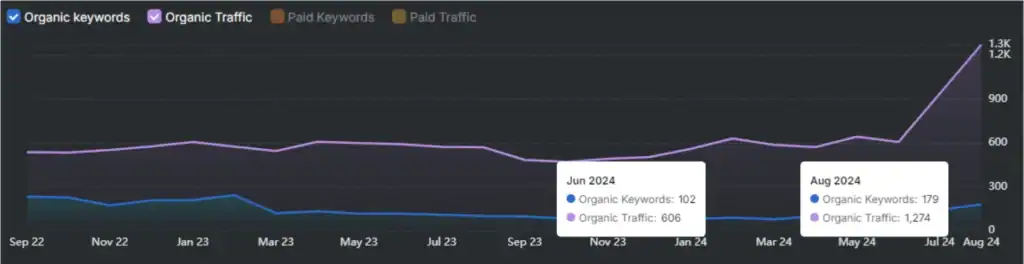
Common Generative Engine Optimization (GEO) misconceptions are incorrect beliefs about how AI systems retrieve, evaluate, and cite content in generated answers. Common Generative Engine Optimization (GEO) misconceptions include assumptions that outdated SEO tactics still work, that AI systems behave like humans, and that content volume or keyword density drives visibility. These misconceptions distort strategy because Generative Engine Optimization (GEO) relies on semantic clarity, entity relationships, and citation-ready structure rather than traditional ranking signals.
Generative Engine Optimization (GEO) is a content optimization method that structures information for AI systems to retrieve, interpret, and cite in generated answers, which differentiates GEO from traditional Search Engine Optimization (SEO) that focuses on rankings and clicks. Generative Engine Optimization (GEO) prioritizes entity clarity, semantic relationships, and answer extraction, while Search Engine Optimization (SEO) prioritizes crawlability, keyword alignment, and ranking positions. This shift from pages to answer blocks explains why misconceptions arise, as marketers apply keyword-first logic to systems that evaluate meaning and structure.
Common Generative Engine Optimization (GEO) misconceptions spread because rapid AI evolution, oversimplified marketing advice, and confusion between SEO, AEO, and GEO create incorrect models of how AI retrieval works. Misconceptions include beliefs that GEO replaces SEO, more content improves performance, keyword density drives results, schema is unnecessary, and authority no longer matters. Additional misconceptions include claims that keyword research is obsolete, ranking number 1 guarantees AI inclusion, and GEO equals prompt engineering. These misconceptions persist because misinformation spreads quickly and repeated exposure reinforces incorrect assumptions.
Avoiding Generative Engine Optimization (GEO) misconceptions requires shifting from keyword-focused tactics to semantic, structured, and authority-driven strategies while correcting myths to prevent risks like traffic volatility, AI inclusion loss, and brand misrepresentation. Are there risks to using generative engine optimization incorrectly? Yes, incorrect strategies reduce visibility, remove content from AI answers, and distort brand representation at scale. Common mistakes marketers avoid in generative search optimization include content flooding, weak entity definition, poor structure, and lack of factual accuracy. A unified approach that combines SEO and GEO with strong content quality, structured data, and user intent alignment ensures stable visibility, accurate representation, and long-term performance in AI-driven search systems.
What is Generative Engine Optimization (GEO)?
Generative Engine Optimization (GEO) is a digital marketing technique that structures content and manages online presence for visibility in AI-generated answers. Generative Engine Optimization (GEO) focuses on earning citations, source mentions, and inclusion in responses from systems (ChatGPT, Google Gemini, Claude, and Perplexity AI).
What does Generative Engine Optimization (GEO) do? Generative Engine Optimization (GEO) refines content so that generative AI systems retrieve, summarize, and present it accurately. GEO uses clear entities, direct answers, structured formatting, factual depth, and machine-readable signals. GEO matters because AI systems often cite a single passage instead of ranking a full page.
How did Generative Engine Optimization (GEO) emerge? Generative Engine Optimization (GEO) emerged as search behavior shifted from traditional results to AI-generated responses. GEO developed from SEO, not outside SEO. Public discussion accelerated in 2025 as AI-referred sessions rose by 527% year over year, and companies increased their focus on AI visibility.
What differentiates Generative Engine Optimization (GEO) from traditional SEO? Generative Engine Optimization (GEO) targets AI answers, while traditional SEO targets search rankings. GEO still depends on SEO fundamentals because AI systems rely on crawlable, indexable, and well-structured content. Related terms address the same core problem: Answer Engine Optimization (AEO), Large Language Model Optimization (LLMO), Generative Search Optimization (GSO), and AI Optimization (AIO).
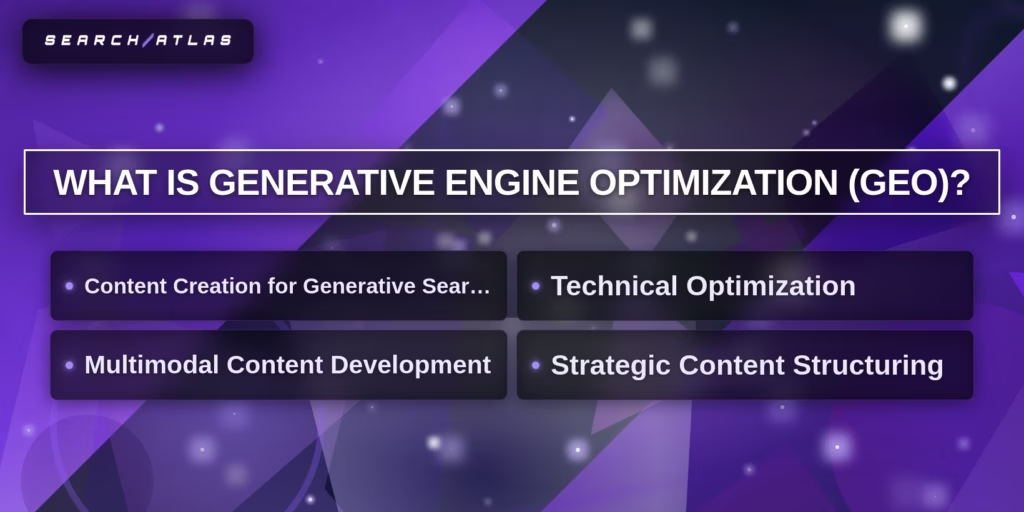
What are the main components of Generative Engine Optimization (GEO)? There are 4 main components of Generative Engine Optimization (GEO).
- Content creation for generative search focuses on authority, factual accuracy, contextual depth, AI readability, intent alignment, and originality. Research from Princeton University and IIT Delhi linked content optimization methods to up to 40% higher citation frequency.
- Technical optimization focuses on structured data, site speed, and accessibility. Technical optimization improves machine readability and content extraction.
- Multimodal content development focuses on text, graphics, photography, infographics, short-form video, and audio. Multimodal content matches the response formats used by generative engines.
- Strategic content structuring focuses on direct answers in the first 40 to 60 words, semantic chunking, and FAQ sections with 5 to 10 concise answers.
What properties define Generative Engine Optimization (GEO)? Generative Engine Optimization (GEO) has 3 defining properties. Firstly, GEO works at the fact level because AI systems often cite a single 60-word section. Secondly, GEO targets conversational queries that average 23 words, while traditional search queries average 4 words. Thirdly, GEO measures success through citation rate, AI referral traffic, and brand presence inside model outputs instead of rankings alone.
Why does Generative Engine Optimization (GEO) matter now? Generative Engine Optimization (GEO) matters because AI search already shapes discovery, traffic, and brand perception at scale. ChatGPT processed 2.5 billion prompts per day in mid 2025. Perplexity AI processed more than 780 million monthly queries and reached 45 million active users. Google AI Overviews expanded to more than 200 countries and territories in over 40 languages, which increased the importance of visibility inside AI-generated answers.
What Differentiates GEO from Traditional SEO?
Generative Engine Optimization (GEO) differs from Traditional SEO in target, outcome, and content format. Generative Engine Optimization (GEO) targets AI-generated answers and citations. Traditional SEO targets search engine rankings and website clicks.
What are the core purposes and goals of GEO compared to Traditional SEO? Generative Engine Optimization (GEO) aims for citations in AI-generated responses, while Traditional SEO aims for rankings in search listings. Traditional SEO improves visibility in Search Engine Results Pages (SERPs) and drives clicks to websites. Generative Engine Optimization (GEO) places content inside direct answers, summaries, and zero-click interfaces.
What platforms do GEO and Traditional SEO target? Generative Engine Optimization (GEO) targets AI answer platforms, while Traditional SEO targets traditional search engines. Traditional SEO focuses on Google, Bing, and Yahoo. Generative Engine Optimization (GEO) focuses on ChatGPT, Claude, Gemini, Google AI Overview, Perplexity, and Copilot.
How do GEO and Traditional SEO optimize content? Generative Engine Optimization (GEO) optimizes answers, entities, and context, while Traditional SEO optimizes keywords, backlinks, and page signals. Generative Engine Optimization (GEO) depends on clear facts, direct answers, logical formatting, and structured data. Traditional SEO depends on keyword relevance, backlink strength, technical performance, and page-level authority.
How do content strategies and structures differ between GEO and Traditional SEO? Generative Engine Optimization (GEO) uses answer-first content, while Traditional SEO often uses long-form keyword-focused pages. Generative Engine Optimization (GEO) rewards clear answers, conversational phrasing, explicit source attribution, and extractable sections. Traditional SEO rewards topical depth, keyword coverage, and authority across multiple pages.
What are the key optimization elements and best practices for GEO and Traditional SEO? There are 2 main optimization patterns in Generative Engine Optimization (GEO) and Traditional SEO. Traditional SEO uses keyword optimization, meta tags, site structure, page speed, internal links, backlinks, and content quality. Generative Engine Optimization (GEO) uses structured data, FAQ formatting, semantic triples, quick summaries, comparison tables, direct answers, citations, quotations, and statistics.
What are the main content signals in Generative Engine Optimization (GEO)? There are 3 main content signals in Generative Engine Optimization (GEO). Firstly, clear factual statements increase extractability. Secondly, an entity-rich structure improves AI interpretation. Thirdly, authoritative markers increase citation frequency. A 2024 Princeton University study linked these methods to up to 40% higher visibility in AI responses.
How do crawlers work for GEO and Traditional SEO? Traditional SEO crawlers index full pages, while Generative Engine Optimization (GEO) systems extract specific information blocks. Traditional search crawlers evaluate site structure, metadata, keywords, and links across websites. Generative Engine Optimization (GEO) systems prioritize factual chunks, direct statements, and structured formats for retrieval and answer generation.
What is the impact of GEO and Traditional SEO on web traffic and visibility? Traditional SEO drives direct website traffic, while Generative Engine Optimization (GEO) drives visibility inside AI-generated answers. Traditional SEO creates traffic through ranked links. Generative Engine Optimization (GEO) creates awareness through citations and references, even when no click occurs.
What tools and metrics measure GEO and Traditional SEO success? Traditional SEO uses mature tools and stable metrics, while Generative Engine Optimization (GEO) uses newer tools and evolving metrics. Tools for Traditional SEO are Search Atlas, Ahrefs, Moz, and Semrush. Traditional SEO metrics are rankings, click-through rate, organic traffic, conversions, domain authority, backlinks, and technical compliance. Tools for Generative Engine Optimization (GEO) are Search Atlas, Peec, mangools, seanking, Amadora, MentionDesk, and seenscore.app, AthenaHQ, Goodie AI, HubSpot AI Search Grader. Generative Engine Optimization (GEO) metrics are AI citations, branded search lift, AI referral traffic, and mention quality.
What are the underlying principles and evolution of GEO and Traditional SEO? Traditional SEO optimizes websites for ranking systems, while Generative Engine Optimization (GEO) optimizes content for answer systems. Traditional SEO follows keyword relevance, authority, and E-E-A-T principles. Generative Engine Optimization (GEO) responds to AI search interfaces that generate summaries instead of listing only links. The term GEO was formalized in November 2023.
What is the market context and impact of AI search on traditional search volume? AI search is changing search behavior and reducing exclusive reliance on traditional search. Gartner predicted a 25% decline in traditional search volume by 2026. A Gartner 2023 study found that 79% of consumers planned to use AI-enhanced search within 1 year. ChatGPT reached 100 million users in 2 months. Google AI-generated overviews now appear for millions of queries.
What is the relationship and future outlook for GEO and Traditional SEO? Generative Engine Optimization (GEO) extends Traditional SEO rather than replacing Traditional SEO. Traditional SEO remains the foundation for crawlability, authority, and discoverability. Generative Engine Optimization (GEO) adds citation-focused formatting for AI interfaces. Both methods share content strategy, keyword research, and user experience principles, but each method targets a different output.
Why Do GEO Misconceptions Spread?
GEO misconceptions spread because Generative Engine Optimization (GEO) developed quickly while terminology, marketing explanations, and optimization frameworks remain inconsistent. Generative Engine Optimization (GEO) intersects with multiple disciplines – Search Engine Optimization (SEO), Answer Engine Optimization (AEO), and Artificial Intelligence Optimization (AIO). Overlapping terminology and rapid industry adoption create confusion.
The three main reasons why GEO misconceptions spread are listed below.
- Rapid Evolution of AI Search
- Oversimplified Marketing Advice
- Confusion Between SEO, AEO, and GEO
1. Rapid Evolution of AI Search
Why is rapid evolution the reason why geo misconceptions spread? The rapid evolution of AI search is the main reason why Generative Engine Optimization (GEO) misconceptions spread across the digital marketing industry. Rapid evolution of AI search refers to the accelerated development and adoption of generative AI systems that retrieve, synthesize, and present information in conversational answers. The rapid evolution of AI search changes discovery systems faster than traditional search technologies have evolved, which creates confusion about how optimization works.
What drives the rapid evolution of AI search systems? Large Language Models (LLMs) drive the rapid evolution of AI search through continuous model updates, new retrieval systems, and expanding user adoption. Large Language Models (LLMs) power AI systems that generate answers from indexed web information. Platforms built on LLMs process billions of prompts daily across ChatGPT, Google Gemini, Claude, and Perplexity, which accelerates how search technology evolves.
Why does rapid technological change create GEO misconceptions? The rapid evolution of AI search creates GEO misconceptions because marketers interpret early trends as permanent ranking rules. New AI search features launch frequently across AI chat interfaces, AI search engines, and integrated assistants. Rapid feature changes create unstable optimization assumptions, which lead to incorrect beliefs about how AI systems select sources.
How does rapid AI adoption increase misunderstanding about GEO? Rapid adoption of AI search expands GEO discussion faster than verified optimization research develops. AI-referred traffic increased 527% year over year in the first five months of 2025. High growth triggers widespread experimentation across companies, agencies, and SaaS platforms. Large experimentation cycles produce conflicting advice about GEO strategies.
What outcome does rapid AI search evolution create for GEO understanding? Rapid evolution of AI search creates an environment where GEO practices evolve continuously as AI systems update retrieval and citation mechanisms. Generative Engine Optimization (GEO) adapts alongside AI search development. A clear understanding requires separating temporary platform behaviors from consistent optimization principles.
2. Oversimplified Marketing Advice
Why is oversimplified marketing advice the reason why geo misconceptions spread? Oversimplified marketing advice spreads Generative Engine Optimization (GEO) misconceptions because simplified guidance removes the technical context required for AI search optimization. Oversimplified marketing advice refers to generalized SEO style recommendations that describe GEO with short rules, generic tactics, and universal formulas. Oversimplified marketing advice ignores how generative engines retrieve facts, evaluate sources, and generate citations.
How does the lack of specificity create GEO misconceptions? Lack of specificity creates GEO misconceptions because generalized advice ignores how AI systems process entities, facts, and structured information. Generative engines retrieve specific information units instead of entire pages. AI systems often cite a single factual paragraph, data point, or structured answer. Simplified GEO advice hides this fact-level retrieval model and creates incorrect expectations about optimization.
How does one-size-fits-all advice distort GEO understanding? One-size-fits-all GEO advice spreads misconceptions because generative engines operate with different retrieval systems and citation behaviors. ChatGPT, Google Gemini, Claude, and Perplexity retrieve information through different pipelines. Each system uses different training signals, indexing layers, and citation formats. A single universal tactic cannot guarantee visibility across all generative engines.
How does missing research create incorrect GEO strategies? Missing research spreads GEO misconceptions because simplified marketing advice replaces data with assumptions. Verified research from Princeton University and IIT Delhi found that structured content with statistics every 150 to 200 words increases citation frequency by up to 40%. Oversimplified GEO advice rarely references empirical research about citation behavior, retrieval signals, or prompt structures.
How does oversimplified GEO advice distort how AI systems work? Oversimplified GEO advice distorts AI search understanding because it frames generative engines as traditional ranking systems. Generative engines generate synthesized answers from multiple sources. Generative engines retrieve documents, extract facts, and assemble responses through retrieval augmented generation pipelines. Ranking positions alone do not determine which sources appear inside AI-generated answers.
What outcome does oversimplified GEO advice create in the GEO industry? Oversimplified marketing advice creates conflicting GEO strategies across agencies, SaaS platforms, and marketing communities. Rapid AI search growth produced large volumes of simplified tutorials, social media threads, and promotional guides. Simplified explanations spread faster than technical research, which amplifies misconceptions about how Generative Engine Optimization (GEO) works.
3. Confusion Between SEO, AEO, and GEO
Why is confusion between SEO, AEO, and GEO the reason why GEO misconceptions spread? Confusion between Search Engine Optimization (SEO), Answer Engine Optimization (AEO), and Generative Engine Optimization (GEO) spreads GEO misconceptions because the industry lacks a consistent terminology framework. Search Engine Optimization (SEO), Answer Engine Optimization (AEO), and Generative Engine Optimization (GEO) describe related optimization practices that target different discovery systems. Agencies, publishers, marketers, and SEO specialists introduce multiple acronyms to describe optimization for AI search systems. Terminology fragmentation creates misunderstanding about how each method works and what each method measures.
What causes terminology confusion in AI optimization? Terminology confusion in AI optimization exists because multiple acronyms describe the same shift toward AI-driven discovery systems. The terms AEO, GEO, GSO (Generative Search Optimization), AIO (Artificial Intelligence Optimization), and LLMO (Large Language Model Optimization) refer to overlapping optimization practices. The industry lacks a common taxonomy. Agencies, publishers, marketers, and SEO specialists adopt different acronyms to describe optimization for generative AI systems.
How do SEO, AEO, and GEO define visibility differently? Search Engine Optimization (SEO), Answer Engine Optimization (AEO), and Generative Engine Optimization (GEO) define visibility through different discovery outcomes. There are 3 primary visibility models in modern search optimization. The visibility models are listed below.
- Search Engine Optimization (SEO), visibility appears through ranked blue links that drive website clicks.
- Answer Engine Optimization (AEO), visibility appears through direct answers extracted by search engines or assistants.
- Generative Engine Optimization (GEO), visibility appears through citations, summaries, and references inside AI-generated responses.
Search Engine Optimization (SEO) measures rankings and click-through rate. Answer Engine Optimization (AEO) measures answer extraction and featured snippet presence. Generative Engine Optimization (GEO) measures citation frequency, AI mentions, and reference visibility.
What tactical overlap exists between AEO and GEO? Answer Engine Optimization (AEO) and Generative Engine Optimization (GEO) share structural optimization methods but target different output formats. Answer Engine Optimization (AEO) prioritizes machine-readable answers through schema markup, FAQ structure, and knowledge graph alignment. Generative Engine Optimization (GEO) expands the same structure with contextual authority, entity clarity, and citation-ready factual blocks for Large Language Models (LLMs).
What misinformation sources increase SEO, AEO, and GEO confusion? Industry misinformation increases SEO, AEO, and GEO confusion because new AI terminology spreads faster than verified research. Marketing communities, social platforms, and promotional content introduce new acronyms to sell optimization services. LinkedIn discussions, promotional threads, and speculative experiments produce inconsistent explanations about AI retrieval systems.
What position do search companies hold about AI optimization terminology? Google and Microsoft state that AI search optimization builds on traditional Search Engine Optimization (SEO) foundations. Google representatives Jeff Dean, Danny Sullivan, John Mueller, Nick Fox, and Gary Illyes confirm that AI search relies on indexed web content. Microsoft representatives confirm the same principle across Bing-powered AI systems.
What consequences result from misunderstanding the AEO and GEO distinction? Misunderstanding the distinction between Answer Engine Optimization (AEO) and Generative Engine Optimization (GEO) creates visibility gaps across AI platforms. Many organizations treat Answer Engine Optimization (AEO) and Generative Engine Optimization (GEO) as identical processes. This misunderstanding weakens AI visibility signals.
What Are the Most Common GEO Misconceptions?
The most common Generative Engine Optimization (GEO) misconceptions are incorrect beliefs about how AI systems retrieve, evaluate, and cite information. Generative Engine Optimization (GEO) misconceptions emerge from misunderstanding how Large Language Models (LLMs) generate answers from indexed web content. Generative Engine Optimization (GEO) misconceptions distort how marketers interpret visibility signals, optimization tactics, and success metrics in AI search systems.
There are 13 common Generative Engine Optimization (GEO) misconceptions. The misconceptions are listed below.
- GEO Replaces Traditional SEO
- More Content is Better
- Keyword Density is Key
- Schema Markup is No Longer Necessary
- AI Understands Content Like Humans
- Only AI-Generated Content Works
- “Keyword Research” is Obsolete
- Ranking #1 on Google guarantees inclusion in AI answers
- Small Businesses Cannot Compete
- Backlinks are the Primary Factor
- Authority No Longer Matters in GEO
- GEO Is Just Prompt Engineering
- GEO and SEO have the Same Metrics
1. GEO Replaces Traditional SEO
The misconception that Generative Engine Optimization (GEO) replaces traditional Search Engine Optimization (SEO) is a misconception because Generative Engine Optimization (GEO) extends Search Engine Optimization (SEO) rather than replacing it. Generative Engine Optimization (GEO) refers to optimization for AI-generated answers and citations in generative systems. Search Engine Optimization (SEO) refers to optimization for crawlability, indexing, and ranking in search engines. Generative Engine Optimization (GEO) builds on Search Engine Optimization (SEO) foundations and expands optimization toward AI-generated responses.
How does Generative Engine Optimization differ from traditional Search Engine Optimization? Generative Engine Optimization (GEO) differs from Search Engine Optimization (SEO) because Generative Engine Optimization (GEO) structures content for AI citations while Search Engine Optimization (SEO) structures content for search rankings. Search Engine Optimization (SEO) maps pages to queries through keyword targeting, technical crawlability, and ranking signals. Generative Engine Optimization (GEO) formats explanations into quotable knowledge units that Large Language Models (LLMs) extract and reference inside AI-generated answers.
How do AI search mechanics change content optimization? AI search mechanics change content optimization because generative systems synthesize information from multiple sources instead of ranking a single result. Generative AI systems retrieve documents, extract facts, and generate summarized responses. Generative AI systems prefer passages with clear definitions, structured lists, short explanations, and verifiable claims. Direct factual blocks increase citation probability inside AI-generated responses.
What traditional Search Engine Optimization factors remain important for AI visibility? Traditional Search Engine Optimization (SEO) factors remain important for AI visibility because generative systems rely on indexed web content retrieved from search engines. Strong technical structure, keyword alignment, and backlinks maintain discoverability. Pages with clear hierarchy, entity definitions, and Experience Expertise Authoritativeness Trustworthiness (E-E-A-T) signals strengthen both ranking signals and citation signals.
What content strategy aligns with both Search Engine Optimization and Generative Engine Optimization? A unified content strategy aligns Search Engine Optimization (SEO) with Generative Engine Optimization (GEO) through human-readable explanations and machine-readable structure. Effective pages present direct answers near the beginning, structured sections, clear entity definitions, and short declarative sentences. Question-based headings, structured paragraphs, and explicit claims increase extraction accuracy for AI answer generation.
What approach connects Generative Engine Optimization with broader digital marketing systems? Generative Engine Optimization (GEO) integrates with a unified digital marketing ecosystem that includes search optimization, reviews, structured data, and brand authority signals. Search visibility, review signals, social proof, structured data, and brand mentions strengthen entity authority across the web. AI answer engines reference authoritative sources across multiple signals when generating responses.
2. More Content is Better
The misconception that more content is better is a misconception because Generative Engine Optimization (GEO) and Search Engine Optimization (SEO) prioritize content quality, clarity, and authority rather than content volume. Generative Engine Optimization (GEO) evaluates structured facts, clear explanations, and trustworthy sources for citation in AI-generated answers. Search Engine Optimization (SEO) evaluates relevance, expertise signals, and information value rather than the number of published pages.
How does a quantity over quality strategy distort content strategy? A quantity-over-quality strategy distorts content strategy because content production replaces content value as the primary goal. Businesses often publish large volumes of low-depth articles created without subject expertise or brand knowledge. Content strategist Kristina Halvorson states that content has value only when it fulfills user needs or supports a defined business objective.
How does content quantity influence search rankings? Content quantity does not directly influence search rankings because search engines evaluate relevance, authority, and information usefulness instead of word count. Google representative John Mueller states that the number of words on a page is not a ranking factor. Longer pages rank well when they present comprehensive explanations and trustworthy information.
There are 3 primary content characteristics that influence search visibility. The characteristics are listed below.
- Topical depth and comprehensive coverage of a subject improve relevance signals.
- Information originality, unique analysis, data, or insights increase differentiation.
- Authority signals, backlinks, expert attribution, and trustworthy references strengthen credibility.
How does excessive content production affect audience engagement? Excessive content production reduces audience engagement because low-value content creates information fatigue and weakens brand trust. Research shows that 42% of consumers report annoyance when brands publish irrelevant content. Research shows that 29% of consumers become less likely to purchase from brands that publish irrelevant content.
How does quantity-focused content damage brand value over time? Quantity-focused content damages brand value because repetitive or irrelevant material weakens brand authority and message clarity. Orbit Media reports that only 20% of bloggers report strong results from blogging strategies. Five years earlier, 30% of bloggers reported strong results. Declining performance reflects the growing volume of low-value digital content.
Why does digital content growth require strategic content creation? The rapid growth of digital information requires strategic content creation because the internet contains massive volumes of competing information. Global digital data production continues to accelerate every year. Strategic content prioritizes relevance, authority, and purpose instead of publishing content without a defined objective.
3. Keyword Density is Key
The misconception that keyword density is the key ranking factor is a misconception because modern search algorithms evaluate meaning, context, and user intent instead of keyword frequency. Keyword density refers to the percentage of times a keyword appears within a page compared with the total word count. Modern search systems analyze semantic relevance, entity relationships, and contextual meaning instead of counting keyword repetitions.
How did keyword density become an outdated optimization tactic? Keyword density became outdated because search algorithms evolved from frequency matching to natural language understanding. Early search engines ranked pages through keyword repetition signals. Modern algorithms interpret search queries through Natural Language Processing (NLP), entity recognition, and semantic analysis.
What negative impact does keyword stuffing create for search visibility? Keyword stuffing harms search visibility because excessive keyword repetition disrupts readability and triggers algorithmic spam signals. Keyword stuffing refers to the deliberate overuse of target phrases to manipulate rankings. Search systems detect unnatural repetition patterns and reduce rankings for pages that demonstrate manipulation signals.
How has recommended keyword density guidance changed? Keyword density guidance changed because modern search engines no longer use keyword frequency thresholds as ranking signals. Older SEO guidelines promoted keyword density ranges between 3% and 5%. Current optimization strategies avoid density targets because density monitoring does not influence ranking performance.
There are 3 primary content signals that replace keyword density in modern search optimization. The signals are listed below.
- Semantic relevance and contextual alignment between the query and the topic improve retrieval accuracy.
- Entity clarity, explicit definition of people, organizations, concepts, and products, improves knowledge extraction.
- Topical coverage, comprehensive explanation of related concepts, strengthens contextual authority.
What strategy replaces keyword density optimization? A semantic content strategy replaces keyword density optimization because modern search engines prioritize intent satisfaction and topical authority. Effective pages answer user questions with natural language explanations. High-quality pages include relevant terminology, entity definitions, and structured explanations that match the query intent.
4. Schema Markup is No Longer Necessary
The misconception that Schema Markup is no longer necessary is a misconception because Schema Markup provides structured data that AI systems and search engines use for entity identification and knowledge graph connections. Schema Markup refers to structured data vocabulary that defines entities, attributes, and relationships in machine-readable formats. Schema Markup connects webpage content with global knowledge graphs and reduces interpretation ambiguity for Artificial Intelligence (AI) systems.
What problem does ambiguity create for Artificial Intelligence systems? Ambiguity creates interpretation errors for Artificial Intelligence systems because language terms often represent multiple entities. Entity ambiguity occurs when one label refers to different meanings. The term Mercury represents multiple entities (planet, chemical element, Roman god, automobile brand). Artificial Intelligence systems rely on entity disambiguation methods to determine the correct reference during information retrieval.
How does Schema Markup resolve entity ambiguity? Schema Markup resolves entity ambiguity because structured data declares entities with explicit identifiers rather than inferred meanings. Schema Markup connects entities with unique identifiers through properties and Uniform Resource Identifiers (URIs). Structured data replaces probabilistic interpretation with explicit entity declarations in machine-readable formats (JSON-LD).
Why do Artificial Intelligence systems prefer structured data? Artificial Intelligence systems prefer structured data because structured data requires less computational processing than natural language interpretation. Natural Language Processing (NLP) requires probabilistic inference and large computational resources. Structured data parsing uses deterministic rules that process faster and consume less computational power.
There are 3 primary functions of Schema Markup in AI search systems. First, entity declaration, structured data defines entities, attributes, and relationships for knowledge graph alignment. Second, knowledge graph linking, structured identifiers connect content with global entity databases. Third, machine interpretation, structured fields enable AI systems to verify facts without contextual inference.
How does Schema Markup strengthen Experience Expertise Authoritativeness Trustworthiness signals? Schema Markup strengthens Experience Expertise Authoritativeness Trustworthiness (E-E-A-T) signals because structured entities verify authorship, organization identity, and professional credentials. Person Schema defines authors, expertise areas, and professional profiles. Organization Schema defines legal identity, locations, and affiliations. Structured entity verification increases citation probability within AI-generated answers.
Why does structured data matter in the Agentic Web? Structured data matters in the Agentic Web because AI agents retrieve verified information directly from machine-readable data sources. The Agentic Web refers to an internet environment where AI agents perform actions, retrieve data, and generate responses automatically. AI agents prioritize verifiable structured information because verified data reduces hallucination risk during answer generation.
5. AI Understands Content Like Humans
The misconception that Artificial Intelligence (AI) understands content like humans is a misconception because Artificial Intelligence (AI) processes patterns in data rather than comprehending meaning. Artificial Intelligence (AI) refers to computational systems that analyze large datasets to detect statistical patterns in language, images, and behavior. Artificial Intelligence (AI) generates responses through probability calculations rather than human reasoning, emotions, or consciousness.
What created the misconception that Artificial Intelligence is sentient? The misconception that Artificial Intelligence is sentient originates from decades of popular culture portraying machines with human consciousness. Films and literature frequently depict intelligent machines with emotions, motives, and awareness. Cultural narratives established the expectation that advanced software behaves like a thinking entity. Widespread public interaction with conversational AI systems after the launch of ChatGPT in 2022 reinforced that perception.
How does Artificial Intelligence processing differ from human cognition? Artificial Intelligence processing differs from human cognition because Artificial Intelligence analyzes patterns in data while human cognition interprets meaning through context, experience, and emotion. Artificial Intelligence models detect relationships between words based on training data patterns. Human cognition interprets language through cultural knowledge, social context, and emotional awareness.
What mechanisms explain how Artificial Intelligence generates language? Artificial Intelligence generates language through probabilistic prediction models that estimate the most likely next word in a sequence. Natural Language Processing (NLP) systems analyze large text datasets and learn statistical relationships between words. Language generation results from probability calculations that select tokens with the highest likelihood based on training patterns.
There are 3 primary limitations of Artificial Intelligence comprehension. The limitations are listed below.
- Contextual limitation means Artificial Intelligence lacks lived experience and cultural interpretation frameworks.
- Emotional limitation means Artificial Intelligence does not experience emotions or subjective awareness.
- Reasoning limitation means Artificial Intelligence relies on statistical inference rather than independent reasoning.
What advanced Artificial Intelligence concepts remain theoretical? Artificial General Intelligence (AGI) represents a theoretical form of Artificial Intelligence with human-level reasoning and learning capabilities. Artificial General Intelligence (AGI) refers to systems capable of understanding and applying knowledge across different domains. Artificial General Intelligence (AGI) does not exist in current AI systems. Current AI models operate as narrow Artificial Intelligence systems designed for specific tasks.
6. Only AI-Generated Content Works
The misconception that only AI-generated content works is a misconception because search systems evaluate information quality, authority signals, and factual clarity rather than the content creation method. AI-generated content refers to text produced by Artificial Intelligence systems through language generation models. Human-written content and AI-assisted content achieve visibility when the content contains accurate information, a clear structure, and trustworthy signals.
Why does the misconception that AI-generated content performs better spread quickly? The misconception spreads because Artificial Intelligence tools enable rapid content production at a large scale. Large-scale automation increases the number of published articles across websites and marketing platforms. High publishing volume creates the perception that automated content generation determines search visibility.
How do search engines evaluate AI-generated and human-written content? Search engines evaluate usefulness, relevance, and credibility rather than the content production method. Google documentation confirms that automated content does not violate guidelines when the content provides value and satisfies search intent. Low-quality content receives a ranking reduction regardless of whether a human writer or an Artificial Intelligence system produced the content.
There are 3 primary quality signals that influence content performance. The signals are listed below.
- Information accuracy. Factual statements require verifiable sources and consistent explanations.
- Expertise signals. Expert attribution and professional credentials strengthen credibility.
- Content usefulness. Clear answers, structured explanations, and relevant information increase information value.
Why does low-quality AI-generated content perform poorly? Low-quality AI-generated content performs poorly because automated text generation often produces repetitive or inaccurate information without verification. Artificial Intelligence models generate text through probability patterns learned from training data. Probability-based generation introduces factual errors and repeated phrasing without editorial review.
What role does human expertise play in AI-assisted content creation? Human expertise strengthens AI-assisted content because expert review verifies facts, clarifies explanations, and improves contextual accuracy. Artificial Intelligence systems accelerate drafting and summarization tasks. Subject matter expertise ensures factual correctness, authoritative interpretation, and reliable information within published content.
7. “Keyword Research” is Obsolete
The misconception that keyword research is obsolete is a misconception because keyword research remains the foundation for understanding search demand and user intent. Keyword research refers to the process of identifying the words and phrases people use when searching for information online. Keyword research reveals how audiences describe problems, questions, and solutions across search engines and AI-driven discovery systems.
Why did the misconception that keyword research disappeared spread in the AI search era? The misconception spreads because search interfaces now display direct answers through AI summaries and zero-click results. AI Overviews, featured snippets, and People Also Ask sections present summarized responses directly on the results page. Reduced click-through rates create the perception that search queries no longer influence visibility.
How do AI-powered search results still depend on keyword signals? AI-powered search results still depend on keyword signals because search queries trigger the retrieval process that generates answers. Generative systems retrieve documents based on query interpretation and semantic similarity. Query interpretation still begins with the words used in the search request.
How do voice search and conversational queries change keyword research? Voice search and conversational queries change keyword research because spoken questions contain longer and more natural phrases. Traditional search queries often contain short phrases. Conversational queries contain full questions that reflect natural speech patterns and specific intent.
There are 3 primary query formats in modern search behavior. The query formats are listed below.
- Short keyword queries. Example: best pizza in NYC.
- Conversational questions. Example: What is the best pizza place near me open right now?
- Multimodal search queries. Example: image-based searches through tools (Google Lens).
Why does keyword research remain important for modern SEO and GEO strategies? Keyword research remains important because search visibility depends on understanding how people phrase problems and questions. Keyword research reveals the language patterns people use across web search, voice assistants, and AI interfaces. Understanding these patterns guides content structure, topic coverage, and answer-focused explanations.
8. Ranking #1 on Google guarantees inclusion in AI answers
The misconception that ranking number 1 on Google guarantees inclusion in AI answers is a misconception because generative AI systems retrieve and synthesize information from multiple sources rather than selecting a single top-ranked page. Ranking number 1 in Search Engine Optimization (SEO) refers to the highest position in traditional search engine results pages. AI-generated answers rely on retrieval systems that evaluate relevance, factual clarity, and citation suitability across many documents.
Why does the misconception connect rankings with AI answers? The misconception exists because traditional search behavior has trained marketers to associate top rankings with maximum visibility. Traditional search results display ranked blue links that prioritize the first position for user clicks. AI answer systems change the visibility model because the system generates a synthesized response instead of presenting only ranked links.
How do generative AI systems select sources for answers? Generative AI systems select sources by retrieving multiple documents and extracting relevant statements that answer the query. Retrieval systems evaluate semantic similarity between the query and available content. The generation system then composes an answer from extracted passages rather than copying a single source.
There are 3 primary factors that influence whether content appears in AI answers. The factors are listed below.
- Information clarity. Clear definitions and direct statements increase extraction probability.
- Entity authority. Recognized entities and credible sources increase citation probability.
- Structured explanations. Organized sections and concise factual blocks improve retrieval accuracy.
Why can lower-ranked pages appear in AI answers? Lower-ranked pages appear in AI answers because retrieval systems evaluate relevance and extract specific passages rather than ranking positions. A page ranked outside the first position contains a clearer explanation or a more precise definition. AI systems select passages that answer the question directly, regardless of the page ranking position.
9. Small Businesses Cannot Compete
The misconception that small businesses cannot compete is a misconception because small businesses maintain structural advantages in specialization, agility, and local authority. Small businesses represent the majority of economic entities across many markets and operate with flexible strategies that adapt to local demand. Small businesses represent 99.9% of all businesses in the United States, totaling about 32.5 million businesses in 2024.
How do small businesses demonstrate adaptability and resilience? Small businesses demonstrate adaptability because smaller organizations respond faster to market changes and external pressures. Smaller organizational structures allow rapid operational adjustments and faster decision cycles. Companies that implement resilience strategies recover from crises 50% faster than companies without structured resilience planning.
What economic impact do small businesses create in local markets? Small businesses create a strong economic impact because locally owned businesses circulate money within the local economy. Local businesses strengthen employment, service diversity, and community stability. Research shows that $68 of every $100 spent at a local business remains in the local economy, reinforcing local commerce and regional growth.
How do community relationships strengthen small business competitiveness? Community relationships strengthen small business competitiveness because local trust and personal service increase customer loyalty. Local businesses build direct relationships with customers through personalized interactions. Gallup research shows that small businesses receive higher public trust than many large institutions.
There are 3 primary competitive advantages small businesses possess. The advantages are listed below.
- Niche specialization. Small businesses target specific markets with focused expertise.
- Personalized customer relationships. Direct interaction strengthens customer loyalty and repeat purchases.
- Rapid operational adaptability. Smaller organizational structures enable faster response to market changes.
How do differentiation strategies increase small business competitiveness? Differentiation strategies increase small business competitiveness because unique products, services, and brand identity distinguish local businesses from large corporations. Differentiation refers to creating distinctive values that competitors cannot easily replicate. Unique design, specialized services, and local brand identity create competitive market positioning.
Why does the misconception about small business competition persist? The misconception persists because large corporations possess greater financial resources and advertising budgets. Large companies benefit from economies of scale and large marketing investments. Despite these advantages, niche expertise, community trust, and operational agility allow small businesses to compete effectively in many markets.
10. Backlinks are the Primary Factor
The misconception that backlinks are the primary ranking factor is a misconception because search engines evaluate many ranking signals beyond link quantity or link authority. Backlinks refer to hyperlinks from external websites that point to a webpage. Backlinks contribute to search visibility, but backlinks represent only one signal among many signals used to evaluate content relevance, credibility, and usefulness.
Why does the misconception about backlinks as the main factor persist? The misconception persists because early search algorithms heavily relied on link analysis to measure website authority. Google originally introduced PageRank to evaluate links between web pages. PageRank is calculated authority by analyzing how many websites reference a page and how authoritative those linking pages are.
How does Domain Authority differ from Google’s ranking evaluation? Domain Authority differs from Google’s ranking evaluation because Domain Authority is a third-party metric created by Moz rather than a Google ranking signal. Domain Authority estimates a website’s ranking potential based primarily on link metrics. Google does not use Domain Authority as an official ranking factor in search algorithms.
What signals influence search rankings beyond backlinks?
Search rankings depend on multiple signals that evaluate relevance, authority, and technical performance rather than links alone. Google evaluates hundreds of ranking signals across content quality, website performance, and credibility indicators.
There are 3 primary ranking signal groups used in modern search systems. The signals are listed below.
- Content relevance. Search engines evaluate whether the page answers the query clearly and accurately.
- E-E-A-T signals. Author credentials, expertise signals, and brand reputation strengthen credibility.
- Technical performance. Mobile friendliness, page speed, and structured architecture improve search accessibility.
Why do backlinks still matter in search optimization? Backlinks still matter because they signal recognition and references from other websites. High-quality backlinks indicate that other sources consider the content valuable. Search engines interpret natural backlinks as credibility signals that strengthen authority when combined with strong content and technical optimization.
11. Authority No Longer Matters in GEO
The misconception that authority no longer matters in Generative Engine Optimization (GEO) is a misconception because AI systems prioritize credible, authoritative sources when selecting information for generated answers. Authority refers to the recognized credibility, expertise, and trust signals associated with a source, brand, or author. Generative AI systems evaluate authoritative sources to reduce misinformation risk and increase response reliability.
Why did the misconception that authority had disappeared spread in AI search discussions? The misconception spreads because generative AI systems present synthesized answers that hide traditional ranking signals from the interface. AI answers display summarized responses instead of visible ranked links. The removal of visible rankings creates the perception that traditional authority signals no longer influence information selection.
How do AI systems evaluate authoritative sources? AI systems evaluate authoritative sources through credibility signals present in web content and knowledge sources. Generative systems retrieve documents from indexed web sources and evaluate signals that indicate expertise and reliability. Sources with recognized expertise and consistent citations appear more frequently in AI-generated responses.
There are 3 primary authority signals that influence AI citation probability. The signals are listed below.
- Source credibility. Recognized organizations, expert authors, and reputable publications increase trust signals.
- Citation frequency. Sources referenced by multiple websites strengthen perceived authority.
- Entity recognition. Brands, authors, and organizations linked to knowledge graphs strengthen entity credibility.
How do E-E-A-T signals influence GEO visibility? E-E-A-T signals influence GEO visibility because credible sources provide reliable information for answer generation. Search engines and AI systems evaluate signals that indicate subject matter expertise and content reliability. Strong authority signals increase the probability that AI systems reference the source in generated responses.
12. GEO Is Just Prompt Engineering
The misconception that GEO is just prompt engineering is a misconception because GEO optimizes web content for AI retrieval systems rather than controlling prompts inside AI interfaces. Prompt engineering refers to writing instructions that guide the output of a generative AI system during a conversation. Generative Engine Optimization (GEO) focuses on structuring web content so AI systems retrieve, interpret, and cite the information during answer generation.
Why does the misconception between GEO and prompt engineering appear frequently? The misconception appears because both concepts involve interaction with generative Artificial Intelligence systems. Prompt engineering influences responses inside a single AI session. Generative Engine Optimization (GEO) influences how AI systems retrieve information from external web sources before generating answers.
How does Generative Engine Optimization differ from prompt engineering? Generative Engine Optimization (GEO) differs from prompt engineering because GEO focuses on content visibility while prompt engineering focuses on response control. Prompt engineering modifies instructions given to an AI model during runtime. Generative Engine Optimization modifies how information appears in web documents that AI systems retrieve during the answer generation process.
There are 3 primary components of Generative Engine Optimization (GEO). The components are listed below.
- Content structuring. Clear definitions, concise explanations, and organized sections increase extraction accuracy.
- Entity clarity. Explicit entity identification strengthens knowledge graph connections.
- Citation readiness. Verifiable facts and structured information increase citation probability in AI-generated answers.
Why does Generative Engine Optimization require website-level optimization? Generative Engine Optimization requires website-level optimization because AI systems retrieve information from indexed web content rather than from prompts alone. Generative AI systems rely on retrieval pipelines that access web documents and knowledge sources. Structured, authoritative web content increases the probability that AI systems reference the source during response generation.
13. GEO and SEO have the Same Metrics
The misconception that Generative Engine Optimization (GEO) and Search Engine Optimization (SEO) have the same metrics is a misconception because each method measures different types of visibility and performance. Generative Engine Optimization (GEO) tracks visibility inside AI-generated answers and citations. Search Engine Optimization (SEO) tracks visibility through rankings, clicks, and traffic from search engine results pages.
Why do marketers assume GEO and SEO share the same metrics? Marketers assume GEO and SEO share the same metrics because both practices originate from search optimization. Search Engine Optimization (SEO) established measurement frameworks based on rankings and traffic. Generative Engine Optimization (GEO) builds on SEO foundations, which creates the assumption that performance measurement remains identical.
How do Search Engine Optimization metrics differ from Generative Engine Optimization metrics? Search Engine Optimization (SEO) metrics differ from Generative Engine Optimization (GEO) metrics because each method tracks different user interactions and outcomes. SEO measures performance through clicks and page visits. GEO measures performance through citations, mentions, and visibility inside AI-generated responses.
There are 2 primary metric categories for SEO and GEO. The categories are listed below.
- Search Engine Optimization (SEO) metrics. Rankings, organic traffic, click-through rate, and impressions.
- Generative Engine Optimization (GEO) metrics. Citation frequency, AI mentions, reference visibility, AI driven traffic.
Why do GEO metrics focus on citations instead of clicks? Generative Engine Optimization (GEO) metrics focus on citations because AI systems deliver answers directly without requiring users to click links. AI-generated answers reduce the need for users to visit external pages. Visibility shifts from traffic acquisition to presence inside the generated response.
How does this metric difference change the optimization strategy? This metric difference changes the optimization strategy because content must prioritize extractable facts and citation-ready information. Search Engine Optimization (SEO) prioritizes ranking positions and click attraction. Generative Engine Optimization (GEO) prioritizes clear answers, structured data, and authoritative signals that increase citation probability.
How to Avoid GEO Misconceptions?
Avoiding Generative Engine Optimization (GEO) misconceptions requires a structured understanding of how AI retrieval systems evaluate content, authority, and intent signals. Generative Engine Optimization (GEO) misconceptions refer to incorrect beliefs about how AI systems retrieve and generate answers. Generative Engine Optimization (GEO) misconceptions form from oversimplified advice, misinformation sources, and a lack of technical understanding of AI-driven search systems.
There are 7 primary methods to avoid Generative Engine Optimization (GEO) misconceptions. The methods are listed below.
- Move beyond keywords to semantics.
- Prioritize structural clarity.
- Build authority, not just volume.
- Use entity optimization.
- Leverage structured data (Schema Markup).
- Ensure content quality and accuracy.
- Target user intent, not just queries.
1. Move Beyond Keywords to Semantics
Moving beyond keywords to semantics is important to avoid Generative Engine Optimization (GEO) misconceptions because AI systems interpret meaning, relationships, and context instead of matching exact keyword phrases. Generative Engine Optimization (GEO) refers to structuring content for AI systems that retrieve and generate answers from semantic understanding. Generative Engine Optimization (GEO) relies on semantic fields, entity relationships, and contextual clarity rather than keyword repetition.
How does Generative Engine Optimization differ from traditional Search Engine Optimization? Generative Engine Optimization (GEO) differs from Search Engine Optimization (SEO) because Generative Engine Optimization (GEO) prioritizes semantic relationships while Search Engine Optimization (SEO) historically prioritized keyword matching. Modern search systems use models like BERT and MUM to interpret intent and contextual meaning. These systems evaluate how concepts connect rather than how often keywords appear.
What misconception does keyword-focused thinking create in GEO? Keyword-focused thinking creates misconceptions because it assumes that repeating terms improves visibility in AI-generated answers. Large Language Models (LLMs) evaluate concepts and relationships between entities. Repeating the same keyword without adding new information produces low information gain and reduces content value.
Why is semantic depth critical for GEO performance? Semantic depth is critical for Generative Engine Optimization (GEO) because deeper topic coverage increases citation probability and improves contextual authority. Semantic depth refers to a detailed explanation of entities, attributes, and relationships within a topic. Research shows that 82.5% of AI Overview citations come from deep pages, which demonstrates a preference for detailed and structured content.
There are 3 primary components of semantic optimization in GEO. The components are listed below.
- Entity relationships. Content defines how entities connect within a topic.
- Contextual relevance. Content aligns with the meaning and intent behind queries.
- Topical depth. Content covers attributes, variations, and related subtopics.
How does content structure reinforce semantic understanding? Content structure reinforces semantic understanding because organized sections clarify relationships between concepts for AI systems. Hierarchical headings, grouped concepts, and internal linking create logical connections across topics. Structured explanations improve how AI systems extract and summarize information.
How does structured data strengthen semantic clarity? Structured data strengthens semantic clarity because Schema Markup defines entities and attributes in machine-readable formats. Structured data connects content to knowledge graphs and removes ambiguity in interpretation. Machine-readable definitions improve how AI systems validate and retrieve information.
What actions improve semantic optimization for GEO? Semantic optimization improves when content focuses on meaning, structure, and entity coverage instead of keyword repetition. Content should define entities clearly, connect related concepts, and present factual statements early in each section. Strong semantic structure increases visibility across AI-driven search systems.
2. Prioritize Structural Clarity
Prioritizing structural clarity is important to avoid Generative Engine Optimization (GEO) misconceptions because AI systems extract, interpret, and cite information based on clear and organized content structures. Structural clarity refers to the organization of content into well-defined sections, concise paragraphs, and logically connected ideas. Generative Engine Optimization (GEO) depends on structural clarity to ensure accurate retrieval and correct interpretation in AI-generated answers.
Why does AI answer volatility creates misconceptions about GEO? AI answer volatility creates misconceptions because visible outputs change frequently while underlying evaluation signals remain stable. Research tracking 2,500 prompts shows that 40% to 60% of cited sources change monthly. Despite this variation, stable signals like clarity, authority, and trust continue to guide retrieval and citation behavior.
What structural characteristics increase AI visibility? Structural characteristics increase AI visibility because organized content improves retrieval, interpretation, and attribution accuracy. Content with clear entity definitions, consistent structure, and multi-platform presence increases AI confidence. Strong structural signals align with technical accessibility, content quality, and credibility indicators.
There are 3 primary structural characteristics that enable AI visibility. The characteristics are listed below.
- Entity clarity. A clear definition of what the entity is and what it represents.
- Content extractability. Self-contained paragraphs that retain meaning without surrounding context.
- Multi-platform consistency. Consistent entity descriptions across websites, directories, and data sources.
How does entity clarity improve AI interpretation? Entity clarity improves AI interpretation because clear definitions reduce ambiguity and strengthen knowledge graph alignment. AI systems evaluate what a brand represents, what category a brand belongs to, and what expertise a brand demonstrates. Consistent entity descriptions across webpages, structured data, and external platforms increase confidence in entity recognition.
What is content extractability, and why does it matter? Content extractability refers to how easily a passage is retrieved and understood in isolation by AI systems. AI systems break content into segments and evaluate each segment independently. Passages with direct answers, factual statements, and clear context maintain meaning when extracted.
How does structural clarity affect AI parsing and accuracy? Structural clarity improves AI parsing because organized content reduces ambiguity and improves information retrieval precision. Headings, short paragraphs, and clearly defined sections create predictable patterns for AI systems. Structured layouts prevent misinterpretation during answer generation.
What happens when content lacks structural clarity? Content lacking structural clarity reduces AI visibility because unclear organization leads to misinterpretation and lower trust signals. Disorganized content creates ambiguity and weakens extraction accuracy. AI systems avoid referencing content that lacks a clear structure and reliable interpretation.
How do SEO fundamentals reinforce structural clarity for GEO? SEO fundamentals reinforce structural clarity because technical accessibility and content organization improve retrieval reliability. Crawlable pages, fast loading speed, and clean hierarchy increase accessibility. Clear structure combined with credibility signals strengthens both ranking systems and AI retrieval systems.
What practices improve structural clarity for GEO? Structural clarity improves when content follows consistent formatting, clear definitions, and logical organization. Content should use direct answers, structured headings, short paragraphs, and labeled sections. Consistent terminology and explicit connections between concepts improve clarity and reduce misunderstanding in AI-generated responses.
3. Build Authority, Not Just Volume
Building authority instead of content volume is important to avoid Generative Engine Optimization (GEO) misconceptions because AI systems prioritize credible, expert-level sources over large amounts of low-value content. Generative Engine Optimization (GEO) is the process of optimizing content for AI retrieval and citation systems. Generative Engine Optimization (GEO) evaluates authority through expertise signals, trust indicators, and consistent topical focus rather than publishing frequency.
Why does the content volume approach create GEO misconceptions? The content volume approach creates misconceptions because high publishing frequency creates the false belief that more pages increase AI visibility. Many strategies focus on producing large amounts of unedited AI-generated content. Low-quality content reduces authority signals and weakens citation probability in AI-generated answers.
What is the authority imperative in Generative Engine Optimization? The authority imperative in Generative Engine Optimization (GEO) means that AI systems prioritize expertise, authoritativeness, and trustworthiness signals over content quantity. Industry data shows that citation-based optimization methods improve performance by 41%, which demonstrates the importance of authority signals. AI systems select sources that demonstrate consistent expertise and reliable information.
There are 3 primary authority signals that influence GEO performance. The signals are listed below.
- Expertise signals. Demonstrated knowledge, experience, and subject matter depth.
- Trust signals. Accurate information, transparency, and consistent reliability.
- Citation signals. References from authoritative sources and repeated mentions across platforms.
Why does low-quality, high-volume content fail in GEO? Low-quality, high-volume content fails because generic and unverified information reduces credibility and does not provide unique value. AI systems detect repetitive patterns, weak explanations, and a lack of original insight. A single high-quality article with expert-level detail outperforms many low-value pages.
How does authority build over time in GEO? Authority builds over time because credibility signals accumulate through consistent expertise, citations, and trustworthy content. Authority development follows a long-term pattern where recognition increases gradually. Most authority-building efforts require 6 to 12 months for measurable impact and 18 to 24 months for strong compounding effects.
How does authority differ from influence in GEO? Authority differs from influence because authority reflects expertise and credibility, while influence reflects audience reach. AI systems prioritize verified expertise and institutional credibility over follower count or popularity. Sources with strong expertise signals receive higher citation probability than sources with only large audiences.
What strategies build authority in Generative Engine Optimization? Authority-building strategies focus on creating high-value content, demonstrating expertise, and earning credible references. Original research, expert analysis, and fact-based content increase authority signals. Consistent publishing of expert-level content combined with credible citations strengthens long-term visibility in AI-generated answers.
4. Use Entity Optimization
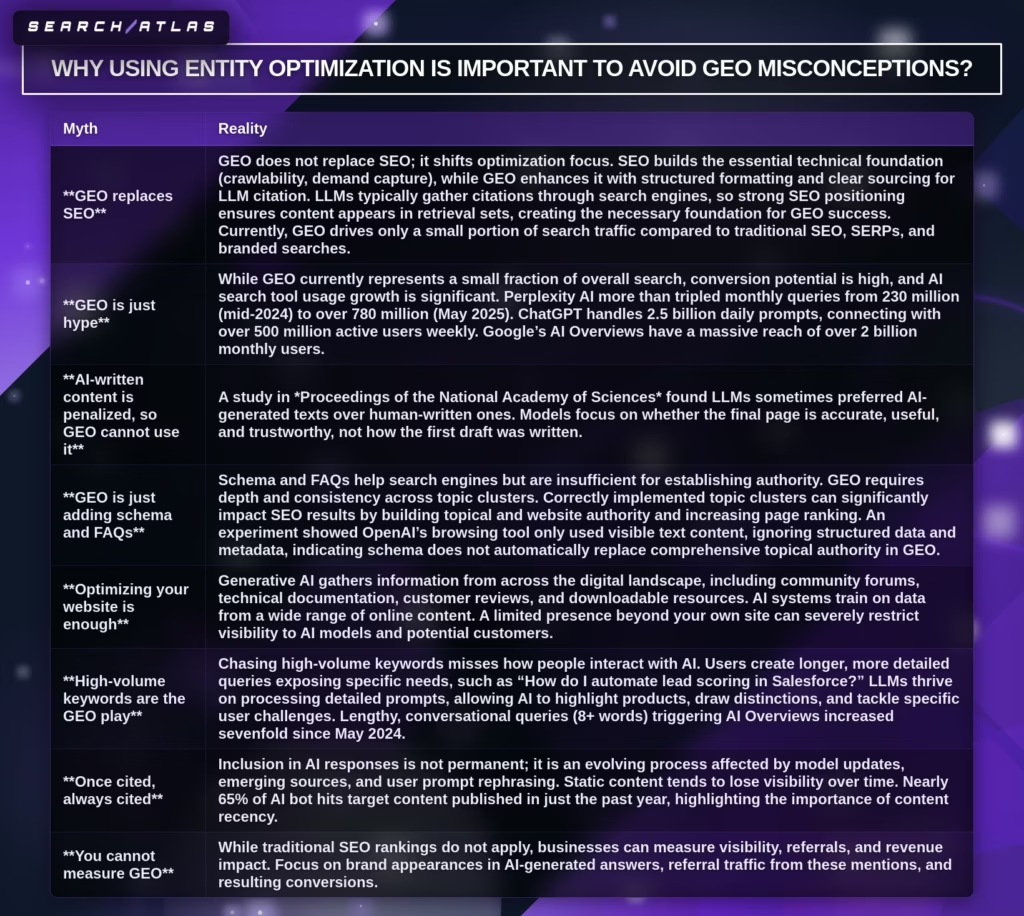
Using entity optimization is important to avoid Generative Engine Optimization (GEO) misconceptions because AI systems organize, retrieve, and validate information based on entities rather than keywords. Entity optimization refers to defining and reinforcing entities such as brands, people, products, and concepts with clear attributes and relationships. Generative Engine Optimization (GEO) depends on entity clarity to ensure accurate interpretation, correct attribution, and consistent representation in AI-generated answers.
How does Generative Engine Optimization shift from keywords to entities?
Generative Engine Optimization (GEO) shifts from keywords to entities because AI systems evaluate meaning through relationships between identifiable concepts. Search systems evolved through updates like Hummingbird, BERT, and MUM to prioritize semantic understanding. AI systems interpret queries by mapping entities and their relationships instead of matching exact keyword phrases.
What is the core purpose of entity optimization in GEO? The core purpose of entity optimization is to define what an entity is, what an entity does, and how an entity connects to other entities. Entity optimization ensures AI systems answer key identity questions about a brand or concept. Clear entity definition increases confidence in retrieval and citation decisions.
There are 3 primary functions of entity optimization in GEO. First, Entity definition, where content explains what the entity is with clear attributes and descriptions. Second, where entity relationships. Content connects the entity to related concepts, categories, and use cases. Third, Entity validation where external mentions and consistent data confirm the entity across multiple sources.
How do AI systems validate entities across the web? AI systems validate entities by analyzing consistent signals across multiple data sources and platforms. AI systems compare website content, structured data, business profiles, and third-party mentions. Consistent naming, descriptions, and positioning increase entity confidence and reduce ambiguity.
Why does inconsistent entity information create GEO misconceptions? Inconsistent entity information creates GEO misconceptions because conflicting signals reduce AI confidence in understanding and attribution. Variations in name, description, or positioning weaken entity recognition. Weak entity signals lead to omission or incorrect representation in AI-generated answers.
How does entity optimization improve AI visibility? Entity optimization improves AI visibility because clearly defined and validated entities increase citation probability in AI-generated responses. AI systems prioritize entities with strong contextual connections and verified signals. Strong entity presence ensures inclusion across AI answers, knowledge graphs, and zero-click results.
5. Leverage Structured Data (Schema)
Leveraging structured data is important to avoid Generative Engine Optimization (GEO) misconceptions because structured data defines entities, attributes, and relationships in a machine-readable format that AI systems use for accurate interpretation. Structured data refers to standardized markup formats that describe content using predefined vocabularies. Structured data improves how Large Language Models (LLMs) parse, validate, and retrieve information for AI-generated answers.
How does structured data improve AI visibility? Structured data improves AI visibility because machine-readable content increases accessibility and interpretation accuracy for AI systems. Pages with structured data are 36% more likely to appear in AI-generated summaries and 3 times more likely to receive citations. Websites without structured data risk losing up to 60% of visibility as AI-driven search expands.
How does structured data improve Large Language Model comprehension? Structured data improves Large Language Model comprehension because structured formats reduce ambiguity and provide explicit meaning. Research shows that LLM performance improves by up to 300% when using knowledge graph-grounded data. Structured data reduces processing complexity by using 2 to 5 times fewer tokens per entity, which increases parsing efficiency.
There are 3 primary functions of structured data in AI systems. The functions are listed below.
- Entity definition. Structured data declares entities with explicit attributes and identifiers.
- Relationship mapping. Structured data connects entities across concepts, categories, and data sources.
- Content classification. Structured data defines content types for accurate extraction and reuse.
What role does JSON-LD play in structured data implementation? JSON-LD plays a critical role because JSON-LD encodes semantic relationships directly within web content for machine interpretation. JSON-LD defines identity, roles, and relationships in a standardized format. This structure reduces ambiguity and increases confidence in AI retrieval and citation decisions.
What misconceptions exist about structured data in GEO? A common misconception is that structured data guarantees rankings or citations, which is incorrect because structured data improves clarity but does not create authority. Structured data enables eligibility for enhanced search features. Authority signals and content quality still determine whether content appears in AI-generated answers.
How does structured data increase trust in AI systems? Structured data increases trust because verifiable attributes allow AI systems to confirm accuracy and consistency across sources. Structured data defines authorship, ownership, and content purpose. Verified structure reduces uncertainty and improves confidence during answer generation.
How does structured data reduce AI misinterpretation risk? Structured data reduces misinterpretation risk because consistent definitions prevent conflicting interpretations across pages and platforms. Clear entity definitions and relationships ensure consistent understanding. AI systems rely on structured signals to avoid incorrect summaries or misattribution.
What role does technical SEO play in structured data effectiveness? Technical SEO strengthens structured data effectiveness because crawlability, indexing, and site performance ensure machine accessibility. Clean architecture, internal linking, and fast loading speed improve how structured data is processed. Technical issues reduce the impact of structured data even when markup exists.
What mistakes reduce the effectiveness of structured data? Structured data loses effectiveness when implementation errors create inconsistency or confusion for AI systems. Common issues include incorrect schema types, missing required properties, a mismatch between markup and visible content, and duplicated schema elements. Accurate implementation ensures reliable interpretation and maximum visibility.
6. Ensure Content Quality and Accuracy
Ensuring content quality and accuracy is important to avoid Generative Engine Optimization (GEO) misconceptions because AI systems prioritize factually accurate, clearly structured, and trustworthy information during retrieval and citation. Generative Engine Optimization (GEO) refers to content optimization for AI-driven discovery systems. Generative Engine Optimization (GEO) depends on high-quality information because low-quality information weakens trust signals, reduces citation probability, and spreads false assumptions about how AI search works.
Why does low-quality AI-generated content create GEO misconceptions? Low-quality AI-generated content creates GEO misconceptions because mass-produced content creates the false belief that scale matters more than accuracy. Unedited AI-generated pages often contain generic claims, weak structure, and factual errors. Search systems detect thin content with low information gain. Low-value content harms authority and reduces visibility in both traditional search and generative search.
Why does content quality matter more than content volume in GEO? Content quality matters more than content volume because one accurate and well-structured page creates more value than many generic pages. A well-researched article answers a real question with clear facts and relevant context. Generic pages do not rank well, do not get cited, and do not convert. Strategic quality creates durable authority over time.
There are 3 primary quality signals that strengthen GEO performance. The signals are listed below.
- Factual accuracy. Verified claims increase trust and reduce misinformation risk.
- Structural clarity. Clear sections and direct answers improve extraction accuracy.
- Source credibility. Expert input and reliable references strengthen authority signals.
Why is human review necessary for content quality and accuracy? Human review is necessary because AI-generated content does not verify facts, understand business context, or apply editorial judgment. Human experts fact-check claims, correct weak phrasing, and add real-world expertise. Human review aligns content with brand voice, audience needs, and search intent. Human oversight turns AI-generated drafts into trustworthy content.
How do quality and accuracy align with search algorithms and user intent? Quality and accuracy align with search algorithms and user intent because search systems prioritize helpful, relevant, and reliable answers. Helpful content updates and Experience, Expertise, Authoritativeness, and Trustworthiness signals reward pages that solve the user problem directly. AI systems do not cite content that misses the question or presents weak evidence.
What content characteristics do Large Language Models prefer? Large Language Models prefer content that is clear, citable, credible, and easy to extract. Large Language Models process content in chunks, which increases the value of short paragraphs, explicit headings, factual statements, and step-by-step explanations. Balanced tone, expert-backed claims, and consistent topic coverage strengthen citation-readiness.
Why does misinformation make content quality control essential? Misinformation makes content quality control essential because false information spreads quickly and weakens trust in digital content. Research shows that false headlines often spread widely, even when people say accuracy matters. Fact-checking reduces false beliefs across different countries and topics. Strong review processes reduce publishing risk and protect authority.
How do content teams maintain high-quality and accurate GEO content? Content teams maintain high-quality and accurate GEO content through prompt control, expert review, fact-checking, and regular updates. Prompt design shapes draft quality at the start. Editorial review improves clarity and removes errors. Regular updates preserve freshness for time-sensitive topics and keep content aligned with current search behavior.
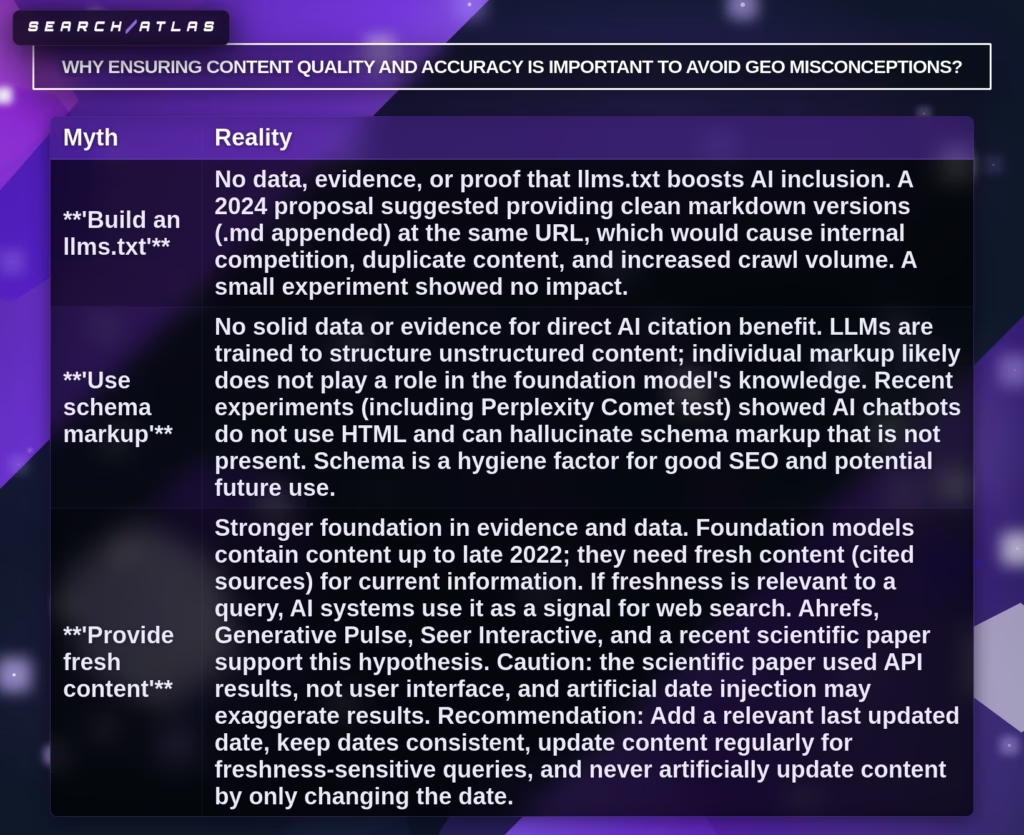
7. Target User Intent, Not Just Queries
Targeting user intent instead of only queries is important to avoid Generative Engine Optimization (GEO) misconceptions because search systems rank and cite content that solves the real user goal. User intent refers to the outcome a person wants from a search. Query wording shows the request, but user intent reveals the purpose behind the request.
How does intent mismatch affect search visibility? An intent mismatch lowers search visibility because weak engagement signals show that the page does not satisfy the search goal. High bounce rates and short dwell times reduce confidence in page relevance. Better-matched pages gain stronger engagement and stronger rankings.
How does intent mismatch reduce conversions? Intent mismatch reduces conversions because the page presents the wrong content for the decision stage. A tutorial query that lands on a sales page creates friction. A pricing query that lands on a definition page delays action and weakens commercial performance.
What makes user intent more important than query matching in GEO? User intent matters more than query matching in GEO because AI systems select answers that resolve the full question context. Generative Engine Optimization (GEO) prioritizes direct usefulness, factual clarity, and answer fit. AI systems do not cite content that misses the real need behind the query.
How does user intent extend beyond query classification? User intent extends beyond query classification because intent includes context, constraints, role, and decision maturity. Informational, commercial, transactional, and navigational labels describe broad intent types. Real content performance depends on what the person needs at that exact moment.
There are 4 primary intent signals that define content fit. The signals are listed below.
- Goal clarity. The page states the exact outcome the searcher wants.
- Context fit. The page matches urgency, industry, device, and expertise level.
- Proof level. The page provides the amount of evidence the searcher expects.
- Next-step logic. The page presents the right action for the decision stage.
How do explicit intent and implicit intent differ? Explicit intent states the visible request, while implicit intent reveals the unstated expectations behind the request. A query about CRM for SMEs states a software category. The same query often implies budget limits, fast rollout, and ease of use.
How should calls to action align with user intent? Calls to action must align with user intent because the wrong next step increases exits and lowers lead quality. Discovery-stage content needs education-first progression. Decision-stage content needs evaluation, pricing detail, or product action.
What content alignment issues weaken intent targeting? Content alignment issues weaken intent targeting because the format, message, or page type does not match the search goal. There are 4 common alignment issues. The issues are listed below.
- Evaluation queries reach definition pages. Add selection criteria, alternatives, and comparison blocks.
- Learning queries reach sales-led pages. Add an educational intro block or publish a guide page.
- Definition queries reach product pages. Build a dedicated educational page and connect both pages internally.
- Several pages target one need. Consolidate overlap and assign one dominant intent per page.
Why does intent targeting matter for both SEO and GEO? Intent targeting matters for both Search Engine Optimization (SEO) and Generative Engine Optimization (GEO) because both systems reward pages that satisfy the underlying goal. Search Engine Optimization (SEO) uses engagement and relevance signals. Generative Engine Optimization (GEO) uses extraction fit, authority, and answer usefulness. Both systems favor content that gives the exact answer the searcher needs.
Why Correcting GEO Myths Matters?
Correcting Generative Engine Optimization (GEO) myths matters because misinformation distorts optimization strategies, reduces content effectiveness, and leads to incorrect decisions in AI-driven search environments. Generative Engine Optimization (GEO) myths refer to false or oversimplified beliefs about how AI systems retrieve, evaluate, and cite content. Generative Engine Optimization (GEO) myths spread through repetition, misinterpretation of data, and lack of technical understanding, which creates persistent strategic errors.
Why do GEO myths spread and persist over time? GEO myths spread and persist because repeated exposure reinforces false beliefs even when the information lacks accuracy. Research on misinformation shows that repeated claims increase perceived truth, even when individuals value accuracy. Misinterpretation and inattention explain over 84% of false information sharing, which demonstrates how incorrect GEO advice continues to circulate across marketing communities.
How does misinformation impact GEO strategy and performance? Misinformation impacts Generative Engine Optimization (GEO) strategy because incorrect assumptions lead to ineffective optimization tactics and wasted resources. Strategies based on myths result in low-quality content, poor structure, and weak authority signals. Incorrect execution reduces visibility, prevents AI citation, and lowers return on investment.
There are 3 primary consequences of uncorrected GEO misconceptions. The consequences are listed below.
- Strategic inefficiency. Resources are allocated to tactics that do not influence AI retrieval or citation.
- Visibility loss. Content fails to appear in AI-generated answers due to weak signals.
- Authority erosion. Low-quality or inaccurate content reduces trust and credibility over time.
How does correcting GEO myths improve content quality and accuracy? Correcting Generative Engine Optimization (GEO) myths improves content quality because an accurate understanding aligns content with real AI retrieval mechanisms. A clear understanding shifts focus toward factual accuracy, structured content, and authority signals. Correct strategy increases citation probability and strengthens long-term visibility.
How does correcting GEO myths align with scientific and data-driven approaches? Correcting Generative Engine Optimization (GEO) myths aligns with scientific thinking because validated evidence replaces assumptions and untested beliefs. Data-driven analysis, similar to phylogenetic methods in myth studies, applies structured evaluation and verification. Evidence-based optimization reduces reliance on intuition and improves consistency in results.
Why is correcting GEO myths critical for long-term digital strategy? Correcting Generative Engine Optimization (GEO) myths is critical because long-term success depends on an accurate understanding of how AI systems evolve and evaluate information. AI search systems continuously update retrieval and citation mechanisms. Accurate knowledge enables adaptation, while myths create rigid and outdated strategies that fail over time.
What Are the Risks of Following Bad GEO Advice?
The risks of following bad Generative Engine Optimization (GEO) advice include unstable visibility, reduced AI inclusion, and incorrect brand representation in AI-generated answers. Bad Generative Engine Optimization (GEO) advice refers to inaccurate or misleading strategies that do not align with how AI systems retrieve and cite information. Bad Generative Engine Optimization (GEO) advice creates inconsistent performance, weak authority signals, and long-term visibility loss.
There are 3 primary risks of following bad Generative Engine Optimization (GEO) advice. The risks are listed below.
- Traffic volatility.
- AI inclusion loss.
- Brand misrepresentation.
1. Traffic volatility
Traffic volatility is a risk of following bad Generative Engine Optimization (GEO) advice because incorrect strategies create unstable visibility and unpredictable traffic patterns across search and AI systems. Traffic volatility refers to rapid fluctuations in website traffic caused by inconsistent performance in search rankings and AI citations. Generative Engine Optimization (GEO) depends on stable signals like authority, clarity, and trust, which bad advice fails to establish.
Why does bad GEO advice create unstable traffic patterns? Bad Generative Engine Optimization (GEO) advice creates unstable traffic because weak optimization signals fail to maintain consistent inclusion in AI-generated answers. AI systems update outputs frequently and re-evaluate sources continuously. Weak content quality, poor structure, and low authority lead to frequent inclusion and exclusion cycles.
How do AI system changes amplify traffic volatility? AI system changes amplify traffic volatility because citation sources shift frequently based on relevance, clarity, and trust signals. Research shows that 40% to 60% of cited sources change monthly, which creates constant competition for visibility. Content without stable authority signals loses position during these shifts.
There are 3 primary causes of traffic volatility in GEO. The causes are listed below.
- Weak authority signals. Low credibility reduces consistent citation probability.
- Poor content structure. Unclear formatting reduces extraction and reuse.
- Inaccurate information. Incorrect facts reduce trust and remove content from AI answers.
What financial risks result from traffic volatility? Traffic volatility creates financial risk because unstable visibility reduces predictable traffic and revenue streams. Case studies show traffic dropping from 8 million visits per month to 0.3 million, which demonstrates severe visibility loss. Some publishers report up to 90% traffic decline, which leads to significant revenue impact and recovery costs.
How does traffic volatility create long-term strategic risk? Traffic volatility creates long-term strategic risk because reactive adjustments replace a consistent optimization strategy. Businesses enter recovery cycles that require audits, rewrites, and technical fixes. Recovery efforts increase costs and reduce competitive advantage while stable competitors gain visibility.
2. AI Inclusion Loss
AI inclusion loss is a risk of following bad Generative Engine Optimization (GEO) advice because weak signals prevent content from being selected, cited, and included in AI-generated answers. AI inclusion loss refers to the absence of a brand or content within AI responses, summaries, and citations. Generative Engine Optimization (GEO) requires strong authority, structure, and clarity signals for consistent inclusion.
Why does bad GEO advice lead to AI inclusion loss? Bad Generative Engine Optimization (GEO) advice leads to AI inclusion loss because incorrect strategies fail to meet retrieval and citation requirements. AI systems evaluate content based on clarity, credibility, and relevance. Content based on myths like keyword stuffing or volume-first publishing lacks the signals required for inclusion.
How does weak content representation reduce AI inclusion? Weak content representation reduces AI inclusion because incomplete or low-quality signals lower confidence in content selection. AI systems rely on consistent and well-defined data patterns. Research in AI systems shows that limited or unrepresentative data leads to exclusion and reduced performance across outputs.
There are 3 primary causes of AI inclusion loss in GEO. The causes are listed below.
- Low authority signals. Lack of expertise and trust reduces citation probability.
- Poor entity definition. अस्पष्ट or inconsistent entity signals reduce recognition.
- Weak structural clarity. Unstructured content reduces extraction accuracy.
How does AI inclusion loss impact visibility and performance? AI inclusion loss impacts visibility because content that is not cited does not appear in AI-generated answers or summaries. AI-driven search reduces reliance on traditional clicks. Absence from AI answers removes a major discovery channel and reduces brand exposure.
How does AI inclusion loss create long-term risk? AI inclusion loss creates long-term risk because repeated exclusion weakens authority signals and reduces future inclusion probability. AI systems reinforce trusted sources over time. Content that remains excluded loses competitive positioning while authoritative competitors gain consistent visibility.
3. Brand Misrepresentation
Brand misrepresentation is a risk of following bad Generative Engine Optimization (GEO) advice because inaccurate, inconsistent, or unclear signals cause AI systems to generate incorrect descriptions about a brand. Brand misrepresentation refers to situations where AI systems present false, outdated, or misleading information about a company, product, or service. Generative Engine Optimization (GEO) requires precise entity definition, factual accuracy, and consistent signals to ensure correct representation.
Why does bad GEO advice lead to brand misrepresentation? Bad Generative Engine Optimization (GEO) advice leads to brand misrepresentation because weak content signals force AI systems to rely on incomplete or incorrect data. AI systems synthesize answers from multiple sources. Missing, inconsistent, or low-quality inputs increase the probability of incorrect outputs.
How does AI information dissemination amplify brand misrepresentation? AI information dissemination amplifies brand misrepresentation because one incorrect statement scales across many user interactions without verification. Nearly 50% of consumers use AI for decision-making, which increases reliance on AI-generated summaries. Zero-click behavior removes source verification, which allows incorrect information to spread without correction.
There are 3 primary causes of brand misrepresentation in GEO. The causes are listed below.
- Inconsistent entity signals. Conflicting descriptions across platforms reduce accuracy.
- Low factual accuracy. Incorrect or outdated information introduces false claims.
- Weak authority signals. Lack of credibility increases reliance on unreliable sources.
How does brand misrepresentation impact business performance? Brand misrepresentation impacts business performance because incorrect information damages trust, disrupts decision-making, and reduces conversions. Incorrect AI statements about pricing, features, or reputation influence buyer perception early in the decision process. Misrepresentation block deals before direct interaction occurs.
How does brand misrepresentation create legal and reputational risk? Brand misrepresentation creates legal and reputational risk because false or misleading information violates regulations and reduces brand trust. AI-generated misinformation triggers compliance issues, customer complaints, and reputational damage. Loss of trust reduces long-term brand equity and market positioning.
How do disinformation and manipulation increase brand misrepresentation risk? Disinformation and manipulation increase brand misrepresentation risk because AI systems amplify false narratives generated by coordinated campaigns. Fake engagement signals, manipulated content, and synthetic media introduce misleading narratives. Research shows 63% of people struggle to verify information credibility, which increases vulnerability to incorrect brand perception.
Why is preventing brand misrepresentation critical in GEO? Preventing brand misrepresentation is critical because AI systems shape perception at scale and influence decisions before direct brand interaction. Strong entity clarity, factual accuracy, and consistent signals ensure correct representation. Accurate representation increases trust, improves conversions, and protects long-term brand authority.
Do AI Engines Prefer Concise Answers Over Long-Form Content?
Yes, AI engines prefer concise answers because AI engines extract short, self-contained responses that directly match user queries. AI engines refer to systems that retrieve and generate answers using Large Language Models (LLMs). AI engines prioritize concise answer blocks because concise content improves parsing, extraction, and response generation.
Why do AI engines prioritize concise answers? AI engines prioritize concise answers because short responses are easier to interpret and assemble into generated outputs. AI systems retrieve content from multiple sources and combine relevant fragments. Short, direct answers increase clarity and reduce processing complexity.
How do AI engines use long-form content? AI engines use long-form content as a source of context while extracting concise segments for final answers. Long-form content provides depth, authority, and supporting information. AI systems scan long pages and select the most relevant passages that answer the query directly.
Why do users perceive AI content as overly long? Users perceive AI content as overly long because AI-generated text often includes unnecessary expansion and filler language. Language models generate complete explanations based on probability patterns. This behavior creates longer responses even when shorter answers would satisfy the query.
Should Brands Prioritize GEO Over SEO?
No, brands should not prioritize Generative Engine Optimization (GEO) over Search Engine Optimization (SEO) because both methods serve different roles in search visibility. Search Engine Optimization (SEO) drives rankings, traffic, and conversions through traditional search engines. Generative Engine Optimization (GEO) drives citations, mentions, and visibility inside AI-generated answers.
Why does Search Engine Optimization remain critical? Search Engine Optimization (SEO) remains critical because traditional search still drives a large share of traffic and conversions. About 30% to 40% of traffic originates from traditional search. Google processes around 14 billion searches per day, which shows the scale of search demand.
Why is Generative Engine Optimization necessary alongside SEO? Generative Engine Optimization (GEO) is necessary because AI-driven search changes how users discover and consume information. Between 30% and 50% of search results include AI Overviews, which shifts visibility from clicks to answers. Many searches end without a click, which increases the importance of citation visibility.
What strategy delivers the best results? An integrated SEO and GEO strategy delivers the best results because both channels capture different types of visibility. SEO ensures discoverability in search results. GEO ensures presence inside AI-generated answers and summaries.
Will GEO Become More Important Than SEO?
No, Generative Engine Optimization (GEO) will not fully replace Search Engine Optimization (SEO) because both systems operate together in modern search ecosystems. Generative Engine Optimization (GEO) expands visibility into AI-generated answers. Search Engine Optimization (SEO) maintains traffic acquisition and conversion pathways.
Why does GEO increase in importance? Generative Engine Optimization (GEO) increases in importance because AI-driven discovery continues to grow across platforms. AI-referred users convert at 4.4 times higher rates than traditional organic traffic. AI visibility creates high-intent exposure without requiring clicks.
Why does SEO remain essential despite GEO growth? Search Engine Optimization (SEO) remains essential because traditional search still controls the majority of search demand and traffic flow. Businesses relying only on SEO capture about 60% to 70% of total visibility, which shows the gap that GEO fills rather than replaces.
What is the future of SEO and GEO together? The future of search optimization combines SEO and GEO into a unified strategy that maximizes total visibility across search and AI systems. Over 70% of SEO best practices remain effective for GEO, which shows a strong overlap. Businesses that integrate both approaches gain higher visibility, stronger authority, and better conversion outcomes.