AI-generated content ranks in Google when the content meets Google quality standards and satisfies search intent. Large-scale SERP analysis shows that AI-generated content appears in top Google ranking positions at rates similar to human-written content, with about 57% of AI text and 58% of human text appearing in the top ten search results. Around 19% of top-ranking pages consist primarily of AI-generated content, while 86.5% of top-ranking pages contain some level of AI-generated content, demonstrating that AI content Google ranking performance depends on content quality rather than production method.
Google ranking systems evaluate content through quality signals such as E-E-A-T, originality, and usefulness, not through the detection of AI usage. Google algorithm updates target low-value content that shows scaled content abuse, little effort, little originality, and little added value. The March 2024 core update reduced visibility of low-quality automated pages while continuing to reward high-quality AI-assisted content that demonstrates expertise and clear user benefit.
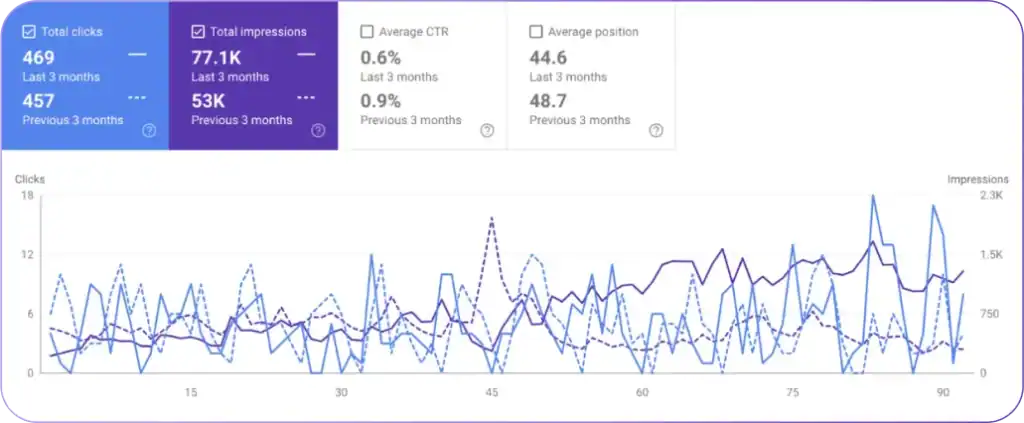
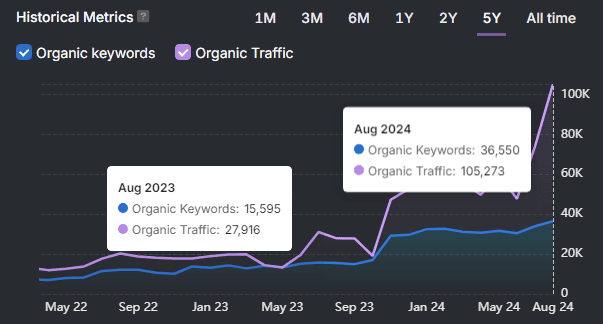
Industry data shows measurable performance from AI-assisted publishing strategies. About 39% of marketers report increased organic traffic after publishing AI-generated content, while 33% report stronger ranking performance compared with human-written content. Most successful publishing workflows combine automation with editorial expertise, where AI produces structured drafts and human editors refine the material for accuracy, originality, and brand alignment. Human-reviewed AI-assisted content has produced high-visibility results, including experiments generating more than 555,000 impressions and over 2,300 clicks while achieving top-10 Google ranking positions.
Google Search Quality Rater Guidelines updated in January 2025 instruct evaluators to assign the lowest quality rating to pages where most main content consists of AI-generated text without added value. AI detection technology has also improved, with modern tools identifying automated text patterns with high accuracy. At the same time, search features such as AI Overviews prioritize high-quality sources that demonstrate E-E-A-T, with about 52% of cited sources originating from top-10 search results. Strong technical SEO, topical authority, and high-quality backlinks remain critical signals for both Google ranking and AI citation visibility.
What is AI-Generated Content?
AI-generated content is digital material produced through artificial intelligence content creation systems that use machine learning models to generate text, images, audio, video, or code. AI-generated content forms a category of automated media output created by algorithms trained on large datasets that learn language patterns, semantic relationships, and contextual structure to produce new content that resembles human communication. In search and publishing environments, AI-generated content typically refers to written material created by large language models used for research summaries, articles, product descriptions, and marketing copy.
What does the term AI content mean in artificial intelligence content creation? AI content refers to any media output generated by artificial intelligence systems during the process of automated content creation. Artificial intelligence content creation uses natural language processing, deep learning models, and transformer-based architectures to generate structured information based on prompts or input instructions. Common formats of AI-generated content include blog posts, landing pages, product descriptions, social media posts, scripts, images, voice narration, and video assets.
How does artificial intelligence generate content? Artificial intelligence generates content by analyzing patterns in training data and predicting the most probable sequence of words, images, or signals based on the input context. Modern AI-generated content systems rely on large language models and generative algorithms that process tokens, semantic relationships, and contextual signals to construct coherent outputs. These systems do not reproduce existing documents directly. They generate new content based on learned representations of language and knowledge patterns.
What Is Google’s Official Policy on AI-Generated Content?
Google AI content policy defines a quality-first evaluation model where Google ranking systems reward helpful, reliable content regardless of whether a human or an AI system produces the material. Google Search Central states that “Our focus is on the quality of content, rather than how content is produced,” which establishes that AI-generated content does not receive automatic penalties when it delivers useful, accurate, and people-first information. The Google stance on AI content evaluates usefulness, relevance, and credibility rather than the production method.
Does Google penalize AI content automatically? Google does not penalize AI-generated content solely because artificial intelligence creates the content. Google ranking systems evaluate whether the content provides value to users and follows Google’s helpful, reliable, people-first content guidelines. AI-generated pages rank when the content demonstrates originality, accuracy, and strong E-E-A-T signals, while low-quality pages lose visibility when they fail to meet quality standards.
What type of AI content violates Google search policies? AI-generated content violates Google’s spam policies when automation generates content primarily to manipulate search rankings rather than help users. Google defines this practice as scaled content abuse, which includes producing large volumes of low-effort pages with little originality or added value. Content created through automation that repeats existing information, lacks expertise, or exists only to capture search traffic falls under spam policy violations.
How does Google detect low-quality automated content? Google detection systems analyze patterns that indicate large-scale automated content production. SpamBrain, a machine learning system used in Google search ranking systems, identifies spam signals such as repetitive structures, low informational depth, and coordinated content networks. SpamBrain continuously updates detection patterns to reduce visibility of manipulative automation while preserving visibility for high-quality AI-assisted content.
What role do quality guidelines play in Google AI content evaluation? Google Search Quality Rater Guidelines instruct evaluators to assign the lowest quality rating to pages where most main content consists of AI-generated text without effort, originality, or added value. This guidance reinforces the Google stance on AI content as quality-driven rather than origin-driven. Pages that demonstrate expertise, trustworthy sources, and meaningful user value align with Google AI content policy and remain eligible for ranking in organic search.
Has Google’s Policy on AI-Generated Content Changed in 2026?
No, Google’s policy on AI-generated content remains consistent in 2026 and continues to follow a quality-first evaluation model rather than an origin-first model. Google ranking systems evaluate usefulness, originality, and trust signals regardless of whether artificial intelligence or human authors produce the content. Official guidance continues to state that appropriate use of automation, or AI, does not violate search guidelines when the content exists to help users rather than manipulate rankings.
What policy updates affected AI-generated content evaluation in recent Google guidelines? The January 2025 Google Search Quality Rater Guidelines update strengthened the evaluation of low-effort AI-generated pages. Quality raters receive instructions to assign the lowest quality rating when most of the main content on a page consists of AI-generated material with little effort, little originality, or little added value for users. This update clarifies that low-quality automated pages violate Google quality standards while high-quality AI-assisted content remains eligible for ranking.
What remains the core principle of Google’s stance on AI-generated content? Google’s stance on AI-generated content focuses on intent and quality rather than detection of automation. Google systems target scaled content abuse, which involves generating large volumes of pages designed primarily to manipulate search rankings. Pages that demonstrate expertise, accurate information, and meaningful user value remain eligible to rank even when artificial intelligence produces the text.
Can Google Detect AI-Generated Content?
Yes. Google systems detect patterns associated with automated content creation through machine learning analysis and spam detection systems. Google ranking systems analyze signals such as repetitive phrasing, shallow topical coverage, missing real-world experience, and large-scale automated publishing patterns that indicate low-quality AI-generated content. Google Search quality teams continuously develop ranking solutions that identify automated content networks and reduce the visibility of pages that rely on low-effort automation.
What evidence shows Google’s detection of AI-generated content in search results? Search updates and manual actions demonstrate that Google identifies and removes low-quality automated content at scale. During enforcement actions connected to major search updates, Google issued manual actions against more than 1,400 websites, and analysis of deindexed domains showed that a large portion of those sites relied heavily on AI-generated pages. Some domains contained extremely high levels of automation, with more than 95% of content produced through AI systems, which led to removal from search results.
Does detection of AI-generated content lead to automatic penalties? Detection alone does not trigger penalties because Google ranking systems evaluate quality and usefulness rather than authorship. Google guidelines state that appropriate use of automation or artificial intelligence does not violate search policies when content provides helpful, relevant information for users. Ranking penalties occur only when content becomes spammy, manipulative, or low value, regardless of whether artificial intelligence or human writers produce the material.
Can AI Content Rank in Google?
AI-generated content can rank in Google when it meets the same quality standards applied to any other page in search results. Evidence from multiple SERP analyses shows that AI content SEO performance depends on whether the page delivers helpful, original, and trustworthy information aligned with search intent. Google ranking systems evaluate usefulness, topical depth, E-E-A-T signals, and user satisfaction rather than the production method. As a result, the answer to can AI content rank on Google is a conditional yes. AI content ranks when it provides genuine user value and fails when it exists primarily to manipulate rankings or publish low-effort pages.
The ability of AI content to rank depends on several ranking conditions that determine whether automated writing meets Google quality expectations. These conditions include content quality and helpfulness, E-E-A-T signals, originality and human expertise, avoidance of scaled content abuse, human editorial oversight, and proper optimization for search. Each factor directly influences whether AI-generated pages satisfy Google ranking systems and maintain long-term search visibility.
1. Quality and Helpfulness
Quality and helpfulness determine whether AI-generated content ranks in Google because Google ranking systems prioritize useful information that satisfies search intent. Google evaluates whether content answers the query clearly, demonstrates topical depth, and delivers meaningful guidance rather than generic summaries. Thin or repetitive AI text often fails because it lacks practical detail, real examples, or structured explanations that help users solve problems.
Content creators improve AI content SEO performance by structuring articles around real user questions, adding actionable steps, and expanding coverage beyond basic definitions. Methods include expanding topic coverage with examples, original explanations, or supporting data, ensuring that AI drafts become comprehensive resources rather than generic summaries.
2. E-E-A-T Signals
E-E-A-T signals influence whether AI-generated content ranks because Google evaluates experience, expertise, authoritativeness, and trustworthiness as indicators of content reliability. AI-generated pages perform better when they demonstrate subject knowledge, cite reliable sources, and show evidence of real expertise behind the information.
Content teams strengthen E-E-A-T signals by adding author information, referencing credible sources, linking to research or primary data, and publishing consistent topical coverage. These signals help Google interpret the credibility of AI-assisted content and determine whether the information deserves visibility in search results.
3. Originality and Human Expertise
Originality and human expertise determine whether AI content ranks because search systems reward content that adds new insights rather than repeating existing information. AI-generated text often reproduces widely known ideas unless human experts introduce real examples, unique analysis, or first-hand observations.
Writers improve originality by expanding AI drafts with industry insights, case examples, original frameworks, or practical experience that AI models cannot generate independently. This human contribution transforms automated text into authoritative content that satisfies Google quality standards.
4. Avoiding Scaled Content Abuse
Avoiding scaled content abuse determines whether AI-generated content ranks because Google spam policies target mass-produced pages created with little effort or originality. Automated publishing systems that generate hundreds of thin pages often trigger ranking suppression because they prioritize volume instead of user value.
Effective AI publishing strategies focus on selective production rather than mass automation. Content teams limit automation to research or drafting while maintaining editorial review, ensuring each page provides meaningful depth and does not exist solely to manipulate search rankings.
5. Human Editorial Oversight
Human editorial oversight determines whether AI-generated content ranks because manual review ensures accuracy, credibility, and alignment with search intent. AI tools generate drafts quickly but frequently require corrections, clarification, and additional context before publication.
Editorial workflows improve AI content quality through fact verification, rewriting unclear passages, adding supporting evidence, and aligning the article with user intent. This process transforms AI output into reliable content that satisfies Google ranking expectations.
6. Optimization for Search
Search optimization influences whether AI-generated content ranks because Google still evaluates traditional SEO signals alongside content quality. Pages that match search intent, use structured headings, include relevant entities, and follow clear topical organization perform better in search results.
AI-assisted content performs best when optimization occurs during the editing stage. Editors refine headings, improve semantic structure, integrate relevant keywords naturally, and strengthen internal linking. These actions help Google interpret the topic clearly and connect the content to relevant search queries.
When Does AI-Generated Content Fail to Rank on Google?
AI-generated content fails to rank on Google when the content shows documented failure patterns that trigger ranking loss, manual actions, weak indexing, or deindexation. AI content ranking failure occurs when pages lack originality, accuracy, user value, or supporting authority signals. Google systems do not demote pages because artificial intelligence produced the text. Google systems demote pages because the content appears thin, misleading, scaled for manipulation, or unsupported by technical SEO and credibility signals.
Why AI content does not rank usually comes down to 4 recurring failure conditions that appear across Google spam guidance, quality evaluations, and search performance data. These failure conditions include generic, thin, or repetitive output; factual inaccuracies and hallucinations; publishing at scale without added value; and missing technical SEO and authority signals. Each condition increases the risk of AI content Google penalty outcomes, weak crawl performance, ranking decline, or complete loss of search visibility.
1. Generic, Thin, or Repetitive Output
Generic, thin, or repetitive output causes AI-generated content to fail on Google because the page adds little originality, little depth, and little practical value beyond existing results. Pages built from broad summaries, repeated phrasing, obvious advice, or near-duplicate topic coverage often fail to satisfy search intent. This pattern creates weak engagement, poor differentiation, and low perceived usefulness, which directly contributes to AI content ranking failure.
The fix is to rewrite thin AI drafts around specific user intent, original examples, and deeper topical coverage before publication. Editors need to cut repetitive filler, add concrete examples, introduce stronger structure, and replace generic wording with real insight. Content needs clear informational gain, not paraphrased sameness.
2. Factual Inaccuracies and Hallucinations
Factual inaccuracies and hallucinations cause AI-generated content to fail on Google because false claims weaken trust, reduce usefulness, and damage content reliability. AI systems often produce plausible but incorrect statements, outdated facts, invented numbers, or unsupported citations. These errors become especially damaging on health, finance, legal, and other high-trust topics where Google applies stronger reliability expectations.
The fix is to fact-check every AI-generated claim against primary sources, trusted references, and current evidence before indexing the page. Teams need to verify statistics, quotes, definitions, dates, and source support line by line. AI drafts need editorial validation, not light proofreading.
3. Publishing at Scale Without Value
Publishing AI content at scale without added value causes Google penalties because scaled automation without originality aligns with spam and quality-abuse patterns. Large batches of pages that repackage existing results, target overlapping keywords, or exist mainly to capture search traffic often trigger ranking loss, crawl inefficiency, or site-wide trust decline. This is one of the clearest answers to why AI content does not rank after an initial traffic spike.
The fix is to reduce publishing volume, raise editorial thresholds, and require unique value on every URL before release. Each page needs a distinct purpose, unique evidence, and a clear benefit to the user. Scaling content only works when scaling usefulness at the same time.
4. Missing Technical SEO and Authority Signals
Missing technical SEO and authority signals cause AI-generated content to fail because Google cannot rank pages well when the content lacks crawlability, structure, trust, or supporting authority. Even strong AI-assisted writing underperforms when pages have weak indexing signals, poor internal linking, missing schema, weak page structure, or no external authority support. AI-generated content also struggles when the domain lacks trust signals such as backlinks, expert attribution, and strong topical context.
The fix is to pair AI-assisted content with technical SEO controls and authority-building signals before expecting rankings. Pages need clean indexing paths, strong heading hierarchy, internal links, metadata, and source-backed credibility. Rankable AI content needs both content quality and search infrastructure.
How to Make AI-Generated Content Rank on Google?
Making AI-generated content rank on Google requires a structured ranking workflow that transforms raw AI output into high-quality, search-compliant content. This workflow functions as an AI content SEO strategy that combines search intent research, human expertise, technical optimization, and authority signals. Raw AI drafts rarely meet Google quality expectations without revision because Google ranking systems evaluate originality, accuracy, usefulness, and trust rather than production method.
The ranking workflow for AI content consists of 6 steps that convert automated drafts into Google-compliant, E-E-A-T-rich pages. These steps explain how to rank AI content through a repeatable SEO process that improves relevance, credibility, and search visibility.
The 6 steps are to start with a SERP-informed brief, add human SME review and fact-checking, inject original data and brand insights, optimize structure for search intent, build topical authority around the page, and monitor, update, and iterate.
1. Start with SERP-Informed Brief
A SERP-informed brief is a search-driven content plan built from analysis of top-ranking Google results for a target query. AI-generated content performs better when content creation starts from search intent, topic coverage, and structural patterns already visible in the SERP. This approach aligns the page with real search demand instead of generating broad text from a generic prompt.
Analyze the first page of Google results before writing. Identify common subtopics, question patterns, heading structure, and entity coverage across ranking pages. Build the outline from that evidence, then use AI to draft within the boundaries of the brief.
2. Add Human SME Review and Fact-Checking
Human subject matter expert (SME) review improves AI-generated content by validating claims, strengthening expertise signals, and correcting factual errors. AI systems generate language through prediction, not verification, which means drafts often contain inaccuracies, shallow explanations, or unsupported statements. Human review improves trustworthiness and raises content quality to a publishable standard.
Verify every statistic, source, claim, and definition before publication. Replace weak explanations with expert clarification, remove unsupported statements, and refine sections that require real-world knowledge. Add expertise where AI output sounds generic or uncertain.
3. Inject Original Data and Brand Insights
Original data and brand insights improve AI-generated content because Google rewards pages that add information not already repeated across existing results. AI output often summarizes common knowledge, which limits differentiation. Original evidence gives the page unique value and increases the chance of stronger rankings.
Add proprietary research, internal data, customer outcomes, unique frameworks, case examples, or expert observations into the draft. Replace generic summaries with evidence that only the brand, team, or subject expert can provide. This increases information gain and makes the page more distinct.
4. Optimize Structure for Search Intent
Search intent optimization improves AI-generated content by matching the page structure to the reason behind the query. Google ranking systems evaluate whether the article answers the question clearly, completely, and in the format users expect. AI drafts often need restructuring to improve readability and query alignment.
Use clear H2 and H3 headings, short paragraphs, and direct answers near the start of each section. Organize the article around the main query and its supporting subtopics. Place definitions, comparisons, steps, or explanations in the format that best matches the target intent.
5. Build Topical Authority Around the Page
Topical authority improves AI-generated content ranking because Google evaluates subject depth across connected pages, not only within a single URL. A page supported by related content demonstrates stronger expertise than an isolated article. This broader context increases relevance and strengthens ranking potential.
Publish supporting pages around the same subject, including definitions, comparisons, use cases, and advanced subtopics. Connect those pages through contextual internal links. Build a topic cluster that shows complete coverage rather than a single disconnected page.
6. Monitor, Update, and Iterate
Monitoring, updating, and iterating improve AI-generated content ranking because search performance changes over time. Rankings shift as competitors improve content, algorithms change, and user expectations evolve. Static AI-generated pages often lose visibility when they remain outdated or underdeveloped.
Track rankings, impressions, click behavior, and engagement metrics after publication. Update outdated sections, improve weak passages, expand missing information, and refine structure based on performance data. Continuous revision turns AI-generated content into a stronger long-term search asset.
How to Use AI Content Writing Tools to Rank in Google?
AI content writing tools help rank content in Google when the tools support structured research, search intent alignment, and editorial quality improvements rather than mass automation. AI writing systems generate drafts, outlines, and topic coverage quickly, but ranking performance depends on how the tool integrates SEO signals such as keyword intent, entity coverage, and structured content generation. Google ranking systems evaluate usefulness, originality, and credibility regardless of whether the draft originates from artificial intelligence or human writing.
Effective use of AI content writing tools follows a structured workflow that combines AI drafting with SEO optimization and human review. Writers begin by generating outlines informed by search intent and SERP analysis, then expand those outlines into structured content using AI assistance. After generation, editors refine the draft to improve clarity, factual accuracy, and topical completeness. This process transforms automated output into content that satisfies Google’s helpful content standards and strengthens E-E-A-T signals.
Modern AI writing platforms integrate SEO analysis directly into the drafting workflow. Tools such as the Search Atlas Content Genius Tool analyze search intent, extract topical entities from ranking pages, recommend headings and semantic terms, and guide the structure of the article before generation begins. This workflow prevents common problems in AI-generated text, such as thin coverage, repetitive phrasing, or missing subtopics.
AI tools like the Search Atlas Content Genius Tool accelerate research, outlines, and first drafts, while human editing strengthens insight, originality, and expertise. Content that combines AI efficiency with editorial oversight consistently performs better in search results than fully automated output, which often lacks depth, differentiation, and credibility signals required for strong Google rankings.
How Does AI-Generated Content Perform on Google Compared to Human-Written Content?
AI-generated content and human-written content both appear in Google search results, but performance differences depend primarily on content quality rather than authorship. Google ranking systems evaluate usefulness, originality, and E-E-A-T signals instead of whether a human or AI wrote the article. Studies analyzing large datasets show similar ranking potential, with 57% of AI articles and 58% of human-written articles appearing in the top 10 Google results, indicating near-parity in ranking capability.
How common is AI-generated content in search results today? AI-generated content has rapidly increased across the web and now represents a substantial portion of published articles. After the launch of ChatGPT in November 2022, AI-written articles grew quickly and surpassed human-written articles in volume by late 2024. Research estimates that AI-assisted or AI-generated content accounts for a significant share of online publishing, though growth stabilized around mid-2024 as publishers shifted toward hybrid human-AI workflows.
Does Google penalize AI-generated content compared to human-written content? Google does not penalize AI-generated content solely because artificial intelligence produced it. Google Search Central states that ranking systems prioritize “helpful, reliable, people-first content” regardless of how the content is created. Penalties occur only when automation produces scaled content abuse, such as large volumes of low-effort or manipulative pages designed primarily to influence rankings.
How does AI-generated content perform in keyword rankings and organic traffic? AI-generated content can rank in Google, but performance varies depending on editing and originality. A Semrush analysis found that 57% of AI-generated pages appeared in top-10 rankings, compared with 58% of human-written pages, indicating a minimal difference in raw ranking ability. However, some controlled experiments found AI-only content ranked lower in many test cases because generic drafts often lack depth, originality, or strong E-E-A-T signals.
How does user engagement differ between AI-generated and human-written content? User engagement metrics often favor human-written content because human authors provide storytelling, experience, and nuanced explanations. Pages written entirely by AI without editorial improvement frequently show higher bounce rates and shorter time on page due to repetitive phrasing or shallow explanations. Hybrid AI-assisted content, where humans refine drafts, often improves engagement metrics such as time on page and scroll depth.
How do conversion rates compare between AI-generated and human-written content? Conversion performance varies depending on the use case and editing quality. Studies show human-written sales copy converts slightly better, such as a LinkedIn analysis where human copy produced a 2.5% conversion rate compared with 2.1% for AI copy. Poorly edited AI content may reduce trust and harm conversions, while optimized AI-assisted pages can improve marketing efficiency and increase revenue when combined with human review.
When is AI-generated content more effective than human-written content? AI-generated content performs well for scalable informational topics where speed and structured answers matter more than storytelling. Examples include glossary definitions, technical summaries, product specifications, and structured knowledge pages. In these cases AI helps generate large volumes of structured informational content efficiently while maintaining acceptable search performance.
When does human-written content outperform AI-generated content?
Human-written content performs better when originality, expertise, and storytelling significantly influence user trust and engagement. Industries such as healthcare, finance, legal services, and technical analysis benefit from human expertise because these topics require precise knowledge and credible sources. Human authors also excel in opinion pieces, thought leadership, and complex narratives that require subjective interpretation.
Why does hybrid AI-assisted content often perform best in search results? Hybrid content combines AI efficiency with human expertise, which improves quality while maintaining production speed. Many marketers now use AI to generate outlines, research summaries, or first drafts, then apply human editing to refine clarity, accuracy, and insight. This hybrid approach allows publishers to scale content while maintaining the originality and credibility required for strong search rankings.
What are the advantages and disadvantages of AI-generated content for SEO? AI-generated content offers advantages in speed, scalability, and cost efficiency, allowing publishers to create large volumes of informational content quickly. However, unedited AI output often suffers from generic tone, factual errors, and repetitive structure, which weakens long-term ranking performance. Understanding the [Pros and Cons of AI content] helps organizations determine when automation improves SEO efficiency and when human expertise remains necessary.
What is the Future of AI-Generated Content in Google Search?
The future of AI-generated content in Google Search centers on AI-assisted publishing combined with stronger quality evaluation systems and generative search interfaces. Google increasingly integrates artificial intelligence into search experiences through technologies such as AI Overviews, AI Mode, and generative query processing, which change how users discover and consume content.
AI Overviews represent one of the most significant changes to Google Search in decades. These AI-generated summaries appear at the top of search results and already reach more than 1.5 billion users monthly across over 200 countries. Studies show AI Overviews appearing in approximately 13% of search results, with higher prevalence for complex informational queries. As these systems expand, content visibility increasingly depends on being selected as a source for AI summaries rather than simply ranking in the top organic positions.
This shift alters the traditional SEO objective. Instead of optimizing only for blue-link rankings, publishers now optimize content to become citation sources within AI-generated answers. Pages with strong topical authority, structured content, clear definitions, and credible sources are more likely to appear in AI summaries. Structured data, entity-rich writing, and comprehensive topic coverage improve the probability of citation.
AI search systems are simultaneously changing user behavior. Queries are becoming longer, more conversational, and more complex, with some AI-mode queries reaching two to three times the length of traditional searches. Users increasingly ask multi-step questions, follow-up prompts, and multimodal queries involving images, voice, or video. This evolution favors content that answers full problem sets rather than isolated keywords.
Despite rapid AI adoption, traditional search remains essential. Research shows users often combine search engines and AI chat systems to cross-check information, verify facts, and explore deeper explanations. This hybrid usage pattern indicates that AI-generated summaries supplement search results rather than fully replacing them.
For publishers, the long-term implication is a shift toward authority-driven content ecosystems. Websites that demonstrate subject expertise, publish comprehensive topic coverage, and provide original insights will remain visible across both traditional rankings and AI-generated responses. Content strategies built on mass automation or thin summaries will struggle as AI-driven ranking systems increasingly prioritize depth, reliability, and expertise.
In practice, the future of AI content in Google search will not eliminate human writing. Instead, it will produce AI-assisted publishing workflows, where AI accelerates research and drafting while human experts provide insight, validation, and credibility. This combined model aligns with Google’s long-term guidance to create helpful, reliable, people-first content regardless of how the content is produced.