Users frequently look for BrightEdge alternatives due to an outdated user experience, opaque pricing, and significant feature gaps. Proficiency with BrightEdge typically requires 30 to 60 days, with annual costs starting around $10,000 and scaling to 6 figures for enterprise deployments. Critical deficiencies in AI-first search reality result in brands losing 40% of AI visibility within 72 hours, while the platform offers only 16% of competitor data compared to leading alternatives. Its security posture is subpar, evidenced by a 70% SecurityScorecard rating, significantly lower than competitors.
Key alternatives demonstrate superior performance across multiple metrics. Key alternatives demonstrate superior performance across multiple metrics. Search Atlas, a leading AI-powered SEO and AI visibility platform, targets agencies, brands, and growing businesses. It offers transparent pricing starting at $99/month, replaces entire multi-tool stacks inside one unified system, and maintains strong satisfaction ratings across review platforms. Ahrefs, another strong contender, provides a comprehensive backlink index of 14 trillion websites, with plans starting at $99/month, and achieves a 4.6/5 G2 rating. seoClarity offers unlimited rank tracking, a keyword index of over 32 billion terms across 90+ countries, and supports AI content optimization in 16 languages.
Search Atlas emerges as a leading alternative, featuring OTTO SEO, the first fully automated AI-powered SEO assistant, which actively implements optimizations via a JavaScript pixel. It consolidates over 55 SEO tools, offers competitive pricing starting at $99/month, and includes advanced backlink analysis with a unique Domain Power (DP) metric. Other notable alternatives include Moz Pro, with transparent pricing from $39/month and a 30-day free trial, and Serpstat, targeting startups and SMEs with plans from $55/month and a Spotsaas Score of 9.2/10. Google Analytics, a zero-cost solution, holds a dominant 90.08% market share in the Analytics category, providing essential data for fundamental SEO tasks.
What are the Brightedge Alternatives?
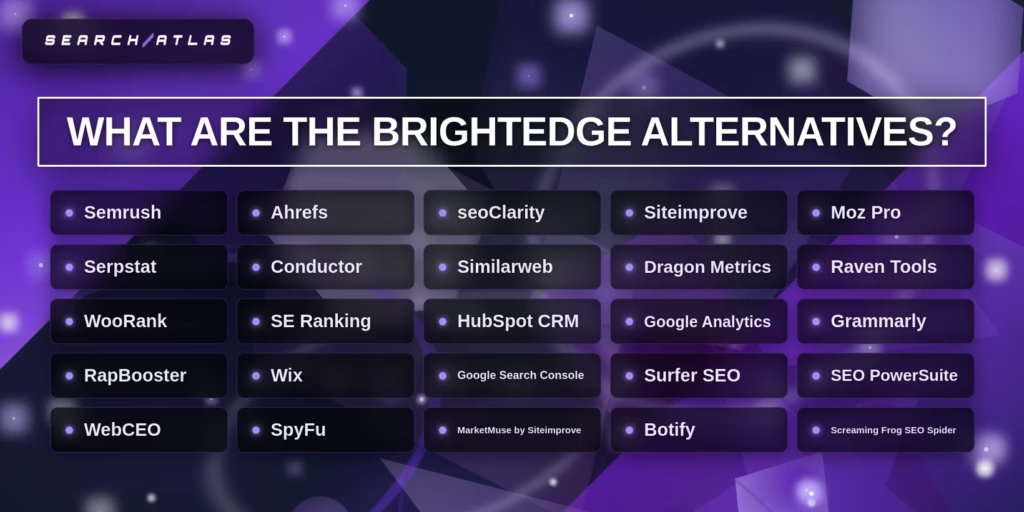
The alternatives to BrightEdge are listed below.
- Search Atlas (SEO Platform)
- seoClarity (Enterprise SEO Platform)
- Siteimprove (Marketing Solution)
- Moz Pro (SEO Tool)
- Serpstat (SEO Tool)
- Conductor (Enterprise SEO Platform)
- Similarweb (Digital Intelligence Platform)
- Dragon Metrics (SEO Platform)
- Raven Tools (SEO and Digital Marketing Platform)
- WooRank (SEO Analysis Tool)
- SE Ranking (Marketing Platform)
- HubSpot CRM (CRM Tool)
- Google Analytics (Web Analytics Tool)
- Grammarly (Writing Assistant)
- RapBooster (WhatsApp Marketing Software)
- Wix (Website Builder)
- Google Search Console (Webmaster Tool)
- Surfer SEO (Content Optimization Tool)
- SEO PowerSuite (SEO Software)
- WebCEO (SEO Analysis Tool)
- SpyFu (Competitor Analysis Tool)
- MarketMuse by Siteimprove (Content Planning Tool)
- Botify (Enterprise SEO Platform)
- Screaming Frog SEO Spider (Website Crawler)
- Semrush (SEO Platform)
- Ahrefs (SEO Platform)
1. Search Atlas
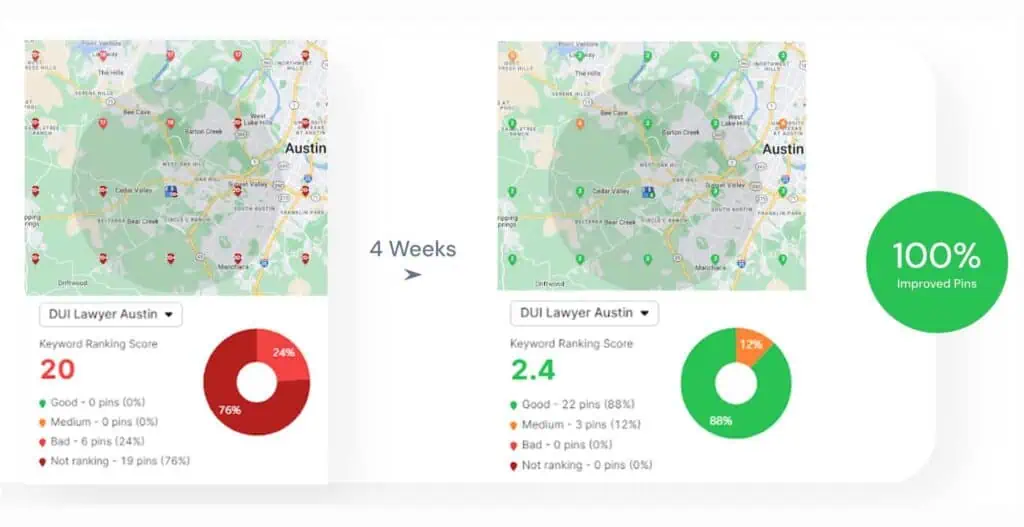
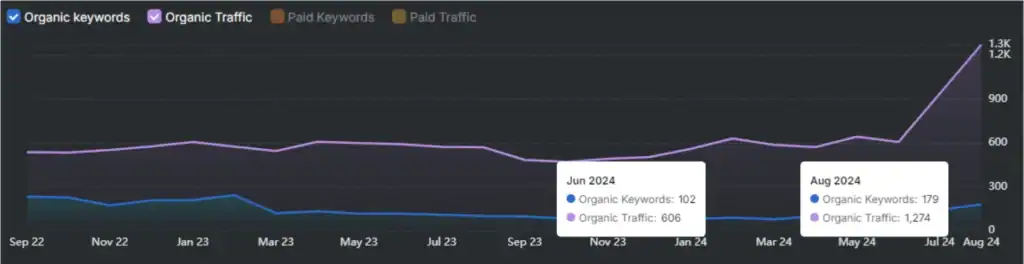
Search Atlas is the best alternative to BrightEdge because it combines keyword research, content optimization, backlink intelligence, and technical SEO auditing in one unified platform. It applies AI-driven automation through OTTO SEO, operates on a dataset of more than 5 billion keywords and 100 trillion backlinks, includes integrated content generation and semantic optimization systems, provides real-time SERP intelligence across global markets, and offers transparent pricing from $99 to $399 per month compared to BrightEdge’s enterprise pricing.
How does Search Atlas’s AI automation differentiate it? Search Atlas integrates OTTO SEO, an AI execution engine that applies schema markup, strengthens internal linking, and deploys on-page optimizations automatically. BrightEdge focuses primarily on reporting and analysis, while Search Atlas executes improvements directly inside the platform. This automation layer converts SEO insights into implemented changes without requiring manual workflows or development resources.
Why is Search Atlas’s keyword research infrastructure stronger? Search Atlas operates on a keyword database exceeding 5 billion terms, covering exact match, long-tail, and question-based queries across global markets. Its Keyword Research Tool evaluates search volume, ranking difficulty, intent signals, and competitive gaps. This dataset scale enables deeper strategic planning for both SEO and PPC initiatives compared to BrightEdge’s more limited keyword visibility.
What makes Search Atlas powerful for content optimization and generation? Search Atlas includes Content Genius, which generates optimized content drafts in minutes while aligning passages with keyword targeting and entity coverage. Scholar reviews each draft through semantic scoring and flags optimization gaps, clarity issues, and coverage weaknesses. This workflow connects research, drafting, and optimization inside a single system rather than separate tools.
How does Search Atlas strengthen technical SEO execution? Search Atlas integrates automated technical execution through OTTO SEO. The system deploys schema markup, adjusts internal link structures, and implements on-page improvements directly within the platform. BrightEdge typically requires external implementation after reporting issues, while Search Atlas moves from diagnosis to execution automatically.
What advantages does Search Atlas offer for unified SEO management? Search Atlas centralizes backlink analysis, keyword tracking, site auditing, content optimization, and SERP intelligence in one interface. This unified architecture removes tool fragmentation and allows teams to manage technical SEO, content strategy, and competitive analysis through one operational system instead of multiple disconnected platforms.
How does Search Atlas compare in pricing and accessibility? Search Atlas provides transparent pricing ranging from $99 to $399 per month, while BrightEdge typically operates on enterprise contracts starting around $10,000 annually. This pricing structure makes enterprise-level datasets, automation, and AI-driven workflows accessible to agencies, brands, and growing businesses without requiring large enterprise budgets.
What are the perceived strengths and weaknesses of Search Atlas? The perceived strengths and weaknesses in the Search Atlas review include its unified platform architecture, AI-powered automation, enterprise-scale datasets, and integrated content generation capabilities. Users value the ability to execute SEO changes directly through automation, access large keyword and backlink datasets, and centralize multiple workflows. Some teams report a learning curve during initial adoption, though onboarding and guided setup accelerate platform familiarity.
2. seoClarity
seoClarity is an alternative to BrightEdge because its AI capabilities are explicitly designed for AI search engines, it offers unlimited rank tracking and competitor comparisons, its keyword research provides a wider range of insights with 32 billion terms, it embeds AI content optimization across workflows in 16 languages, its technical SEO crawler has no limits for up to 20 million pages monthly, and it provides no-dev SEO execution solutions for on-page changes and split testing.
How do seoClarity’s AI capabilities differentiate it? seoClarity is positioned as an “AI SEO Platform to Execute Faster,” specifically addressing AI search engines and AI Overviews. The BrightEdge capabilities in these critical areas (AI Content Analysis and LLM Optimization) are largely marked as unavailable. seoClarity centralizes data to create a single source of truth, simplifying and scaling SEO within an organization.
Why is seoClarity’s rank tracking superior? seoClarity offers daily, weekly, hourly, and on-demand rank tracking across Google (all countries, by city, state, zip, lat/long), Bing, Yahoo, Baidu, and specialized rankings like Google Maps and YouTube. BrightEdge’s frequency is “Limited,” and its specialized tracking is only “Some of these.” seoClarity is the only SEO platform to offer unlimited competitive comparisons within tracked keywords, while BrightEdge charges for this feature.
What makes seoClarity a winner for keyword research? seoClarity provides all keywords rank checked every month for both desktop and mobile, unlike BrightEdge which primarily offers desktop data. It features AI-driven search demand calculation based on multiple data sources, including clickstream, which BrightEdge lacks. Its keyword index contains over 32 billion terms and supports 90+ countries, significantly more than BrightEdge’s “Less than 25 Countries.”
How does seoClarity excel in content optimization? seoClarity offers 50 AI Content Analyses per month, compared to BrightEdge’s paid model. It allows comparison of up to 5 competitors at once for content gaps and boasts the Largest People Also Ask database. seoClarity supports full-scale content generation with GenAI capabilities and natural language processing, with tools available in 16 languages.
Why is seoClarity’s technical SEO robust? seoClarity provides a No-Limits Crawler capable of auditing up to 20 million pages every month, whereas BrightEdge requires inquiry about limits. It offers an Internal link graph with detailed analysis and Full Funnel Reporting to aggregate data from all URLs, features absent in BrightEdge. Clarity360 provides a clear breakdown of technical SEO by URL, guiding actionable prioritization.
What are seoClarity’s no-dev SEO execution solutions? seoClarity offers unique features to deploy on-page SEO changes, conduct SEO split testing, and utilize a Schema Optimizer without developer involvement. These capabilities are marked as unavailable for BrightEdge, except for a “Limited” Link Seeker. This platform is a next-gen automation solution for implementing SEO fixes and testing ideas to achieve faster results.
What are the perceived strengths and weaknesses of seoClarity? The perceived strengths and weaknesses of seoClarity include its automation, enterprise-grade analytics, and custom build capabilities. seoClarity is liked for its end-to-end solution, speed, AI SEO features, and comprehensive rank tracking. seoClarity provides strong research, content optimization, technical SEO, insights, and integrations, but requires technical expertise.
What are the perceived strengths and weaknesses of seoClarity? The perceived strengths and weaknesses in seoClarity review include its automation, enterprise-grade analytics, and custom build capabilities. seoClarity is liked for its end-to-end solution, speed, AI SEO features, and comprehensive rank tracking. seoClarity provides strong research, content optimization, technical SEO, insights, and integrations, but requires technical expertise.
3. Siteimprove
Siteimprove is an alternative to BrightEdge because it has a significantly higher product rating of 9.0/10 (56 reviews) compared to BrightEdge’s 7.4/10 (155 reviews). Siteimprove offers unique accessibility compliance features (Title II, EAA, ACA) that BrightEdge lacks, Siteimprove provides integrated analytics beyond basic SEO metrics, Siteimprove offers technical SEO automation and multi-market content optimization which BrightEdge does not, and Siteimprove includes a free trial while BrightEdge does not.
How does Siteimprove’s higher product rating and user satisfaction contribute to its viability as an alternative? Siteimprove users are more likely to recommend the platform (9.2/19 ratings) than BrightEdge users (8.5/80 ratings). Siteimprove also boasts higher usability (8.7/12 ratings) and support ratings (9.3/5 ratings) compared to BrightEdge’s 8.4/12 ratings and 9.0/14 ratings, respectively. This indicates a more positive user experience and stronger overall satisfaction with Siteimprove’s offerings.
Why are Siteimprove’s accessibility compliance features a key differentiator?Siteimprove review highlights its unique dashboards for accessibility compliance (Title II, EAA, ACA) and automated scanning for ADA, HIPAA, and EU compliance standards. This addresses a critical need for enterprises to make the web “a place for everyone,” a capability BrightEdge does not handle. Siteimprove’s focus on accessibility is a core value proposition, tackling a problem other SEO tools often ignore.
What makes Siteimprove’s integrated analytics superior? Siteimprove provides integrated analytics that go beyond basic SEO metrics, which enables users to build Website KPIs “much quicker and easier than other analytics tools.” This contrasts with BrightEdge, which lacks integrated analytics beyond basic SEO metrics. Siteimprove’s comprehensive approach offers deeper insights and smarter reporting, unifying various elements of a marketing strategy.
How do technical SEO automation and multi-market content optimization enhance Siteimprove’s appeal? Siteimprove offers technical SEO automation and multi-market content optimization, capabilities that BrightEdge does not provide. Siteimprove uses AI for proactive issue detection, such as JavaScript rendering issues and competitor content pivots, and predictive analytics to spot traffic drops. Clients report “50% less time spent fixing technical issues” and reduced campaign management time, with Cuisinart cutting time in half.
Why is the availability of a free trial a significant factor? Siteimprove offers a free trial, which allows potential users to experience its features and benefits firsthand before committing. BrightEdge, conversely, does not offer a free trial. This provides Siteimprove with a competitive advantage, especially for medium-sized companies and enterprises, which are optimal target markets for Siteimprove (Score 9.1).
4. Moz Pro
Moz Pro is an alternative to BrightEdge because it offers transparent pricing starting at $39 per month, provides a more user-friendly interface for beginners, includes a free 30-day trial, offers greater flexibility for customizing SEO strategies, and is a suitable solution for small- to medium-sized companies.
How does Moz Pro’s pricing structure make it an alternative? Moz Pro offers transparent pricing plans ranging from $39 per month for a Starter Plan to $999 per month, with other options like Standard ($79/month), Medium ($143/month), and Large ($239/month). This contrasts with BrightEdge, which operates on a quote basis, typically starting around $10,000 per year, making BrightEdge “expensive for smaller organizations” and less cost-effective for businesses on a tight budget.
Why is user-friendliness a significant factor? Moz Pro is considered more user-friendly, providing a simple and intuitive interface that is easy to navigate, which makes it a “great solution for teams who are just getting started with SEO.” While BrightEdge has a “steeper learning curve” and “may require training to fully master all functions,” Moz is often recommended as “best for beginners.”
What role does a free trial play in its appeal? Moz Pro offers a free 30-day trial, which allows potential users to evaluate its features before committing. BrightEdge, conversely, does not offer a free trial, instead providing a demo upon request. This accessibility makes Moz Pro a more approachable option for initial exploration.
How does strategic flexibility differentiate Moz Pro? Moz Pro is more flexible, which allows users to customize SEO strategies to fit their specific needs. BrightEdge, in contrast, is described as more rigid with predefined templates. This flexibility can be crucial for teams that require tailored approaches rather than standardized solutions.
Why is target audience suitability important? Moz Pro is a “great solution for teams who are just getting started with SEO” and suitable for “small- or medium-sized companies,” though it can also serve large organizations. BrightEdge is an “enterprise-level solution” ideal for larger corporations and enterprise-level businesses, primarily working with B2B and B2C brands in industries like finance, retail, ecommerce, and automotive. Moz Pro’s suitability for smaller entities makes it a viable alternative for a broader market segment.
What are the perceived strengths and weaknesses of Moz Pro? The perceived strengths and weaknesses in Moz review include its domain authority metrics, site auditing tools, and rank tracking capabilities. Moz Pro is valued for boosting organic visibility and providing technical SEO analysis. A noted weakness for Moz Pro is its backlink database, which is less extensive compared to Ahrefs.
5. Serpstat
Serpstat is an alternative to BrightEdge because it is explicitly identified as a direct competitor (TrustRadius), it targets startups and SMEs with plans starting at $55 per month, it offers a comprehensive suite of SEO tools including unique features like ‘keywords missing’ and ‘keywords clustering’, it provides a user-friendly interface for small-to-medium-sized teams, it boasts a higher user rating of 4.4/5 based on 564 reviews, and it achieves a higher Spotsaas Score of 9.2/10.
How is Serpstat directly identified as an alternative? Serpstat.com is explicitly listed as an alternative to BrightEdge on TrustRadius, which indicates a direct comparison and competition between the two platforms. This direct identification positions Serpstat as a viable substitute for businesses considering BrightEdge.
Why is Serpstat’s target audience and pricing a key differentiator? Serpstat is designed as an affordable option for startups and SMEs, with pricing plans beginning at $55 per month (Dashword) or $69 per month (Serpstat vs BrightEdge 2025). In contrast, BrightEdge targets larger enterprises with custom pricing starting at $999 per month (Serpstat vs BrightEdge 2025). This significant price difference makes Serpstat a clear winner for budget-conscious businesses.
What makes Serpstat’s feature set comprehensive for digital marketers? Serpstat helps digital marketers and SEO experts improve search engine visibility through keyword and competitor analysis, site audit, and rank tracking. It includes unique features such as ‘keywords missing’ and ‘keywords clustering’, and is expanding its Google database with additional databases from Bing, Yahoo, Amazon, and YouTube (Dashword). Serpstat also offers backlink analysis and content marketing features (Serpstat vs BrightEdge 2025).
How does Serpstat’s user experience compare? Serpstat is described as easy to use and allows multiple users to access one account (Dashword). It is recommended for small-to-medium-sized teams and those with limited SEO experience due to its user-friendly platform (Serpstat vs BrightEdge 2025). Users appreciate Serpstat’s ease of setting up projects and ability to track (SE Ranking vs Serpstat vs BrightEdge). The BrightEdge UI, however, is noted as not being the best and difficult to navigate.
What do user ratings and feedback indicate about Serpstat? Serpstat has a user rating of 4.4/5 based on 564 reviews, with 294 excellent and 58 very good ratings. Users praise its comprehensive suite of SEO tools, user-friendly interface, easy project setup, valuable insights, and affordable pricing. BrightEdge has a slightly lower user rating of 4.3/5 based on 338 reviews (SE Ranking vs Serpstat vs BrightEdge).
Why is Serpstat’s Spotsaas Score relevant? Serpstat holds a higher Spotsaas Score of 9.2/10, surpassing BrightEdge’s score of 9.0/10. This score reflects an overall assessment of the platform’s capabilities and user satisfaction, further solidifying Serpstat’s position as a strong alternative.
7. Conductor
Conductor is an alternative to BrightEdge because it offers a more intuitive user experience with a higher overall G2 rating, provides superior content creation and optimization tools including AI-powered features, excels in SEO management and workflow with “badass” task management, offers more comprehensive integrations including Adobe Analytics, provides robust 24/7 site monitoring and technical SEO alerts, and boasts an “amazing” customer success team with a less aggressive sales approach.
How does Conductor’s user experience compare? Conductor consistently receives a higher overall rating on G2 and scores higher on TrustRadius, particularly for actionable insights and user-friendly features. Its interface is described as “extremely user-friendly” and the “cleanest interface in the enterprise SEO suite marketplace,” making it “easy to comprehend visually” with data often presented in graphs or pie charts. BrightEdge’s interface, while comprehensive, may require a steeper learning curve due to segmented tools.
Why is Conductor a “clear winner” in content creation and optimization? Conductor excels in user intent focus and content optimization, which offers insights into audience behavior and search trends. Its Content Guidance tool provides real-time SEO recommendations during writing, including suggestions for post length, page speed, and potential traffic gains. Conductor also features an AI-powered writing tool for optimization suggestions and new content opportunities, a feature BrightEdge does not offer. Conductor’s proprietary Search Intent Database further enhances keyword research accuracy.
What makes Conductor’s SEO management and workflow superior? Conductor includes “badass” task management/CRM features and a “fabulous” task manager for reminders. Conductor wins in SEO Management for its user-friendly interface, intelligent prioritization, and custom element monitoring features. It supports content management, workflow management, and social media management, aligning with businesses integrating SEO with wider content and social media strategies.
How do Conductor’s integrations provide an advantage? Conductor offers more integrations, which includes Semrush, Google, and Jira. Conductor integrates Adobe Analytics data for all sites across different search engines (Google, Baidu, Yahoo), allowing analysis of analytics metrics (traffic/leads/page views) against page rankings. Conductor’s partnerships with Moz (Open Site Explorer) and Adobe were a factor in choosing it over BrightEdge 1.5 years prior to a Reddit post.
Why is Conductor strong in site monitoring and technical SEO? Conductor’s Website Monitoring tool offers 24/7 real-time alerts for technical SEO and compliance. Its Conductor Live feature tracks website changes and measures performance impact over time. Conductor is strong for 24/7 monitoring and simplifying issue resolution with templates, tying with BrightEdge in Site Health.
What distinguishes Conductor’s customer support and sales? Conductor has “one of the most amazing customer success teams” that acts as an “extended arm to help highlight… immediate need.” Conductor’s onboarding process is “amazing,” with standard service for setting up categories and content segments. BrightEdge sales were perceived as “annoying and inconsiderate” due to a “barrage of calls and emails,” while Conductor’s sales manager (Andrew Hartman) was “great, not too pushy.”
What are the perceived strengths and weaknesses of Conductor? The perceived strengths and weaknesses in Conductor review include its content intelligence, SEO tracking, and unified data and reporting. Conductor is appreciated for its AI capabilities, user experience, international visibility, and customized reporting. Conductor scored 4.4/5 in Forrester Wave 2025 and ranked #1 overall in SoftwareReviews 2024, though it has higher pricing.
8. Similarweb
Similarweb is an alternative to BrightEdge because it offers broad digital intelligence across multiple channels, targets large organizations needing comprehensive market analysis, provides integrated intelligence beyond just SEO, and is considered an “Alternatives Considered” option on TrustRadius.
How does broad digital intelligence contribute to Similarweb being an alternative? Similarweb is built for teams requiring broad digital intelligence across various channels, analyzing high-traffic websites with over 500,000 monthly visitors. This contrasts with BrightEdge’s focus on sophisticated SEO features for enterprise SEO teams. Similarweb’s capabilities extend to competitor mobile performance, market share across channels, and advertising networks driving competitor traffic, offering a wider lens than BrightEdge’s specialized SEO tools.
Why is targeting large organizations significant? Similarweb targets large organizations with dedicated resources and substantial analytics budgets, providing integrated intelligence across web traffic, mobile apps, advertising, and market research. This aligns with BrightEdge’s service to large global companies managing complex SEO operations across multiple brands or regions. Both platforms cater to enterprise-level needs, with Similarweb’s enterprise contracts typically starting around $40,000+ annually, compared to BrightEdge’s custom pricing starting at $10,000+ annually.
What makes integrated intelligence a key differentiator? Similarweb provides integrated intelligence across web traffic, mobile apps, advertising, and market research, emphasizing comprehensive digital visibility beyond just website traffic analysis. This allows users to monitor continuous market trends and discover new competitors through traffic patterns. While BrightEdge focuses on AI-powered SEO recommendations and content performance tracking, Similarweb offers a broader view of the digital landscape, making it suitable for roles requiring answers across multiple digital dimensions.
How does its positioning on TrustRadius confirm its alternative status? Similarweb is explicitly listed as an “Alternatives Considered” to BrightEdge on TrustRadius. This direct categorization by users seeking alternatives indicates a recognized competitive overlap between the two platforms. Both BrightEdge and SimilarWeb PRO compete in categories such as Analytics, SEO And SEM, Web Analytics, Display Advertising, and Marketing Analytics, further solidifying Similarweb’s role as a direct alternative.
What are the perceived strengths and weaknesses of Similarweb?The perceived strengths and weaknesses in Similarweb review include its detailed traffic analytics, competitive insights, and comprehensive industry benchmarking. Similarweb is appreciated for its modern and intuitive dashboard. A noted weakness for Similarweb is its lack of BrightEdge’s AI-powered SEO automation and content optimization features.
9. Dragon Metrics
Dragon Metrics is an alternative to BrightEdge because of its specialized focus on Asia-focused SEO and smaller enterprises, its comprehensive international marketing tools, its more accessible pricing structure, its provision of unlimited user access, and its dedicated training and onboarding support.
Why is Dragon Metrics’ Asia-focused SEO a key differentiator? Dragon Metrics is an international SEO platform specifically designed for businesses needing reliable insights across global search engines, with a special focus on Asia markets. It is considered the best BrightEdge alternative in Asia-focused SEO due to its multilingual interface and region-specific datasets, making it a strong option for companies targeting China, South Korea, and other underserved regions. BrightEdge SEO, while comprehensive, does not emphasize this regional specialization.
How does Dragon Metrics’ target market align as an alternative? Dragon Metrics serves smaller segments, mainly smaller enterprises in marketing and internet sectors. It aligns with organizations focusing on social media and international markets, providing essential tools for smaller, agile teams. In contrast, BrightEdge SEO appeals to large enterprises and various industries, including marketing and healthcare, fitting into the workflows of large operations.
What international marketing tools does Dragon Metrics offer? Dragon Metrics focuses on social media analytics and competitive intelligence, enhancing social media management and competitive intelligence, and providing tools for effective international marketing. It combines keyword research, rank tracking across 11 search engines and 230+ country/language combinations, backlink analysis, and competitor benchmarking. Specific use cases include White Labeling and optimizing International Marketing Workflow, with reporting dashboards optimized for international teams.
How does Dragon Metrics’ pricing structure compare? Dragon Metrics offers a pricing range from $99 to $499 per month, with discounts available for annual billing. Plans scale by tracked keywords, crawled URLs, campaigns, and user seats, with enterprise options starting at $0.01 per keyword. User feedback indicates BrightEdge SEO is “VERY expensive,” with costs reported as “$4 per keyword,” making Dragon Metrics a more budget-friendly alternative.
Why is unlimited user access a significant advantage? Dragon Metrics provides unlimited user access, which is a notable benefit for teams of any size. This contrasts with platforms that may charge per user, potentially increasing costs for growing teams.
What kind of vendor support does Dragon Metrics offer? Both platforms offer 24/7 support. However, Dragon Metrics’ support specifically focuses on training and onboarding services, which is particularly valuable for smaller teams or those new to international SEO platforms.
10. Raven Tools
Raven Tools is an alternative to BrightEdge because it targets a broader audience including small online businesses and freelancers with budget-friendly options starting at $49 per month, offers more granular technical SEO insights scanning for over 30 SEO mistakes, provides a detailed Backlink Explorer integrating data from Majestic and Moz, features an intuitive dashboard with user-friendly design, and offers transparent pricing with a 7-day free trial.
How does Raven Tools’ target audience and pricing make it an alternative? Raven Tools is designed for media companies, agencies, freelancers, and marketers, specifically positioned as a “smarter pick for small online businesses” due to its “simple, clear SEO insights that are budget-friendly.” Its pricing starts at $49 per month for the Small Biz plan, offering 45 advanced tools. In contrast, BrightEdge targets enterprise B2B and B2C clients with custom pricing and no free trial, which make it “less accessible for smaller teams or solo marketers.”
Why is Raven Tools’ technical SEO capability a significant alternative? Raven Tools offers a “more detailed and actionable technical SEO tool,” capable of scanning for over 30 SEO mistakes during website audits. While BrightEdge’s ContentIQ focuses on large-scale crawling, it “lacks the same granular issue tracking” as Raven Tools. This makes Raven Tools a strong option for users needing in-depth technical site analysis.
What makes Raven Tools’ backlink analysis a viable alternative? Raven Tools integrates backlink data from both Majestic and Moz into its Backlink Explorer, providing broader insights into link quality and authority. It also includes a Link Manager for tracking outreach efforts. BrightEdge tracks own and competitor backlinks, but Raven Tools’ integration of multiple external data sources offers a comprehensive view.
How does ease of use position Raven Tools as an alternative? Raven Tools features an intuitive dashboard with a user-friendly design, easy navigation, and customization options. This accessibility contrasts with BrightEdge, whose enterprise focus implies a more complex user experience, making Raven Tools more approachable for users seeking straightforward SEO management.
Why is Raven Tools’ pricing structure an important alternative? Raven Tools offers 5 structured plans ranging from $49 to $479 per month, all including 45 advanced tools and data. It also provides a free, 7-day trial for any plan. BrightEdge, however, uses custom pricing that requires a quote and does not offer a free trial, which limits its accessibility for smaller teams or individual marketers.
11. WooRank
WooRank is an alternative to BrightEdge because it prioritizes client-facing reporting with white-label options, its user-friendly interface simplifies SEO diagnostics for agencies, it offers a broader range of deployment options including desktop, WooRank demonstrates higher overall performance scores (56.4 vs. 51.2), and it provides more affordable pricing plans starting at $19.99 per month.
How does client-facing reporting differentiate WooRank? WooRank primary advantage is its focus on white-label PDF reports and customizable templates, which make it easier for agencies to present data in a polished, brand-consistent format. This contrasts with BrightEdge’s more complex enterprise dashboards, which are less suited for direct client presentation. WooRank is built for agencies and consultants needing clear, client-ready insights.
Why is WooRank’s user-friendly interface significant? WooRank is designed for simpler, focused needs, emphasizing ease of use and intuitive navigation. It provides actionable audit recommendations and a comprehensive website review, allowing users to spot weaknesses and fix them quickly. This approach is ideal for businesses prioritizing digital presence enhancement and lead generation, especially in media-heavy industries.
What makes WooRank’s deployment options an advantage? WooRank supports both Cloud and Desktop deployment, which offers greater flexibility compared to BrightEdge, which is exclusively cloud-based. Additionally, WooRank supports Mobile (Android, Mobile, iOS) and Windows, and Mac platforms, providing a wider array of access points for users.
How do performance scores indicate WooRank’s viability as an alternative? WooRank exhibits higher overall performance scores (56.4 vs. BrightEdge’s 51.2), review scores (30.0 vs. 29.1), and sentiment scores (19.5 vs. 16.7). WooRank also shows significantly higher engagement scores (4.0 vs. 1.0), suggesting a more active and satisfied user base, despite BrightEdge having a larger market share (0.51% vs. 0.40%).
Why are WooRank’s pricing plans a key differentiator? WooRank offers transparent pricing plans ranging from $19.99 to $199.99 per month (Lite, Pro, Premium), with enterprise options available. This “Medium” pricing is clearly defined, unlike BrightEdge, which often requires direct contact for pricing details. WooRank’s affordability makes it a more accessible option for mid-sized businesses and agencies seeking cost-effective SEO solutions.
12. SE Ranking
SE Ranking is an alternative to BrightEdge because it offers significantly more affordable pricing starting at $18/month compared to BrightEdge’s “By Quote” enterprise costs, it supports 8 languages while BrightEdge only supports English, SE Ranking provides stronger vendor support with 24/7 chat and email, it excels in unique features like white labeling and social media management, and it is positioned as an affordable, hassle-free reporting solution for a broader audience including SMBs and startups.
How does pricing contribute to SE Ranking’s appeal as an alternative? SE Ranking provides clear monthly pricing tiers, starting at $18/month for its Optimum plan, $42/month for Plus, and $90/month for Enterprise. In contrast, BrightEdge’s pricing is “By Quote” and is described as expensive for smaller businesses. A Gizmodo review from 2024 assesses SE Ranking as an “affordable SEO tool,” highlighting its cost-effectiveness advantage for businesses seeking budget-friendly options.
Why is language support a significant differentiator? SE Ranking supports 8 languages, (English, Dutch, French, German, Italian, Japanese, Portuguese, Russian, and Ukrainian). BrightEdge, however, only supports English. This extensive language support makes SE Ranking a more versatile option for international businesses or those operating in diverse linguistic markets, enabling broader accessibility and localized reporting capabilities.
What makes SE Ranking’s vendor support stronger? SE Ranking places a stronger emphasis on 24/7 vendor support through both chat and email channels. While both platforms offer 24/7 support, SE Ranking’s specific focus on these accessible communication methods ensures prompt assistance for users. This dedicated support structure is particularly beneficial for businesses that require immediate help to maintain continuous digital operations.
How do SE Ranking’s unique features enhance its alternative status? SE Ranking review highlights its distinct features (marketing plan, keyword grouping, a lead generator, white label capabilities, and social media management). It particularly excels in white labeling and social media management, aiding businesses in enhancing their online presence and streamlining operations. These features are prevalent in large-scale digital operations and appeal to businesses seeking to consolidate their digital marketing efforts.
Why is SE Ranking’s positioning as an affordable solution important? SE Ranking is positioned as an affordable, hassle-free reporting solution suitable for a wide range of users, from freelancers and startups to large enterprises. While BrightEdge primarily serves enterprise clients, SE Ranking’s accessibility and intuitive dashboards make it a reliable SEO platform for various tasks, featuring accurate data and appealing to businesses targeting market expansion and boosting their digital and social presence.
13. HubSpot CRM
HubSpot CRM is an alternative to BrightEdge because it is highly recommended by 88.9% of users as an excellent alternative, it outperforms BrightEdge in features, value for money, and customer support, it holds a higher market ranking as the #3 BrightEdge alternative in 2026, it leads in the AI Sales & Marketing category with an 8.2 average rating, and it offers a competitive starting price of $45 per month.
How does user recommendation contribute to HubSpot CRM’s viability as an alternative? 88.9% of users recommend HubSpot CRM as an excellent alternative to BrightEdge. Users describe HubSpot CRM as “Must Needed Software for all Businesses” and a “great free tool that is very useful for businesses of any size.” It is highly recommended for businesses serious about leads and not wanting to miss any, indicating strong user satisfaction and practical utility.
Why is comparative performance significant? HubSpot CRM performs better than BrightEdge in key areas (features, value for money, and customer support). These metrics, rated out of 5, highlight HubSpot CRM’s superior offering in critical aspects that influence business decision-making and user experience.
What makes HubSpot CRM’s market position important? HubSpot CRM is ranked #3 among BrightEdge alternatives in 2026 and designated a “Category Champion” in the same year. This strong market position indicates industry recognition and a competitive standing against other solutions, including BrightEdge.
How does HubSpot’s leadership in AI Sales & Marketing establish it as an alternative? In the AI Sales & Marketing category, HubSpot is ranked #1 with an average rating of 8.2, while BrightEdge is ranked #25. HubSpot also holds a 1.8% mindshare in AI Sales & Marketing, compared to BrightEdge’s 1.7%. This demonstrates HubSpot’s dominance and specialized capabilities in a crucial and growing market segment.
Why is pricing a factor in its alternative status? HubSpot CRM has an accessible starting price of $45 per month. This competitive pricing makes it an attractive option for businesses seeking a robust CRM solution without the potentially higher investment associated with other platforms, including BrightEdge.
14. Google Analytics
Google Analytics is an alternative to BrightEdge because it is explicitly listed as an alternative in competitive comparisons, both platforms compete in overlapping market categories (Analytics and SEO), Google Analytics holds a dominant market share of 90.08% in the Analytics category, BrightEdge is perceived as “very expensive” at approximately $70,000 annually, and Google Analytics provides foundational SEO and web performance insights for most website owners.
How is Google Analytics explicitly listed as an alternative? Google Analytics is directly cited under “Alternatives Considered” in a TrustRadius comparison with BrightEdge. This direct mention indicates that users actively evaluate Google Analytics as a viable substitute when considering BrightEdge, highlighting its role in the competitive landscape.
Why do both platforms compete in overlapping market categories? Google Analytics and BrightEdge both contend in the Analytics, Web Analytics, Dashboard, Reporting, and SEO And SEM categories. Specifically, Google Analytics 4 (GA4) and BrightEdge compete in Web Analytics, Analytics, SEO And SEM, and Search Marketing. This extensive overlap in core functionalities positions Google Analytics as a direct competitor and alternative.
What is the significance of Google Analytics’ dominant market share? In the Analytics category, Google Analytics commands a 90.08% market share with 7,824,003 customers, ranking 1st. In contrast, BrightEdge holds a mere 0.02% market share with 1,880 customers, ranking 58th. This overwhelming market presence and customer base demonstrate Google Analytics’ widespread adoption and capability to serve a vast user population, making it a readily available and trusted alternative.
Why is BrightEdge’s cost a factor in seeking alternatives? BrightEdge costs approximately $70,000 annually, a price point described by a long-term user as “very expensive for what it provides.” Another user labeled it “snake oil,” stating that a $70,000 ROI is “unlikely in most organizations.” This high cost and perceived low value drive organizations to seek more affordable, yet capable, alternatives like Google Analytics.
How does Google Analytics provide foundational SEO and web performance insights? Google Analytics offers essential capabilities for website owners engaging with SEO, (insights into site performance and audience demographics). It tracks referral traffic (Organic, Paid, Email) to identify effective channels, allows comparison of traffic between different dates and pages, and analyzes sources sending the most traffic, identifying active backlinks. Google Analytics also highlights pages with the most traffic, conversions, and engagement, and breaks down audience demographics (location, age), user behavior (new vs. returning, session duration), and traffic by device. These core functionalities provide a robust foundation for web performance analysis, often sufficient for organizations that lack internal SEO expertise and seek basic recommendations.
15. Grammarly
Grammarly is an alternative to BrightEdge because 91.3% of users recommend Grammarly as an excellent alternative, it offers superior value for money compared to BrightEdge, and it provides essential writing enhancement features that BrightEdge lacks.
How do user recommendations position Grammarly as an alternative? A significant 91.3% of users recommend Grammarly, with many considering it an excellent BrightEdge alternative. Specific user feedback, such as “Must have for content writers” from Sanket Pandey, a Doctor, highlights its perceived value. Users consistently describe it as a “must-have for researchers and content writers,” noting its precise and to-the-point suggestions after more than a year of use.
Why does Grammarly offer superior value for money? While specific pricing for BrightEdge is not provided for direct comparison, Grammarly’s starting price of $10 User/Month positions it as an accessible tool. User comparisons indicate Grammarly rates higher in value for money (out of 5) and features (out of 5) relative to BrightEdge, suggesting a more cost-effective solution for its core functionalities.
What essential writing enhancement features does Grammarly provide that BrightEdge lacks? Grammarly functions as a writing enhancement program that automatically observes, checks, and fixes spelling and grammar issues. It offers useful feedback and recommendations to enhance writing style, directly influencing how a reader interprets a message for persuasive and effective writing. BrightEdge, conversely, focuses on SEO optimization, content recommendations, and marketing strategies to drive traffic and ROI, without offering direct writing quality improvements.
16. RapBooster
RapBooster is an alternative to BrightEdge because 95% of users recommend RapBooster as an excellent alternative, it offers superior features, value for money, and customer support compared to BrightEdge, and it has been recognized as a Category Champion in 2026.
How does user recommendation contribute to RapBooster being an alternative? A significant 95% of users recommend RapBooster, with most users explicitly considering it an excellent BrightEdge alternative. This strong user endorsement, based on direct user reviews, highlights RapBooster’s effectiveness and satisfaction among its user base, positioning it as a viable and preferred substitute in the market.
Why are features, value, and support significant comparative strengths? RapBooster outperforms BrightEdge in features, value for money, and customer support. Qualitative feedback from users like Vanshika praises RapBooster for its “good quality and easy-to-use software with excellent features and perfect customer support from the team,” noting their concern for providing solutions. These comparative strengths, derived from user reviews, indicate a superior overall user experience and offering.
What does being a Category Champion in 2026 signify? RapBooster recognition as a Category Champion in 2026 further solidifies its position as a strong alternative. This designation, based on user reviews, suggests industry acknowledgment of its performance and standing within its category, reinforcing its competitive edge against established platforms like BrightEdge.
17. Wix
Wix is an alternative to BrightEdge because 86.3% of users recommend Wix as an excellent alternative. It offers stronger comparative performance in features, value for money, and customer support. It provides beginner-friendly website hosting without downtime and integrates well within the broader SEO ecosystem.
How does user recommendation contribute to Wix being an alternative? A significant 86.3% of users recommend Wix, with most considering it an excellent BrightEdge alternative. This high user satisfaction rate indicates that Wix effectively meets the needs of users seeking a platform comparable to BrightEdge, particularly for those prioritizing ease of use and comprehensive features.
Why does Wix offer better comparative performance? Compared to BrightEdge, Wix demonstrates better performance in features, value for money, and customer support. These three critical areas are often decisive factors for users choosing a platform, suggesting Wix provides a more robust and cost-effective solution with superior assistance.
What makes Wix a beginner-friendly option? Wix is described as “Beginner Friendly All In One Website Hosting Without Downtime” by Mohan Khanna, a Web Developer. It is best suited for new web designers and offers many resources for creating business websites. This focus on ease of use and comprehensive support for new users makes it an accessible alternative for those without extensive technical expertise. Wix also excels at blogging with simple author additions, further simplifying content creation.
How does Wix integrate within the broader SEO ecosystem? Wix functions effectively alongside other essential SEO tools, which provides a cohesive environment for managing online presence, even if its direct SEO functionalities are not explicitly compared to BrightEdge.
18. Google Search Console
Google Search Console is an alternative to BrightEdge because it offers a zero-cost solution compared to BrightEdge’s $20k to $50k annual fees, it provides essential data for fundamental SEO tasks like optimizing titles and meta descriptions, and BrightEdge’s usability and data accuracy issues make its high cost difficult to justify.
How does Google Search Console’s cost contribute to its viability as an alternative? Google Search Console (GSC) is explicitly described as “good ‘ol (free) Google Search Console,” highlighting its zero cost. In contrast, BrightEdge is characterized as “overpriced,” with costs ranging from “$20k to $30k” to “$50k” annually, even with a “half price” pitch. This significant price difference makes BrightEdge’s return on investment “very difficult to justify” for many users.
Why is GSC sufficient for fundamental SEO tasks? The original poster’s basic need was to “optimize titles, meta descriptions, and text on our pages to try to rank slightly better,” and to optimize “several international editions.” GSC, being free, can provide data relevant to these basic optimization tasks without the high cost of BrightEdge. GSC, alongside tools like SEMrush and Screaming Frog’s SEO Spider, can help users “get a lot further” for a fraction of BrightEdge’s cost, implying it covers fundamental SEO needs.
What makes BrightEdge’s limitations support GSC as an alternative? BrightEdge’s core keyword research tool, the “data cube,” is criticized for not providing “useful or relevant keywords” and its suggestions are “next to useless” compared to SEMrush. Reporting is “not good (very few customizations), no whitelabel options,” and data validity was “inaccurate.” Recommendations from BrightEdge’s audits were inconsistent, flagging optimizations as needing to be changed again even after implementing their suggestions. The interface is described as “actively working against you at all times” and “the opposite of user friendly.” These issues make BrightEdge’s high cost less appealing, pushing users towards more cost-effective and user-friendly alternatives like GSC.
19. Surfer SEO
Surfer SEO is an alternative to BrightEdge because Surfer SEO focuses on content optimization for individual articles, BrightEdge targets enterprise SEO for large organizations, Surfer SEO has a low to medium pricing range compared to BrightEdge’s high pricing, and Surfer SEO’s AI strengths are in NLP SERP comparison while BrightEdge excels in forecasting and predictive analytics.
How does the primary focus of each tool differentiate them? Surfer SEO review highlights its primary focus is on on-page optimization and content optimization using NLP-based analysis, best suited for content teams optimizing individual articles. For example, a SaaS company optimized 200 blog posts with Surfer SEO, resulting in improved rankings and modest traffic increases. BrightEdge, conversely, focuses on enterprise SEO, technical SEO, and intent fulfillment for large organizations managing complex websites and content portfolios. BrightEdge is designed for enterprise reporting, forecasting, and governance, especially when multiple teams need shared visibility into performance and ROI.
Why is the target audience and pricing a key distinction? Surfer SEO targets content teams and offers a low to medium pricing range, which make it accessible for smaller teams or those with budget constraints. BrightEdge, however, targets enterprise organizations with a high pricing range, often described as “very costly” and “spendy,” making it too expensive for small businesses or startups. Its cost and setup complexity mean it is too heavy for most SMBs, requiring a high learning curve and long onboarding cycles.
What are the differing AI strengths of each platform? Surfer SEO’s AI strengths lie in NLP SERP comparison and scoring, analyzing top pages to provide content outlines, keyword densities, and semantic phrases. This supports its “score-as-you-write” editor and content audit briefs. BrightEdge’s AI, on the other hand, excels in forecasting and performance reporting, keyword tracking, and predictive analytics. BrightEdge’s AI crawls the web for first-party data and provides real-time analysis across search, social, and mobile channels, connecting content recommendations to performance data.
How do their use cases and limitations further distinguish them? Surfer SEO is best for creating content regularly and ensuring consistent on-page alignment, but it is content-focused and does not manage overall SEO momentum or comprehensive keyword research. BrightEdge is best for large sites with complex crawl behavior, multiple subdomains, and international SEO requirements, especially when revenue prioritization matters. However, BrightEdge has limited customization for small sites and is less suitable for small SEO teams. After migrating to BrightEdge, optimizing 40 high-conversion potential pages increased demo signups by 22 percent.
20. SEO PowerSuite
SEO PowerSuite is an alternative to BrightEdge because it offers a cost-effective solution for smaller market segments, provides a robust set of SEO tools for diverse needs, aligns with smaller operational scales for customer acquisition, and offers a free edition for top rankings.
How does SEO PowerSuite offer a cost-effective solution? SEO PowerSuite is described as a cost-effective alternative to monthly cloud structures, particularly for small to medium enterprises and businesses aiming to enhance their digital presence. While BrightEdge SEO is favored by enterprises requiring extensive support, SEO PowerSuite caters to market segments looking for budget-friendly options. However, it is important to note that a con of SEO PowerSuite is its high price for a monthly subscription, which can be a downside for small businesses.
Why does SEO PowerSuite provide a robust set of SEO tools? SEO PowerSuite offers a robust set of tools tailored for various SEO needs, covering different perspectives. Its tools, such as Rank Tracker and SEO Spyglass, provide reliable and accurate data and generate intuitive reports. It also supports white labeling and social media management, serving businesses focused on enhancing their online presence.
What makes SEO PowerSuite suitable for smaller operational scales? SEO PowerSuite aligns best with smaller operations, providing essential features at a scale suited for starting or mid-level digital projects. It helps businesses achieve goals like acquiring new customers and entering new markets, though with less focus on relationship enhancement compared to BrightEdge SEO, which fits into large-scale operations.
How does the availability of a free edition make SEO PowerSuite an alternative? SEO PowerSuite offers a free edition for achieving top rankings on Google and other search engines. This accessibility allows smaller businesses and individuals to utilize powerful SEO tools without an initial investment, making it a viable entry-point alternative to more enterprise-focused solutions like BrightEdge SEO.
21. WebCEO
WebCEO is an alternative to BrightEdge due to direct competition across 5 shared categories, distinct specialized functionalities, and a strong focus on in-depth SEO analysis.
How do direct competitive overlaps position WebCEO as an alternative? BrightEdge and WebCEO directly compete in SEO And SEM, Search Marketing, Analytics, Landing Pages, and Web Analytics categories. WebCEO specifically competes in Project Collaboration and Landing Pages, while BrightEdge focuses on Search Marketing, Analytics, and Web Analytics. This broad overlap in core functionalities establishes WebCEO as a viable alternative for businesses seeking solutions in these areas.
Why are distinct specialized functionalities important for an alternative? WebCEO provides in-depth website SEO analysis, a core offering that helps make websites search engine friendly and achieve higher rankings on Search Engine Results Pages (SERPs). While BrightEdge also operates in the broader search marketing space, WebCEO’s explicit focus on detailed SEO analysis and ranking improvement offers a specialized alternative for users prioritizing these specific capabilities.
What makes WebCEO’s focus on in-depth SEO analysis a compelling alternative? WebCEO’s core functionality is to provide comprehensive tools for website SEO analysis, directly aiming to improve a site’s search engine friendliness and SERP rankings. This dedicated emphasis on granular SEO insights and actionable recommendations positions WebCEO as a strong alternative for users whose primary need is detailed, actionable SEO intelligence to drive organic performance.
22. SpyFu
SpyFu is an alternative to BrightEdge because it is consistently compared as SEO software, with a comparison date of February 12, 2026. Both platforms share core functionalities, including keyword research and competitive analysis. The SpyFu review highlights its significant cost savings, with plans ranging from $39 to $299 per month, compared to BrightEdge’s enterprise pricing. Both provide historical data archives, with SpyFu offering 14 years of data, and they target similar large enterprise and mid-market operations.
How are BrightEdge and SpyFu consistently compared as SEO software? TrustRadius lists both
as “Alternatives Considered,” indicating users view one as a direct substitute for the other. SoftwareReviews defines both as SEO tools that measure key website indicators to drive traffic, improve rankings, and ensure online visibility. Cuspera also identifies them as prominent SEO solutions, further solidifying their direct comparison in the market.
Why do they share core functionalities? Both platforms offer essential SEO features (keyword research, competition analysis, auditing, and rank tracking). For instance, BrightEdge uses AI for instant keyword searching, while SpyFu helps understand competitor ranking strategies and paid keyword costs. Both provide competitor gap analysis, with SpyFu offering insights into competitors’ Top Ads and keywords, and BrightEdge providing competitor benchmarking at scale.
What makes SpyFu a cost-effective alternative? SpyFu is suggested to “save you a hefty sum YOY” compared to BrightEdge. BrightEdge typically requires enterprise-level investment with annual contracts and offers no free trial. In contrast, SpyFu provides a 30-day free trial and flexible plans ranging from $39 to $299 per month, making it more accessible for various budgets.
How do historical data archives contribute to their interchangeability? SpyFu boasts a 14-year historical data archive, which is a valuable asset for long-term trend analysis. BrightEdge’s “datacube” also provided historical keyword data, a feature users seek in alternatives like SEMrush ($60/month), indicating the importance of this capability in an SEO tool.
Why do they target similar audiences? While BrightEdge targets enterprise teams managing hundreds of websites and large organizations needing AI automation, SpyFu is designed for large enterprises and mid-market operations, as well as agency clients and general users of competitor research tools. This overlap in target audience reinforces their positioning as alternatives for businesses of varying sizes.
23. MarketMuse by Siteimprove
MarketMuse by Siteimprove is an alternative to BrightEdge because it offers a unified enterprise platform addressing fragmentation, provides AI-driven content strategy for comprehensive content creation, delivers technical SEO automation and real-time monitoring, integrates holistic data analytics across channels, ensures globally recognized accessibility compliance, and significantly reduces operational costs and labor time.
How does a unified enterprise platform address fragmentation? MarketMuse by Siteimprove.ai is a complete enterprise platform that unifies accessibility, analytics, content strategy, and SEO with a shared data layer, cross-product workflows, automation, and integration. This directly addresses the fragmentation common with “old guard” platforms like BrightEdge, which lack integrated analytics beyond basic SEO metrics and struggle against specialized competitors in 2025.
Why is AI-driven content strategy crucial for modern SEO? MarketMuse, now integrated with Siteimprove, leverages AI to fuel content development by analyzing thousands of competing pages to reveal content gaps and opportunities. MarketMuse’s AI provides data-backed suggestions for future content, including “what to write, why to write it, and how to build a more cohesive content plan — all in a few minutes,” unlike BrightEdge’s limited content advice based on only the top 10 results. This fills Siteimprove’s previous gap in robust SEO content creation capabilities.
What makes technical SEO automation and real-time monitoring a significant advantage? MarketMuse by Siteimprove handles JavaScript rendering, dynamic content, and regulatory compliance as core functions, offering real-time monitoring across 1,000+ metrics. Clients report 50% less time spent fixing technical issues and receive automated alerts on technical problems before Google detects them. BrightEdge, in contrast, does not handle technical SEO automation or digital governance.
How does holistic data analytics improve marketing performance? The combined Siteimprove and MarketMuse platform provides holistic data across channels, which includes website analytics, behavioral insights, content optimization, and search/social media ad analytics. This offers a single source of truth, unlike BrightEdge, which lacks integrated analytics beyond basic SEO metrics and does not provide AI-powered pattern detection across the entire digital footprint.
Why is globally recognized accessibility compliance a key differentiator? Siteimprove offers automated scanning for ADA, HIPAA, and EU compliance standards and includes globally recognized accessibility checks, flagging WCAG issues and simplifying fixes for elements like color contrast and alt tags. Neither BrightEdge nor Conductor handle accessibility compliance, leaving a critical gap in enterprise digital governance.
24. Botify
Botify is an alternative to BrightEdge because it excels at deep technical SEO audits and large-scale website crawling (addressing 50% content visibility issues), it offers more robust technical tools like sitemap generation and 404 monitoring, Botify is approximately half the price of BrightEdge (estimated $3 to 10k/month), it provides actionable insights from comprehensive data analysis, and user sentiment strongly favors Botify over BrightEdge.
How does Botify’s specialization in technical SEO and crawling make it an alternative? Botify is an enterprise SEO platform specifically designed for deep technical SEO audits and large-scale website crawling, which directly addresses the problem that search engines miss approximately half of the content on large, enterprise websites. For example, Botify is used for monthly crawls and comparisons on large sites with 600k unique product pages, providing valuable audits where BrightEdge’s crawl capabilities are described as “shit.”
Why are Botify’s technical tools more robust? Botify offers more robust technical tools compared to BrightEdge, including a sitemap generation tool which BrightEdge appears to lack. Botify also allows for monitoring rogue 404 pages, a feature BrightEdge struggles with, only showing an increase in overall 404 count, not specific URLs. Furthermore, Botify provides crawl records across time and can trend logfiles across time, integrating Adobe Analytics data.
What is the cost difference between Botify and BrightEdge? Botify is about half the price of BrightEdge, with an estimated price range of $3-10k/month. Even when combining Botify with Ahrefs for keyword research, the total cost is still less expensive than BrightEdge, which is often described as an “overpriced rank tracker” and “very expensive.”
How does Botify provide actionable insights? Botify provides comprehensive features including website crawls, performance analyses, and detailed reports that highlight technical issues. While Botify does not provide recommendations directly, it offers data and an analysis tool that allows users to interpret data and create plans, leading to actionable insights. This contrasts with BrightEdge’s recommendations tool, which is widely criticized as “shit” and “terrible,” sometimes leading to detrimental advice like splitting a “Peanut Butter & Jelly” page.
What is the overall user sentiment regarding Botify as an alternative? User sentiment strongly favors Botify, with statements like “I really liked botify. I’d go with them over brightedge.” Users praise Botify’s in-depth SEO analysis, customizable reports and dashboards, extensive integrations, and helpful support. Conversely, there is strong negative sentiment towards BrightEdge, with users advising, “Do. Not. Get. Brightedge. Ever.”
25. Screaming Frog SEO Spider
Screaming Frog SEO Spider is an alternative to BrightEdge because its specialized focus as a technical auditing tool contrasts with BrightEdge’s broader platform, its market presence is extensive with 640 organizations mentioning it, its scalability handles millions of URLs, and its cost-effectiveness is implied by user critiques of BrightEdge’s expense.
How does Screaming Frog’s specialized focus make it an alternative? Screaming Frog SEO Spider is described as a “technical auditing tool” and a “specialist tool designed to do one particular job really well,” rather than a “multipurpose/all-in-one SEO” tool. It excels at website crawling, extracting data like URLs, page titles, and status codes, and identifying technical SEO issues such as broken links and duplicate content. This contrasts with BrightEdge, an “Enterprise SEO platform” that includes site auditing and crawling features, but is suggested by one user as a “better tool for multi purpose usage.”
Why is Screaming Frog’s market presence significant? Screaming Frog has been used for SEO audits for 12 years, with training provided since 2010, and is considered “probably the most used SEO tool in the industry.” It is mentioned by 640 organizations, demonstrating widespread adoption. While BrightEdge is mentioned by 981 organizations, Screaming Frog’s deep penetration in the technical SEO niche establishes it as a strong alternative for specific auditing needs.
What makes Screaming Frog’s scalability a key differentiator? Screaming Frog handles “100s of thousands” of URLs with SSD and Database mode, and users regularly crawl sites of “200K” URLs. It can crawl “millions of URLs” in the cloud, and users have been contracted for “large Ecomm sites that have millions of skus.” Its Database mode on an SSD ensures “continually saving to the database” and “autosaved” crawls, providing robust technical capabilities for large-scale audits.
How does cost-effectiveness position Screaming Frog as an alternative? While specific pricing is not provided, one user explicitly states, “Don’t. BE is expensive crap and their sales reps will stalk you forever,” when referring to BrightEdge. This user sentiment implies that Screaming Frog, as a specialized tool, offers a more cost-effective solution for technical auditing compared to the perceived high expense of the BrightEdge enterprise platform.
26. Semrush
Semrush is a BrightEdge alternative because it targets small to mid-sized businesses with annual revenues between $1M and $50M, offers transparent monthly pricing plans starting at $139.95/month, provides over 50 versatile tools for comprehensive digital marketing, features a user-friendly interface with extensive data visualization, delivers a strong value proposition for scaling SEO efforts, and receives high customer satisfaction with a 4.5/5 G2 rating from over 1,800 reviews.
How does Semrush’s target audience differentiate it as an alternative? Semrush is the go-to platform for small to mid-sized businesses and agencies, which includes freelancers and content marketers. It is ideal for ecommerce brands and SMBs with annual revenues ranging from $1M to $50M. In contrast, BrightEdge focuses on larger enterprises, serving Fortune 1000 teams managing 50+ domains and $100K+ marketing budgets.
Why is Semrush’s pricing model a significant alternative? Semrush offers clearly defined monthly fees, with plans like Pro ($139.95/month), Guru ($249.95/month), and Business ($499.95/month). It provides a 7-day or 14-day free trial, often granting Business-tier access, and allows monthly contracts with cancellation at any time. BrightEdge, however, uses a custom pricing model, requiring users to request a quote, with annual contracts estimated between $30,000 to $150,000+, and lacks a free trial.
What makes Semrush’s feature set a viable alternative? Semrush offers over 50 tools covering SEO, content marketing, competitor analysis, PPC, and social media marketing. Its Keyword Magic Tool provides access to 25.3 billion keywords, helping ecommerce brands uncover 200+ long-tail opportunities in 20 minutes. The Site Audit tool crawls 20,000 pages on mid-tier plans, and the AI-powered ContentShake tool assists with content creation and SEO optimization. BrightEdge’s Data Cube tracks 5 billion keywords but takes days to configure for precise output.
How does Semrush’s user experience contribute to its appeal as an alternative? Semrush features a comprehensive dashboard with extensive data visualization, described as a clean, intuitive interface with tooltips and walkthroughs. While initially overwhelming, it provides depth for experienced marketers. Semrush also offers robust support options, including live chat, email, phone assistance, and free SEO courses through Semrush Academy, with 2-4 hour response times on Business plans.
Why is Semrush considered a strong value proposition? Semrush is cost-effective and packed with a wide range of features, which make it easy to use for small to mid-sized businesses and agencies looking to scale SEO efforts without a large budget. World Synergy considers Semrush a “significant upgrade” over BrightEdge, offering “lots of added benefits” at “a fraction of the cost.”
What do customer reviews indicate about Semrush as an alternative? Semrush scores 4.5/5 on G2 from over 1,800 reviews and 4.6/5 on Capterra. It is praised for its versatility, intuitive interface, simpler onboarding process, affordability, and feature depth. In contrast, BrightEdge scores 4.4/5 on G2 from 200+ reviews, with mid-market buyers criticizing its cost and complexity, citing buggy reporting modules and slow support outside enterprise contracts.
What are the perceived strengths and weaknesses of Semrush? The perceived strengths and weaknesses in Semrush review include its versatility, extensive features, and strong reporting capabilities. Semrush is praised for managing workflows and providing comprehensive data. A common weakness noted for Semrush is a steep learning curve for beginners, despite its user-friendly interface.
27. Ahrefs
Ahrefs is a BrightEdge alternative because it targets a broader audience including small to medium-sized businesses with plans starting at $99/month, offers a more comprehensive backlink analysis with an index of 14 trillion websites, provides a user-friendly interface that allows proficiency within one week, boasts a robust keyword explorer with 22.5 billion keywords, and receives higher user satisfaction ratings with G2 scores of 4.6 out of 5.
How does Ahrefs’ target audience and pricing contribute to its alternative status? Ahrefs is designed for various business sizes (small to medium-sized organizations, bloggers, and professional SEOs), with transparent tiered pricing plans starting at $99/month for its Lite package. In contrast, BrightEdge is an enterprise-level tool with custom sales cycles, quotes starting around $10,000 annually, and basic licenses from $4,000 per month, making it less accessible for smaller entities. Ahrefs also offers a 7-day trial for $7 and a free Ahrefs Webmaster Tools plan, which BrightEdge does not provide.
Why is Ahrefs’ backlink analysis a significant differentiator? Ahrefs features extensive backlink capabilities with the most comprehensive index of live backlinks available, crawling 8 billion pages daily across 14 trillion websites. It provides access to over 7 years of historical data, allowing detailed analysis of competitor backlink profiles and link quality. Over 50% of SEO professionals consider Ahrefs the superior tool for backlink analysis, while BrightEdge offers backlink monitoring but lacks the granular historical data and discovery speed of Ahrefs.
What makes Ahrefs’ user experience and learning curve advantageous? Ahrefs interface is designed for speed, with most core functions accessible within two clicks. New users typically achieve proficiency within one week through Ahrefs Academy video tutorials and self-service documentation. The platform is described as user-friendly and intuitive, especially for beginners. BrightEdge, conversely, has a complex platform where most teams require 30 to 60 days for analysts to feel proficient, and its interface requires dedicated training.
How does Ahrefs’ keyword research compare? Ahrefs’ Keywords Explorer is robust, offering keyword suggestions, search volume data, keyword difficulty analysis, and SERP analysis from a massive database of 22.5 billion keywords with real-time SERP snapshots. It provides accurate search volume and estimated clicks, supporting faster execution for content sprints. BrightEdge’s DataCube tracks 5 billion keywords daily, but its interface requires dedicated training to extract actionable insights, and it has shown “no data” for keywords where Ahrefs reported significant volume (e.g., “Grass seed”: Ahrefs 38K).
Why do user reviews position Ahrefs as a strong alternative? Ahrefs receives higher user satisfaction ratings, with G2 scores of 4.6 out of 5 and Capterra scores of 4.7 out of 5 as of February 2022. Users consistently praise its backlink features, keyword research tools, and insightful data. BrightEdge, while also well-regarded, has slightly lower scores (G2: 4.3/5, Capterra: 4.2/5) and user reviews frequently mention its “extremely high” price point and instances where it “did not provide what was promised, despite an enormous annual subscription fee.”
What are the perceived strengths and weaknesses of Ahrefs? The perceived strengths and weaknesses in Ahrefs review include accurate backlink and keyword data, powerful metrics, and effective identification of keyword “sweet spots.” Ahrefs is highly regarded for its extensive backlink database. A noted weakness for Ahrefs is its lack of built-in content optimization features, and some users express negative feedback on its pricing.
Why do Users Search Alternatives to Brightedge?
Users search for alternatives to BrightEdge because its outdated user experience requires 30 to 60 days to reach proficiency, its opaque and high pricing starts at $10,000 annually, significant feature gaps include limited historical data and international visibility (only 16% of competitor data), critical deficiencies in AI-first search reality leave brands losing 40% of AI visibility within 72 hours, it shows poor suitability for agile teams due to siloed design and account manager gatekeeping, and it has a subpar security posture with a 70% SecurityScorecard rating.
How does the outdated user experience contribute to users seeking alternatives? BrightEdge’s UI is slow, unintuitive, and features fragmented views with scattered data points. Its complexity necessitates dedicated training, often taking 30 to 60 days for proficiency, and requires account manager guidance for basic data access. Dashboard and reporting tools are very limited, frequently requiring data export to Excel for visualization, and customization requires support tickets rather than self-service. This steep learning curve and lack of role-specific dashboards frustrate users.
Why is opaque and high pricing a significant factor? Custom pricing for BrightEdge starts around $10,000 annually for small deployments and scales to six figures for larger enterprises. Users report the software as “a bit pricey” and are frustrated by opaque pricing models and minimum 12-month contract commitments. Entry pricing can be similar to Ahrefs ($11,988 annually) but delays value realization by 60 to 90 days due to sales engineering and training. Additionally, BrightEdge charges separately for premium modules like Local Insights and advanced competitive intelligence.
What makes feature gaps and limitations a reason for users to switch? BrightEdge lacks granular historical data and discovery speed crucial for link-building teams. Its Autopilot feature requires manual approval chains, negating speed advantages. The platform offers zero visibility into AI answer engine citations or Reddit performance and provides limited international visibility and monitoring, offering only 16% of the data available with competitors like Conductor. It relies on a single data source, updated monthly, and its scheduled website crawls are slow, taking days, lacking key performance metrics, and offering no priority alerting. Basic tracking capabilities surface limited growth opportunities, and a lack of integrations forces users to work within its system, limiting performance insights and support for existing tools.
How do critical deficiencies in AI-first search reality impact user satisfaction? BrightEdge leaves critical gaps in the 2026 AI-first search reality. It fails to address real-time AI citation tracking, automated content systems, and attribution connecting visibility to revenue. Static tools cannot keep pace with rapidly evolving AI search behaviors from platforms like ChatGPT, Perplexity, and Google’s AI Overviews. This gap has cost brands millions in missed AI visibility, as brands lose 40% of AI visibility within 72 hours when competitors publish fresher content. Traditional rank tracking has become a lagging indicator, as ranking position one means little if AI engines pull answers from position seven due to competitor community validation.
Why is poor suitability for agile teams a concern? BrightEdge is designed with siloed SEO specialists in mind, lacking essential collaboration features. It fails when teams require agility and daily autonomy without account manager gatekeeping. Its enterprise-level focus might not be suitable for smaller businesses or individual marketers who need more flexible and collaborative tools.
What to Look for in a Brightedge Alternative?
BrightEdge users experience significant pain points related to user experience, functionality, and data limitations. The BrightEdge user interface is slow, unintuitive, and outdated, leading to a frustrating and rigid design with disjointed SEO features. BrightEdge dashboard and reporting tools are very limited, often requiring export to Excel for visualization.
What are the primary user experience and functionality issues with BrightEdge? BrightEdge user experience and functionality issues include a slow and unintuitive user interface, rigid design, and disjointed SEO features. The dashboard and reporting tools are very limited, often requiring export to Excel for visualization. BrightEdge AI writing tool has not shown much success, and its out-of-the-box AI delivers generic content, risks security breaches, and has unclear AI data privacy policies.
What are BrightEdge’s data and integration limitations? BrightEdge’s data and integration limitations include a single data source updated monthly, and missing key global insights. BrightEdge provides “stone-age” scheduled website crawls that take days to complete, lack key performance metrics, and offer no priority alerting. Users wait weeks for data, with no historical insights and basic tracking capabilities that surface limited growth opportunities. BrightEdge lacks integrations, forcing users to work within its system and limiting performance insights.
What are BrightEdge’s technical and operational deficiencies? BrightEdge’s technical and operational deficiencies include keyword tracking and Oncrawl technical monitoring operating as separate entities, lacking unified data views. BrightEdge has a 70% SecurityScorecard rating and has not attained critical certifications. BrightEdge primarily provides desktop keyword ranking data, supports less than 25 countries, and offers “limited” actionable insights compared to seoClarity’s 120+ insights. BrightEdge also has “limited” historical data for Google Search Console integration.
What are BrightEdge’s development and content optimization constraints? BrightEdge’s development and content optimization constraints include not allowing deployment of on-page SEO changes without a development team. BrightEdge does not allow creation, analysis, and deployment of SEO optimizations for testing pages without a development team. BrightEdge also does not allow building, testing, and deploying any schema type across millions of pages without a development team. BrightEdge has “limited” Link Seeker capabilities and lacks built-in content optimization features compared to Ahrefs.
What are the cost implications and target audience for BrightEdge? The cost implications and target audience for BrightEdge include monetary costs for competitor comparisons within tracked keywords, API, and data exports. BrightEdge also charges monetary costs for client support specialists, SEO professional services, and historical data migrations. BrightEdge is perceived as pricey and is designed for siloed SEO specialists, lacking role-specific dashboards and having a steep learning curve.
What functions are required for an alternative SEO platform? Functions required for an alternative SEO platform include keyword research, competitor analysis, site audits, and page performance insights. Keyword research must include historic search volume and conversational keyword suggestions. The platform must identify keyword searches resulting in clicks to pages, with the ability to filter out branded keywords. The platform must also build monthly year-over-year dashboards for various key performance indicators.
What additional features and pricing are required for an alternative? Additional features and pricing required for an alternative include more affordable pricing and integrated content creation or brand monitoring features. An AI writing tool is not a must-have feature for an alternative. The alternative platform must offer a more intuitive or streamlined workflow. The alternative platform should also provide a free trial or more flexible pricing options.
How do alternative SEO tools compare to BrightEdge in features, value, and support? Alternative SEO tools generally compare favorably to BrightEdge in features, value for money, and customer support. Semrush, HubSpot CRM, Google Analytics, Grammarly, Ahrefs, RapBooster, Wix, SE Ranking, Google Search Console, and SimilarWeb Pro are all considered “Better at features (out of 5)” compared to BrightEdge. These alternatives also score higher in “Value for money (out of 5)” and “Customer support (out of 5).”
Why is Search Atlas the Best Brightedge Alternative?
Search Atlas is the best BrightEdge alternative because it offers superior AI automation with OTTO SEO, provides a comprehensive feature set consolidating over 55 tools, maintains competitive pricing significantly lower than enterprise solutions, includes advanced backlink analysis with unique metrics, streamlines content creation with AI-powered tools, and delivers simplified reporting with AI-generated summaries.
How does superior AI automation position Search Atlas as a leading alternative? Search Atlas OTTO SEO is the world’s first fully automated AI-powered SEO assistant, actively handling tasks like content optimization, technical fixes, and link building. Unlike BrightEdge and Ahrefs, whose AI often stops at suggestions, OTTO SEO implements real changes to optimize sites automatically, deploying thousands of optimizations with a few clicks via a JavaScript pixel.
Why is a comprehensive feature set crucial for an alternative? Search Atlas aims to consolidate over 40 SEO tools into one solution, offering all essential functionalities found in BrightEdge and Ahrefs. This includes keyword research, SERP analysis, backlink tracking, competitor analysis, and local SEO. Spiritual_Reserve907 (5/7/2025) highlighted its utility for content strategy and on-page optimization, specifically praising its Content Brief Tool, keyword clustering, and SERP analysis features.
What makes Search Atlas’s competitive pricing a significant advantage? Search Atlas offers advanced features and OTTO SEO activations at a much more competitive price point compared to the high costs of BrightEdge. Subscriptions start at $99/month (Starter), $199/month (Growth), or $399/month (Pro), with Enterprise custom pricing. This is significantly lower than BrightEdge’s reported $10,000+ annually, making it accessible to a broader market.
How do advanced backlink tools enhance Search Atlas’s appeal? Search Atlas provides robust backlink tools (Site Explorer for competitor evaluation, Backlink Gap Analysis) to identify opportunities, and Backlink Analyzer for detailed insights. It offers enhanced metrics like DA, PA, Domain Rating, Trust Flow, Citation Flow, and the unique Domain Power metric, which is considered the most reliable for assessing domain strength. The platform also includes a helpful toxic backlink identifier.
Why is streamlined content creation a key differentiator? The Content Genius tool is AI-powered, analyzing top-ranking competitors to generate SEO-optimized blog posts and product pages. It provides keyword, heading, and internal link recommendations, with Topical Maps highlighting important subjects and a Content Planner revealing keyword trends and clusters. This AI content writer produces serviceable first drafts, comparable to other GPT-based tools.
How do simplified reporting tools contribute to its effectiveness? Search Atlas offers automated, fully customizable reports that integrate data from GA4, GSC, GBP, keyword rankings, and other platform tools. These reports feature AI-generated summaries for clear insights into improvements, wins, and opportunities, simplifying the analysis of complex SEO data for users.