AI SEO (Artificial Intelligence Search Engine Optimization) offers measurable advantages and structural trade-offs that businesses need to evaluate before adoption. AI SEO increases conversion efficiency, strengthens brand authority, expands competitive access, and captures visibility inside AI-generated answers. At the same time, AI SEO reduces click-through rates, limits attribution, and introduces unpredictability in how AI systems select sources.
The pros and cons of AI SEO matter because AI and SEO now operate together inside environments where exposure depends on answer inclusion rather than page position alone. AI SEO tools and and AI SEO agents influence visibility across chat interfaces, AI summaries, and traditional search results. AI SEO defines a hybrid visibility model where AI and SEO operate together to shape trust, exposure, and performance across modern search environments.

What Is AI SEO?
AI SEO (Artificial Intelligence Search Engine Optimization) is a search optimization framework that controls how AI systems retrieve, interpret, and cite content inside AI-generated answers. AI SEO defines how content becomes discoverable, extractable, and trusted by artificial intelligence (AI) systems rather than ranked only in link based results.
AI SEO builds on established search engine optimization fundamentals while extending them for AI interpretation. AI SEO uses technical strength, semantic structure, entity clarity, and authority signals so AI systems extract facts and passages. AI SEO functions by aligning content with how large language models (LLMs) process information during answer generation.
What signals influence AI SEO selection decisions? AI SEO selection depends on entity trust signals, structural clarity, and external authority validation. AI SEO reinforces trust by maintaining consistent entity definitions across content. AI SEO uses schema alignment, factual repetition, and citation consistency. AI systems prioritize sources with stable, verifiable information.
How do GEO and AEO relate to AI SEO? Generative Engine Optimization (GEO) and Answer Engine Optimization (AEO) refer to specialized optimization approaches that exist within the broader AI SEO framework. GEO focuses on how AI systems generate and cite synthesized answers. AEO focuses on direct question answering inside search and voice interfaces. AI SEO provides the umbrella framework that governs how AI systems interpret brands, extract information, and surface authoritative responses across all AI-driven search environments.
Why Does AI SEO Matter for Businesses?
AI SEO matters for businesses because AI SEO determines whether business content appears inside AI-generated answers instead of remaining unseen. AI SEO controls visibility across AI-driven search experiences where users receive synthesized answers before organic listings. AI SEO ensures that business facts, services, and expertise appear directly in AI responses. AI SEO protects brand visibility as search behavior shifts toward answer consumption.
Why does AI SEO matter for business visibility in AI-generated answers? AI SEO matters for business visibility because AI systems decide which business entities to cite during answer generation. AI SEO aligns business content with how AI systems retrieve and reference information. AI SEO matters because being cited replaces ranking as the primary visibility mechanism. AI SEO ensures that AI systems interpret business entities correctly.
Why does AI SEO matter for businesses in zero-click search environments? AI SEO matters for businesses because zero-click search reduces traffic from traditional organic listings. AI SEO addresses environments where users receive answers without visiting websites. AI SEO matters because AI-generated summaries satisfy intent directly. AI SEO allows businesses to remain visible even when clicks decline.
How Does AI SEO Work in Search Engine Optimization?
AI SEO works in search engine optimization by aligning content with how AI-driven systems retrieve, interpret, and cite information during answer generation. AI SEO operates through machine learning, natural language processing (NLP), and LLMs. These systems evaluate intent, entities, and factual structure before selecting sources.
How does AI SEO function inside AI overviews? AI SEO functions inside AI Overviews by optimizing content for selection and citation inside AI-generated summaries. AI Overviews refer to Google AI-generated answer blocks that synthesize information from multiple sources. AI SEO structures content as direct answers with explicit entity definitions.
How does AI SEO influence source selection in AI-generated answers? AI SEO influences source selection by making content easy for AI systems to extract and trust. AI SEO ensures that each passage answers one question with clear entities and factual consistency. AI SEO increases citation probability by aligning content with retrieval logic. AI-driven search systems reuse sources that remain stable and precise.
Where does AIO relate to AI SEO? Artificial Intelligence Optimization (AIO) relates to AI SEO as a complementary framework that expands optimization beyond search retrieval into broader AI system interaction. AI SEO focuses on making content retrievable and citable inside AI-driven search environments. AIO focuses on ensuring that once content is retrieved, AI systems interpret, summarize, and reuse it accurately across platforms. AI SEO governs search-facing visibility inside AI Overviews, chat interfaces, and generative responses. AIO governs machine readability, contextual alignment, and structured usability across AI systems after ingestion. Both operate inside AI-mediated environments, but they control different stages of interaction.
What Is the Difference Between SEO and AI SEO?
The difference between SEO and AI SEO is that SEO optimizes pages to rank in search results, while AI SEO optimizes content to be retrieved and cited by AI-driven answers. SEO, focuses on keyword targeting and ranking pages in search engine results pages. AI SEO focuses on visibility inside AI-generated answers, summaries, and conversational interfaces.
How does traditional SEO work compared to AI SEO? Traditional SEO works by optimizing pages for keyword relevance and ranking signals, while AI SEO works by optimizing content for machine interpretation. Traditional SEO emphasizes manual keyword research, page optimization, and link signals. AI SEO emphasizes entity clarity, semantic structure, and passage-level extraction. Traditional SEO targets blue link results. AI SEO targets AI-generated answers, voice responses, and zero-click surfaces.
How does content strategy differ between SEO and AI SEO? Content strategy differs because SEO prioritizes keyword matching, while AI SEO prioritizes intent resolution and factual clarity. AI SEO structures content so AI systems extract answers. SEO structures content to compete for ranking positions.
How does visibility differ between SEO and AI SEO? Visibility differs because SEO visibility depends on ranking position, while AI SEO visibility depends on citation inside answers. SEO visibility increases with higher rankings and higher click-through rates. AI SEO visibility increases when AI systems reference a source directly. AI SEO enables visibility even when users do not click. SEO depends on user interaction with results.
What Are the Main Pros of AI SEO?
The main pros of AI SEO are higher conversion efficiency, stronger brand authority, expanded visibility access, and cross platform discovery across generative systems. AI SEO increases measurable performance because AI systems prioritize entity clarity, citation inclusion, and semantic trust signals inside generated answers. These advantages improve visibility, trust, and commercial impact beyond traditional ranking metrics.
The 7 main advantages of AI SEO are listed below.
1. Improved Conversion Efficiency
AI SEO improves conversion efficiency because AI systems pre-qualify user intent before directing traffic. AI-driven visitors often arrive with transactional or solution-focused intent, which increases purchase readiness compared to broad keyword traffic. Improved conversion efficiency represents a significant advantage of AI SEO because optimization targets high-intent queries rather than search volume alone.
How does AI SEO increase conversion efficiency? AI SEO analyzes behavioral patterns and long-tail queries to align content with precise user goals, which improves engagement quality and revenue precision. Improved conversion efficiency makes AI SEO revenue-focused rather than traffic-focused.
2. Stronger Brand Authority Signals
AI SEO strengthens brand authority because AI systems cite trusted entities directly inside generated answers. Direct citation positions a brand as a verified source instead of one option in a ranked list. Stronger brand authority is a major pro of AI SEO because citation functions as algorithmic validation.
How does AI SEO reinforce authority? AI SEO improves factual consistency, entity clarity, and external validation signals, which increases citation probability across generative systems. Stronger brand authority increases long-term trust and recognition across AI interfaces.
3. Expanded Competitive Access
AI SEO expands competitive access because AI systems cite authoritative niche sources beyond traditional top 10 rankings. Most cited AI Overview sources do not rank on page 1. Expanded competitive access is a key pro of AI SEO because inclusion depends on semantic precision rather than domain size alone.
How does AI SEO enable competitive inclusion? AI SEO strengthens topical authority and entity definition, which increases selection probability for focused brands. Expanded competitive access allows smaller brands to compete through expertise rather than scale.
4. Zero-Click Visibility Capture
AI SEO captures zero-click visibility because approximately 60% of searches end without a click. AI summaries deliver complete responses inside the interface, which preserves impression share without traffic transfer. Zero-click visibility capture is a strategic pro of AI SEO because citation maintains exposure even when users do not leave the answer interface.
How does AI SEO secure zero-click presence? AI SEO structures content for extraction and reuse inside generated summaries. Zero-click visibility capture protects brand exposure in a click declining search environment.
5. Conversational Query Alignment
AI SEO aligns with conversational search because AI systems process full sentence and multi step queries. Conversational alignment improves semantic retrieval accuracy for complex intent patterns. Conversational query alignment is a measurable pro of AI SEO because natural language optimization increases inclusion for detailed questions.
How does AI SEO optimize for conversational behavior? AI SEO formats content with direct answers, structured headings, and clearly defined entities, which improves query match precision. Conversational query alignment increases relevance for voice and long form search behavior.
6. Semantic Stability
AI SEO improves semantic stability because AI citations depend on entity strength and contextual clarity. Semantic stability reduces volatility compared to keyword dependent rankings. Semantic stability is a defensive pro of AI SEO because entity reinforcement builds durable visibility signals.
How does AI SEO create stability? AI SEO strengthens consistent entity references across reputable sources, which increases trust weight in retrieval systems. Semantic stability creates long-term resilience against ranking fluctuations.
7. Cross Surface Discovery
AI SEO expands cross surface discovery because AI optimized content appears across chat interfaces, multimodal answer blocks, and specialized answer engines. Cross surface discovery increases total impression share beyond traditional Search Engine Results Pages. Cross surface discovery is a growth pro of AI SEO because generative systems distribute answers across multiple platforms.
How does AI SEO enable cross surface reach? AI SEO structures content for reuse across diverse AI systems, which broadens distribution across generative ecosystems. Cross surface discovery multiplies visibility across AI-driven environments.
What Are the Main Cons of AI SEO?
The main cons of AI SEO are reduced click-through rates, penalty exposure from scaled content, factual inaccuracy risk, algorithm unpredictability, and limited citation slots. AI SEO introduces these disadvantages because AI systems provide direct answers, apply opaque retrieval logic, and restrict visible attribution to a small number of sources. These disadvantages affect traffic flow, optimization control, and brand stability inside generative environments.
The 5 primary disadvantages of AI SEO are listed below.
1. Reduced Click-Through Rates
AI SEO reduces click-through rates because AI systems provide complete answers directly inside summaries. Informational queries often resolve without external visits, which lowers traffic for non-transactional pages. Reduced click-through rates represent a structural disadvantage of AI SEO because citation does not guarantee traffic transfer.
How do reduced click-through rates impact visibility strategy? Reduced click-through rates shift value from visit volume to impression share, which forces brands to measure exposure differently inside AI-driven search..
2. Penalty Exposure From Scaled Content
AI SEO increases penalty exposure when brands mass-produce low-quality automated content. Search systems detect scaled content abuse and apply spam enforcement measures that suppress rankings or remove pages from the index. Penalty exposure is a serious disadvantage of AI SEO because visibility loss damages long-term authority signals.
How does scaled content create risk? Automated volume without control weakens quality signals, which increases detection probability in spam filtering systems.
3. Factual Inaccuracy Risk
AI SEO introduces factual inaccuracy risk because automated systems sometimes generate incorrect or unverifiable statements. Inaccurate information weakens Experience Expertise Authoritativeness Trustworthiness (E-E-A-T) signals and reduces citation credibility. Factual inaccuracy risk is a reputational disadvantage of AI SEO because trust directly influences retrieval selection.
How does factual inaccuracy affect brand perception? Incorrect claims reduce citation probability and damage authority across AI-generated answers.
4. Algorithm Unpredictability
AI SEO depends on opaque retrieval systems that do not disclose citation selection logic. Brands cannot clearly determine why content gains or loses inclusion inside AI-generated answers. Algorithm unpredictability is a strategic disadvantage of AI SEO because optimization feedback remains indirect.
Why does algorithm unpredictability increase complexity? Opaque systems limit diagnostic clarity, which raises experimentation costs and monitoring requirements.
5. Limited Citation Slots
AI SEO creates intense competition because AI systems reference only a small number of primary sources per response. Limited citation slots restrict visible attribution even when content quality is strong. Limited citation slots are a structural disadvantage of AI SEO because exposure concentrates among few entities.
How do limited citation slots affect smaller brands? Citation scarcity raises authority thresholds, which makes consistent inclusion more difficult for emerging domains.
What Are Common Mistakes in AI SEO?
Common mistakes in AI SEO include publishing generic AI content, ignoring user intent, and failing to structure content for AI extraction. AI SEO mistakes reduce citation probability, weaken entity trust, and lower inclusion inside AI-generated answers. AI SEO mistakes block retrieval, parsing, and reuse across AI systems.

The 4 common mistakes in AI SEO are listed below.
- Ignoring user intent and conversational context. AI SEO weakens when content targets keywords instead of user intent and conversational queries. Conversational queries now average more than 20 words in AI environments. Intent alignment improves extraction accuracy because AI systems match answers to task completion goals.
- Neglecting structured data and schema alignment. AI SEO loses visibility when schema markup and structured data remain absent. Structured data defines entities, attributes, and relationships in machine readable formats. Clear schema alignment increases parsing precision because AI systems rely on explicit structure for citation.
- Publishing critical information in non HTML formats. AI SEO performance declines when brands publish key information inside PDFs or images. Non HTML formats limit crawl access and reduce text extraction reliability. HTML content increases retrievability because AI systems parse structured text more efficiently.
- Overlooking content freshness and update cycles. AI SEO weakens when pages remain outdated and lack factual updates. AI systems prioritize stable and recent information during answer generation. Regular updates reinforce trust signals because AI systems detect consistency across time.
What Are the Practical Ways to Apply AI SEO for Visibility?

Businesses apply AI SEO for visibility by structuring content for extraction, aligning entities, and reinforcing authority signals for AI systems. AI systems retrieve, interpret, and cite passages instead of ranking link lists. Practical AI SEO focuses on inclusion, citation, and passage level reuse inside AI-generated answers.
The 9 practical methods for applying AI SEO for visibility are listed below.
1. Optimizing Content for AI Retrieval and Passage Extraction
2. Establishing Clear Entity Definitions and Brand Associations
3. Reinforcing Authority and E-E-A-T Signals Used by Retrieval Models
4. Technical Optimization for AI Crawlers and Retrieval Systems
5. Creating Trainable, Fresh, and Continuously Updated Content
6. Structuring Content for Citation in AI-Generated Answers
7. Aligning Content With Conversational and Multimodal Search Behavior
8. Increasing Visibility Across AI Answer Surfaces Beyond SERPs
9. Monitoring and Measuring LLM-Level Visibility
1. Optimizing Content for AI Retrieval and Passage Extraction
Optimizing content for AI retrieval and passage extraction ensures that AI systems select, extract, and cite specific passages inside generated answers. Clear passage structure increases visibility because AI systems evaluate semantic relevance at the paragraph level. Businesses apply optimizing content for AI retrieval and passage extraction by writing direct answers first, using question based headings, limiting paragraphs to 3 to 5 sentences, and defining entities explicitly. A practical takeaway is to treat each section as a self contained answer that remains clear when extracted independently.
2. Establishing Clear Entity Definitions and Brand Associations
Establishing clear entity definitions and brand associations ensures that AI systems correctly identify, interpret, and connect a brand to the right concepts inside generated answers. Clear entity definitions increase visibility because AI systems prioritize distinct entities and their relationships instead of isolated keywords. Strong brand associations improve retrieval accuracy and trust because AI systems disambiguate similar terms and favor consistent topical signals. Businesses apply establishing clear entity definitions and brand associations by creating one dedicated pillar page per core entity, and reinforcing relationships through internal linking. A practical takeaway is to define each core entity once, consistently, and structurally across the entire site.
3. Reinforcing Authority and E-E-A-T Signals Used by Retrieval Models
Reinforcing authority and E-E-A-T signals ensures that retrieval models recognize content as credible, verifiable, and safe to cite inside AI-generated answers. Reinforcing authority and E-E-A-T signals increases visibility because AI systems prioritize trusted sources to reduce misinformation risk. Strong authority signals improve citation frequency because retrieval models cross reference claims across multiple sources before reuse. Businesses apply reinforcing authority and E-E-A-T signals by adding expert bylines with detailed bios, publishing original research or case studies written by subject matter experts, and earning backlinks and mentions from recognized industry sites. A practical takeaway is to combine verified expertise with external validation to strengthen citation probability inside AI summaries.
4. Optimizing Technical Optimization for AI Crawlers and Retrieval Systems
Optimizing technical foundations for AI crawlers and retrieval systems ensures that AI systems access, parse, and index content before evaluating its quality. Technical optimization for AI crawlers and retrieval systems increases visibility because AI bots skip slow, blocked, or poorly structured pages during retrieval. Businesses apply optimizing technical foundations for AI crawlers and retrieval systems by allowing GPTBot and Google Extended in robots.txt, maintaining strong Core Web Vitals, implementing Schema.org markup, and using clear heading hierarchies with semantic internal linking. A practical takeaway is to prioritize crawl access and structural clarity before focusing on content refinement.
5. Creating Trainable, Fresh, and Continuously Updated Content
Creating trainable, fresh, and continuously updated content ensures that AI systems recognize information as current, structured, and reliable for citation. Creating trainable, fresh, and continuously updated content increases visibility because AI systems prioritize recent updates from the last 2 to 3 months as freshness signals. Fresh updates improve trust because retrieval models detect active maintenance and factual consistency over time. Businesses apply creating trainable, fresh, and continuously updated content by structuring pages with predictable H2 and H3 headings, organizing information into chunked sections, adding new statistics, and incorporating original research or expert quotes. A practical takeaway is to refresh high value pages quarterly with structured updates that reinforce expertise and citation readiness.
6. Structuring Content for Citation in AI-Generated Answers
Structuring content for citation in AI-generated answers ensures that AI systems easily extract, verify, and reuse information inside summaries. Structuring content for citation in AI-generated answers increases visibility because organized sections with front loaded answers are cited more often in AI summaries. Clear structure improves retrieval accuracy because AI systems extract information from headings, bullet lists, and short paragraphs. Businesses apply structuring content for citation in AI-generated answers by presenting direct answers first, incorporating original statistics and verifiable data, and formatting content into concise, scannable sections. A practical takeaway is to write citation ready blocks that remain clear and factual when extracted independently.
7. Aligning Content With Conversational and Multimodal Search Behavior
Aligning content with conversational and multimodal search behavior ensures that AI systems match natural language queries and interpret multiple media formats accurately. Aligning content with conversational and multimodal search behavior increases visibility because AI systems prioritize direct answers and synthesize text, images, and video during response generation. Conversational alignment improves retrieval precision because AI systems process long-tail natural language queries instead of short keywords. Businesses apply aligning content with conversational and multimodal search behavior by answering specific how and why questions, embedding relevant videos and infographics, using descriptive image alt text, and adding video timestamps. A practical takeaway is to structure content as direct answers supported by clearly labeled multimedia assets.
8. Increasing Visibility Across AI Answer Surfaces Beyond SERPs
Increasing visibility across AI answer surfaces beyond traditional SERPs ensures that brands appear inside AI-generated summaries instead of only ranked link lists. Increasing visibility across AI answer surfaces beyond traditional SERPs matters because users now search through tools (ChatGPT, Gemini, and Perplexity) that synthesize direct answers. Expanded visibility improves citation reach because AI systems reference structured sources during summary generation. Businesses apply increasing visibility across AI answer surfaces beyond traditional SERPs by formatting answers with bullet points and short paragraphs, and by targeting natural language question based queries instead of isolated keywords. A practical takeaway is to optimize content for direct extraction across multiple AI interfaces, not only for search rankings.
9. Monitoring and Measuring LLM-Level Visibility
Monitoring and measuring LLM level visibility is the process of tracking how often and in what context a brand appears inside LLM generated answers. Monitoring and measuring LLM level visibility increases strategic control because generative systems (ChatGPT, Gemini, Claude, and Perplexity) influence user decisions through direct answers. Visibility tracking improves optimization accuracy because brands identify which queries trigger inclusion or competitor displacement. Businesses apply monitoring and measuring LLM level visibility by running audits across high intent queries and using specialized LLM visibility monitoring tools for automated tracking. A practical takeaway is to measure citation frequency and answer positioning regularly to guide content and authority updates.
What Are AI SEO Tools?
AI SEO tools are software platforms that use artificial intelligence to automate and optimize search engine optimization tasks. AI SEO tools apply machine learning and NLP to analyze search behavior, interpret intent, and optimize content at scale. AI SEO tools accelerate research, execution, and monitoring. These tools reduce human dependency while improving consistency across optimization tasks.
How do AI SEO tools work? AI SEO tools work by analyzing large data sets and automating decisions that influence search visibility. AI SEO tools process SERP data, content signals, and technical metrics to identify optimization opportunities. AI SEO tools evaluate entities, semantic relationships, and structural clarity. These evaluations guide content and technical improvements.
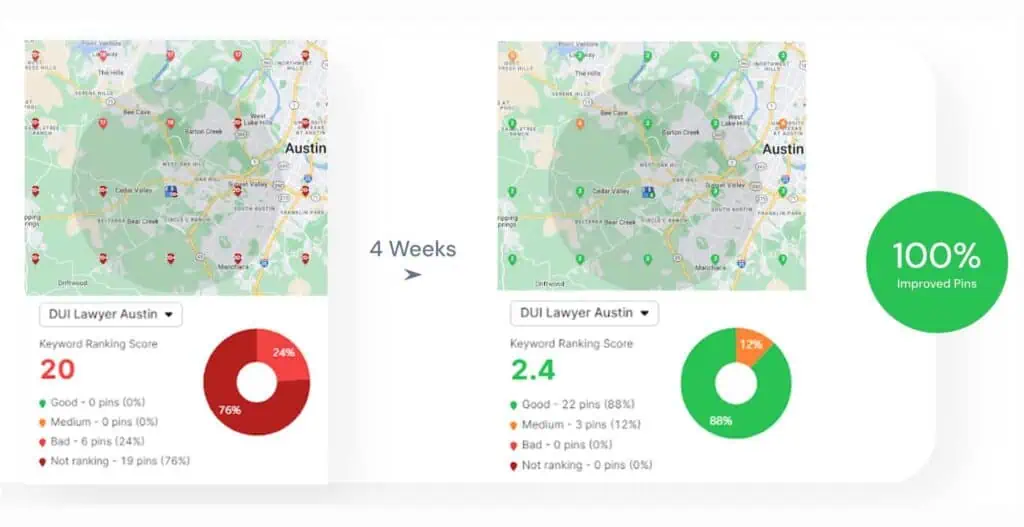
What is an example of an AI SEO tool? Search Atlas is an example of AI SEO automation platform that supports search engine optimization and generative engine optimization through a unified workflow. Search Atlas manages content optimization, backlink analysis, technical audits, schema deployment, local SEO, and LLM visibility. Search Atlas applies AI-driven execution across SEO and GEO tasks. This execution model enables scalable, consistent optimization.
What Are AI SEO Agents?
AI SEO agents are autonomous AI systems that execute search engine optimization tasks without continuous human input. AI SEO agents observe data, plan actions, and perform optimizations across content, technical SEO, and competitive analysis. AI SEO agents differ from static tools by operating continuously. These agents analyze live signals and act in real time.
How do AI SEO agents work? AI SEO agents work by monitoring performance data and executing optimization actions based on predefined objectives. AI SEO agents connect to analytics, crawl data, and competitive signals to evaluate site performance. AI SEO agents follow a loop of observation, decision making, and execution.
What are examples of AI SEO agents? OTTO SEO and Atlas Brain are examples of AI SEO agents that execute optimization tasks autonomously. OTTO SEO performs technical updates, on-page optimizations, content actions, authority development, and local SEO adjustments using performance data from analytics and search platforms. Atlas Brain performs audits, content revisions, backlink actions, and topical mapping through conversational execution.
Both systems function as execution agents rather than reporting tools. Both systems automate SEO implementation across multiple optimization fronts.
What Are the Best AI SEO Tools?
The best AI SEO tools are Search Atlas, Writesonic, AirOps, Clearscope, and Rankscale.ai. These AI SEO tools optimize content creation, automate SEO workflows, and track brand visibility across AI-driven search environments. Each AI SEO tool addresses a specific operational layer inside AI Search Engine Optimization.
The 5 best AI SEO tools are listed below.
- Search Atlas. Search Atlas is an AI SEO automation platform that supports SEO and GEO through a unified workflow. Search Atlas manages content optimization, backlink analysis, technical audits, schema deployment, local SEO, and LLM visibility tracking. Search Atlas applies AI-driven execution across SEO and GEO tasks, which enables scalable and consistent optimization across search and generative systems.
- Writesonic. Writesonic accelerates SEO research and AI assisted content production using real time SEO data. Writesonic analyzes ranking pages, keyword signals, and content gaps during drafting. Writesonic fits teams that prioritize faster research and structured AI content generation.
- AirOps. AirOps automates SEO operations and content production through structured workflow automation. AirOps connects prompts, datasets, and publishing pipelines into repeatable production systems. AirOps fits teams that manage scaled content execution through process automation.
- Clearscope. Clearscope optimizes human written content through ranking term analysis and relevance scoring. Clearscope evaluates topical coverage, semantic depth, and competitive alignment against top search results. Clearscope fits teams that refine expert content for stronger ranking performance.
- Rankscale.ai. Rankscale.ai tracks brand visibility across AI search engines and generative answer platforms. Rankscale.ai measures brand presence frequency and competitor comparison across AI responses. Rankscale.ai fits teams that prioritize monitoring AI-driven search exposure.
Among available AI SEO tools, Search Atlas provides the most complete AI SEO workflow because Search Atlas integrates automation, optimization, backlink intelligence, schema deployment, local SEO, and the LLM Visibility tool inside one unified system. Search Atlas LLM Visibility tool tracks brand presence, citation frequency, and competitor displacement across generative AI platforms, which connects AI visibility insights directly to execution workflows.
Will AI replace SEO?
No, AI will not replace SEO, but AI is transforming how SEO operates across search environments. SEO remains necessary because AI-driven search systems still depend on crawlable, structured, and authoritative web content.
SEO is evolving from ranking pages in search engine results pages to optimizing content for AI-powered answer engines. Answer Engine Optimization (AEO), refers to optimizing content for direct answer inclusion inside AI-generated responses. This shift expands SEO rather than eliminates it.
AI-driven search interfaces generate synthesized answers instead of ranked link lists. These systems still retrieve information from indexed web content. SEO ensures that content remains discoverable, trustworthy, and structured for retrieval.
Will AI Replace SEO Professionals?
No, AI will not replace SEO professionals, but AI is transforming how SEO professionals work and deliver value. Artificial Intelligence automates repetitive optimization tasks that previously required manual effort. SEO professionals remain necessary because search strategy, brand positioning, and contextual judgment require human oversight.
AI automates keyword research, competitor analysis, technical audits, and content drafting. Automation reduces time spent on data collection and pattern identification. SEO professionals then interpret outputs, refine strategies, and align actions with business goals.
Human expertise remains essential for interpreting nuanced search intent and evaluating content quality. AI processes signals at scale, but AI does not understand brand differentiation or long-term positioning without direction. AI increases execution speed. SEO professionals increase strategic accuracy.
How to Balance AI and Human Expertise in SEO?
Balancing AI and human expertise in SEO requires assigning automation to data-heavy tasks and reserving strategic decisions for human oversight. AI processes large data sets and executes repetitive workflows efficiently. Human expertise remains necessary for strategic direction, brand positioning, and quality validation. AI increases speed. Humans increase strategic precision.
AI handles research, clustering, competitor analysis, and draft generation. These tasks benefit from scale and pattern recognition. Humans refine outputs to ensure alignment with Experience, Expertise, Authoritativeness, and Trustworthiness.
A hybrid workflow improves efficiency without sacrificing credibility. AI generates structured drafts and technical insights. Human editors validate accuracy, adjust tone, and ensure factual integrity. Both roles remain necessary for sustainable SEO performance.
What Future Trends Are Shaping AI SEO?
The future of AI SEO is being shaped by the expansion of AI-generated search experiences, entity-based retrieval, and answer-focused visibility models.
One major trend shaping AI SEO is the expansion of AI Overviews and similar AI-generated answer formats. AI Overviews synthesize information from multiple indexed sources and prioritize passages that are clear, structured, and authoritative. This shift increases the importance of passage-level optimization and explicit entity definitions. Visibility now depends on whether AI systems select and cite content inside answers.
Another trend shaping AI SEO is the growth of Generative Engine Optimization. GEO focuses on optimizing content for inclusion inside AI-generated summaries across chat interfaces and answer engines. GEO expands AI SEO beyond ranking signals and toward retrieval readiness and factual density.
Entity-based authority is becoming more central to AI SEO. AI systems evaluate brands and topics through entity relationships rather than isolated keywords. Consistent entity definitions and structured attributes increase trust and citation likelihood.
Experience, Expertise, Authoritativeness, and Trustworthiness continue influencing source selection. AI systems prioritize credible and verifiable information. AI SEO is evolving from keyword placement toward intent resolution, semantic clarity, and authoritative representation across AI-driven search ecosystems.
Is AI SEO a Long-Term Advantage or a Temporary Trend?
AI SEO is a long-term advantage because AI-driven search represents a structural shift in how information is discovered and consumed. Search behavior now favors synthesized responses from AI assistants. Visibility is shifting from ranking pages to being referenced inside generated answers. AI SEO strengthens entity clarity and authority so AI systems treat a source as trustworthy. AI automates research, technical audits, and structured optimization at scale. Automation increases efficiency while human strategy governs quality and positioning.
Traditional SEO remains foundational because AI systems still depend on crawlable and authoritative content. AI SEO expands SEO into AI-driven environments. AI SEO reflects a long-term evolution, not a temporary trend.